Imagine walking through the dense, pristine forests of the eastern United States a century and a half ago. Towering high above the canopy, reaching up to 100 feet in the air with massive trunks, were the undisputed kings of the woods—often referred to as the “Redwoods of the East.” Today, cultivating american chestnut trees is not just a standard landscaping project; it is an extraordinary opportunity to participate directly in one of the most vital ecological restoration movements in North American history.
Before the early 20th century, nearly four billion of these magnificent trees dominated the landscape from Maine to Mississippi. They were the keystone species of the ecosystem, providing rot-resistant timber for pioneers and a highly reliable, nutrient-dense food source for countless wildlife species and indigenous communities. Then, tragedy struck in the form of an imported fungal disease, reducing this majestic canopy giant to a struggling understory shrub in just a few decades.
But the story doesn’t end there. Thanks to modern arboriculture, genetic research, and dedicated conservationists, bringing this legendary tree back to your property is an achievable reality. Whether you are a passionate conservationist, a homesteader looking for a reliable nut crop, or a tree care enthusiast wanting to plant a living legacy, this comprehensive guide will equip you with the exact science-backed steps you need. From decoding the strict soil requirements to mastering the perfect planting technique and defending against wildlife, we will cover exactly how to grow and care for this historic species successfully.
(Expert Note: As a tree care specialist, I often tell growers that planting a chestnut requires a blend of historical reverence and strict horticultural discipline. Follow this guide closely, as these trees demand specific site conditions that leave zero room for guesswork!)
II. Understanding the History and Modern Hope 📜🌱
To truly understand how to care for these trees, you must first understand what they have been fighting against for over a century.
What Happened to the American Chestnut? 🍂
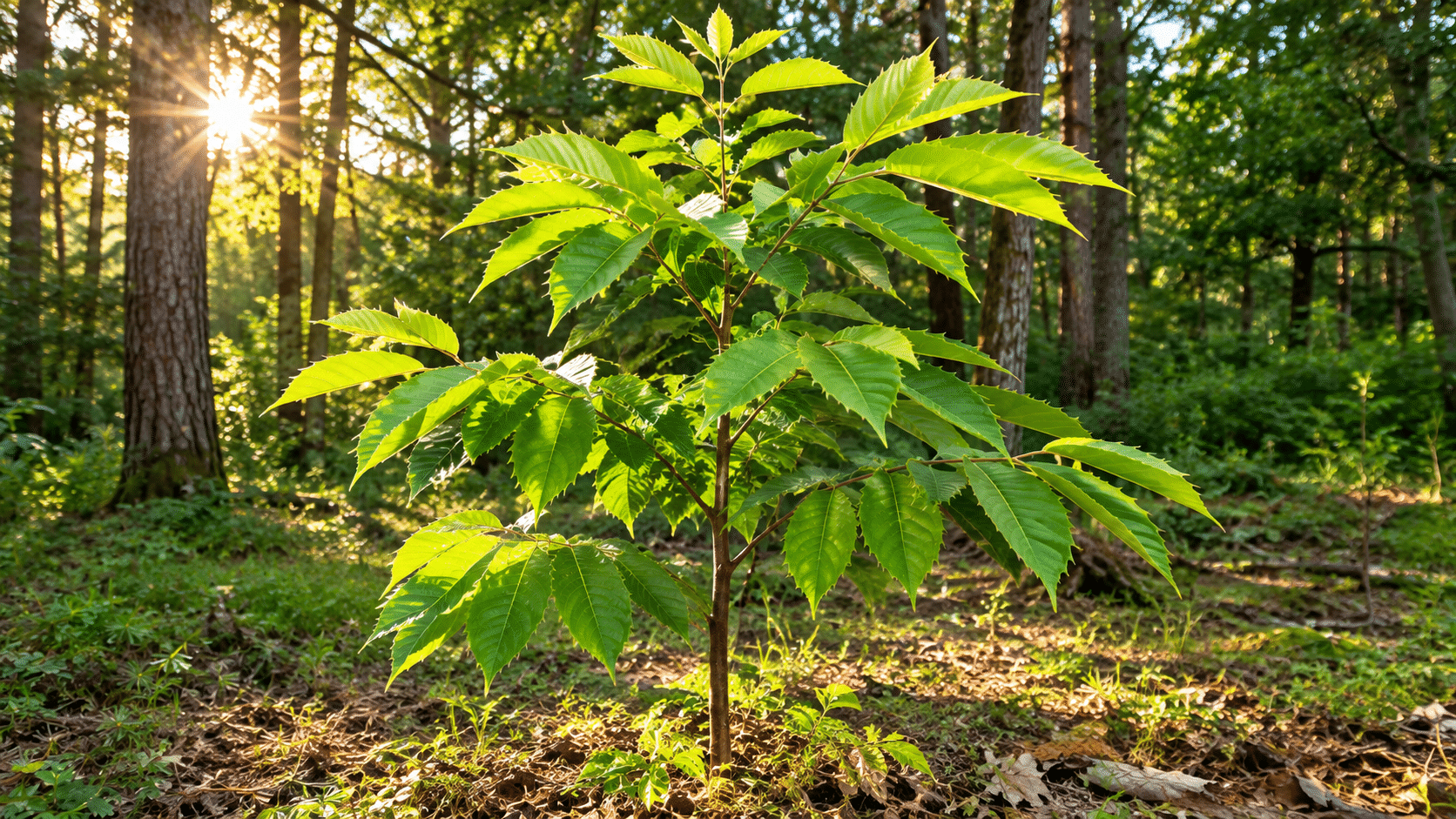
In 1904, a forester at the Bronx Zoo noticed a mysterious die-off among the native chestnuts. The culprit was Cryphonectria parasitica, commonly known as the chestnut blight. Accidentally introduced via imported Asian chestnut trees, this airborne bark fungus enters through wounds in the tree. It grows rapidly beneath the bark, destroying the tree’s vascular tissue (the cambium layer) and effectively girdling the trunk. Because the native species had zero evolutionary resistance to this pathogen, the blight swept through the Appalachian Mountains like a wildfire. By 1950, the towering canopy trees were virtually wiped out.
Interestingly, the blight does not kill the root system. Today, millions of “ghost trees” still survive in the wild as stump sprouts, sending up small shoots that inevitably catch the blight and die back to the ground before they can mature and produce nuts.
The Restoration Effort: Blight-Resistant Trees 🔬
You might be wondering: If the blight is still out there, how can I grow one?
For decades, organizations like The American Chestnut Foundation (TACF) and various university research programs have been working tirelessly to develop blight-resistant varieties. There are two primary pathways making modern cultivation possible:
-
Backcross Breeding: By crossing the native species with the naturally blight-resistant Chinese chestnut (Castanea mollissima), and repeatedly backcrossing the offspring with the American species, scientists have created trees that are 15/16ths American but retain the genetic resistance of their Asian cousins.
-
Genetic Engineering: Recent breakthroughs have involved inserting a specific enzyme-producing gene from wheat into the chestnut genome, which neutralizes the deadly acid produced by the blight fungus.
When you source seeds or bare-root seedlings today from reputable restoration farms or conservation groups, you are typically planting advanced hybrids or highly resilient purebred stock selected for their hardiness.
III. Site Selection: The Absolute Secret to Chestnut Success 🗺️☀️
If there is one section of this guide you memorize, let it be this: Site selection is the single most important factor in your success. You can do everything else right, but if you plant your tree in the wrong spot, it will not survive.
Strict Soil Requirements (Don’t Skip This!) 🪨
American chestnut trees are incredibly finicky about their soil. They demand highly well-drained, sandy, or sandy-loam soils.
-
The Danger of Clay: Planting a chestnut in heavy clay or permanently wet, poorly draining soil is a guaranteed death sentence. In wet conditions, they are highly susceptible to Phytophthora cinnamomi (a devastating water mold that causes root rot). If water pools in your planting area for more than a few hours after a heavy rain, do not plant a chestnut there.
-
Soil pH: These trees thrive in acidic environments. Your soil pH should ideally be between 4.5 and 6.5.
-
Action Step: Always conduct a professional soil test before planting. If your soil is too alkaline, you will need to amend it with elemental sulfur or pine needle mulch well in advance of planting.
Sunlight and Spacing ☀️
While young seedlings can tolerate partial shade (as they naturally would in a forest understory), mature trees require full sun to produce a robust mast (nut harvest). Aim for a location that receives at least 6 to 8 hours of direct, unobstructed sunlight daily.
-
Spacing Rules: For optimal canopy growth and nut production, space your trees 20 to 30 feet apart.
-
The Cross-Pollination Rule: Chestnuts are self-incompatible. This means you cannot plant just one tree. You must plant a minimum of two (preferably three or more) relatively close to each other so the wind can carry pollen between the male catkins and female flowers.
Avoiding Frost Pockets ❄️
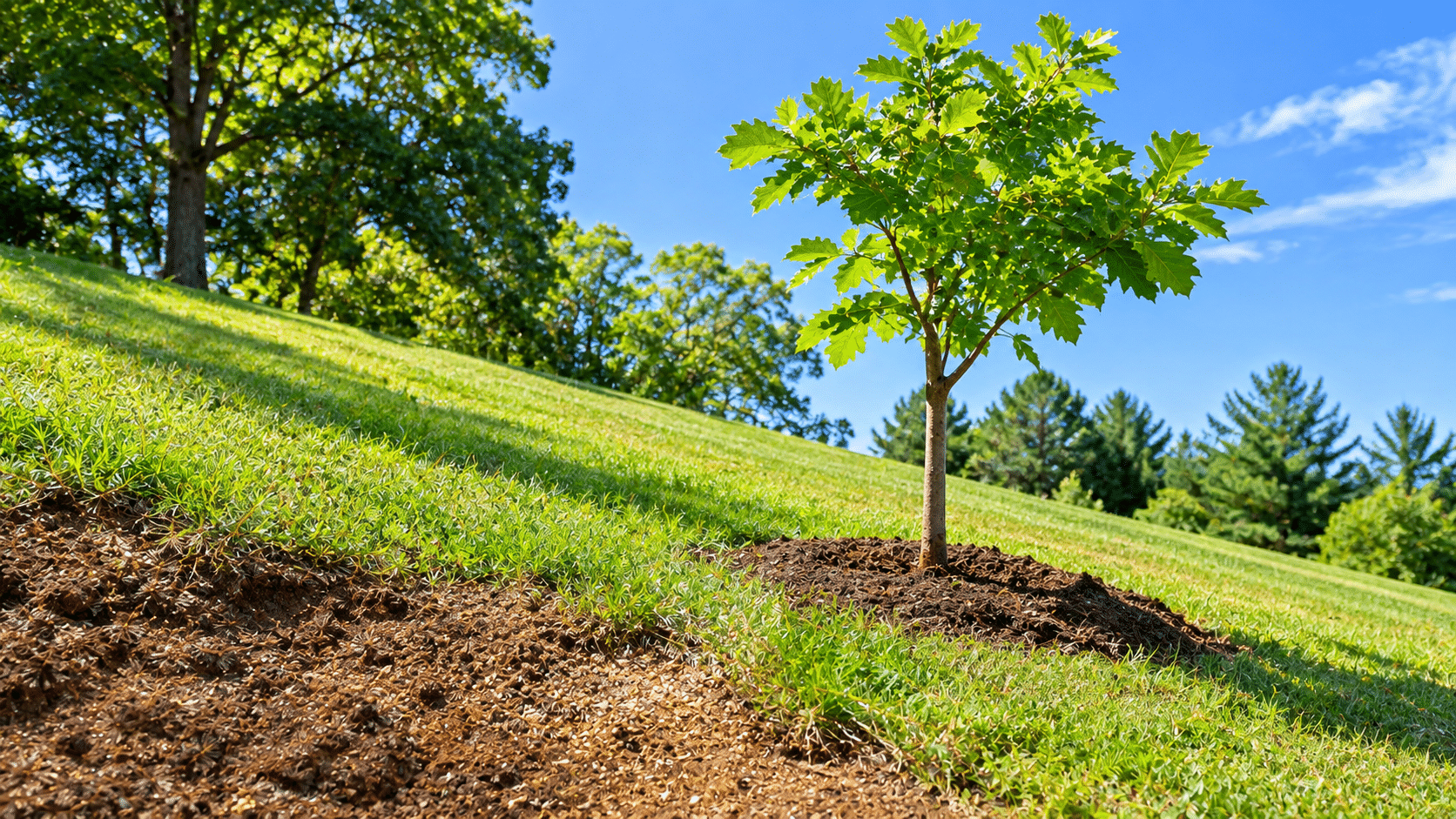
Because they bloom slightly later in the spring than many other hardwoods, their delicate new buds can be highly susceptible to late spring frosts. Avoid planting in low-lying valleys, depressions, or the bottom of hills. Cold air is heavier than warm air and will flow down slopes, settling in these “frost pockets.” Instead, plant on a hillside, slope, or upland terrain where cold air can drain away safely.
IV. How to Plant American Chestnut Trees: A Step-by-Step Guide 🪴
Whether you are starting from freshly harvested seeds (nuts) or purchasing 1-year-old bare-root seedlings, precision during planting sets the foundation for decades of growth.
Starting from Seed (Nuts) vs. Purchasing Seedlings 🌰
Buying bare-root seedlings offers a one-year head start and is generally easier for beginners. However, growing from seeds is incredibly rewarding and cost-effective if you plan to plant a large grove.
-
Crucial Seed Warning: Chestnut seeds must never be allowed to dry out or freeze solid. To simulate winter and trigger germination, they require “cold stratification”—meaning they must be stored in a slightly damp medium (like peat moss) in a refrigerator at 34°F to 40°F for 60 to 90 days before planting.
The Indoor Potting Method 🏡
If you choose to sprout your stratified seeds indoors in late winter, follow these steps to prevent rot:
-
The Soil Mix: Use a high-drainage, soilless potting mix. A proven formula is 1/3 peat moss, 1/3 perlite, and 1/3 vermiculite. Do not use standard garden soil in pots, as it holds too much moisture.
-
Tall Pots: Chestnuts develop a deep, vigorous taproot very quickly. Use extra-tall “treepots” (at least 10–12 inches deep) to prevent the taproot from curling at the bottom (J-rooting).
-
Orientation is Key: When you pull the nut from the fridge, you will see a small white root (the radicle) emerging from the pointed end. Plant the nut about 1 inch deep on its side, with the radicle pointing horizontally or straight down. Never point the radicle up!
Transplanting and Direct Sowing Outdoors 🌳
If you are planting bare-root seedlings or moving your potted sprouts outdoors, wait until all danger of a hard frost has passed in the spring.
-
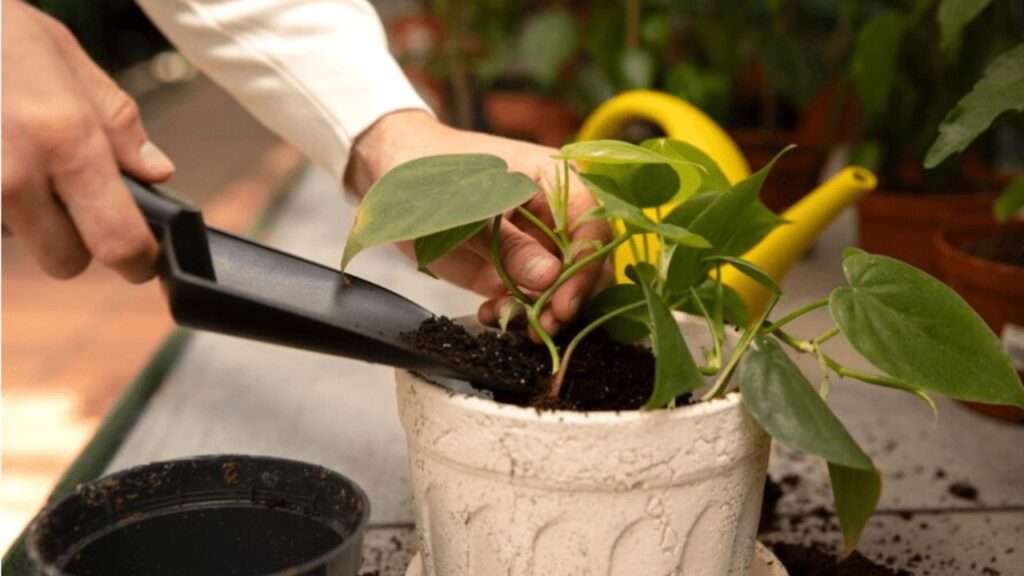
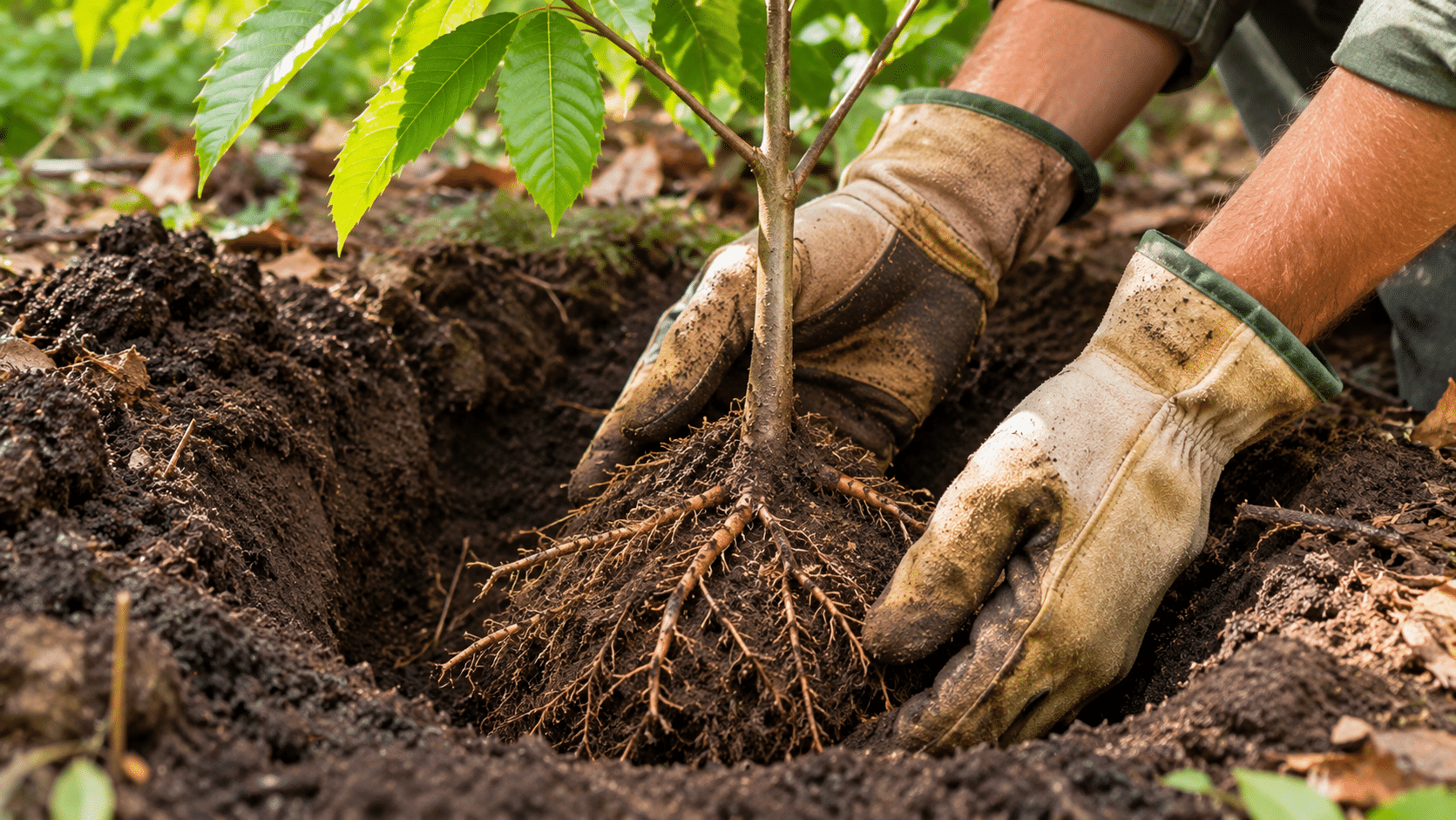
Digging the Hole: Dig a hole twice as wide as the root system, but exactly the same depth. Do not bury the tree deeper than it was previously growing (look for the distinct soil line on the trunk).
-
The E-E-A-T Secret (Mycorrhizae): Chestnut roots rely heavily on symbiotic relationships with beneficial soil fungi to absorb water and nutrients. Before placing the tree in the hole, grab a handful of native, dark forest soil from under an established oak or pine tree on your property and sprinkle it directly onto the chestnut’s roots. This naturally inoculates your tree with native mycorrhizae, drastically improving its survival rate.
-
Backfilling: Backfill the hole gently with the native soil. Do not add heavy compost or rich fertilizers to the planting hole, as this can burn the young roots or encourage rot. Tamp the soil down lightly to remove air pockets, and water deeply to settle the dirt.
V. Complete Care and Maintenance Guide 💧🛠️
Once your tree is safely in the ground, the real work begins. While mature american chestnut trees are remarkably resilient, the first three years of establishment require careful, observant management.
Watering Protocols for Young Trees 🚿
Watering is a delicate balancing act. A newly planted sapling needs consistent moisture to establish its deep taproot, but as we discussed in the site selection phase, it absolutely cannot sit in soggy soil.
-
Year One Routine: Provide 1 to 2 gallons of water per tree per week, accounting for natural rainfall. If the top 2 inches of soil feel dry to the touch, it is time to water.
-
The Drought Transition: By year three, once the taproot has anchored deeply into the subsoil, your chestnut will become surprisingly drought-tolerant. Mature trees rarely need supplemental watering unless you are experiencing an extreme, prolonged summer drought.
Fertilizing Dos and Don’ts 🌿
Chestnuts are vigorous growers and generally do not require heavy fertilization if planted in healthy, organically rich forest soil. However, if your soil test indicates nutrient deficiencies, you can apply a balanced N-P-K fertilizer (like a 10-10-10) in early spring just as the buds begin to swell.
-
Crucial Timing Warning: Never fertilize a chestnut tree after mid-July! Late-season nitrogen pushes the tree to produce tender, green new growth going into autumn. This new growth will not have time to harden off before the first frost, leading to severe winter injury or fatal dieback.
Weed Control and Mulching 🌾
Grass and aggressive weeds are a young tree’s worst enemy. They will rapidly outcompete your chestnut seedling for water and surface nutrients.
-
The Weed-Free Zone: Maintain a 3- to 4-foot diameter weed-free circle around the trunk.
-
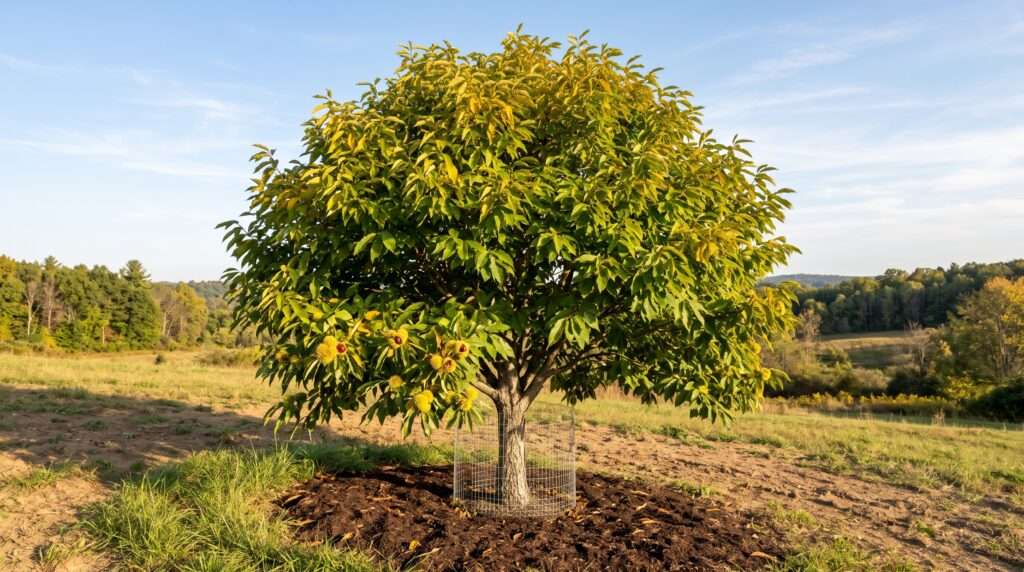
Proper Mulching: Apply a 2- to 3-inch layer of organic mulch (like pine bark or wood chips) to help retain soil moisture and suppress weeds. Keep the mulch pulled back at least 2 inches from the actual trunk to prevent moisture buildup and bark rot.
VI. Protecting Your Trees (From Wildlife and Pests) 🛡️🦌
If you plant a chestnut tree in the wild without protection, local wildlife will almost certainly destroy it before it reaches its second birthday.
Defending Against Deer and Voles 🐇
Deer consider tender chestnut shoots an absolute delicacy. Furthermore, bucks love to rub their antlers on the smooth bark of saplings in the fall, which can snap the tree in half.
-
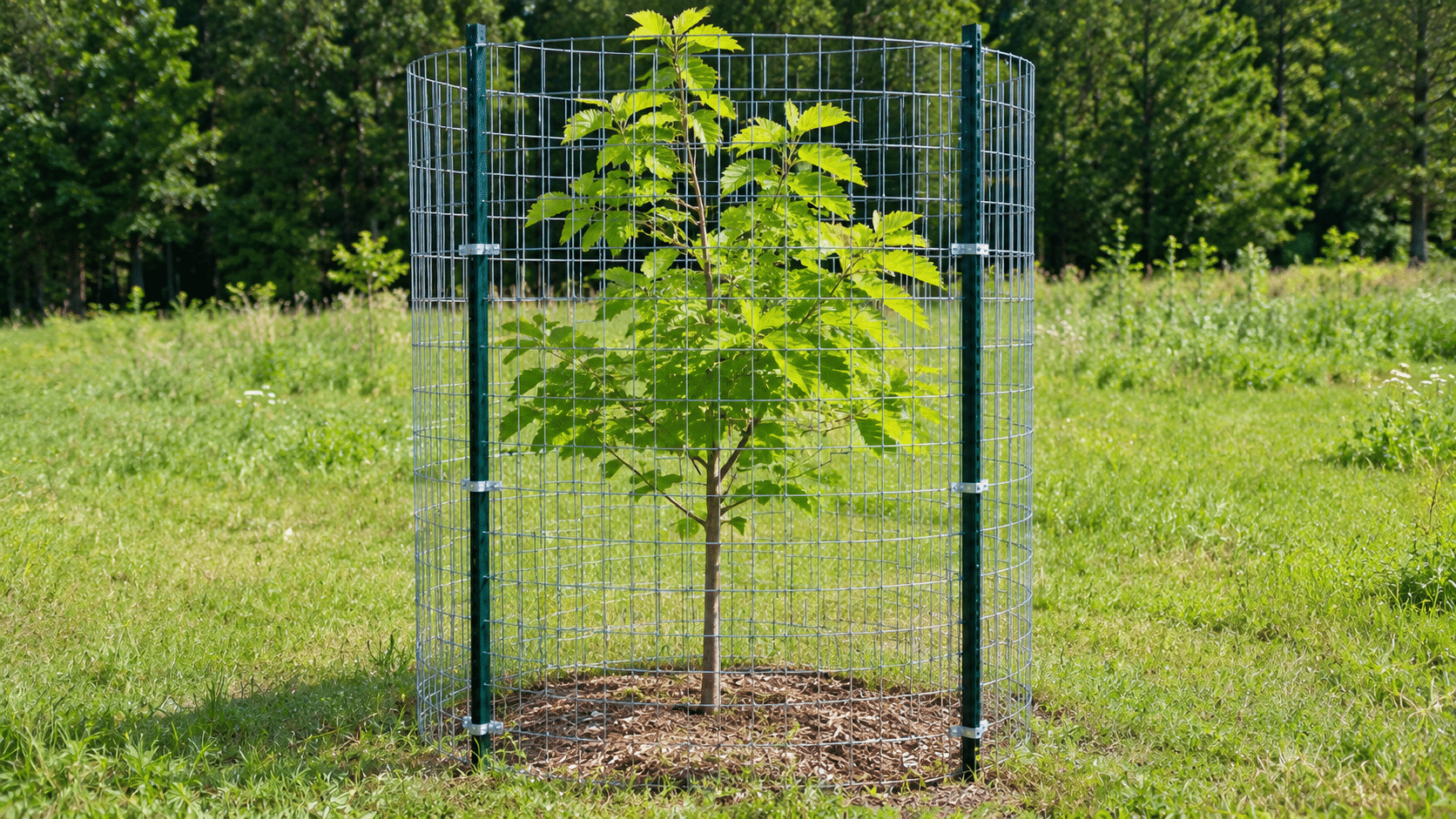
Deer Caging: Immediately upon planting, construct a 4- to 5-foot tall cage using heavy-duty welded wire fencing (like concrete reinforcing wire). Secure it with heavy T-posts. Do not use flimsy chicken wire; a motivated deer will crush it.
-
Vole Protection: Voles are small rodents that live under the grass and mulch, and they will chew the bark completely off the base of your tree (girdling), killing it instantly. To stop them, place a rigid plastic tree tube or a wrap of hardware cloth around the bottom of the trunk. Sink the bottom of this guard 1 to 2 inches into the soil so they cannot burrow underneath it.
Identifying Common Pests 🐛
While the blight is the most famous threat, a few insects also target this species:
-
Asian Chestnut Gall Wasp: This invasive pest lays eggs in the buds, causing abnormal, swollen growths (galls) on the leaves and stems, which severely stunts growth and reduces nut yields.
-
Chestnut Weevils: These beetles lay eggs inside the developing nuts. When you harvest the nuts, you may find small white worms inside.
-
Organic Solutions: Implementing Integrated Pest Management (IPM) is key. For gall wasps, prune and destroy affected branches before the adult wasps emerge in summer. For weevils, gather up all fallen nuts promptly in the autumn (don’t leave any rotting on the ground), and you can treat harvested nuts with a warm water bath (120°F for 20 minutes) to kill any larvae inside without ruining the nut for consumption.
VII. The Reward: Harvesting and Ecological Benefits 🐿️🍂
If you have provided proper soil, protected your trees, and planted at least two for cross-pollination, your patience will eventually be rewarded with an abundant mast crop.
Harvesting the Chestnuts 🌰
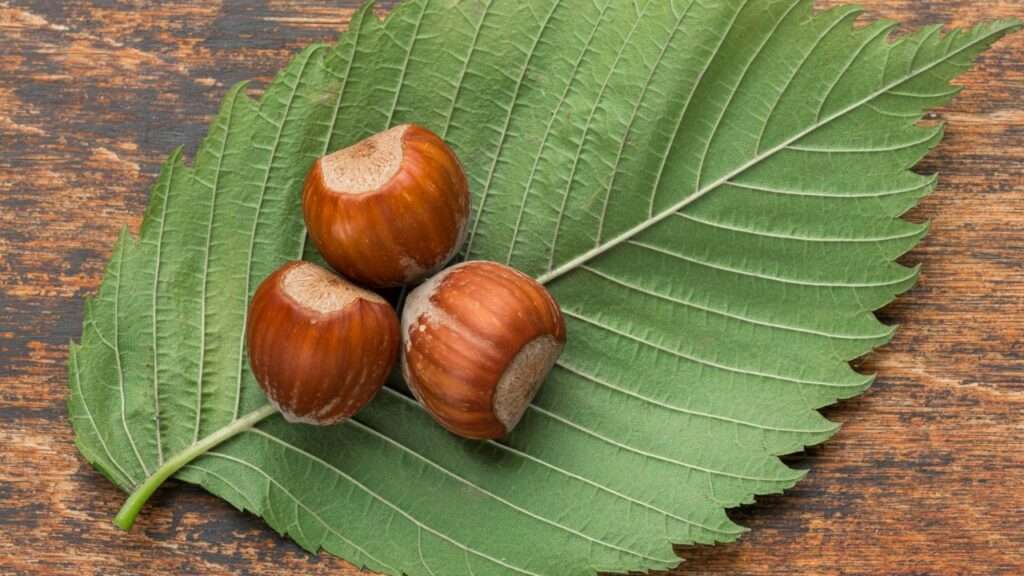
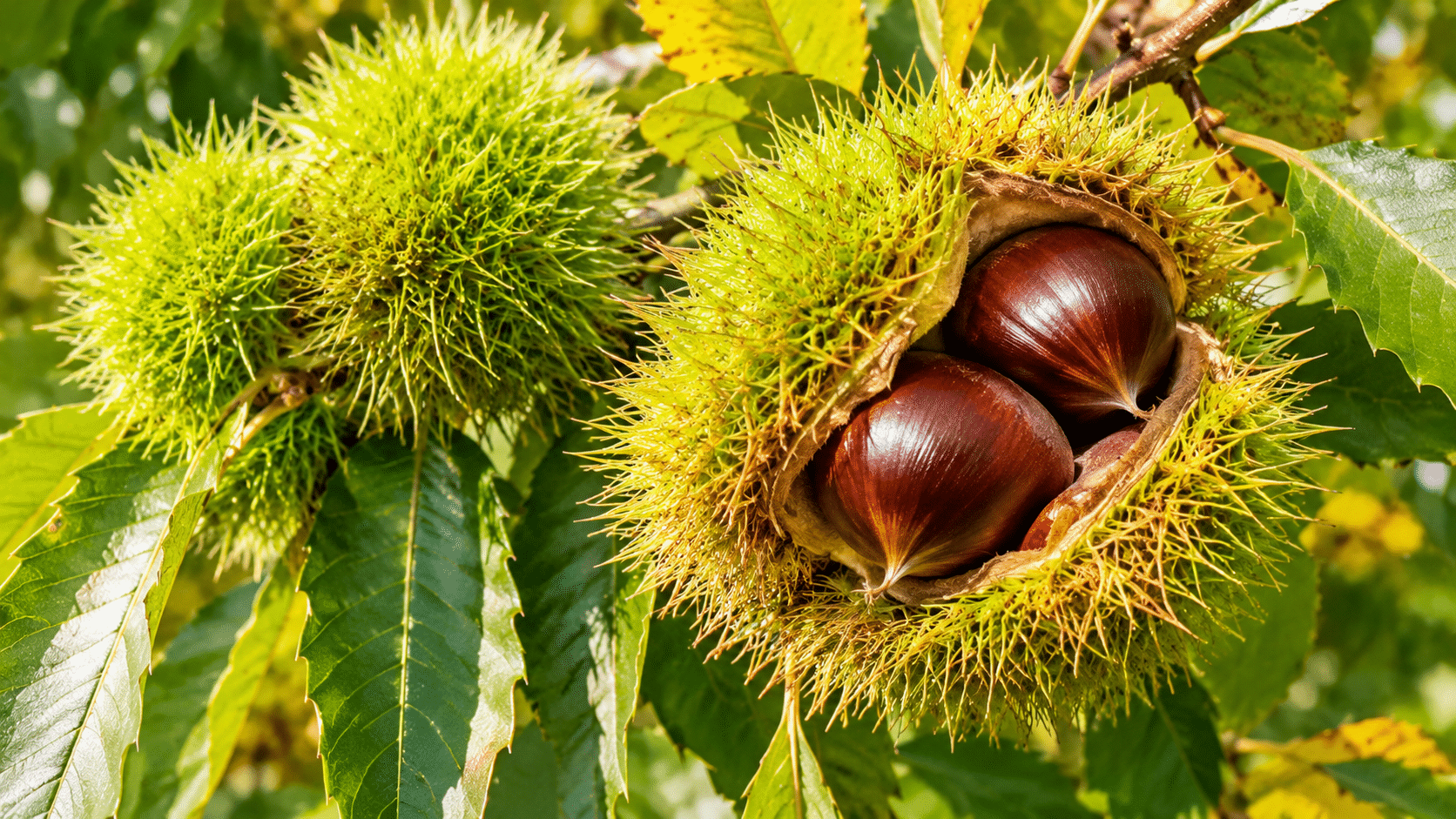
Between September and October, the trees will produce bright green, incredibly spiny seed pods known as “burs.”
-
The Waiting Game: Do not try to pick the burs off the tree. Wait until they naturally split open (revealing the dark brown nuts inside) and drop to the ground.
-
Safe Handling: The spines on a chestnut bur are sharp enough to pierce standard gardening gloves. Always use heavy leather gloves when gathering.
-
Storage: Fresh chestnuts are highly perishable and will dry out quickly. Store them in a breathable bag in the crisper drawer of your refrigerator until you are ready to roast them.
Supporting Local Wildlife 🦃
When you harvest your nuts, be sure to leave some behind. The ecological value of an american chestnut tree is immeasurable. A single mature tree can drop hundreds of pounds of high-protein, high-carbohydrate nuts every single fall. They are a preferred, high-value food source for white-tailed deer, wild turkeys, black bears, and squirrels. Furthermore, the tree acts as a vital host plant for over 125 native species of moths and butterflies, boosting local biodiversity.
VIII. Frequently Asked Questions (FAQs) ❓
1. Are American chestnut trees actually extinct? No. They are classified as “functionally extinct” in the wild. While billions of large canopy trees died from the blight, the root systems survived. Today, millions of stump sprouts still exist in native forests, though they rarely live long enough to reproduce. Thanks to conservation efforts, hybrid and resistant varieties are now widely available for cultivation.
2. How long does it take for an American chestnut to produce nuts? When planted in optimal, full-sun conditions and provided with a cross-pollination partner, a healthy seedling can begin producing nuts in as little as 3 to 7 years.
3. Can I plant just one chestnut tree in my yard? No. Chestnuts are self-incompatible. To produce nuts, you must plant at least two trees (preferably three) within 50 to 100 feet of each other so the wind can easily transfer pollen between them.
4. How fast do chestnut trees grow? They are incredibly vigorous growers. In ideal, well-draining acidic soil with plenty of sunlight, a young sapling can shoot up 4 to 7 feet per year, rapidly establishing itself as a dominant canopy tree.
IX. Conclusion: Planting a Legacy 🌟
Cultivating american chestnut trees is a masterclass in patience, precise site selection, and dedicated tree care. By ensuring they have highly well-drained, acidic soil, full sun exposure, and strict protection from local wildlife during their early years, you can successfully grow one of the most historically significant plants in the world.
When you dig a hole and plant a chestnut, you are doing more than just landscaping your yard. You are actively participating in the resurrection of a lost species, providing an invaluable food source for local wildlife, and planting a towering, living legacy that will shade and feed generations to come. Happy planting! 🌲💚