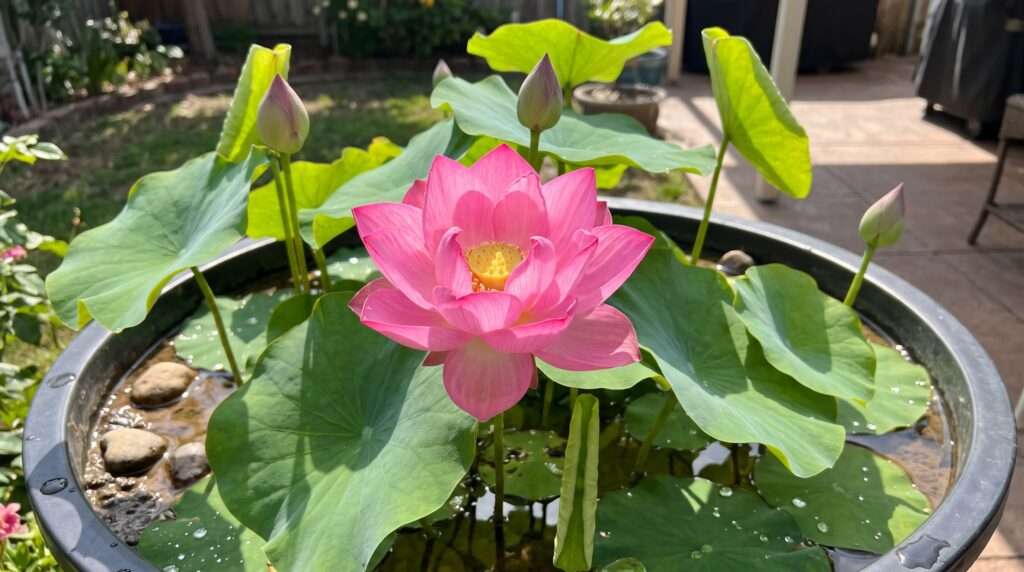
You carefully nestled the tuber into the mud, watched the first delicate pads unfurl on the water’s surface, and beamed with pride as tall, velvety green umbrella leaves rose toward the sky. You waited through late spring. You waited through the heat of July. Yet, while your neighbors’ water gardens are bursting with luminous pink and creamy white blossoms, your pot is nothing more than a lush, green salad bowl.
If this sounds familiar, take a deep breath—you haven’t failed as an aquatic gardener. Lotus plants (Nelumbo nucifera) are notoriously particular about their blooming triggers. Even seasoned pond keepers occasionally end up with a forest of foliage and zero flowers. The good news is that a non-blooming lotus is almost never a lost cause. It is simply trying to tell you that one of its core environmental needs—usually light, heat, space, or nutrients—is slightly off balance.
In this comprehensive guide, we will diagnose exactly why your lotus flower isn’t blooming, walk through the seven most common mistakes that stall bud production, and give you a step-by-step revival plan to get your plant bursting with blooms. 🌿✨
🔍 Quick Diagnosis: Why Your Lotus Isn’t Blooming
Before diving into the deep end of lotus plant care, use this quick diagnostic table to match what you are seeing in your pond or patio container with the most likely culprit.
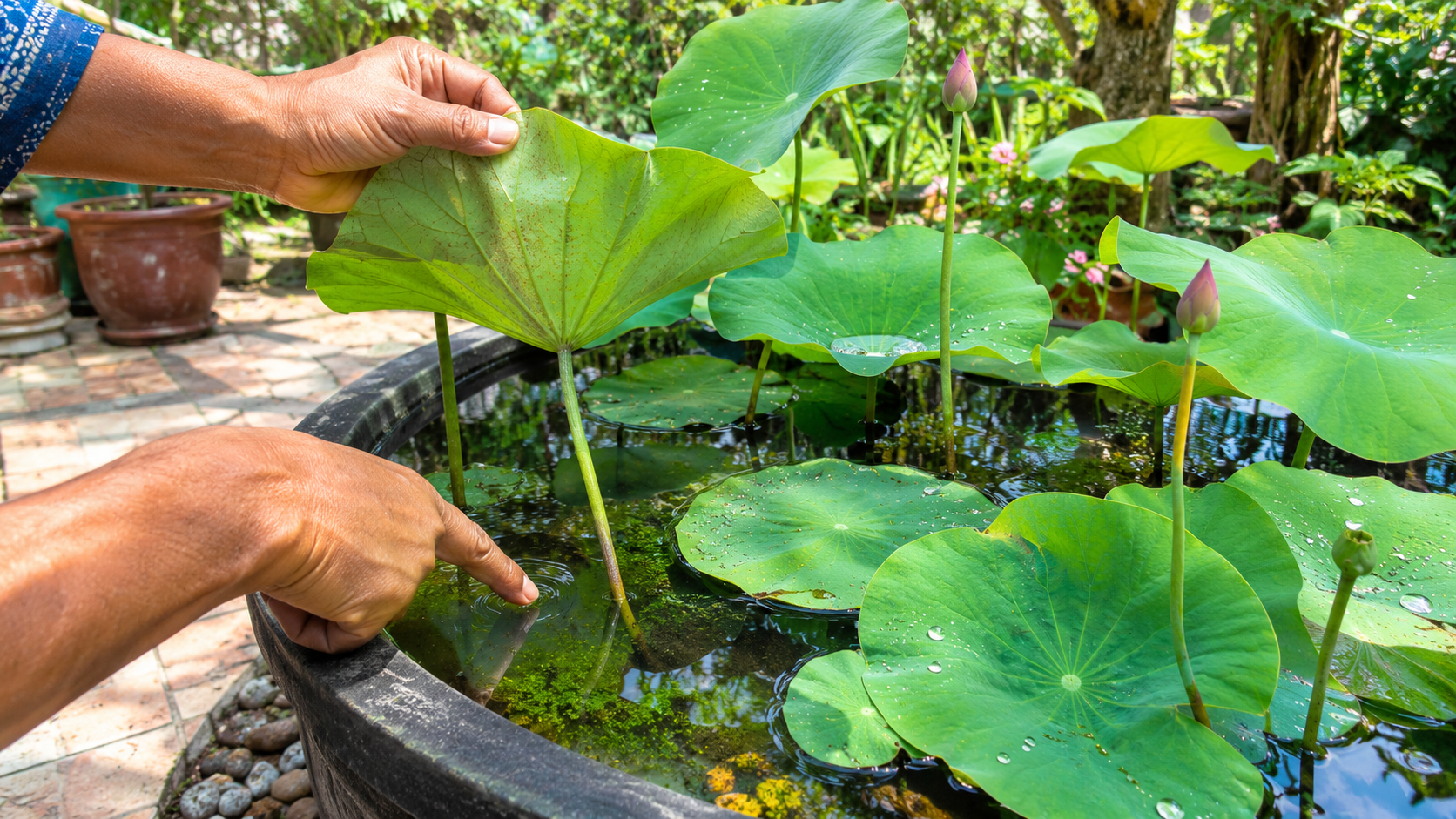
🌿 7 Main Reasons Your Lotus Plants Won’t Bloom (And How to Fix Them)
To understand how to make a lotus bloom, you have to think like the plant. In the wild, lotuses grow in warm, shallow, sun-baked mud flats. When we bring them into backyard ponds or patio bowls, even minor deviations from those native conditions can signal the plant to stay in “survival and leaf-building mode” rather than “reproduction and blooming mode.“
Here are the seven primary reasons your lotus plants are holding out on you—and exactly how to fix each one.
1. ☀️ Insufficient Direct Sunlight (The #1 Culprit)
If your lotus has healthy leaves but refuses to set buds, sunlight is the very first thing you should audit. Lotus plants are absolute sun-worshippers. While many garden perennials can scrape by in partial shade, a lotus will not.
In dappled shade or with only three to four hours of morning sun, your plant will still photosynthesize enough to push out attractive foliage. However, producing massive, multi-petaled flowers requires an immense amount of solar energy. Without it, the plant simply aborts flower bud initiation to conserve resources.
-
The Fix: Your lotus needs a minimum of 6 to 8 hours of direct, unfiltered sunlight every single day. Morning and early afternoon sun is especially valuable because it warms the water quickly.
-
💡 Expert Tip: If you are growing lotus in containers on a patio or deck, place the pot on a heavy-duty wheeled plant caddy before you fill it with soil and water. As the angle of the sun shifts from May to August, you can effortlessly roll your lotus out of creeping shadows and keep it in the sweet spot all summer long.
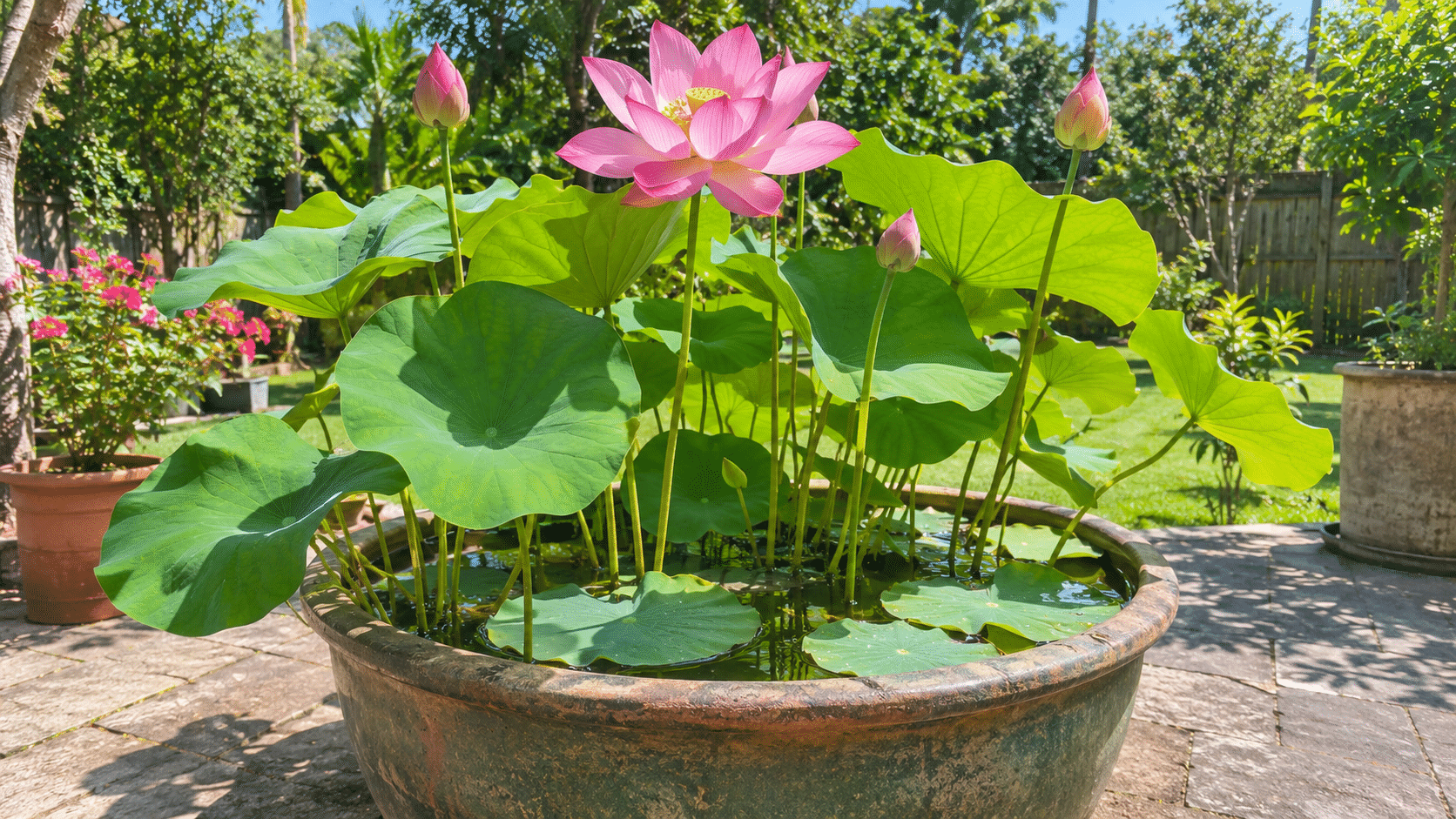
2. 🧪 Imbalanced Fertilization (The Nitrogen Trap)
Lotus plants are famously heavy feeders, which leads gardeners to make one of two opposite mistakes: starving the plant completely, or feeding it the wrong type of fertilizer.
If you use a general-purpose, high-nitrogen lawn or garden fertilizer, you will trigger explosive vegetative growth. Your pot will be packed with giant, dark green leaves—and not a single flower. Nitrogen fuels foliage, while Phosphorus (P) and Potassium (K) are the driving forces behind root development and flower bud production. Conversely, if you never fertilize a container-grown lotus, it will quickly exhaust the nutrients in its small pot and stall out before it can bloom.
-
The Fix: Follow a disciplined, stage-appropriate feeding schedule using aquatic plant fertilizer tablets (look for bloom-boosting NPK ratios like 10-14-8 or 5-10-10).
-
Wait to feed: Never fertilize a newly planted tuber until it has produced at least 3 to 4 floating leaves (and ideally its first standing aerial leaf). Feeding a dormant or waking tuber will burn the tender new roots.
-
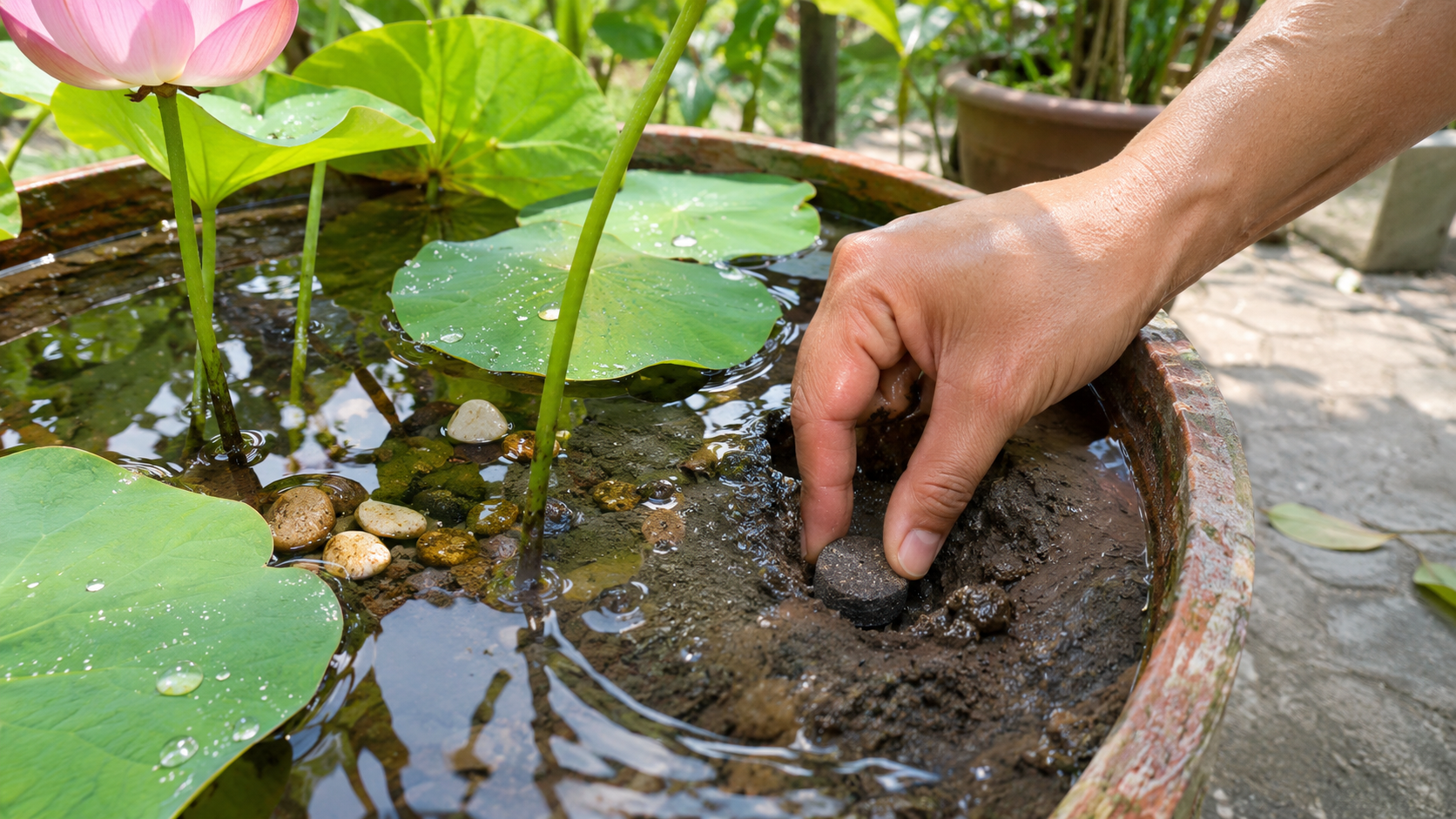
Application technique: Push the fertilizer tablets deep into the clay soil (about 2 to 3 inches down) near the outer edge of the pot, away from the central growing tips. Pinch the mud closed over the hole so the nutrients don’t leach into the water and trigger an algae bloom.
-
Frequency: Feed every 3 to 4 weeks throughout peak summer, adjusting the number of tablets based on your pot size (usually 1–2 tabs for small bowls, 3–4 for large tubs).
-
⚠️ E-E-A-T Warning: Never sprinkle loose, water-soluble granular fertilizer directly into the water or onto the surface of the soil. Not only will it turn your water into pea-green soup, but direct contact with raw fertilizer salts can chemically burn the delicate lotus rhizome and cause emerging flower buds to blast (turn brown and shrivel).
3. 🪴 Your Container Is Too Small (Rootbound Tubers)
One of the most common misconceptions in aquatic gardening is that any lotus can be grown in a cute tabletop ceramic bowl. In reality, lotus plants come in drastically different size classes—ranging from tiny micro-lotuses to massive pond giants that grow six feet tall.
Lotus tubers grow via aggressive underground runners (rhizomes) that travel outward in a circle. If you plant a medium or large pond variety in a cramped container, the runners will quickly run out of room, wrap tightly around the pot, and choke themselves out. A severely rootbound lotus becomes stressed and stops flowering.
-
The Fix: Always match your container size to your specific cultivar, and plan to divide and repot your tubers every 2 to 3 years in early spring.
-
Micro / Bowl Lotus: 10–12 inches wide, 6–8 inches deep.
-
Small / Dwarf Lotus: 14–18 inches wide, 8–10 inches deep.
-
Medium Lotus: 18–24 inches wide, 10–12 inches deep.
-
Large / Pond Lotus: 24–36+ inches wide, 12–18 inches deep.
-
-
Pro Insight: Always choose round containers with smooth interior walls (no drainage holes!). Square or rectangular pots are a hidden hazard for lotus plants—when the fragile, spear-like growing tips hit a 90-degree corner, they can snap off, setting your plant’s growth back by weeks.
4. 🌡️ Water Temperature & Depth Mistakes
Even with blazing sunlight and perfect fertilizer, cold water will put the brakes on blooming. Lotus plants are tropical-leaning perennials that rely on sustained warmth to wake up and flower. If your nights are still dipping into the 50s°F (10°C–15°C), or if your pond is shaded and cool, your lotus will sit in a sluggish holding pattern.
Water depth plays an equally critical role. If a lotus tuber is submerged too deeply, the plant has to burn all of its stored energy just stretching its stems to reach the surface for air and light, leaving nothing left in the tank for flowers.
-
The Fix:
-
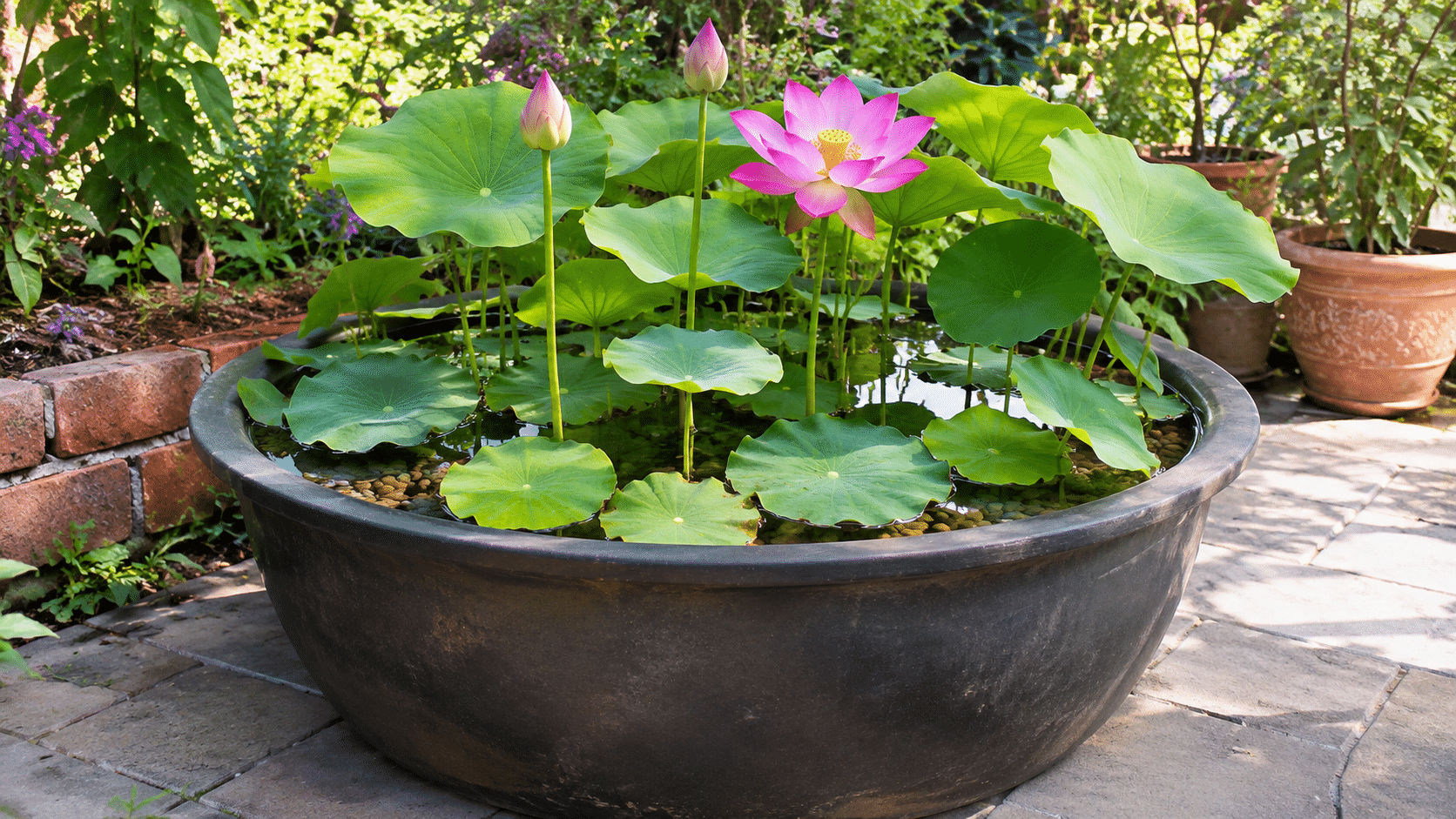
Target the right temperature: Lotus plants thrive and bloom best when water temperatures consistently sit between 75°F and 85°F (24°C to 29°C). Dark-colored containers absorb more solar heat and can actually help warm the water faster in cooler climates!
-
Dial in the depth: Maintain 2 to 6 inches of water above the soil line for container and bowl lotuses. Larger pond varieties can handle 6 to 12 inches of water above the soil, though shallower water warms faster in spring.
-
Top off gently: When replenishing evaporated water on hot summer days, trickle lukewarm, dechlorinated water slowly down the side of the pot. Blasting the plant with ice-cold hose water can shock the rhizome and cause developing flower buds to abort.
-
5. 🌱 Your Lotus Plant Is Simply Too Young
Sometimes, you are doing everything right—perfect sun, warm water, ideal fertilizer—and your lotus still refuses to produce a single bud. Before you tear your hair out, ask yourself one simple question: Did you grow this plant from a seed, or from a tuber?
There is a massive difference in blooming timelines between the two:
-
Grown from a tuber (rhizome): A healthy, mature lotus tuber purchased from a reputable aquatic nursery already has a stored bank of energy. In most cases, it will reward you with blooms in its very first summer.
-
Grown from a seed: Those viral “bowl lotus seed kits” are fun and rewarding to sprout, but they rarely tell you the fine print. A seed-grown lotus has to spend its entire first year (and often its second) building a strong root system and developing a mature underground tuber. It is very rare for a seed-grown lotus to bloom in year one; most take 2 to 3 years to reach flowering maturity.
-
The Fix: Patience! If your lotus is a first-year seedling, celebrate the healthy green leaves. Every leaf it grows is acting like a solar panel, pumping energy down into the mud to build a fat, healthy tuber that will power next year’s spectacular flower show.
6. 🪨 Wrong Soil Type (Floating Potting Mix)
If you planted your lotus in standard bagged potting soil from the garden center, you have likely already noticed a messy problem: the perlite, peat moss, and bark chips float to the surface, turning your water brown and murky.
Beyond the mess, lightweight potting mixes are terrible for lotus plants. As the organic bark and peat decompose underwater, they create anaerobic (oxygen-starved) pockets of rot that can suffocate and kill the rhizome. Worse, fluffy potting mix cannot properly anchor heavy lotus roots or hold onto aquatic fertilizer tablets.
-
The Fix: Plant your lotus in heavy clay loam or plain, unfertilized garden topsoil (avoid anything with added moisture-control crystals, perlite, or compost). Clay soil mimics the dense, nutrient-holding riverbeds where lotuses naturally thrive.
-
✨ Pro Finishing Touch: Once your tuber is nestled into the mud, top the soil with a 1-inch layer of coarse sand or smooth pea gravel. This acts as a clean cap that keeps the mud from clouding the water when you top it off or when rain hits the pot.
7. 🐛 Pests, Overcrowding & Environmental Stress
Even a mature, sun-drenched lotus can lose its blooms at the last minute if pests or water-quality issues stress the plant. The most notorious flower-killers are waterlily aphids—tiny, soft-bodied insects that love to cluster on the tender, emerging flower buds and suck out the sap, causing the buds to deform or turn brown before they ever open. Caterpillars (like the China mark moth) can also chew through young leaves, while thick mats of string algae can choke out emerging shoots.
-
The Fix: Avoid harsh chemical pesticides or horticultural oils! Lotus leaves have a famous microscopic, waxy coating (the “lotus effect”) that repels water; oil-based sprays and insecticidal soaps can damage this coating and literally burn the leaves in the sun.
-
For aphids: Simply knock them off into the water using a gentle spray from a misting bottle (if you have fish in your pond, they will happily eat them!).
-
For algae: Gently twirl string algae out by hand using a bamboo stick, and ensure you aren’t over-fertilizing.
-
For mosquitoes: Drop a quarter of a Bacillus thuringiensis israelensis (BTI) mosquito dunk into your container—it is completely safe for plants, pets, and fish, and keeps standing water bug-free.
-
🛠️ Step-by-Step Revival Plan: How to Trigger Blooms This Season
If it is currently late spring or mid-summer and your lotus is sitting stubbornly bloom-free, follow this 4-step revival plan to reset its growth and encourage late-season flowers:
-
Audit Your Sunlight Today: Set a timer and check your lotus container at 9:00 AM, 12:00 PM, and 3:00 PM. If it is in the shade during any of those checkpoints, move it to a brighter spot immediately.
-
Check Water Levels & Temperature: Measure the water depth above the soil. If it’s deeper than 6 inches in a container, siphon a little out so the sun can warm the mud faster. Top off evaporated water gently with dechlorinated, lukewarm water.
-
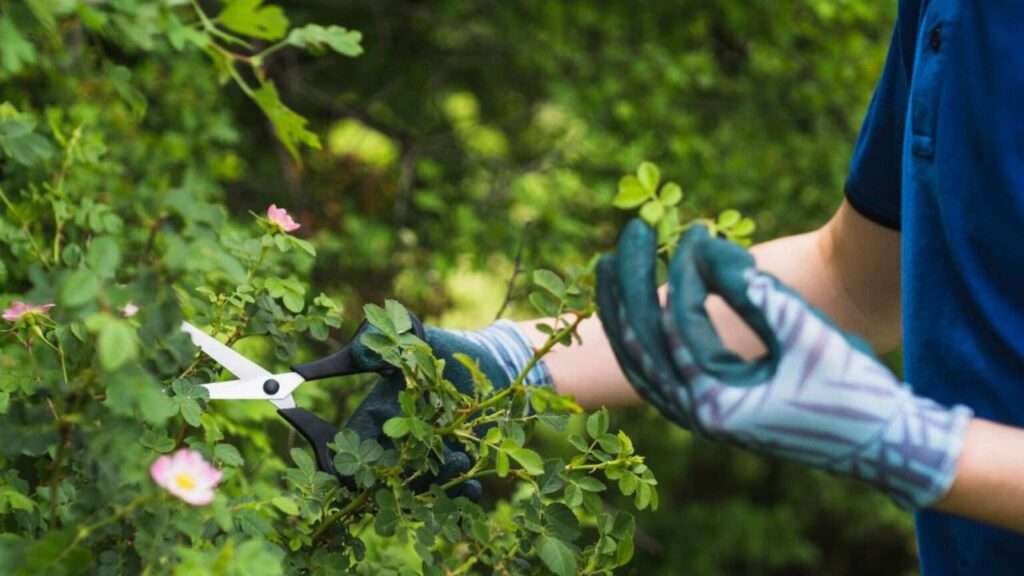
Prune Dead or Yellowing Foliage (The Right Way): Trim away any yellowing, tattered, or rotting leaves so the plant redirects its energy into new growth. Crucial Rule: Always cut lotus stems above the waterline! Lotus stems are hollow breathing tubes connected directly to the underground tuber. If you snip a stem underwater, water will flood down the hollow tube and rot the rhizome from the inside out.
-
Reset Your Feeding Schedule: If you haven’t fertilized in over a month—and your plant has at least 3 to 4 healthy leaves—push a bloom-boosting aquatic fertilizer tablet (like 10-14-8) deep into the clay soil near the rim of the pot. Repeat every 3 to 4 weeks until late summer.
📅 Seasonal Care Calendar for Reliable Blooms Every Year
Fixing a non-blooming lotus this year is great, but building a simple seasonal rhythm guarantees you will get breathtaking flowers every single summer without the guesswork.
-
🌸 Spring (Wake-Up & Repotting): As soon as daytime temperatures consistently hit the 60s°F (16°C–20°C), inspect your pots. Every 2 to 3 years, gently dump out the pot in early spring before new growth gets tall, divide the crowded tubers, and replant the healthiest sections (with at least two intact growing tips) in fresh clay soil.
-
☀️ Summer (Peak Bloom Mode): Keep the water topped off daily during heatwaves, feed with aquatic fertilizer tablets every 3–4 weeks, and do a quick weekly check for aphids on emerging buds.
-
🍂 Fall (Winding Down): Stop fertilizing by late August or early September (about 6–8 weeks before your first expected frost). Continuing to feed in autumn forces tender new growth that will be killed by the cold, preventing the tuber from properly entering dormancy.
-
❄️ Winter (Dormancy Protection): Lotus plants are surprisingly cold-hardy (USDA Zones 4–11), provided the tuber never freezes solid. In deep ponds, simply lower the pot to the deepest part of the pond below the ice line. For patio containers in freezing climates, trim dead leaves above the waterline, drain the standing water (keeping the mud damp, never bone-dry), and store the pot in a cool, dark, frost-free garage or basement (around 35°F–50°F / 2°C–10°C) until spring.
✨ Expert Pro-Tips for Bigger, Brighter Lotus Flowers
Want to take your aquatic garden from “a few nice flowers” to a show-stopping display? Keep these insider secrets in mind:
-
Choose Free-Blooming Varieties: Not all lotus cultivars are created equal. Some heirloom varieties are shy bloomers, while modern hybrids are bred to flower nonstop. For containers, look for ‘Momo Botan’ (a compact, double-petaled pink powerhouse) or ‘Baby Doll’ (crisp white blooms). For larger ponds, ‘Perry’s Giant Sunburst’ is legendary for its massive, reliable yellow blossoms.
-
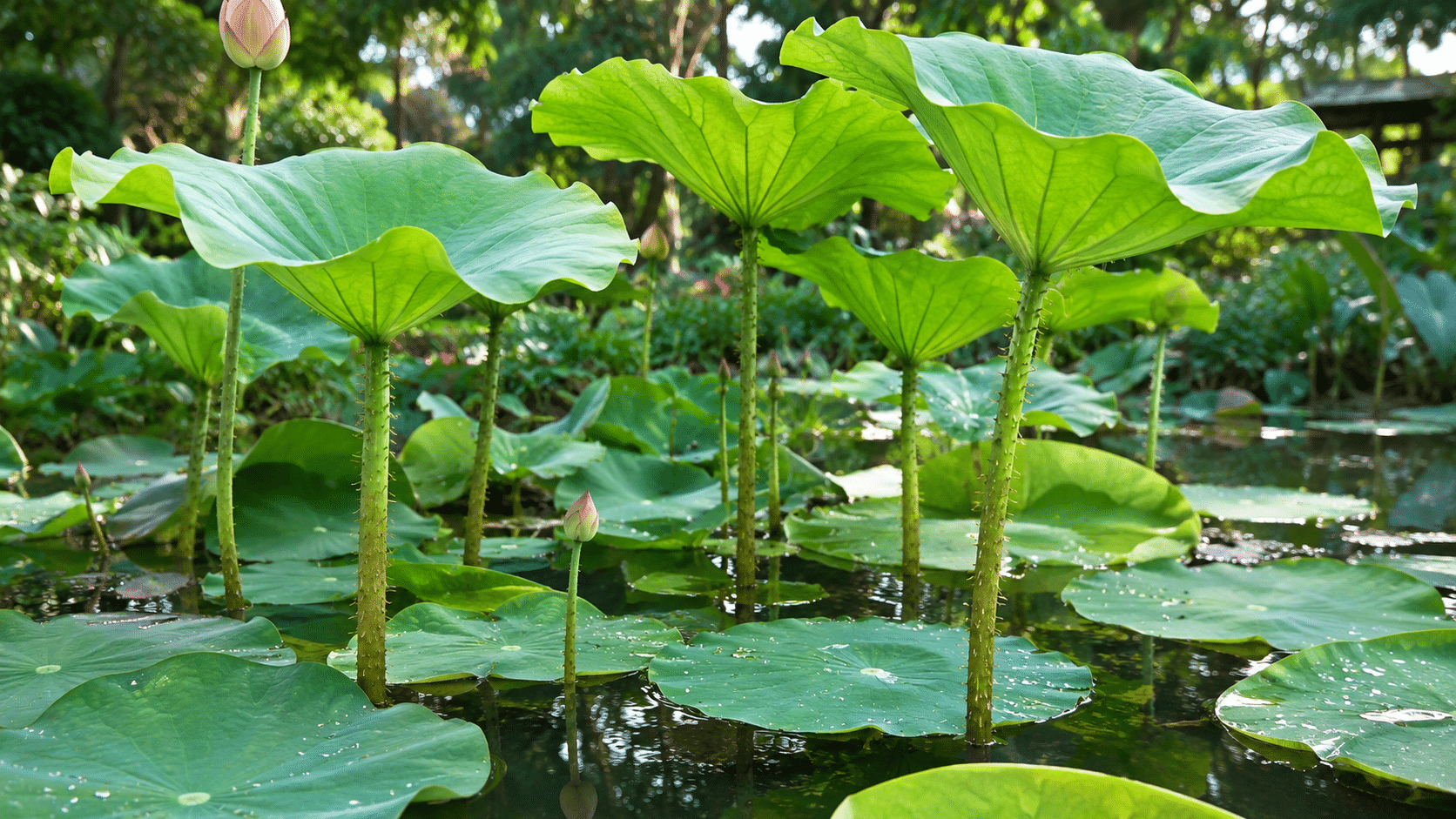
Watch for the “Aerial Leaf” Signal: Lotus plants always grow in two distinct stages. First, they send up floating leaves that rest flat on the water. Once the plant is warm and established, it begins sending up stiff, tall aerial leaves that stand well above the surface. Flower buds almost always follow the aerial leaves! If you see standing leaves rising up, your blooms are usually just 2 to 3 weeks away.
-
Don’t Move the Pot Once Buds Appear: While it’s fine to relocate a non-blooming pot to find better sun, once you spot those pointed, teardrop-shaped flower buds emerging, leave the container alone. Sudden shifts in light angle or jostling the roots can cause the plant to drop its buds.
❓ Frequently Asked Questions About Lotus Plants
How long do lotus flowers last once they bloom?
Each individual lotus flower typically lasts 3 to 5 days. They put on a daily show—opening up fresh in the early morning sunlight and closing their petals tightly by mid-afternoon, before finally dropping their petals to reveal the iconic, sculptural seed pod.
Can lotus plants bloom indoors?
It is very difficult to get lotus plants to bloom indoors. Even a bright south-facing window rarely provides the 6+ hours of intense, unfiltered UV light and high water temperatures they require. If you want to try growing a micro-lotus indoors, you will need a powerful, full-spectrum LED grow light positioned directly above the bowl for 12–14 hours a day.
Why are my lotus flower buds turning brown before opening?
This frustrating issue—known as “bud blast”—is usually caused by one of three things: a sudden cold snap (nighttime temperatures dropping below 60°F / 15°C), an infestation of sap-sucking aphids, or fertilizer burn from overfeeding.
How many times a year do lotus plants bloom?
Lotus plants are not one-and-done bloomers! Once a healthy, mature lotus starts flowering in late spring or early summer, it will bloom continuously in waves all summer long—often from June right through September—producing dozens of flowers over the season.
Do I need to deadhead spent lotus flowers?
Deadheading is completely optional. If you love the look of the decorative green seed pods (which dry into gorgeous arrangements for fall crafts), leave them on the plant. If you want to maximize flower count in a small container, snip the spent flower stems above the waterline so the plant puts its energy into new buds instead of making seeds.
🌸 Final Thoughts: Patience Pays Off
When your lotus plants refuse to bloom, it is easy to feel discouraged—especially when you have put so much care into setting up their watery home. Remember that these ancient, resilient plants are simply responding to their environment. Give them blazing sunshine, warm shallow water, heavy clay soil, and a steady diet of bloom-boosting aquatic fertilizer, and they will reward you with some of the most breathtaking flowers in the gardening world.
How old is your lotus plant, and are you growing it in a backyard pond or a patio container? Drop a comment below with what you’re seeing—let’s troubleshoot it together and get those blooms popping! 🪷💬