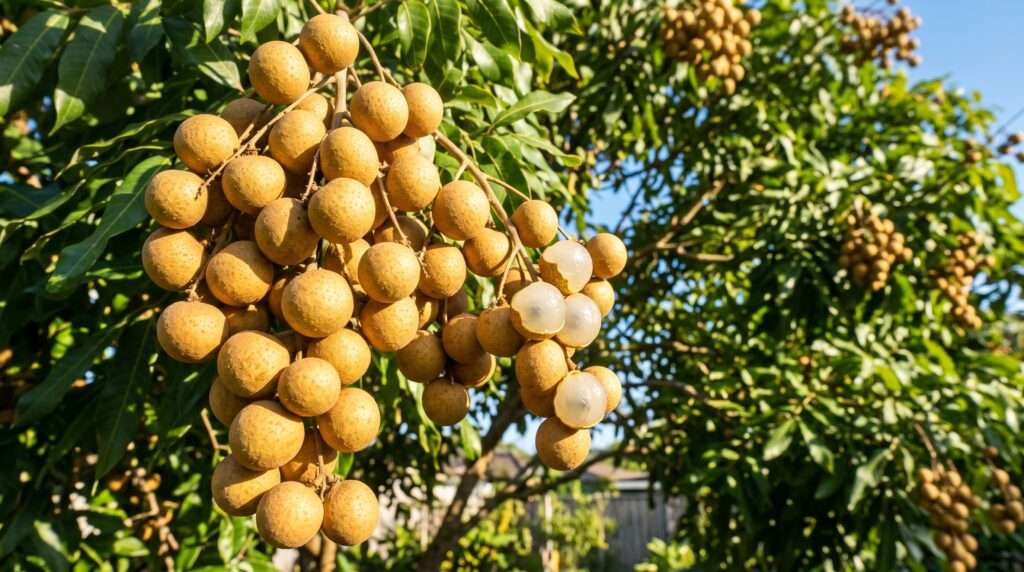
There is a specific kind of heartbreak known only to backyard tropical fruit growers. You spend years babying a longan tree (Dimocarpus longan), giving it rich soil, plenty of water, and regular fertilizer. It rewards you with a lush, gorgeous canopy of glossy green leaves—and not a single flower or fruit. Season after season, you wait for those sweet, translucent “dragon’s eyes” to appear, only to be met with more vegetative growth.
If you are wondering why your longan tree refuses to fruit, take a deep breath: you haven’t failed, and your tree isn’t broken. After observing dozens of backyard longan trees across subtropical growing zones, the culprit is almost never bad luck. In fact, most home growers accidentally prevent fruiting by pampering their trees at the exact wrong time of year.
Unlike many common backyard fruit trees that thrive on year-round consistency, the longan tree requires a very specific environmental “wake-up call” to switch from growing leaves to producing heavy clusters of honey-sweet fruit. Whether you are planning to plant your first sapling in a patio container or trying to coax a stubborn, mature tree into blooming, this complete guide breaks down the exact science-backed care routine, variety selection, and seasonal triggers you need to harvest baskets of homegrown longans. 🍈🌿
📋 Longan Tree Care At-a-Glance
🔍 Why Most Homegrown Longan Trees Fail to Fruit (The Secret Trigger) ❄️
Before you buy a single bag of fertilizer, it helps to understand the biology of how a longan tree decides to bloom. If you don’t align your care routine with its natural fruiting cycle, you will end up with a magnificent shade tree instead of a fruit tree.
Seed-Grown vs. Grafted Trees 🌿
If you ate a delicious store-bought longan, tucked the shiny black seed into a pot, and watched it sprout, you’ve already discovered how easy growing longan from seed can be. However, seed-grown trees come with two major drawbacks for home growers:
-
The Long Wait: A seedling longan tree typically takes 7 to 10 years (sometimes up to 12) to reach sexual maturity and produce its first flowers.
-
Unpredictable Quality: Longans do not grow “true to seed.” After waiting a decade, your tree may produce small, bland fruit with oversized seeds—or barely fruit at all.
By contrast, purchasing a grafted longan tree or an air-layered (marcotted) tree from a reputable tropical nursery gives you a genetic clone of a proven, heavy-bearing mother tree. Because the wood is already mature, a grafted or air-layered tree will often begin flowering and fruiting within 2 to 3 years of planting.
The Winter Chill & Dry-Down Requirement 🌡️
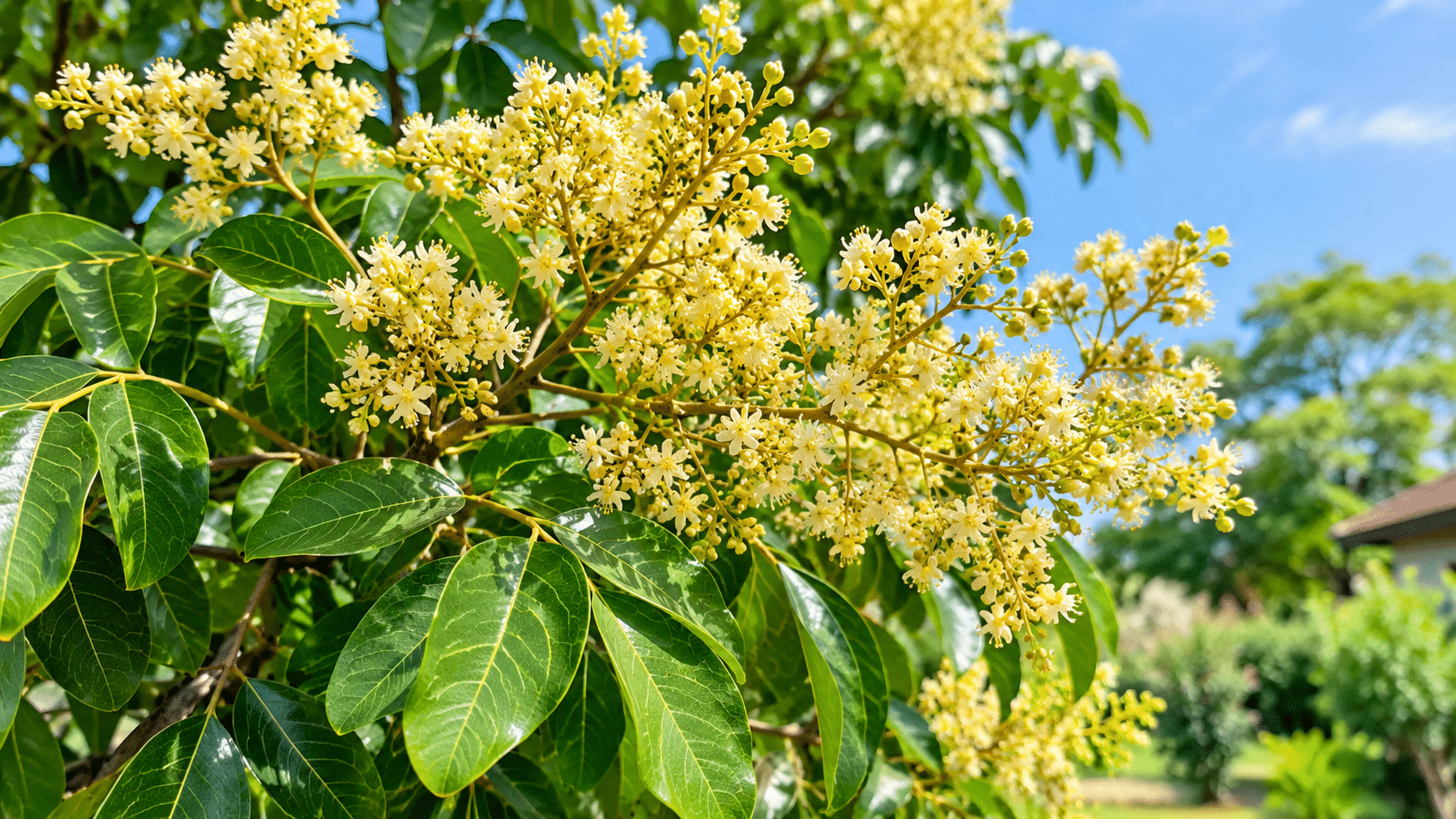
Even if you own a mature grafted tree, it will stay stuck in vegetative mode without its biological trigger. In their native Southeast Asian habitats, longan trees experience a distinct cool, dry winter followed by a warm, wet spring.
To form flower panicles (the branching stems that hold the blooms), a longan tree needs both of the following in late fall and winter:
-
Cool Temperatures (Longan Chilling Hours): The tree needs several weeks of cool night temperatures hovering between 45°F and 60°F (7°C to 15°C). It does not need freezing temperatures—frost will actually damage it—just a sustained cool spell that signals winter dormancy.
-
Mild Drought Stress: Simultaneously, the tree needs dry soil. If you keep watering and fertilizing your longan tree through late fall and winter, the tree receives a chemical signal to push out new red-bronze leaf flushes instead of flower buds. Once a branch flushes with new leaves in winter, it will not bloom that spring.
💡 Expert Insight: Managing Alternate Bearing Longan trees are naturally prone to alternate bearing—meaning they produce a massive, branch-bending harvest one year, and then take the following year completely off to recover their energy reserves. You can break this cycle by pruning immediately after harvest and thinning out crowded fruit clusters in spring (more on both techniques below!).
🍈 Choosing the Best Longan Tree Variety for Your Space
Not all longan varieties perform the same in a home garden. Some require heavier winter chill, while others are naturally compact enough for growing longan in pots. Choosing the right cultivar from the start is half the battle.
| Variety | Fruit Size & Flavor | Growth Habit | Best For |
|---|---|---|---|
| Kohala 🏆 | Large fruit, small seed, sweet and spicy-aromatic flesh | Vigorous, spreading canopy | Most home growers; the most reliable, consistent producer in Zones 9b–11. |
| Biew Kiew 🍬 | Medium-large, crisp, exceptionally sweet flesh | Upright, moderately vigorous | Flavor purists; slightly more finicky about winter chill and prone to alternate bearing. |
| Sri Chompoo 🌸 | Medium-large with a unique pinkish tint; very sweet | Medium, dense canopy | Warmer subtropical areas (Zone 10b–11) where winter chill is milder. |
| Diamond River 🪴 | Medium fruit, juicy and sweet | Compact, weeping/dwarf habit | Container growing, small yards, and patio gardens; fruits reliably at a young age. |
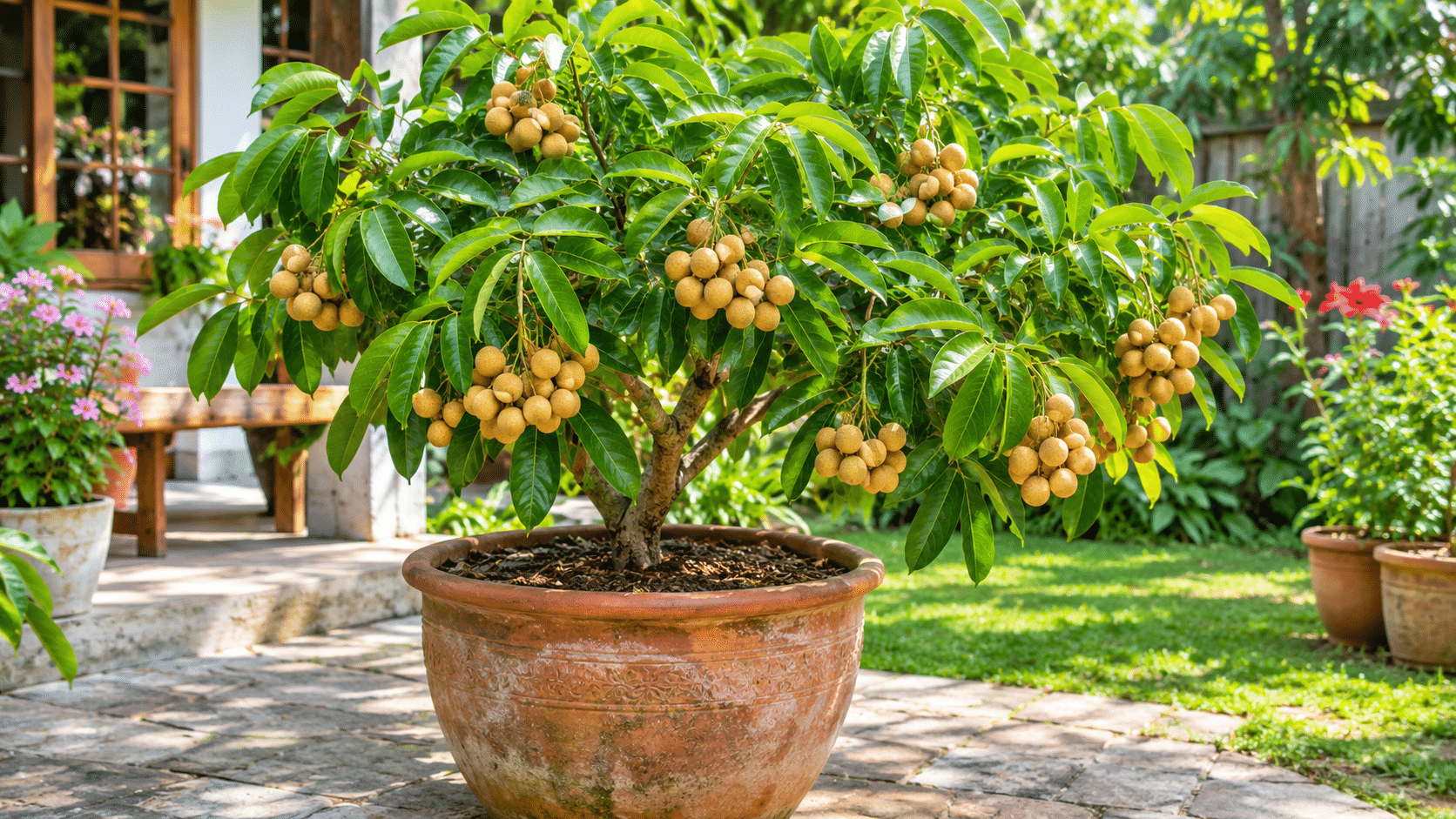
If you are planting in the ground in a typical suburban yard, Kohala longan is widely considered the gold standard. It sets fruit reliably even in slightly warmer winters, and its high flesh-to-seed ratio makes every harvest feel worthwhile. If you live in a cooler zone and need to wheel your tree into a greenhouse or sunroom for winter, Diamond River is your clear winner.
🏡 Planting Your Longan Tree for Long-Term Success
Longan trees are remarkably resilient once established, but they are unforgiving of soggy roots during their first two years. Setting up the right foundation prevents root rot and stunts far more effectively than any chemical treatment later on.
Sunlight, Wind Protection, and Location ☀️
Choose the sunniest spot in your yard. A longan tree needs a minimum of 6 to 8 hours of direct, unfiltered sunlight daily to generate the carbohydrates required for sweet fruit.
While mature trees have strong, flexible wood that handles storms surprisingly well, young trees (under 4 years old) hate harsh, drying winds. Windburn causes young leaf tips to turn brown and crispy, slowing down establishment. If your yard is exposed, plant your tree near a south-facing fence, wall, or windbreak, and give it at least 20 to 25 feet of clearance from your house, septic lines, or other large trees if planting in the ground.
Soil Requirements & Drainage 🪱
Longan trees adapt to a wide range of soils—from sandy Florida dirt to rocky limestone—as long as one non-negotiable rule is met: the soil must drain quickly. Standing water around the roots for more than 24–48 hours invites Phytophthora root rot.
-
Ideal pH: Slightly acidic, between 5.5 and 6.5.
-
Heavy Clay Warning: If your yard has dense clay that holds puddles after a rainstorm, do not dig a deep hole and backfill it with potting soil (this creates a “bathtub effect” that drowns the roots). Instead, plant your tree on a raised mound 12 to 18 inches high and 4 to 5 feet wide.
Step-by-Step Planting Guide (In-Ground vs. Containers) 🪴
Planting In-Ground:
-
Dig a hole twice as wide as the nursery pot, but no deeper than the root ball.
-
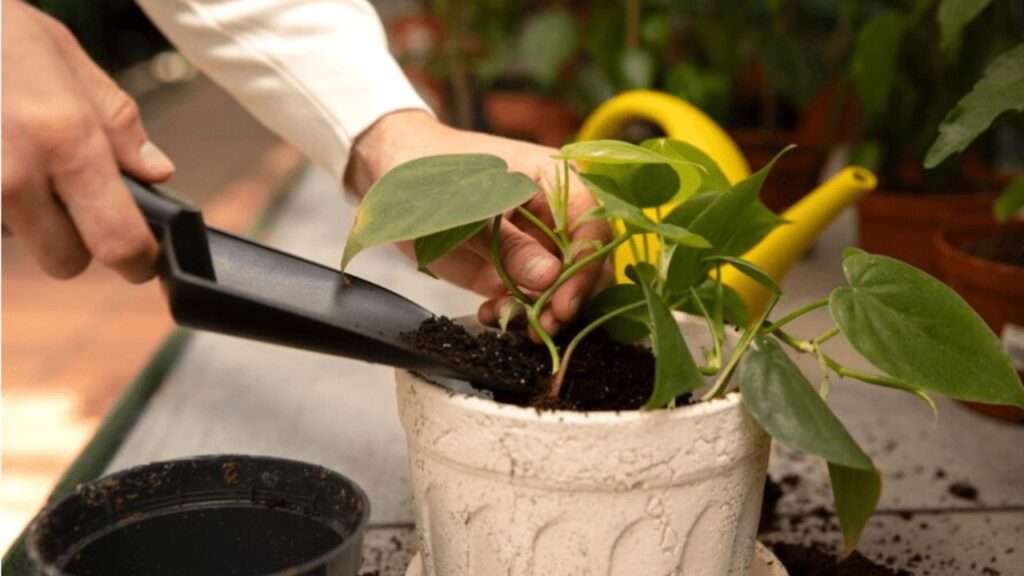
Gently slide the tree out of its pot. If the roots are tightly circling the bottom, lightly tease them outward with your fingers—avoid aggressively hacking at them, as longan roots are sensitive to disturbance.
-
Place the tree in the hole so the top of the root ball sits 1 to 2 inches above the surrounding soil line. Ensure the graft union (the visible bump or scar near the base of the trunk) stays well above the soil.
-
Backfill with your native soil, tamping down gently to remove air pockets, and water deeply to settle the soil.
-
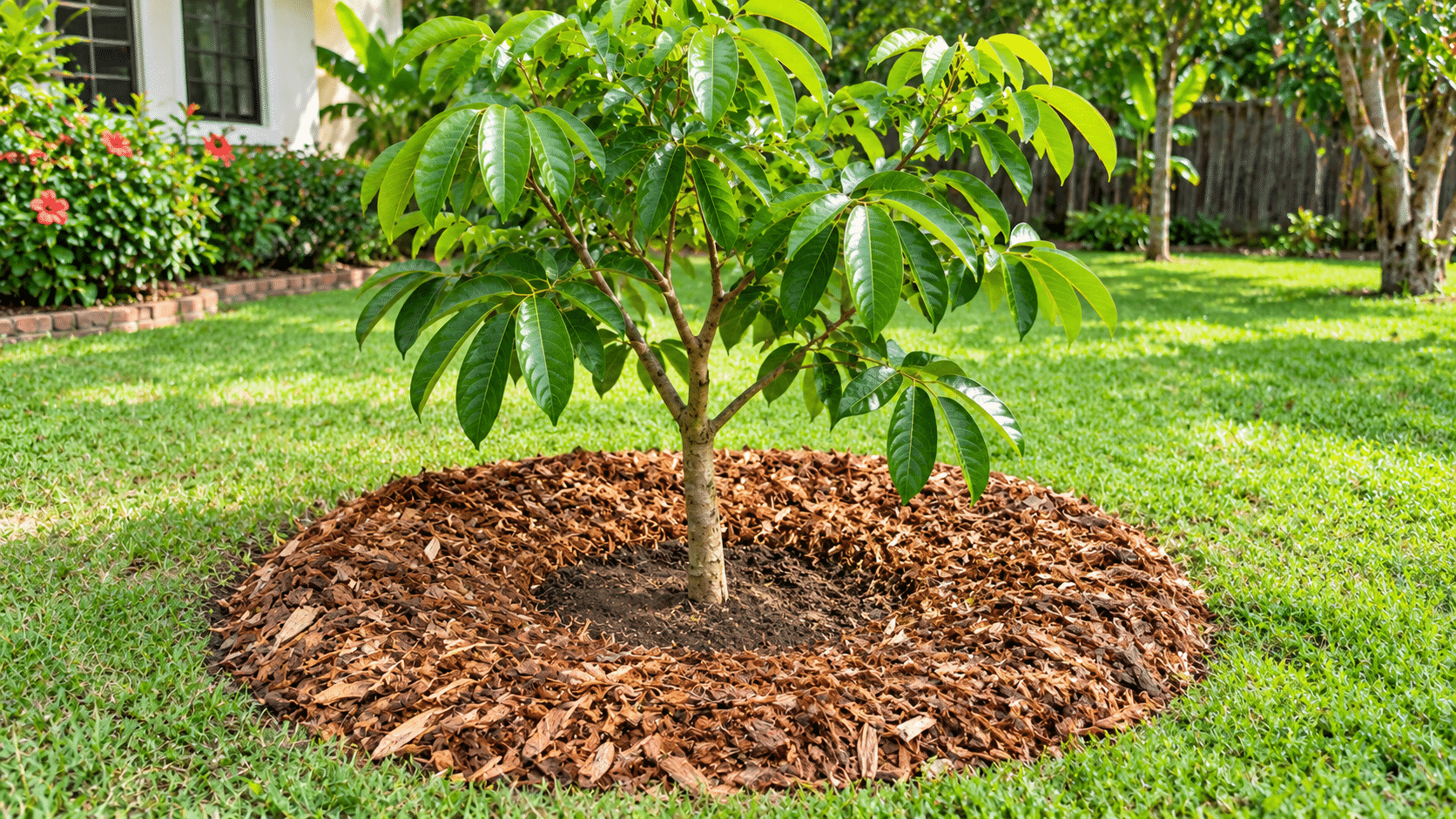
Apply a 3-inch layer of coarse wood chip mulch in a wide ring around the tree, keeping the mulch 4 to 6 inches away from the trunk to prevent collar rot.
Planting in Containers:
-
Start with a 15- to 25-gallon container with ample drainage holes. Breathable fabric grow bags or unglazed terracotta pots are ideal because they prevent the roots from overheating and staying waterlogged.
-
Skip standard dense garden soil. Mix a chunky, fast-draining potting medium: 50% high-quality potting mix, 30% pine bark fines, and 20% coarse perlite or pumice.
-
Repot every 2 to 3 years in early spring, root-pruning lightly if the tree reaches its maximum pot size.
💧 Season-by-Season Longan Tree Care Guide
Mastering longan tree care comes down to shifting your routine with the seasons. Treat your tree like a thirsty tropical plant in summer, and like a tough, drought-tolerant native in winter.
Watering: When to Soak and When to Stop 🚿
-
Spring & Summer (Flowering, Fruit Set, and Growth): This is when your tree needs consistent, deep moisture. Water thoroughly 2 to 3 times a week during dry spells (daily for potted trees in peak summer heat). Consistent moisture while the fruit is sizing up prevents premature fruit drop and keeps the shells from splitting.
-
Late Fall & Winter (The Dry-Down Phase): Starting in late October or November (in the Northern Hemisphere), turn off the irrigation for established in-ground trees. Let natural rainfall handle the tree unless you experience a severe, prolonged drought and the leaves visibly droop. For potted trees, cut watering back by half—water only when the top 3 to 4 inches of soil are completely dry. Resume deep watering only after you see tiny flower panicles emerging in late winter or early spring.
Fertilizing for Fruit, Not Just Leaves 🧪
Over-fertilizing with nitrogen is the second biggest reason healthy longan trees fail to fruit. High nitrogen forces lush, dark-green foliage at the direct expense of flowers.
-
Active Season (Spring through Early August): Feed your tree every 6 to 8 weeks with a balanced, slow-release tropical fruit fertilizer—look for an NPK ratio like 8-3-9 or 6-6-6 that includes essential micronutrients like magnesium, zinc, and iron.
-
Fruit Development Boost: Once small pea-sized fruits have set in spring, supplement with a high-potassium fertilizer (such as kelp meal or sulfate of potash). Potassium directly improves fruit size, juiciness, and sugar content.
-
Late Summer through Winter: Stop all nitrogen fertilization by late August. Applying nitrogen in fall triggers tender new leaf flushes that both prevent winter blooming and are easily killed by cold snaps.
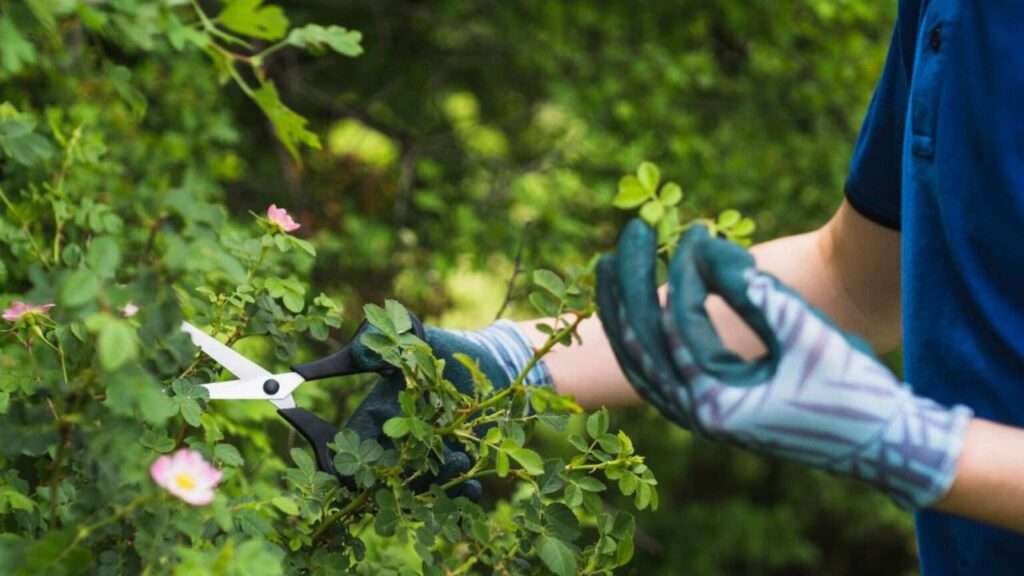
Pruning & Canopy Management ✂️
Unpruned longan trees can soar past 35 feet, putting all your best fruit out of reach (and right into the hands of local birds and squirrels). Smart pruning keeps your tree at a manageable 10 to 15 feet and dramatically increases your harvest.
-
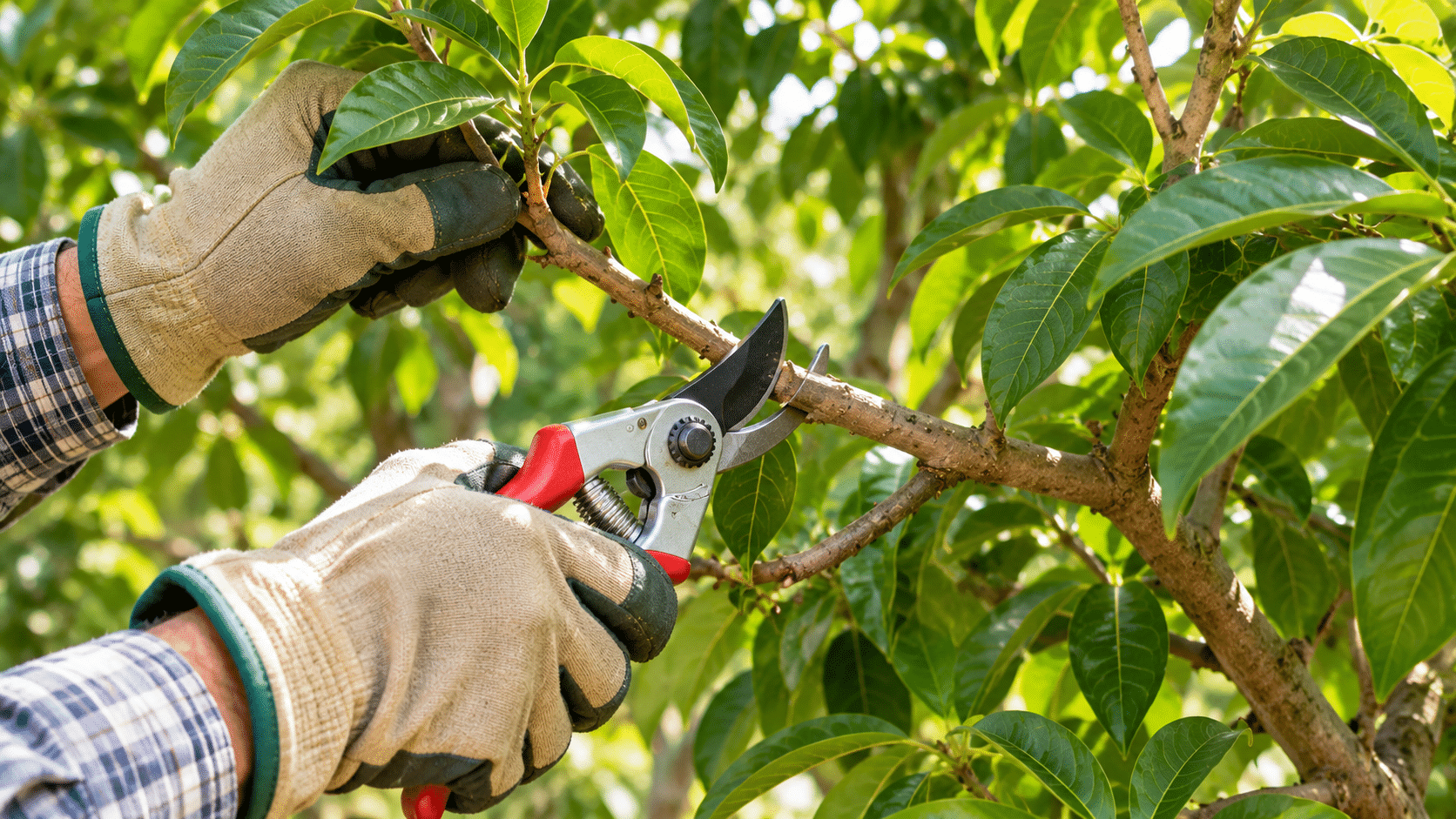
The Golden Rule of Timing: Prune immediately after harvesting your fruit (usually late summer). Never prune in late fall or winter, or you will literally cut off the mature terminal stems where next spring’s flowers are waiting to form.
-
How to Prune:
-
Remove any dead, diseased, or crossing branches first.
-
Thin out the dense interior of the canopy to create an “open vase” shape. Sunlight and airflow penetrating the center of the tree reduce fungal issues and encourage fruiting on inner branches.
-
Trim back overly tall vertical shoots by about 1 to 2 feet to encourage bushy, outward branching.
-
🌸 Pro Tips to Maximize Blooming and Fruit Set
Once your tree is healthy and producing spring flower panicles, a few intermediate orchard techniques will take your harvest from a handful of small fruit to heavy, market-quality clusters.
Attracting Pollinators 🐝
Longan trees are self-fertile, meaning a single tree produces both male and female flowers on the same panicle. However, they still rely heavily on insects—primarily honeybees, stingless bees, and flies—to transfer pollen between blooms.
To boost your fruit set naturally:
-
Pause all pesticide sprays (even organic ones like neem oil) the moment flower buds begin to open.
-
Plant pollinator magnets nearby, such as African blue basil, sweet alyssum, rosemary, or marigolds, to keep bees actively working your yard during the critical spring bloom window.
Fruit Thinning for Sweeter, Larger Longans ✂️🍈
It feels counterintuitive to snip off baby fruit you waited years to grow, but fruit thinning is one of the best-kept secrets of commercial longan growers. When a tree sets massive, overcrowded clusters of 80 to 100+ tiny fruits, the tree splits its sugars among all of them—resulting in small, watery fruit with large seeds, snapped branches, and an exhausted tree that skips fruiting the next year.
-
When to Thin: Wait until the natural “June drop” finishes and the remaining fruits are roughly the size of a marble.
-
How to Thin: Use clean, sharp snips to remove 30% to 50% of the smallest or most crowded fruits on each panicle, aiming to leave 20 to 30 well-spaced fruits per cluster. Your remaining longans will grow noticeably larger, sweeter, and juicier.
Cold Protection for Marginal Zones (Zone 9a–9b) 🧣
Mature longan trees are slightly more cold-hardy than lychees, tolerating brief dips down to 28°F to 30°F (-2°C to -1°C). Young trees under 4 years old, however, can suffer severe dieback or death at 32°F (0°C).
If a sudden frost threatens your marginal growing zone:
-
Water the soil deeply the afternoon before a freeze—moist soil holds and radiates significantly more heat overnight than dry soil.
-
Drape a breathable frost cloth (never plastic directly touching the leaves) over young trees, anchoring the edges to the ground to trap rising earth heat.
-
Add gentle radiant heat by stringing old-fashioned incandescent C9 Christmas lights (not cool-burning LEDs) through the lower branches before covering.
🐛 Troubleshooting Common Longan Pests & Problems
Even well-cared-for trees hit occasional snags. Here is how to diagnose and fix the most common longan tree issues before they ruin your harvest.
Yellowing Leaves (Iron Chlorosis) 🍂
If your tree’s new leaves turn pale yellow while the veins remain dark green (interveinal chlorosis), your tree is suffering from an iron deficiency. This is extremely common in alkaline or calcareous soils (pH above 7.0), where iron is physically present in the dirt but chemically locked away from the roots.
-
The Fix: Apply EDDHA chelated iron (specifically formulated to remain available in high-pH soils) as a soil drench. Long-term, top-dress with acidic organic compost, pine bark mulch, or elemental sulfur to gradually lower your soil pH back toward 6.0.
Fruit Drop & Splitting 💔
Watching half-grown longans split open or rain down onto the grass is frustrating, but the cause is almost always inconsistent watering. When a tree goes bone-dry during fruit development and then gets hit with a heavy summer downpour or a massive soaking, the flesh expands faster than the leathery shell can stretch, causing it to crack.
-
The Fix: Maintain steady, even soil moisture throughout late spring and summer, and keep a 3-inch layer of mulch over the root zone to buffer moisture swings.
Common Pests & Diseases 🐞
-
Longan Erinose Mite: These microscopic mites cause new leaves to curl, distort, and develop a distinctive fuzzy, reddish-brown “felt” on the undersides. Prune off and bag affected shoots immediately (do not compost them), and spray the remaining foliage with wettable sulfur or horticultural oil during the non-blooming season.
-
Scale Insects & Stink Bugs: Scale looks like tiny brown bumps along stems and leaves, while stink bugs pierce developing fruit, causing brown spots and premature drop. Treat minor outbreaks with insecticidal soap or neem oil in the early evening (when bees are asleep).
-
Birds, Squirrels & Fruit Bats: Wildlife adore ripe longans and will strip a tree overnight just days before you plan to harvest. The most effective organic solution is slipping breathable mesh organza bags over your fruit clusters as soon as they begin to color up.
🧺 Harvesting and Storing Your Homegrown Longans
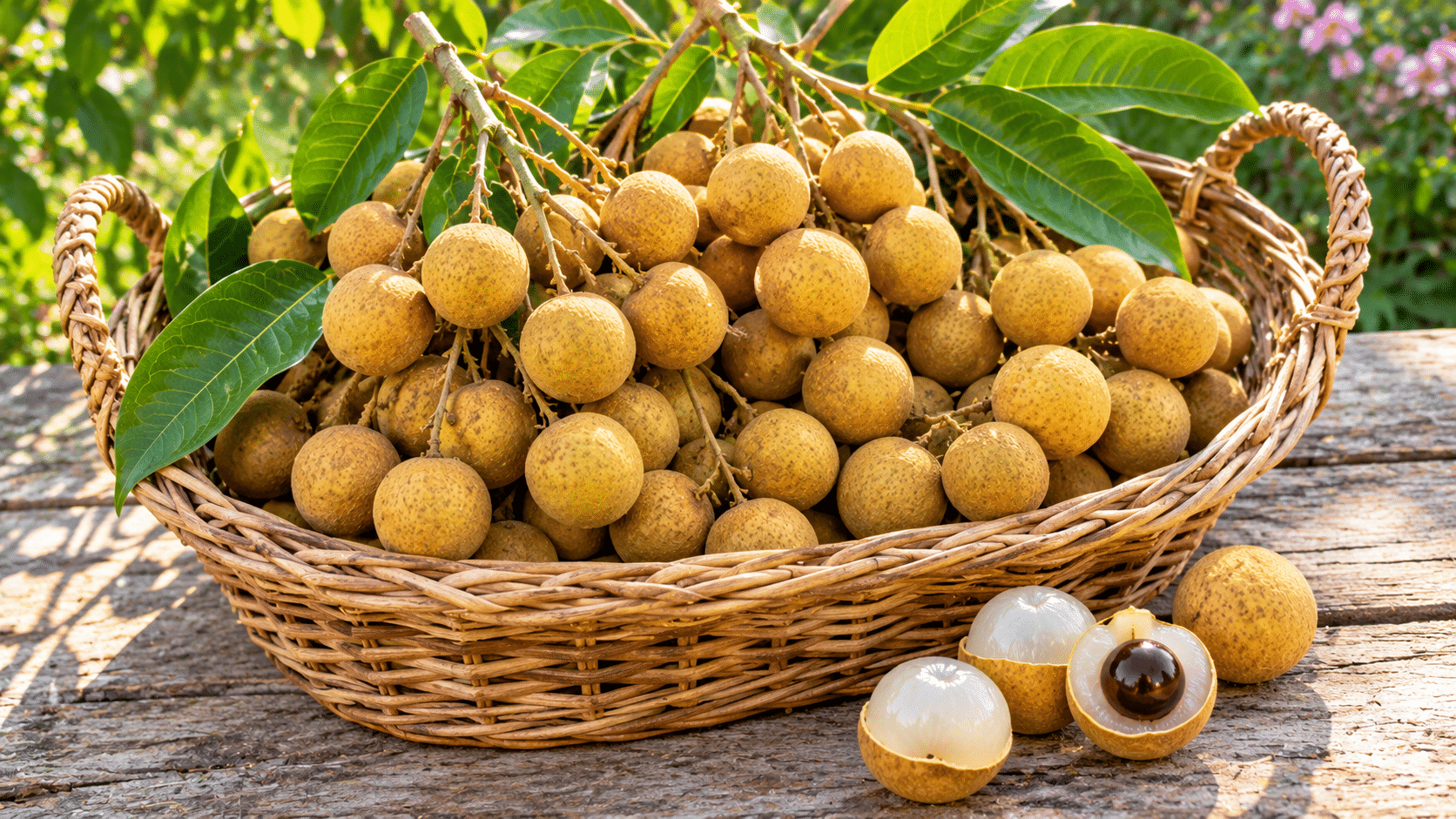
How to Tell When Longans Are Ripe ✨
Here is the most important harvesting rule to remember: longans do not ripen off the tree. Unlike bananas or avocados, a longan picked too early will stay tart and starchy forever.
Depending on your variety and climate, longans typically ripen between mid-July and September. Visual clues include:
-
The skin transitions from greenish-brown to a uniform, smooth tan or golden-brown.
-
The bumpy texture of the shell smooths out slightly, and the fruit yields gently to a light squeeze.
-
The Ultimate Test: Pick one fruit from a sunny outer cluster and taste it. When it hits that signature musky, honey-sweet flavor with crisp, translucent flesh, the whole cluster is ready.
The Right Way to Harvest ✂️
Resist the urge to yank individual longans off the tree. Pulling single fruits often tears the delicate skin at the stem end, causing the fruit to spoil within a day.
Instead, use sharp bypass pruners to cut the entire fruit panicle along with 2 to 4 inches of the woody stem behind it. Not only does this keep the fruit fresh much longer, it also acts as a built-in post-harvest prune that stimulates healthy new fruiting wood for next year!
Storing & Preserving 🧊
-
Countertop: Whole clusters kept in a cool, shaded spot stay fresh for 3 to 5 days.
-
Refrigerator: Snip fruits from the stems (leaving a tiny 1/4-inch stub of stem attached to keep the shell sealed) and store them in a perforated zip-top bag in the crisper drawer for up to 2 weeks.
-
Freezing: Longans freeze remarkably well! Simply wash, dry, and freeze them whole right in their shells in an airtight freezer bag for up to 6 months. When you want a refreshing tropical treat, run a frozen longan under cool water for 10 seconds, peel it, and enjoy it like a natural sorbet bite.
❓ Frequently Asked Questions About Longan Trees
How long does it take for a longan tree to bear fruit?
A grafted or air-layered longan tree typically begins bearing fruit within 2 to 3 years of planting, with heavy harvests starting around year 4 or 5. If you grow a longan tree from a store-bought seed, expect to wait 7 to 10+ years before seeing your first flowers.
Do I need two longan trees to get fruit?
No! Longan trees are self-fertile, meaning a single tree produces both male and female flowers on the same branching flower panicles. As long as bees or other pollinators are active in your yard during spring bloom, one tree is all you need for a generous harvest.
Can you grow a fruiting longan tree indoors?
Growing a fruiting longan strictly indoors is very difficult because it needs 6–8+ hours of direct sunlight and a cool winter chill period to trigger blooms. However, you can easily grow a dwarf variety like Diamond River in a large pot outdoors during warm months and wheel it into a bright sunroom or unheated garage for winter.
What is the difference between a longan tree and a lychee tree?
Both belong to the soapberry family (Sapindaceae) and produce sweet, translucent white fruit, but longans are generally easier for home growers. Longan trees tolerate slightly colder temperatures, handle wind and alkaline soils better, and produce smooth, tan-brown fruit with a musky, honey-like flavor—whereas lychees have bumpy red shells and a floral, tart-sweet taste.
Are longan tree roots invasive?
Longan trees have a moderately deep, spreading root system, though they are far less aggressive than ficus or eucalyptus trees. Still, to be safe and avoid future sidewalk lifting or pipe issues, plant in-ground longan trees at least 20 to 25 feet away from your home’s foundation, driveways, and septic lines.
🌟 Bringing Home Your First Sweet Harvest
Turning a stubborn longan tree into a dependable backyard fruit machine doesn’t require expensive chemicals or complicated orchard gear—it just requires working with the tree’s natural rhythm instead of against it.
Remember the three golden rules for a heavy harvest: start with a proven grafted variety like Kohala or Diamond River, respect the cool, dry winter rest period by cutting back water and stopping nitrogen in fall, and prune immediately after harvest so next year’s flowering wood has plenty of time to mature. Give your tree that simple seasonal structure, and you will be rewarded with basket after basket of crisp, honey-sweet dragon’s eyes right from your own yard.
Have a stubborn longan tree in your yard, or trying to pick the best variety for your climate? Drop your growing zone and what your tree is currently doing in the comments below—I’d love to help you troubleshoot! 💬🌿