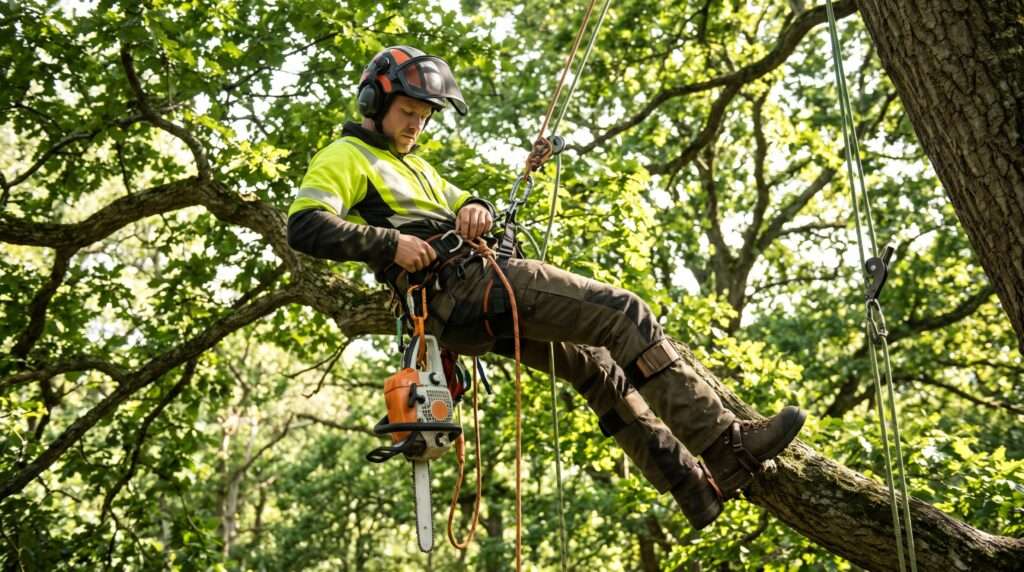
Hang 50 feet up in an oak canopy for four hours in a poorly designed saddle, and every minor flaw turns into a distraction you cannot afford. Pinched thighs restrict circulation, a heavy top-handle chainsaw drags your waistbelt down, and flimsy padding folds inward in the dreaded “taco effect” that grinds relentlessly into your lower back. Choosing from the best 10 tree climbing harness options on the market isn’t just about all-day comfort—it is the foundation of your safety, endurance, and mobility aloft.
The challenge is that shopping online for climbing gear has become a minefield. Search Amazon for a tree harness, and you will immediately encounter dozens of $40 to $70 kits making bold weight-rating claims without legitimate life-support certifications, often plagued by weak stitching and painful tie-in geometry. Worse, many buyers accidentally purchase a rock-climbing harness (which lacks side work-positioning D-rings and wide lumbar support) or a hunting treestand harness (built for dorsal fall arrest, not suspended canopy work). To keep you safe, this guide focuses strictly on certified arborist work-positioning saddles engineered for pruning, limb walking, rigging, and heavy removals.
To separate truly dependable life-support gear from risky knockoffs, we evaluated top-rated saddles from proven arborist manufacturers against strict industry benchmarks: verified ANSI Z133, ASTM F887, CE EN 813, and EN 358 certifications, suspension ergonomics, rope-bridge modularity, chainsaw weight distribution, and long-term feedback from working climbers. Whether you are a full-time production arborist logging 40 hours a week on Single Rope Technique (SRT) or a property owner investing in your first certified saddle, this breakdown of the best 10 tree climbing harness models will help you choose the right fit with complete confidence.
Quick Navigation: Top Picks at a Glance | Comparison Table | In-Depth Reviews | Buyer’s Guide | FAQs
Quick Picks: Our Top Recommendations at a Glance {#quick-picks}
Short on time? Here are the standout performers from our evaluation, broken down by climbing style and budget:
-
Best Overall & Crew Standard: Petzl SEQUOIA SRT — The industry benchmark for balanced weight, rock-solid certifications, and effortless Single Rope Technique (SRT) integration.
-
Best Premium & Most Customizable: Teufelberger treeMOTION Pro X — Unmatched dial-in ergonomics, dual rope bridges, and 10 replaceable wear parts backed by a 10-year lifespan.
-
Best Lightweight & Breathable: Notch Sentinel — At just over 4 pounds with breathable contoured mesh, it is the top mid-priced choice for hot climates and agile pruning.
-
Best Budget Certified Saddle: Singing Rock Timber 3D — Genuine CE EN 813 and EN 358 certification with supportive 3D padding right around the $320 mark.
-
Best Entry-Level Synthetic Saddle: Weaver Arborist Cougar (WLC-700) — American-made durability with a 7-inch memory foam back pad that forgives long workdays.
Mobile-Friendly Comparison Table: Best 10 Tree Climbing Harnesses {#comparison-table}
How We Evaluated & Selected the Best 10 Tree Climbing Harnesses
Unlike consumer outdoor gear where a bad purchase is merely inconvenient, a tree climbing harness is life-support equipment. Every saddle in this guide had to pass five non-negotiable evaluation criteria modeled after professional arboriculture testing standards:
-
Verified Life-Support Certifications: Every harness on this list meets recognized arborist safety standards—specifically CE EN 813 (sit harness for rope suspension), CE EN 358 (work-positioning belts and side D-rings), ANSI Z133, and/or ASTM F887. Uncertified generic harnesses were automatically disqualified.
-
Suspension Ergonomics & Anti-Pinch Geometry: We prioritized semi-rigid waistbelts and anatomically contoured leg loops that distribute weight evenly across the pelvis and thighs, preventing hip pinch and the lower-back “taco effect” during multi-hour hangs.
-
Climbing System Versatility (SRT vs. MRS): Modern climbers frequently switch between Moving Rope Systems (MRS/DdRT) for fine pruning and Single Rope Technique (SRT/SRS) for rapid canopy ascents. We assessed ventral tie-in geometry, gated rings, dual-bridge support, and chest-harness attachment points.
-
Chainsaw Carry & Hardware Layout: A harness feels very different once you clip on a 10-pound top-handle chainsaw, handsaw scabbard, rigging slings, and carabiners. We examined dedicated chainsaw lanyard rings, Caritool/tool-clip slots, and buckle security (such as Cobra, FAST, and STS buckles).
-
Serviceable Lifespan & Long-Term Value: Rope bridges, leg loop straps, and foam padding wear out faster than structural webbing. We awarded higher marks to harnesses with user-replaceable wear components that extend your investment across years of daily work.
In-Depth Reviews: The Best 10 Tree Climbing Harnesses
1. Petzl SEQUOIA SRT Tree Care Seat Harness (Best Overall)
Product Description
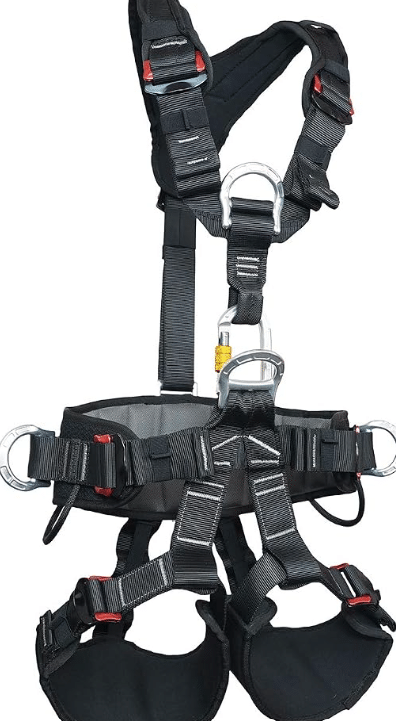
The Petzl SEQUOIA SRT has earned its reputation as the gold-standard daily driver for working arborists worldwide. Engineered specifically for Single Rope Technique ascents while remaining completely fluid on moving-rope systems, it strikes a rare equilibrium between lightweight agility and structured support. Petzl constructs the waistbelt and leg loops with a semi-rigid, extra-wide silhouette lined in sculpted 3D perforated foam. The result is a saddle that stays crisp and supportive when you are suspended 60 feet up with a saw on your hip, yet breathes noticeably better than bulky foam-filled traditional belts.
Price:
Key Features & Benefits
-
Dedicated SRT Ventral Point: Features a lower ventral attachment point and rear buckles built to connect a CROLL rope clamp with Petzl’s TOP CROLL or shoulder straps, shifting chainsaw weight off your hips.
-
Gated Attachment Rings: Two openable gated rings allow you to customize bridge length, install a secondary bridge, or connect a Petzl ZIGZAG or RING directly to the bridge without extra carabiners.
-
FAST Automatic Leg Buckles: Once adjusted to your thigh size, the FAST buckles open and close cleanly even while wearing thick winter climbing gloves.
-
Extensive Gear Organization: Equipped with 7 to 9 pre-shaped gear loops (depending on size), 5 slots for Petzl CARITOOL tool holders, and 2 retainers for chainsaw or handsaw carabiners.
-
Broad Global Certifications: Certified to CE EN 813, CE EN 358, ANSI Z133, and ASTM F887.
Pros & Cons
-
Pros:
-
Exceptionally well-balanced weight-to-support ratio
-
Gated rings make bridge replacement and customization effortless
-
Seamless integration with Petzl’s ecosystem (ZIGZAG, CHICANE, CARITOOL, optional Seat)
-
Meets both North American and European safety standards
-
-
Cons:
-
Shoulder straps and the optional rigid seat are sold separately
-
Less granular side-strap micro-adjustment than the Teufelberger treeMOTION Pro X
-
Amazon Customer Ratings & Reviews
Across Amazon and verified arborist retailers, the Petzl SEQUOIA SRT consistently earns 4.7 to 4.8 out of 5 stars. Climbers frequently highlight its predictable, zero-surprise fit right out of the box and praise how smoothly the FAST buckles hold adjustment throughout the workday. The most common minor critique is that climbers running heavy rear-handle saws for removals often want to add the optional Petzl shoulder straps for extra lumbar relief.
Why It’s a Good Choice for All-Around Arborists
If you want one harness that handles residential pruning, technical SRT ascents, and commercial crew compliance without requiring hours of tweaking, the SEQUOIA SRT delivers. Its wide certification profile also makes it an easy approval for municipal and utility safety officers.
Ideal Use Case / Who Should Buy It
Commercial production arborists, SRT climbers, and serious tree-care professionals looking for a proven, lightweight, all-purpose saddle that pairs seamlessly with modern mechanical climbing devices.
2. Teufelberger treeMOTION Pro X (Best Premium & Customizable)
Product Description
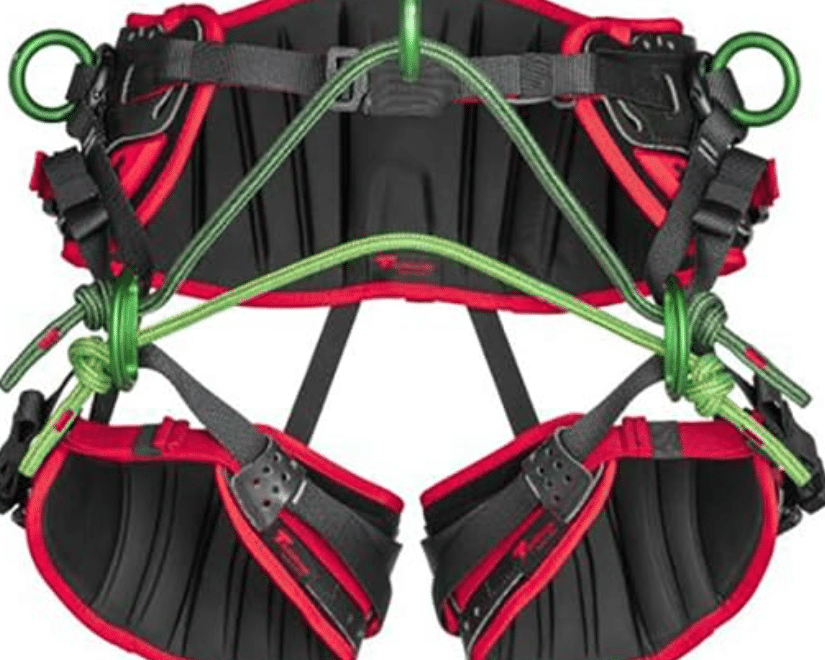
If the Petzl SEQUOIA is the dependable workhorse of the tree-care world, the Teufelberger treeMOTION Pro X is the precision-tuned flagship. Built on decades of feedback from competition and production climbers, the Pro X takes customization further than virtually any other saddle on the market. Rather than forcing your body to adapt to fixed strap angles, the treeMOTION lets you dial in the hip-to-leg rise, bridge geometry, and padding thickness until the harness feels weightless in suspension. Even better, Teufelberger engineered it with 10 user-replaceable wear components, backing the structural chassis with a remarkable 10-year manufacturer lifespan.
Price:
Key Features & Benefits
-
Dual-Bridge Configuration: Ships ready for a two-bridge setup (long and short), giving you redundant tie-in points or independent positioning for SRT and secondary lanyards.
-
10 Replaceable Components: Easily swap out worn rope bridges, hip/leg connections, elastic retainers, openable side rings, and padding without retiring the entire saddle.
-
Cobra Quick-Release Buckles: Heavy-duty, intuitive Cobra buckles on the waist and legs snap shut securely and never slip under load.
-
Customizable Comfort Padding: Includes both comfort and standard thin padding options so you can choose maximum cushioning for long hangs or a low-profile feel for summer heat.
-
High Load Capacity & Longevity: Rated up to 330 lbs (150 kg) total user + gear weight with a 10-year lifespan from the date of manufacture.
Pros & Cons
-
Pros:
-
Unrivaled ergonomic fit that virtually eliminates hip pinch
-
10-year lifespan and replaceable wear parts lower long-term cost per year
-
Dual-bridge capability out of the box
-
Ultra-secure Cobra hardware and openable side rings
-
-
Cons:
-
Highest upfront price tag on this list
-
Takes 20–30 minutes of initial adjustment to dial in all strap angles properly
-
Amazon Customer Ratings & Reviews
Holding an impressive 4.8 out of 5 stars across verified climber reviews, the treeMOTION Pro X draws rave praise from full-time professionals who climb 30 to 40+ hours a week. Reviewers repeatedly note that once dialed in, lower-back soreness disappears and lateral limb walking feels completely unrestricted. The only recurring caveat is the steep initial investment and the learning curve of fine-tuning its many adjustment points.
Why It’s a Good Choice for Full-Time Production Climbers
When you live in your harness five days a week, replacing a $40 bridge or $60 pad set instead of buying a brand-new $600 harness every three years makes strong financial sense—and your hips and back will feel the difference every single afternoon.
Ideal Use Case / Who Should Buy It
Full-time professional arborists, competition climbers, and seasoned tree workers who want the highest level of ergonomic customization and are willing to invest in a 10-year flagship saddle.
3. Notch Sentinel Arborist Harness (Best Lightweight & Breathable)
Product Description
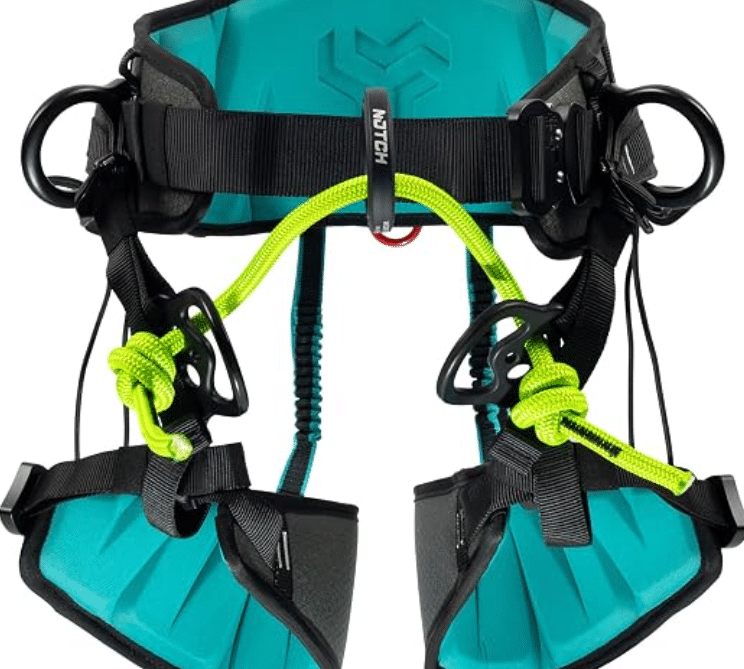
Hot, humid summer climbs quickly expose the flaws of thick, sweat-soaked harnesses. The Notch Sentinel was engineered to solve that exact problem—delivering genuine pro-grade canopy mobility in a featherlight ~4.1-pound package priced well below flagship European saddles. Built with contoured, breathable mesh padding and an Edelrid-manufactured replaceable rope bridge, the Sentinel hugs the body cleanly without bulk, letting you snake through tight branch unions and walk out to the tips of limbs with minimal drag.
Price: $524.99
Key Features & Benefits
-
Ultralight Breathable Build: Weighs roughly 4.1 to 4.2 lbs with open-cell contoured mesh padding that dumps heat rapidly in warm climates.
-
25kN Forged Floating Ring: Moves effortlessly across the replaceable Edelrid rope bridge for smooth hip rotation during lateral limb walks.
-
Thumb-Release Friction Buckles: Fast, secure waist and leg adjustments that stay locked without creeping.
-
Smart Tool & Chainsaw Layout: Features 8 accessory loops, dedicated Caritool/tool-clip slots, and a customizable rear chainsaw lanyard connection.
-
Certified & Capable: Rated to a 308 lb maximum user weight (including gear) and certified to ASTM F887, ANSI Z133, CE EN 813, and CE EN 358.
Pros & Cons
-
Pros:
-
Outstanding price-to-performance ratio under $400
-
Exceptionally cool and lightweight for all-day summer climbing
-
Smooth lateral mobility with a quality Edelrid rope bridge
-
Broad safety certifications for both US and international work
-
-
Cons:
-
Lighter, more flexible back pad offers less rigid lumbar support when carrying very large removal saws
-
Slightly less plush thigh padding than heavier multi-foam saddles like the Courant Koala
-
Amazon Customer Ratings & Reviews
The Notch Sentinel averages 4.6 to 4.7 out of 5 stars from verified buyers. Both apprentice climbers and seasoned veterans consistently call it the best mid-range saddle on the market, praising how quickly it breaks in and how light it feels on the hips. A few removal specialists mention that if they are running a big 70cc+ saw all day, they prefer adding suspenders or stepping up to a stiffer back pad.
Why It’s a Good Choice for Hot Climates & Agile Pruning
It strips away unnecessary weight and heat-trapping foam while preserving every critical safety certification and modern rope-bridge feature a serious climber needs.
Ideal Use Case / Who Should Buy It
Pruning specialists, climbers working in warm or humid regions, and intermediate climbers upgrading from a bulky starter saddle without crossing the $400 mark.
4. Edelrid TreeRex II (2.0) Saddle (Best Versatile Rope Bridge)
Product Description
German engineering shines in the Edelrid TreeRex II (2.0), a powerhouse saddle that bridges the gap between plush lumbar support and hyper-adaptable bridge geometry. Built with Edelrid’s signature 3D Vent technology, the TreeRex II pairs a wide, supportive back pad with molded, breathable ventilation channels so you never have to choose between rigid back support and airflow. Its defining feature, however, is its multi-configuration rope bridge system—allowing you to run a single bridge, dual bridges, or an integrated SRT bridge depending on the job at hand.
Price:
Key Features & Benefits
-
Multi-Configuration Bridge System: Easily configured for MRS/DdRT or SRT ascents with dual-bridge capability and color-coded wear indicators built into the bridge webbing/rope.
-
3D Vent Support Technology: Wide, anatomically shaped waistbelt and leg loops distribute suspension loads evenly while venting moisture through recessed air channels.
-
High-Capacity Gear Storage: Includes 4 large, structured gear loops, multiple attachment options for tool carabiners, and a dedicated chainsaw suspension point.
-
Triple-Locking & Quick Buckles: Secure, intuitive buckle hardware designed for fast donning and reliable load retention.
-
Full Arborist Certifications: Meets CE EN 813, CE EN 358, and ANSI Z133 / ASTM F887 requirements.
Pros & Cons
-
Pros:
-
Wide, supportive back pad rivals more expensive flagship harnesses
-
Highly adaptable bridge architecture for both SRT and MRS climbers
-
Built-in bridge wear indicators simplify daily safety inspections
-
Excellent balance of durability and breathability
-
-
Cons:
-
Slightly heavier than minimalist mesh harnesses like the Notch Sentinel
-
Sits near the $600 mark, putting it in direct competition with the Petzl SEQUOIA SRT
-
Amazon Customer Ratings & Reviews
With ratings hovering around 4.7 out of 5 stars, climbers frequently compare the TreeRex II favorably to the Teufelberger treeMOTION—noting that it delivers comparable lumbar support and bridge versatility at roughly $100 less. Reviewers especially appreciate the wide back pad during long hanging sessions and the clean layout of the gear loops.
Why It’s a Good Choice for Multi-Technique Climbers
If your workweek includes SRT ascents into tall pines on Monday and delicate DdRT crown-thinning on Tuesday, the TreeRex II adapts to both workflows without needing clunky aftermarket workarounds.
Ideal Use Case / Who Should Buy It
Versatile residential and commercial arborists who switch frequently between single-rope and moving-rope systems and want a wider, more supportive lumbar pad.
5. CAMP Tree Access ANSI ST / EVO Harness (Best Modular SRT System)
Product Description
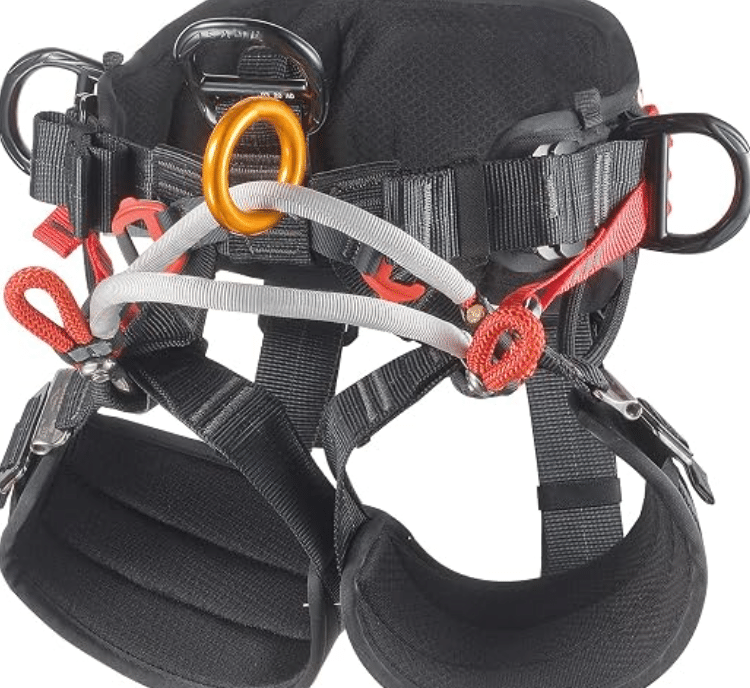
Designed in Italy for technical vertical progression, the CAMP Tree Access ANSI ST (and updated EVO edition) is a rugged, multi-standard workhorse built from the ground up for Single Rope Technique and strict commercial compliance. Weighing roughly 4.9 to 5.1 pounds, it feels noticeably substantial in hand, utilizing variable-thickness ergonomic padding that stays stiff where you need structural support and softens around pressure points. Its standout advantage is seamless modularity: it pairs directly with CAMP’s GT Chest harness and Turboknee ascender to transform into a full-body SRT rope-walking rig in seconds.
Price:
Key Features & Benefits
-
Double Mobile Bridges: Reinforced with high-durability tubular webbing over load-bearing rope, providing smooth lateral travel and high abrasion resistance.
-
Patented STS ANSI Leg Buckles: Low-profile, quick-release leg buckles engineered to meet strict ANSI strength standards without snagging on twigs or rigging lines.
-
Dual Ventral Attachment Points: Features both a metallic lower ring and a textile upper loop for clean organization of lanyards, ascenders, and mechanical hitches.
-
NFC TRACK Digital ID (EVO Model): Built-in NFC chip allows commercial crews and safety managers to log inspections and track PPE lifespans digitally.
-
Comprehensive Safety Ratings: Certified to ANSI Z133, ASTM F887, CE EN 358, and CE EN 813.
Pros & Cons
-
Pros:
-
Rock-solid hardware and abrasion-resistant tubular bridge protection
-
Effortless modular integration with chest harnesses and knee ascenders
-
NFC tracking makes fleet PPE management seamless
-
Full North American ANSI and European CE compliance
-
-
Cons:
-
Feels slightly stiffer out of the box until broken in over a few climbs
-
Heavier than ultralight pruning saddles
-
Amazon Customer Ratings & Reviews
Verified buyers rate the CAMP Tree Access ANSI series around 4.6 to 4.7 out of 5 stars. Municipal arborists and SRT climbers praise its bombproof construction, snag-free STS leg buckles, and rock-steady comfort when paired with a chest harness. A few reviewers note that the padding feels firm during the first week before conforming comfortably to the hips.
Why It’s a Good Choice for Technical SRT & Fleet Tracking
Between its reinforced double bridges, ANSI-rated quick buckles, and NFC inspection chip, the Tree Access ANSI is tailor-made for safety-regulated crews and technical rope walkers.
Ideal Use Case / Who Should Buy It
Municipal tree crews, utility-adjacent commercial arborists, and SRT enthusiasts who want a heavy-duty, modular saddle with built-in inspection tracking.
6. Buckingham Ergovation Pro Saddle (Best for Heavy Saws & Ergonomic Support)
Product Description
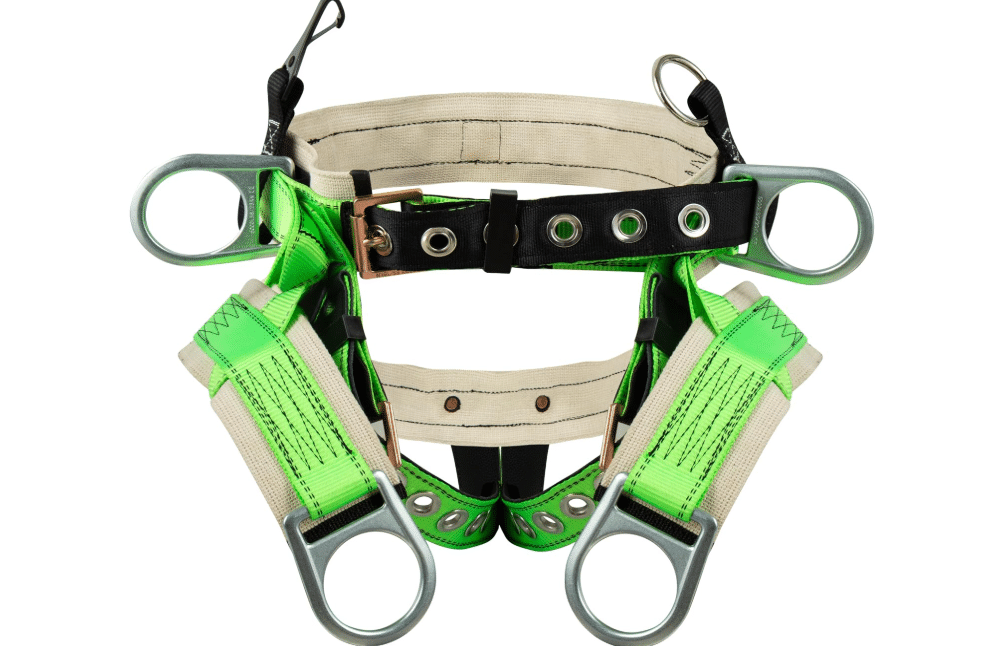
Co-developed by a certified arborist and a physical therapist, the Buckingham Ergovation Pro was built from the ground up to solve the number-one occupational complaint among veteran tree climbers: chronic lower-back and pelvic fatigue. Made in the USA with heavy-duty nylon webbing and anatomically sculpted lumbar support, the Ergovation Pro stabilizes your core so that hanging a heavy top-handle or rear-handle chainsaw off your belt doesn’t pull your spine out of alignment. Whether you opt for the streamlined Ergovation Pro or upgrade to the fully modular Ergovation system, this saddle feels like a supportive brace rather than a simple strap harness.
Price:
Key Features & Benefits
-
Physical-Therapist-Engineered Lumbar Pad: Contoured pelvic and lower-back support prevents the waistbelt from rolling, sagging, or pinching under heavy gear loads.
-
Heavy-Saw Ready Attachment Points: Reinforced rear and side chainsaw carry points keep heavy removal saws balanced close to your center of gravity.
-
Modular Expandability: Compatible with Buckingham’s optional ergonomic suspenders, lower-back pads, and specialized tool pouches to customize load distribution.
-
Rugged American Hardware: Built with forged steel and aluminum D-rings, heavy-duty stitching, and a replaceable floating rope bridge.
-
Certified Protection: Meets ASTM F887 and ANSI Z133 arborist safety requirements.
Pros & Cons
-
Pros:
-
Unmatched lumbar stability when carrying large chainsaws on heavy removals
-
Reduces hip and lower-back strain during long spur-climbing days
-
Exceptionally durable American-made construction
-
Available in both mid-priced Pro and fully modular configurations
-
-
Cons:
-
Noticeably bulkier and heavier than European pruning saddles
-
The full modular configuration is one of the most expensive harnesses on the market
-
Amazon Customer Ratings & Reviews
Across Amazon and professional arborist suppliers, the Buckingham Ergovation series earns 4.6 to 4.8 out of 5 stars. Veteran removal climbers and crane-work specialists frequently report that switching to the Ergovation noticeably eased their end-of-day lower-back stiffness. The main trade-off mentioned in reviews is weight—it isn’t the lightest choice for racing through dense, small-branch canopies, though its support more than compensates on big wood.
Why It’s a Good Choice for Heavy Removals
When you are blocking down massive trunks on spurs with a heavy saw hanging from your harness, minimalist mesh padding simply isn’t enough. The Ergovation Pro’s rigid anatomical chassis keeps your hips supported and your tools right where they belong.
Ideal Use Case / Who Should Buy It
Removal specialists, crane-work arborists, and climbers managing lower-back sensitivity who routinely carry heavy chainsaws and rigging gear aloft.
7. Courant Koala Tree Climbing Harness (Best Multi-Foam Suspension Comfort)
Product Description
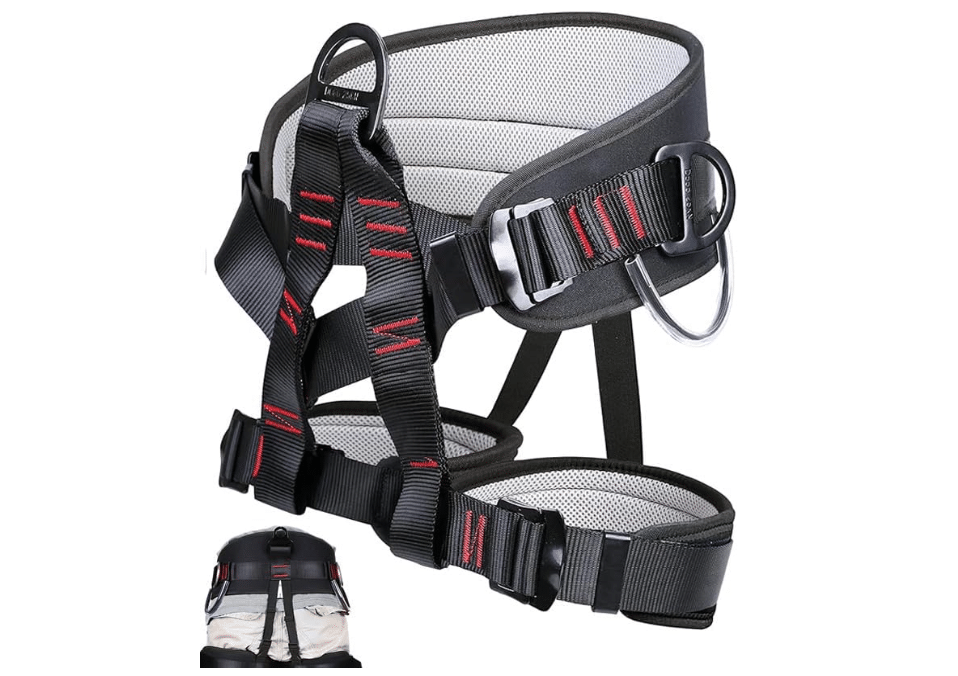
French manufacturer Courant took a different approach to canopy comfort with the Koala: instead of relying on stiff plastic stays or thin mesh, they engineered a proprietary multi-density foam blend that cradles your waist and thighs like a high-end ergonomic chair. Slip into the Koala and hang freely on a rope, and you will immediately notice the absence of harsh pressure points around the inner thighs and hip bones. Despite its plush feel, it maintains a clean, agile silhouette with intuitive quick-adjust buckles and generous gear-carrying capacity.
Price: $34.99
Key Features & Benefits
-
Multi-Density Breathable Foam: Combines firmer outer structural foam with softer inner cushioning to absorb pressure during extended rope suspension without trapping excessive heat.
-
Zero Break-In Geometry: Contoured leg loops and waistbelt articulate naturally as you shift from standing on limbs to hanging freely.
-
Color-Coded Quick Buckles: Fast, intuitive waist and leg buckles simplify donning and make pre-climb safety checks effortless.
-
Smart Gear Organization: Includes ample molded gear loops, tool-holder slots, and dedicated attachment points for a handsaw or chainsaw lanyard.
-
Certified & Sizing-Inclusive: Certified to CE EN 813 and CE EN 358, and offered in three distinct size ranges (XS/S, M/L, XL) for a tailored fit.
Pros & Cons
-
Pros:
-
Plush, cloud-like suspension comfort right out of the box—no break-in needed
-
Excellent thigh pressure distribution during long hanging prunes
-
Intuitive, snag-resistant hardware layout
-
Lightweight enough for agile crown work
-
-
Cons:
-
Replacement bridges and pads can be slightly harder to find at local brick-and-mortar shops compared to Petzl or Weaver
-
Primarily carries European CE certifications rather than North American ASTM F887 (check employer requirements)
-
Amazon Customer Ratings & Reviews
With consistent 4.7 out of 5 star feedback across climber forums and online retailers, the Courant Koala has developed a fiercely loyal following. Reviewers rave about its comfort during three- and four-hour suspended pruning jobs, with many calling it the most comfortable leg-loop harness they have ever worn. A handful of users note that ordering spare bridges online ahead of time is smart since local shops stock Petzl more commonly.
Why It’s a Good Choice for Long Suspension Climbs
If most of your climbing time is spent hanging off a rope rather than standing on spikes, thigh pinch is your biggest enemy. The Koala’s multi-density foam neutralizes hot spots better than almost anything else in its price bracket.
Ideal Use Case / Who Should Buy It
Fine-pruning arborists, recreational tree climbers, and anyone who spends long stretches suspended in their harness and prioritizes immediate, plush comfort.
8. Weaver Arborist Cougar Tree Saddle (WLC-700) (Best Entry-Level Synthetic Floating Bridge)
Product Description
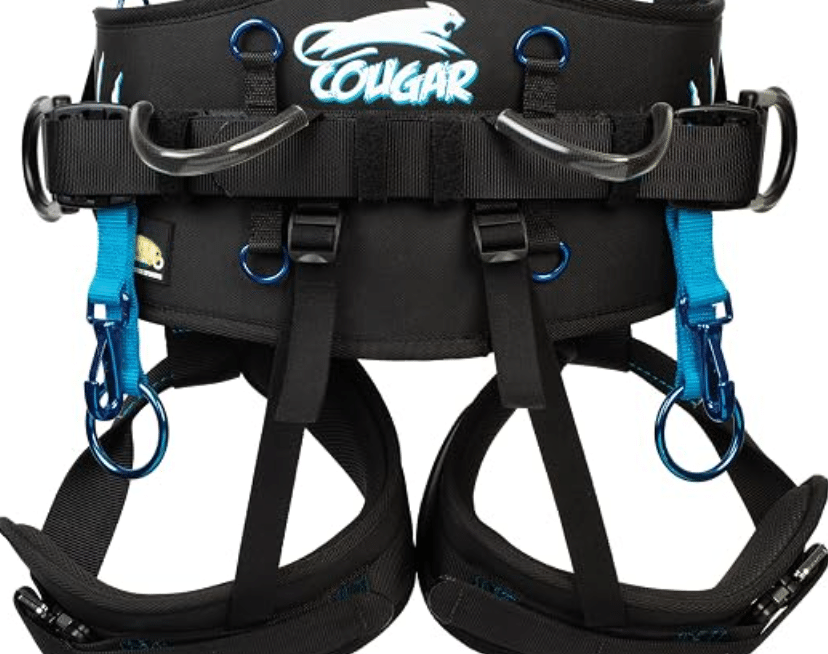
For generations of North American arborists, the Weaver Arborist Cougar (WLC-700) has been the rite-of-passage saddle—and for good reason. Made in the USA from rugged, weather-resistant synthetic webbing, it pairs traditional American toughness with modern floating-bridge mobility. Its signature feature is an extra-wide, 7-inch memory foam back pad matched with 4-inch padded leg straps that distribute load generously across your hips. While it is heavier than sleek European designs, the Cougar shrugs off bark abrasion, sap, and years of hard use without complaint.
Price:
Key Features & Benefits
-
7-Inch Memory Foam Back Pad: Oversized lumbar support conforms to your waist while resisting collapse when carrying a chainsaw and lanyard.
-
4-Inch Padded Leg Straps: Wide thigh support reduces leg pinch during extended hangs; also available in a batten-seat (bosun) configuration if preferred.
-
One-Handed Side D-Rings: Two-bar fixed aluminum side D-rings stay positioned outward so you can clip your flip-line cleanly with one hand.
-
Replaceable Webbing/Rope Bridge: Smooth floating bridge lets you twist and reach across the canopy far more freely than fixed-D saddles.
-
Suspender-Ready Design: Built-in front and rear D-rings make adding Weaver suspenders effortless for heavy saw days.
Pros & Cons
-
Pros:
-
Bulletproof American-made durability that handles rough bark and daily abuse
-
Generous 7-inch memory foam back pad feels instantly familiar and supportive
-
Easy one-handed flip-line clipping with two-bar side D-rings
-
Great bridge between traditional leather saddles and modern floating-bridge designs
-
-
Cons:
-
Heavy (~6.5 to 6.8 lbs), which feels noticeable on long, hot climbs
-
Less crotch-strap and bridge micro-adjustability than European saddles like the treeMOTION or TreeRex
-
Amazon Customer Ratings & Reviews
The Weaver Cougar maintains a strong 4.6 to 4.7 out of 5 stars across hundreds of Amazon and arborist supply reviews. Buyers repeatedly call it a “tank” and a “tried-and-true starter saddle” that easily lasts five or more years of steady work. The most frequent critique is its weight and warmth during 90-degree summer afternoons, though many climbers gladly accept the extra pounds in exchange for its thick foam padding.
Why It’s a Good Choice for Upgrading from Basic Gear
If you are stepping up from a stiff, fixed-D utility belt or buying your first serious floating-bridge saddle, the Cougar offers forgiving comfort, straightforward buckles, and zero fragile parts.
Ideal Use Case / Who Should Buy It
Apprentice arborists, landowners maintaining large wooded properties, and traditional climbers transitioning to a modern floating-bridge saddle.
9. Singing Rock Timber 3D Arbor Harness (Best Budget Certified European Saddle)
Product Description
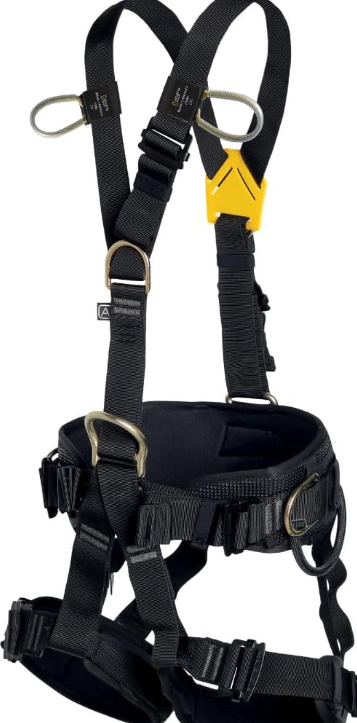
Trying to shop for a tree climbing harness near the $300 mark usually leads buyers straight into a minefield of uncertified Amazon knockoffs. The Singing Rock Timber 3D is the rare exception that proves you do not have to spend $600 to get legitimate, European-certified life-support gear. Engineered in the Czech Republic, the Timber 3D packs a stiff, supportive 3D-molded waistbelt, breathable padded leg loops, and a sliding D-ring bridge into a nimble 4.1-pound frame—giving budget-conscious climbers real arborist ergonomics without gambling on safety.
Price: $171.00
Key Features & Benefits
-
Certified Life-Support Safety: Fully certified to CE EN 813 (sit harness) and CE EN 358 (work positioning) with clear traceability and load ratings.
-
3D-Molded Wide Waistbelt: Stiffened anatomical padding holds its shape under load, preventing the painful waist collapse common in cheap harnesses.
-
Speed Lock Quick Buckles: Smooth, reliable quick-release buckles on the waist and legs speed up gear-up time.
-
Sliding Bridge & Positioning D-Rings: Equipped with a replaceable rope bridge with a forged aluminum ring plus two EN 358 side positioning D-rings.
-
Lightweight & Practical: Weighs just 1,860 g (~4.1 lbs) with 4 braided gear loops rated to 5 kg each and dedicated tool-clip slots.
Pros & Cons
-
Pros:
-
Genuine CE EN 813 and EN 358 certifications at a fraction of flagship pricing
-
Lightweight (~4.1 lbs) and surprisingly comfortable for the price
-
Stiff 3D back padding resists folding under moderate saw loads
-
Fast, reliable Speed Lock buckles
-
-
Cons:
-
Fewer gear loops and tool slots than $550+ production saddles
-
Less modular customization for advanced dual-bridge SRT setups
-
Amazon Customer Ratings & Reviews
Rated around 4.5 to 4.6 out of 5 stars, the Singing Rock Timber 3D earns enthusiastic praise from part-time tree workers, recreational canopy climbers, and entry-level arborists. Buyers frequently express relief at finding a legitimately certified European harness near $320 that feels genuinely comfortable in the tree. Experienced production climbers note that while it lacks the endless tweakability of a treeMOTION, it punches far above its price tag.
Why It’s a Good Choice for Budget-Conscious Climbers
It establishes the true safety floor for modern floating-bridge tree harnesses—delivering certified webbing, real 3D lumbar padding, and smooth rope-bridge mobility at an accessible price.
Ideal Use Case / Who Should Buy It
Part-time tree workers, weekend recreational climbers, and beginners on a strict budget who refuse to compromise on certified safety.
10. Weaver Floating D Extra-Wide Back Saddle (Best Traditional Work Positioning Saddle)
Product Description
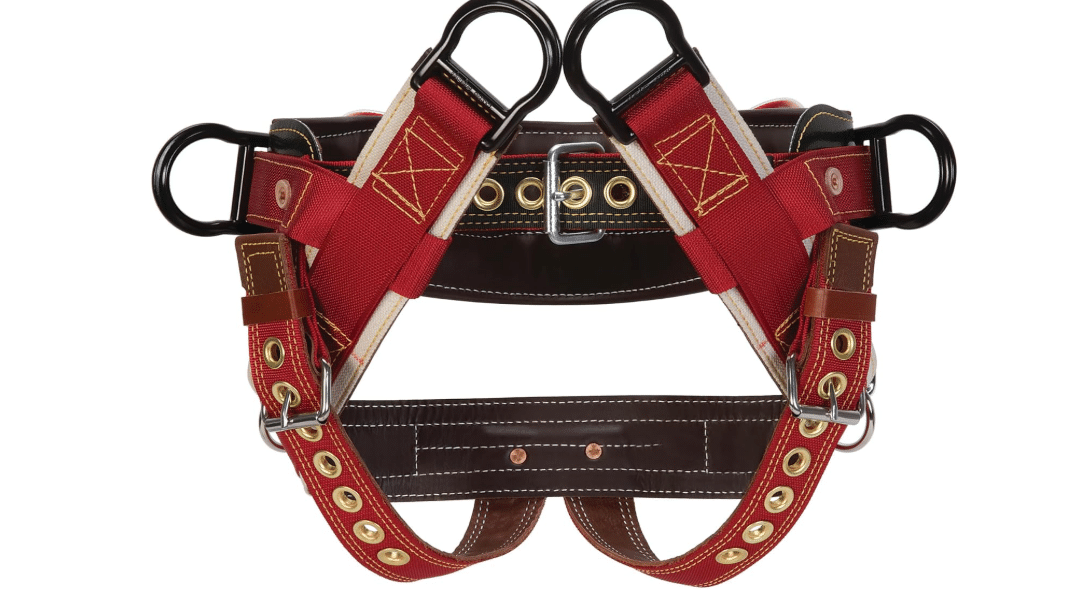
Not every tree job requires swinging laterally across sprawling oak limbs on a dual-bridge European rig. If your work centers on climbing straight stems with spurs, leaning back into a steel-core flip-line, and blocking down removals, the Weaver Floating D Extra-Wide Back Saddle remains a classic American staple. Built around a thick 6-inch foam-filled back pad, individual leg straps, and a heavy-duty forged floating D-ring, it trades modern rope-bridge complexity for straightforward, bombproof work positioning at one of the lowest prices in certified arboriculture.
Price: $258.73
Key Features & Benefits
-
6-Inch Foam-Filled Back Support: Wide, cushioned lumbar belt wrapped in durable synthetic/leather materials supports your back when leaning into a flip-line on spikes.
-
Forged Floating D-Ring: Heavy-duty floating center D-ring provides simple, dependable tie-in geometry with some lateral give.
-
Individual Leg Straps: Keeps leg positioning secure while climbing up trunks on spurs without restricting knee lift.
-
Classic Heavy-Duty Hardware: Equipped with forged side positioning D-rings, utility snaps, and rings for attaching handsaws and lanyards.
-
Proven Value: One of the most affordable reputable, American-made arborist saddles available.
Pros & Cons
-
Pros:
-
Extremely affordable entry into reputable, purpose-built arborist gear
-
Simple, rugged mechanics with virtually nothing to tangle or wear out quickly
-
Great lower-back support when standing on climbing spikes
-
Easy to inspect and maintain
-
-
Cons:
-
Lacks the lateral hip mobility and freedom of a modern rope-bridge saddle
-
Less comfortable for long periods of free-hanging rope suspension compared to contoured leg-loop saddles
-
Heavier and warmer than modern mesh harnesses
-
Amazon Customer Ratings & Reviews
With 4.5 to 4.6 out of 5 stars across Amazon and tree-care retailers, this Weaver classic draws steady praise from traditional spur climbers, farmers, and property owners who want no-nonsense durability. Reviewers consistently note that it is built like a tank and lasts for years, while candidly pointing out that climbers who spend hours dangling on a rope will eventually want to upgrade to a modern rope-bridge harness.
Why It’s a Good Choice for Spur Climbing & Utility Work
When your feet are planted on climbing spikes and your weight rests back against a lanyard, this saddle’s wide back pad and forged hardware deliver rock-solid confidence without unnecessary frills.
Ideal Use Case / Who Should Buy It
Traditional spur climbers, utility/line-clearance workers, and budget-minded property owners performing straightforward trunk removals.
Comprehensive Buyer’s Guide: How to Choose the Right Tree Climbing Harness
Investing in one of the best 10 tree climbing harness models requires matching the saddle’s engineering to how—and how often—you climb. Before clicking “Add to Cart,” evaluate these five critical buying factors:
1. Certifications That Actually Save Lives
Never trust vague Amazon marketing claims like “supports 800 lbs” or “heavy-duty climbing belt.” Legitimate arborist saddles are independently tested and stamped with specific life-support standards:
-
CE EN 813: Certifies the sit harness and ventral tie-in point for full-body rope suspension.
-
CE EN 358: Certifies the waistbelt and side D-rings for work positioning (using a flip-line or lanyard).
-
ANSI Z133 & ASTM F887: The primary North American arboriculture safety standards required by most commercial tree companies, municipalities, and utility contractors.
Rule of thumb: If a $45 harness on Amazon does not clearly list EN 813/EN 358 or ASTM F887 from a verifiable brand, do not trust your life to it.
2. Rope Bridge vs. Floating D-Ring vs. Bosun (Batten) Seat
-
Rope Bridge (Modern Standard): Found on the Petzl SEQUOIA, treeMOTION Pro X, Notch Sentinel, Edelrid TreeRex II, and CAMP Tree Access. A floating ring slides across a replaceable rope or webbing bridge, letting your hips twist freely during lateral limb walks without twisting your tie-in line.
-
Floating D-Ring (Traditional): Found on the Weaver Floating D. Simple and rugged for vertical spur climbing, but offers far less lateral agility in dense canopies.
-
Bosun / Batten Seat: Uses a rigid padded board beneath the thighs (optional on the Petzl SEQUOIA and Weaver Cougar). Ideal for long, stationary hangs, though it adds bulk and restricts high-stepping when climbing through tight branches.
3. SRT (Single Rope Technique) vs. MRS/DdRT (Moving Rope System)
-
If you climb primarily on MRS/DdRT, any modern floating-bridge saddle will serve you well.
-
If you use SRT/SRS (stationary rope) with a knee ascender and chest harness, prioritize a saddle with a dedicated lower ventral attachment point, dual-bridge compatibility, or rear shoulder-strap loops—such as the Petzl SEQUOIA SRT, CAMP Tree Access ANSI, or Teufelberger treeMOTION Pro X.
4. Padding Rigidity & Chainsaw Weight Distribution
Soft, thin padding feels cozy in your living room, but once you clip a 10-pound chainsaw to your hip, soft foam folds in half (the “taco effect”) and digs into your spine. Look for semi-rigid or 3D-molded waistbelts if you run saws aloft, and consider adding detachable suspenders whenever you carry heavy removal saws.
5. Sizing & Rated Weight Limits
Always measure your waist (at the top of your hip bones, not your pant size) and upper thighs while wearing the thickest layers you climb in during winter. Pay close attention to the manufacturer’s maximum rated working load—typically 308 lbs (140 kg) to 330 lbs (150 kg)—which includes your body weight plus boots, chainsaw, rigging hardware, and clothing.
Safety, Inspection & Maintenance Tips for Maximum Harness Lifespan
Even the highest-rated harness degrades if neglected. Follow these professional maintenance habits to protect your gear and your life:
-
Daily Pre-Climb Inspection Checklist: Before every ascent, run your hands over every inch of load-bearing webbing, checking for fuzzy abrasion, chemical burns, sap stiffness, or broken stitching. Inspect the rope bridge closely for glazing, flat spots, or core exposure, and verify that aluminum D-rings and buckles have no sharp burrs or sticking gates.
-
Proper Cleaning & Storage: Tree sap, sweat salts, and grit act like microscopic sandpaper inside nylon fibers. Hand-wash your harness occasionally in lukewarm water (under 86°F / 30°C) using mild pH-neutral soap, rinse thoroughly, and air-dry completely in the shade. Never machine-wash, bleach, or store your saddle next to gasoline, bar oil, or direct sunlight in a truck bed.
-
Know the Retirement Rules: Every certified harness carries a manufacturer lifespan limit—typically 5 to 10 years from the date of manufacture printed on the sewn label, regardless of use. Retire any harness immediately if it suffers a serious shock load (fall arrest), takes a chainsaw nick (even a tiny scratch on load-bearing webbing), or fails a hardware inspection.
Frequently Asked Questions (FAQs) {#faqs}
Can I use a rock climbing harness for tree climbing?
No—while rock climbing harnesses are certified for fall arrest, they are poorly suited for tree work. They lack side work-positioning D-rings (EN 358) for securing a lanyard, feature narrow waistbelts that dig painfully into your back during multi-hour hangs, and are not designed to carry chainsaws or heavy arborist tools.
What is the difference between a tree climbing harness and a hunting treestand harness?
A hunting treestand harness is a dorsal fall-arrest harness designed to catch you from behind your shoulder blades if you slip off a stand. An arborist tree climbing harness is a work-positioning sit saddle with a front ventral bridge and side D-rings engineered so you can comfortably sit, lean, ascend ropes, and work with both hands free.
How much should I spend on a safe tree climbing harness?
Plan on spending a minimum of $310 to $350 for a legitimately certified entry-level arborist saddle (such as the Singing Rock Timber 3D or Weaver Floating D). Mid-range pro saddles sit around $380 to $550, while flagship customizable harnesses run $600 to $750+. Avoid $40–$80 uncertified kits online.
Do I need suspenders or a chest harness with my tree saddle?
If you only do light handsaw pruning, a sit harness alone is usually plenty. However, if you regularly climb with a chainsaw on your hip or ascend tall trees using SRT rope-walking systems, adding suspenders or a compatible chest harness dramatically reduces lower-back fatigue and keeps your waistbelt from sliding down.
How often should I replace my rope bridge?
Inspect your bridge before every single climb. Because the metal ring slides back and forth under full body weight, the bridge is the fastest-wearing component on your harness. Most full-time production climbers replace their rope bridge every 6 to 18 months, or immediately at the first sign of cover fraying, glazing, or stiffness.
Final Verdict: Which Tree Climbing Harness Should You Buy?
Choosing the right saddle from the best 10 tree climbing harness lineup comes down to matching your climbing frequency, saw weight, and budget:
-
Choose the Petzl SEQUOIA SRT if you want the safest, most versatile all-around industry standard for daily crew work and SRT ascents.
-
Choose the Teufelberger treeMOTION Pro X if you climb full-time and want unmatched ergonomic adjustability backed by a 10-year lifespan and replaceable wear parts.
-
Choose the Notch Sentinel if you want a cool, featherlight, fully certified pro saddle under $400.
-
Choose the Buckingham Ergovation Pro if heavy removals and lower-back support are your top priorities.
-
Choose the Singing Rock Timber 3D or Weaver Floating D if you need dependable, certified safety right around the $310–$320 mark.
Before placing your order, double-check your waist and thigh measurements over your normal work clothes, verify that the seller is an authorized distributor for the brand, and pair your new saddle with a properly rated lanyard and helmet. Climb safe, inspect your gear daily, and enjoy the difference a truly dialed-in harness makes aloft.