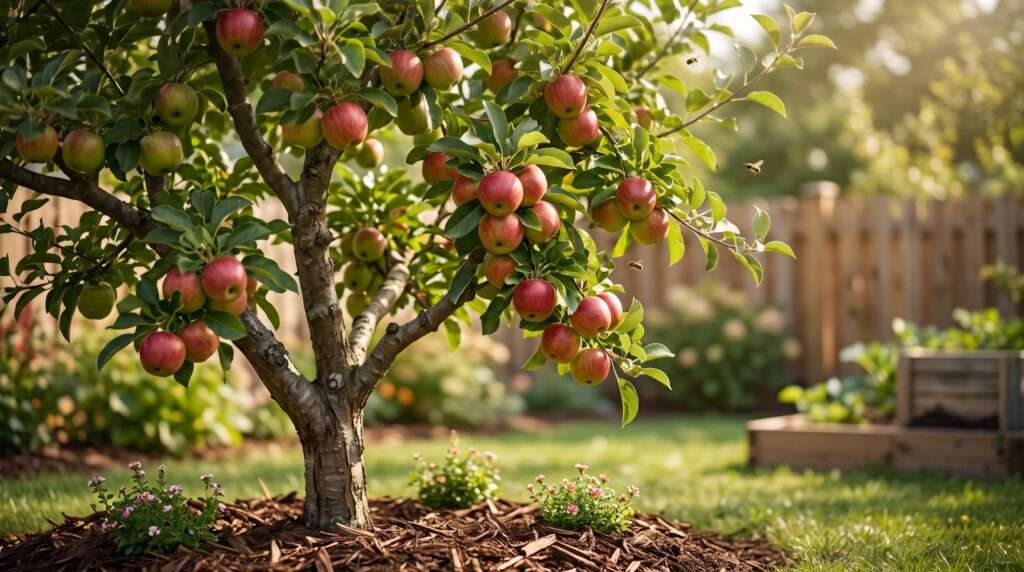
There is nothing quite like the anticipation of planting your very own apple tree. You dig the hole, tuck the roots into rich soil, step back, and picture yourself biting into a crisp, sun-warmed Honeycrisp straight from your backyard. Then spring arrives, and you find yourself inspecting every single twig, wondering when the magic actually happens.
If you are asking yourself how long does an apple tree take to grow, the short answer is 2 to 5 years for a grafted nursery tree to produce its first fruit, and 7 to 10 years if you start from a seed. Reaching full, mature size typically takes anywhere from 6 to 10 years depending on the rootstock.
The good news? You are not stuck passively waiting for a decade. An apple tree’s timeline isn’t set in stone—it is heavily influenced by the type of tree you buy, your local climate, and a handful of proven orchard techniques. Below, you will find a complete year-by-year growth timeline, the truth about growing from seed, and expert strategies to get your tree bearing crisp, abundant harvests years faster. 🌿
Quick Answer: Apple Tree Growth Timeline at a Glance ⏱️
Before diving into the biology of apple tree development, it helps to see how dramatically the timeline shifts based on the type of tree you plant. In horticulture, an apple tree’s mature size and speed to fruiting are controlled almost entirely by its rootstock—the lower root system onto which your favorite apple variety is grafted.
| Tree Type | Years to First Fruit | Mature Height | Best For |
| Dwarf Apple Tree 🪴 | 2 – 3 years | 8 – 10 feet | Small yards, patios, large containers |
| Semi-Dwarf Apple Tree 🌳 | 3 – 5 years | 12 – 15 feet | Backyard orchards, balanced yield & size |
| Standard Apple Tree 🌲 | 6 – 8 years | 20 – 25+ feet | Large properties, shade, legacy trees |
| Grown from Seed 🌰 | 7 – 10+ years | 20 – 30 feet | Fun gardening experiments, rootstock |
💡 Expert Insight: There is a big difference between first fruit and full production. A dwarf tree might hand you 5 to 10 apples in its second or third year, which is an exciting milestone! However, most apple trees need an additional 2 to 3 years after their first blossoms to reach peak, bushel-filling harvests.
Apple Tree Growth Stages: A Year-by-Year Breakdown 🌱
Understanding what is happening both above and below the soil line takes the guesswork out of tree care. Apple trees follow a predictable biological rhythm, and knowing what normal growth looks like will keep you from panicking during their slower early seasons.
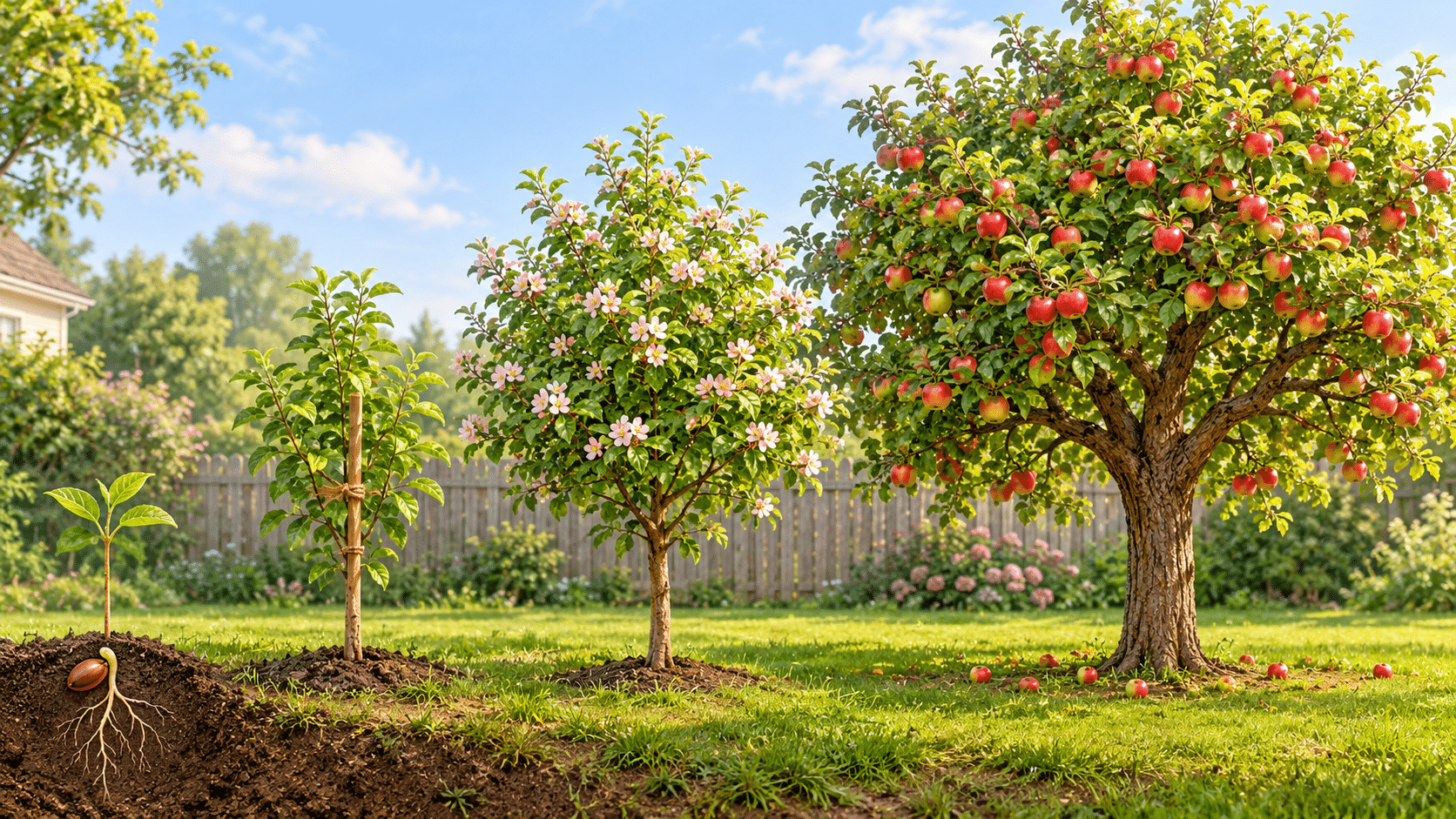
Stage 1: Seed Germination & Seedling (Year 1) 🌰
If you start from an apple pip, growth begins with cold stratification. Apple seeds have a built-in dormancy mechanism that prevents them from sprouting in the middle of winter. They require 60 to 90 days of moist, cold temperatures (34°F to 40°F) before they will germinate.
Once sprouted, the first year is all about survival. A seedling will push out a slender, whip-like stem reaching 12 to 24 inches tall by autumn, while focusing most of its energy on developing a central taproot and fine feeder roots.
Stage 2: Sapling & Root Establishment (Years 1–3) 🌿
When you plant a young bare-root or potted sapling from a nursery, it enters what seasoned arborists call the “sleep, creep, leap” phase:
-
Year 1 (Sleep): Above-ground growth looks minimal—maybe only 6 to 12 inches. Don’t worry! Underground, the tree is aggressively expanding its root system to anchor itself and pull in water and nutrients.
-
Year 2 (Creep): With roots established, the sapling begins pushing out stronger lateral branches (scaffold limbs) and thicker foliage.
-
Year 3 (Leap): Growth accelerates noticeably, and dwarf varieties often produce their first real clusters of flower buds.
Stage 3: Juvenile Growth & Canopy Development (Years 3–5) 🌳
During this phase, a healthy apple tree adds 12 to 24 inches of new shoot growth per year. The trunk thickens, the bark matures from smooth and reddish-brown to slightly textured gray-brown, and the tree builds its permanent structural framework—usually trained into a central leader (a Christmas-tree shape that lets sunlight reach the lower branches).
Stage 4: First Blossoms & Fruiting (Years 2–8, Depending on Type) 🌸
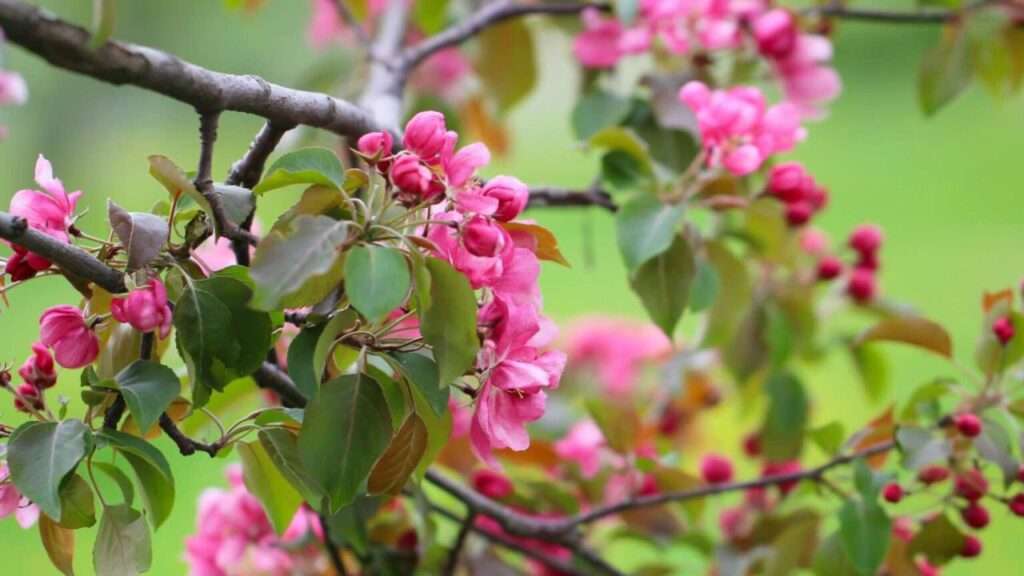
Eventually, the tree shifts hormonally from vegetative growth (making leaves and wood) to reproductive growth (making flowers and fruit). You will notice stubby, wrinkled side shoots called fruiting spurs forming on 2-year-old wood. Each spring, these spurs burst into fragrant pink-and-white blossoms. Once pollinated by bees, tiny fruitlets swell through summer and ripen in late summer or autumn.
Stage 5: Full Maturity & Peak Harvest (Years 8–10+) 🧺
By year 8 to 10, your apple tree has reached its full canopy spread and height. At this stage, upward growth slows down naturally as the tree channels the majority of its carbohydrates into annual fruit production. With proper dormant pruning and basic disease management, a healthy dwarf tree will produce reliably for 15 to 20 years, while a standard tree can keep feeding your family for 50 to 100 years.
Growing from Seed vs. Nursery Sapling: Why It Changes Everything 🌾
One of the most common mistakes beginner gardeners make is saving seeds from a delicious grocery-store apple, planting them in a pot, and expecting an identical tree in a few years. While growing an apple tree from seed is a fun science project, it comes with two major drawbacks: time and genetics.
The “True-to-Type” Genetic Trap 🧬
Apples are extreme heterozygotes, meaning they do not grow “true to seed.” Just like human siblings inherit different combinations of traits from their parents, every single seed inside a Honeycrisp apple carries a completely unique genetic code—a mix of the Honeycrisp mother tree and whatever mystery apple or crabapple tree pollinated its blossom.
If you wait 8 to 10 years for a seed-grown tree to finally bear fruit, there is a very high chance the apples will be small, tart, mealy, or only suitable for cider and wildlife.
Why Grafted Nursery Trees Win Every Time 🏆
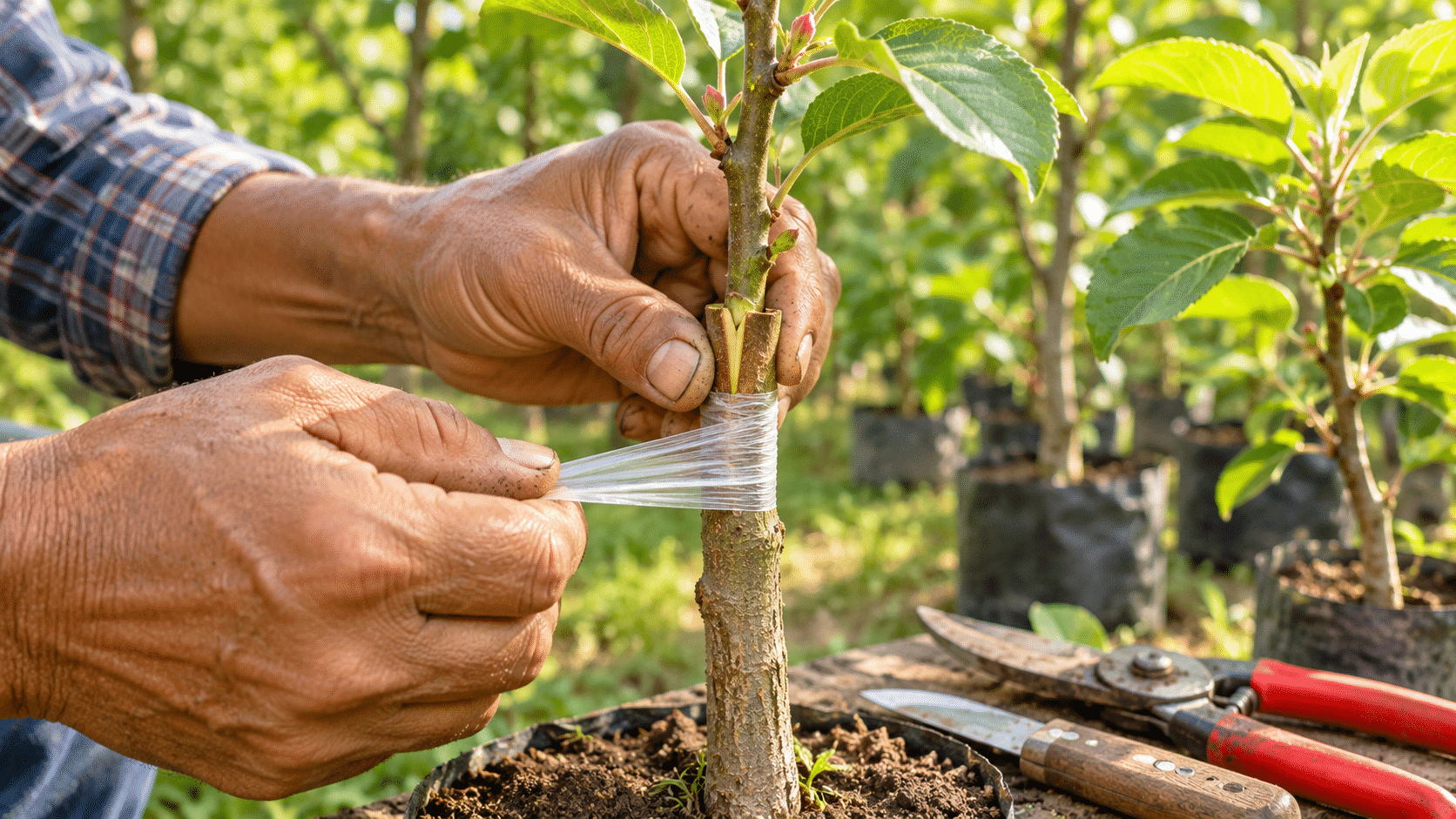
Commercial growers and nurseries bypass both the genetic lottery and the decade-long wait through grafting. They take a cutting (called a scion) from a proven, mature variety—like Gala, Fuji, or Granny Smith—and fuse it onto a specialized rootstock.
Because the scion wood is already biologically mature, a 2-year-old grafted nursery sapling skips the entire juvenile phase. Buying a grafted bare-root or container tree instantly shaves 5 to 7 years off your wait time and guarantees you get the exact flavor, texture, and harvest window you want.
6 Key Factors That Determine How Fast an Apple Tree Grows ☀️
Two gardeners can plant the exact same apple variety on the exact same weekend and end up with completely different timelines. One might be baking homemade apple pie in year three, while the other is still staring at bare green branches in year six. Here are the six horticultural factors that dictate your tree’s pace.
1. Rootstock Selection (The #1 Speed Factor) 🪴
If you want apples fast, look at the rootstock code on the nursery tag. Dwarfing rootstocks—such as M.9, Bud 9 (B.9), or G.11—restrict the tree’s vigor and intentionally force it into early fruit production, often within 2 to 3 years. Semi-dwarf rootstocks like M.26, G.935, or MM.106 offer a middle ground (3 to 5 years) with better anchorage, while standard rootstocks like MM.111 or Antonovka prioritize massive root systems and tall canopies first, delaying fruiting until years 6 to 8.
2. Apple Variety (Precocious vs. Slow Producers) 🍏
In orchard terminology, varieties that bear fruit at a young age are called precocious. Cultivars like Gala, Honeycrisp, Fuji, Pink Lady, Liberty, and Golden Delicious are naturally eager to set flower buds early. On the other hand, classic heirloom varieties like Northern Spy or Arkansas Black are notoriously slow to mature and can take 8 to 10 years to produce a meaningful crop, even when grafted.
3. Sunlight & Chill Hours 🌡️
Apple trees are sun-worshippers. They require a minimum of 6 to 8 hours of direct, unfiltered sunlight every day to generate the carbohydrates needed for wood growth and flower bud initiation.
Equally important are winter chill hours—the cumulative number of hours between 32°F and 45°F during winter dormancy. Most apple trees thrive in USDA Hardiness Zones 3 through 8 and need 500 to 1,000+ chill hours to break dormancy properly in spring. If you live in a warmer climate (Zones 9–10), standard varieties will struggle to leaf out or bloom unless you plant low-chill varieties like Anna, Dorsett Golden, or Ein Shemer (which need fewer than 300 chill hours).
4. Soil Quality, pH, and Drainage 🪱
Apple trees prefer deep, well-draining loamy soil with a slightly acidic to neutral pH between 6.0 and 7.0. Heavy, compacted clay soil that holds standing water will suffocate fine feeder roots, trigger root rot (Phytophthora), and stall vertical growth for years. If your yard has poor drainage, planting on a slightly raised mound (6 to 12 inches high) can dramatically speed up root establishment.
5. Pollination Partners 🐝
Most apple trees are self-unfruitful (or only partially self-fertile). Even if your tree grows rapidly and bursts into gorgeous white blossoms, those flowers will simply drop off without forming apples unless bees transfer pollen from a different, compatible apple variety that blooms at the exact same time. For reliable fruit set, plant at least two compatible varieties (or a flowering crabapple) within 50 to 100 feet of each other.
6. Watering & Nutrient Consistency 💧
Young apple trees have shallow, developing root systems that cannot yet tap into deep groundwater. Consistent moisture—roughly 1 inch of water per week during the growing season—keeps cellular division humming along. Drought stress causes the tree to shut down shoot elongation and abort developing fruit buds to protect itself.
7 Proven Tips to Speed Up Apple Tree Growth & Fruiting 🚀
While you cannot rush nature completely, commercial orchardists use specific, science-backed techniques to shave years off the wait time. Put these seven strategies to work in your own backyard:
-
Start with a 2-to-3-Year-Old Grafted Tree 🌱
Skip the seeds and fragile 1-year whips. Buying a well-branched, 2-to-3-year-old grafted sapling from a reputable nursery gives you a massive head start on both root mass and canopy structure.
-
Choose a Dwarfing Rootstock 🪴
Unless you specifically want a giant shade tree for a sprawling acreage, opt for a dwarf or semi-dwarf tree. You will harvest apples years sooner, and pruning, spraying, and picking can all be done safely without a tall ladder.
-
Pinch Off Blossoms in Years 1 & 2 🌸✂️
This is the hardest advice for new gardeners to follow, but it is pure horticultural gold. If your brand-new tree blooms during its first or second year in the ground, gently pinch off the flowers. Allowing a tiny sapling to support heavy fruit drains energy away from root and branch development, stunting the tree for years. Sacrificing 3 apples in Year 1 rewards you with 30+ apples in Year 3!
-
Train Branches Horizontally (Limb Spreading) 📐
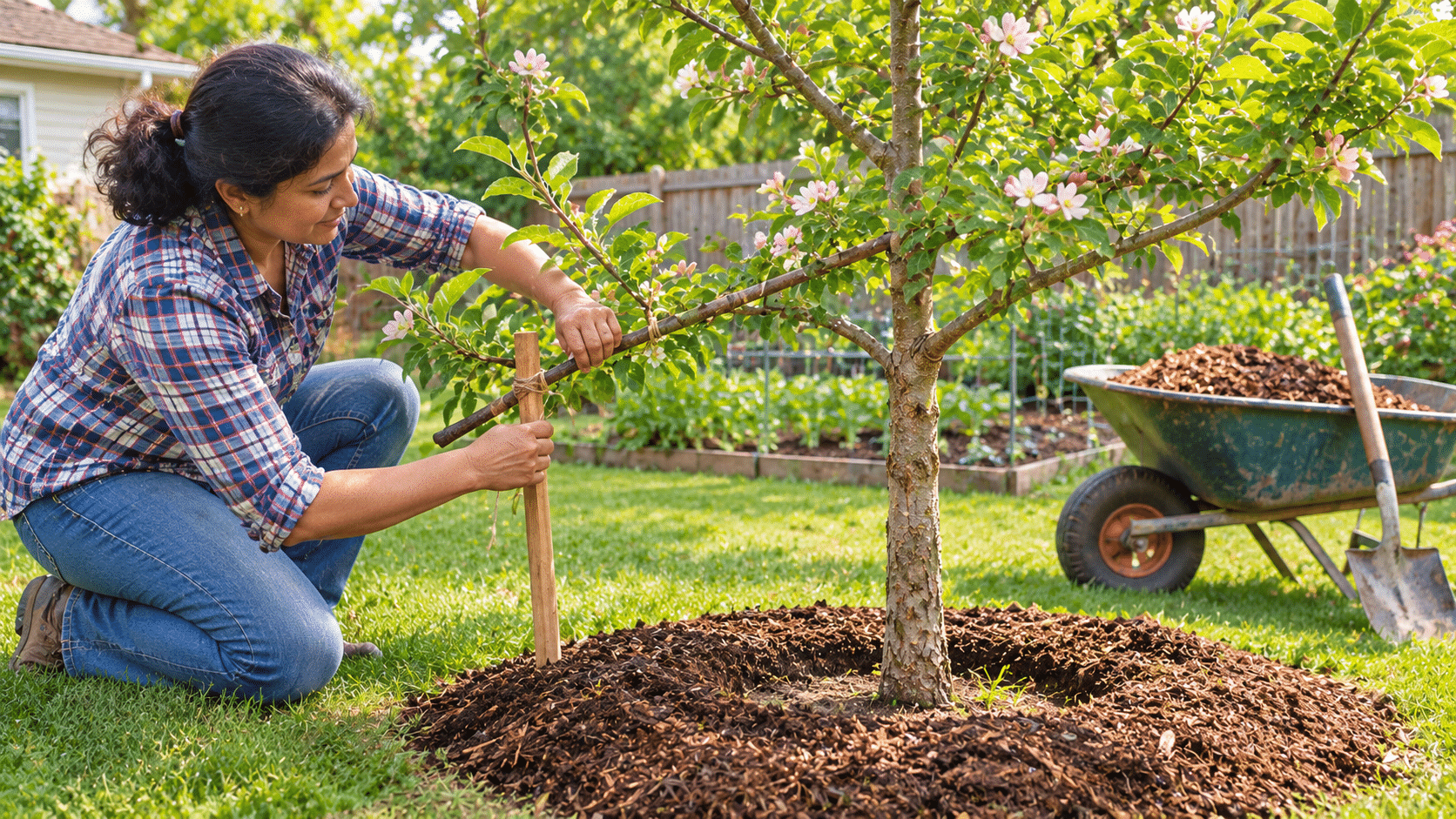
Branches that grow straight up (vertically) are dominated by growth hormones that produce leaves and wood—not fruit. By gently spreading young lateral branches outward to a 45-to-60-degree angle using wooden limb spreaders or soft twine staked to the ground, you slow down vegetative vigor and trigger the tree to form fruiting spurs much earlier.
-
Master Dormant Winter Pruning ❄️
Prune your apple tree in late winter (February to March) while it is completely dormant. Remove dead, damaged, or crossing branches to open up the canopy. Better sunlight penetration and airflow directly stimulate flower bud production on the remaining scaffold limbs.
-
Mulch Smartly (No Mulch Volcanoes!) 🪵
Grass and weeds are fierce competitors for water and nitrogen around a young tree’s shallow roots. Clear a 3-to-4-foot grass-free ring around the base and apply 2 to 3 inches of organic wood chip mulch. Keep the mulch pulled back 3 inches from the trunk (shaped like a donut, never piled like a volcano) to prevent bark rot and rodent damage.
-
Go Easy on High-Nitrogen Fertilizers 🚫
It is tempting to dump heavy fertilizer on a young tree to make it shoot up faster, but excess nitrogen is the enemy of early fruiting. Over-fertilizing forces the tree to pump out lush, weak green shoots (water sprouts) instead of flower buds. Stick to a light top-dressing of compost each spring unless a soil test reveals a specific deficiency.
Why Isn’t My Apple Tree Growing or Bearing Fruit? (Troubleshooting) 🔍
If your apple tree is past the 5-year mark and still hasn’t delivered a harvest—or seems frozen in size—check these five common culprits:
-
Biennial Bearing: Did your tree produce a massive bumper crop last year and zero apples this year? Apple trees often exhaust their energy reserves during heavy years and take the next season “off.” Fix: Thin fruit clusters in early summer (June) to just 1 apple every 6 inches so the tree has enough energy to set next year’s flower buds.
-
Late Spring Frosts 🥶: An unexpected freeze below 28°F while blossoms are open can kill the delicate flower pistils overnight. The tree will still grow healthy leaves, but no fruit will develop that season.
-
Lack of Pollination 🐝: Cold, rainy, or windy weather during the brief 10-day bloom window keeps honeybees in their hives. Alternatively, your two apple trees might belong to different bloom groups (e.g., an early bloomer paired with a late bloomer).
-
Too Much Shade ☁️: As nearby shade trees or hedges mature, they may slowly block your apple tree’s sunlight. Fewer than 6 hours of direct sun drastically reduces flowering.
-
Over-Pruning ✂️: Removing more than 25–30% of the canopy in a single year shocks the tree into survival mode, causing it to throw all its energy into rapid, leafy regrowth rather than fruit.
Frequently Asked Questions (FAQs) ❓
What is the fastest-growing apple tree variety?
For the quickest path to a harvest, look for Gala, Honeycrisp, Fuji, or Anna grafted onto a dwarfing rootstock (like M.9 or Bud 9). These precocious varieties routinely produce their first apples within 2 to 3 years of planting.
How tall is an apple tree after 5 years?
Height at the 5-year mark depends on rootstock and pruning. A 5-year-old dwarf apple tree is usually near its full mature height of 7 to 9 feet, a semi-dwarf will stand around 9 to 12 feet, and a standard apple tree typically reaches 10 to 14 feet as it continues climbing toward 25 feet.
Can you grow an apple tree in a pot, and does it take longer?
Yes! Dwarf apple trees thrive in large containers (at least 20 to 25 gallons with excellent drainage holes). They follow the same 2-to-3-year timeline to first fruit, provided you water them consistently (containers dry out fast in summer) and fertilize lightly each spring.
How many apples does a mature tree produce?
Yield scales with canopy size. A healthy, mature dwarf tree produces 1 to 3 bushels (roughly 40 to 120 pounds of apples) per year. A semi-dwarf yields 4 to 8 bushels, while a massive standard apple tree can produce an astonishing 10 to 20 bushels in a single season!
Final Thoughts: Patience Pays Off in Crisp Harvests 🍏
Knowing how long does an apple tree take to grow makes the journey from sapling to backyard orchard much more enjoyable. While nature asks for a little patience during those first two root-building seasons, choosing a grafted dwarf or semi-dwarf tree, giving it full sun, and pinching off those tempting Year 1 blossoms will reward you with basketfuls of crisp, homegrown apples for decades to come.
Which apple variety are you planning to plant in your yard this season—or are you already waiting on a young sapling to bloom? Share your garden journey in the comments below! 🌿🍎