
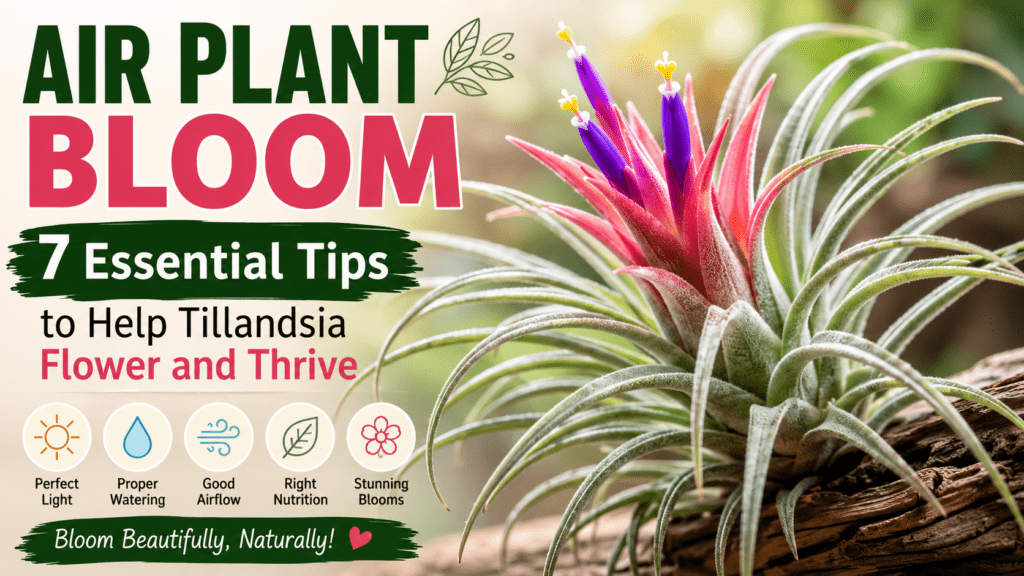
Have you ever cared for an air plant for months — watering it carefully, placing it near sunlight, and patiently waiting — only to wonder why it still refuses to flower? 🌸 You’re not alone. Many plant lovers struggle to achieve a healthy air plant bloom, even when their Tillandsia appears perfectly healthy on the outside.
The truth is, blooming is one of the biggest signs that an air plant is truly thriving. But unlike traditional houseplants, Tillandsias have very specific environmental needs before they produce those stunning pink, purple, red, or yellow flowers. Tiny mistakes in lighting, watering, airflow, or fertilizing can quietly prevent blooming altogether.
The good news? Once you understand how the blooming cycle works, helping your air plant flower becomes much easier. 🌿 In this complete guide, you’ll learn exactly how to encourage air plants to bloom naturally, how to care for them before and after flowering, and the expert-backed techniques growers use to keep Tillandsias healthy for years.
Whether you’re growing a tiny Ionantha or a dramatic Xerographica, these proven tips will help your air plants flourish beautifully indoors. 🪴✨
🌱 What Is an Air Plant Bloom?
An air plant bloom is the flowering stage of a Tillandsia plant — a moment that many indoor gardeners consider the ultimate reward for proper care. Unlike traditional plants that grow in soil, air plants are epiphytes, meaning they absorb moisture and nutrients through their leaves instead of roots.
When conditions are right, mature air plants develop colorful flower bracts and delicate blossoms that can last from days to several months, depending on the species. 🌺
🌸 Understanding the Blooming Cycle of Tillandsia
One of the most important things to understand about Tillandsias is that they are monocarpic plants. This means each individual plant blooms only once during its lifetime.
That sounds sad at first — but there’s a fascinating twist.
After blooming, healthy air plants usually produce offsets called “pups.” These baby air plants grow around the base of the mother plant and eventually mature into blooming plants themselves. 🌱👶
Typical Air Plant Blooming Cycle
- Juvenile growth stage
- Mature foliage development
- Color change or blush phase
- Flower spike formation
- Blooming period
- Pup production
- Gradual aging of mother plant
This natural cycle can take anywhere from several months to a few years depending on:
- Species
- Light exposure
- Humidity
- Fertilization
- Overall care quality
⏳ How Long Does an Air Plant Bloom Last?
Bloom duration varies significantly between Tillandsia species.
Some air plants display flowers for only a few days, while others maintain colorful bloom spikes for several months. In many cases, the colorful bracts remain attractive long after the flowers fade. 🌺
Average Bloom Times by Species
| Air Plant Variety | Bloom Duration |
|---|---|
| Tillandsia Ionantha | 1–2 weeks |
| Tillandsia Stricta | Several weeks |
| Tillandsia Xerographica | Months |
| Tillandsia Caput Medusae | 2–4 weeks |
Environmental conditions also affect bloom longevity. Stable temperatures, proper humidity, and indirect light can help flowers last longer.
🌺 What Does a Healthy Air Plant Bloom Look Like?
Healthy air plant blooms are vibrant, colorful, and often surprisingly exotic-looking. Many Tillandsias develop bright “blushing” foliage before flowering, turning shades of pink, red, or orange. 🌈
Depending on the species, flowers may appear:
- Tubular
- Feather-like
- Clustered
- Spike-shaped
Common Bloom Colors
- 💜 Purple
- 🌸 Pink
- ❤️ Red
- 💛 Yellow
- 💙 Blue
Some of the most eye-catching flowering air plants include:
- Tillandsia Ionantha
- Tillandsia Aeranthos
- Tillandsia Stricta
- Tillandsia Xerographica
🌞 7 Essential Care Tips to Help Air Plants Bloom and Thrive
Getting an air plant to bloom naturally requires recreating the conditions these tropical plants experience in the wild. Here are the most important care practices experts use to encourage flowering. 🌿
☀️ 1. Give Your Air Plant Bright Indirect Light
Lighting is one of the biggest factors affecting air plant flowering.
In nature, Tillandsias grow attached to trees where they receive filtered sunlight throughout the day. Indoors, they need similarly bright conditions to store enough energy for blooming. 🌞
Best Lighting Conditions for Blooming
- Bright indirect sunlight
- East-facing windows
- South-facing windows with sheer curtains
- Supplemental grow lights during winter
Signs Your Air Plant Needs More Light
- Dull or faded leaf color
- Slow growth
- No blooming after years
- Excessive stretching
Warning Signs of Too Much Sun
- Brown crispy leaf tips
- Bleached leaves
- Curling foliage
💡 Expert Tip: If your home lacks natural light, full-spectrum LED grow lights can dramatically improve blooming success.
💧 2. Water Correctly Without Overdoing It
Improper watering is one of the most common reasons air plants fail to bloom. While Tillandsias need moisture, they hate staying wet for long periods.
The goal is hydration followed by fast drying. 🌬️
Best Watering Methods
Soaking Method
- Submerge plants in room-temperature water for 20–30 minutes
- Shake off excess water thoroughly
- Allow plants to dry upside down
Misting Method
- Useful for dry climates between soakings
- Best as supplemental hydration
📅 Simple Air Plant Watering Schedule
| Climate | Watering Frequency |
|---|---|
| Humid climate | Once weekly |
| Dry indoor environment | 2–3 times weekly |
| Summer heat | Extra misting needed |
| Winter | Reduce frequency slightly |
Common Watering Mistakes
❌ Leaving water trapped in the center
❌ Using softened water
❌ Overwatering dark indoor spaces
❌ Poor drying after soaking
💡 Pro Tip: Air movement after watering is just as important as watering itself.
🌬️ 3. Maintain Ideal Humidity and Air Circulation
Air plants evolved in tropical and subtropical regions where humidity and airflow work together constantly. Replicating this indoors helps stimulate flowering and prevents disease.
Ideal Humidity Range
- 50–70% humidity for most Tillandsias
How to Increase Humidity Naturally
- Group plants together
- Use pebble trays
- Run a humidifier
- Mist lightly in dry seasons
But humidity alone isn’t enough.
Why Air Circulation Matters
Without airflow:
- Water sits too long
- Rot develops
- Fungus grows
- Blooming slows down
A small nearby fan or open window can dramatically improve plant health. 🌿
🌿 4. Feed Your Air Plant the Right Nutrients
Although air plants absorb nutrients from the air and rainwater in nature, indoor plants benefit greatly from fertilizing — especially when trying to encourage blooms.
Best Fertilizers for Air Plants
Choose:
- Bromeliad fertilizer
- Orchid fertilizer with low copper
- Specialized Tillandsia fertilizer
Fertilizing Schedule
- Feed once monthly during growing season
- Dilute fertilizer to 1/4 strength
Why Fertilizer Helps Blooming
Proper nutrients support:
- Flower production
- Vibrant color
- Pup growth
- Stronger foliage
⚠️ Avoid overfertilizing. Excess fertilizer can burn leaves and weaken plants.
🌡️ 5. Keep Temperatures Stable
Air plants prefer moderate temperatures and can become stressed when exposed to sudden environmental changes.
Ideal Temperature Range
- Daytime: 65–85°F (18–29°C)
- Nighttime: Above 50°F (10°C)
Temperature Problems That Prevent Blooming
❌ Cold drafts
❌ AC vents blowing directly on plants
❌ Extreme heat exposure
❌ Sudden temperature swings
During winter, keep air plants away from frosty windows and heating vents.
🌸 6. Choose Mature Air Plants Ready to Bloom
Sometimes the problem isn’t your care routine at all — your plant may simply be too young.
Air plants need maturity before they can flower. Smaller juvenile Tillandsias often require several years before blooming naturally. 🌱
Signs an Air Plant Is Mature
- Larger overall size
- Fuller leaf formation
- More vibrant coloration
- Slower but stronger growth
🌺 Best Air Plant Species for Stunning Blooms
💖 Tillandsia Ionantha
- Bright pink blush
- Purple flowers
- Beginner-friendly
💜 Tillandsia Stricta
- Easy to grow
- Beautiful purple blooms
- Reliable flowering indoors
🌿 Tillandsia Xerographica
- Large silver leaves
- Dramatic flower spikes
- Slow-growing but spectacular
🐙 Tillandsia Caput Medusae
- Unique twisting leaves
- Bright colorful flowers
- Excellent conversation piece
🪴 7. Reduce Stress and Avoid Constant Handling
Air plants are surprisingly sensitive to stress.
Frequent moving, rough handling, and unstable conditions can delay flowering significantly. Once an air plant starts preparing to bloom, consistency becomes especially important. 🌸
Common Sources of Stress
- Constant relocation
- Touching leaves excessively
- Poor mounting materials
- Chemical sprays nearby
- Smoke exposure
Best Practices
✅ Keep care routines consistent
✅ Use breathable displays
✅ Avoid copper wire mounts
✅ Minimize unnecessary handling
🌺 What Happens After an Air Plant Bloom?
Many beginners panic when their blooming air plant begins changing after flowering. But this stage is completely natural — and exciting. 🌱
After blooming, the mother plant gradually redirects energy into producing pups.
👶 Why Air Plants Produce Pups After Flowering
Pups are baby air plants that emerge from the base of the mother plant after blooming.
Depending on the species and care quality, one plant may produce:
- 1–2 pups
- Or entire clumps over time
This is how Tillandsias continue their lifecycle naturally.
🪴 How to Care for an Air Plant After Blooming
Post-bloom care is critical for healthy pup development.
Continue:
✅ Regular watering
✅ Bright indirect light
✅ Gentle fertilizing
✅ Proper airflow
Avoid:
❌ Throwing away the mother plant too early
❌ Overwatering weakened plants
❌ Cutting pups prematurely
The mother plant may survive for months or even years while nurturing offsets.
✂️ When and How to Separate Air Plant Pups
You can leave pups attached to form beautiful clumps or separate them for propagation.
Best Time to Separate
When pups reach:
- One-third to half the size of the mother plant
How to Separate Safely
- Hold the base gently
- Twist carefully
- Avoid pulling forcefully
- Allow damaged areas to dry
🌿 Many growers prefer leaving pups attached because clustered air plants often create more dramatic future blooms.
🚨 Common Reasons Your Air Plant Is Not Blooming
Even healthy-looking air plants sometimes refuse to flower. Usually, one or more environmental factors are preventing blooming
🚨 Common Reasons Your Air Plant Is Not Blooming
If your Tillandsia has stayed green for years without showing signs of flowering, don’t worry — this is extremely common. 🌿 Most blooming problems can be traced back to environmental conditions rather than plant disease.
Understanding these issues early can dramatically improve your chances of getting a healthy, colorful air plant bloom.
☀️ Not Enough Light
Insufficient light is the number one reason air plants fail to flower indoors.
Air plants use sunlight to produce energy for:
- Growth
- Color development
- Flower spikes
- Pup formation
Without enough bright indirect light, the plant simply survives instead of thriving.
Signs of Low Light
- Pale green leaves
- Thin or stretched growth
- Slow development
- Lack of blooming for multiple years
Quick Fix 🌞
Move your air plant:
- Near an east-facing window
- Into brighter filtered sunlight
- Under a full-spectrum grow light
💡 Many indoor growers notice blooming within several months after improving light exposure.
💧 Overwatering or Rot
Air plants need moisture, but they must dry quickly after watering.
If water stays trapped inside the crown, the plant may develop internal rot — one of the most dangerous conditions for Tillandsias.
Symptoms of Rot
❌ Mushy leaves
❌ Blackened base
❌ Foul smell
❌ Leaves falling out easily
Unfortunately, a rotting plant rarely blooms successfully.
Prevention Tips
✅ Always shake out excess water
✅ Dry upside down after soaking
✅ Increase airflow around the plant
✅ Avoid closed terrariums without ventilation
🌿 Lack of Nutrients
While Tillandsias are low-maintenance plants, they still require nutrients to support flowering.
A nutrient-deficient air plant may:
- Stay small
- Grow slowly
- Produce dull foliage
- Never bloom
Best Feeding Practice
Use:
- Bromeliad fertilizer
- Orchid fertilizer (low copper)
- Air plant-specific nutrients
Apply monthly during spring and summer for best results. 🌸
🌱 Your Air Plant Is Too Young
Some air plants simply need more time.
Many species require several years before reaching blooming maturity. Smaller varieties may bloom faster, while larger species like Xerographica mature slowly.
Patience Matters 🪴
Healthy growth is actually a positive sign. If your plant:
✅ Produces new leaves
✅ Maintains healthy color
✅ Feels firm and hydrated
…it may simply not be ready yet.
🌬️ Poor Airflow Conditions
Air circulation is often overlooked in indoor plant care.
In nature, air plants constantly receive breezes that help them dry properly and absorb nutrients efficiently.
Without airflow:
- Moisture lingers too long
- Rot risk increases
- Growth slows
- Blooming becomes less likely
Easy Airflow Solutions
- Open windows occasionally
- Use a small fan nearby
- Avoid overcrowding plants
🌿 Good airflow can significantly improve overall plant vitality.
🌡️ Extreme Temperatures
Temperature stress can interrupt the blooming cycle completely.
Air plants dislike:
❌ Frost
❌ Heat waves
❌ Sudden cold drafts
❌ Air conditioner blasts
Ideal Indoor Range
- 65–85°F (18–29°C)
Stable conditions help Tillandsias focus energy on flowering rather than survival.
🧠 Expert Tips to Encourage Faster Air Plant Blooms
If you want to maximize your chances of getting stunning blooms, these advanced techniques can help create an ideal flowering environment. 🌺
These are the same methods many experienced collectors and specialty Tillandsia growers use successfully indoors.
💡 Use Grow Lights Effectively
Natural sunlight isn’t always enough indoors — especially during winter.
Full-spectrum LED grow lights can:
- Increase flowering rates
- Improve foliage color
- Boost overall growth
- Simulate tropical conditions
Best Grow Light Practices
✅ Position lights 6–12 inches above plants
✅ Use lights 10–12 hours daily
✅ Avoid excessive heat buildup
💜 Red and blue light spectrums are especially helpful for flowering stimulation.
🍂 Understand Seasonal Bloom Triggers
Many Tillandsias bloom seasonally in response to:
- Day length changes
- Temperature shifts
- Humidity fluctuations
Typical Blooming Seasons
| Season | Bloom Activity |
|---|---|
| Spring | High blooming activity |
| Summer | Active flowering |
| Fall | Slower blooming |
| Winter | Dormancy or slow growth |
Providing slightly warmer temperatures and increased light during spring can encourage blooming naturally. 🌸
🏡 Create a Bloom-Friendly Indoor Environment
Indoor conditions often lack the natural variation air plants receive outdoors.
To mimic their natural habitat:
- Use filtered sunlight
- Maintain humidity
- Ensure airflow
- Feed lightly
- Avoid sudden environmental changes
Ideal Indoor Setup 🌿
- Bright bathroom window
- Kitchen with indirect light
- Covered patio
- Shelf near humidifier
Consistency is key.
🌱 Group Air Plants Together
Grouping air plants together creates a tiny humidity microclimate that helps reduce moisture stress.
Benefits include:
✅ Improved humidity retention
✅ Better visual displays
✅ Healthier growth
✅ Increased blooming potential
This method works especially well in dry climates or air-conditioned homes.
🪴 Best Air Plant Varieties for Stunning Blooms
Not all air plants bloom the same way. Some produce subtle flowers, while others create dramatic displays that become the centerpiece of an indoor plant collection. 🌺
If your main goal is flowering beauty, these Tillandsia varieties are among the best choices.
🌸 Tillandsia Ionantha

One of the most popular air plants in the world, Ionantha is loved for its dramatic color transformation before blooming.
Why Growers Love It
- Compact and beginner-friendly
- Turns bright pink or red before flowering
- Produces vivid purple blooms
- Blooms relatively easily indoors
Best For
✅ Small spaces
✅ Terrariums with ventilation
✅ Beginner collectors
💜 Tillandsia Stricta

Tillandsia Stricta is known for reliable flowering and soft lavender-purple blossoms.
Key Features
- Fast-growing species
- Attractive grassy foliage
- Excellent for mounted displays
- Produces pups readily
Its forgiving nature makes it one of the easiest blooming air plants for beginners. 🌿
🌿 Tillandsia Xerographica

Often called the “queen of air plants,” Xerographica produces one of the most spectacular air plant blooms imaginable.
What Makes It Special
- Large silver curly leaves
- Massive colorful flower spikes
- Exceptional display plant
- Long lifespan
Important Note
This species grows slowly and requires patience, but mature blooms are breathtaking. 👑🌸
🐙 Tillandsia Caput Medusae

Named after Medusa from Greek mythology, this species features twisting snake-like leaves and colorful flowers.
Why It Stands Out
- Unique sculptural shape
- Bright red or purple blooms
- Easy indoor adaptation
- Great conversation piece
📊 Quick Comparison of Popular Blooming Air Plants
| Variety | Bloom Color | Difficulty | Bloom Size |
|---|---|---|---|
| Ionantha | Purple | Easy | Small |
| Stricta | Lavender | Easy | Medium |
| Xerographica | Red/Yellow | Moderate | Large |
| Caput Medusae | Purple/Red | Easy | Medium |
📅 Seasonal Air Plant Bloom Care Guide
Air plant care should change slightly throughout the year to support healthy blooming cycles. 🌿
Understanding seasonal adjustments can improve flowering success dramatically.
🌸 Spring Care
Spring is the primary growing season for many Tillandsias.
Focus Areas
✅ Increase watering frequency
✅ Resume fertilizing
✅ Improve light exposure
✅ Watch for bloom spikes
This is the ideal time to encourage flowering naturally.
☀️ Summer Care
Summer heat increases evaporation and plant activity.
Important Summer Tips
- Water more frequently
- Mist during heat waves
- Protect from harsh afternoon sun
- Improve airflow
⚠️ Outdoor air plants may dry much faster during hot weather.
🍂 Fall Adjustments
As temperatures cool:
- Reduce fertilizing slightly
- Monitor indoor humidity
- Continue bright light exposure
Many plants begin slowing their growth during this period.
❄️ Winter Bloom Protection
Winter is challenging for indoor air plants because:
- Heating systems dry the air
- Sunlight becomes weaker
- Cold drafts increase stress
Winter Care Checklist
✅ Reduce watering slightly
✅ Use grow lights if needed
✅ Keep away from heaters
✅ Increase humidity carefully
🌿 Stable winter care helps prepare plants for future blooming seasons.
❌ Biggest Mistakes That Shorten Air Plant Bloom Life
Even after successfully achieving a bloom, certain mistakes can shorten flower longevity dramatically.
Avoiding these problems helps your Tillandsia stay vibrant longer. 🌺
🚫 Leaving Water Trapped in the Center
This is one of the fastest ways to damage blooming air plants.
Why It’s Dangerous
Flower spikes trap moisture easily, leading to:
- Crown rot
- Fungus
- Premature flower loss
Better Alternative
✅ Shake plants thoroughly after watering
✅ Dry upside down
✅ Increase airflow immediately after soaking
🚫 Using Softened Water
Softened water often contains salts harmful to Tillandsias.
Over time this can:
- Damage leaf trichomes
- Reduce nutrient absorption
- Stress blooming plants
Best Water Choices
✅ Rainwater
✅ Filtered water
✅ Distilled water occasionally
✅ Aquarium water (non-salty)
🚫 Too Much Direct Sunlight
While bright light encourages blooming, harsh direct sun can scorch flowers and leaves.
Signs of Sunburn
- Brown patches
- Crispy tips
- Bleached blooms
Morning sun is generally safer than intense afternoon exposure. ☀️
🚫 Ignoring Airflow
Poor ventilation shortens bloom life significantly.
Flowers exposed to stagnant humidity are more vulnerable to:
- Mold
- Rot
- Decay
🌬️ Improve Airflow for Longer-Lasting Blooms
Proper air circulation is one of the easiest ways to extend the life of an air plant bloom. In nature, Tillandsias constantly experience moving air, which helps moisture evaporate quickly and keeps fungal issues away.
Easy Ways to Improve Airflow Indoors
✅ Place plants near an open window
✅ Use a gentle fan nearby
✅ Avoid overcrowding displays
✅ Remove plants from sealed terrariums occasionally
💡 Even a few hours of gentle airflow daily can noticeably improve bloom health and overall plant vitality.
🚫 Fertilizer Overuse
Fertilizer helps encourage flowering — but too much can backfire badly.
Overfertilized air plants may develop:
- Burned leaf tips
- Weak growth
- Salt buildup
- Short-lived blooms
The Safe Approach 🌿
Use diluted fertilizer only once monthly during active growth seasons.
Remember: air plants need very small amounts of nutrients compared to soil plants.
🧽 How to Clean and Maintain Blooming Air Plants
Dust buildup can block trichomes — the tiny structures air plants use to absorb water and nutrients.
Keeping your Tillandsias clean improves:
✅ Moisture absorption
✅ Photosynthesis
✅ Flower health
✅ Overall appearance
🪴 Safe Cleaning Methods
Gentle Rinse Method
- Use room-temperature water
- Rinse lightly
- Shake thoroughly afterward
Soft Brush Cleaning
Use:
- Small paintbrush
- Makeup brush
- Soft artist brush
This method works well for fuzzy or delicate species.
⚠️ Avoid harsh wiping or scrubbing, especially around flowers.
🌺 Air Plant Bloom Color Changes Explained
Many beginners become alarmed when their air plants suddenly turn red, pink, or orange before flowering.
In reality, this is often a very positive sign. 🌈
Why Air Plants Change Color Before Blooming
This “blushing” process happens because:
- Increased sunlight exposure triggers pigments
- The plant prepares for flowering
- Natural reproductive hormones activate
Species like Tillandsia Ionantha are famous for dramatic pre-bloom color transformations.
🌿 When Color Changes Are NOT Normal
Not all color changes are healthy.
Warning Signs
❌ Black patches
❌ Transparent leaves
❌ Brown mushy areas
❌ Sudden fading after watering
These symptoms may indicate:
- Rot
- Sunburn
- Overwatering
- Cold damage
Learning the difference between healthy blushing and stress signals is essential for successful air plant care.
🏡 Best Places to Display Blooming Air Plants
A blooming Tillandsia becomes a natural piece of living art. Choosing the right display location improves both aesthetics and plant health. 🌸
🪟 Bright Windowsills
East-facing windows are usually ideal because they provide:
- Gentle morning sunlight
- Stable temperatures
- Good brightness
South-facing windows also work if filtered with sheer curtains.
🌿 Mounted Driftwood Displays
Mounted displays mimic the plant’s natural growing environment.
Popular mounting materials include:
- Driftwood
- Cork bark
- Grapevine branches
Avoid These Materials
❌ Pressure-treated wood
❌ Copper wire
❌ Moisture-retaining moss packed too tightly
🧺 Hanging Air Plant Holders
Hanging displays improve airflow naturally and create stunning visual impact indoors.
Popular display styles:
- Macramé holders
- Wire globes
- Hanging geometric frames
- Seashell displays
🌬️ Better airflow often means healthier blooms.
🚫 Closed Terrariums
Although air plants are commonly sold in terrariums, fully enclosed containers can become dangerous.
Without ventilation:
- Humidity builds excessively
- Rot risk increases
- Flower spikes deteriorate faster
Better Option
Use open terrariums or partially ventilated glass containers instead.
🧪 The Science Behind Air Plant Blooming
Understanding the biology behind blooming can help you care for Tillandsias more effectively. 🌿
Air plants bloom as part of their reproductive cycle. Flowering signals that the plant has:
- Reached maturity
- Stored enough energy
- Experienced suitable environmental conditions
During blooming, the plant redirects resources toward:
- Flower development
- Pollination
- Pup production
This is why flowering often slows leaf growth temporarily.
🐝 How Air Plants Pollinate in Nature
In their natural habitats, Tillandsias are pollinated by:
- Hummingbirds
- Bees
- Moths
- Butterflies
Bright colors and tubular flowers evolved specifically to attract pollinators. 🌺🐝
Indoor plants rarely get naturally pollinated unless manually assisted.
✋ Can You Hand-Pollinate Air Plants?
Yes — although most hobbyists grow Tillandsias mainly for ornamental beauty rather than seed production.
Basic Hand-Pollination Process
- Use a soft brush
- Collect pollen gently
- Transfer pollen between flowers
- Repeat during bloom period
However, seed-grown air plants develop very slowly and may take years to mature.
🌱 Growing Air Plants From Seeds
Most growers propagate air plants through pups because it’s much faster and easier.
But growing from seed can be rewarding for patient collectors.
Important Facts About Seed Growth
- Seeds require high humidity
- Germination is slow
- Growth may take several years
- Young seedlings are extremely delicate
🌿 Commercial nurseries often rely on tissue culture or greenhouse propagation instead.
🌎 Why Air Plants Are Different From Traditional Houseplants
Understanding how Tillandsias evolved helps explain why their care needs differ from typical indoor plants.
Unlike soil plants, air plants:
- Absorb water through leaves
- Use roots mainly for anchoring
- Prefer airflow around roots
- Thrive without potting soil
Their silvery appearance comes from specialized leaf structures called trichomes.
✨ What Are Trichomes?
Trichomes are tiny hair-like structures covering the leaves.
These structures help air plants:
✅ Capture moisture
✅ Absorb nutrients
✅ Reflect excess sunlight
✅ Reduce dehydration
Healthy trichomes give many Tillandsias their beautiful silver or frosted appearance. 🌿
🪴 Beginner-Friendly Air Plant Care Routine
If you’re new to air plants, keeping care simple is the best strategy.
Weekly Beginner Routine 🌸
Once or Twice Weekly
- Soak plants for 20–30 minutes
- Shake off excess water
- Dry upside down
Daily
- Ensure good airflow
- Check light exposure
Monthly
- Fertilize lightly
Consistency matters more than perfection.
📋 Quick Air Plant Bloom Checklist
Use this checklist to maximize blooming success:
✅ Bloom Success Checklist
- Bright indirect sunlight
- Proper soaking routine
- Fast drying after watering
- Moderate humidity
- Good airflow
- Monthly fertilizing
- Stable temperatures
- Mature plant age
Following these fundamentals solves most blooming problems naturally. 🌿
🌟 Air Plant Bloom FAQs
❓ How Often Do Air Plants Bloom?
Most Tillandsias bloom once during their lifetime after reaching maturity.
Depending on the species, this may take:
- Several months
- 2–5 years
- Even longer for large species
After flowering, the plant typically produces pups.
❓ Can an Air Plant Bloom More Than Once?
No — each individual air plant blooms only once because Tillandsias are monocarpic plants.
However, the pups produced afterward will eventually bloom themselves. 🌸
❓ Should I Cut Off the Flower Spike?
You can remove the flower spike after it fully dries out.
But avoid removing it too early because:
- Some species flower repeatedly from the same spike
- The plant may still redirect nutrients during blooming
❓ Why Is My Air Plant Turning Pink or Red?
This is usually a normal pre-bloom response called “blushing.”
Increased light exposure and flowering hormones trigger colorful pigments before blooming begins. 🌈
❓ Do All Air Plants Flower?
Yes — all Tillandsias flower eventually if healthy and mature enough.
However:
- Some bloom more dramatically than others
- Indoor conditions can delay flowering
❓ How Long Do Air Plant Flowers Last?
Flower duration varies by species.
Some flowers last:
- A few days
- Several weeks
- Multiple months for certain bloom spikes
Proper care helps maximize bloom longevity. 🌺
❓ Can Indoor Air Plants Bloom Naturally?
Absolutely. Many air plants bloom beautifully indoors when provided:
✅ Bright indirect light
✅ Proper watering
✅ Good airflow
✅ Occasional fertilizing
Indoor blooming is very achievable with consistent care.
❓ Is Blooming a Sign of a Healthy Air Plant?
Generally, yes. Blooming indicates the plant has reached maturity and stored enough energy to reproduce successfully. 🌿
Healthy blooms usually reflect:
- Good lighting
- Balanced watering
- Stable growing conditions
🌿 Final Thoughts: Helping Your Air Plant Bloom Naturally
Watching an air plant bloom is one of the most rewarding experiences in indoor gardening. 🌸 Those vibrant flowers and dramatic color changes are signs that your Tillandsia feels healthy, secure, and thriving in its environment.
The key to successful blooming isn’t complicated — it’s consistency.
When you provide:
✅ Bright indirect light
✅ Proper watering and drying
✅ Good airflow
✅ Moderate humidity
✅ Occasional feeding
…your air plant has everything it needs to flourish naturally.
Remember, patience is part of the process. Some Tillandsias bloom quickly, while others take years to mature. But with attentive care and the right environment, your plants can reward you with spectacular blooms and generations of pups for years to come. 🌿✨
Whether you’re growing a tiny Ionantha on your desk or displaying a giant Xerographica in your living room, every bloom is a reminder that even the smallest plants can create something extraordinary. 🌺











