
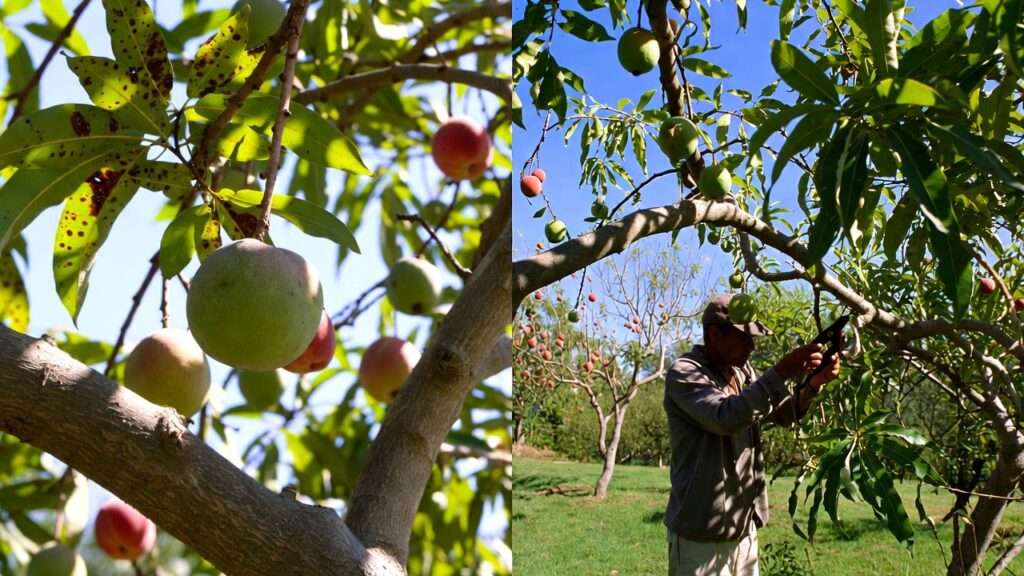
Imagine stepping into your backyard orchard on a warm spring morning, excited to see your mango tree bursting with new growth or your peach branches heavy with promising fruit—only to find leaves curling with dark, irregular spots, young fruits developing sunken lesions, and entire shoots wilting away 🍂😔. This heartbreaking scene is all too common for fruit tree growers, especially in humid, rainy regions like many parts of Bangladesh and tropical/subtropical areas worldwide. The culprit? Anthracnose disease in fruit trees—a sneaky fungal infection that can slash your harvest by 50–80% or more if left unchecked.
Anthracnose isn’t just a cosmetic issue; it weakens trees, causes premature fruit drop, leads to post-harvest rot, and can even kill young branches over time. Caused primarily by fungi in the genus Colletotrichum (and sometimes related species like Neofabraea in apples), this disease thrives in warm, wet conditions—exactly the weather many home gardeners face during the growing season 🌧️🔥. But here’s the good news: with early identification, smart cultural practices, timely treatments, and strong prevention, you can protect your trees and enjoy bountiful, healthy fruit year after year 🍑✨.
In this comprehensive guide, we’ll cover everything you need—from understanding the disease and spotting symptoms early to proven organic and conventional treatments and long-term prevention strategies. Drawing from university extension resources (like UC IPM, Penn State Extension, and WSU Tree Fruit), field experiences, and integrated pest management principles, this article goes beyond basic advice to deliver actionable, expert-level insights that truly solve the problem of losing your precious harvest to anthracnose.
What Is Anthracnose Disease in Fruit Trees? 🌱
Anthracnose refers to a group of fungal diseases affecting leaves, shoots, flowers, and especially fruit on many tree species. The primary pathogens are species of Colletotrichum (e.g., C. gloeosporioides, C. acutatum), which are hemibiotrophic fungi—meaning they start with a subtle biotrophic phase (living off living tissue without immediate symptoms) before switching to destructive necrotrophic growth (killing and feeding on dead tissue).
The fungal life cycle is straightforward yet devastating:
- Overwintering — The fungus survives in fallen leaves, mummified fruit, infected twigs, cankers, or even latent infections on buds and branches 🔄.
- Spring activation — Warm rains (75–86°F or 24–30°C) trigger spore production (conidia).
- Dispersal — Spores splash via rain or overhead irrigation onto young, tender tissues.
- Infection — Spores germinate in moisture, penetrate plant surfaces (often through wounds or natural openings), and establish infection—often remaining latent until conditions favor symptom development.
- Spread — New spores form on lesions (often salmon-pink masses under humidity), restarting the cycle 💧.
This splash-dispersed nature makes anthracnose worse in dense canopies, poorly ventilated orchards, or during prolonged wet periods—common in humid climates.
Common Fruit Trees Affected by Anthracnose 🍋🍏
Anthracnose hits a wide range of fruit trees, but some are especially vulnerable:
- Mango — Often the hardest hit; causes blossom blight, fruit spotting, and severe post-harvest rot—major issue in tropical regions like South Asia 🌴.
- Peach & other stone fruits (nectarine, plum, cherry) — Leads to fruit rot, twig blight, and cankers 🍑.
- Apple — Known for bull’s-eye rot on fruit (post-harvest sunken spots with concentric rings) and branch cankers 🍏.
- Citrus (oranges, lemons) — Fruit lesions and drop.
- Avocado — Body rot and stem-end rot, with sunken dark areas leading to decay 🥑.
- Papaya & others — Similar fruit spotting and rot.
Regional note: In areas with high rainfall and humidity (like Barisal Division in Bangladesh), mango and tropical fruits suffer most. Choosing resistant varieties (e.g., certain mango cultivars like ‘Nam Dok Mai’ in some contexts or anthracnose-tolerant apples) can make a huge difference when planting new trees 🌱.
How to Identify Anthracnose: Key Symptoms 📸
Early detection is your best defense—symptoms often appear in wet springs but can progress rapidly.
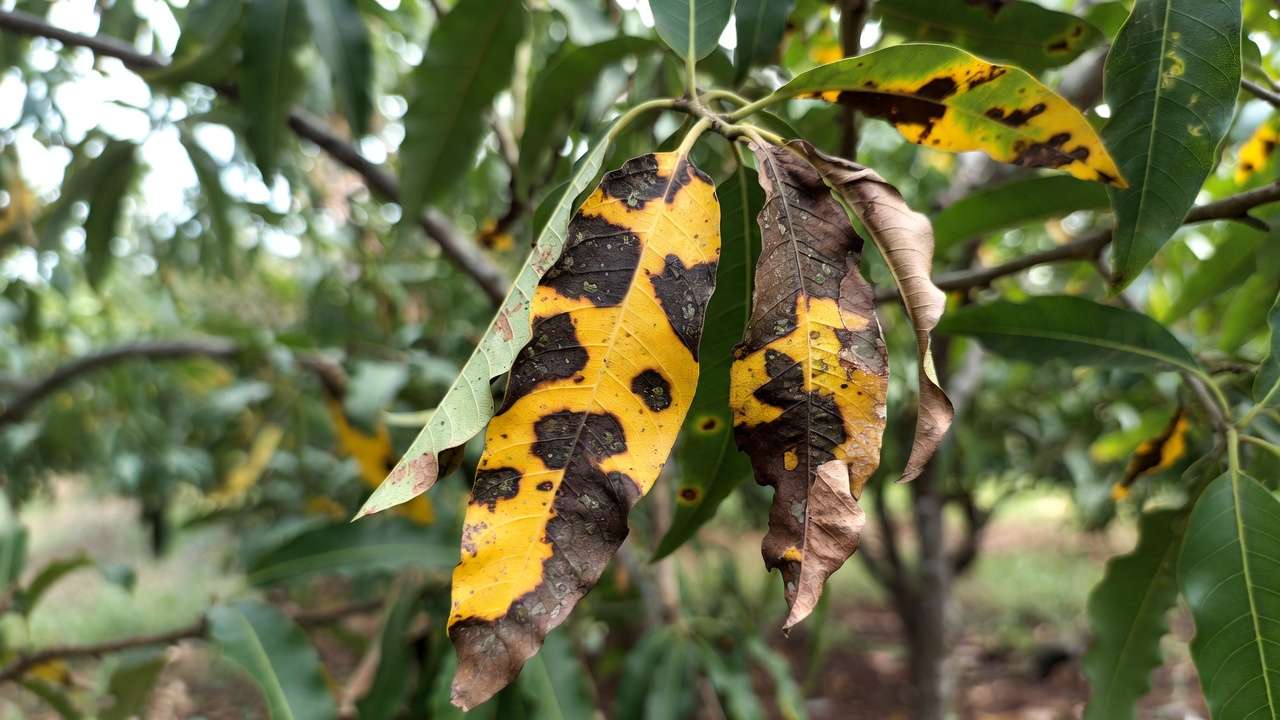
Early Leaf Symptoms (H3) Irregular brown to black spots, often vein-bordered or angular; yellow halos around lesions; leaves curl, wilt, turn papery, and drop prematurely 🍂. Severe defoliation weakens the tree and reduces next year’s fruit set.
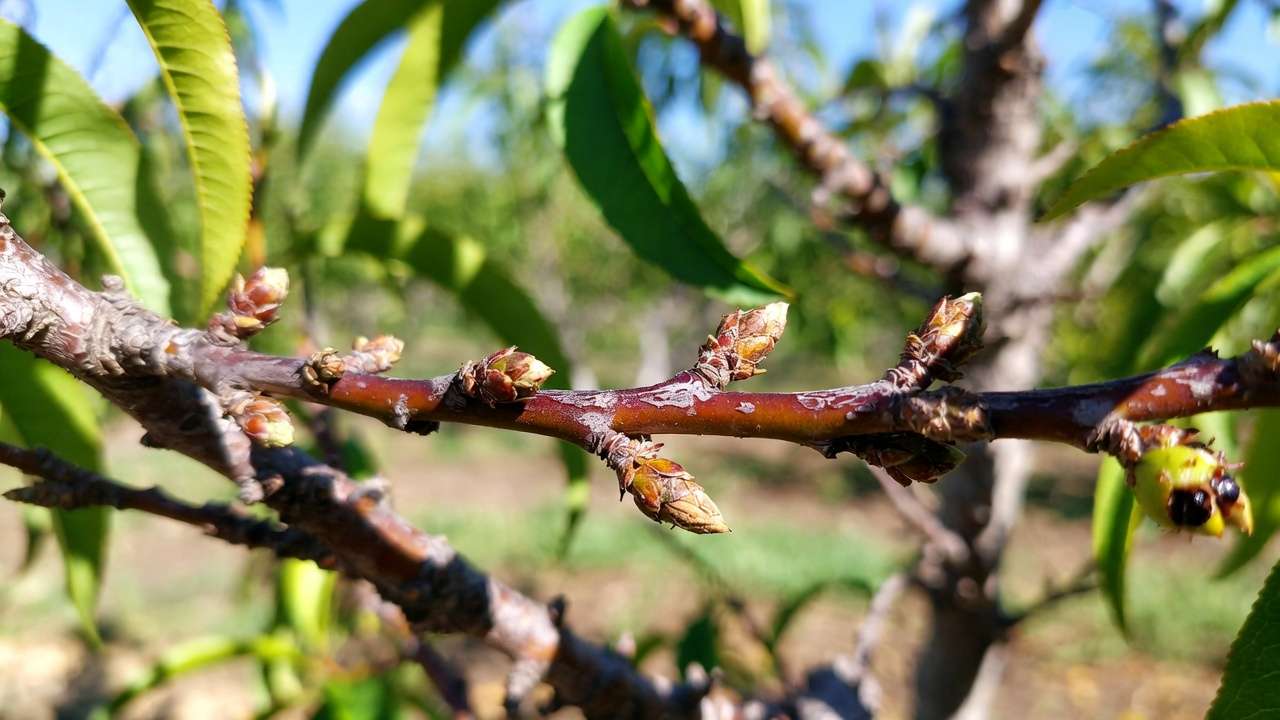
Shoot & Twig Symptoms (H3) Blighted shoot tips (dieback from the end); sunken, discolored cankers on twigs/branches; gummy ooze in some cases (e.g., peaches). Infected twigs may die over winter, releasing spores in spring ✂️.
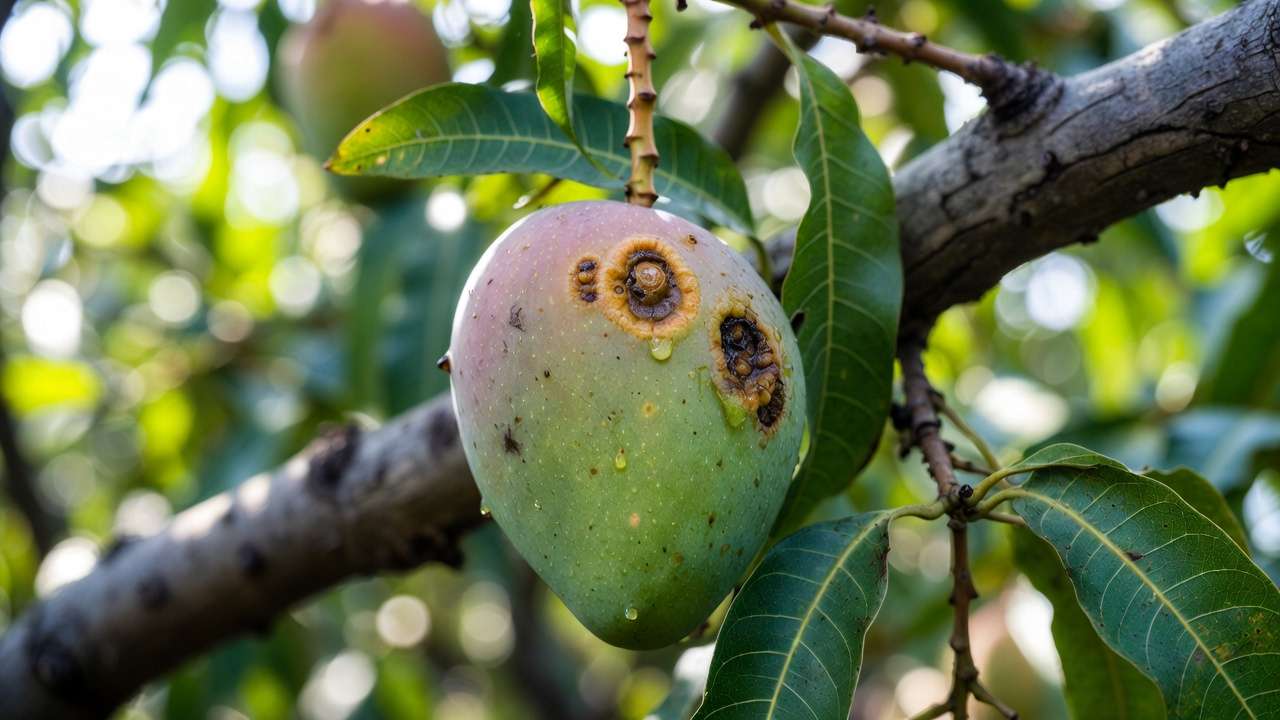
Fruit Symptoms (H3) Small, dark, sunken spots appear → enlarge into watery, rotting areas; concentric rings or target-like patterns (bull’s-eye in apples); salmon/orange spore masses in humid weather; fruit becomes mushy, shrivels, or rots on the tree or in storage 🍅🚫. Green fruit can get latent infections that activate during ripening.
Flower & Young Fruit Impact (H3) Blossom blight (flowers turn brown/black and drop); young fruitlets abort or develop spots early.
Timing tip: Watch for symptoms after rainy periods in spring/early summer. Compare your tree to reliable photos—look for those characteristic sunken lesions with spore masses for confirmation.
What Causes Anthracnose Outbreaks? 🌧️🔥
Understanding the triggers behind anthracnose outbreaks is crucial for stopping it before it spirals out of control. The disease doesn’t strike randomly—it’s heavily driven by environmental conditions that favor the fungus.
The primary causes include:
- High humidity and prolonged leaf wetness — Relative humidity above 80–90% (ideally near 100% for spore germination) is essential. Spores need free water (from rain, dew, fog, or overhead irrigation) on plant surfaces for at least 6–12 hours to infect successfully 💧.
- Warm temperatures — Optimal range is 75–86°F (24–30°C), though infection can occur from 50–95°F depending on the Colletotrichum species. In cooler wet springs (around 60–75°F), symptoms may still develop but slower.
- Frequent rain or splashing water — Rain splash is the main dispersal method—spores are knocked from infected debris or lesions onto healthy tissues. Overhead sprinklers worsen it by mimicking rain and wetting foliage for hours.
- Tree stress and poor site conditions — Weakened trees (from nutrient deficiencies, drought followed by heavy rain, compacted soil, or overcrowding) are more susceptible. Dense canopies trap humidity and reduce drying time after rain 🌳🚫.
In regions like Barisal Division (with its high rainfall, especially during pre-monsoon and monsoon seasons), these factors align perfectly for severe outbreaks on mango, jackfruit, and other tropical fruits. Latent infections from previous seasons can “wake up” when wet weather returns, explaining why symptoms sometimes explode suddenly after a dry spell.
Effective Treatment Strategies for Anthracnose 🍑🧴
Once symptoms appear, quick action can limit spread and save remaining fruit—though prevention is always better than cure. Treatments work best when started early (at first sign or preventively during risky weather).
Cultural & Immediate Actions (H3)
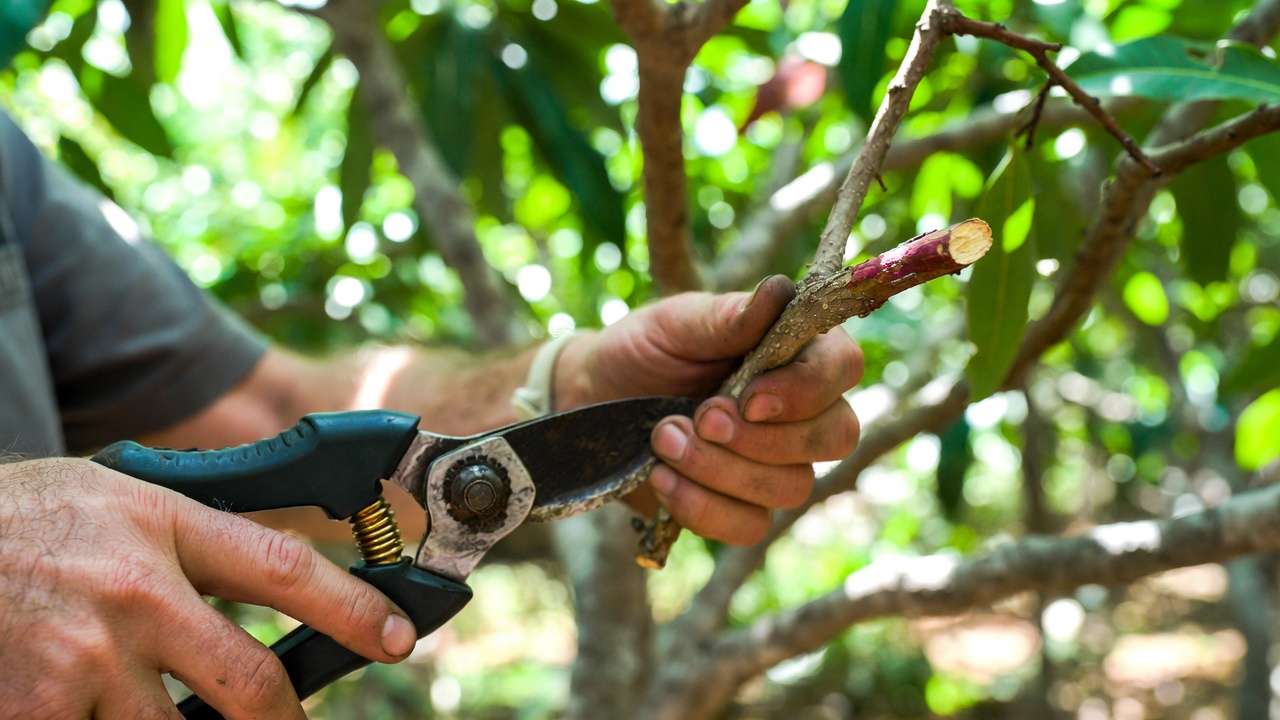
- Prune out infected shoots, twigs, and branches immediately—cut 6–12 inches below visible symptoms and sanitize tools with 10% bleach or alcohol between cuts ✂️🔥. Remove and destroy (burn or bag) all fallen leaves, mummified fruit, and debris—never compost infected material!
- Improve airflow by thinning dense canopies and spacing trees properly.
- Switch to drip or low-angle irrigation to keep foliage dry. These steps reduce inoculum (spore sources) dramatically—often by 50–70% in one season.
Organic & Natural Treatments (H3) Home gardeners and eco-conscious growers love these low-impact options:
- Copper-based fungicides (e.g., copper soap, Bordeaux mixture, or fixed copper like Liqui-Cop) — Excellent protectants; apply every 7–14 days during wet periods. Safe for most fruit trees if used per label (avoid high heat to prevent leaf burn).
- Neem oil or horticultural oils — Combined with baking soda (1 tbsp per gallon water + 1 tsp oil) for a homemade spray; disrupts fungal growth.
- Biofungicides — Products with Trichoderma harzianum (e.g., Trianum Shield) or Bacillus subtilis compete with Colletotrichum and boost plant defenses 🌿. Apply as soil drench or foliar spray.
- Other naturals — Potassium bicarbonate or sulfur-based products show promise in trials. Start at bud swell or first symptoms; repeat after rain. These are most effective preventively or in low-pressure years—combine with cultural practices for best results.
Conventional Fungicide Options (H3) For moderate to severe pressure:
- Protectants like mancozeb, chlorothalonil, or captan — Broad-spectrum; apply every 7–14 days during bloom/fruit set in rainy weather. Rotate to prevent resistance.
- Systemics — Azoxystrobin (QoI group), propiconazole (DMI), or trifloxystrobin — Penetrate tissue for curative action; use sparingly (follow FRAC guidelines to avoid resistance).
- Timing is key: Start at pink bud/bud break for stone fruits or pre-flowering for mangoes; continue through wet spells. Always check local regulations and pre-harvest intervals (PHI)—many are safe for edibles if followed. Expert tip: Tank-mix protectants with systemics for broader coverage, but rotate chemical classes.
Post-Harvest Management (H3) For fruits like mango, apple, or avocado: Cool storage (avoid chilling injury—around 50–55°F for mangoes) slows rot. Hot water dips (122–131°F for 3–10 min) or vapor heat kill surface spores. Sort and discard spotted fruit immediately to prevent spread in storage 🥭❄️.
Prevention: The Best Long-Term Defense 🌱🛡️
The real win against anthracnose comes from stopping it before it starts—integrated strategies can cut reliance on sprays by 70–80%!
Cultural Practices (H3)
- Plant resistant or tolerant varieties: For mango, try ‘Keitt’, ‘Tommy Atkins’, or local tolerant types; for apples, avoid highly susceptible ones.
- Space trees for good airflow (at least 15–20 ft apart); prune annually to open the canopy.
- Use mulch (but not too thick near trunk) to suppress splash; avoid overhead watering.
- Fertilize balanced—avoid excess nitrogen that promotes soft, susceptible growth.

Sanitation & Cleanup (H3) Fall/winter: Rake and destroy all debris. Prune dormant cankers. Disinfect tools religiously.
Monitoring & Timing (H3) Scout weekly in spring; use weather apps to predict rainy periods. Apply protectants before major rains.
Soil & Tree Health (H3) Healthy trees resist better—test soil, correct pH (6.0–7.0 for most fruits), and manage water stress.
FAQs About Anthracnose in Fruit Trees ❓🍏
Here are the most common questions home gardeners and fruit tree owners ask about anthracnose—answered with practical, evidence-based guidance.
1. Is anthracnose fatal to fruit trees? Not usually fatal in a single season for mature, healthy trees. However, repeated severe infections over years can weaken the tree significantly—leading to dieback, reduced vigor, fewer fruiting spurs, and eventual decline or death in young or stressed trees. Consistent prevention keeps most trees alive and productive for decades 🌳.
2. Can I eat fruit that has anthracnose spots? Small, early spots on otherwise firm fruit can often be cut away—the rest is safe to eat if there’s no rot or off odor. Once the fruit becomes soft, mushy, or shows extensive sunken rot, discard it to avoid potential mycotoxin risks (though rare with anthracnose). Always wash fruit thoroughly. For market or gift fruit, even minor spots reduce appeal—so prevention pays off 🥭🚫.
3. What’s the difference between anthracnose and black spot / scab / bacterial diseases?
- Anthracnose: Sunken dark lesions, often with concentric rings or salmon spore masses; affects fruit, leaves, twigs; splash-dispersed fungus.
- Black spot / apple scab (Venturia inaequalis): Velvety olive-green/black spots on leaves/fruit; mainly wind-dispersed; more common in cooler climates.
- Bacterial spot / canker: Oozing, water-soaked lesions; often angular on leaves; bacterial—not fungal. Correct ID prevents wasting the wrong treatment!
4. Are there natural predators or biological controls for anthracnose? Yes—beneficial microbes like Trichoderma spp., Bacillus subtilis, and certain yeasts compete with Colletotrichum on plant surfaces. Products like Serenade (Bacillus-based) or RootShield (Trichoderma) show good results in trials, especially when combined with cultural practices. Ladybugs and predatory mites help indirectly by reducing overall pest stress on trees 🌿🦋.
5. How do I prevent anthracnose in very rainy seasons like monsoon in Barisal?
- Choose tolerant varieties and plant in well-drained sites.
- Prune aggressively for airflow before monsoon.
- Apply copper-based protectant sprays preventively before heavy rains start (every 10–14 days).
- Remove all debris in late winter/early spring.
- Use drip irrigation and mulch to minimize splash. These steps dramatically reduce infection even in high-rainfall years like those common in southern Bangladesh 🌧️🛡️.
6. When should I start applying fungicides for anthracnose? Preventively: At bud swell / pink bud stage (stone fruits) or before flowering (mango, avocado). Curatively: At the very first symptom in wet weather. Continue every 7–14 days during periods of frequent rain until fruit is pea-sized or larger (depending on crop and product label). Stop well before harvest per pre-harvest interval (PHI).
7. Does anthracnose spread to other plants in my garden? Yes—many Colletotrichum species have wide host ranges. It can infect shade trees (e.g., oak, maple), vegetables (beans, peppers, tomatoes), and ornamentals. Keep fruit tree debris away from veggie beds and sanitize tools to limit cross-contamination.
8. My tree had anthracnose last year—will it come back every season? Not necessarily—if you remove overwintering sources (debris, cankers) and protect new growth during wet periods, you can greatly reduce or eliminate annual outbreaks. Sanitation + prevention breaks the cycle 🔄.
Conclusion 🌳❤️
Anthracnose disease in fruit trees is a frustrating but manageable challenge for backyard growers and small-scale orchardists alike. By learning to spot the telltale sunken spots, irregular leaf lesions, and blossom blight early, acting quickly with pruning, sanitation, and targeted treatments, and—most importantly—building strong preventive habits, you can protect your mango, peach, apple, or other fruit trees from devastating losses.
The key takeaway? Prevention beats cure every time. Start this season with a thorough cleanup of fallen leaves and mummified fruit, prune for better airflow, consider resistant varieties for future plantings, and keep an eye on weather forecasts so you can protect your trees before the fungus gains a foothold 🍑✨.
Healthy, productive fruit trees don’t happen by accident—they’re the reward of consistent, informed care. Take a walk around your garden this week, inspect those leaves and fruits, and put even one or two of these strategies into action. Your trees (and your future harvests) will thank you!
If you’ve battled anthracnose in your own garden—especially here in Barisal’s humid climate—share your experiences, successes, or questions in the comments below. And if you found this guide helpful, subscribe for more practical tree care tips, seasonal checklists, and organic solutions tailored to tropical and subtropical growers like you 🌴📩.
Stay green and keep growing! 🌱🍎











