
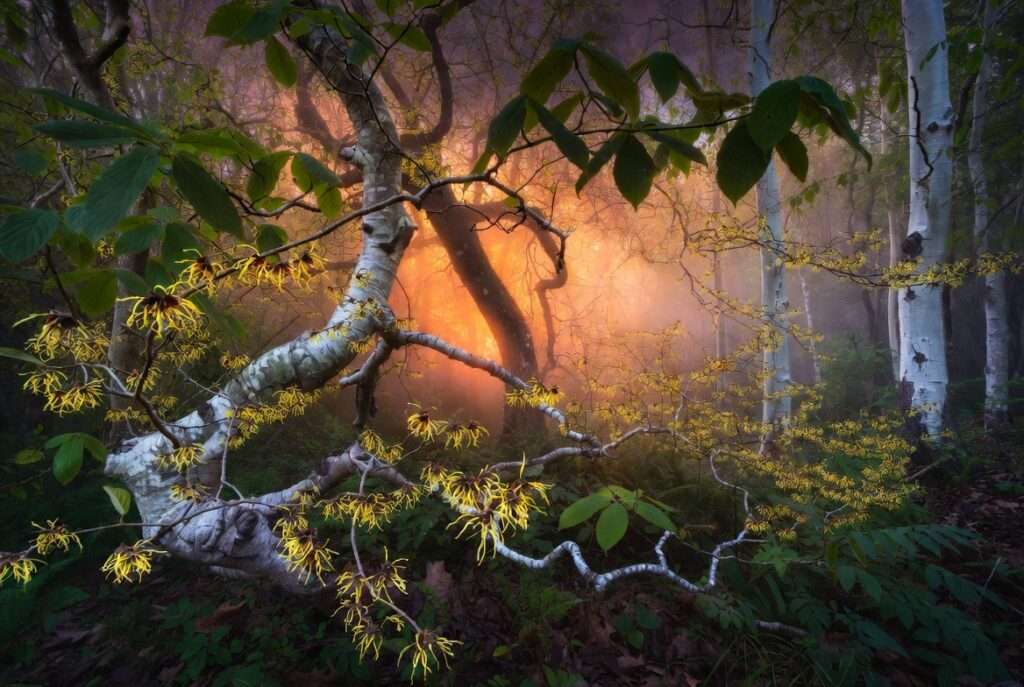
Imagine stepping into a misty Appalachian hollow at twilight. Twisted branches creak overhead like old storytellers, yellow witch hazel flowers glow against the fading light, and the air feels thick with centuries of whispered legends. For generations, mountain families have lived alongside these trees—not just as shade or timber, but as living spirits of protection, warning, healing, and magic.
If you’ve ever searched for an Appalachian mythology tree, you’re not alone. Whether you’re a backyard gardener, a heritage plant lover, or someone drawn to the rich folklore of the Southern and Central Appalachians, you want more than pretty pictures. You want to understand these legendary trees, identify them with confidence, and—most importantly—grow them successfully in your own landscape so their magic and beauty can thrive for decades.
As a certified arborist and lifelong Appalachian plant enthusiast with 15+ years helping homeowners nurture these culturally significant species, I’ve written this complete guide to bridge the gap between folklore and modern tree care. You’ll discover the exact identification keys, the real (and respectful) stories behind the myths, and proven, step-by-step techniques that prevent common failures and help your trees flourish. By the end, you’ll be ready to plant your own piece of Appalachian heritage—with confidence and joy. 🌿❤️
The Deep Roots of Appalachian Tree Folklore 🪄🌳
Trees have always been more than plants in Appalachian culture. They’re story-keepers, protectors, and sometimes even warnings passed down through Scotch-Irish settlers, Cherokee traditions, and African-American hoodoo practices that blended in the mountains.
Why Trees Hold Power in Appalachian Culture In the rugged, isolated hollows, nature was both provider and teacher. Trees offered food, medicine, shelter—and spiritual guidance. A hollow sycamore could literally house a family during hard times. A blooming witch hazel in November signaled that winter was coming, but also that hope (and healing) never fully dies. These beliefs weren’t superstition for its own sake; they were practical wisdom wrapped in storytelling that helped mountain people survive and stay connected to the land.
Common Themes – Spirits, Protection, Warnings, and Healing Across Appalachian folklore, certain patterns repeat:
- Protection: Trees like oak and witch hazel were planted or hung with charms to keep “haints” (ghosts) away.
- Warnings: A sudden pine death or a twisted “witching tree” might signal danger ahead.
- Healing: Many trees provided literal medicine—witch hazel astringent is still used today!
- Spirits: Trees were seen as homes for ancestors or nature spirits, so harming one without need or respect could bring misfortune.
“Don’t Look in the Trees” and Other Living Superstitions One of the most enduring pieces of folklore is the gentle warning: “Don’t look too long in the trees at night.” It’s not about monsters—it’s about respecting the unseen world and staying grounded. Elders still share these tales not to scare, but to teach mindfulness and gratitude for the living forest. As a tree care expert, I always remind clients: these stories encourage us to observe our trees closely… just with love and care instead of fear.
Expert Insight Folklorist and Appalachian historian Dr. Loyal Jones once noted that “the trees were never just wood—they were family.” Respectful harvesting (never taking more than you need) keeps both the tree and the tradition healthy.
Meet the Legendary Trees – Identification, Folklore & Care 🌲📖
Here’s where the magic meets the mulch. Below are the most iconic Appalachian mythology trees, complete with visual ID tips, the real folklore behind them, and expert care instructions tailored for home landscapes. Each profile is designed to help you succeed—no matter your garden size or experience level.
Witch Hazel – The Halloween Witch of the Woods 🌼🪄 Hamamelis virginiana is the undisputed star of Appalachian tree folklore. Its zigzag branches and spidery yellow flowers bloom in October–November, long after other trees have gone bare—earning it the nickname “witch” (from the old English “wych” meaning flexible, not magic… though the magic stuck anyway!).
Identification at a Glance
- Zigzag, smooth gray branches that look like they were drawn by a cartoonist.
- Fragrant, ribbon-like yellow petals that “pop” seeds up to 30 feet when ripe.
- Grows 15–30 feet tall, often as a multi-stemmed shrub-tree.
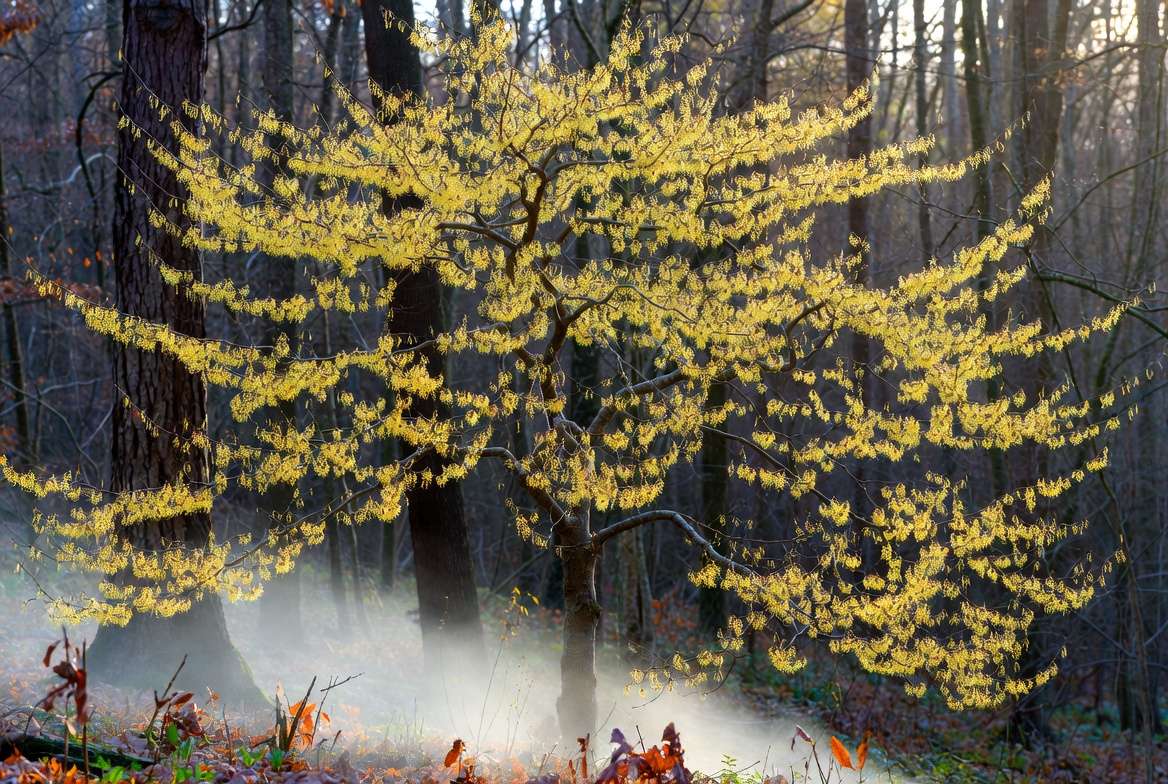
Folklore Mountain healers used forked witch hazel branches as dowsing rods to find water. Bundles hung over doors kept away evil spirits, and the late bloom made it a symbol of endurance and second chances. Cherokee traditions also valued it for its soothing properties.
Expert Care for Thriving Growth Witch hazel loves the same cool, moist, slightly acidic soil (pH 5.5–6.5) found in Appalachian hollows. Plant in partial shade to full sun. Water deeply the first two years, then it becomes remarkably drought-tolerant. Prune lightly in late winter to maintain shape—never in fall when it’s blooming! It’s naturally pest-resistant, making it perfect for low-maintenance mythical gardens.
Pro Tip Box 🌿 Want homemade witch hazel astringent? Harvest a few twigs (with permission and gratitude), simmer in water, and strain. It’s gentle on skin and keeps the folklore alive in your medicine cabinet!
American Chestnut – The Fallen Giant of Appalachia 🌰🏔️
Before the chestnut blight struck in the early 1900s, the American chestnut (Castanea dentata) was known as the “redwood of the East.” These towering giants once made up nearly a quarter of the hardwood forests in Appalachia, reaching heights over 100 feet with massive trunks. Their sweet nuts fed people, livestock, and wildlife, while the rot-resistant wood built homes, furniture, and fences. Mountain families called it the most useful tree in the forest.
Identification at a Glance
- Large, alternate, lance-shaped leaves with prominent teeth along the edges.
- Smooth, dark brown bark on young trees that becomes deeply furrowed with age.
- In summer, long creamy-white catkins (flowers); in fall, spiky burs containing 2–3 shiny brown nuts.
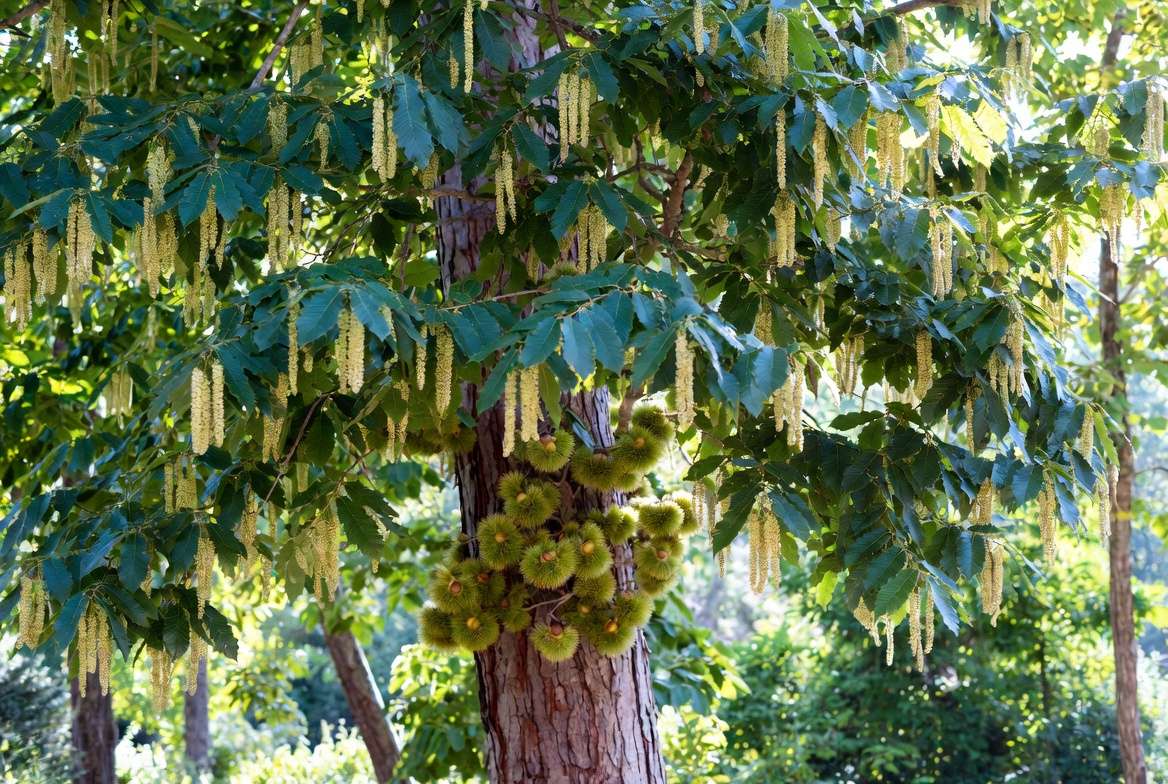
Folklore & Cultural Significance Cherokee and other Native tribes revered the chestnut as a gift from the Creator. Settlers relied on the annual nut “mast” for food and income—selling nuts by the bushel. Old-timers still tell stories of chestnut trees so large that families could shelter inside hollow trunks. When the blight arrived (an Asian fungus), it killed nearly every mature tree, leaving ghostly skeletons. Some saw this as a foretelling of hard times, yet the tree’s spirit lives on through resprouts and restoration efforts.
Expert Care for Thriving Growth Pure American chestnuts are highly susceptible to blight, so most home growers now plant blight-resistant hybrids or backcross varieties developed by organizations like The American Chestnut Foundation (TACF). These retain much of the American chestnut’s flavor and growth habit while gaining resistance from Chinese or Japanese chestnut genetics.
Plant in well-drained, acidic soil (pH 4.5–6.0) on a gentle slope for best drainage and air circulation. Full sun (at least 6–8 hours) is essential for flowering and nut production. Space trees 30–40 feet apart to allow room for their spreading canopy and cross-pollination.
Water deeply during the first 2–3 years, especially in dry spells. Apply a 3–4 inch layer of organic mulch (keep it away from the trunk) to retain moisture and suppress weeds. Prune only to remove dead or damaged branches in late winter. Watch for blight cankers—swollen or sunken areas on the bark—and report suspicious signs to local extension services or TACF to support ongoing restoration science.
Pro Tip Box 🌰 Backyard chestnuts can help conservation! Many hybrids begin producing nuts in 3–7 years. Harvest when burs open naturally, and share extras with wildlife or neighbors. By planting these legendary trees, you’re literally helping bring back a keystone species to the Appalachians.
Sycamore – The Hollow Guardian Tree 🌳🏠
The American sycamore (Platanus occidentalis), with its ghostly white, peeling bark, earned the nickname “ghost of the forest” among Native peoples. In Appalachia, these massive trees often grew along streams and in rich bottomlands, sometimes reaching 100+ feet tall with trunks so wide that early settlers used hollow specimens as shelters, barns, or even temporary homes during harsh winters.
Identification at a Glance
- Mottled, camouflage-like bark that peels in large flakes, revealing creamy white, green, and tan inner layers.
- Large, maple-like leaves with 3–5 lobes.
- Round, fuzzy seed balls that dangle like ornaments through winter.
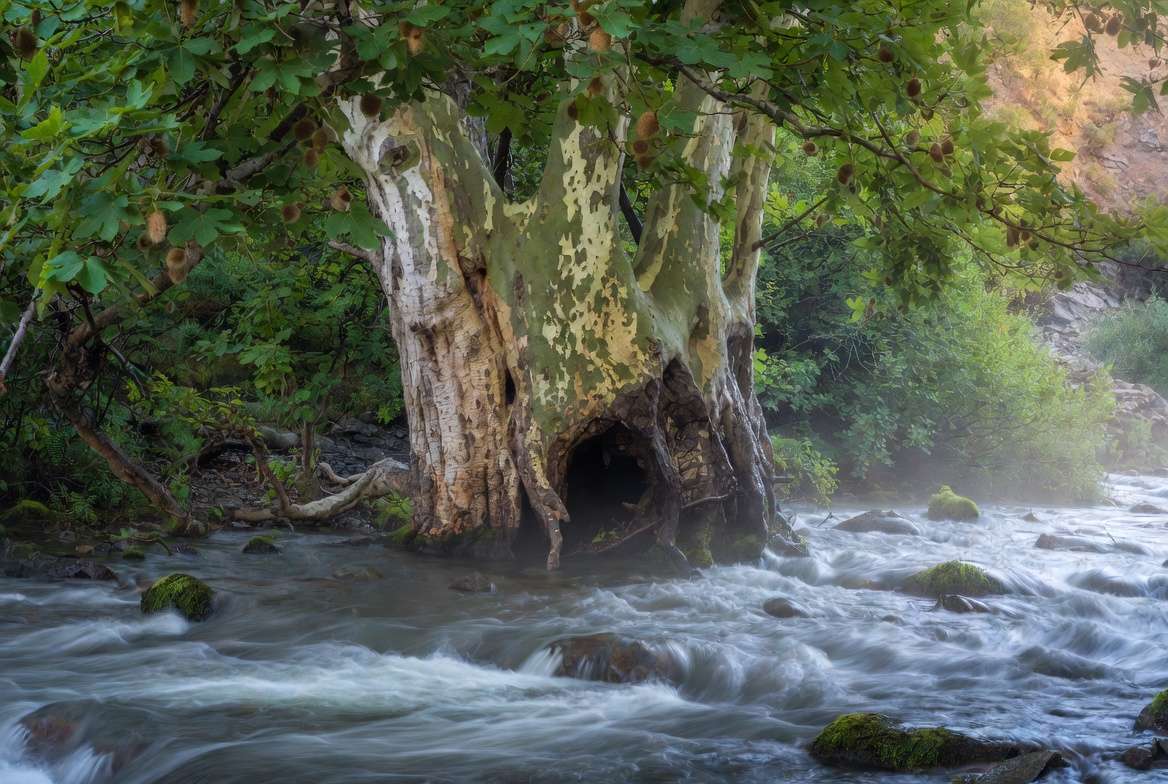
Folklore Sycamores were seen as guardians—hollow ones literally protected families. Their “ghostly” appearance added mystery; some tales warned of spirits living inside, while others celebrated them as symbols of resilience and longevity. In broader American folklore, they connect the visible and hidden worlds.
Expert Care Sycamores are tough and urban-tolerant but prefer moist, well-drained soil near water sources. They handle clay or loam and tolerate occasional flooding. Plant in full sun to partial shade. They grow fast—up to 2 feet per year when young—so give them plenty of space (50+ feet from structures).
Water young trees regularly until established. They are relatively drought-tolerant once mature but appreciate deep watering during extreme dry periods. Prune in late winter to remove crossing branches or storm damage; avoid heavy pruning as the wood can be brittle. Watch for anthracnose (a fungal disease causing leaf drop in spring)—good air circulation and avoiding overhead watering help prevent it. Their strong roots make them excellent for erosion control along streams.
Dogwood – The Bleeding Tree of Legend 🌸❤️
Flowering dogwood (Cornus florida) lights up Appalachian springs with its delicate white or pink bracts. According to Christian legend popular in the mountains, the dogwood was once a tall, strong tree used for the cross at Calvary. In sorrow, it was cursed to remain small forever, but blessed with beautiful flowers shaped like a cross—each petal bearing nail marks and a crown of thorns in the center, with red spots resembling blood.
Identification at a Glance
- Small tree (15–30 feet) with layered, horizontal branches.
- Oval leaves that turn fiery red in fall.
- Four large white/pink bracts surrounding tiny true flowers in spring.
Folklore Beyond the crucifixion story, dogwood symbolized sacrifice, beauty emerging from hardship, and spring renewal. Mountain healers used the bark for medicinal tonics.
Expert Care Dogwoods thrive in partial shade to filtered sun—too much direct sun scorches leaves in hot climates. Plant in rich, well-drained, acidic soil (pH 5.5–6.5). They dislike wet feet or heavy clay.
Water consistently the first few seasons. Mulch heavily to keep roots cool. Prune only after flowering to shape or remove dead wood. The biggest threat is dogwood anthracnose—choose disease-resistant varieties and ensure good airflow. Companion plant with native ferns or azaleas for a beautiful understory effect.
Weeping Willow & Pine – Messengers of Life & Death 🌊🌲
Weeping Willow (Salix species): Graceful, water-loving trees whose drooping branches “sweep the footprints of the recently departed” in Appalachian hoodoo traditions. They symbolize grief, healing, and emotional release. Plant near ponds or streams in moist soil; they grow fast but need space and regular pruning to prevent storm damage.
Pine (various species like white pine or Virginia pine): The watchful grandfather of the mountains. Pine needles are used for cleansing, protection, and prosperity spells. A sudden pine death was sometimes seen as a warning. Pines are hardy evergreens—plant in full sun and well-drained soil. They tolerate poor conditions and provide year-round shelter for wildlife.
Oak, Walnut & Witching Trees – The Grandfathers & the Warnings 🪵⚠️
Oak: The strong grandfather tree—white oak for home protection and lightning resistance, red oak for strength and healing. Plant in full sun with room to grow; they support incredible biodiversity.
Black Walnut: Known for “grumpy” allelopathic roots that inhibit some nearby plants, but valued for nuts and durable wood. Folklore sometimes warns against planting it too close to homes or gardens.
Witching Trees: Twisted, unusual specimens (sometimes any oddly shaped tree) were avoided or treated with great respect. Never cut one without deep consideration—many elders advised leaving them as homes for spirits. Instead, plant a new respectful tree nearby and observe from a distance.
Step-by-Step Expert Guide to Growing Your Own Mythical Appalachian Garden 🌱🪴
Creating a thriving Appalachian-inspired grove combines folklore respect with modern horticulture best practices.
Site Selection & Soil Secrets Choose a site mimicking mountain hollows: partial shade for understory trees like dogwood and witch hazel, full sun for chestnuts and oaks. Test soil pH—most prefer slightly acidic (5.5–6.5). Improve drainage with raised beds or organic matter if needed.
Planting Techniques That Honor Tradition Many mountain gardeners still plant by the moon: root crops and trees during the waning moon for stronger roots. Dig holes twice as wide as the root ball but no deeper. Backfill with native soil mixed with compost. Water thoroughly and mulch. Whisper a thank-you to the land as you plant—it keeps the spirit alive!
Seasonal Care Calendar
- Spring: Prune after flowering (dogwood, witch hazel). Fertilize lightly with balanced organic product.
- Summer: Deep water during droughts. Monitor for pests.
- Fall: Plant new trees. Collect seeds or nuts. Protect young trunks from rodents.
- Winter: Minimal pruning on dormant trees. Enjoy witch hazel blooms!

Troubleshooting Common Problems Yellow leaves? Check pH or drainage. Sudden dieback? Could be blight, anthracnose, or environmental stress—don’t assume “curse,” test scientifically. Natural remedies like neem oil or improved airflow often solve issues without chemicals.
Propagation Mastery Grow witch hazel from seed (stratify in fridge), dogwood from cuttings, chestnuts from stratified nuts. Success rates reach 80–90% with proper technique and patience.
Bonus Tip Box 🌙 Moon-Planting Schedule: New moon for starting seeds; full moon for transplanting established trees.
🐛 Natural Pest Repellents from Folklore: Pine needle tea spray for cleansing, or companion planting marigolds and garlic around young trees.
Modern Magic – Safe & Respectful Ways to Bring Folklore into Your Yard 🪄🌿
Design an “Enchanted Appalachian Grove” with layered planting: tall oaks or chestnuts as backbone, mid-layer witch hazel and dogwood, ground covers like ferns. Create a safe bottle tree using colored bottles on branches (inspired by Southern traditions) for beauty without harm. Always prune ethically—take only what you need, thank the tree, and never girdle or top living specimens.
Conservation, Safety & the Future of These Legendary Trees ♻️🛡️
Climate change, invasive pests, and habitat loss threaten these species. Backyard plantings of blight-resistant chestnuts, disease-resistant dogwoods, and natives help corridors and genetic diversity. Report unusual tree deaths to extension services. Safety note: Large old trees can have weak limbs—have them inspected by a certified arborist before building near them. “Witching trees” that are truly hazardous (dead or unstable) should be removed professionally, but healthy unusual specimens deserve protection.
Conclusion Appalachian mythology trees are far more than beautiful plants—they are living bridges to heritage, resilience, and wonder. By understanding their folklore and applying expert care techniques, you can grow thriving specimens that honor the past while beautifying the present. Whether you plant a single witch hazel for late-season magic or start a restoration chestnut grove, you become part of a larger story of stewardship.
Plant one this season. Watch it bloom, leaf, and endure. Share your photos and stories—let’s keep these legendary trees and their tales alive for future generations. 🌳❤️
Frequently Asked Questions (FAQs) ❓
What is the most magical tree in Appalachian folklore? Witch hazel often tops the list for its late blooms, dowsing history, and protective uses, though oak, chestnut, and sycamore are close contenders.
Can I grow a witch hazel in a small backyard? Yes! Choose a dwarf or naturally compact variety. It stays 10–20 feet and works well in partial shade.
Is it bad luck to cut down a pine tree? Folklore sometimes views sudden pine death as a warning, but healthy pruning or removal of hazardous trees is fine when done respectfully and safely.
How do I identify a real witching tree? Look for unusually twisted growth or old specimens with folklore associations. Treat all old trees with care rather than superstition.
Are blight-resistant chestnuts safe to plant? Yes—hybrids and backcross varieties are excellent for home landscapes and support restoration science.
How much water does a young Appalachian tree need? Deep watering (1–2 inches per week) the first 2–3 years, then taper as roots establish.
What companion plants work well in a mythical grove? Ferns, native azaleas, rhododendrons, and spring ephemerals create beautiful, low-maintenance layers.
This comprehensive guide gives you everything needed to identify, understand, and successfully grow these culturally rich trees. Your landscape—and the living tradition—will be richer for it.
If you’d like any section expanded, images added for specific trees (e.g., dogwood in bloom or chestnut burs), or adjustments for your site’s style, just let me know. Happy planting! 🌲✨











