
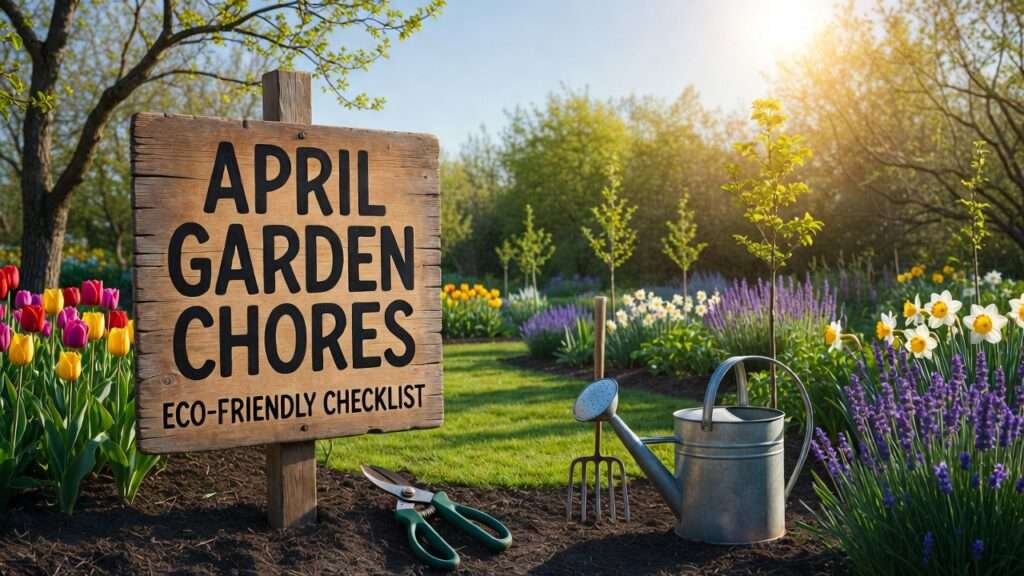
Imagine stepping into your yard on a crisp April morning, the sun warming the soil, birds chirping, and fresh green shoots pushing through last year’s remnants. This is the magical moment when your garden awakens from winter slumber—but only if you act now! April is the pivotal month that sets the stage for a lush, productive season. Get these chores right, and you’ll enjoy vibrant blooms, bountiful harvests, and resilient trees for months (and years) to come. Miss them, and you could face weed invasions, weak roots, or disappointing growth when summer heat hits.
In this April garden chores overview, you’ll find a complete, expert-curated checklist tailored for healthy plants and trees. Drawing from university extension services (like UMN Extension and OSU), proven horticultural best practices, and decades of real-world experience, this guide goes beyond basic lists to deliver actionable, in-depth advice. Whether you’re in a cooler northern zone or milder southern area, these steps address the real needs of spring gardeners: beating late frosts, building soil health, preventing pests early, and maximizing growth before summer stress. Let’s turn April into your garden’s strongest start yet! 🚀
Why April Is Critical for Plant and Tree Health 🌿 April marks the thrilling shift from winter dormancy to active growth in the Northern Hemisphere. Soil temperatures rise (often reaching 50°F+ for many plants), daylight hours lengthen dramatically, and spring rains provide natural moisture. This perfect storm fuels rapid root development, bud break, and new shoots—making it ideal for planting, dividing, and fertilizing.
However, risks loom large: late frosts can zap tender starts, weeds explode with warmer weather, nutrient demands spike as plants wake up, and diseases/pests emerge. Acting strategically now establishes deep roots that withstand summer droughts, reduces future maintenance, and supports pollinators and wildlife. The payoff? Healthier plants, stronger trees, and a more sustainable garden ecosystem.
Quick-Start April Garden Checklist (Printable-Friendly) 📋 Here’s your at-a-glance must-do list—expand on each below:
- 🌱 Clean up beds and remove winter debris thoughtfully
- 🧪 Test and amend soil for optimal nutrition
- 🌳 Prune wisely and plant trees/shrubs
- 🌼 Divide perennials and sow/plant cool-season crops
- 🐛 Scout for early pests and diseases
- 💧 Mulch generously, water deeply, and fertilize smartly
1. Garden Cleanup and Preparation Tasks A clean, prepped space prevents problems and makes planting joyful. Start early but gently—rushing can harm beneficial insects overwintering in debris.
Removing Winter Debris and Old Growth Gently rake fallen leaves, twigs, and dead annual stems. For perennials, cut back dead foliage to 6-8 inches but leave some hollow stems for pollinators like solitary bees 🐝. Clear branches around trees to avoid fungal spread. Push back heavy winter mulches as soil warms to prevent rot and allow shoots to emerge.
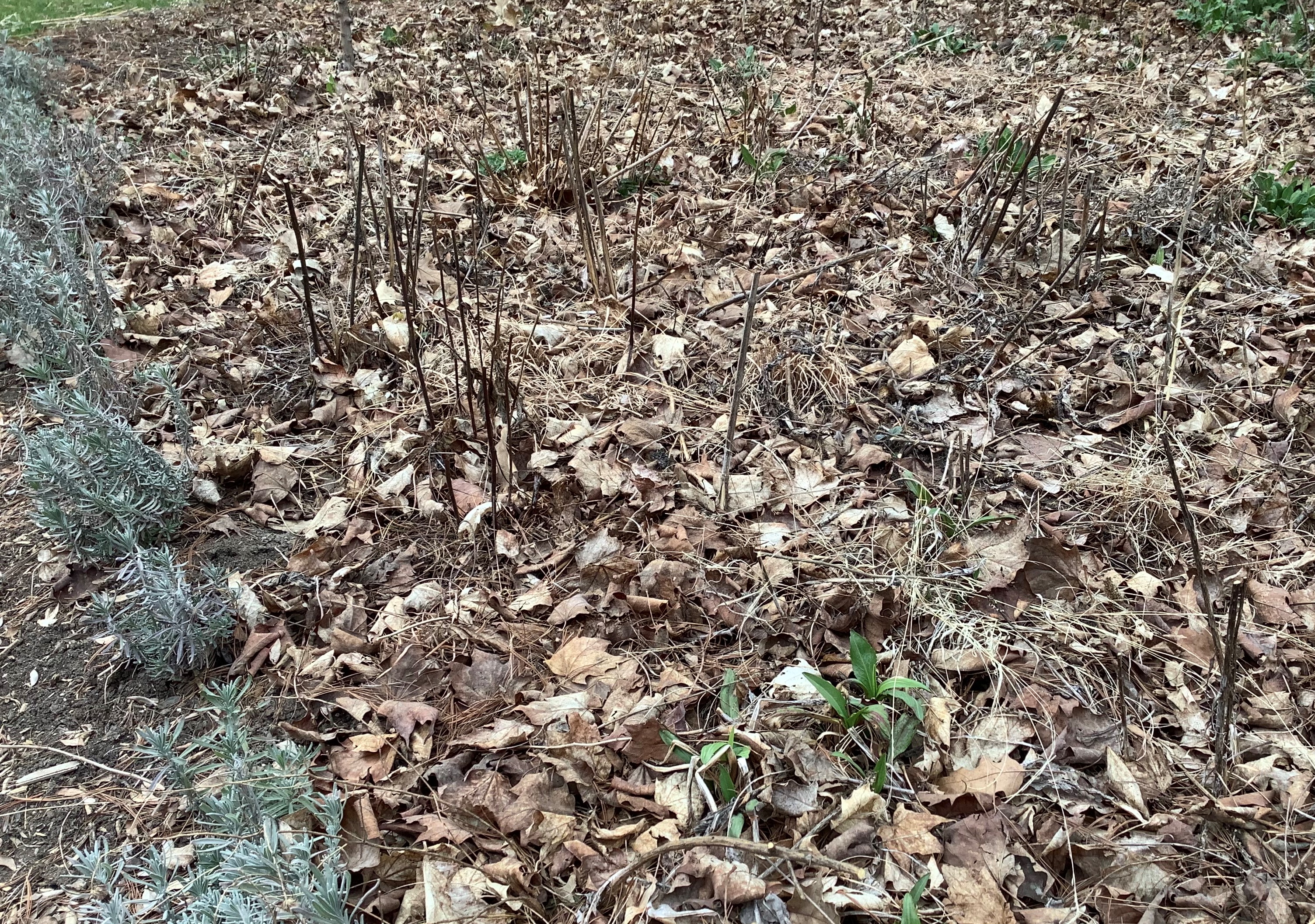
(Example of thoughtful spring cleanup: Leave some natural debris for wildlife while clearing paths and beds.)
Soil Preparation and Testing Never skip a soil test! Grab a kit from your local extension or garden center to check pH (ideal 6.0-7.0 for most plants) and nutrients. Incorporate 2-4 inches of compost or aged manure to improve structure, drainage, and microbial life. Loosen compacted areas lightly with a fork—avoid over-tilling to preserve soil biology.
Weed Control Before They Take Over Weeds love April’s moisture and warmth. Hoe or hand-pull tiny sprouts early—it’s far easier than battling mature ones later. Consider organic pre-emergents (like corn gluten meal) in established beds. Mulch soon after to smother future weeds.
2. Planting and Sowing in April Prime time for many crops—time it to your local last frost date (check tools like USDA zone maps).
Cool-Season Vegetables and Herbs Direct sow peas, carrots, radishes, lettuce, spinach, kale, and beets as soon as soil is workable (crumbles, not muddy). Plant onion sets, potatoes, and Swiss chard. Transplant hardened-off broccoli, cabbage, and cauliflower. These thrive in cool temps and provide early harvests.
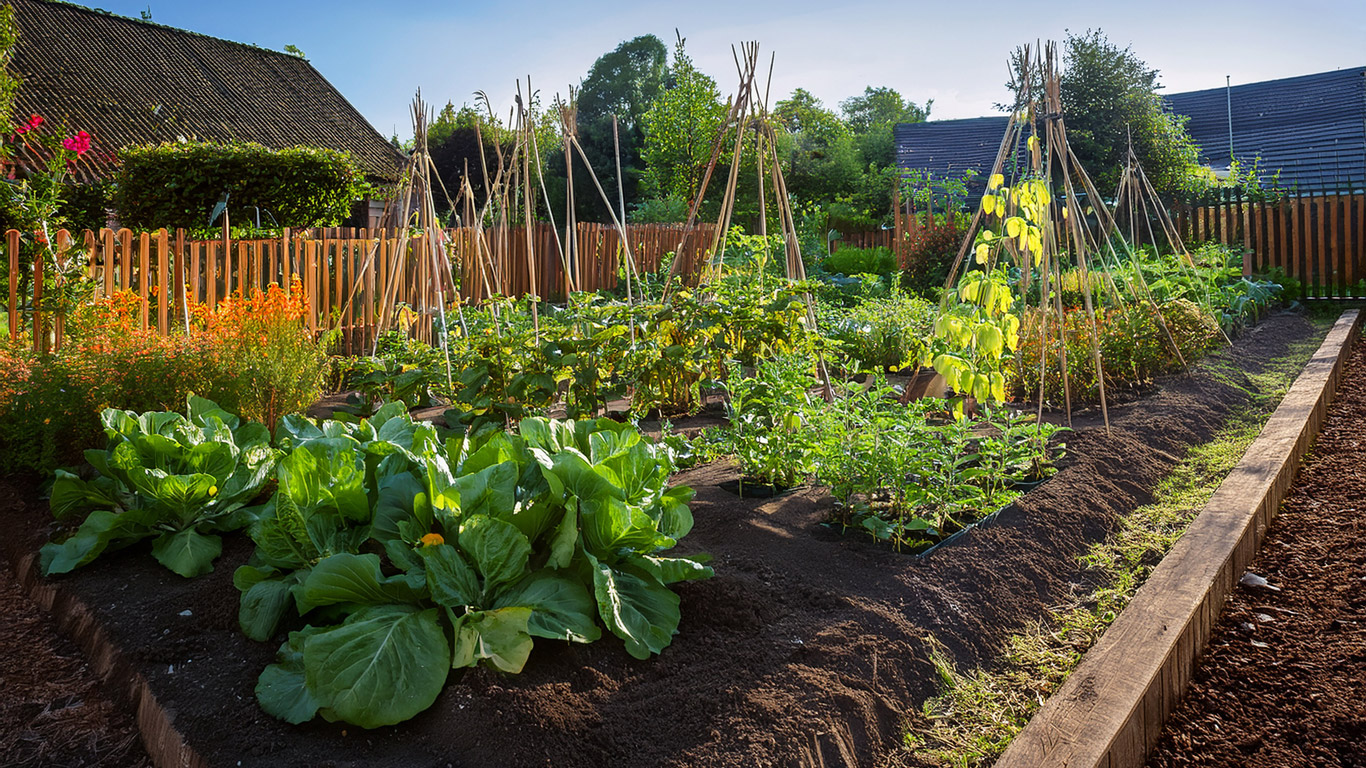
(Lush cool-season veggie beds ready for April planting—perfect for fresh salads soon!)
Warm-Season Crops (Timing Tips) Start tomatoes, peppers, and eggplants indoors early; harden off for late-April transplant in warmer zones (after frost risk passes). Sow beans, cucumbers, and squash toward month-end in milder areas. Use row covers for protection.
Flowers and Annuals Plant pansies, violas, and snapdragons for instant color 🎨. Direct sow hardy annuals like zinnias, marigolds, and cosmos. Add native wildflowers to boost pollinators and biodiversity.
3. Tree and Shrub Care in April Trees and shrubs are your garden’s long-term anchors—April planting gives roots months to establish before heat.
Planting and Transplanting Trees/Shrubs April is excellent for bare-root or container stock. Dig wide, shallow holes (2-3x root width), amend with compost, plant at original depth, and water deeply. Stake only if needed for wind.
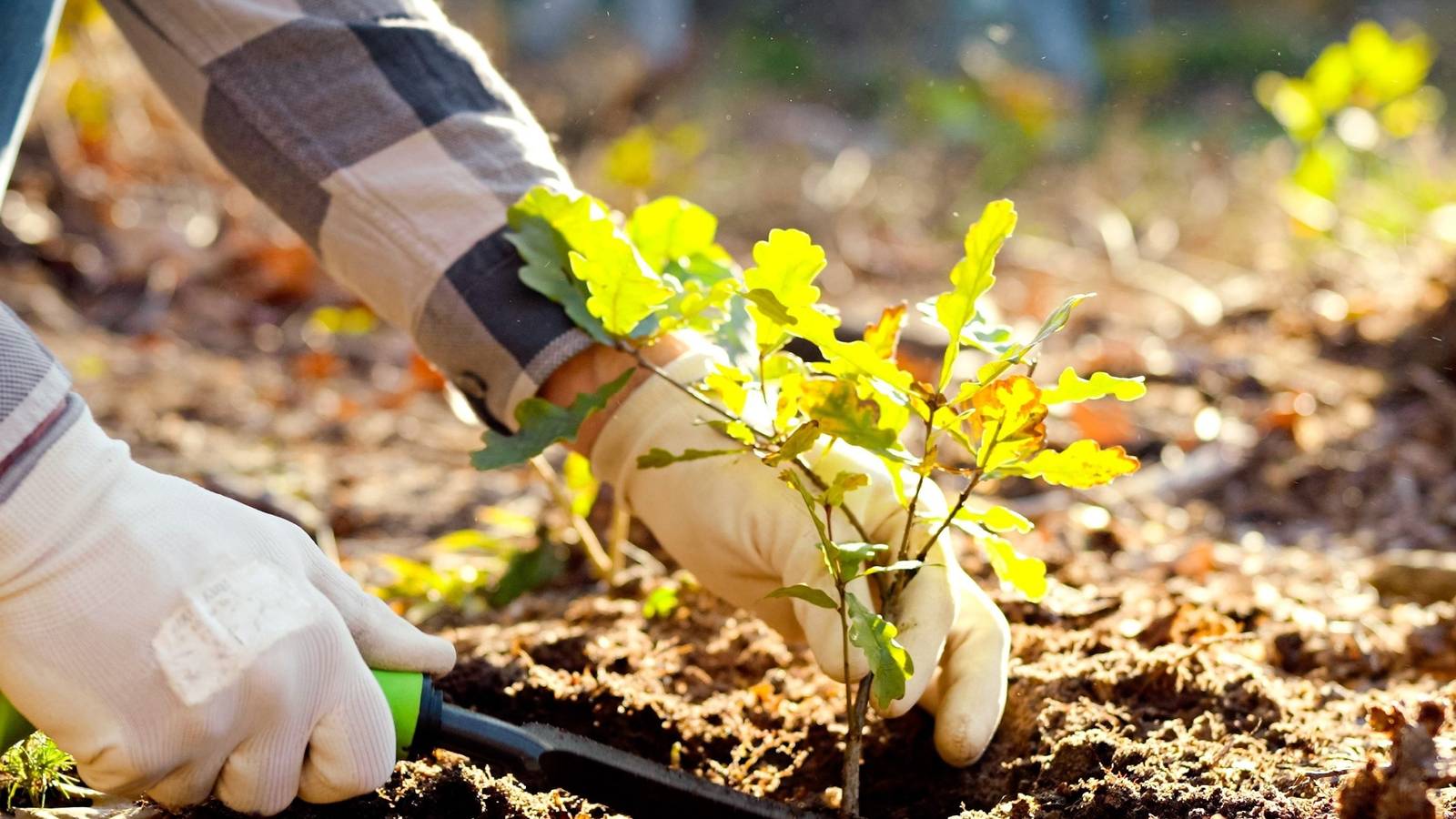
(Planting a young oak tree in spring soil—roots establish beautifully in April weather.)
Pruning Best Practices Finish dormant pruning on non-bloomers. Prune spring-flowering shrubs (lilacs, forsythia, azaleas) after blooming to avoid cutting off next year’s buds. Remove dead/damaged branches from trees; avoid oak pruning now to prevent oak wilt.
Fertilizing and Mulching Trees Apply slow-release organic fertilizer around the drip line. Add 2-3 inches of mulch (wood chips, bark) in a ring—keep it away from the trunk to deter rot and pests.

(Mulching around perennials and trees retains moisture and suppresses weeds—essential April task!)
4. Perennial, Bulb, and Lawn Care Revitalize established plants for peak performance.
Dividing and Replanting Perennials Divide hostas, daylilies, peonies, and irises as shoots emerge. Replant divisions quickly in amended soil for fuller beds next year.
Bulb and Rose Maintenance Allow bulb foliage (daffodils, tulips) to yellow naturally—no braiding! Remove rose winter mounds; prune lightly to outward buds.
Lawn Revival Tasks Fertilize cool-season grasses; overseed thin spots. Apply crabgrass preventer when forsythia blooms.
5. Watering, Mulching, and Fertilizing Strategies 💧
Proper water, mulch, and nutrient management in April creates the foundation for drought-resistant, vigorous plants all summer long.
Deep, Infrequent Watering to Build Strong Roots Newly planted trees, shrubs, perennials, and vegetable seedlings need consistent moisture while roots establish—but avoid daily shallow watering. Instead, give a slow, deep soak (1–1.5 inches) once or twice per week, depending on rainfall. Use a soaker hose or watering wand to deliver water directly to the root zone. This encourages roots to grow downward, making plants far more resilient when July heat arrives.
Mulching Generously – Your Garden’s Best Friend Apply a 2–4 inch layer of organic mulch (shredded bark, wood chips, straw, or composted leaves) around trees, shrubs, perennials, and vegetable beds after soil warms. Benefits include:
- Retaining soil moisture (reduces watering by up to 50%)
- Suppressing weeds
- Moderating soil temperature (keeps roots cooler in summer, warmer in spring)
- Feeding soil microbes as it breaks down
Important rule: Keep mulch 2–3 inches away from tree trunks and shrub stems to prevent rot and rodent damage.
(Freshly mulched perennial border—notice the neat “donut” shape around stems to avoid moisture buildup!)
Fertilizing Smartly – Feed Growth, Not Excess Use a balanced, slow-release organic fertilizer (e.g., 10-10-10 or compost tea) on actively growing plants. Apply around the drip line of trees/shrubs and work lightly into vegetable/perennial beds. Avoid heavy nitrogen on lawns or trees in late spring—it promotes soft, pest-prone growth. For acid-loving plants (azaleas, blueberries, rhododendrons), choose an acid-specific formula. Always water thoroughly after fertilizing.
6. Pest and Disease Monitoring and Prevention 🔍
Early detection in April prevents small issues from becoming season-long disasters. Walk your garden every few days with a keen eye (and perhaps a hand lens).
Common April Pests to Watch For
- Aphids: Clusters on new growth—blast with water or use insecticidal soap
- Slugs/snails: Hand-pick at dusk or use iron phosphate baits
- Boxwood leafminer, scale insects, tent caterpillars: Inspect evergreens and fruit trees
- Deer/rabbits: Install fencing or repellents early
Disease Prevention Basics
- Remove and destroy (don’t compost) any overwintered diseased foliage
- Improve air circulation by proper spacing and selective pruning
- Avoid overhead watering to reduce fungal issues like powdery mildew or black spot on roses
Promote Beneficial Insects Plant early-blooming flowers (crocus, hellebore, lungwort, alyssum) to attract ladybugs, lacewings, and parasitic wasps that eat pests. Avoid broad-spectrum pesticides—they kill the good guys too!
7. Sustainable and Eco-Friendly April Practices 🌍
A truly healthy garden supports the broader ecosystem.
- Rainwater Harvesting: Direct downspouts into rain barrels—great free water for April transplants
- Plant Natives: Add native perennials, shrubs, and trees (e.g., serviceberry, coneflower, milkweed) for pollinators and birds
- Compost Everything: Turn kitchen scraps, coffee grounds, and yard waste into “black gold”
- Reduce Chemicals: Build healthy soil biology instead—compost, cover crops, and mulch do wonders
- Leave Some “Mess”: Retain small brush piles or leaf litter in corners for overwintering beneficial insects and small wildlife 🐞
Expert Tips and Common Mistakes to Avoid
- Pro Tip: Don’t clean up too aggressively in early April—many native bees and butterflies overwinter in hollow stems and leaf litter. Wait until temperatures consistently reach 50°F+ before full cleanup.
- Common Mistake #1: Pruning spring-blooming shrubs (forsythia, lilac, weigela) before they flower → you remove next year’s buds! Always prune these right after bloom.
- Common Mistake #2: Planting warm-season crops too early → wait for soil temps of 60°F+ and no frost forecast. Use soil thermometers for precision.
- Pro Tip: Use floating row covers or cloches over tender seedlings during late frosts—they’re lightweight, reusable, and can add 4–8°F of protection ❄️
Regional Variations: Adjusting for Your Zone
Gardening in April varies dramatically by location:
- Zones 3–5 (Northern/Cooler Climates): Focus on frost protection, slow cleanup, hardy cool-season planting, and heavy mulching. Delay warm-season starts until May.
- Zones 6–7 (Mid-Atlantic/Midwest): Prime time for most planting—watch for variable weather. Mid-to-late April is safe for many transplants.
- Zones 8–10 (Southern/Warmer Areas): Emphasize heat prep, early warm-season crops, deep mulching, and pest vigilance (aphids explode early here).
Always check your local last frost date and 10-day forecast—tools like the Old Farmer’s Almanac or NOAA are invaluable.
Frequently Asked Questions (FAQs)
Q: Is April too late to plant trees and shrubs? 🌳 A: Not at all! April is actually one of the best months in most zones—cool soil and spring rains help roots establish before summer stress.
Q: Should I fertilize my lawn in April? A: Yes for cool-season grasses (fescue, bluegrass, rye)—use a slow-release nitrogen product. Warm-season lawns (Bermuda, zoysia) wait until May.
Q: How do I know if my soil is ready to work? A: Grab a handful—if it crumbles easily instead of forming a tight ball or feeling sticky, it’s ready.
Q: Can I still prune fruit trees in April? A: Early April is usually fine, but finish before buds swell too much. Avoid pruning oaks after mid-April to prevent oak wilt spread.
Q: What’s the fastest way to improve poor soil in spring? A: Top-dress with 1–2 inches of compost, then mulch. Repeat annually for dramatic improvement over time.
Conclusion
April is your golden window—the month where thoughtful effort today delivers massive rewards tomorrow. By following this detailed April garden chores overview, you’re not just checking boxes; you’re building healthier soil, stronger roots, fewer pests, and a more vibrant, sustainable landscape.
Grab your gloves, a cup of coffee, and your printable checklist—then head outside. Your plants and trees are ready to thrive, and with these steps, so are you. Here’s to the most beautiful, productive gardening season yet! 🌿✨
Happy gardening!











