
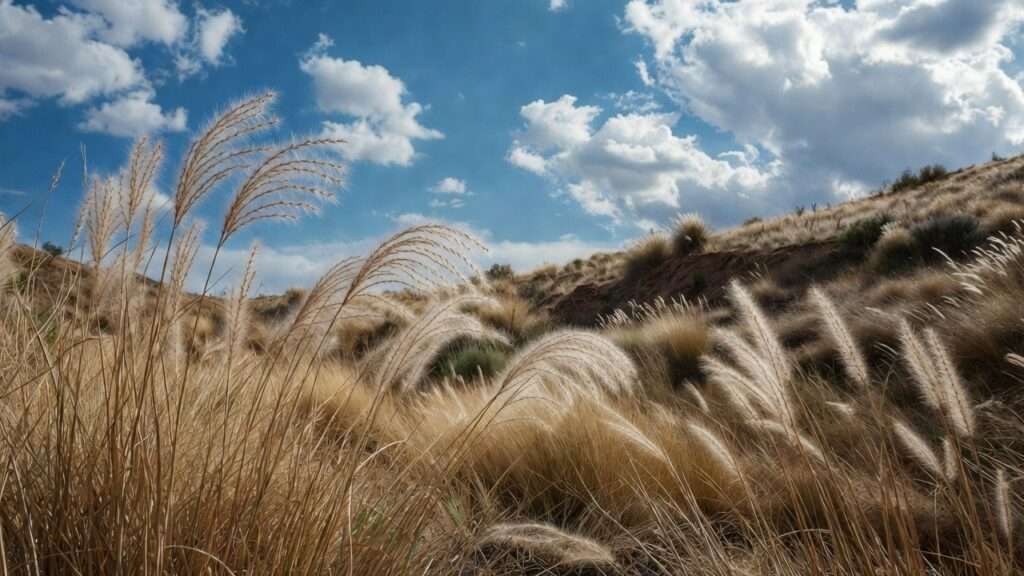
Imagine stepping into your yard and feeling transported to a vast, swaying arid grassland — golden seed heads dancing in the breeze, soft plumes glowing in the late-afternoon sun, birds flitting between feathery tops, all without a single sprinkler in sight. ☀️🌾 No more sky-high water bills, no more guilt over lush but thirsty lawns, and no more boring, brown patches during summer heatwaves.
If you’re gardening in a dry climate, dealing with drought restrictions, or simply craving a naturalistic, low-maintenance landscape that looks effortlessly beautiful year-round, arid grassland ornamental grass ideas are the perfect solution. These resilient beauties mimic native prairies and dry grasslands, delivering movement, texture, color changes across seasons, erosion control, and vital habitat for pollinators and birds — all while sipping minimal water once established.
As a plant care specialist with over 15 years of hands-on experience in xeriscape and drought-tolerant landscaping across USDA zones 4–11, I’ve helped countless homeowners transform water-hungry yards into sustainable, stunning oases. In this comprehensive guide, you’ll discover the top drought-tolerant varieties, creative design layouts, step-by-step planting and care tips, companion plant pairings, seasonal highlights, and expert tricks to avoid common pitfalls. Let’s turn your arid space into a thriving, low-water masterpiece! 💚
Why Choose Ornamental Grasses for Arid & Low-Water Landscapes? 🌵💧
Ornamental grasses shine in dry conditions for good reason. Unlike traditional turf or high-maintenance perennials, most drought-tolerant varieties develop deep root systems that access moisture far below the surface, allowing them to thrive with little supplemental watering after the first year.
Key benefits include:
- Extreme drought tolerance — Many need only occasional deep soaks even in scorching heat.
- Low maintenance — Minimal fertilizing, few pests/diseases, and no frequent mowing.
- Dynamic beauty — They add kinetic energy with swaying blades, rustling sounds, airy plumes, and seasonal color shifts (blue-green summers to fiery fall reds and bronzes).
- Ecological value — Support native wildlife, improve soil stability on slopes, prevent erosion, and sequester carbon — perfect for mimicking natural arid grasslands or prairies.
- Water savings — Homeowners often cut irrigation by 50–75% compared to lawns.
Compared to thirsty alternatives, these grasses solve real problems: high utility costs, municipal watering bans, poor soil in arid regions, and the desire for year-round interest without constant upkeep. In my projects, clients in semi-arid and arid zones report loving the “prairie meadow” vibe that feels wild yet intentional. 🌾🐦
Top Drought-Tolerant Ornamental Grasses for Arid Grassland Vibes (The Star Varieties) 🌟
Here are standout selections grouped by height and use. All are proven performers in dry landscapes, with details on USDA hardiness zones, mature size, standout features, and quick pros/cons.
Low-Growing (Edging, Groundcover, Front Borders) 🦶
- Blue Grama (Bouteloua gracilis) — Iconic native with fine green blades and quirky “eyelash” seed heads that wave like flags. Zones 3–10, 1–2 ft tall × 1–2 ft wide. Ultra-tough, native to prairies. Pros: Extremely drought-tolerant, low-growing, wildlife-friendly. Cons: Can go dormant in extreme dry spells (turns tan but revives).
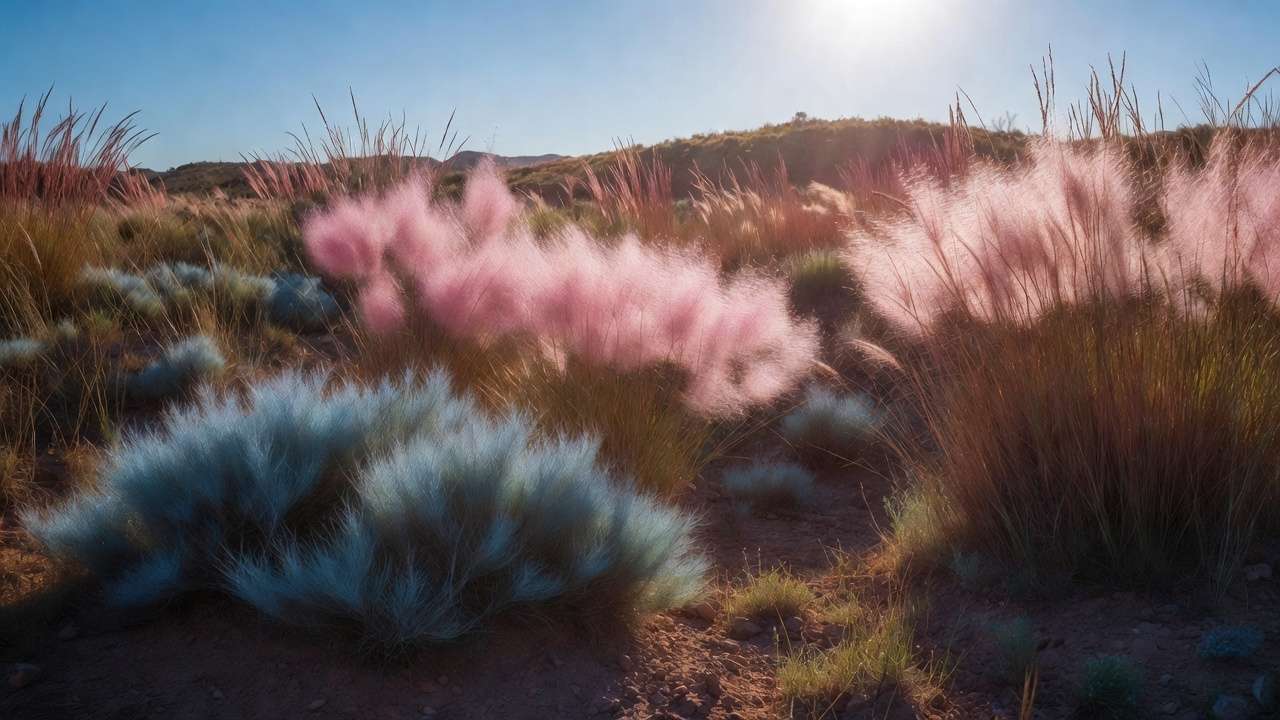
- Blue Fescue (Festuca glauca ‘Elijah Blue’) — Striking icy-blue mounds that stay compact and evergreen-ish in mild winters. Zones 4–9, 8–12 inches tall. Pros: Eye-catching color, great for borders/containers. Cons: May need occasional division to prevent center die-out.
- Prairie Dropseed (Sporobolus heterolepis) — Fine-textured, airy grass with a sweet vanilla scent in warm weather. Zones 3–9, 2–3 ft. Pros: Fragrant, golden fall color. Cons: Slower to establish.
Medium-Height (Mid-Border, Mass Planting) 📏
- Little Bluestem (Schizachyrium scoparium) — Blue-green summer foliage turns reddish-bronze in fall — classic prairie grass. Zones 3–9, 2–4 ft. Pros: Stunning seasonal color, excellent drought/poor soil tolerance. Cons: Can flop if over-fertilized.
- Pink Muhly Grass (Muhlenbergia capillaris) — Ethereal pink clouds of plumes in late summer/fall — a showstopper! Zones 6–10, 2–4 ft. Pros: Dramatic fall display, heat-loving. Cons: Needs full sun; plumes fade to tan in winter.
- Mexican Feather Grass (Nassella tenuissima) — Super-fine, flowing texture like soft hair in the wind. Zones 7–10, 1–3 ft. Pros: Airy movement, self-seeds gently. Cons: Can be short-lived in very cold zones.
Tall & Dramatic (Focal Points, Screens, Backdrops) 🏔️
- Switchgrass (Panicum virgatum cultivars like ‘Apache Rose’ or ‘Cheyenne Sky’) — Upright, colorful foliage with airy panicles. Zones 5–9, 3–6 ft. Pros: Strong structure, fall color, bird habitat. Cons: Needs space to avoid crowding.
- Deer Grass (Muhlenbergia rigens) — Evergreen arching form in mild climates, great for structure. Zones 6–11, 3–5 ft. Pros: Year-round presence, erosion control. Cons: Can look untidy if not cut back.
- Big Bluestem (Andropogon gerardii) — Tall prairie native with reddish fall tones. Zones 4–9, 4–7 ft. Pros: Bold scale, wildlife value. Cons: Slow to establish.
Quick-Reference Table (visualize this in the full article!):
| Variety | Height | USDA Zones | Best Feature | Water Needs After Year 1 |
|---|---|---|---|---|
| Blue Grama | 1–2 ft | 3–10 | Eyelash seed heads | Very low |
| Pink Muhly | 2–4 ft | 6–10 | Pink cloud plumes | Low |
| Little Bluestem | 2–4 ft | 3–9 | Fiery fall color | Very low |
| Switchgrass | 3–6 ft | 5–9 | Upright structure | Low |
These picks prioritize natives or well-adapted varieties for authenticity in arid grassland styles. 🌱
Creative Arid Grassland Design Ideas & Layouts 🎨
Bring the prairie to your yard with these inspiring concepts:
- Prairie-Inspired Meadow — Plant large drifts of mixed heights (tall switchgrass at back, medium little bluestem in middle, low blue grama edging). Interspersed with drought-tolerant perennials like coneflowers, black-eyed Susans, and yarrow for pops of color. Result: A wild, flowing meadow that sways beautifully.
- Modern Xeriscape Accents — Pair blue fescue mounds with agaves, yuccas, and gravel mulch for clean, sculptural lines — ideal for contemporary arid yards.
- Slope Erosion Control — Use deer grass and big bluestem to anchor soil; their deep roots stabilize while adding texture.
- Small-Space Magic — Container thrillers like pink muhly or Mexican feather grass in large pots with succulents — perfect for patios in dry climates.
- Four-Season Interest Combos — Spring fresh greens → summer kinetic movement → fall pink/red explosions → winter architectural skeletons for birds.
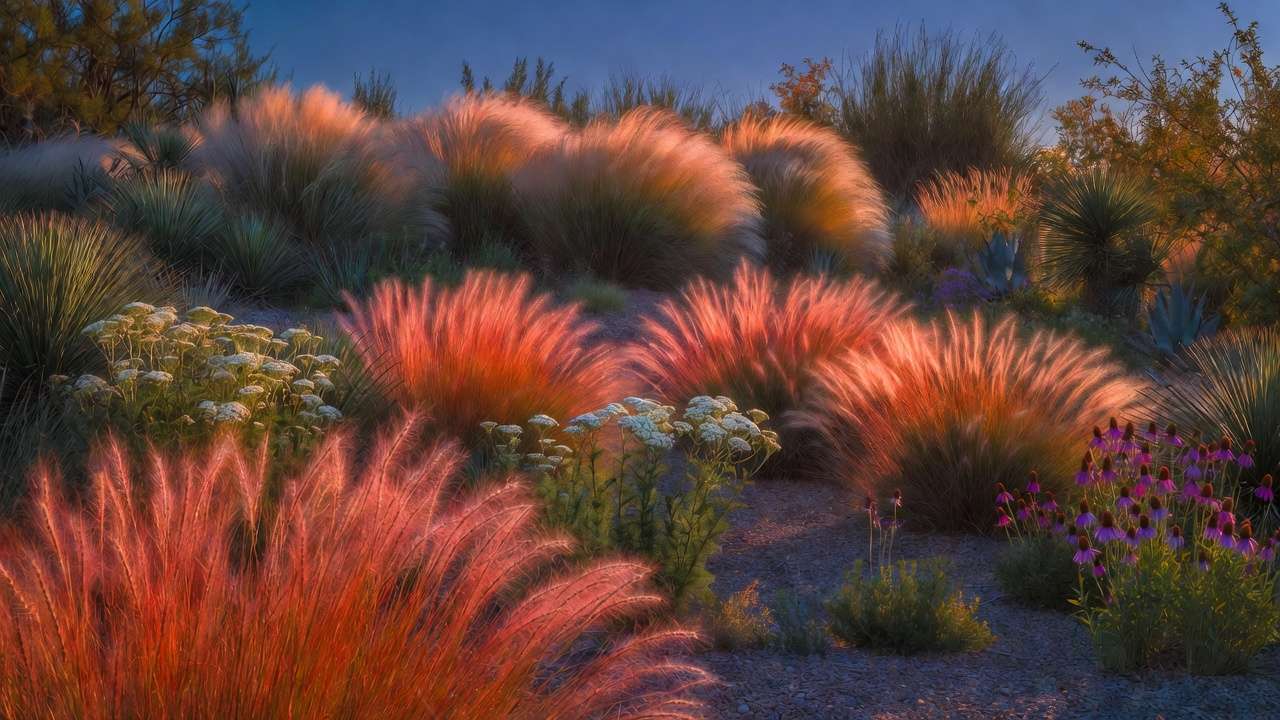
Picture drifts of pink muhly glowing at sunset — pure magic! ✨
Planting Guide: Step-by-Step for Success 🌱🛠️
Getting these grasses established is the most important (and easiest) step toward a thriving arid grassland landscape. Follow this proven method — one I’ve used in dozens of drought-challenged gardens — and your plants will reward you with vigorous growth and minimal future care.
- Choose the Right Site Full sun is non-negotiable — aim for at least 6–8 hours of direct sunlight daily. These grasses evolved in open prairies and arid plains; shade makes them leggy, weak, and prone to flopping. Soil should drain quickly. Sandy, rocky, or gravelly loam is ideal. If you have heavy clay, amend generously with coarse sand, decomposed granite, or pea gravel to improve drainage. Test drainage by digging a 12-inch hole, filling it with water, and ensuring it empties within 4–6 hours.
- Best Planting Time
- Spring (after last frost) or early fall (6–8 weeks before first frost) are optimal in most zones.
- In very hot arid regions (zones 9–11), fall planting is often better — cooler temperatures reduce transplant stress.
- Avoid summer planting unless you can provide consistent deep watering for the first 6–8 weeks.
- Soil Preparation
- Loosen soil to 12–18 inches deep.
- Mix in 2–3 inches of gritty material (coarse sand, decomposed granite, or horticultural grit) if drainage is poor.
- Skip rich compost or manure — these grasses prefer lean, low-fertility soil. Too much organic matter encourages lush but floppy growth that collapses in heat.
- Spacing Recommendations
- Low-growers (blue grama, blue fescue): 12–18 inches apart
- Medium-height (little bluestem, pink muhly, Mexican feather grass): 18–30 inches apart
- Tall varieties (switchgrass, deer grass, big bluestem): 3–5 feet apart Plant in drifts or sweeps (groups of 5–11+) rather than single specimens — this creates the authentic grassland look and makes maintenance easier.
- Planting Technique
- Dig holes twice as wide as the root ball but no deeper.
- Set the crown (where roots meet foliage) at the same level as in the pot — never bury it.
- Backfill with native soil (amended if needed), firm gently, and water deeply to settle roots.
- Initial Watering & Establishment
- Week 1–2: Water deeply every 2–3 days (about 1 inch per session).
- Week 3–6: Every 4–7 days, depending on heat and rainfall.
- After 6–8 weeks: Begin tapering to deep, infrequent soaks only during prolonged dry spells.
- Goal: Train roots to grow downward, not stay shallow and dependent on frequent sprinkles.
- Mulching for Arid Style
- Use 2–3 inches of inorganic mulch: decomposed granite, gravel, river rock, or crushed stone.
- This suppresses weeds, retains soil moisture, keeps roots cool, and perfectly complements the arid grassland aesthetic.
- Avoid thick organic mulches (wood chips, bark) — they hold too much moisture and can cause crown rot in dry-loving grasses.
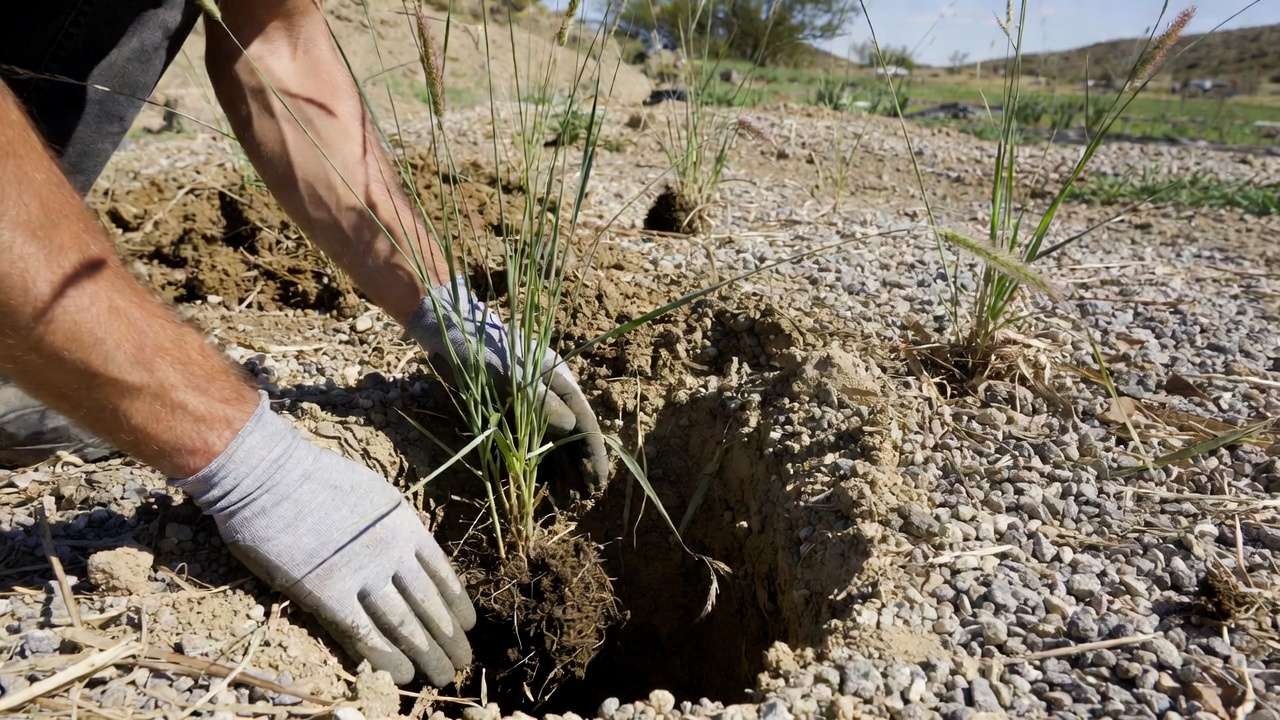
With proper planting, most of these varieties establish fully within one growing season and become nearly carefree thereafter. 🌿
Ongoing Care & Maintenance Tips (Low-Effort Wins) ✂️
Once established, these grasses live up to their “low-maintenance” reputation. Here’s the streamlined annual routine I recommend to clients:
- Watering After year 1, most need only occasional deep watering (1–2 inches) during extreme drought. Rely primarily on natural rainfall. Overwatering is the #1 killer — it causes weak, shallow roots and invites rot.
- Cutting Back Warm-season grasses (most on our list) go dormant in winter. Cut back to 4–6 inches above ground in late winter/early spring (February–March in most zones) before new growth emerges. Use sharp bypass pruners or hedge shears. Wear gloves — some edges are surprisingly sharp! Leave the clippings on-site as natural mulch, or compost them.
- Fertilizing Usually unnecessary. If growth seems weak after several years, apply a light application of low-nitrogen, slow-release granular fertilizer (e.g., 5-10-10) in early spring — but sparingly. Excess nitrogen = floppy, unattractive plants.
- Dividing Every 3–5 years, when the center dies out or clumps become too large, divide in early spring. Dig up, cut into sections with healthy roots, replant immediately, and water well.
- Pest & Disease Management Extremely rare. Occasional aphids or spider mites can be hosed off. Fungal issues almost always stem from overwatering or poor drainage — fix the cause, not the symptom.
These simple habits keep your arid grassland looking polished with just a few hours of work per year. 💪
Companion Plants to Pair with Arid Grassland Grasses 🌼🪴
The right companions amplify texture, color, and pollinator appeal while maintaining drought tolerance:
- Perennials
- Purple coneflower (Echinacea purpurea)
- Black-eyed Susan (Rudbeckia hirta)
- Yarrow (Achillea millefolium)
- Russian sage (Perovskia atriplicifolia)
- Gaura (Oenothera lindheimeri)
- Lavender (Lavandula angustifolia)
- Structural & Succulent Accents
- Agave (various species)
- Yucca (Y. filamentosa, Y. rostrata)
- Hesperaloe parviflora (red yucca)
- Sedum & sempervivum for ground-level interest
- Native Wildflowers for Pollinators
- Blanket flower (Gaillardia)
- Desert marigold (Baileya multiradiata)
- Penstemon (various drought-tolerant species)
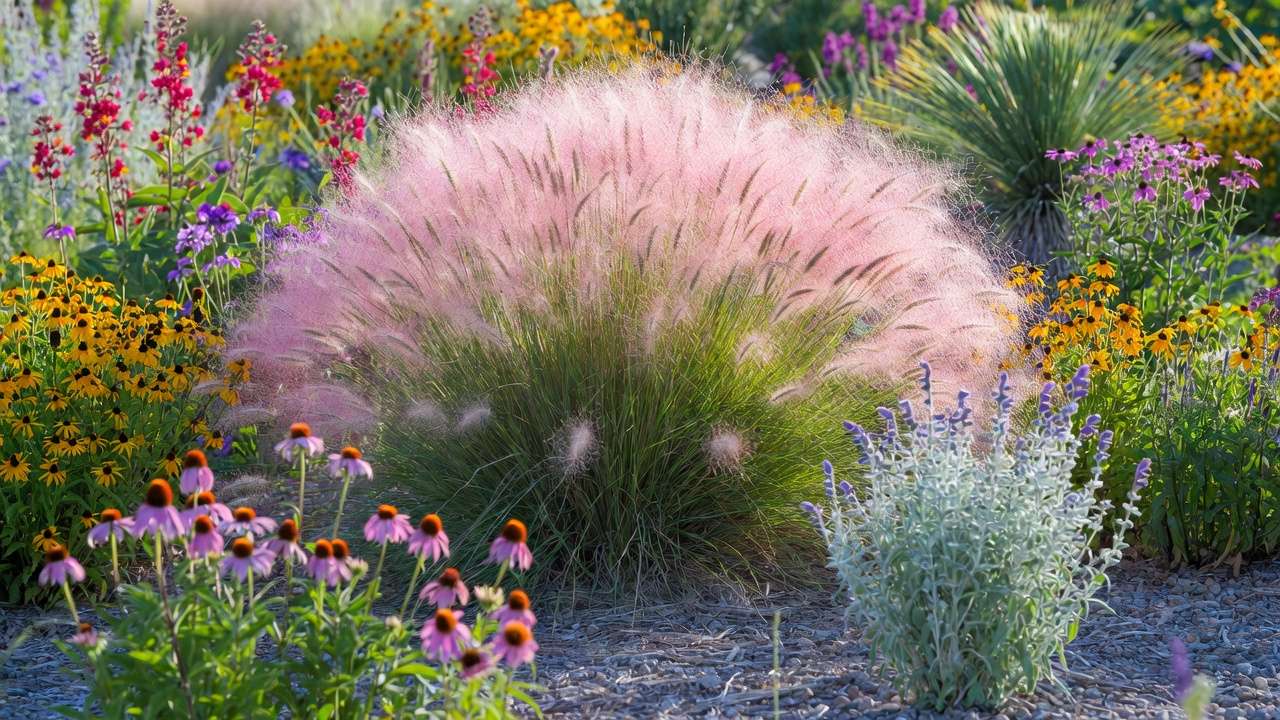
Avoid thirsty plants like hostas, daylilies, or hydrangeas — they’ll undermine your water-saving goals and look out of place.
Seasonal Guide: What to Expect Year-Round 📅✨
One of the greatest strengths of arid grassland ornamental grasses is their ability to provide interest in every season — something many traditional landscapes struggle to achieve in dry climates. Here’s what you can look forward to throughout the year:
- Spring (March–May) 🌸 Fresh, vibrant new growth emerges from the base as temperatures rise. Blades appear in shades of bright green, blue-green, or silvery-blue (depending on variety). Early bloomers like prairie dropseed may send up delicate flower spikes. This is the time for cutting back old foliage if you haven’t already. The garden feels alive and full of promise — perfect for adding spring ephemerals like desert marigold or penstemon among the grasses.
- Summer (June–August) ☀️🌾 Peak season for movement and texture. Tall and medium-height grasses produce airy panicles or plumes that catch every breeze, creating that signature swaying grassland effect. Foliage holds color well (blue fescue stays icy, little bluestem deepens to blue-green). Heat doesn’t faze them — many actually perform best when it’s hot and dry. This is when pollinators and birds are most active around your meadow.
- Fall (September–November) 🍂🔥 The grand finale! Many varieties explode with color: little bluestem turns coppery-red to burgundy, switchgrass takes on pinkish-bronze tones, and pink muhly grass creates those dreamy cotton-candy clouds that make photographers (and Instagram) swoon. Seed heads mature, providing food for finches and sparrows. The combination of warm hues against drying grasses is pure arid grassland magic.
- Winter (December–February) ❄️🌾 Don’t underestimate the beauty of dormancy. Upright or arching forms remain standing, catching frost or light snow in delicate, crystalline patterns. Tan, beige, and straw-colored blades provide structure and subtle contrast against evergreens or bare soil. Seed heads continue to feed overwintering birds. In mild-winter zones (8–10), some like deer grass stay semi-evergreen, adding year-round presence.
This four-season performance is exactly why these grasses outperform many perennials in low-water designs — they never truly “disappear” even in winter. 🌟
Common Mistakes to Avoid in Arid Grassland Designs ⚠️
Even experienced gardeners sometimes stumble when transitioning to drought-tolerant grasses. Here are the pitfalls I see most often — and how to sidestep them:
- Overwatering after establishment — The #1 killer. Once roots are deep (usually year 2), extra water causes rot, weak growth, or fungal issues. Stick to deep, infrequent soaks only when rainfall is absent for 4+ weeks.
- Planting in shade or poor-draining soil — These grasses demand full sun and excellent drainage. Shady spots lead to floppy, etiolated plants; soggy soil invites crown rot.
- Ignoring mature size → overcrowding — Always check final height/width and space accordingly. A cute 1-gallon little bluestem can become a 4-foot-wide clump in 3–4 years.
- Over-fertilizing — High-nitrogen feeds produce lush but weak, floppy growth that collapses under its own weight or in wind/heat.
- Cutting back too early or too late — Cut in late winter/early spring before new shoots emerge. Cutting too early removes winter interest and bird food; too late damages fresh growth.
- Choosing non-native invasives — Some feather grasses self-seed aggressively in certain regions. Stick to natives or well-behaved cultivars (e.g., pink muhly is generally safe in most zones).
Avoid these, and your design will thrive with far less intervention.
Frequently Asked Questions (FAQs) ❓
Which grass is best for extreme heat and almost no supplemental water? Blue grama, little bluestem, and deer grass are among the toughest — they handle 100°F+ days and long dry spells like champions once established.
Are any of these grasses invasive in my area? Most listed here (especially natives like blue grama, little bluestem, switchgrass) are not invasive. Mexican feather grass can self-seed in zones 8–10 — monitor and remove seedlings if unwanted. Check your local extension service for regional behavior.
How do I make my yard look like a natural grassland quickly? Plant in large drifts (7–15+ of each variety), mix heights, add a few compatible perennials, and use gravel mulch. The “instant meadow” look comes fastest with larger starter sizes (1–3 gallon pots) rather than tiny plugs.
Can I mix ornamental grasses with trees or shrubs? Absolutely! Pair with drought-tolerant natives like honey mesquite, desert willow, or scrub oak for a layered, naturalistic effect. Keep grasses away from the immediate drip line of very thirsty trees.
What are the best grasses for containers in arid climates? Blue fescue, Mexican feather grass, and pink muhly excel in pots. Use large containers (18–24+ inches wide) with excellent drainage and gritty potting mix.
Final Thoughts & Next Steps 🌟
Creating an arid grassland-inspired landscape isn’t just about saving water — it’s about crafting a living, breathing space that feels connected to the natural world, supports wildlife, reduces maintenance, and looks beautiful in every season.
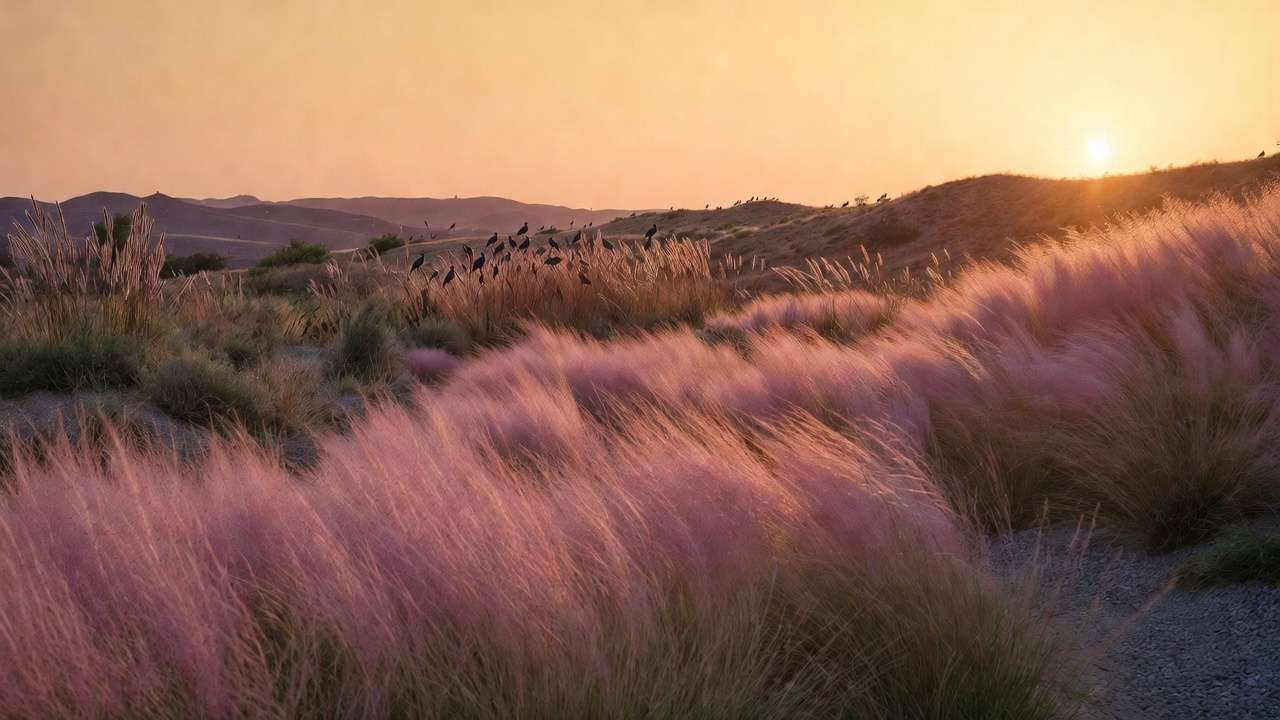
Start small if you’re new to this style: choose 2–3 varieties that match your zone and sunlight, plant them in a sunny, well-drained spot, and watch them grow into something magical. Before long, you’ll have that swaying, sunlit prairie right outside your door — with lower bills and higher satisfaction.
Have you tried any of these grasses yet? Which one are you most excited to add to your yard? Drop a comment below — I’d love to hear your plans or answer any questions! 🌾💚











