
Picture this: You step out to your balcony or glance at your favorite indoor fiddle-leaf fig, only to discover those once-lush green leaves now edged in crispy brown, with bleached patches and scorched tips staring back at you. 😱 Heartbreaking, right? This is leaf burn (also called leaf scorch or plant sunburn), a super common issue that strikes houseplants, garden perennials, and even young trees when direct sunlight overwhelms them. The good news? It’s completely preventable — and often reversible if caught early.
Avoiding leaf burn from direct sunlight is one of the most important skills any plant parent or gardener can master. Excessive sun exposure causes physiological damage, not a disease or pest problem, but it can weaken your plants, stunt growth, reduce photosynthesis, and make them vulnerable to other issues. In this in-depth guide, we’ll dive deep into the science, spot the early warning signs, identify vulnerable plants, uncover hidden triggers, and share proven, expert-backed strategies to protect your greenery year-round. Whether you’re nurturing tropical houseplants in Khulna’s humid climate or caring for young shade trees in a sunny yard, these tips will help keep your foliage vibrant and burn-free. 🌱
Let’s get started!
What Exactly Is Leaf Burn from Direct Sunlight? 🔥🍂
Leaf burn isn’t true “burning” from fire — it’s a stress response when leaves lose water faster than roots can supply it, combined with intense light and heat.
Understanding Sunburn vs. Leaf Scorch
- Sunburn typically refers to direct UV/heat damage on tender tissues (common in fruits like tomatoes or young leaves suddenly exposed).
- Leaf scorch (more accurate for most cases) is physiological: High temperatures + bright sun + dry air or soil cause rapid transpiration. Cells collapse, leading to dead tissue.
Both look similar: brown, crispy edges, yellow halos, or white/bleached spots.

These close-ups show classic signs: marginal browning, interveinal scorching, and patchy necrosis.
How Direct Sunlight Damages Leaves (The Science)
Leaves transpire water through stomata to cool themselves and pull up nutrients. In intense midday sun (especially 10 AM–4 PM), transpiration skyrockets. If soil moisture, root health, or humidity can’t keep up, leaf cells dehydrate and die — starting at tips and margins where water loss is highest.
Reflected heat from windows, pavement, or walls amplifies this. Sudden exposure (e.g., moving a shade-loving plant outdoors) prevents acclimation, worsening damage. Low humidity (common indoors with AC) and wind accelerate evaporation too.
Early signs include:
- Wilting despite wet soil
- Yellowing between veins
- Brown, papery edges
- Bleached white/yellow patches on older leaves
If ignored, entire leaves drop, and repeated stress weakens the plant long-term.
Which Plants Are Most Vulnerable to Leaf Burn? 😿
Not all plants react the same — shade-lovers suffer most.
High-risk houseplants:
- Fiddle-leaf fig (Ficus lyrata)
- Monstera deliciosa
- Peace lily
- Calathea species
- Ferns
- Pothos (if suddenly in full sun)
- Succulents (if transitioned poorly)
Outdoor/garden plants:
- Hostas
- Impatiens
- New transplants of any kind
- Young trees (maples, oaks, fruit trees like apple/cherry)
Thin-barked young trees also get trunk sunscald — bark cracks, exposing cambium.
:max_bytes(150000):strip_icc()/fiddle-leaf-fig-leaves-turning-brown-6503953-hero-0870e689ce8d4582b186cbca2b4eefb6.jpg)
Always check plant tags or care guides for “bright indirect light” vs. “full sun” needs!
Common Causes & Triggers of Leaf Burn (H2)
Sudden Changes in Light Exposure
The #1 culprit: Moving indoor plants from low light straight to a sunny window or outdoors without gradual acclimation.
Environmental Factors
- Intense midday sun
- Hot, dry winds
- Low humidity (<40%)
- Heat reflection (glass, concrete, white walls)
Water & Root Issues
Underwatering or inconsistent moisture → roots can’t replenish transpired water. Root-bound pots, poor drainage, or compacted soil worsen this.
Other Contributors
- Over-fertilizing (salt buildup burns roots/leaves)
- Pests/diseases weakening defenses
- Hot containers (black pots absorb heat)
Pro tip: Use this quick checklist table in your mind:
| Trigger | Quick Check |
|---|---|
| Sudden sun exposure | Did you move the plant recently? |
| Dry soil | Finger test 2″ deep — dry? |
| Low humidity | Leaves curling/crisp? |
| Reflected heat | Near window/pavement? |
How to Prevent Leaf Burn from Direct Sunlight: Essential Strategies 🌞🛡️
Prevention is far easier (and cheaper) than recovery. The cornerstone of avoiding leaf burn from direct sunlight lies in mimicking the plant’s natural habitat while balancing light, water, and environmental stress. Here are the most effective, research-backed methods used by professional horticulturists, extension services, and experienced plant enthusiasts.
Choose the Right Spot for Your Plants
Location is everything.
- Indoors: Aim for bright, indirect light. East-facing windows provide gentle morning sun; west-facing can be too harsh in the afternoon. South-facing windows often need filtering.
- Outdoors: Plant shade-lovers under tree canopies, north sides of buildings, or in partial shade beds. Full-sun plants (like tomatoes or roses) tolerate direct rays, but young transplants need protection.
Pro tip: Use a light meter app (many free ones measure in foot-candles or lux) — most houseplants thrive at 1,000–2,500 fc indirect, while direct sun hits 10,000+ fc midday.
Here’s how sheer curtains create perfect filtered light for sensitive tropicals:

Acclimate Gradually (The Golden Rule!) 🌅
Sudden sun shock is the fastest way to scorch leaves. Always harden off plants over 7–14 days:
- Days 1–3: 1–2 hours of early morning sun (before 10 AM), then back to shade/indirect.
- Days 4–7: Increase to 3–4 hours, including some late morning.
- Days 8+: Full exposure if appropriate, monitoring daily.
This allows leaves to thicken cuticles and produce protective pigments. Skip this step, and even sun-tolerant plants can burn.
Provide Physical Protection
Use barriers to diffuse intense rays:
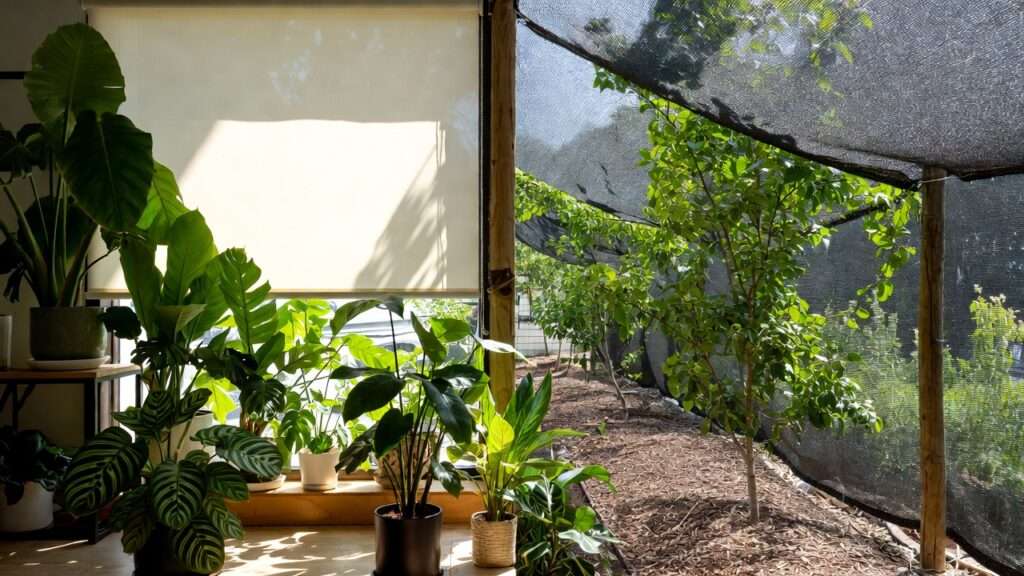
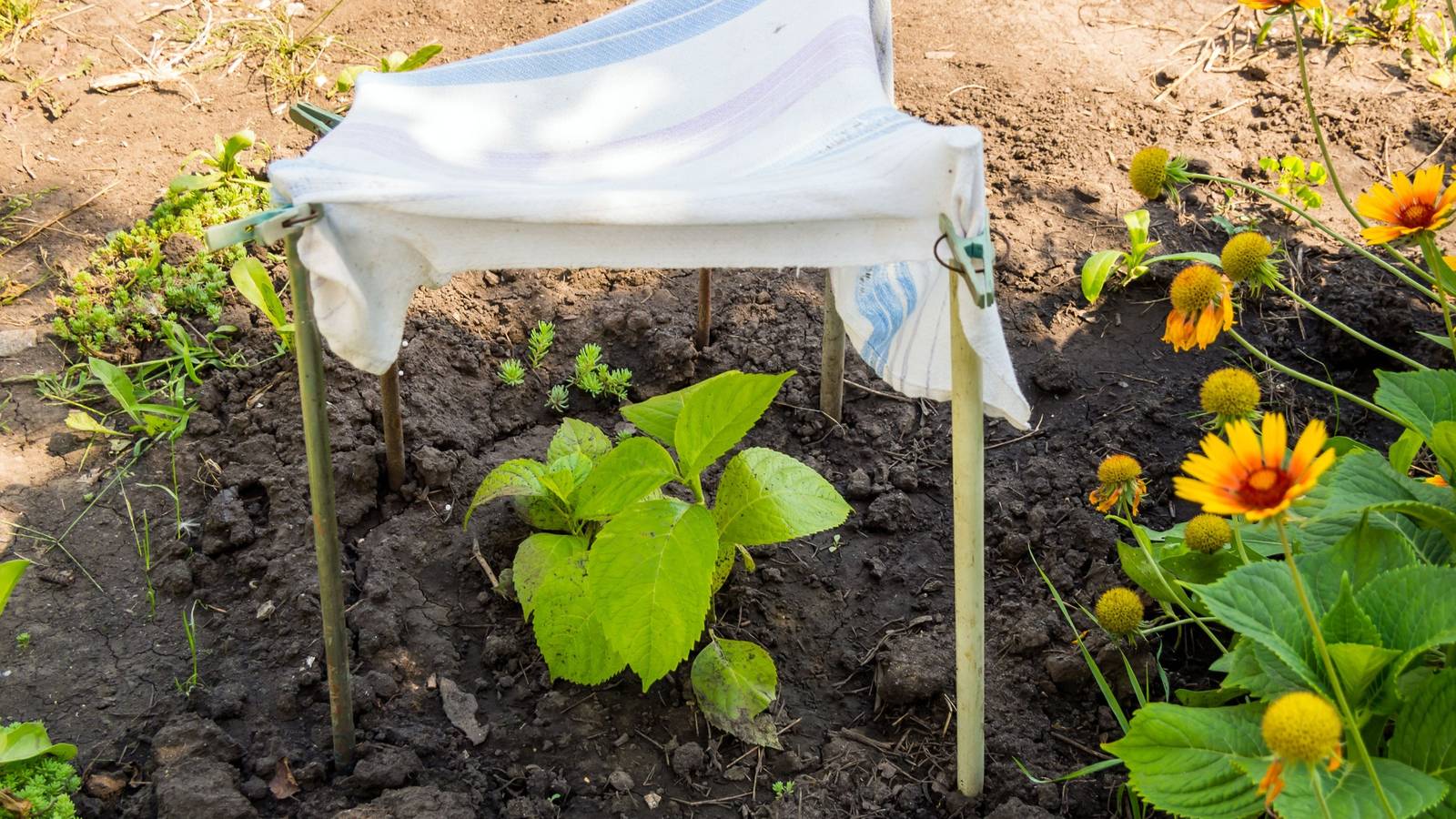
- Shade cloth: 30–50% density is ideal for most vulnerable plants (blocks UV without starving light). Drape over frames, hoops, or pergolas.
- Temporary hacks: Old bedsheets, umbrellas, lattice, or even strategically placed taller plants.
- Indoors: Sheer/white curtains, UV-filtering window film, or blinds.
Visual examples of shade cloth in action for gardens and veggies:
Master Watering to Beat Transpiration Stress 💧
Consistent soil moisture is key — plants “sweat” more in sun/heat, so roots must keep up.
- Water deeply and less frequently to encourage deep roots (better drought resistance).
- Best time: Early morning — leaves dry quickly, reducing fungal risk.
- Check: Stick finger 2 inches deep; water if dry. Use moisture meters for precision.
- Avoid: Shallow daily sprinkles (promotes weak roots) or evening watering (invites disease).
In hot, dry climates like parts of Bangladesh, consider self-watering pots or ollas for steady supply.
Mulch & Soil Care for Cooler Roots
Mulch insulates soil, retains moisture, and suppresses weeds:
- Apply 2–4 inches of organic mulch (bark, wood chips, straw, compost) around base.
- Keep it 2–3 inches away from stems/trunks to prevent rot (no “volcano” mulching!).
- Benefits: Reduces soil temperature by up to 10–15°F, cuts evaporation.
Proper mulching around a young tree:

Boost Humidity & Airflow (Especially Indoors) 🌫️
Low humidity exacerbates scorch — target 50–60% for tropicals.
- Pebble trays with water (pots sit above water).
- Humidifiers or misting (morning only).
- Group plants to create micro-humidity.
- Gentle airflow (ceiling fan on low) prevents fungal issues but avoid direct blasts.
What to Do If Your Plant Already Has Leaf Burn 😔➡️🌿
Even the most careful plant parents encounter leaf burn occasionally — especially during sudden heatwaves, forgotten watering days, or that one too-sunny weekend. The encouraging news is that most plants are remarkably resilient. Damaged leaves won’t magically turn green again, but the plant can recover and push out fresh, healthy growth if you act promptly.
Step-by-Step Recovery Plan
- Assess the Damage
- Mild: Just crispy edges or small brown patches → plant is likely fine with quick intervention.
- Moderate: 30–50% of leaves affected → needs immediate relocation and care.
- Severe: Most leaves scorched, heavy defoliation, wilting stems → check roots for rot; recovery may take months or require propagation.
- Relocate Immediately Move the plant to a spot with bright, indirect light only — no direct sun for at least 4–6 weeks. For outdoor plants/trees, use temporary shade cloth or plant under a taller companion until new growth appears.
- Prune Damaged Tissue
- Use clean, sharp scissors or pruning shears (wipe blades with 70% alcohol between cuts).
- Remove only the dead/brown parts — cut back to healthy green tissue if possible.
- For leaves that are more than 50% scorched, remove the entire leaf at the base to redirect energy to new growth.
- Never remove more than 25–30% of foliage at once — this stresses the plant further.
- Water and Hydrate Carefully
- Give a deep, thorough watering until water drains from the bottom (if potted).
- Let the top 1–2 inches of soil dry slightly before the next watering — overwatering scorched plants is a common mistake that leads to root rot.
- Mist leaves gently in the morning to boost humidity (avoid midday misting — it can magnify sun damage if any stray rays hit).
- Hold Off on Fertilizer Do not fertilize for at least 4–8 weeks. A stressed plant cannot process nutrients well, and excess salts can worsen burn-like symptoms. Once you see vigorous new growth, resume with half-strength balanced fertilizer.
- Monitor and Be Patient New leaves should emerge without burn marks if conditions are corrected. This is the ultimate sign of recovery! Expect 2–8 weeks depending on species, season, and severity.
Here are real recovery examples — notice how fresh foliage looks perfect after proper care:
Plant-Specific Prevention Tips & Examples 🌱
Different species have unique needs. Here are tailored recommendations for some of the most commonly affected plants in home gardens and indoor collections:
- Fiddle-Leaf Fig (Ficus lyrata): Loves bright indirect light. Use east windows or sheer curtains. Acclimate slowly if moving closer to light. Mist regularly or use a pebble tray. Many owners report success with 40% shade cloth during peak summer.
- Monstera deliciosa: Tolerates more light than most tropicals once established, but young leaves scorch easily. Rotate pot every few days for even exposure.
- Calathea & Prayer Plants: Extremely sensitive. Keep in north/east windows or under grow lights. High humidity (60%+) is non-negotiable.
- Succulents & Cacti: Many enjoy full sun, but indoor-grown ones burn when suddenly placed outside. Harden off over 2 weeks minimum.
- Young Trees (Maple, Cherry, Apple): Wrap trunks with tree guards or white latex paint (diluted) in late winter/early spring to prevent southwest-facing sunscald. Mulch widely and water deeply during dry spells.
- Garden Hostas & Impatiens: Plant in morning-sun/afternoon-shade spots. Use floating row covers or 30% shade cloth during heatwaves.
Mini case study: A Khulna gardener moved their indoor monstera to a sunny balcony without acclimation → severe marginal burn in 3 days. After relocating to indirect light, deep watering, and 50% shade cloth for 3 weeks, fresh perforate leaves emerged burn-free within 5 weeks. 🌿✨
Frequently Asked Questions (FAQ) ❓
Can leaf burn be reversed? No — dead tissue stays dead. But the plant can recover by growing new, healthy leaves if you fix the underlying issues quickly.
Is it okay to water plants in the middle of a hot day? It’s not ideal (water droplets can act like tiny lenses and scorch leaves), but it’s far better than letting a severely dehydrated plant stay that way. Morning watering is always best.
What percentage shade cloth should I use? 30–50% is perfect for most houseplants and shade-loving garden species. 50–70% for very sensitive ferns/calatheas during peak heat.
Why do indoor plants burn near south-facing windows even with curtains? Reflected heat + glass magnification can create a microclimate 10–20°F hotter. Use light-filtering (not blackout) curtains or move plants 3–6 feet back.
Does leaf burn spread like a disease? No — it’s not contagious. Each affected leaf is responding individually to stress.
Can I save a severely scorched young tree? Yes, in most cases. Provide shade, deep weekly watering, mulch, and trunk protection. New canopy growth usually returns next season.
Are grow lights safer than windows for preventing burn? Much safer for sensitive plants — you control intensity and duration. Full-spectrum LEDs at 12–16 inches away rarely cause burn.
Conclusion 🌿✨
Avoiding leaf burn from direct sunlight doesn’t require fancy equipment or constant hovering — it comes down to understanding your plants’ needs, making thoughtful location choices, acclimating gradually, and supporting them with consistent moisture, mulch, and protection during stressful periods.
By implementing the strategies we’ve covered — from gradual hardening off and strategic shade solutions to deep watering habits and humidity boosts — you’ll dramatically reduce (and often eliminate) those heartbreaking crispy edges and bleached patches. Your houseplants will stay lush, your garden beds vibrant, and your young trees will develop strong, healthy canopies without the setback of repeated scorch.
Remember: Plants are forgiving when we catch problems early and respond thoughtfully. The next time you notice wilting or suspicious browning, don’t panic — refer back to this guide, assess quickly, and take action. With time and these proven techniques, you’ll build greener, more resilient collections that thrive even in Khulna’s warm, humid climate or any sunny spot you love.
Your plants are counting on you — and now you have the tools to keep them happy, burn-free, and beautiful all year long. 😊🌱🌳
Go check on your green friends today, adjust a curtain or add some mulch, and enjoy watching them flourish!
Ready to level up your plant care even more? Subscribe to get weekly tips, seasonal checklists, and recovery success stories straight to your inbox. Have you battled leaf burn before? Drop a comment below with your plant rescue story — we’d love to hear how you saved your favorites! 💚











