
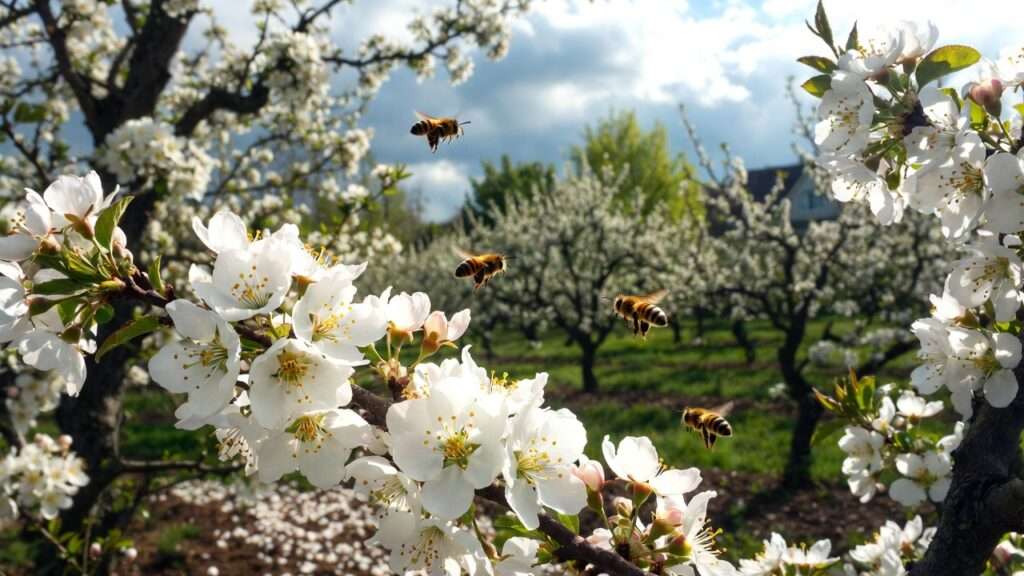
Imagine this: It’s spring, and your backyard orchard is a breathtaking sea of pink and white blossoms. Bees buzz happily from flower to flower 🐝, and you dream of baskets overflowing with juicy apples, pears, and cherries come harvest time. But when autumn arrives, you’re left staring at sparse branches or tiny, disappointing fruit. Sound familiar? 😔
This heartbreaking scenario happens far too often in home orchards—and the main culprit is avoiding pollination overlap issues (or rather, failing to avoid them). Pollination overlap refers to the critical timing when compatible fruit tree varieties bloom simultaneously, allowing bees to transfer viable pollen for successful fruit set. Even with perfect planting conditions, soil, and care, a mismatch in bloom periods can result in little to no harvest. In fact, studies from university extensions like Washington State University and the University of Missouri show that bloom timing mismatches are among the top reasons home gardeners see beautiful trees produce almost nothing.
The good news? You can prevent this entirely by choosing varieties with overlapping bloom times and proven compatibility. In this in-depth guide, we’ll walk you through everything you need to know: from understanding bloom groups and common pitfalls to step-by-step variety selection, recommended pairings, and pro tips for bigger, more reliable harvests. Whether you’re planting your first apple trees or expanding a small orchard, these expert strategies will help you turn those stunning spring blooms into abundant fruit. Let’s dive in! 🌿
What Exactly Are Pollination Overlap Issues? (H2)
Pollination is the magical process where pollen from the male anthers lands on the female stigma, leading to fertilization and fruit development. For many fruit trees—like most apples 🍏, pears 🍐, sweet cherries 🍒, and Japanese plums—self-pollination isn’t enough. They require cross-pollination from a different but compatible variety.
Here’s where overlap comes in: Each variety has a specific bloom period (early, mid, or late spring), lasting roughly 3–7 days when flowers are receptive. For pollen transfer to happen effectively:
- The pollinizer (pollen donor) and main variety must bloom at the same time.
- Overlap needs to be substantial—ideally full or at least partial—for good fruit set.
Without this synchronization, bees might visit one tree but not the other during the receptive window, leading to poor or zero pollination.
Key terms to know:
- Self-fertile/self-fruitful: Can set fruit with its own pollen (e.g., many peaches, some apples like Golden Delicious).
- Self-unfruitful/self-incompatible: Requires cross-pollination (most apples, pears, sweet cherries).
- Triploid varieties: Produce sterile pollen (can’t pollinate others) and often need two compatible partners (e.g., Jonagold, Mutsu apples).
- Flowering groups: Standardized charts (1–6 for apples/pears) group varieties by bloom timing. Neighboring groups usually overlap well.
Symptoms of overlap failure include heavy bloom followed by massive fruit drop, small/deformed fruit, or no fruit at all—despite healthy trees.
Why Pollination Overlap Fails So Often in Home Orchards (H2)
Home gardeners frequently fall into these traps:
- Assuming “two trees = fruit” ❌ — Planting the same variety twice won’t work (self-incompatible), or mismatched bloom times doom the pair.
- Ignoring triploids — A triploid like Winesap can’t donate pollen, so even a blooming partner may not suffice.
- Planting too far apart — Bees travel best within 50–100 feet; beyond that, pollen transfer drops sharply.
- Weather interference — Cold snaps below 50°F (10°C), rain, or wind during bloom keep bees grounded 🌧️❄️.
- Incompatible partners — Some cherries have strict compatibility groups; even same-time bloomers may not work.
- Climate shifts — Warmer springs or variable zones can shift bloom by 1–2 weeks, throwing off expectations.
Real example: Many gardeners plant a popular ‘Bing’ sweet cherry expecting fruit, but without a compatible mid-bloom partner like ‘Rainier’ or ‘Stella’, yields plummet.
Understanding Bloom Timing and Flowering Groups (H2)
Bloom timing isn’t random—nurseries and extensions use flowering groups to simplify planning.
- Apples and pears: Groups 1 (very early) to 6 (very late). Varieties in the same or adjacent groups overlap reliably.
- Sweet cherries: Often grouped by bloom (early/mid/late) plus compatibility charts.
- Japanese plums: Similar group system.

Regional factors matter: In cooler climates (e.g., northern zones), bloom stretches longer for better overlap. In warmer areas, it compresses—early + late may miss each other.
Pro tip: Use tools like the Orange Pippin Pollination Checker or WSU charts for precise matches. 📊
(Imagine a table here: Sample Apple Flowering Groups)
- Group 1 (Early): Gravenstein, Idared
- Group 2 (Early-Mid): Gala, Honeycrisp
- Group 3 (Mid): Fuji, Golden Delicious
- Group 4 (Mid-Late): Granny Smith, Braeburn
- Group 5–6 (Late): Pink Lady, certain heirlooms
Varieties in Groups 2–4 overlap best for most home setups.
Step-by-Step: How to Choose Fruit Tree Varieties with Perfect Overlap (H2)
Step 1: Know Your Fruit Type’s Needs (H3) Apples 🍏 and pears 🍐 almost always need cross-pollination. Sweet cherries 🍒 require it (except self-fertile like Stella). Japanese plums often do too. Peaches and European plums are frequently self-fertile but benefit from partners.
Step 2: Match Bloom Periods (H3) Aim for full overlap: Pair early-mid with mid, mid with mid-late. Avoid extremes (very early + very late).
Step 3: Check Compatibility Charts (H3) Always verify pollen compatibility. Example mini-chart for popular apples:
- Honeycrisp (Group 3): Excellent partners — Fuji, Golden Delicious, Gala
- Gala (Group 2): Works with Honeycrisp, Granny Smith, McIntosh
Step 4: Factor in Special Cases (H3)
- Triploids need fertile partners.
- Use universal crabapples like Dolgo (early-mid), Manchurian, or Evereste for insurance—they bloom long and pollinate most apples.
Step 5: Plan Your Layout (H3) Space dwarfs/semi-dwarfs 15–25 ft apart; standards up to 50 ft. Plant in groups or use multi-graft trees for small spaces.
Recommended Variety Pairings for Reliable Overlap (H2)
Here are battle-tested pairings (based on WSU, Stark Bro’s, and extension charts) 🌟:
Apples 🍏
- Early-Mid + Mid: Gala + Fuji (great overlap, excellent fruit set)
- Mid + Mid: Honeycrisp + Golden Delicious (universal pollinator)
- Mid-Late: Granny Smith + Braeburn
Pears 🍐
- Bartlett + Anjou (classic combo)
- Bosc + Comice
Sweet Cherries 🍒
- Bing + Rainier or Stella (self-fertile backup)
- Van + Lapins
Japanese Plums
- Santa Rosa (self-fertile option) + Shiro

Add a crabapple like Dolgo for multi-variety backup!
Advanced Strategies to Guarantee Pollination Success (H2)
Even with perfectly matched bloom times, a few extra tricks can push your fruit set from “okay” to “abundant.” Here are proven, expert-level techniques used by commercial orchards and serious home growers alike 🌟
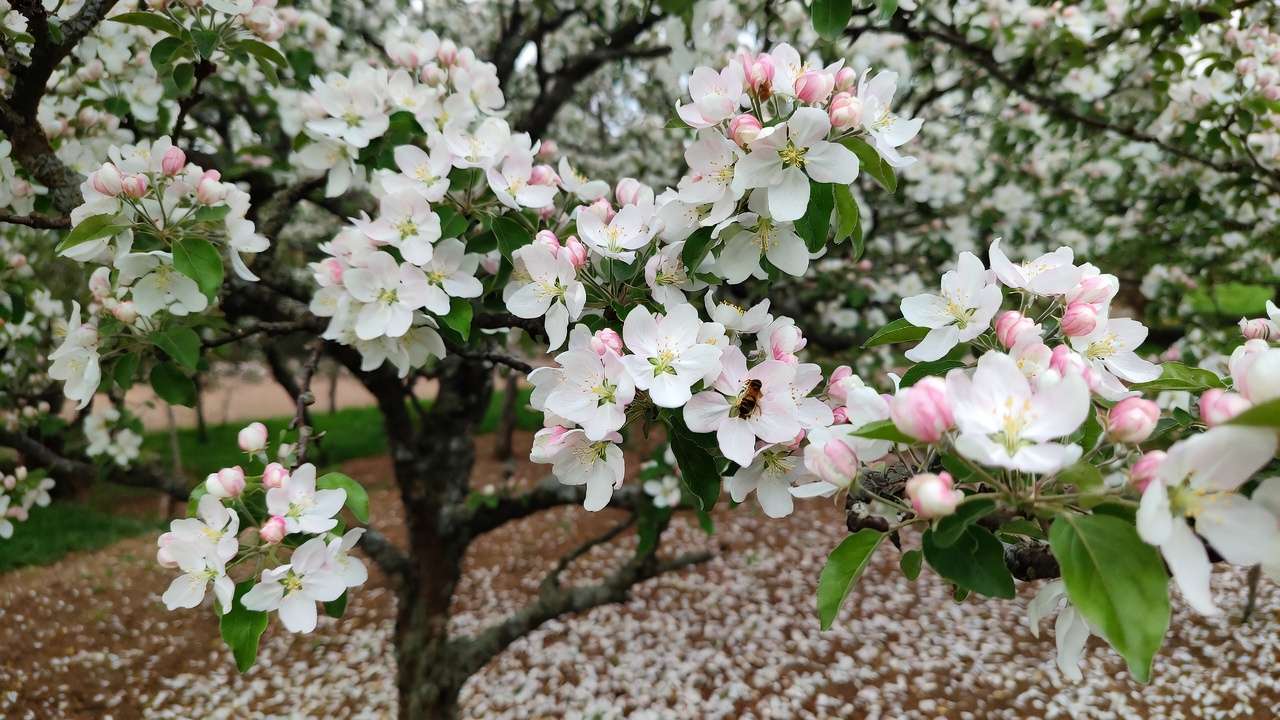
Use Crabapples as “Insurance” Pollinizers Crabapple trees are pollination superheroes. Many bloom over an extended period (often 10–14 days) and produce abundant, compatible pollen for most apple varieties.
Top recommendations:
- Dolgo — Very early to early-mid bloom, disease-resistant, beautiful white-pink flowers
- Manchurian — Mid-season bloom, heavy pollen producer
- Evereste — Mid to mid-late, excellent disease resistance
- Golden Raindrops — Late bloom, small ornamental fruit
Plant one crabapple for every 4–8 main fruit trees, within 50 feet. Many home orchardists report doubling yields simply by adding a single crabapple. Bonus: Their tiny fruit makes great jelly! 🍎
Grafting or Top-Working for Single-Tree Fixes If you already have a mature tree with no compatible partner, don’t remove it—graft!
- Add 2–3 compatible scion varieties to upper branches (cleft or whip-and-tongue grafting in late winter).
- Many nurseries sell multi-variety grafted trees (“fruit cocktail” trees) with 3–5 varieties chosen for bloom overlap.
This is especially useful in small urban yards where space is limited.
Boost and Protect Pollinators 🐝 Healthy bee populations are non-negotiable for cross-pollination success.
- Plant early-, mid-, and late-blooming companion flowers (crocus, clover, borage, lavender, sunflowers).
- Install bee hotels or native bee nesting blocks.
- Avoid spraying insecticides during bloom (even “bee-safe” products can harm if mis-timed).
- Provide a shallow water source with pebbles for bees to drink safely.
Research from Cornell University shows that orchards with diverse floral resources can see 30–50% higher fruit set.
Hand-Pollination as Emergency Backup For small numbers of trees or unpredictable weather:
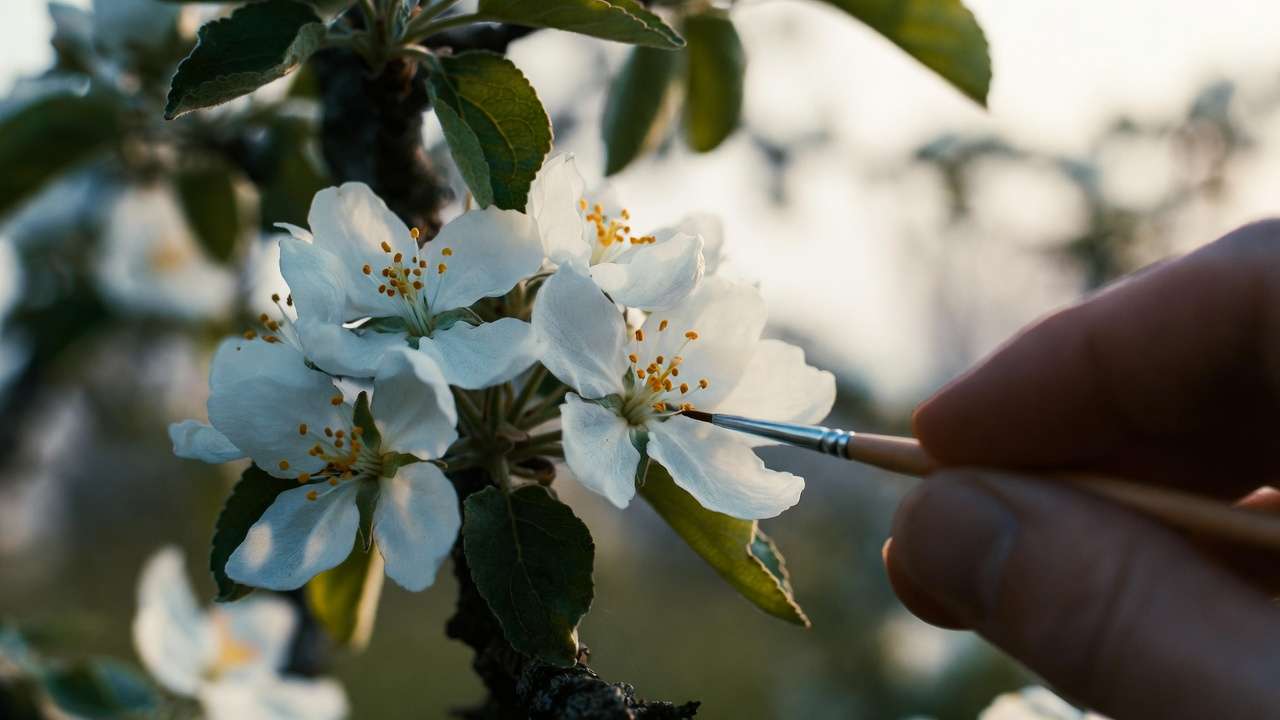
- Collect fresh pollen from open flowers of the pollinizer variety using a small brush or cotton swab.
- Gently dab pollen onto receptive stigmas of the main variety (stigmas look sticky and open).
- Do this mid-morning on dry, calm days.
- Repeat every 2–3 days during bloom.
While labor-intensive, hand-pollination has saved entire crops during rainy springs.
Weather-Proof Your Bloom Window
- Use row covers or frost blankets for early bloomers during late frosts.
- Install windbreaks (fences, hedges) to reduce blossom damage.
- Track local bloom progression with apps like USA National Phenology Network or iNaturalist.
Troubleshooting When Overlap Still Goes Wrong (H2)
Sometimes, even careful planning doesn’t deliver fruit. Here’s how to diagnose and fix:
Symptom: Heavy bloom → massive early fruit drop
- Likely cause: Insufficient overlap or incompatible pollen.
- Fix: Add a crabapple this season; plan a replacement or graft next winter.
Symptom: Some fruit sets, but very few or small/deformed
- Possible causes: Partial overlap, poor bee activity, nutrient deficiency (especially boron), or biennial bearing tendency.
- Fixes: Soil test → apply balanced fertilizer + boron spray pre-bloom; thin fruit aggressively to redirect energy.
Symptom: One variety fruits well, the other doesn’t
- Likely: The non-fruiting tree is triploid or the pollinizer isn’t blooming simultaneously.
- Fix: Confirm variety details; replace or graft.
Case Study Example A reader in USDA Zone 6 planted ‘Honeycrisp’ and ‘Granny Smith.’ Honeycrisp (mid bloom) set decent fruit, but Granny Smith (mid-late) produced almost none. Diagnosis: Slight bloom timing mismatch + triploid status of some Honeycrisp rootstocks reducing pollen viability. Solution: Added a ‘Golden Delicious’ (mid bloom, excellent pollinator) the following year → both varieties produced heavily.
Quick Tips Checklist for Bigger Harvests (H2)
Here’s your at-a-glance cheat sheet ✅
- Always verify bloom group before purchasing trees 📅
- Choose adjacent flowering groups for best overlap (e.g., 2–3, 3–4)
- Plant at least one universal crabapple for insurance 🌳
- Keep compatible trees within 50 feet of each other
- Never rely on two trees of the same variety for cross-pollination ❌
- Avoid triploids as sole pollinizers
- Boost bee habitat with flowers and water sources 🐝
- Monitor local bloom dates—your zone may differ from catalog timing
- Consider multi-graft trees for tiny spaces
- Hand-pollinate during bad weather years
- Thin fruit early to prevent biennial bearing
- Test soil and add boron if fruit set is consistently poor
- Label your trees! (You’ll thank yourself in 3 years)
- Join local gardening forums to learn region-specific pairings
- Patience pays off—most fruit trees need 3–5 years to reach full production
Frequently Asked Questions (FAQs) (H2)
Do I really need two different trees for fruit? Yes, for most apples, pears, sweet cherries, and many plums. Self-fertile exceptions exist (e.g., Golden Delicious apple, Stella cherry, many peaches), but even they often produce more with a partner.
Can one crabapple pollinate multiple different apple varieties? Absolutely! A single well-placed crabapple like Dolgo or Evereste can serve 6–10 nearby trees if bloom times align.
What if my two trees bloom 2–3 weeks apart? They won’t cross-pollinate effectively. Replace one, graft, or add a mid-bloom variety/crabapple as a bridge.
Are there completely self-fertile fruit trees I can plant singly? Yes—many peaches, nectarines, European plums (e.g., Stanley), some apricots, and self-fertile apples (e.g., Golden Delicious, Liberty) and cherries (Stella, Lapins, Sweetheart).
How far apart can pollinating trees be? Ideally 20–50 feet for best results. Up to 100 feet can work in open areas with strong bee populations, but closer is always better.
Will my trees fruit if I only have one of each variety but they’re far apart? Probably not reliably. Distance reduces successful pollen transfer dramatically.
Do I need different varieties for pollination every year? No—once you have compatible, overlapping bloomers planted, they’ll work for decades.
Can weather completely prevent fruit set even with good overlap? Yes—prolonged cold, heavy rain, or high winds during bloom can keep bees away. That’s why having extra strategies (crabapples, hand-pollination) helps.
Conclusion: Plant Smart for Years of Abundant Fruit (H2)
Avoiding pollination overlap issues isn’t about luck—it’s about intentional variety selection, strategic planting, and a little extra care for your pollinators. By matching bloom times, using compatibility charts, adding insurance crabapples, and supporting bees, you’ll set yourself up for consistent, generous harvests year after year 🍏🍐🍒
Take action today:
- Check your current trees’ varieties and bloom groups
- Research one or two compatible additions for next season
- Plant bee-friendly flowers this fall or spring
Your future self (and your pantry) will thank you!
Have you battled pollination problems before? Which fruit trees are you growing, and which pairings have worked best for you? Drop your experience in the comments—I’d love to hear and help troubleshoot! 🌳✨
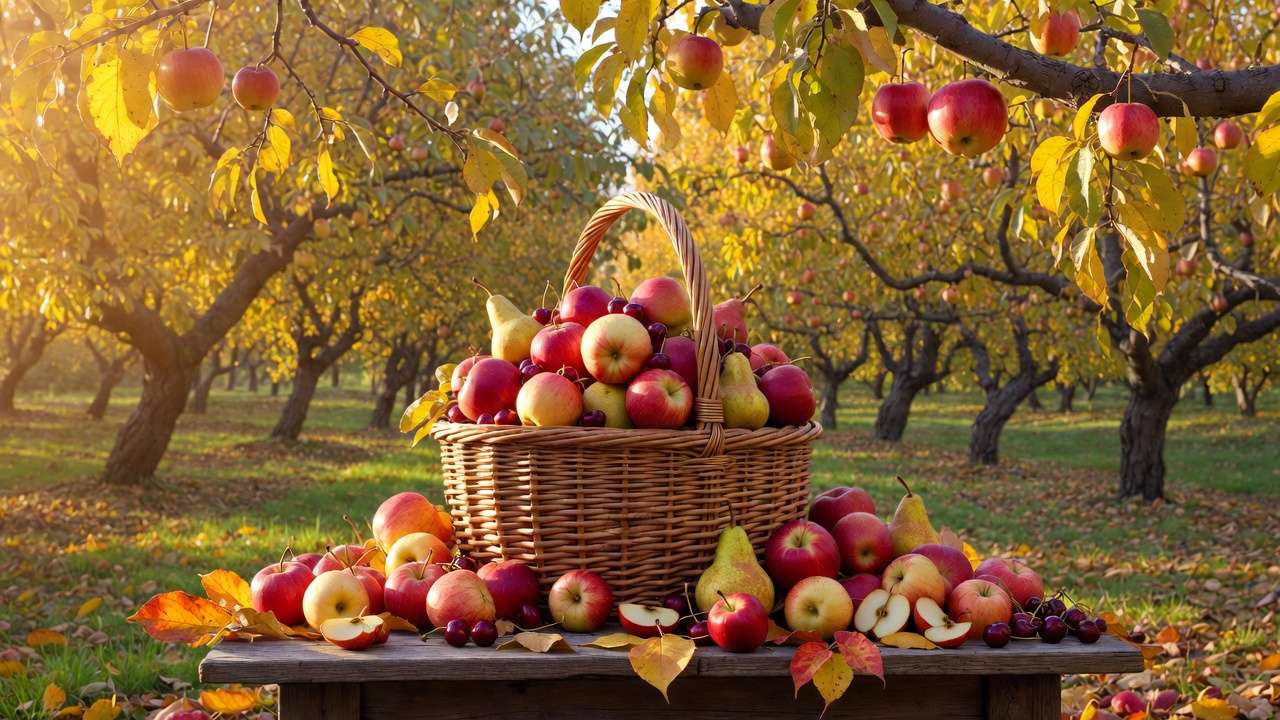
Happy planting, and here’s to overflowing harvest baskets!











