
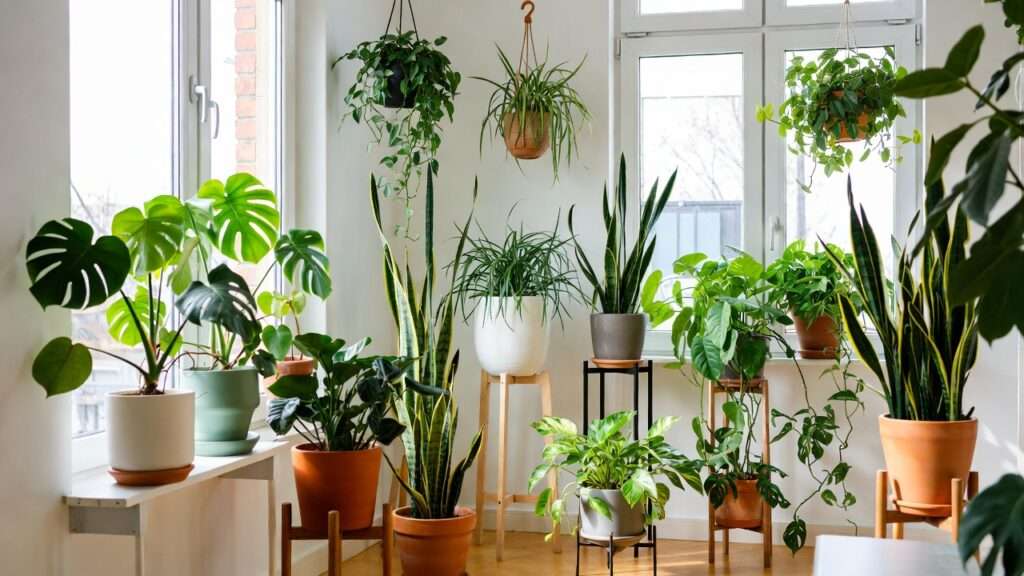
Ever walked into a stunning, plant-filled home on Pinterest or Instagram and thought, “I want that vibe!”… only to watch your own houseplants slowly wilt in those picture-perfect spots? 😩
You’re not alone. Thousands of indoor plant enthusiasts face the same challenge every day: balancing décor and plant needs so their spaces look magazine-worthy while their green companions stay lush and healthy. The good news? You absolutely can have both—a stylish, biophilic home that boosts mood, purifies air, and feels alive—without the heartbreak of yellow leaves or leggy growth.
As a plant care specialist with over a decade of experience helping homeowners and collectors create thriving indoor jungles, I’ve seen (and fixed) every common styling mistake. In this comprehensive guide, we’ll cover everything from accurate light assessment to expert grouping strategies, trending plant picks for 2025–2026, and practical maintenance hacks. By the end, you’ll have the tools to design intentional, sustainable plant displays that look intentional and keep your plants thriving for years. Let’s turn your home into a green sanctuary that works for both aesthetics and biology! 🌱💚
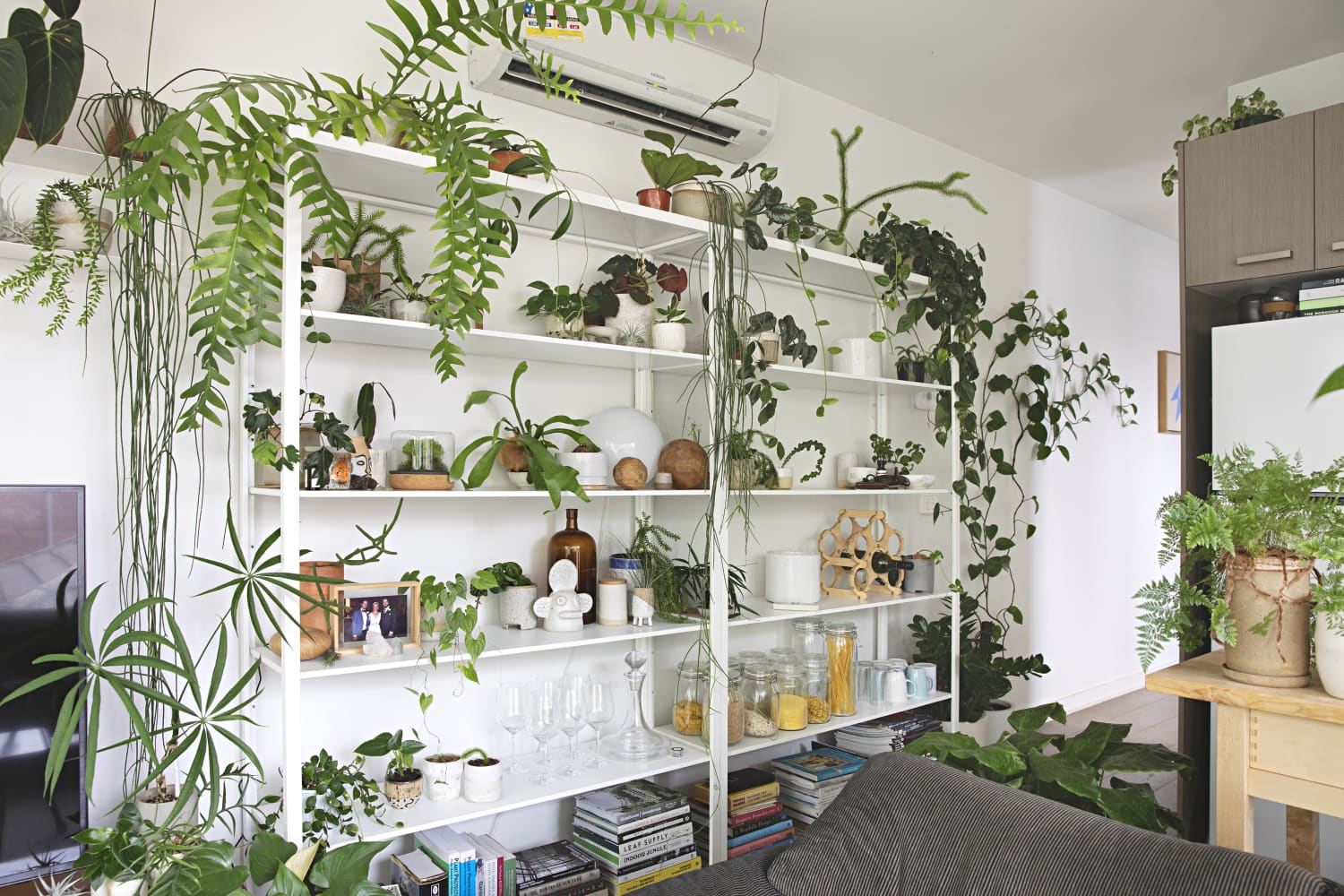
Why Balancing Aesthetics and Plant Health Matters More Than Ever 🌍
The rise of biophilic design in recent years has turned houseplants into essential interior elements rather than mere accessories. Studies show that indoor plants can reduce stress by up to 15%, improve air quality by filtering toxins like formaldehyde and benzene, and even boost productivity in home offices. But here’s the catch: these benefits only materialize when plants are genuinely healthy.
Poor placement—such as shoving a light-loving fiddle leaf fig into a dim corner for “vibe” or cramming high-humidity tropicals into dry, air-conditioned rooms—leads to high failure rates. In fact, many new plant owners report losing 30–50% of their collection in the first year due to mismatched conditions.
The goal isn’t just pretty photos; it’s creating lasting, low-maintenance greenery that enhances your décor long-term. When you prioritize balancing décor and plant needs, you invest in joy rather than constant replacement.
Understanding Your Space: Assess Light, Humidity, and Airflow First 🔍
The foundation of successful styling is knowing your home’s microclimates. Skip this step, and even the most Instagram-worthy arrangement will fail.
How to Accurately Measure Natural Light in Each Room ☀️
Forget guessing “bright” or “low”—get precise:
- Download a free lux meter app (like “Light Meter” on iOS/Android) or buy an affordable handheld meter (~$20–30).
- Measure at different times: morning, midday, afternoon, and note seasonal shifts (winter light can drop 50–70% in many regions).
- Key categories:
- Bright indirect (500–2,000+ lux): Near east/west windows with sheer curtains.
- Medium (250–500 lux): A few feet from windows.
- Low (<250 lux): Interior corners or north-facing rooms.
- Direct sun (2,000+ lux): South-facing unshaded spots (risk of scorch for many plants).
Pro tip: Observe shadows—sharp edges mean direct sun; soft/fuzzy mean indirect.
Matching Humidity and Temperature to Your Home Environment 💧
Most homes hover at 30–50% humidity, but tropical favorites crave 60%+.
- Group plants by needs: desert types (succulents, snake plants) love dry; ferns, calatheas, and peace lilies thrive in steamy bathrooms.
- Use pebble trays, humidifiers, or group plants to create micro-humidity pockets.
- Avoid placing near heating vents, AC blasts, or drafty windows—consistent temps (65–80°F/18–27°C) prevent stress.
Quick Room-by-Room Light & Condition Checklist 📋
- Living room: Often bright indirect near windows—great for statement plants.
- Bedroom: Usually medium to low—ideal for calming, air-purifying options.
- Kitchen: Variable, often humid near sink—perfect for herbs and moisture lovers.
- Bathroom: High humidity, lower light—spa-like paradise for ferns.
- Home office: Desk spots with window access—productivity boosters like pothos or ZZ plants.
Choosing the Right Plants: Best Houseplants That Naturally Fit Your Decor Style 🌿
Select varieties that match both your aesthetic and your space’s reality—no forcing trendy rarities into unsuitable conditions.
Low-Light Tolerant Beauties for Modern Minimalist or Moody Spaces 🖤
These forgiving champs thrive with minimal fuss:
- Snake Plant (Sansevieria): Architectural upright leaves, air-purifying, nearly indestructible.
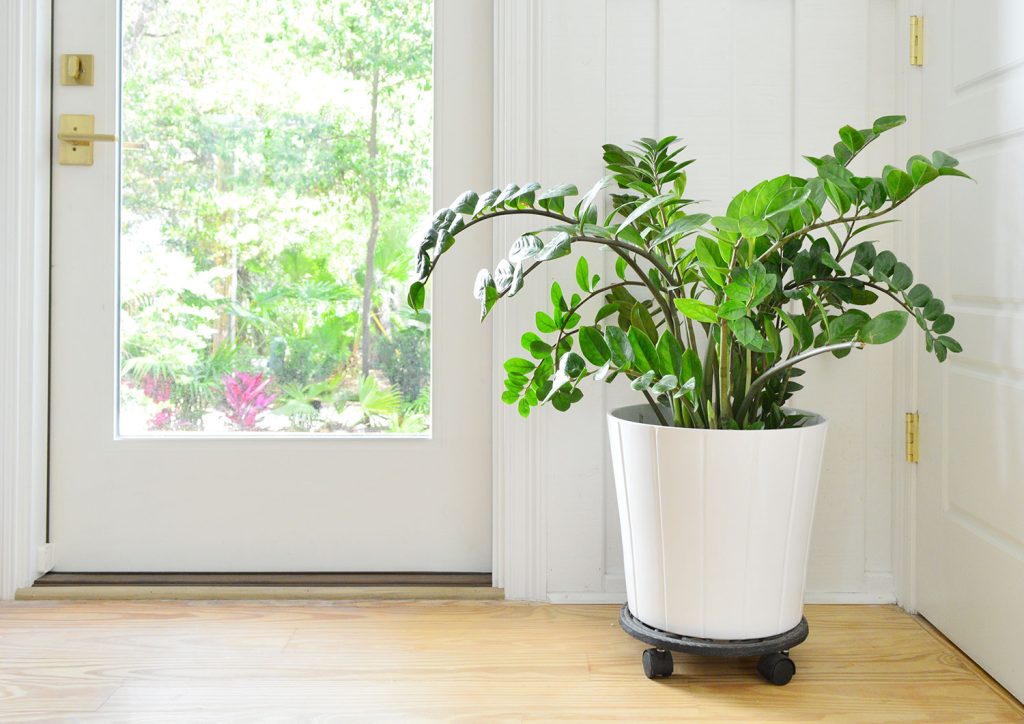
- ZZ Plant (Zamioculcas zamiifolia): Glossy dark foliage, drought-tolerant, perfect for forgotten corners.
- Pothos (Epipremnum aureum): Trailing heart leaves in variegated gold/green—super adaptable.
- Peace Lily (Spathiphyllum): Elegant white blooms, signals when thirsty by drooping.
Statement Plants for Bright, Airy, Scandinavian or Bohemian Vibes 🌞
These drama queens demand good light but reward with wow factor:
- Fiddle Leaf Fig (Ficus lyrata): Iconic large leaves—needs consistent bright indirect.
- Monstera Deliciosa: Split-leaf tropical icon—loves climbing support.
- Bird of Paradise (Strelitzia reginae): Exotic banana-like leaves and potential blooms.
- Rubber Plant (Ficus elastica): Bold glossy leaves in burgundy or variegated.
Trailing & Textural Plants for Shelves, Hanging, and Layered Looks 🌱
Add movement and softness:
- String of Pearls (Senecio rowleyanus): Cute bead-like succulent trails.
- Philodendron Brasil: Heart-shaped leaves with lime variegation.
- Hoya varieties: Waxy blooms, slow-growing vines.
- Tradescantia (Wandering Jew): Fast-growing colorful trailers.
2025–2026 Trending Picks That Are Easy to Style (and Keep Alive) 🔥
- Variegated Anthuriums: Heart-shaped leaves with pops of color.
- Pellionia (Watermelon Begonia): Trailing patterned foliage.
- Dracaena ‘Goldieana’: Striking gold stripes.
- Hybrid Hoyas: Compact, fragrant bloomers.
Design Principles for Stylish, Plant-Friendly Arrangements 🌟
Now that you know your space and have chosen compatible plants, it’s time to arrange them like a pro stylist—while keeping their biological needs front and center. The secret lies in applying timeless interior design rules with a plant-care twist.
The Rule of Three (and Odd Numbers) for Natural Harmony
Odd-numbered groupings (3, 5, 7…) almost always feel more organic and balanced than even numbers.
- Why it works: Our eyes find symmetry in threes more dynamic and less rigid than pairs or fours.
- Plant-care bonus: Grouping three plants of similar light/water needs creates a natural microclimate—higher local humidity, shared pest monitoring, easier rotation. Example: A tall snake plant flanked by two trailing pothos in matching ceramic pots looks intentional and modern.
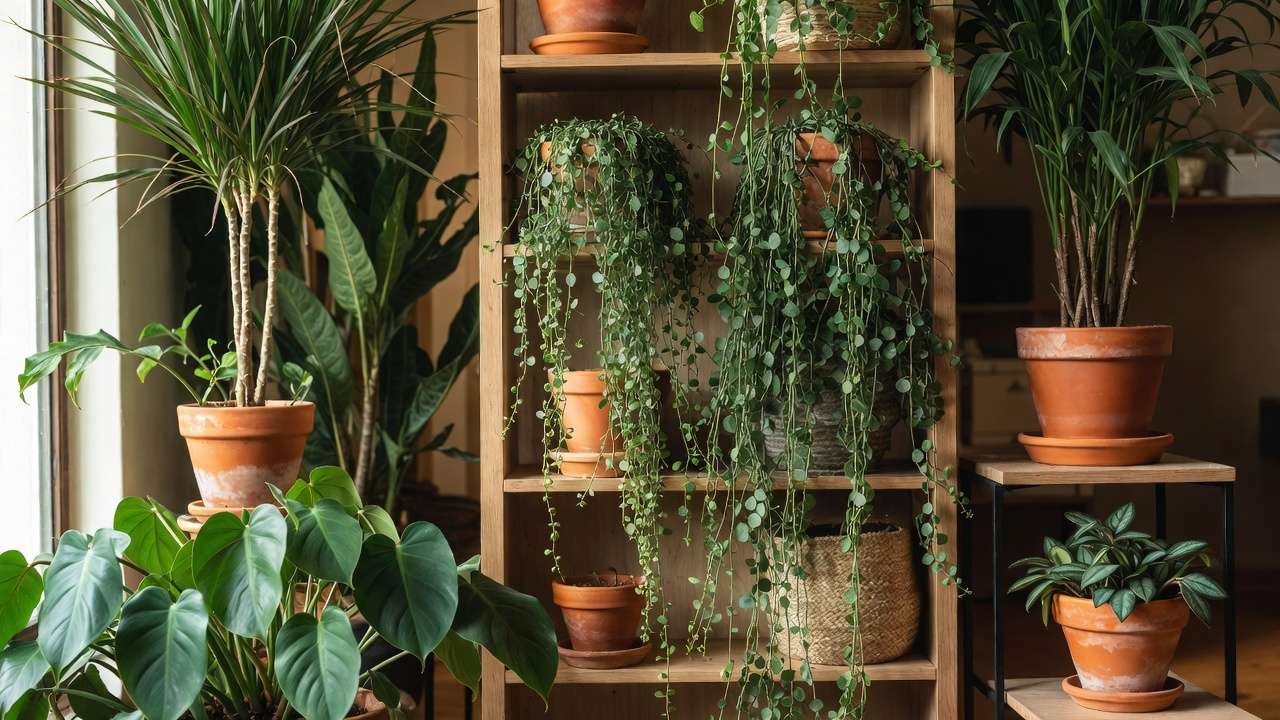
Playing with Height, Texture, and Color for Visual Interest
Layering is key to depth and dimension:
- Tall floor plants (Monstera, Bird of Paradise, Fiddle Leaf Fig) as anchors
- Mid-level plants on plant stands, side tables, or low bookshelves (Rubber Plant, Dracaena, Peace Lily)
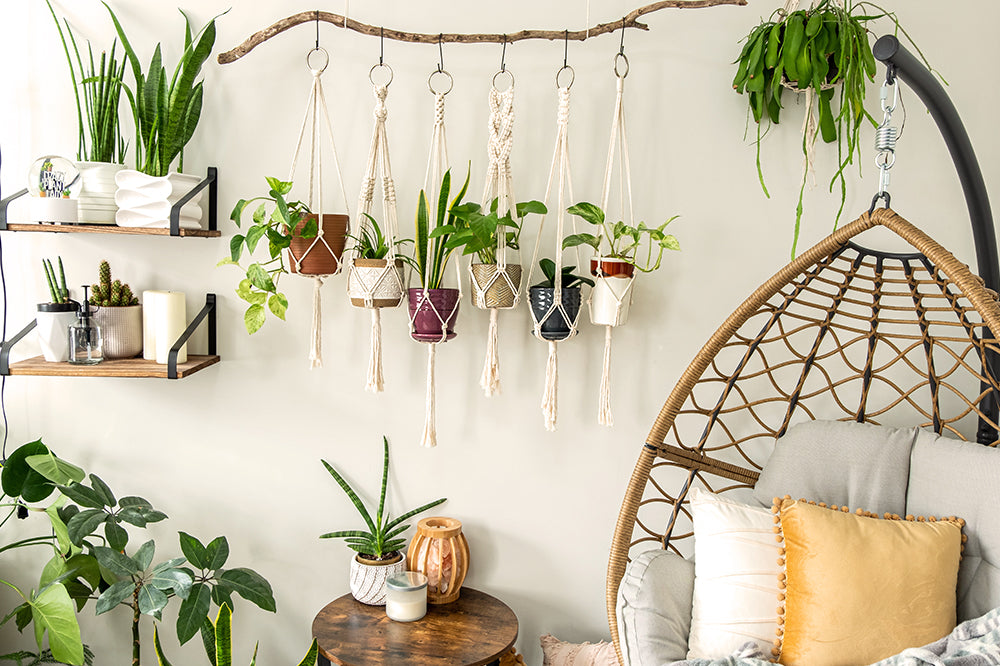
- Trailing/cascading plants from shelves, hanging planters, or macramé hangers (String of Pearls, Philodendron Brasil, Hoya)
Mix textures for richness:
- Glossy (ZZ, Rubber Plant) + matte (Pothos, Calathea) + fuzzy/succulent (String of Pearls, Echeveria)
- Color pops: Variegated leaves (Brasil, Marble Queen Pothos) against deep greens or burgundy tones (Rubber Plant ‘Burgundy’).
Grouping Plants by Care Needs (The Secret to Long-Term Success)
This is the single most powerful strategy for balancing décor and plant needs long-term. Create “care zones”:
- High-humidity cluster → bathroom or kitchen near sink (Ferns, Calathea, Peace Lily, Anthurium)
- Low-water desert squad → bright, dry windowsill or shelf (Snake Plant, ZZ, Haworthia, String of Pearls)
- Medium tropical crew → bright indirect living-room corner (Monstera, Philodendron, Fiddle Leaf Fig)
When plants with matching requirements live together, you water, mist, fertilize, and rotate them all at once—saving time and preventing accidental neglect.
Using Furniture and Decor to Elevate Plant Placement
- Plant stands (wood, metal, or rattan) raise smaller pots to eye level and improve airflow underneath
- Floating shelves → perfect for trailing plants and small/medium growers
- Bookshelves & consoles → stagger heights for layered looks
- Macramé hangers & ceiling hooks → add vertical interest without floor space
- Mirrors & reflective surfaces → bounce light deeper into rooms, helping low-light plants
Pro tip: Position taller plants slightly off-center rather than dead-center for a more relaxed, lived-in feel.
Creative Placement Ideas by Room (With Plant Health in Mind) 🏡
Living Room: Focal Point Trees + Grouped Clusters
- Anchor with one large statement plant near the brightest window (Fiddle Leaf Fig, Monstera, or Bird of Paradise)
- Surround with a care-matched trio on a console or plant stand
- Add trailing accents from mantel or high shelf Health win: Bright indirect light + good airflow from open space
Bedroom: Calming Low-Light Options + Hanging Trails
- Peace Lily, Snake Plant, or Pothos on nightstands/dressers
- Hanging Hoya or String of Hearts near window for soft movement
- Avoid very tall plants—keep sightlines open for restful energy Health win: Most bedrooms have medium-low light; these plants thrive there and purify air overnight
Kitchen: Herbs + Humidity-Loving Plants Near Sink
- Basil, mint, oregano in cute pots on counter or windowsill
- Ferns, Calathea, or Prayer Plant near sink for steam benefit
- Trailing Pothos or Philodendron from upper cabinets Health win: Natural humidity + occasional kitchen light
Bathroom: High-Humidity Paradise
- Boston Fern, Maidenhair Fern, Calathea, Nerve Plant, Peace Lily
- Hang or place on shelf—steam from showers mimics rainforest Health win: Consistent 60–80% humidity most plants crave
Home Office: Productivity-Boosting Desk Companions
- Small to medium: Pothos, ZZ Plant, Snake Plant, Spider Plant
- Desk-edge trailing varieties or small succulent terrariums Health win: Studies show plants reduce stress and improve focus—perfect for long work hours
Pot and Planter Selection: Aesthetic Meets Functionality 🪴
The container you choose affects both style and survival.
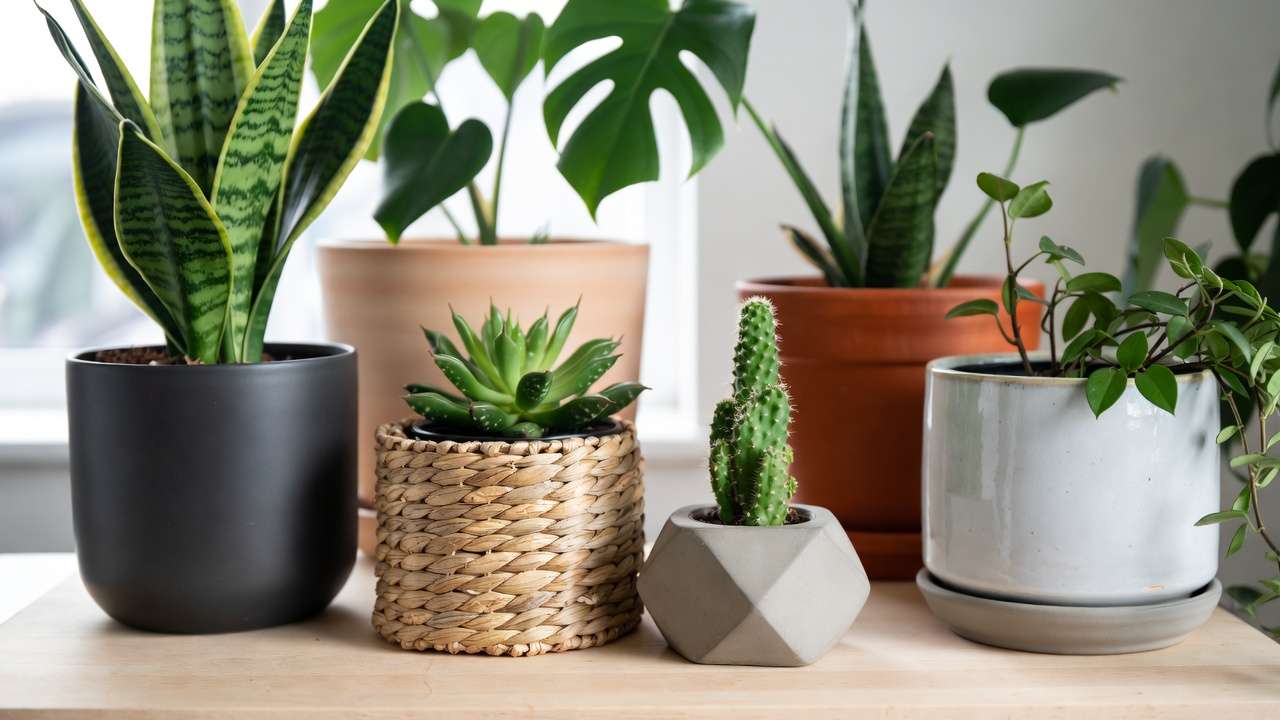
Materials: Ceramic vs. Terracotta vs. Plastic – Pros & Cons
- Ceramic/glazed: Stylish, heavy (stable for tall plants), holds moisture longer → great for tropicals
- Terracotta: Breathable, wicks excess water → ideal for succulents, cacti, snake plants
- Plastic/nursery pots inside cachepots: Lightweight, excellent drainage, budget-friendly → hide with decorative outer pots
Drainage 101: Why It’s Non-Negotiable (and Stylish Solutions)
No drainage hole = root rot death sentence. Solutions:
- Drill holes in decorative pots
- Use pots with built-in saucers
- Layer gravel or LECA at bottom (for cachepot setups)
- Choose self-watering pots with reservoir (great for forgetful owners)
Matching Planters to Your Decor Theme
- Boho: Woven rattan, macramé, textured clay
- Modern/Minimalist: Matte black, white ceramic, concrete
- Japandi/Scandinavian: Light wood, simple unglazed terracotta
- Eclectic: Mix metals, colors, vintage finds
Maintenance Tips to Keep Your Styled Plants Thriving Long-Term 🌿💧
Styling is only half the battle—consistent, thoughtful care keeps your beautiful arrangement alive and lush for years. Here are expert-level routines tailored to styled setups.
Rotate Plants Regularly for Even Growth
Most houseplants grow toward the strongest light source (phototropism), causing lopsided or “leaning” growth over time.
- Solution: Rotate each pot ¼ turn every 7–14 days.
- Styled tip: Mark the back of decorative pots with a tiny dot of washi tape so you know the original orientation—keeps symmetry intact after rotation.
- Bonus: Rotation also helps catch early pest signs on all sides.
Watering Schedules Tied to Decor Placement
Placement directly affects how quickly soil dries:
- Plants near bright windows or heat sources dry faster → check soil weekly.
- Low-light or grouped plants retain moisture longer → water less frequently.
- Method: Use the finger test (top 1–2 inches dry = water) or a moisture meter for precision.
- Stylish hack: Keep a small, attractive watering can nearby so the routine feels intentional rather than a chore.
Fertilizing Without Mess in Styled Groupings
- Use a balanced, water-soluble houseplant fertilizer (e.g., 20-20-20 or organic seaweed extract) at ½ strength every 4–6 weeks during spring/summer.
- Dilute in a separate jug → water all plants in a care zone at once.
- Avoid fertilizing in winter when growth slows—over-fertilizing causes salt buildup and leaf tip burn.
Pest Prevention in Beautiful Groupings
Close groupings increase humidity (good!) but can also spread pests quickly (bad!).
- Weekly ritual: Wipe leaves with a damp microfiber cloth to remove dust and inspect undersides.
- Proactive: Introduce beneficial insects like ladybugs or use neem oil spray monthly as prevention.
- Quarantine new plants for 2–4 weeks before adding to styled displays.
Pruning for Shape, Health, and Aesthetic Control
- Trim leggy growth, yellow leaves, or dead tips with clean shears.
- Propagate cuttings (especially pothos, philodendron, tradescantia) in water or soil to fill empty spots in your display.
- Shape trailing plants by pinching tips → encourages bushier growth that looks fuller on shelves.
Common Mistakes to Avoid When Styling with Houseplants 🚫
Even experienced plant parents fall into these traps—here’s how to sidestep them:
- Placing for looks over light → The #1 killer. Always prioritize actual light conditions over “vibe.” Fix: Use a light meter and relocate as needed.
- Overcrowding = poor airflow & fungal/disease risk → Leave 4–6 inches between pots for circulation.
- Ignoring rotation → Results in permanently lopsided plants that ruin symmetry.
- Trend-chasing rare plants without matching conditions → Variegated Monsteras or Alocasia need bright indirect light and high humidity—don’t force them into dim corners.
- Forgetting seasonal adjustments → Reduce watering in winter; move plants closer to windows during shorter days.
Expert Insights and Real-Life Examples 📸
From years of working with clients and my own 200+ plant collection:
- Horticulturist tip: “Treat plants like roommates—group those with similar personalities (light, water, humidity) so everyone gets along.” — Dr. Lisa Eldred Steinkopf, The Houseplant Guru
- Stylist insight: “Odd numbers + varying heights create movement that feels natural, not staged.” — Interior designer specializing in biophilic spaces
Real-life transformation example: A client’s dim living-room corner held a sad, leaning fiddle leaf fig. We swapped it for a tall snake plant trio (low-light tolerant), added trailing pothos on a high shelf, and grouped three peace lilies on a console near a window. Result: Lush, balanced look with zero casualties after 18 months.
FAQs: Answering Your Top Questions on Balancing Décor and Plant Needs ❓
Can I move plants around once they’re styled? Yes—but gradually. Sudden big light changes shock plants. Move them a few feet at a time over 1–2 weeks, or use grow lights as a bridge.
What if my dream spot has bad light? Supplement with full-spectrum grow lights (6500K, 12–14 hours/day) hidden behind furniture or in stylish floor lamps. Many modern designs blend seamlessly.
How many plants are too many? There’s no magic number—stop when you can’t comfortably reach/water/rotate every plant. Start with 5–10, then scale as you master care routines.
Best beginner-friendly stylish plants? Pothos, ZZ Plant, Snake Plant, and Peace Lily. Forgiving, beautiful, and widely available.
Do hanging plants need special care? They dry out faster (air circulation + gravity). Check soil more often and use self-watering globes or wicking systems for consistency.
Conclusion: Create Your Dream Green Sanctuary Today 🌱💚
You now have a complete roadmap to balancing décor and plant needs—from assessing your space and choosing compatible varieties, to arranging with design principles, maintaining effortlessly, and avoiding the most common pitfalls.
The result isn’t just a prettier home; it’s a living, breathing environment that supports your well-being every single day. Start small: pick one room, one care-matched group, and watch how quickly confidence (and lush growth) builds.
Your turn: Which room are you transforming first? Drop a 🌿 in the comments, share your before-and-after, or tell me your biggest styling struggle—I’m here to help!
Happy planting, and may your home always feel like a jungle retreat! 🪴✨











