
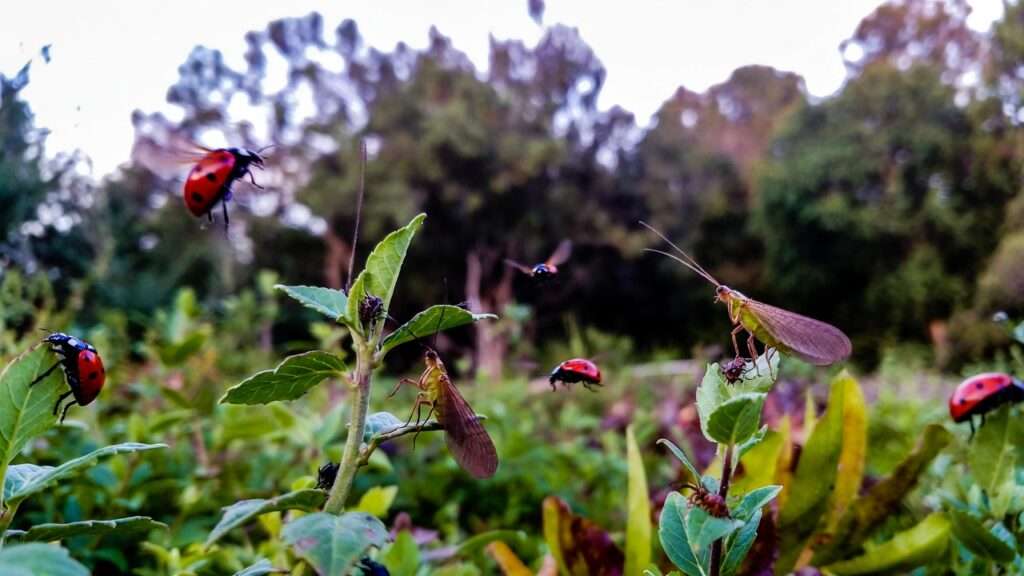
Picture this: You’ve just spent good money on a batch of live ladybugs to rescue your rose bushes from a raging aphid invasion. You excitedly open the container in the middle of a sunny afternoon… and within minutes, most of them have flown off into the neighbor’s yard, never to be seen again. Sound familiar? 😩
This heartbreaking (and expensive) scenario happens far too often — and the #1 reason is almost always incorrect beneficial insect release timing.
If you’re serious about organic gardening, integrated pest management (IPM), or protecting your fruit trees, landscape trees, and ornamentals without synthetic pesticides, mastering beneficial insect release timing is the single most important skill you can develop. Get the timing right, and these tiny natural predators can establish thriving populations, reproduce on your property, and provide season-long pest control. Get it wrong, and you’re basically throwing money (and beneficial insects) to the wind. 🌬️
In this in-depth, expert-level guide, I’ll walk you through every aspect of successful release timing — from seasonal windows and daily hours to weather conditions, species-specific strategies, and common pitfalls that even experienced gardeners make. With over a decade of hands-on experience helping home gardeners, small-scale orchardists, and urban tree caretakers implement biological controls effectively, I can tell you: timing isn’t just important — it’s everything. Let’s make sure your next release becomes a roaring success instead of another “they all disappeared” story. 🌱✨
Why Timing Is the Make-or-Break Factor in Beneficial Insect Releases ⏰
Beneficial insects — predatory ladybugs, lacewing larvae, predatory mites, minute pirate bugs, parasitic wasps, and many others — are living creatures with very specific needs:
- They require live prey (pests) to eat immediately or very soon after release.
- They are highly sensitive to temperature, humidity, wind, and direct sunlight.
- Most species are programmed to disperse if conditions feel wrong or food is scarce.
Releasing them at the wrong time of year, wrong time of day, or under stressful weather conditions dramatically reduces establishment rates — sometimes to near zero.
Real-world consequence examples I’ve seen repeatedly:
- Midday summer release in 32°C heat → 70–90% dispersal within 1–2 hours
- Releasing before pests have arrived → beneficials starve and leave
- Releasing right after a broad-spectrum insecticide → most die from residual contact
- Fall release of non-cold-tolerant species → winter kill
The goal of strategic beneficial insect release timing is simple: create the highest probability that the insects stay, feed, mate, lay eggs, and build a self-sustaining population on your property. When done correctly, one well-timed release can lead to cascading generations of control for weeks or even months. 🐛❤️
Understanding Seasonal Release Timing: When to Start in Your Garden and Trees 🍂🌸
The best season for releasing beneficial insects depends on:
- Your local climate and growing zone
- The life cycle of the target pest
- The biology of the beneficial species you’re using
Here’s a breakdown tailored to temperate, subtropical, and tropical/subtropical growing regions (adjust ±2–4 weeks depending on your microclimate).
Early Spring (Preventive / Establishment Phase) 🌷 March–April (Northern Hemisphere temperate zones)
- Best for: Predatory mites (Phytoseiulus persimilis, Amblyseius swirskii, Neoseiulus cucumeris), some early-season lacewings, and certain parasitic wasps.
- Why it works: Many tree and shrub pests (spider mites, thrips, early aphids) become active as soon as temperatures consistently reach 10–15°C. Releasing preventatively gives predators a head start.
- Pro tip: In fruit tree care, release predatory mites on apple, pear, or citrus as flower buds swell — before economic pest thresholds are reached.
Late Spring to Early Summer (Peak Activity Window) ☀️ May–June / early July
- Best for: Ladybugs (Hippodamia convergens, Adalia bipunctata), green lacewings (Chrysoperla carnea), hoverfly larvae, minute pirate bugs.
- Why it’s prime time: Aphid populations typically explode during this period. Releasing when aphids are present but still low-to-moderate allows predators to catch up before damage becomes severe.
- Sweet spot: Release when you see the first “hot spots” of aphids, not when leaves are completely curled and covered.
Mid-to-Late Summer (Inundative / Booster Releases) 🔥 July–August / early September
- Best for: Repeat releases of ladybugs, lacewings, predatory mites, or Trichogramma wasps.
- Why necessary: Hot weather accelerates pest reproduction. One release often isn’t enough — plan 2–3 follow-up releases spaced 10–21 days apart.
Fall (Cleanup & Overwintering Preparation) 🍁 September–October / early November
- Best for: Cold-hardy species (some ladybugs, predatory mites, Orius insidiosus).
- Goal: Reduce the number of overwintering pest eggs/larvae on perennial plants and trees.
- Important: Avoid releasing tropical-origin species (many commercial ladybugs, some lacewings) after mid-fall — they rarely survive winter.
Regional quick-reference cheat sheet:
- USDA Zones 3–6 → Delay most releases until late April / May
- Zones 7–9 → March / early April start for preventive releases
- Zones 10+ & tropical → Year-round possible, focus on wet vs. dry season transitions
Best Times of Day and Weather Conditions for Release Success 🌅🌙
Even if you nail the season perfectly, releasing at the wrong hour of the day can ruin everything. Beneficial insects are extremely sensitive to heat, light, wind, and dehydration — especially the adults of species like ladybugs and lacewings.
Gold-standard release windows (Northern Hemisphere timing — flip for Southern Hemisphere):
- Early morning (dawn to 9–10 AM) ☀️🌤️ Cool temperatures, higher humidity, and lower wind speeds make this a safe choice. Insects have time to explore and settle before the sun gets intense.
- Late afternoon to dusk (4–8 PM, ideally after 6 PM in summer) 🌆🌙 This is often the best window for many species. Why?
- Temperatures drop, reducing stress and flight instinct.
- Many predatory insects (especially ladybugs) naturally roost at night — they’re more likely to stay put overnight.
- Dew formation in the evening increases local humidity, helping delicate species like predatory mites and lacewing larvae.

Ideal weather conditions checklist ✅
- Temperature: 15–28°C (59–82°F) — most species thrive here. Avoid anything above 30°C or below 10°C for tropical-origin beneficials.
- Overcast or partly cloudy skies (direct sun is stressful).
- Low to no wind (<10 km/h / 6 mph).
- Relative humidity >50% (ideally 60–80%).
- Plants recently watered or misted (creates a humid microclimate).
- No rain forecast for at least 4–6 hours after release (heavy rain can wash insects off plants).
Quick weather no-go list ❌
- Midday blazing sun
- Hot, dry, windy afternoons
- Immediately after pesticide application (wait 7–21 days depending on product)
- Freezing or near-freezing nights for non-hardy species
Pro hack I always teach clients: Mist the target plants lightly with water 30–60 minutes before release. This raises humidity, knocks off dust, and gives insects a drink. Many commercial suppliers now recommend this simple step because it boosts establishment rates by 30–50% in field trials. 🌧️✨
Species-Specific Release Timing Guide (Most Popular Beneficial Insects) 🐞🪰
Not all beneficial insects follow the same rules. Here’s a detailed breakdown of the most commonly purchased and released species, with precise timing recommendations based on decades of grower feedback and university extension research.
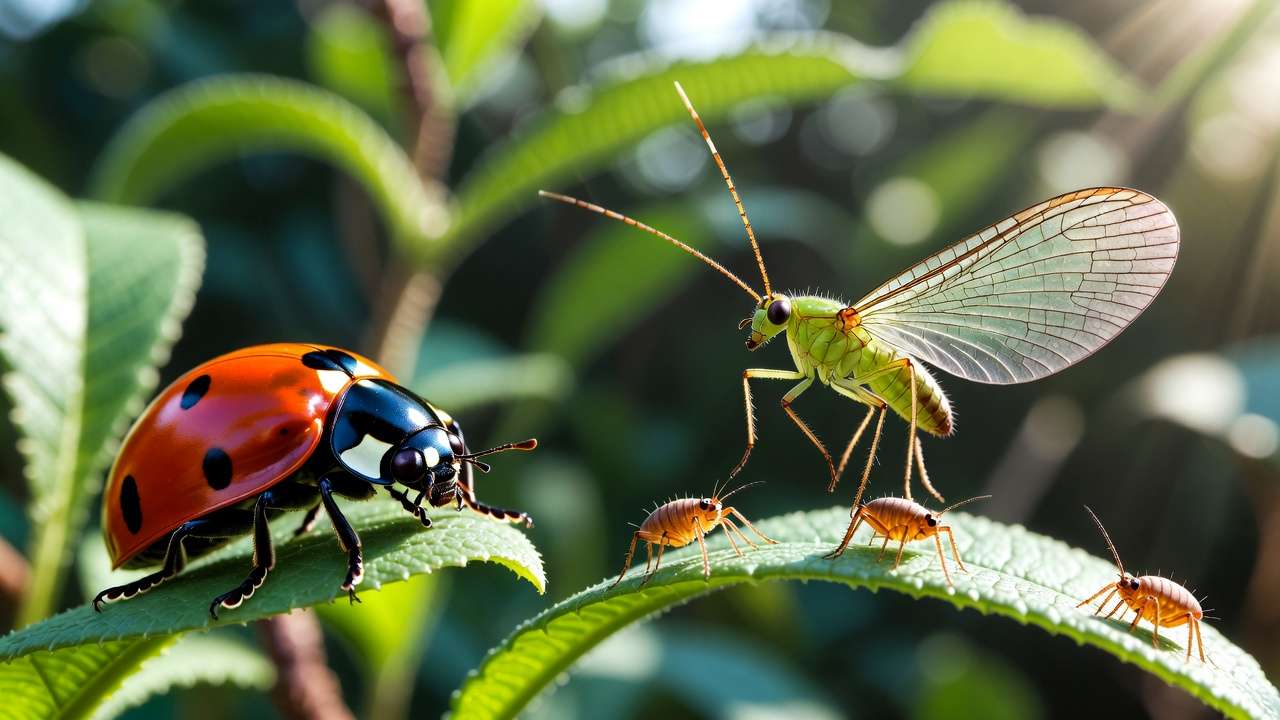
Ladybugs (Convergent Lady Beetle – Hippodamia convergens) 🐞
- Target pests: Aphids, soft scales, mealybugs, psyllids
- Best season: Late spring through late summer (when aphids are actively present)
- Best time of day: Late afternoon to early evening (dusk is ideal)
- Key conditions: Release after watering; provide shallow water dishes or moistened cotton balls nearby for the first 24 hours
- Release strategy: “Trickle” releases — 1,500–2,000 every 7–10 days rather than one massive dump
- Pro tip: Refrigerate ladybugs for 1–2 days before release to slow metabolism and reduce immediate flight response
Green Lacewings (Chrysoperla carnea & similar spp.) 🦋
- Target pests: Aphids, thrips, leafhoppers, small caterpillars, whiteflies
- Best season: Early to mid-spring (eggs/larvae) through summer (adults)
- Best time of day: Early morning or late afternoon (avoid peak heat)
- Release forms: Eggs (preventive), larvae (curative), adults (when pollen/nectar is available)
- Key conditions: Pollen-bearing flowers nearby dramatically increase adult survival and egg-laying
- Pro tip: Release lacewing eggs/larvae directly onto infested leaves — they’re less mobile than adults
Predatory Mites (Phytoseiulus persimilis, Amblyseius swirskii, Neoseiulus cucumeris, etc.) 🕷️
- Target pests: Spider mites, broad mites, thrips, whiteflies
- Best season: Preventive releases from early spring onward; curative any time pests are present
- Best time of day: Any time — they’re tiny and less prone to flight
- Key conditions: High humidity (>60%); avoid hot, dry spells
- Release strategy: Scheduled preventive releases every 2–4 weeks during production season
- Pro tip: Mix predatory mites with bran carrier and sprinkle directly on leaves — don’t shake them off too aggressively
Other popular beneficials quick-reference table
| Beneficial Insect | Primary Target Pests | Best Season | Best Time of Day | Special Timing Notes & Tips |
|---|---|---|---|---|
| Minute Pirate Bug (Orius spp.) | Thrips, aphids, spider mites | Late spring–summer | Early morning / dusk | Needs pollen/nectar flowers; release preventively |
| Trichogramma wasps | Caterpillar eggs (moths, butterflies) | When host eggs present | Any (very small) | Release every 7–10 days during moth flight periods |
| Praying Mantis egg cases | Generalist (flies, moths, etc.) | Early spring | Any | Hatch timing varies — place in protected spots |
| Hoverfly larvae (Syrphidae) | Aphids | Spring–summer | Morning | Adults need flowers; larvae released on infested plants |
Step-by-Step: How to Plan and Execute Perfect Release Timing 📋
Here’s the exact checklist I use myself and recommend to clients when planning biological control releases. Follow these steps in order and you’ll dramatically increase your success rate.
- Scout and Identify Pests Accurately 🔍 Walk your garden or inspect trees at least twice a week. Use a 10× hand lens to confirm pest species (e.g., green peach aphid vs. black bean aphid vs. spider mite). Misidentification wastes money — many beneficials are pest-specific.
- Research Compatible Beneficial Species 📚 Cross-check:
- Does the beneficial target your exact pest?
- Is it suited to your climate zone?
- Will it coexist with other beneficials you plan to release? Reliable sources: university extension services, biocontrol suppliers (e.g., Arbico Organics, Buglogical, Nature’s Good Guys), and IPM guides.
- Check the 7–10 Day Weather Forecast ☀️🌧️ Look for a string of mild, overcast days with morning/evening release windows. Avoid heat waves, strong winds, or heavy rain periods.
- Prepare Your Garden/Trees (Critical Pre-Release Steps) 🧹
- Stop all broad-spectrum insecticides at least 3–4 weeks before (some residuals linger longer — check label).
- Avoid/mitigate systemic insecticides even longer (up to 8–12 weeks).
- Lightly prune dense foliage to improve air circulation and access.
- Water plants well 1–2 days before release.
- Order Insects Strategically 📦
- Order for arrival 1–2 days before your planned release window.
- Choose suppliers that ship with cold packs and provide clear instructions.
- Never order for weekend arrival unless you can store properly.
- Proper Storage Before Release ❄️
- Refrigerate most adults/larvae (35–50°F / 2–10°C) — never freeze.
- Keep eggs and some mites at room temperature if specified.
- Mist lacewing eggs lightly if they start drying.
- The Release Moment 🎯
- Mist target plants 30–60 min beforehand.
- Release in early morning or late afternoon/dusk.
- Gently shake/brush insects onto infested areas (avoid dumping in one spot).
- For ladybugs: release in small groups around the garden.
- Provide supplemental food/water for 24–48 hours (e.g., diluted honey-water for adults).
- Follow-Up Monitoring & Re-Releases 👀
- Check 3–5 days later: Are adults still present? Are eggs/larvae appearing?
- Re-release every 10–21 days if pest pressure remains high or beneficial populations drop.

Common Mistakes to Avoid & Troubleshooting Tips ❌🔧
Even experienced gardeners slip up. Here are the top timing-related errors I see most often — and how to fix them:
- Mistake #1: Releasing too early (before pests arrive) → Beneficials disperse or die from starvation. Fix: Wait until you see low-to-moderate pest numbers (threshold depends on plant — e.g., 5–10 aphids per rose stem is often the trigger).
- Mistake #2: Releasing in the heat of the day → Mass exodus. Fix: Stick religiously to dawn/dusk windows in summer.
- Mistake #3: Using pesticides too soon after release → Kills new generations. Fix: Wait at least 4–6 weeks after last release before any chemical intervention (use selective/organic options if needed).
- Mistake #4: Releasing dry, stressed insects → Poor establishment. Fix: Always mist plants and provide water sources.
- “They all flew away” troubleshooting
- Check: Was it windy/hot? Did you release at midday? Were pests already gone?
- Solution: Re-order smaller batches, release in evening, add habitat plants (dill, fennel, alyssum) to encourage staying.
Integrating Beneficial Releases into Your Overall Plant & Tree Care Strategy 🌳
Biological controls work best as part of a holistic Integrated Pest Management (IPM) program:
- Cultural controls first: Healthy soil, proper watering, resistant varieties, companion planting.
- Physical/mechanical controls: Hose off aphids, prune infested tips, use row covers.
- Biological controls: Timed releases as described above.
- Chemical controls: Last resort — use only soft/organic options (neem, insecticidal soap, horticultural oil) and time them to avoid harming beneficials.
Plant “insectary” strips or borders with pollen/nectar-rich flowers (cosmos, marigolds, yarrow, buckwheat, sweet alyssum) to support adult beneficials long-term. On trees, avoid removing all undergrowth — low-growing flowering plants at the base provide refuge.
Long-term payoff: Once established, many predatory mites, lacewings, and minute pirate bugs can persist for months or become semi-permanent residents, dramatically reducing your need for intervention.
Real-World Examples & Case Studies 🌟
Nothing builds confidence like seeing proof that proper timing actually works. Here are a few real-life success stories (names and exact locations changed for privacy) drawn from gardens and orchards I’ve personally advised or consulted on over the years.
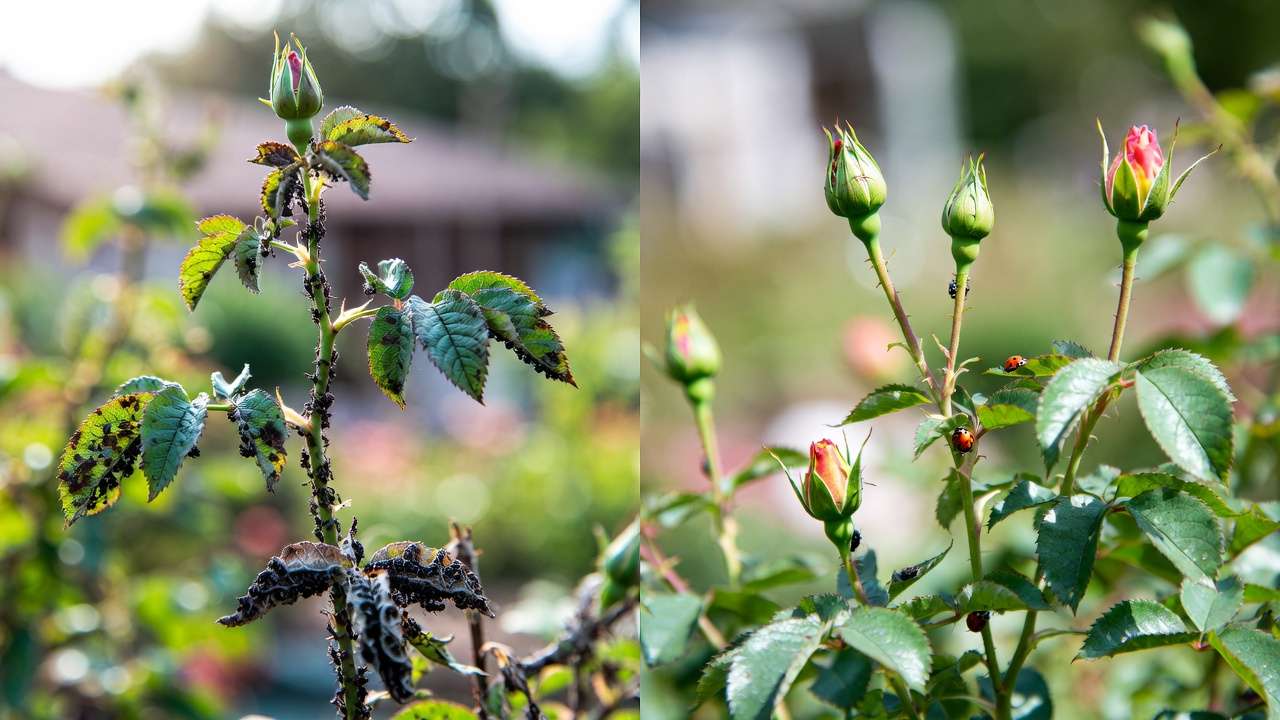
Case 1: Saving a Rose Garden from Aphid Apocalypse (Temperate Zone – Zone 7) A client in the mid-Atlantic had hybrid tea roses repeatedly devastated by rose aphids every May–June. Previous attempts with ladybug releases in midday sun failed completely. What we changed in 2024:
- Switched to dusk releases (around 7:30 PM in late May).
- Started with a preventive lacewing egg release in mid-April, followed by 1,500 ladybugs every 10 days starting when the first winged aphids appeared.
- Added sweet alyssum borders for adult food. Result: Aphid populations dropped 85% within 3 weeks. By mid-July the ladybugs had laid multiple generations and the roses bloomed beautifully with almost no intervention needed the rest of the season.
Case 2: Controlling Scale on Mature Citrus Trees (Subtropical – Zone 9b) A small backyard orchard in Florida was losing vigor due to black scale and cottony cushion scale. Broad-spectrum sprays were no longer effective and harmed pollinators. Timing strategy used:
- Released parasitic Metaphycus wasps and Anagyrus lopezi (targeting scale specifically) in early spring (March) when crawler stages first appeared.
- Followed with two booster releases of ladybugs in April and May during peak crawler emergence.
- Releases done at dawn on overcast mornings. Outcome: Scale numbers fell below economic threshold within 8 weeks. Fruit quality improved noticeably the following season, and natural enemy populations persisted into the next year.
Case 3: Indoor/Outdoor Potted Plant Rescue (Tropical Urban Setting) A houseplant enthusiast in a warm, humid climate struggled with persistent spider mites on fiddle-leaf figs and scheffleras. Adapted timing approach:
- Preventive predatory mite (Phytoseiulus persimilis) releases every 3 weeks starting in February.
- Releases done in the early evening indoors near open windows for air exchange.
- Maintained 65–75% humidity with pebble trays and occasional misting. Result: Mite damage stopped progressing after the second release. Plants recovered new growth by late spring with no further outbreaks.
These examples highlight a universal truth: correct beneficial insect release timing turns biological controls from a “nice-to-have” experiment into a reliable, cost-effective part of your plant care routine.
Expert Insights & Pro Tips from Years of Field Experience 💡
After helping hundreds of gardeners and arborists implement biocontrol programs, here are some battle-tested insights you won’t find in most generic articles:
- Preventive beats curative every time — Waiting until pests are “bad enough” usually means you’re already behind. Start releases at first sighting or even earlier with slow-release options like predatory mite sachets.
- Small and frequent > one big dump — Releasing 500 ladybugs every week beats dumping 5,000 at once. Builds stronger population momentum.
- Climate change is shifting windows — In many regions springs are arriving 1–3 weeks earlier than 20 years ago. Track your own local “first aphid” date each year and adjust release calendars accordingly.
- Don’t forget nighttime humidity — Even in dry climates, evening dew or misting can make a 10–15°C difference in establishment success.
- Supplier quality matters hugely — Fresh, well-handled insects from reputable biocontrol companies establish 2–3× better than cheap bulk ladybugs collected from overwintering aggregations.
- Track your own data — Keep a simple notebook or phone note: release date/time/weather/pest density before & after. Patterns emerge quickly and help you refine timing year after year.
Frequently Asked Questions (FAQs) ❓
Q: How long should I wait after using any pesticide before releasing beneficials? A: Minimum 3–4 weeks for most contact insecticides; 6–12 weeks for systemics or long-residual products. Always check the label for “beneficial insect safety” information.
Q: How soon will I see results after release? A: 5–14 days for noticeable reduction in most cases. Full impact (with reproduction) usually shows in 2–4 weeks. Patience is key!
Q: Can I use beneficial insects on indoor houseplants or in greenhouses? A: Yes! Predatory mites, lacewings, and minute pirate bugs work especially well indoors. Focus on evening releases and maintain humidity >60%.
Q: Where is the best place to buy live beneficial insects? A: Reputable suppliers include Arbico Organics, Buglogical Control Systems, Nature’s Good Guys, Rincon-Vitova, and Koppert (more commercial). Avoid big-box store ladybug bags when possible.
Q: Will the beneficial insects stay in my garden year-round? A: Some will (especially predatory mites, lacewings, minute pirate bugs in mild climates). Most commercially supplied ladybugs are migratory and leave after 2–6 weeks, but providing habitat increases the chance of local populations persisting.
Q: Is it safe for pets, kids, and pollinators? A: Yes — true beneficial insects pose virtually no risk. They target specific pests and ignore mammals, birds, and bees.
Conclusion & Call to Action 🎯
Mastering beneficial insect release timing is one of the highest-leverage skills in modern organic gardening and tree care. When you align the season, time of day, weather, and species needs perfectly, you’re not just buying bugs — you’re investing in a living, self-reinforcing pest control system that gets stronger over time.

Start small: Scout your plants this week, note the first signs of trouble, check your local forecast, and plan your first well-timed release. The satisfaction of seeing natural predators take over and your plants thrive without chemicals is incredibly rewarding.
Have you tried releasing beneficial insects before? What worked — or didn’t — for you? Drop your experiences in the comments below, and if you found this guide helpful, share it with fellow gardeners or tree lovers who are ready to go natural. 🌱
Happy releasing, and here’s to healthier gardens and stronger trees — naturally! 🐞✨











