
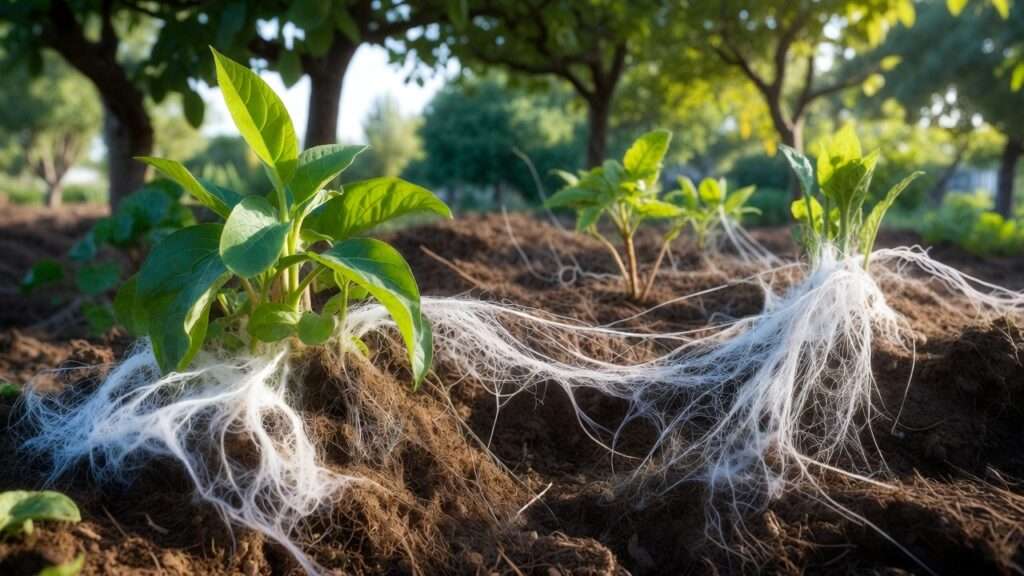
Picture this: You’ve just planted a beautiful young tree or set out a new vegetable garden, dreaming of lush green leaves, vibrant blooms, and strong, resilient growth. But instead of thriving, your plants struggle—yellowing leaves, slow establishment, constant need for watering and fertilizer, maybe even disappointing yields or dieback after a dry spell. Sound familiar? 😔
What if the secret to turning that struggle into success was already hiding in healthy, living soil… waiting for you to invite it in?
That secret is mycorrhizal fungi — nature’s underground superheroes. These beneficial fungi form powerful, lifelong partnerships with the roots of most plants and trees, dramatically improving nutrient uptake, water efficiency, disease resistance, and overall plant vigor. 🌱💪
The benefits of using mycorrhizal fungi go far beyond simple “better growth.” Home gardeners, orchardists, tree planters, landscapers, and organic enthusiasts worldwide are discovering that adding the right mycorrhizal inoculants at planting time can:
- Reduce watering needs by 25–50% in many cases
- Cut synthetic fertilizer use significantly
- Speed up establishment of new trees and shrubs
- Increase flower, fruit, and vegetable production
- Build long-term soil health and resilience
In an era of depleted soils, climate stress, and rising input costs, mycorrhizal fungi offer one of the most powerful, natural, and cost-effective tools available to modern gardeners and arborists.
In this in-depth guide, we’ll explore exactly how these microscopic allies work, the science-backed benefits of using mycorrhizal fungi, which plants benefit most (and which don’t), when and how to apply them effectively, common mistakes to avoid, and real-world success stories from gardens just like yours.
By the end, you’ll have everything you need to decide whether mycorrhizal fungi deserve a permanent place in your planting routine — and how to use them for maximum impact. Ready to unlock healthier plants and trees the natural way? Let’s dig in! 🌳🔬
What Are Mycorrhizal Fungi? A Quick Expert Overview 🧬🌍
Mycorrhizal fungi (from the Greek “myco” = fungus + “rhiza” = root) are specialized soil fungi that have co-evolved with plants for over 400 million years — since the very first land plants appeared.
Unlike disease-causing fungi, mycorrhizal species are mutualistic symbionts: both the fungus and the plant benefit.
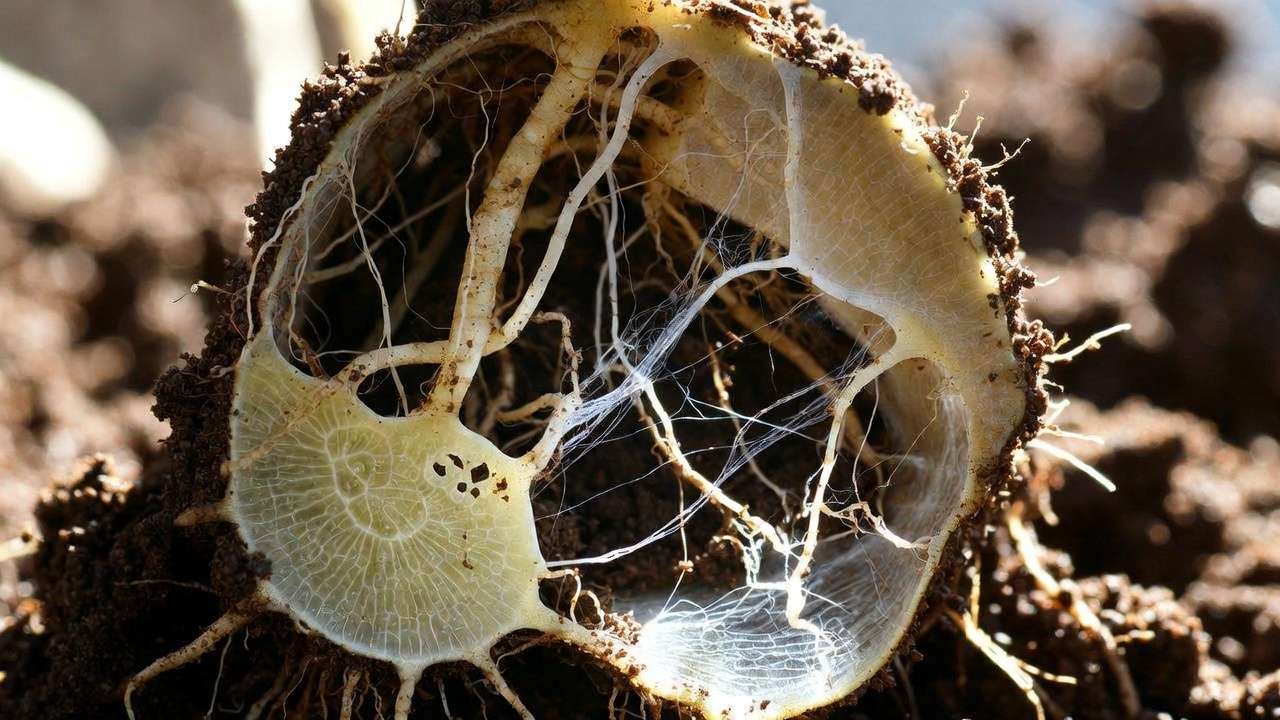
The Two Main Types Gardeners Need to Know
- Arbuscular Mycorrhizal Fungi (AMF or Endomycorrhizae)
- Most common type — associates with ~80–85% of all plant species
- Penetrates inside root cells, forming tree-like structures called arbuscules
- Partners with vegetables, fruits, flowers, grasses, legumes, many trees (maple, ash, dogwood, etc.), and most garden perennials
- Ectomycorrhizal Fungi (ECM or Ectomycorrhizae)
- Forms a sheath around root tips and a Hartig net between cells
- Partners mainly with woody trees and shrubs: pines, oaks, birches, beeches, hickories, spruces, firs, some poplars, willows, and eucalyptus
There are also specialized types (ericoid, orchid, arbutoid), but most commercial products focus on AMF and/or ECM strains.
How the Symbiosis Actually Works 🤝
In exchange for sugars (carbohydrates) produced by the plant through photosynthesis, the fungus delivers:
- Vastly extended hyphal networks (microscopic fungal threads) that explore soil volumes roots cannot reach
- Access to otherwise unavailable phosphorus, nitrogen, zinc, copper, iron, and other micronutrients
- Water from tiny soil pores during dry periods
- Protection against certain soil-borne pathogens
Some researchers even call this interconnected fungal network the “Wood Wide Web” — because mycorrhizal fungi can link neighboring plants, allowing resource sharing (carbon, nutrients, water) and even warning signals about pests or drought.
In short: healthy mycorrhizal associations turn ordinary roots into super-roots.
Key Benefits of Using Mycorrhizal Fungi for Plants and Trees 🌟
Here’s where the real magic happens. Let’s break down the most valuable, research-supported benefits of using mycorrhizal fungi that gardeners and tree-care professionals care about most.
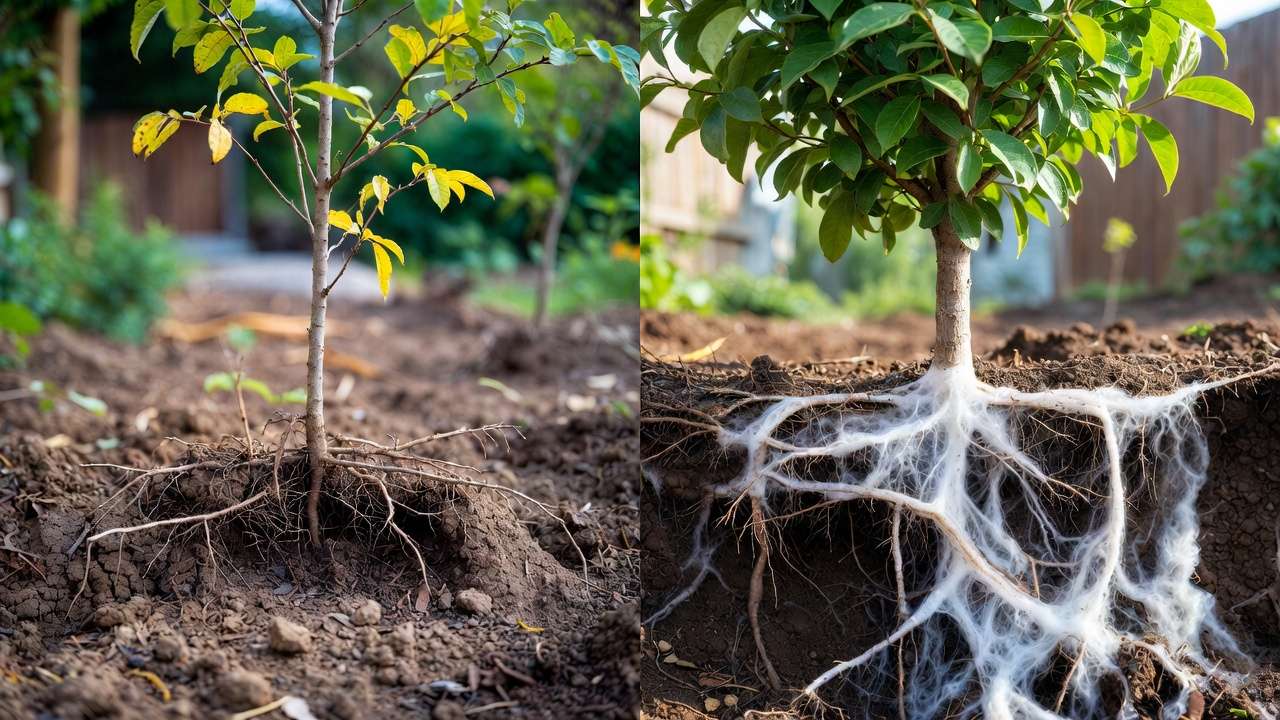
1. Dramatically Improved Nutrient Uptake (Especially Phosphorus)
Phosphorus is often the most limiting nutrient in garden soils — it binds tightly to clay and becomes unavailable to plants. Mycorrhizal hyphae are 100–1,000 times thinner than roots and can explore far greater soil volume.
Studies show:
- Up to 10-fold increase in phosphorus uptake in low-P soils
- Better nitrogen, zinc, copper, manganese, and sulfur acquisition
- Reduced need for high-phosphorus fertilizers (which can actually suppress mycorrhizal colonization if overused)
Perfect for: new gardens, poor native soils, post-construction sites, containers, and organic growing systems.
2. Superior Water Efficiency and Drought Resistance 💧
Mycorrhizal hyphae reach into micropores where plant roots cannot go, accessing “bound” soil water that remains available longer during dry spells.
Real-world impact:
- Many field trials report 25–50% reduction in irrigation needs
- Improved survival rates of newly planted trees during establishment
- Better performance during heat waves and prolonged dry periods
This benefit alone makes mycorrhizae one of the best tools for water-wise gardening and climate-resilient landscapes.
3. Stronger, Faster Root Development & Plant Establishment
Transplant shock is a major cause of failure with new trees, shrubs, and perennials. Mycorrhizal inoculation at planting time often results in:
- Larger, more branched root systems
- Faster recovery from transplant stress
- Earlier and more vigorous top growth
University extension trials frequently show 20–100% better establishment rates when mycorrhizae are added correctly at planting.
4. Enhanced Stress Tolerance & Natural Disease Protection 🛡️
Mycorrhizal plants consistently show:
- Greater tolerance to soil salinity, heavy metals, acidity, and compaction
- Reduced root disease incidence (e.g., Fusarium, Pythium, Phytophthora, nematodes)
- Systemic resistance to some foliar diseases through induced plant defenses
The fungi produce antibiotics, compete with pathogens for space and nutrients, and stimulate stronger plant immune responses.
5. Improved Soil Structure and Long-Term Soil Health
Mycorrhizal hyphae produce glomalin — a sticky glycoprotein that binds soil particles into stable aggregates.
Benefits include:
- Better soil aeration and drainage
- Reduced erosion
- Increased water infiltration
- Support for diverse soil microbial communities
Over years, regular mycorrhizal presence builds richer, more living soil — the foundation of any sustainable garden or landscape.
6. Higher Yields, Bigger Blooms, and Better Tree Vitality
Across vegetables, fruits, flowers, and trees, inoculated plants frequently show:
- Increased fruit/vegetable size and quality
- More abundant flowers
- Faster canopy development in young trees
- Longer lifespans and better overall vigor in established specimens
These gains often come with reduced input costs — less fertilizer, less water, fewer pest/disease interventions.
Which Plants and Trees Benefit Most? (With Real-World Examples) 🌸🌳
Not every plant forms a partnership with mycorrhizal fungi, but the vast majority do—around 80–90% of all terrestrial plant species rely on these symbiotic relationships for optimal health and performance. Knowing which ones benefit helps you target applications effectively and avoid wasting product on non-responsive plants.
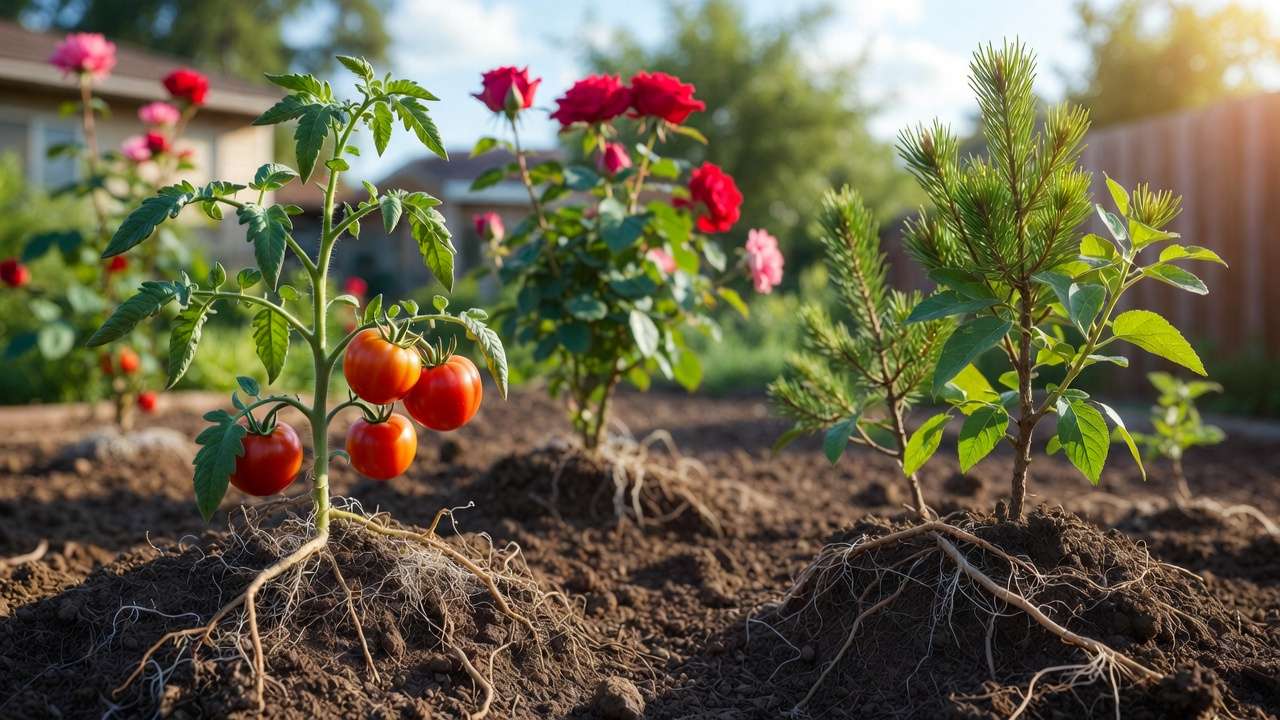
Endomycorrhizal (Arbuscular Mycorrhizal Fungi – AMF) Lovers
These are the most common type and partner with the majority of garden favorites. AMF penetrate inside root cells, forming arbuscules for nutrient exchange. They shine in vegetable gardens, flower beds, fruit orchards, and many ornamental landscapes.
- Vegetables & Herbs: Tomatoes 🍅, peppers, cucumbers, beans, peas, carrots, onions, garlic, lettuce, basil, oregano, strawberries, corn, wheat, and most other crops.
- Fruits & Berries: Apples, pears, citrus, grapes, raspberries, blackberries (except blueberries).
- Flowers & Ornamentals: Roses 🌹, marigolds, zinnias, petunias, sunflowers, hostas, daylilies, salvia, and most perennials.
- Grasses & Lawns: Turf grasses, prairie mixes, and cover crops like clover.
- Trees & Shrubs: Maples, ash, dogwood, holly, locust, redbud, serviceberry, and many deciduous species.
Real-world example: In university trials (e.g., from Oklahoma State and UF/IFAS extensions), inoculated tomato plants showed up to 20–50% better phosphorus uptake in low-P soils, leading to larger fruits and healthier vines with less fertilizer.
Ectomycorrhizal (ECM) Specialists
These form a sheath around root tips and are crucial for many woody plants, especially in forests, orchards, and landscapes. They benefit about 5–10% of plants but are vital for tree health.
- Conifers: Pines 🌲, spruces, firs, hemlocks, cedars.
- Hardwoods: Oaks, birches, beeches, hickories, willows, poplars, eucalyptus.
- Other Woody Plants: Some poplars, alders, and certain nut trees (e.g., hazelnuts in some cases).
Real-world example: In reforestation projects on disturbed mine lands (U.S. Forest Service studies), ectomycorrhizal-inoculated pine and oak seedlings established 30–50% faster, with higher survival rates in poor soils due to enhanced drought tolerance and nutrient access.
Special Cases & Ericoid Mycorrhizae
Acid-loving plants like blueberries, cranberries, rhododendrons, azaleas, and heathers form ericoid mycorrhizae—a specialized type not typically included in general endo/ecto products. Use specific ericoid inoculants if available.
Plants That Do NOT Benefit (Non-Mycorrhizal or Rarely Responsive)
These families evolved without strong mycorrhizal dependence and often show little to no response (or may even be suppressed by added fungi):
- Brassicas: Broccoli, cabbage, kale, cauliflower, Brussels sprouts, mustard.
- Beets, spinach, chard (Amaranthaceae family).
- Blueberries, cranberries, lingonberries (often Ericaceae, but non-responsive to standard AMF/ECM).
- Sedges and some aquatic plants.
Pro tip: In mixed gardens, focus inoculants on responsive plants—non-hosts won’t be harmed, but they won’t gain benefits either.
By matching the right fungi to the right plants, you maximize results and create thriving, low-maintenance landscapes. 🌿
When and Why You Should Use Mycorrhizal Inoculants
The benefits of using mycorrhizal fungi shine brightest in specific scenarios where natural populations are low or stressed:
- New plantings/transplants: Bare-root trees, nursery stock, or seedlings into disturbed/compacted soil. Inoculation at planting reduces transplant shock and speeds establishment.
- Poor or depleted soils: Post-construction sites, sandy/low-organic-matter gardens, or areas with heavy tillage/compaction.
- Drought-prone or water-restricted areas: Mycorrhizae can cut irrigation needs by 25–50% in trials.
- Organic/low-input systems: To reduce reliance on synthetic fertilizers (especially phosphorus) while boosting yields.
- Replant problems: Roses, fruit trees, or orchards with “replant disease” often recover faster with inoculation.
- Restoration projects: Reviving degraded land, mine reclamation, or native plantings.
Avoid routine top-dressing on established, healthy gardens—native mycorrhizae are often already present and sufficient unless disrupted.
How to Use Mycorrhizal Fungi Effectively: Step-by-Step Guide 🛠️
Success depends on direct root contact—fungi need to colonize living roots quickly. Follow these best practices for reliable results.
Choosing the Right Product
- Look for diversity: Quality inoculants list multiple strains (e.g., Glomus spp. for AMF, Pisolithus/Scleroderma for ECM).
- Forms: Granular/powder (easy for planting), soluble (for watering in), or seed treatments.
- Check viability: Shelf life 1–2 years; store cool and dry. Avoid products with just “mycorrhizae” without species counts or guarantees.
- Endo vs. Ecto: Match to your plants (many products combine both for versatility).
Application Methods
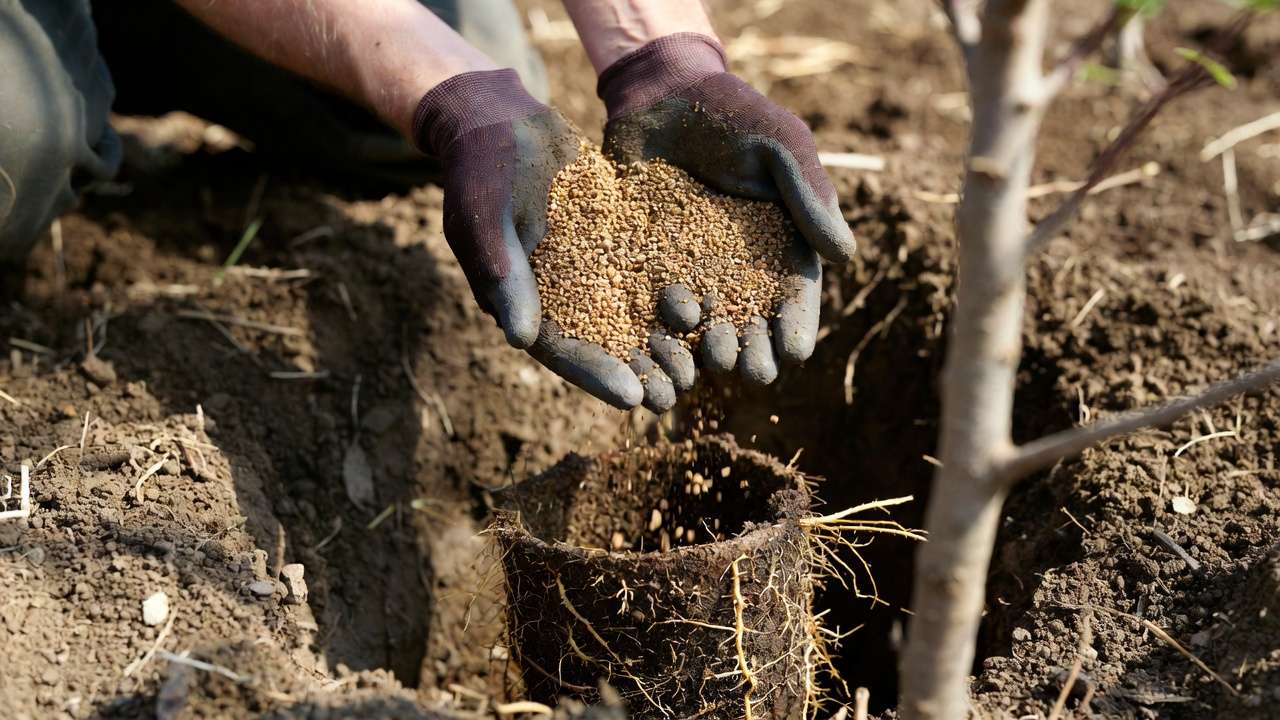
- At Planting (Best for Maximum Colonization)
- Dig the hole.
- Sprinkle 1–2 teaspoons (small plants) to 1–2 tablespoons (trees/shrubs) directly on the root ball or in the bottom of the hole.
- Gently tease roots to expose more surface.
- Backfill, water thoroughly to settle soil and activate spores.
- For Seeds/Seedlings
- Coat seeds lightly before sowing or mix into starting mix.
- Dip bare-root seedlings in a slurry (product + water).
- Water in young transplants with soluble form.
- For Established Plants
- Use soluble products: Mix per label, apply as root drench around the drip line.
- Core/aerate soil first if compacted, then sprinkle granular and water in deeply.
Pro Tips for Maximum Success
- Direct root contact is key — Avoid broadcasting on soil surface (UV kills spores).
- Water well after application — Keeps hyphae moist during colonization (2–4 weeks).
- Avoid high-P fertilizers initially — Excess phosphorus suppresses symbiosis (wait 4–6 weeks).
- Skip fungicides — Many kill beneficial fungi too.
- Combine with organics — Compost, mulch, and cover crops build long-term networks.
- One-time for perennials/trees — Colonization is permanent once established.
Common Mistakes to Avoid & Troubleshooting 🔍⚠️
Even though mycorrhizal fungi are remarkably forgiving once established, a few common errors can delay or reduce colonization success. Here are the top pitfalls and how to fix them:
- Applying to the Wrong Plants
- Mistake: Dumping inoculant on brassicas, beets, or blueberries expecting miracles.
- Fix: Always check plant compatibility first (refer to the list above). Non-hosts won’t be harmed, but you’re wasting product.
- High Phosphorus Fertilizer Right After Inoculation
- Mistake: Using starter fertilizers with high soluble P (e.g., 10-52-10) at planting. Plants get “lazy” and suppress fungal colonization.
- Fix: Wait 4–8 weeks before heavy P feeding. Use low- or slow-release organic fertilizers initially.
- Exposing Product to Sunlight or Heat
- Mistake: Leaving open bags in direct sun or a hot garage—spores die quickly.
- Fix: Store sealed products in a cool, dark place (fridge is ideal for long-term). Use opened bags within a season.
- Surface Broadcasting Instead of Root Contact
- Mistake: Sprinkling granules on top of soil like regular fertilizer.
- Fix: Always place product directly against roots or in the planting hole. UV light and drying kill spores fast.
- Using Fungicides or Soil Fumigants
- Mistake: Applying broad-spectrum fungicides (e.g., those targeting root rots) soon after inoculation.
- Fix: Avoid systemic or soil-applied fungicides for at least 6–12 months. If disease pressure is high, use targeted biological controls instead.
- Expecting Instant Results
- Mistake: Judging success in 1–2 weeks. Colonization takes 2–8 weeks depending on soil temperature and moisture.
- Fix: Be patient—benefits often become obvious in the second growing season (stronger drought tolerance, bigger blooms, etc.).
- Over-Tilling or Compacting Soil Repeatedly
- Mistake: Annual deep tilling destroys established hyphal networks.
- Fix: Switch to no-till or minimal-till practices. Use mulch to protect and feed the soil food web.
Troubleshooting tip: If plants still struggle after inoculation, test soil pH, drainage, and compaction first—mycorrhizae work best in moderately aerated, neutral-to-slightly-acidic soils (pH 5.5–7.5 for most AMF).
Expert Insights & Scientific Backing 🔬📚
As a plant care enthusiast who has followed mycorrhizal research for years, I can tell you the evidence is overwhelming and growing stronger every season.
Key highlights from peer-reviewed studies and university extensions:
- University of Wisconsin Horticulture Extension — Reports that AMF-inoculated vegetable crops in phosphorus-deficient soils consistently show 20–60% higher yields with reduced fertilizer inputs.
- Oklahoma State University — Field trials on turf and ornamentals demonstrated 30–50% less irrigation needed after mycorrhizal treatment, with measurable improvements in root biomass.
- U.S. Forest Service & USDA studies — Ectomycorrhizal inoculation on pine and oak seedlings in reforestation sites increased survival by 40–70% on harsh sites.
- Meta-analyses (e.g., 2010–2020 reviews in journals like New Phytologist and Mycorrhiza) — Across hundreds of experiments, inoculated plants average:
- 25–49% better phosphorus uptake
- 20–30% greater drought tolerance
- Significant reductions in root pathogen incidence
Glomalin (the glycoprotein produced by AMF hyphae) is now recognized as one of the most important contributors to stable soil carbon storage—helping fight climate change one garden at a time. 🌍
Bottom line: Mycorrhizal fungi aren’t a gimmick. They’re a restoration of a natural partnership that modern agriculture and landscaping often disrupt.
Real-Life Success Stories & Case Studies 🌱🏡
- Home Gardener in Texas (drought-prone clay soil): After adding AMF to new rose bushes and tomato transplants, the gardener reported 40% less watering in summer and noticeably larger blooms the following year—no extra fertilizer needed.
- Organic Apple Orchard (Pacific Northwest): Switching to ectomycorrhizal inoculation at planting reduced phosphorus fertilizer applications by 60% over three years while maintaining or increasing fruit size and quality.
- Urban Tree Planting Program (Midwest city): Municipal crews inoculated street trees (maples, oaks) post-construction. Survival rates jumped from ~65% to 92% in the first two years, with faster canopy closure.
- Restoration of Degraded Pastureland: A small farm used a combo endo/ecto product on native prairie grasses and woody seedlings—within three seasons, soil organic matter increased measurably, and erosion dropped dramatically.
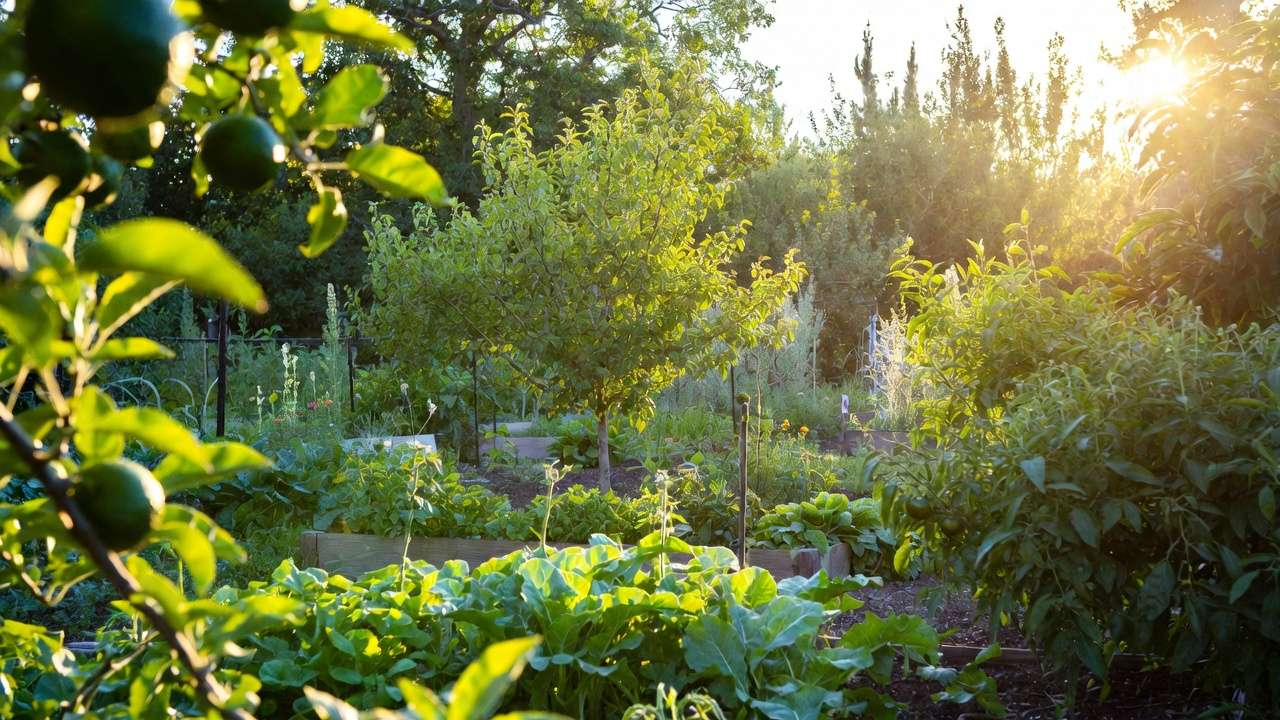
These aren’t outliers. When conditions are right (proper application, compatible plants, reasonable soil), the benefits of using mycorrhizal fungi deliver consistent, compounding returns.
FAQs About Mycorrhizal Fungi ❓
Q: Do mycorrhizal fungi work in pots and containers? A: Yes! Especially helpful in potting mixes that are often sterilized or low in native fungi. Apply at potting time for noticeably better growth and water efficiency.
Q: How long until I see results? A: Visible improvements (greener leaves, faster growth) often appear in 6–12 weeks. Biggest benefits (drought resistance, higher yields) show up in the second season.
Q: Can I make my own inoculant from healthy forest soil? A: Technically yes, but it’s inconsistent and risks introducing pathogens. Commercial products offer known, viable strains in higher concentrations—safer and more reliable for most gardeners.
Q: Are commercial mycorrhizal products worth the cost? A: For new plantings, transplants, or problem soils—absolutely. A single application can pay for itself through reduced water/fertilizer bills and healthier plants over years.
Q: What if my soil already has native mycorrhizae? A: Adding diverse strains still helps, especially in disturbed or low-diversity soils. Think of it as “probiotic boosting” for the root zone.
Q: Will mycorrhizae fix all my plant problems? A: No—they’re not a cure-all. They amplify success when combined with good practices (proper planting depth, mulch, watering, etc.).
Conclusion: Embrace the Underground Allies for a Thriving Garden 🌿🌍
Mycorrhizal fungi aren’t just another garden additive—they’re nature’s original plant-care partner, refined over 400 million years. By harnessing the benefits of using mycorrhizal fungi, you can grow healthier plants and trees with less effort, fewer inputs, and greater resilience to the challenges of modern gardening: poor soil, drought, transplant stress, and rising costs.
Whether you’re reviving a tired vegetable patch, establishing a new orchard, planting a windbreak of oaks and pines, or simply wanting more vibrant roses with less fuss, mycorrhizae offer one of the highest return-on-investment tools available to home gardeners and professionals alike.
Start small: Inoculate your next tree, shrub, or batch of seedlings. Observe. Compare. Most gardeners who try it become lifelong believers.
Your soil—and your plants—are ready to team up with these invisible allies. Will you give them the chance? 🌳💚
Have you used mycorrhizal fungi before? What results did you see? Drop a comment below—I’d love to hear your story! 👇











