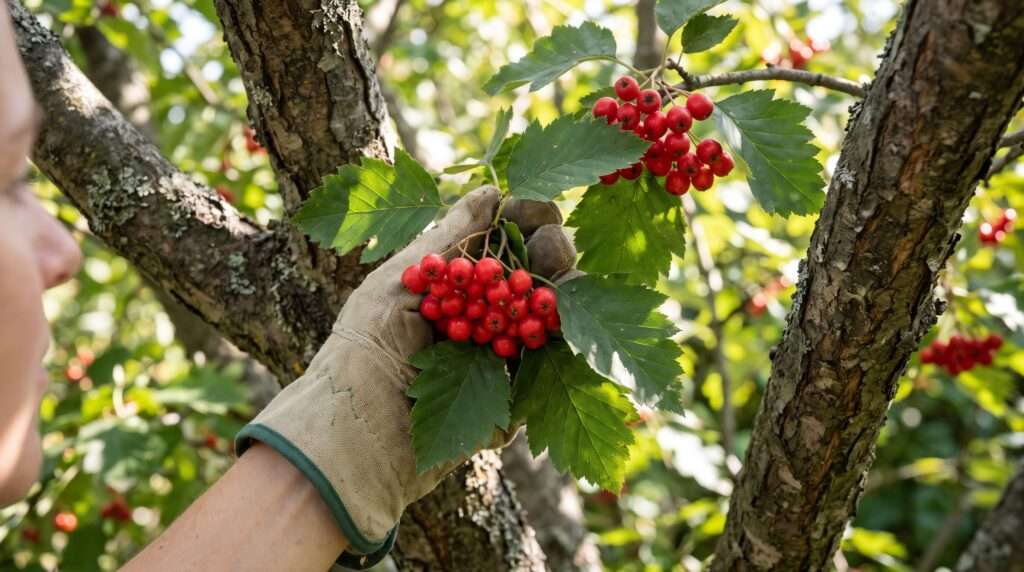
You are enjoying a peaceful afternoon in your backyard, watching your dog sniff around the garden beds, or perhaps you are on a weekend hike with your children. Suddenly, you spot a brightly colored berry in tree branches just above eye level. Curiosity strikes, but it is immediately followed by a wave of concern. Are they safe? Are they edible? Or are they a highly toxic hazard hiding in plain sight?
Identifying wild fruit can be incredibly tricky without the right botanical knowledge. A single misidentification can lead to severe stomach upset—or worse—for curious toddlers and foraging pets. The problem is that many of the most poisonous plant species look strikingly similar to harmless, edible varieties.
This comprehensive guide will walk you through the exact steps to identify common tree berries by analyzing their color, leaf shape, and growing season. By the time you finish reading, you will confidently know how to separate the delicious from the dangerous, empowering you to manage your landscape safely.
💡 Expert Safety Disclaimer: Never ingest a wild berry, seed, or plant part unless you are 100% certain of its identity. If you suspect a child or pet has eaten an unknown, potentially poisonous berry, contact Poison Control or your emergency veterinarian immediately.
II. 🛑 The Golden Rules of Tree Berry Identification
Before we dive into specific species, it is crucial to establish a baseline of foraging and identification safety. Many common assumptions about wild plants are dangerously incorrect.
Never Rely on Color Alone 🎨
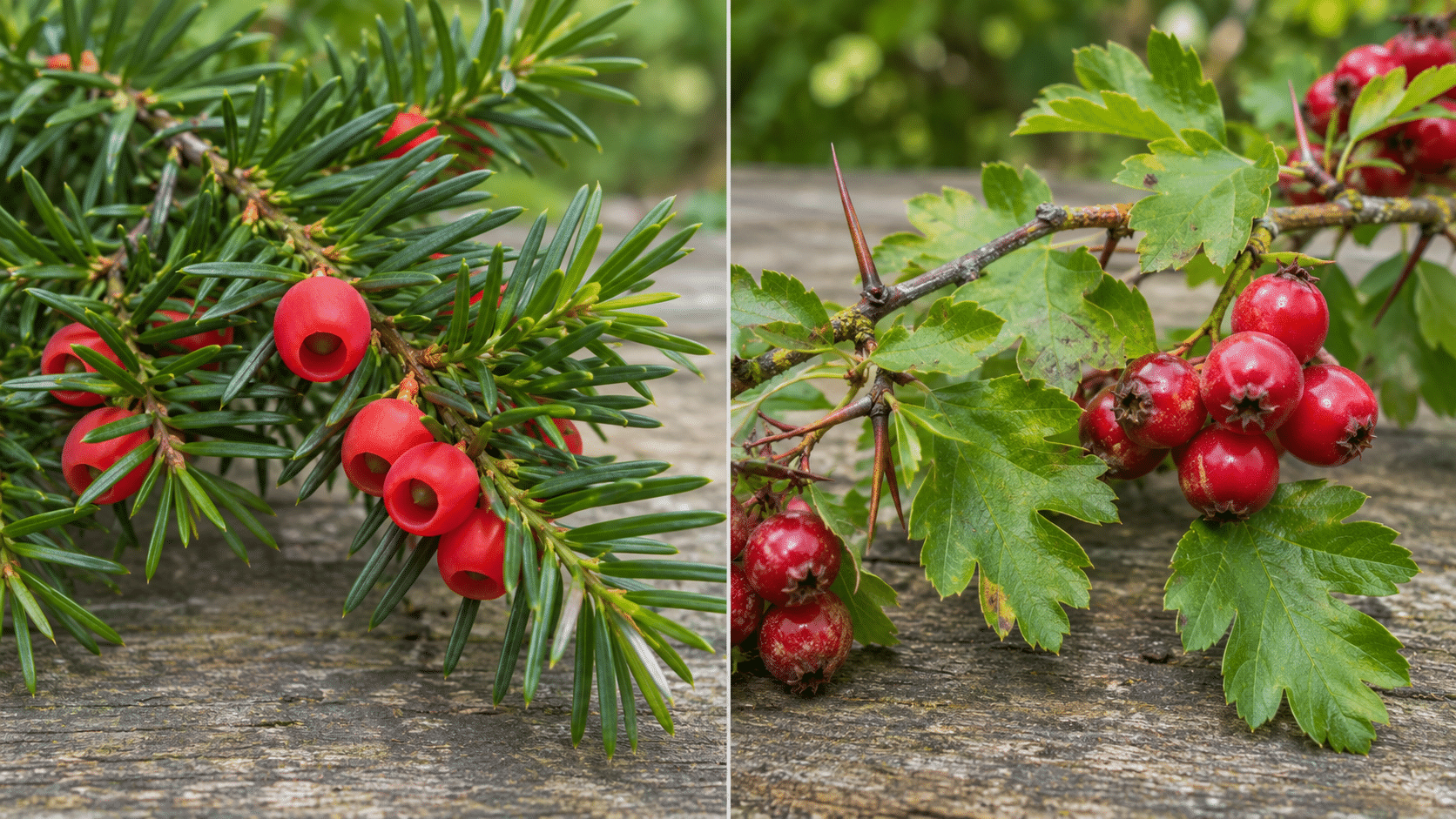
Color is a helpful starting point, but it is never a definitive answer. The natural world uses bright colors both as an invitation (to spread seeds) and as a warning (to deter predators). Many highly toxic and perfectly edible berries share the exact same bright red or deep purple hue. For instance, the deadly Yew berry and the medicinal Hawthorn berry are both vivid red, yet one can cause cardiac arrest while the other is used in herbal teas.
The “Bird Test” is a Myth 🐦
One of the most persistent—and dangerous—myths in foraging is the belief that if birds or wildlife are eating a berry, it must be safe for human or canine consumption. This is entirely false. Birds have vastly different digestive systems and metabolisms than mammals. Avian species can happily feast on Poison Ivy berries, Holly berries, and Mistletoe without any ill effects, all of which are toxic to humans and dogs.
Use the “Rule of Three” for Identification 🌿
To accurately identify a plant, you must look at the whole picture. Use the “Rule of Three”:
-
The Fruit: What is the size, color, and texture?
-
The Leaves: Are they broad and flat, or needle-like?
-
The Bark/Structure: Is it a woody shrub, a creeping vine, or a towering hardwood? Only when all three characteristics match a known species can you make a positive identification.
III. 🔍 Step-by-Step: How to Analyze the Tree and Its Berries
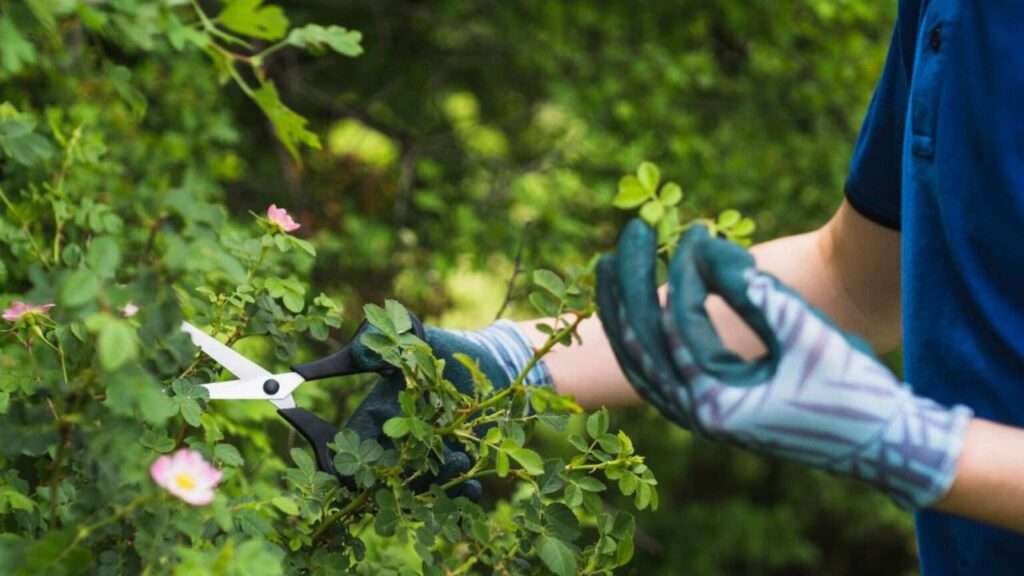
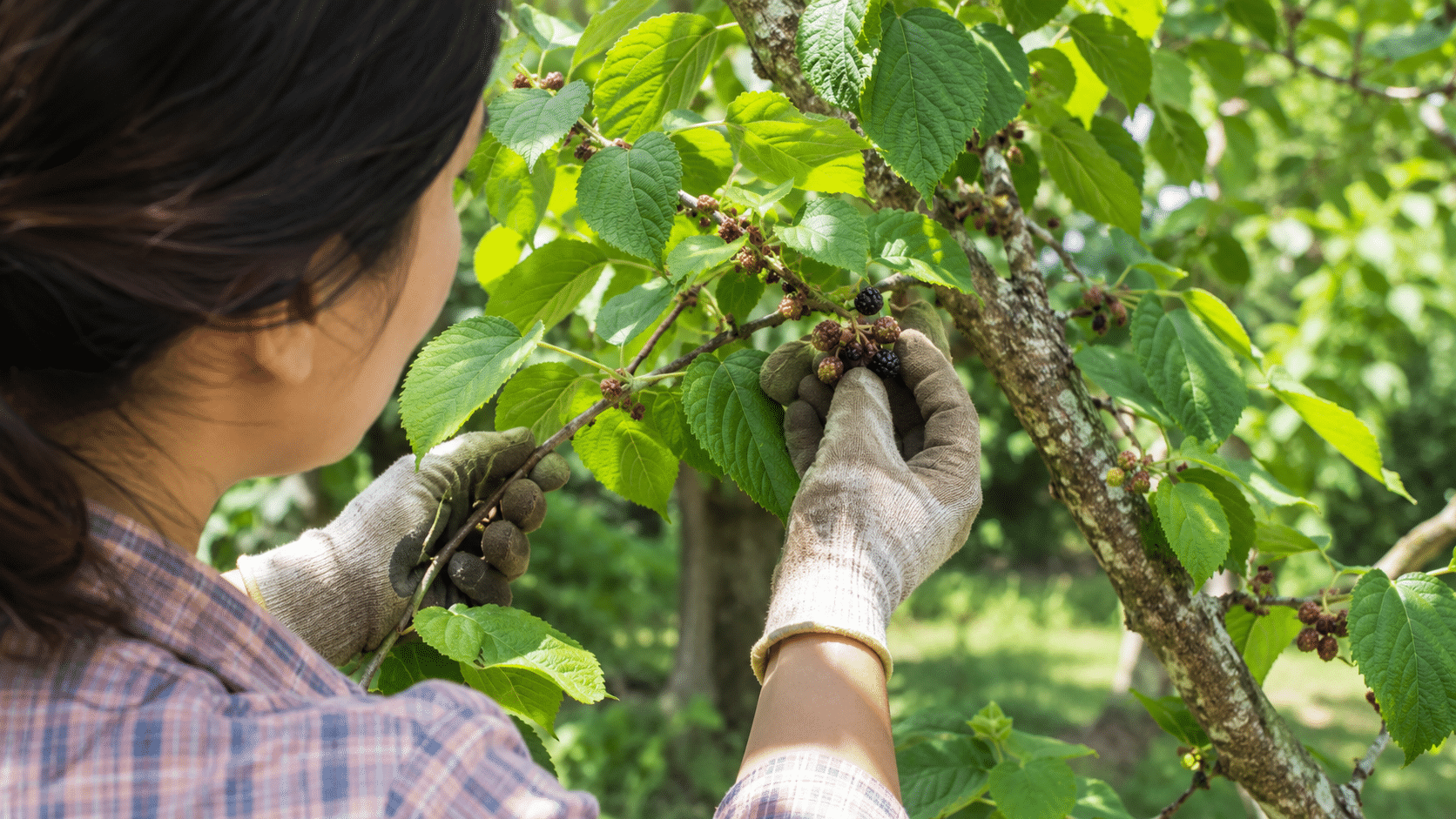
When you find a mystery fruit, put on a pair of gardening gloves and take a closer look at the botanical structure.
Step 1: Examine the Berry Placement and Clusters 🍇
How the fruit attaches to the branch is a major identifying factor. Do the berries grow individually, tucked close to the stem? Do they dangle in pairs? Or do they hang in heavy, drooping umbrella-like clusters (umbels)? The arrangement of the fruit is often unique to a specific plant family.
Step 2: Look Closely at the Leaves 🍃
The foliage is often your biggest clue. Note whether the leaves are evergreen (retaining their color year-round, often as needles or scaly leaves) or deciduous (broad leaves that drop in the autumn). Examine the leaf margins (edges)—are they smooth, toothed (serrated), or lobed like an oak leaf? Also, note how they grow on the stem: are they opposite one another, or do they alternate up the branch?
Step 3: Check for Pits or Seeds 🌰
With your gloves on, carefully squish one of the fruits. Does it contain a single, hard central pit? If so, it is technically a “drupe” (like a cherry or a peach). Does it contain multiple tiny seeds scattered throughout the flesh? This internal structure will help you quickly narrow down your search in plant identification guides.
IV. 🍒 Common Red Berries Found in Trees (Safe vs. Dangerous)
Red is the most common color for wild berries, making it the most highly searched category. It is also the most polarizing, featuring both incredibly toxic species and historically medicinal ones.
☠️ Yew (Taxus) – Highly Toxic!
The Yew is a popular evergreen landscaping shrub and tree, known for its extreme toxicity.
-
Identification: It features flat, dark green evergreen needles. The fruit is actually an “aril”—a bright red, fleshy, cup-like structure that is open at the bottom, revealing a hard, green seed inside.
-
Toxicity: While the red fleshy part is technically not toxic, the green seed inside, along with the needles and bark, contains lethal taxine alkaloids. It is highly dangerous to humans, dogs, cats, and livestock.
⚠️ Holly (Ilex) – Toxic to Humans and Pets
Holly is a classic winter landscape plant, famous for its festive appearance.
-
Identification: Easily recognized by its thick, glossy, leathery evergreen leaves that typically feature sharp, spiky points along the margins. The bright red berries grow in dense clusters tight against the woody stems.
-
Toxicity: Holly berries contain saponins, which are highly toxic to pets and humans. Ingestion causes severe gastrointestinal distress, vomiting, and lethargy.
🥧 Hawthorn (Crataegus) – Generally Safe/Medicinal
Hawthorn trees are beautiful deciduous trees often used in hedging and ornamental landscaping.
-
Identification: Look for long, sharp thorns on the woody branches. The leaves are typically lobed and deciduous. The red berries (often called “haws”) look like miniature apples and grow in small clusters.
-
Toxicity: The flesh of the berry is safe and historically used in jams and teas. However, much like real apples, the seeds contain trace amounts of cyanide compounds and should not be crushed or chewed in large quantities.
🐦 Mountain Ash (Sorbus) – Edible but Bitter
Also known as the Rowan tree, this species thrives in cooler climates.
-
Identification: It features pinnately compound leaves (multiple small leaflets arranged along a single stem). In late summer and fall, it produces massive, heavy clusters of bright orange-red berries.
-
Toxicity: They are not toxic, but they are incredibly astringent and bitter when raw. They are generally considered safe but are best left for the birds or heavily cooked down into jellies.
V. 🫐 Dark Berries: Blue, Purple, and Black Varieties
Dark berries are highly sought after by foragers, but they require equally careful identification to avoid unpleasant side effects.
🌿 Mulberry (Morus) – Edible and Delicious
Mulberry trees are fast-growing deciduous trees that produce an abundance of messy, sweet fruit.
-
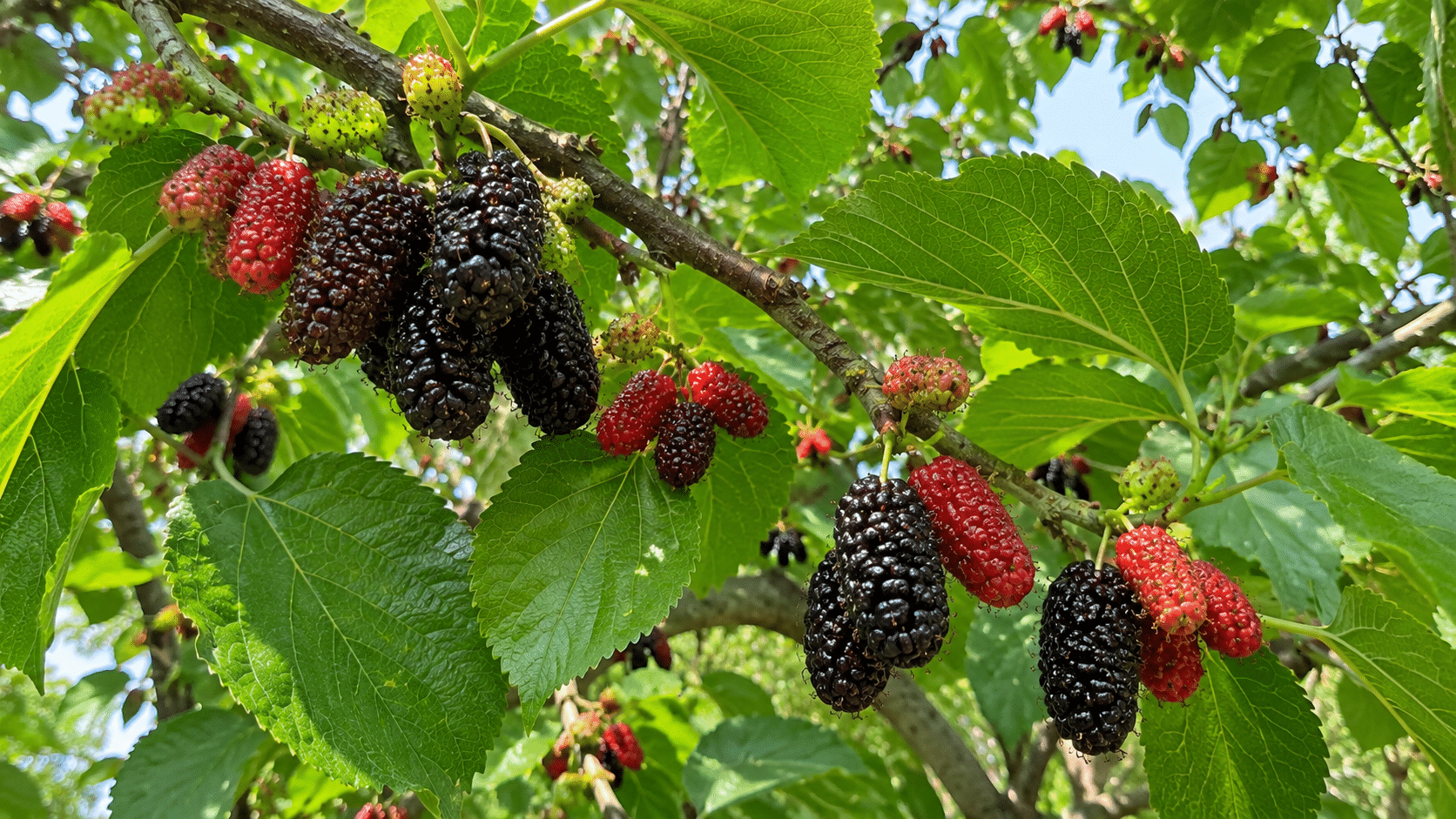
Identification: The berries look almost exactly like elongated blackberries or loganberries, but instead of growing on thorny brambles, they grow directly on the woody branches of a tree. The leaves are large, often heart-shaped, and can have varied lobes on the same tree.
-
Toxicity: Fully ripe, dark purple/black mulberries are completely safe, sweet, and delicious. (Note: Unripe, green mulberries can cause stomach upset and mild hallucinations, so wait until they are dark and soft).
🤧 Elderberry (Sambucus) – Requires Cooking!
Elderberry shrubs/small trees are incredibly popular for immune-boosting syrups, but they demand respect.
-
Identification: They feature compound leaves and produce large, flat-topped clusters of tiny, dark purple or black berries.
-
Toxicity: This is a crucial distinction: the stems, leaves, roots, and raw berries contain cyanogenic glycosides (which release cyanide). Consuming raw elderberries will cause severe nausea and vomiting. The berries must be completely cooked or boiled to neutralize the toxins before they can be safely consumed.
🚫 Privet (Ligustrum) – Mildly Toxic/Highly Invasive
Privet is one of the most common hedging plants in suburban neighborhoods.
-
Identification: A dense shrub or small tree with small, smooth, oval-shaped leaves that grow opposite each other. In late summer and autumn, it produces clusters of small, dark bluish-black berries.
-
Toxicity: Privet berries are mildly to moderately toxic to humans and dogs. Ingestion causes gastrointestinal upset, vomiting, and diarrhea.
VI. ⚪ White and Yellow Tree Berries (Proceed with Caution)
In the botanical world, white berries are relatively rare compared to red or dark fruits, and they should almost always be treated with extreme caution. A common foraging adage warns that “white and yellow, kill a fellow”—while not universally true, it is a smart safety baseline when dealing with an unidentified berry in tree branches.
💋 Mistletoe (Viscum album or Phoradendron leucarpum) – Toxic
Mistletoe is not a traditional tree; it is a hemiparasitic plant that grows high up in the branches of host trees, such as oaks, maples, and apple trees.
-
Identification: You will often spot it as a large, rounded mass of evergreen foliage clustered in the bare winter branches of a deciduous tree. The leaves are leathery and oval, and the plant produces clusters of small, sticky, pearl-white berries.
-
Toxicity: Highly toxic. Mistletoe contains phoratoxins and viscotoxins. Ingestion of the berries or leaves, especially by pets or children during the winter holidays, can cause severe gastroenteritis, a drop in blood pressure, and cardiovascular collapse.
❄️ Snowberry (Symphoricarpos) – Mildly Toxic
Often used in ornamental landscaping and native to North America, the Snowberry bush/small tree is visually striking in the barren winter months.
-
Identification: Recognized by its stark-white, opaque berries that look almost like small marshmallows or puffed rice. The berries are uniquely spongy and tend to persist on the bare, woody stems well into the winter.
-
Toxicity: While beautiful, they contain saponins that are mildly toxic. Eating them will not be fatal, but it will cause pronounced nausea, vomiting, and dizziness in humans, and moderate gastrointestinal upset in dogs.
VII. 🐶 Pet and Child Safety: What to Do in a Berry Emergency 🚑
If you have curious toddlers or foraging dogs, discovering an unknown berry in tree foliage in your backyard can be terrifying. Knowing exactly how to react can make all the difference in an emergency.
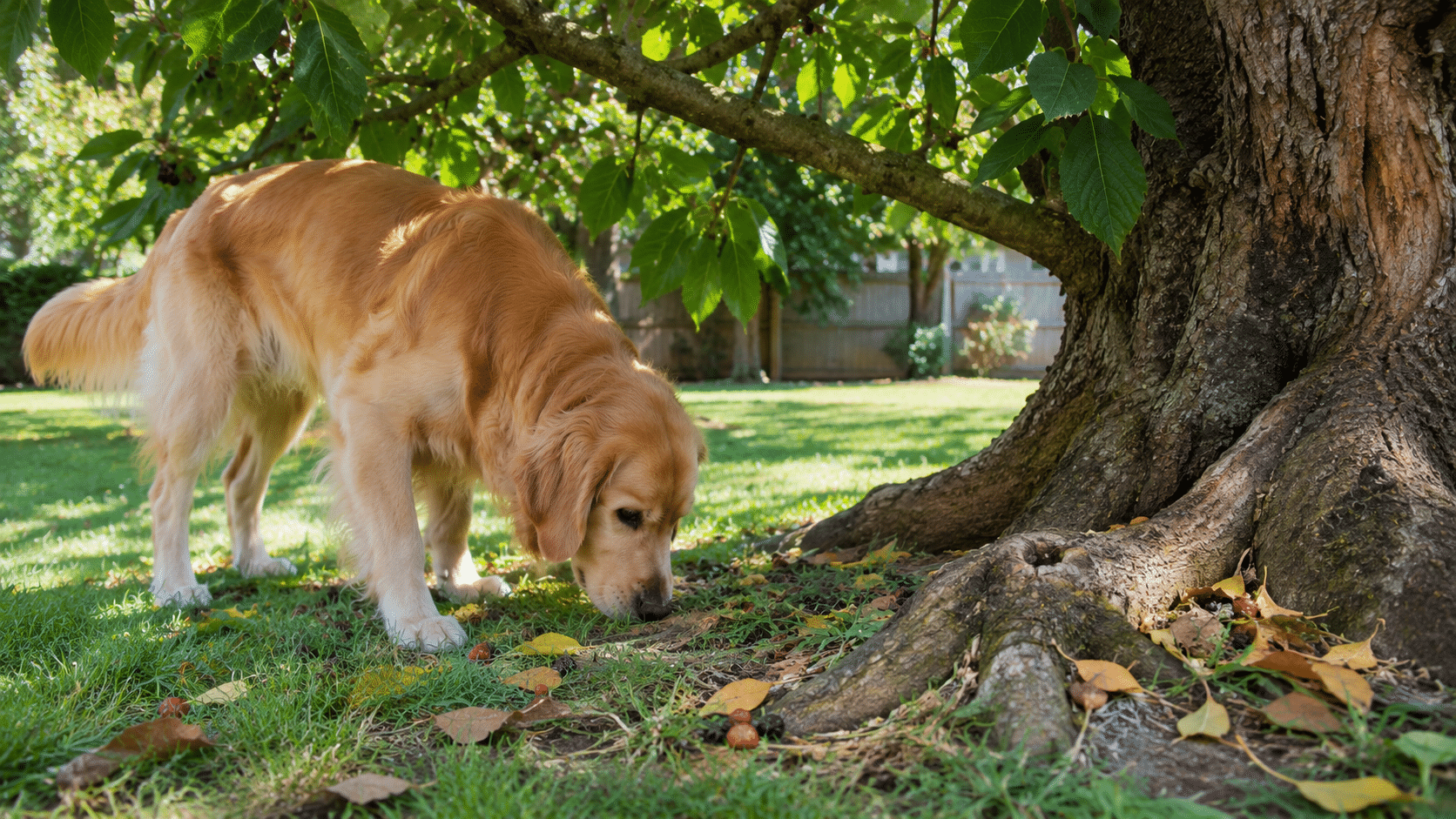
Recognizing Signs of Berry Poisoning in Dogs and Cats 🐾
Pets cannot tell you what they ate, so it is crucial to recognize the clinical signs of plant poisoning. If your pet has been playing near a fruiting tree, watch for these symptoms:
-
Gastrointestinal Distress: Sudden vomiting (emesis), diarrhea, or excessive drooling (hypersalivation).
-
Neurological Signs: Tremors, muscle twitching, seizures, or profound lethargy and weakness.
-
Physical Changes: Dilated pupils, difficulty breathing, or pale gums.
Immediate Action Steps (Who to Call) 📞
If you suspect your child or pet has ingested a toxic tree berry, follow these E-E-A-T approved emergency protocols:
-
Clear the Mouth: Gently remove any remaining plant material from their mouth. Keep this material!
-
Do NOT Induce Vomiting: Never induce vomiting unless explicitly instructed to do so by a medical professional. Some toxins cause more damage coming back up.
-
Collect a Sample: Grab a clear plastic ziplock bag and collect a sample of the berries, leaves, and a small branch. Accurate identification by the vet or doctor relies on seeing the whole plant structure.
-
Make the Call: Immediately call the ASPCA Animal Poison Control Center (888-426-4435) if it is a pet, or the National Poison Help Hotline (800-222-1222) if it is a human. Alternatively, rush directly to your local emergency room or 24-hour veterinary clinic.
VIII. ✂️ Yard Management: How to Handle Nuisance Berries
If you have properly identified a toxic or simply messy berry tree in your yard, you do not necessarily have to resort to cutting the whole tree down. Proper landscape management can mitigate the risk.
Pruning to Prevent Fruiting 🪴
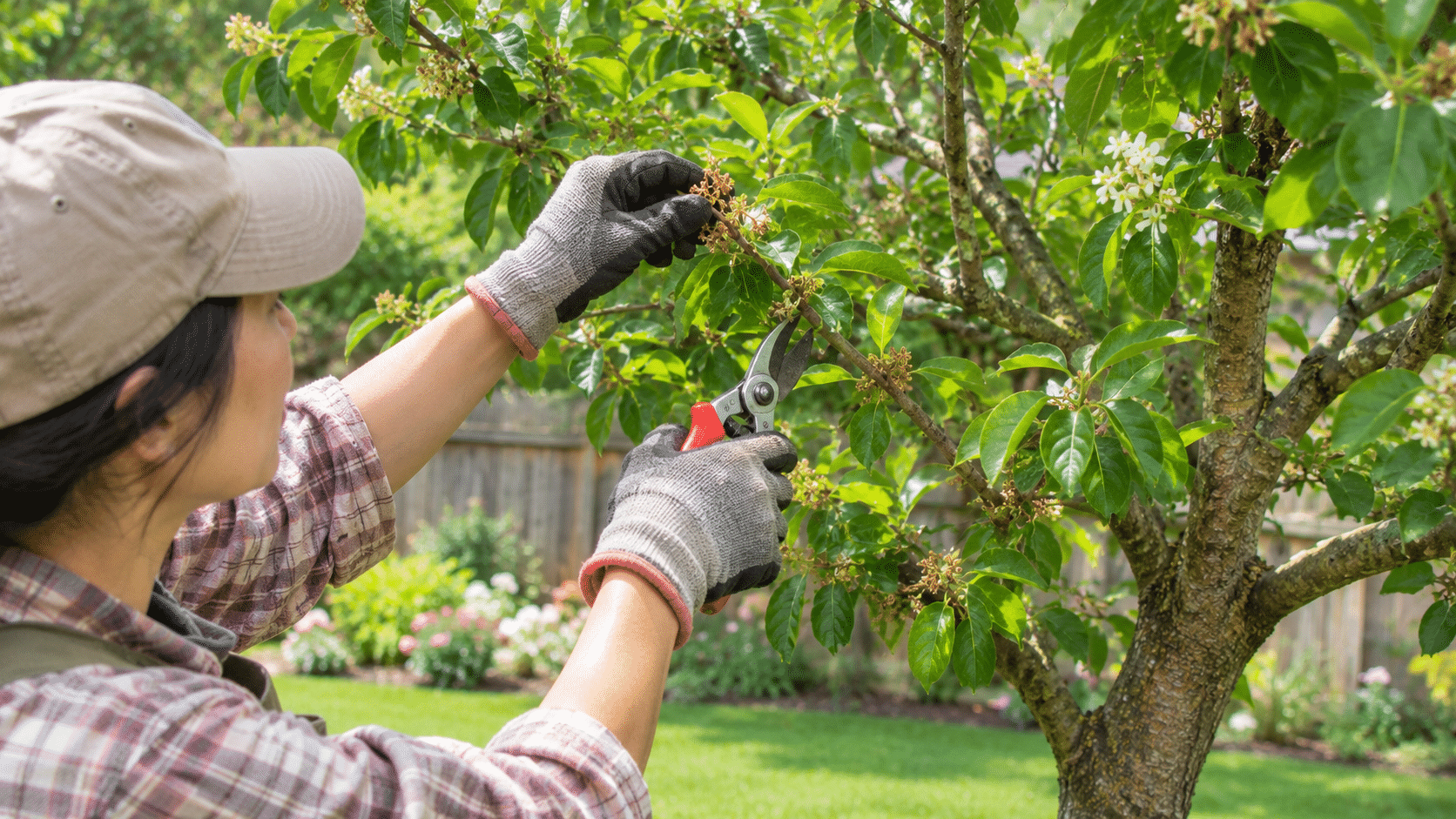
All fruit develops from a pollinated flower. If you want to keep the tree for its foliage and shade but want to eliminate the toxic or messy berries, the solution is strategic pruning.
-
Timing is Everything: Prune the tree immediately after it finishes its blooming cycle, cutting away the fading flowers (deadheading) before they have a chance to set fruit.
-
Chemical Thinning: For large ornamental trees, professional arborists can apply fruit-suppression sprays (hormonal treatments) during the blooming phase to stop the tree from developing berries entirely.
Safe Alternatives for a Pet-Friendly Landscape 🌻
If you decide it is time to remove a dangerous tree—such as a toxic Yew or invasive Privet—replace it with beautiful, pet-safe alternatives.
-
Dogwood Trees (Cornus): Many varieties provide stunning spring flowers and autumn color without posing a deadly threat to pets.
-
Crape Myrtle (Lagerstroemia): Offers spectacular, long-lasting summer blooms and non-toxic foliage.
-
Magnolia Trees: Features grand, iconic flowers and leathery leaves that are perfectly safe for a household with foraging dogs.
IX. ❓ Frequently Asked Questions (FAQs) About Tree Berries
If I find a single, unidentified berry in a tree, should I cut the tree down? Not necessarily. First, take the time to properly identify it using the leaves, bark, and fruit structure. If it is highly toxic and located in a high-traffic area where toddlers or puppies play, removal might be the safest choice. If it is only mildly toxic or just messy, aggressive pruning to prevent fruiting is a more sustainable solution.
Can I use plant identification apps to tell if a berry is poisonous? Plant identification apps (like PictureThis or Google Lens) are fantastic starting points, but they are not infallible. They can easily confuse related species. Always use apps as a guide, but verify the identification by cross-referencing botanical databases and looking at the leaf structure, not just the berry. Never eat a berry based solely on an app’s recommendation.
What tree has red berries that look like tiny apples? This is typically the Hawthorn tree (Crataegus). The berries, known as haws, often look like miniature, slightly elongated apples and grow on branches that feature prominent thorns. While the flesh is historically used in herbalism, the seeds contain cyanide compounds, similar to actual apple seeds.
Are any berries with pits poisonous? Yes. While many pitted fruits (drupes) like cherries, peaches, and plums are delicious, their pits, leaves, and stems contain cyanogenic glycosides. If a dog chews up and swallows a large quantity of wild cherry pits, it can be fatal. The presence of a pit does not automatically mean the entire plant is safe.
X. Conclusion: Forage with Your Eyes, Not Your Mouth 👀
Spotting a brightly colored, unidentified berry in tree branches is one of the many joys of exploring nature, whether you are hiking a backcountry trail or simply managing your own backyard landscape. However, that curiosity must always be paired with respect for botanical safety.
Remember the golden rules: never rely on color alone, completely ignore the “bird test,” and always use the leaves, bark, and fruit together to make a positive identification. When in doubt, it is always best to forage with your eyes and your camera, leaving the mystery berries exactly where you found them.
Join the Conversation! 💬 Have you found a mystery tree in your yard that you are struggling to identify? Do you have tips for keeping foraging pets safe in the garden? Share this article with your local neighborhood groups to help keep your community safe, and leave a comment below describing the mystery plant in your yard—we would love to help you identify it!