
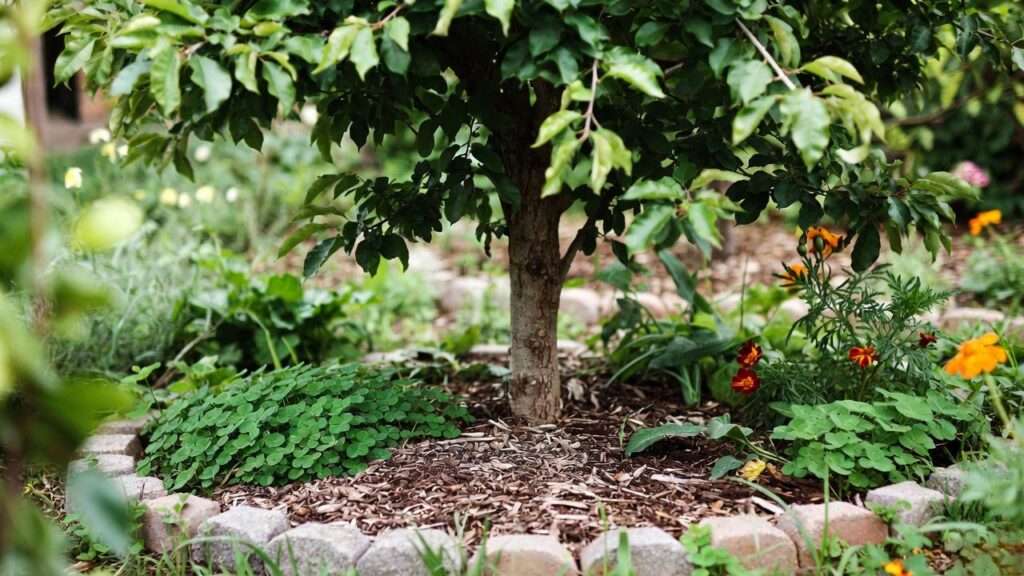
Imagine stepping into your backyard orchard and seeing your fruit trees absolutely thriving—vibrant green leaves, strong branches loaded with juicy apples, peaches, or cherries, and hardly a weed in sight. What’s the often-overlooked secret behind this picture-perfect scene? It’s the best border around a fruit tree: a thoughtfully designed mulch ring or edged zone that protects roots, conserves water, suppresses weeds, and fosters a healthy soil ecosystem. As a horticulturist with over 15 years of experience caring for home orchards and consulting with university extensions, I’ve seen firsthand how the right border can accelerate tree growth, reduce pest issues, and boost harvests by up to 30% in some cases. In this ultimate guide, we’ll dive deep into proven, science-backed strategies to create the ideal border for your fruit trees—whether you’re starting with young saplings or revitalizing mature ones. Let’s transform your tree care routine and unlock bountiful yields! 🍏🌱
Why Do Fruit Trees Need a Dedicated Border? The Science-Backed Benefits 🌿
Fruit trees, especially young ones, face fierce competition from lawn grass and weeds. Turfgrass is one of the biggest enemies of trees, voraciously consuming water and nutrients while offering no benefits in return. Research from Utah State University Extension shows that keeping a vegetation-free zone around fruit tree trunks allows trees to establish faster, fruit earlier, and grow more vigorously.
A dedicated border—often called a mulch ring or tree circle—creates this essential buffer. Here’s why it’s non-negotiable for optimal tree health:
Key Advantages of a Proper Tree Border 🛡️
- Weed Suppression and Reduced Competition: Grass and weeds can steal up to 50% of available water and nutrients from young trees. A clear border eliminates this rivalry.
- Moisture Retention and Soil Temperature Regulation 💧: Organic mulches reduce evaporation by 50-70%, keeping roots consistently moist and moderating extreme temperature swings.
- Trunk Protection 🔒: Borders prevent damage from lawn mowers, string trimmers, and rodents like voles.
- Improved Nutrient Cycling 🍂: As organic materials decompose, they release nutrients slowly, feeding the tree naturally without synthetic fertilizers.
- Pest and Disease Reduction 🐛: Better airflow and fewer hiding spots discourage insects and pathogens.
Expert Insight: Studies from university extensions, including USU and K-State Research, confirm that mulched trees in turfgrass settings grow significantly faster and produce higher-quality fruit compared to those surrounded by lawn.
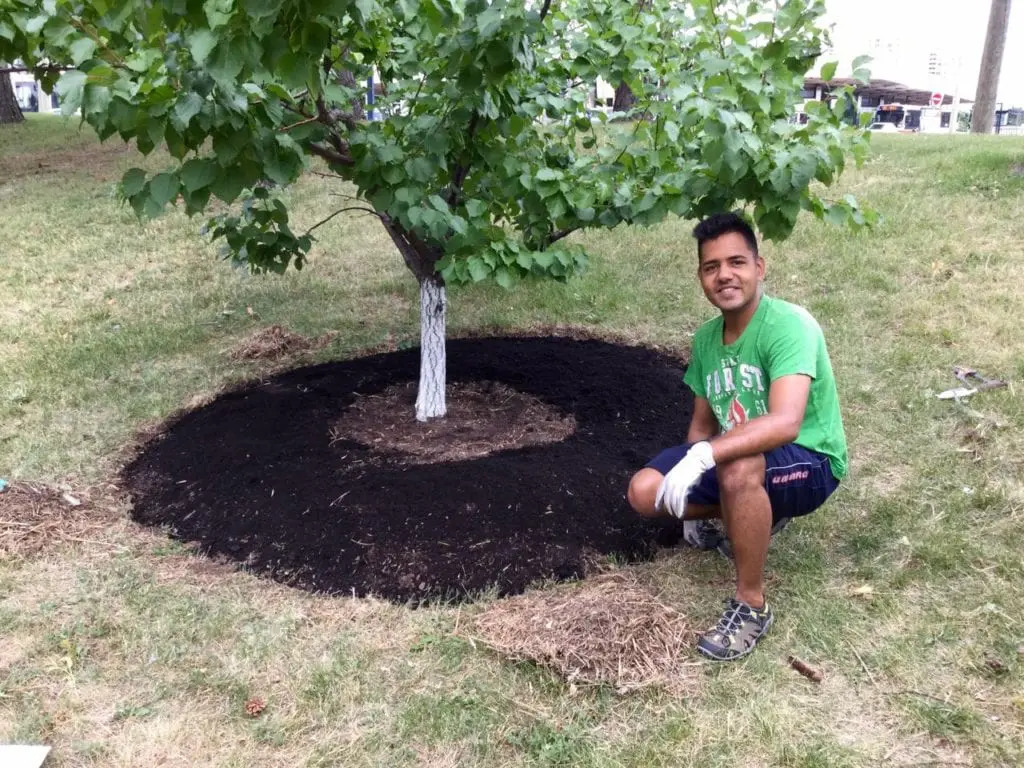
These images show classic wood chip mulch rings in action—clean, effective, and promoting healthy growth.
Determining the Ideal Size for Your Fruit Tree Border 📏
Size matters when it comes to borders. Too small, and your tree still competes with grass; too large, and it might not fit your yard layout.
How Wide and Deep Should It Be?
- For young trees (under 5 years): Start with a 3-4 foot diameter ring.
- For maturing trees: Expand to the drip line (the outer edge of the canopy), ideally 6-10 feet or more in diameter.
- Minimum recommendation: At least 3 feet radius for every inch of trunk diameter (caliper).
- Depth: 3-4 inches of mulch is optimal—enough for benefits without smothering roots. Keep it 4-6 inches away from the trunk.
Pro Tip 🍃: Shape it like a “donut”—no mulch touching the trunk—to prevent crown rot and fungal diseases. Expose the root flare (where roots meet trunk) for long-term health.
University guidelines from Purdue and Illinois Extensions emphasize expanding rings annually as trees grow, ultimately reaching the drip line for maximum root support.
The Best Materials for Borders and Edging Around Fruit Trees 🪵
Choosing materials is where many gardeners go wrong. Avoid anything that restricts roots long-term or introduces toxins.
Top Edging Options (Physical Borders)
Physical edging keeps mulch contained and grass out, creating crisp lines.
| Material | Pros | Cons | Best For |
|---|---|---|---|
| Natural Stone/Rock 🌑 | Durable, attractive, warms soil slightly | Heavy to install, higher cost | Permanent, formal orchards |
| Brick or Pavers 🧱 | Clean, classic look; easy to curve | May shift over time | Traditional gardens |
| Wood Logs/Branches 🪵 | Inexpensive, natural, decomposes beneficially | Temporary; may attract pests initially | Rustic or permaculture setups |
| Metal Edging 🔩 | Long-lasting, sharp edges | Can rust if not galvanized | Modern, low-maintenance yards |
| No Edging (Natural) 🌾 | Free, flexible; allows root expansion | Grass can creep in | Large orchards or minimalist |
Expert Recommendation: Skip plastic or rubber edging long-term—it can girdle roots or leach chemicals. Natural stone or no edging is preferred for unrestricted growth.

Stone and structured edging provide that polished look while protecting the mulch zone.
Best Mulch Materials Inside the Border
The mulch itself is the star—opt for organic options that build fungal-dominant soil, ideal for trees.
- Arborist Wood Chips (top choice!): Free from tree services; chunky texture promotes beneficial fungi essential for fruit tree roots.
- Layered Compost + Wood Chips: Add 2 inches compost for nutrients, topped with chips for retention.
- Shredded Leaves or Straw 🍁: Excellent for young trees; renew annually.
- Avoid: Rubber mulch (potential toxins), dyed bark (chemicals), fresh pine alone (acidifies soil excessively), or black plastic (smothers soil life).
Recent 2025 insights from orchard experts reinforce wood chips as superior for moisture, weed control, and microbial health.
Advanced Option: Building a Fruit Tree Guild Border for Maximum Productivity 🌸
If you’re ready to take your fruit tree border to the next level, consider transforming it into a fruit tree guild—a permaculture-inspired ecosystem where companion plants work synergistically with your tree. This isn’t just mulch; it’s a living, self-sustaining border that enhances biodiversity, improves soil fertility, attracts pollinators, repels pests, and even provides additional yields.
A guild mimics natural forest edges, with the fruit tree as the “anchor” species. Research from permaculture experts and trials at sites like the Milkwood Permaculture Farm demonstrate that well-designed guilds can reduce the need for external inputs (fertilizers, pesticides) by 50-70% while increasing overall productivity.

These images showcase thriving fruit tree guilds with layered companion plants, creating beautiful and functional borders.
What Is a Fruit Tree Guild?
It’s a carefully selected community of plants around the tree that fulfill roles like:
- Fixing nitrogen
- Accumulating deep minerals
- Attracting beneficial insects
- Repelling pests
- Suppressing weeds as living mulch
- Providing edible or medicinal harvests
Essential Guild Layers and Plant Ideas 🐝
Design in concentric rings for optimal spacing:
- Inner Ring (near trunk, low-growing): Bulbs like daffodils (deter voles) and alliums (chives, garlic—repel borers and aphids).
- Middle Ring: Dynamic accumulators like comfrey (mines potassium) and yarrow (attracts predators).
- Pollinator and Beneficial Attractors: Borage, marigolds, lavender, and fennel to draw bees and ladybugs.
- Nitrogen Fixers: Clover, peas, or Siberian pea shrub for natural fertilization.
- Ground Covers/Weed Suppressors: Strawberries, thyme, or oregano—edible and spreading.
- Outer Edge: Taller plants like rhubarb or sunflowers for wind protection.
Example Guild for Apple Trees 🍎 (adapt for peaches, cherries, etc.):
- Inner: Daffodils + chives
- Middle: Comfrey + borage + yarrow
- Outer: White clover ground cover + nasturtiums (pest trap crops) + strawberries
For citrus in warmer zones: Swap in rosemary, lemongrass, and aloe.
Expert Insight: Start small—plant 5-7 species initially. Observe and adjust based on your climate and soil. Guilds shine in zones 5-9, but principles apply everywhere.
This approach not only creates the best border around a fruit tree but turns it into a mini food forest!
Step-by-Step: How to Create the Best Border Around Your Fruit Tree 🛠️
Ready to implement? Follow this proven process for lasting results.
- Assess and Plan 📐: Measure your tree’s drip line. Sketch the border size and choose edging/mulch/guild.
- Clear the Area 🌿: Smother grass with cardboard or newspaper (overlapping layers) for 4-6 weeks—no herbicides needed!
- Install Edging 🪨: If using, place stones, bricks, or metal now for clean lines.
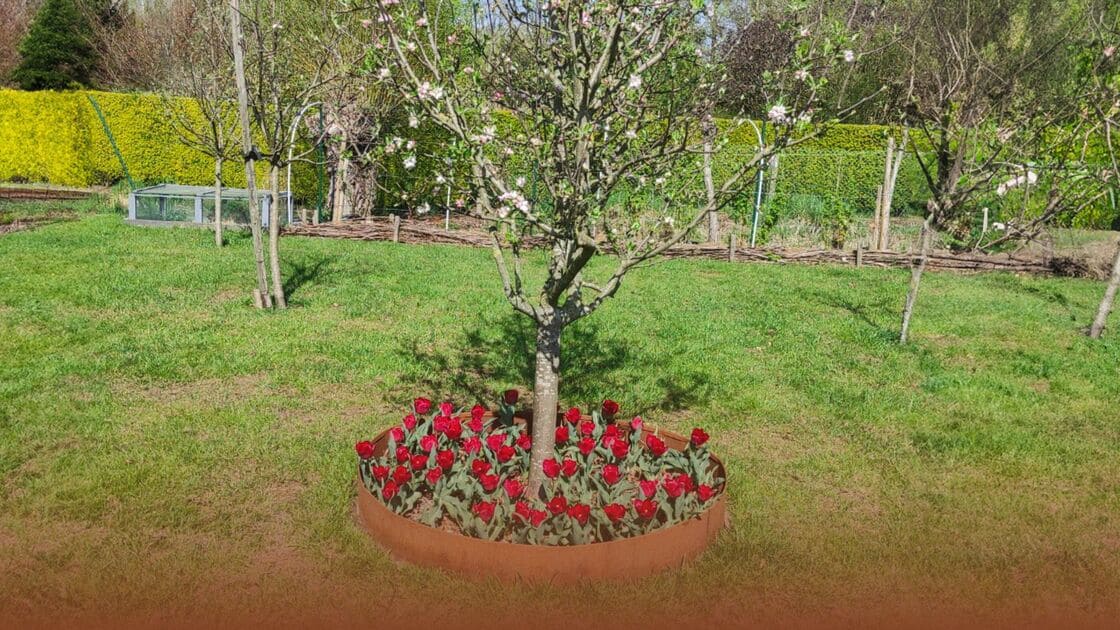
Stone and structured edging examples for polished, durable borders.
- Amend Soil 🪴: Add 1-2 inches of compost over the cleared area for a nutrient boost.
- Apply Mulch 🪵: Spread 3-4 inches of wood chips or chosen material, pulling back from the trunk.

Proper wood chip mulch rings with clear trunks— the gold standard.
- Plant Guild Companions 🌱 (optional): Poke holes in cardboard and plant through it.
- Water and Monitor 💧: Deep soak initially; check for settling.
Seasonal Tip ❄️: Refresh mulch in early spring; add compost in fall. Expand the border yearly as the tree grows.
Common Mistakes to Avoid (And How to Fix Them) ⚠️
Even experienced gardeners slip up—here’s how to steer clear:
- Volcano Mulching 🌋: Piling mulch against the trunk invites rot, insects, and girdling.

Classic “mulch volcanoes”—a major no-no that can kill trees over time. Fix: Pull mulch back 6 inches from trunk.
- Borders Too Small: Limits root zone benefits. Fix: Expand annually.
- Wrong Materials: Dyed mulch or rubber introduces toxins. Fix: Switch to organic.
- Burying Root Flare: Hides the trunk base, causing decline. Fix: Gently excavate to expose.
Real-Life Examples and Inspiration 📸
- Simple Mulch Ring: Low-maintenance wood chips for busy homeowners.
- Stone-Edged Classic: Elegant and permanent.
- Guild Masterpiece: Biodiverse, productive paradise.
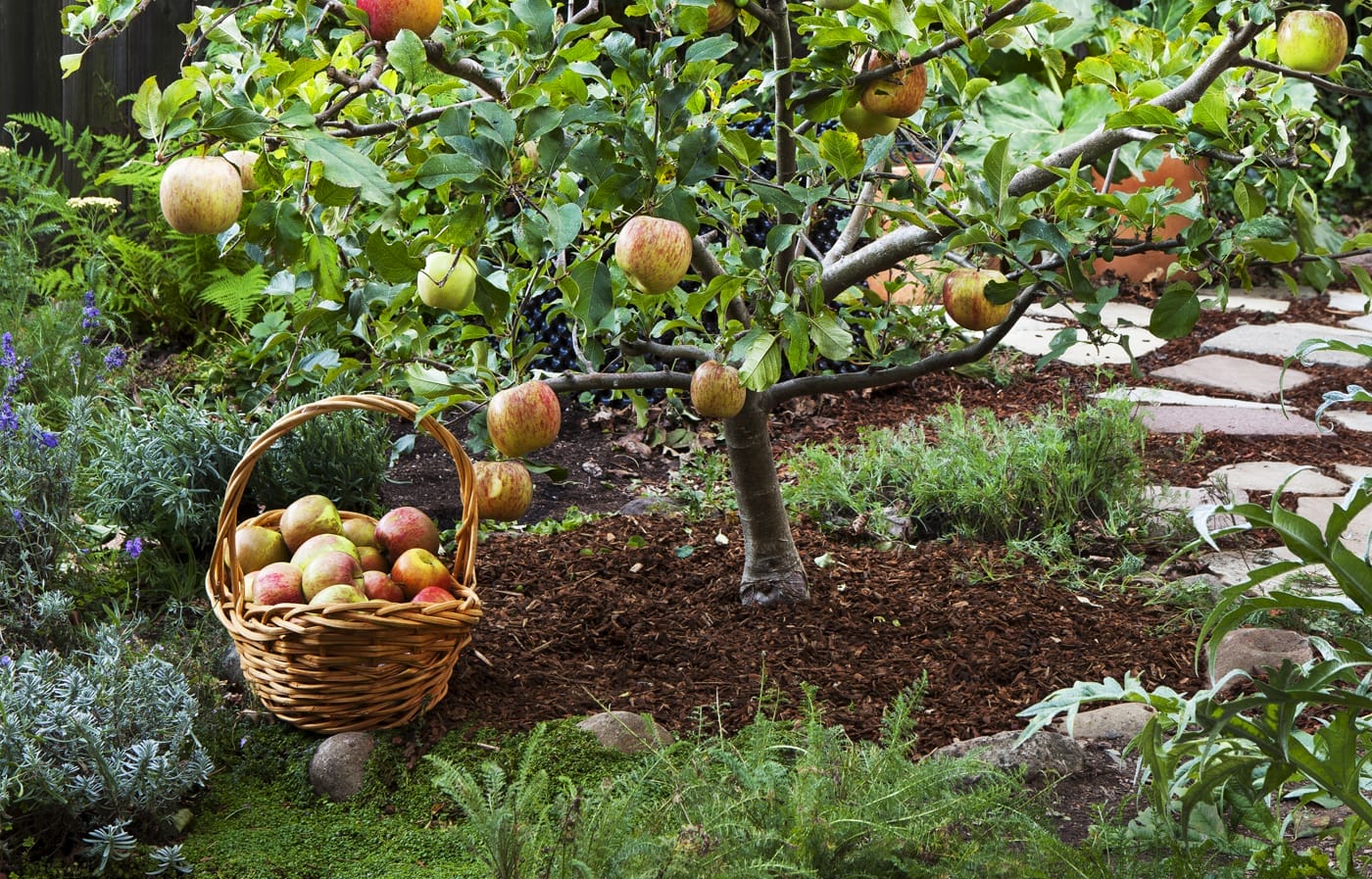
Healthy fruit trees with proper borders yielding bountiful harvests—inspiration for your garden!
FAQs About Borders Around Fruit Trees ❓
Q: Can I use living plants as a border instead of mulch? A: Absolutely! Living mulches like clover or full guilds are superior long-term for soil health.
Q: Is rubber edging or mulch safe for fruit trees? A: No—avoid rubber products; they can leach zinc and other toxins harmful to edibles.
Q: How often should I maintain the border? A: Top up mulch annually (spring best); weed sparingly; refresh guild plants as needed.
Q: Will a proper border help with common pests like aphids or codling moths? A: Yes! Guild plants attract predators, and clear zones reduce hiding spots.
Q: What’s the best border for dwarf vs. standard fruit trees? A: Same principles—scale to drip line. Dwarfs need smaller initial rings but still benefit hugely.
Conclusion: Start Building Your Perfect Fruit Tree Border Today! 🌟
Creating the best border around a fruit tree is one of the simplest yet most impactful steps you can take for healthier trees and bountiful harvests. From basic mulch rings that save water and suppress weeds to advanced guilds that build a thriving ecosystem, these strategies—backed by science and real-world success—will reward you season after season.
Whether you opt for natural stone edging, fresh arborist chips, or a pollinator-packed guild, your trees will thank you with vigorous growth and delicious fruit. Start small if needed, but start today—you’ll see differences in the first year!
What’s your plan for your fruit trees? Share in the comments—I’d love to hear! Happy gardening, and here’s to your most abundant harvest yet! 🍑🍒🌳











