
Picture this: it’s the middle of summer, and you are spending your entire weekend sweating behind a lawnmower, only to watch the grass shoot back up just a few days later. Rapid vertical grass growth doesn’t just eat up your free time; it leads to scalped lawns, depleted soil nutrients, and a frustrating cycle of endless yard work. Every homeowner dreams of that thick, dark green, golf-course quality turf, but achieving it with half the maintenance often feels impossible. Fortunately, we have the solution. In this comprehensive guide, we review the best 10 grass growth regulator products on the market to help you reclaim your weekends.
Once the tightly guarded secret weapon of professional turf managers and golf course superintendents, Plant Growth Regulators (PGRs) are now completely accessible for residential lawns. Instead of pushing blades higher, these advanced formulas cleverly redirect your lawn’s energy into lateral root development and overall soil health. Our carefully researched list of the best 10 grass growth regulator solutions will help you make an informed buying decision so you can successfully reduce mowing frequency, cut down on water usage, and finally achieve a denser, deeper green lawn.
2. How to Make an Informed Buying Decision (Buying Guide)
Before diving into our product reviews, it is crucial to understand that not all PGRs are created equal. Choosing the right product depends heavily on your grass type, yard size, and lawn care goals.
-
Active Ingredients: The two most common ingredients are Trinexapac-ethyl (absorbed through the foliage and inhibits cell elongation) and Paclobutrazol (absorbed through the roots and suppresses weed grasses like Poa annua). Trinexapac-ethyl is generally safer for residential beginners, while Paclobutrazol offers heavy-duty control.
-
Turf Type Compatibility: Always check the label. Some regulators are tailored specifically for cool-season grasses (like Kentucky Bluegrass or Fescue), while others excel on warm-season turfs (like Bermuda or Zoysia).
-
Application Method: PGRs are not applied with a standard hose-end sprayer. To ensure even coverage without damaging your lawn, you must use a precisely calibrated battery-powered or manual backpack sprayer equipped with flat-fan or foliar nozzles.
-
Cost Per Application: Don’t get sticker shock from a $150 gallon jug. PGRs are highly concentrated. When applied at rates of just 0.25 to 0.75 ounces per 1,000 square feet, a single jug can last a homeowner multiple seasons, bringing the actual cost per application down to just a few dollars.
-
Safety & Turf Stress (The “Bronzing” Effect): Shortly after application, some lawns may experience temporary yellowing or “bronzing.” This is normal turf stress. Lawn care experts mitigate this by tank-mixing the PGR with liquid iron or a small amount of liquid nitrogen to keep the grass exceptionally green.
3. Quick Comparison Table
Here is a quick, mobile-friendly overview of our top picks.
4. Detailed Product Comparison & Reviews (Part 1)
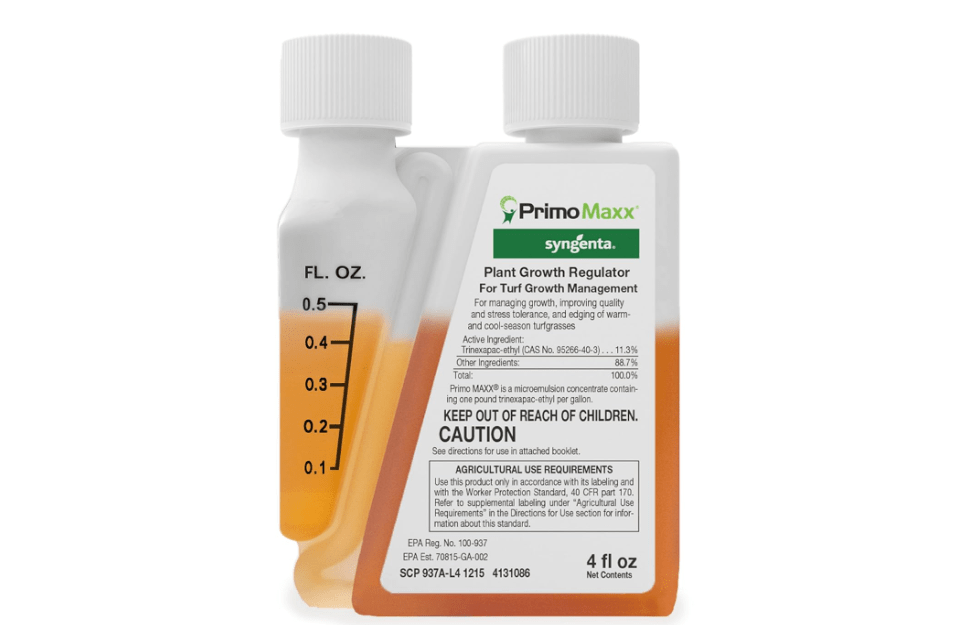
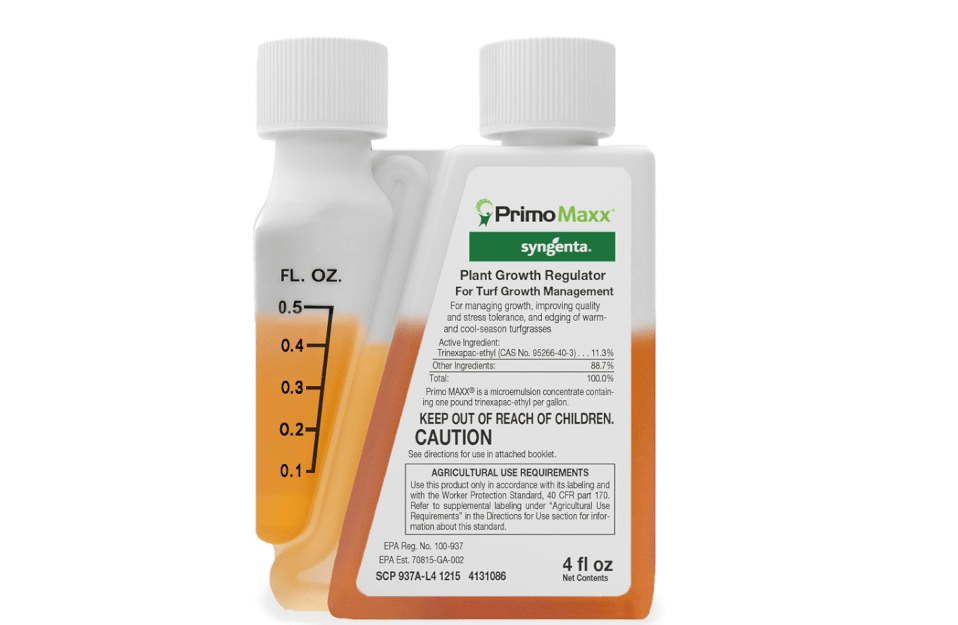
1. Syngenta Primo Maxx Plant Growth Regulator
-
Product Description: Syngenta’s Primo Maxx is universally recognized as the gold standard in the turf industry. This micro-emulsion concentrate targets the part of the plant that dictates vertical shoot growth. By shutting down upward growth, it redirects the grass’s energy into lateral stem production and massive root mass development, resulting in a carpet-like lawn.
-
Price:
-
Key Features & Benefits: Features Trinexapac-ethyl. It significantly increases turf density, improves stress tolerance against heat and drought, and drastically reduces the volume of grass clippings you have to manage.
-
Pros & Cons:
-
Pros: Exceptional pre-stress conditioning; mixes cleanly in the tank.
-
Cons: Because it wears off based on temperature and growth rates, it requires strict tracking and frequent reapplication during peak summer heat.
-
-
Amazon Customer Ratings: 4.5 out of 5 stars.
-
Why It’s a Good Choice: It is the most tested, proven, and reliable PGR on the market. When golf courses want perfect fairways, they use Primo Maxx.
-
Ideal Use Case: Homeowners with high-end turf (like hybrid Bermuda or premium Kentucky Bluegrass) who want a professional, tightly mowed, golf-course quality appearance.
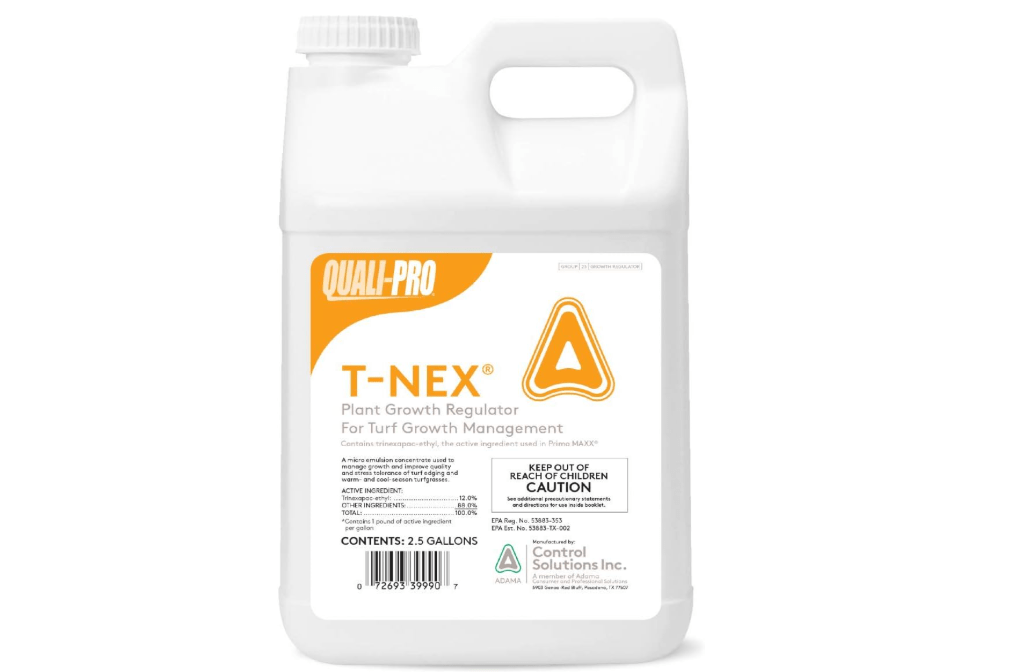
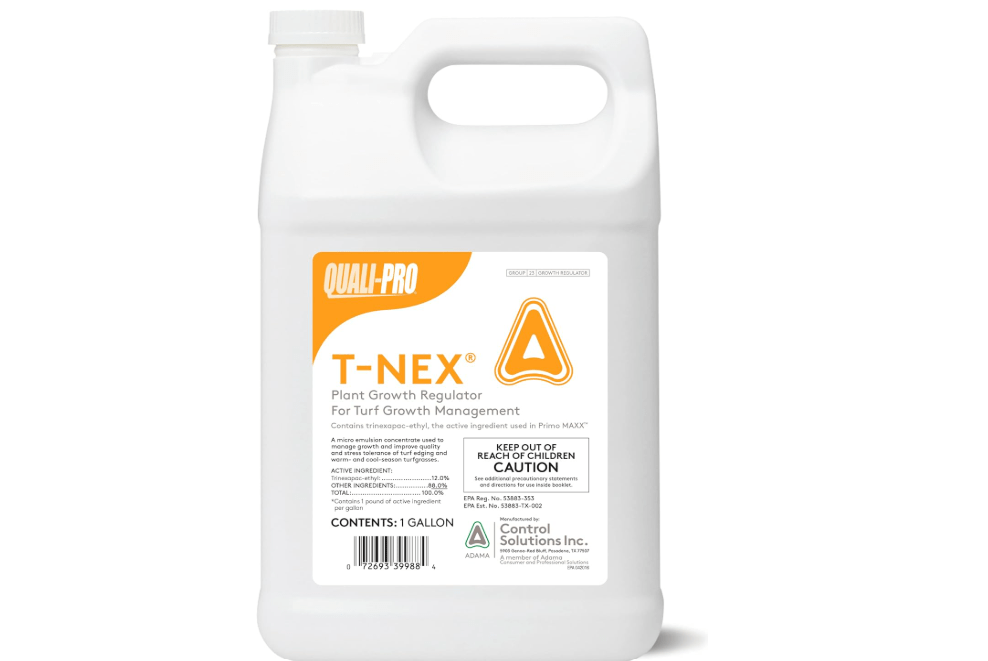
2. Quali-Pro T-Nex Plant Growth Regulator
-
Product Description: Quali-Pro T-Nex is a professional-grade micro-emulsion concentrate that acts as a generic equivalent to Primo Maxx. It functions the exact same way—inhibiting gibberellic acid to slow cell elongation—but it is priced more competitively for those buying in bulk.
-
Price: $337.19
-
Key Features & Benefits: Contains 12% Trinexapac-ethyl. It provides excellent vertical growth suppression, deepens the natural green color by concentrating chlorophyll, and builds a thicker, more resilient turf canopy.
-
Pros & Cons:
-
Pros: Unbeatable value per ounce compared to name brands; identical results to Primo Maxx.
-
Cons: Usually only sold in 1-gallon or 2.5-gallon jugs, which is a massive upfront investment (and volume) for someone with a tiny lawn.
-
-
Amazon Customer Ratings: 5 out of 5 stars.
-
Why It’s a Good Choice: You get the exact same professional-grade growth suppression as the leading brand, completely bypassing the premium brand markup.
-
Ideal Use Case: Lawn care enthusiasts with medium to large yards who apply PGRs consistently on a schedule and want to maximize their budget.
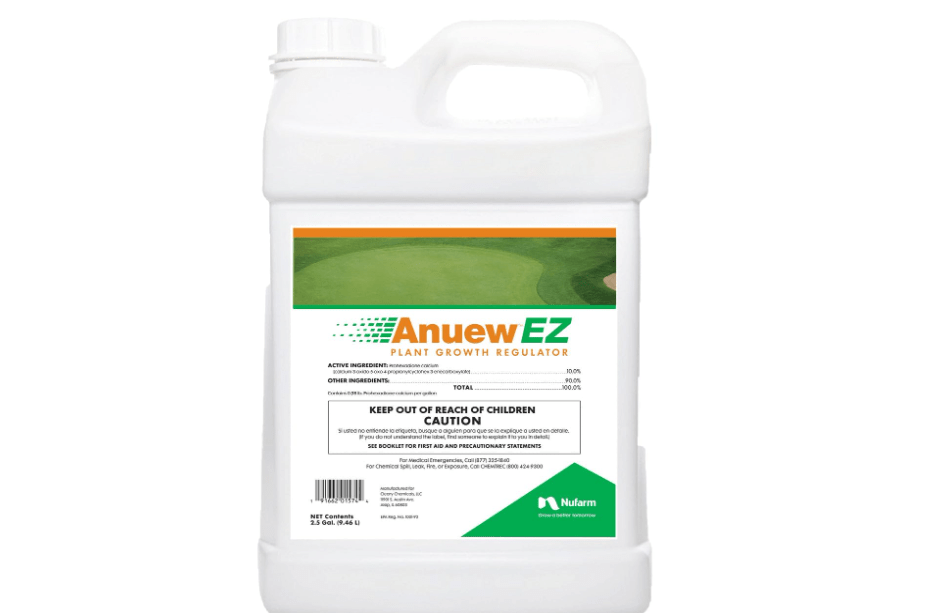
3. Nufarm Anuew EZ Plant Growth Regulator
-
Product Description: Nufarm Anuew EZ is a highly advanced, premium liquid plant growth regulator. Unlike products relying on Trinexapac-ethyl, Anuew uses Prohexadione calcium to rapidly absorb into the plant and provide predictable, long-lasting regulation across a wide variety of turf species.
-
Price: $1,113.21
-
Key Features & Benefits: Regulates both cool-season and warm-season grasses with a remarkably smooth growth curve. It excels at shifting energy downward to create an incredibly dense root system.
-
Pros & Cons:
-
Pros: Provides a very even regulation effect (less “rebound” surge growth when the product wears off).
-
Cons: The upfront purchase cost is quite high for residential buyers.
-
-
Amazon Customer Ratings: 5 out of 5 stars.
-
Why It’s a Good Choice: Because it metabolizes differently in the plant, it offers a smoother experience and is an excellent rotational product if you want to avoid relying solely on Trinexapac-ethyl.
-
Ideal Use Case: Passionate lawn owners looking for a top-tier, fast-acting regulator that provides elite density for premium turfgrass.
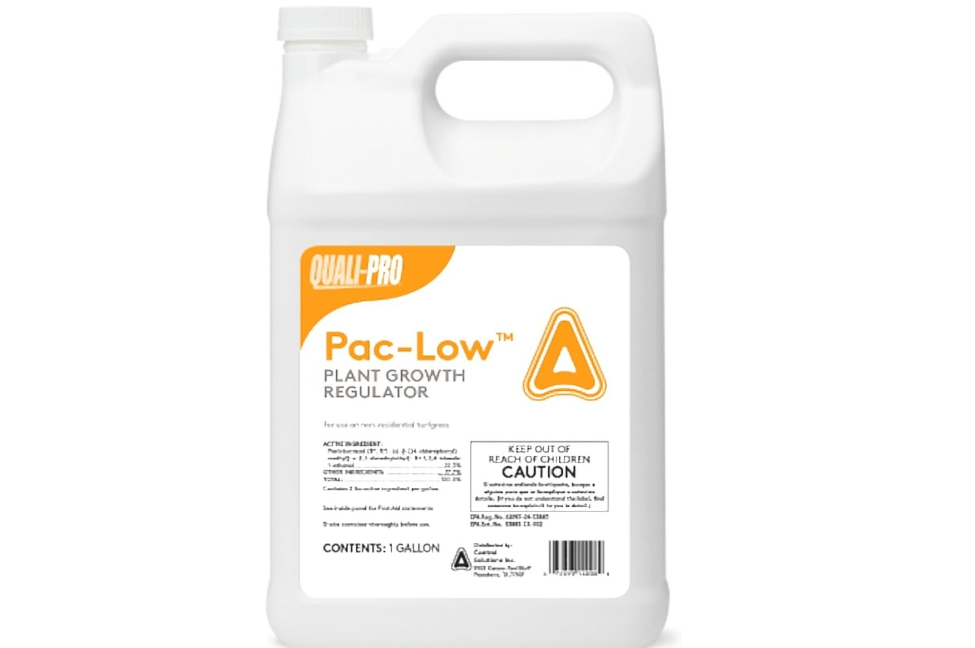
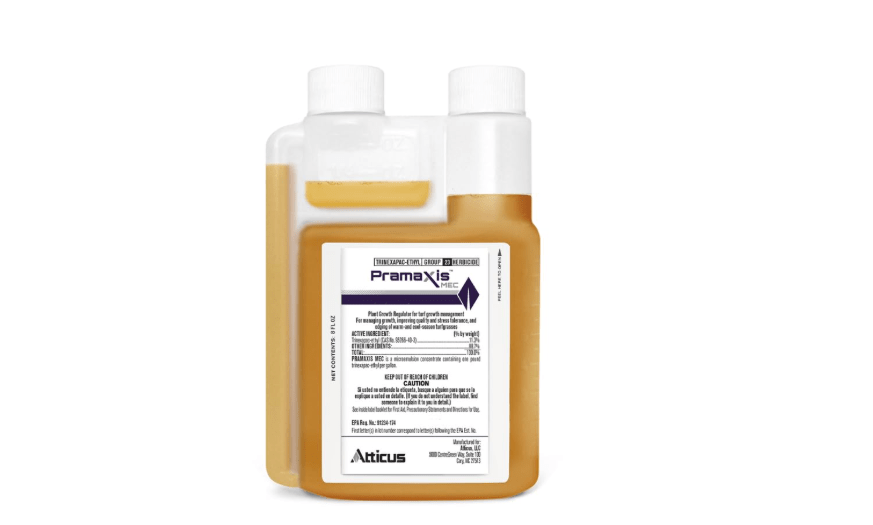
4. Quali-Pro Pramaxis Plant Growth Regulator
-
Product Description: Pramaxis is another high-quality generic equivalent to Primo Maxx, designed to promote a tighter, denser lawn canopy while reducing the amount of grass clippings generated by mowing.
-
Price: $455.88
-
Key Features & Benefits: Temporarily limits the production of gibberellic acid, resulting in shorter internodes and a much thicker sward of grass.
-
Pros & Cons:
-
Pros: Offers a highly accessible price point and bottle size for residential homeowners who don’t want to buy a full gallon.
-
Cons: Measuring small, precise doses for small lawns requires a dedicated syringe to avoid over-regulation.
-
-
Amazon Customer Ratings: 4.5 out of 5 stars.
-
Why It’s a Good Choice: It perfectly fills the market gap for average suburban homeowners who need a manageable, affordable bottle size without sacrificing the potency of professional active ingredients.
-
Ideal Use Case: Suburban homeowners making their first foray into liquid turf management and growth regulators.
5. Syngenta Trimmit 2SC Growth Regulator
-
Product Description: Trimmit 2SC is a powerful, root-absorbed plant growth regulator containing 22.9% Paclobutrazol. Rather than just suppressing upward growth of your primary turf, it actively weakens and suppresses invasive winter weed grasses like Poa annua (annual bluegrass), making it a favorite for transition zones and high-end fairways.
-
Price: $127.70
-
Key Features & Benefits: Works systemically through the roots to inhibit gibberellin synthesis. It heavily slows vertical growth while simultaneously making Poa annua less competitive against your desirable turf.
-
Pros & Cons:
-
Pros: Exceptional weed suppression; can be tank-mixed with Primo Maxx for synergistic, long-term turf control.
-
Cons: Because it is root-absorbed, it must be watered in correctly. If over-applied, it can severely stunt desirable turf.
-
-
Amazon Customer Ratings: 4.6 out of 5 stars.
-
Why It’s a Good Choice: It goes beyond just slowing your grass down. It actively shifts the competitive balance of your lawn in favor of your primary turfgrass by choking out winter weeds.
-
Ideal Use Case: Lawn owners dealing with severe Poa annua infestations in established bermudagrass, bentgrass, or perennial ryegrass.
6. Podium (Generic Primo Maxx) PGR
-
Product Description: Podium is another highly dependable generic equivalent to Primo Maxx. It utilizes Trinexapac-ethyl to slow vertical growth, increase lateral spreading, and build resilience against heat and drought.
-
Price:
-
Key Features & Benefits: Enhances root systems for better water absorption and limits the space available for weed seeds to germinate by creating an ultra-thick canopy.
-
Pros & Cons:
-
Pros: Highly cost-effective for large properties; provides the same active ingredient as premium labels.
-
Cons: Brand recognition is lower among residential users, and it is primarily sold in commercial bulk sizes.
-
-
Amazon Customer Ratings: 4.7 out of 5 stars.
-
Why It’s a Good Choice: A cost-effective way to pre-condition expansive lawns before the brutal summer heat sets in, saving hours of tractor mowing time.
-
Ideal Use Case: Owners of large properties or acreage who need bulk liquid management and have the equipment to spray large areas.
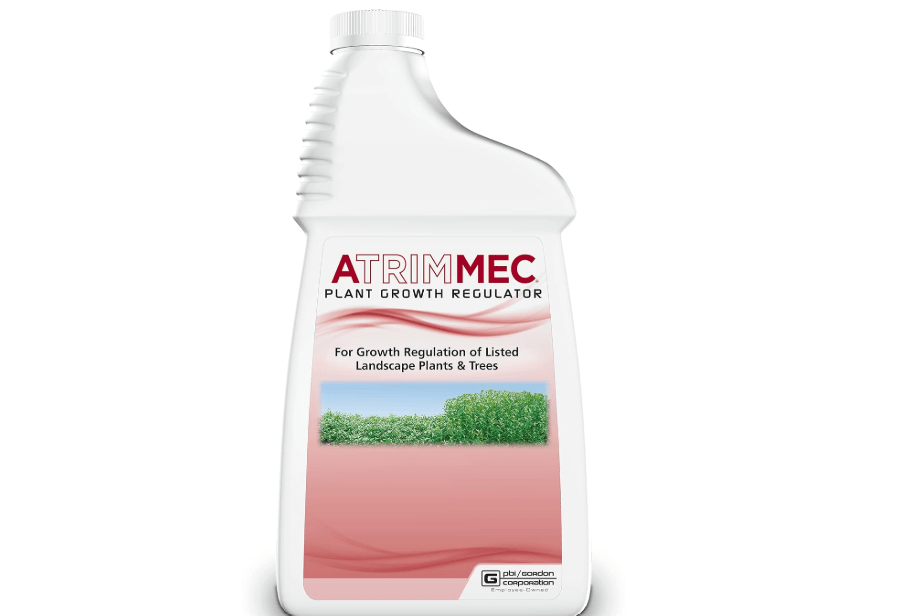
7. PBI Gordon Atrimmec Plant Growth Regulator
-
Product Description: Atrimmec is a versatile, systemic plant growth regulator primarily formulated to reduce trimming and pruning of landscape ornamentals (like hedges and shrubs) by up to 50%. However, it can also be utilized for specialized growth control on certain groundcovers and turf.
-
Price: $139.49
-
Key Features & Benefits: Works by blocking plant hormones and interrupting apical dominance. Instead of growing upward or outward, it forces lateral branching, making shrubs and hedges look much denser and fuller.
-
Pros & Cons:
-
Pros: Multi-use for both landscape shrubs, hedges, and specific turf applications; reduces nuisance fruit on ornamental trees.
-
Cons: Primarily marketed for ornamentals, requiring careful rate calculation if you choose to adapt it for grass.
-
-
Amazon Customer Ratings: 4 out of 5 stars.
-
Why It’s a Good Choice: It acts as a multi-purpose tool for homeowners managing complex, high-maintenance landscapes alongside their lawns.
-
Ideal Use Case: Property owners with extensive hedges, groundcovers, and ornamentals who want a versatile growth regulator in their arsenal to cut down on all yard work, not just mowing.
8. ProForce Regulate 200SC PGR
-
Product Description: A heavy-duty suspension concentrate containing a robust 200g/L of Paclobutrazol. It is designed to severely restrict vertical growth on aggressive, fast-growing turfs.
-
Price: $52.99
-
Key Features & Benefits: Exceptional at suppressing Poa annua and managing the aggressive runners of warm-season grasses. It provides long-lasting residual control in the soil.
-
Pros & Cons:
-
Pros: Unmatched longevity and heavy-duty suppression.
-
Cons: High potential to damage desirable turf if calibration or mixing is inaccurate. Not recommended for beginners.
-
-
Amazon Customer Ratings: 4.4 out of 5 stars.
-
Why It’s a Good Choice: Delivers absolute, long-term control over fast-growing, aggressive turf varieties that require constant edging and cutting.
-
Ideal Use Case: Advanced lawn enthusiasts and property managers managing aggressively spreading warm-season grasses.
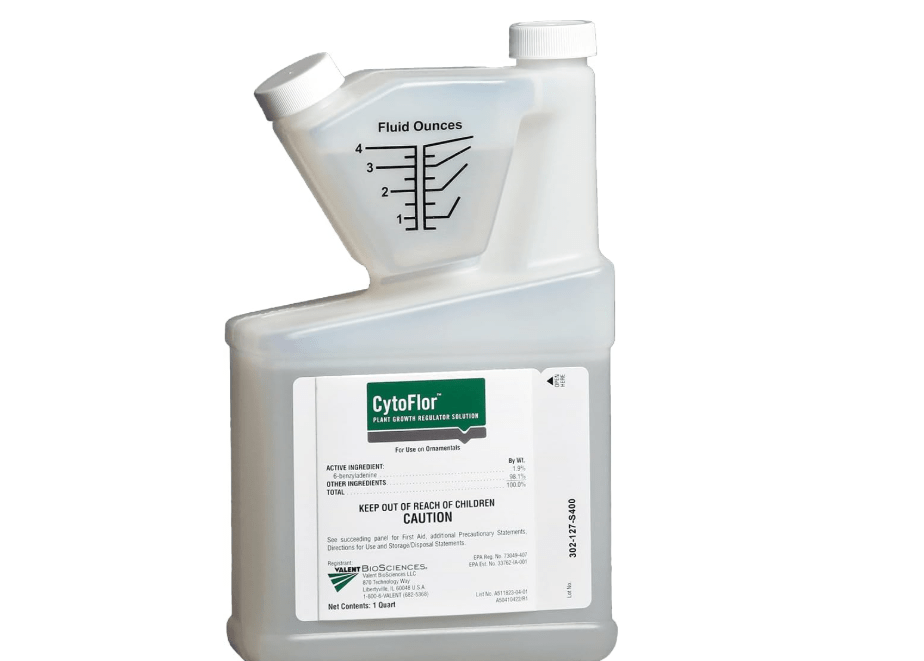
9. Ethic 480 Turfgrass Growth Regulator
-
Product Description: A specialized plant growth regulator containing Ethephon, designed specifically for one major task: controlling wintergrass seedheads.
-
Price: $59.99
-
Key Features & Benefits: Registered for the absolute control of Poa annua seedheads in cool-season turf and golf greens, stopping the plant from reproducing.
-
Pros & Cons:
-
Pros: Unmatched seedhead suppression capability, keeping lawns looking uniformly green.
-
Cons: Extremely high bulk cost designed strictly for commercial or golf course use.
-
-
Amazon Customer Ratings: Professional grade (unrated by general consumers).
-
Why It’s a Good Choice: It stops unsightly white seedhead flushes that ruin the uniform appearance of a manicured lawn in the spring.
-
Ideal Use Case: Estate managers, turf purists, and golf course superintendents managing extensive cool-season lawns prone to heavy spring seeding.
5. How to Apply Plant Growth Regulators Safely & Effectively
Applying the best 10 grass growth regulator products is entirely different from spraying a standard weed killer. Precision is everything.
Calibration is King
You cannot guess the application rate. Over-applying a PGR will stunt your lawn for weeks. Step one is calibrating your backpack sprayer. Mark off a 1,000 square foot area in your driveway or lawn using water only. Walk at a steady, consistent pace with consistent pressure to see exactly how much water it takes you to cover that area. Once you know your water carrier rate (usually 1 to 2 gallons per 1,000 sq. ft.), you can accurately mix the required ounces of PGR into that specific volume of water. Always use flat-fan nozzles for even coverage.
The Iron Trick
A well-known secret among turf professionals is the “Iron Trick.” Because PGRs slow down plant growth, they can sometimes cause a temporary yellowing or “bronzing” of the turf tips a few days after application. To completely counteract this, tank-mix a liquid iron supplement (or a light dose of liquid nitrogen) directly with your PGR. The iron masks the bronzing and pushes an incredibly deep, dark green color, making your lawn look thicker and healthier than ever.
Tracking GDD (Growing Degree Days)
PGRs do not last on a strict calendar schedule (e.g., exactly 28 days). They wear off based on temperature and how fast the plant is metabolizing. If a PGR wears off completely, your grass will experience a “rebound effect”—a sudden surge of rapid vertical growth. To avoid this, professionals track Growing Degree Days (GDD), a measurement of heat accumulation over time. Many free online tools and turf apps allow you to input your zip code to track your GDD, telling you the exact perfect day to reapply your regulator before the rebound occurs.
6. Conclusion
Transitioning to liquid turf management might seem intimidating, but the rewards are undeniable. Using one of the best 10 grass growth regulator products reviewed in this guide will fundamentally change how you care for your lawn. By forcing the grass to grow thicker and deeper roots instead of shooting upward, you will dramatically reduce your time spent mowing, save money on watering, and achieve a lush, dense canopy that naturally chokes out weeds.
Top Recommendation: For the vast majority of homeowners looking to dip their toes into growth regulation, we highly recommend Syngenta Primo Maxx or its budget-friendly generic, Quali-Pro Pramaxis. They offer predictable results, are incredibly safe for most turf types when applied correctly, and are available in manageable sizes.
Ready to reclaim your weekends? Measure your lawn’s square footage today, invest in a quality battery-powered backpack sprayer, and click the links above to check the current pricing on your preferred grass growth regulator. A thicker, greener, lower-maintenance lawn is just one spray away!