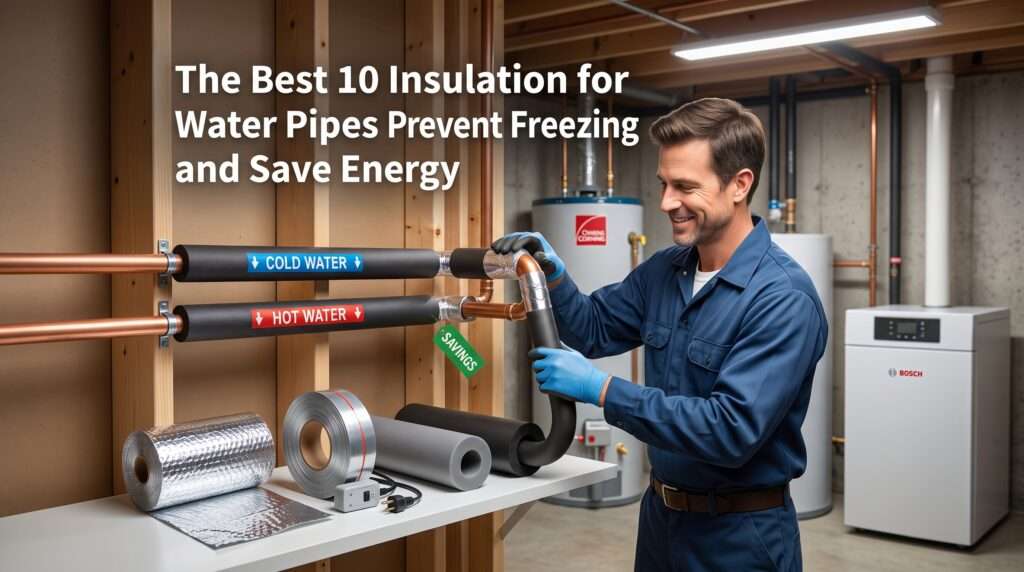
Imagine waking up on a freezing winter morning to find your faucets bone dry, or worse—stepping into a flooded basement because a frozen pipe finally burst. Every year, water damage from burst plumbing costs homeowners thousands of dollars in emergency repairs and property restoration. But the cold isn’t the only enemy. Unprotected hot water pipes silently bleed heat as water travels to your faucets, forcing your water heater to work overtime and constantly inflating your utility bills.
Fortunately, preventing these costly disasters is easier and cheaper than you might think. A small DIY investment in the best 10 insulation for water pipes can safeguard your home against catastrophic winter damage, stop annoying summer condensation (sweating pipes), and significantly lower your energy costs year-round.
In this comprehensive guide, we have rigorously analyzed plumbing industry standards, material efficiency, and thousands of verified customer reviews to find the most effective solutions on the market. Whether you need heavy-duty active freeze protection for a sub-zero climate, fiberglass wraps for high-heat boiler lines, or simple foam to stop indoor pipe sweating, this guide has you covered. Read on as we reveal the top-rated products and show you exactly how to choose the right one for your specific home layout so you can buy with confidence.
II. Quick Comparison: Top Pipe Insulation Solutions
To help you quickly navigate our top picks, here is a mobile-friendly, three-column comparison table highlighting the core strengths of each product.
III. How to Choose the Right Pipe Insulation (Buyer’s Guide)
Before diving into the reviews, it is critical to understand that not all insulation is created equal. The right choice depends entirely on your climate, the pipe’s temperature, and its location. Here is how to make an informed buying decision:
1. Understand the Material Types
-
Foam/Rubber (Polyethylene/Elastomeric): The most common choice for cold water lines and basic winterization. Elastomeric rubber offers superior moisture resistance compared to standard polyethylene foam. Both are easy to install via pre-slit tubes.
-
Fiberglass: The absolute best choice for extreme heat, such as hot water lines, boiler pipes, and steam pipes. Foam will melt under extreme heat, but fiberglass boasts a high R-value and excellent fire resistance.
-
Heating Cables/Heat Tape: Passive insulation only traps existing heat. If a pipe is in a deep-freeze zone (like a crawlspace) with stagnant water, it will eventually freeze. Heating cables actively generate heat to keep the water flowing.
-
Foil & Tape Wraps: Essential for tight spaces, elbows, valves, and joints where rigid tubes simply will not bend or fit.
2. Pay Attention to R-Value
R-value measures a material’s thermal resistance. The higher the R-value, the better the insulation. Thicker walls on a foam tube directly correlate to a higher R-value, offering more protection against extreme ambient temperatures.
3. Size Your Pipes Correctly
A loose fit allows air to circulate, completely defeating the purpose of the insulation. Before ordering, measure the outside diameter of your pipes. Note that Copper and PVC pipes of the same “nominal” size have different actual outside diameters. Always check the product specifications to ensure a snug, airtight fit.
IV. The Top 10 Best Insulation for Water Pipes: Detailed Reviews
1. Best Overall for Cold Pipes: Armacell Armaflex Rubber Pipe Insulation
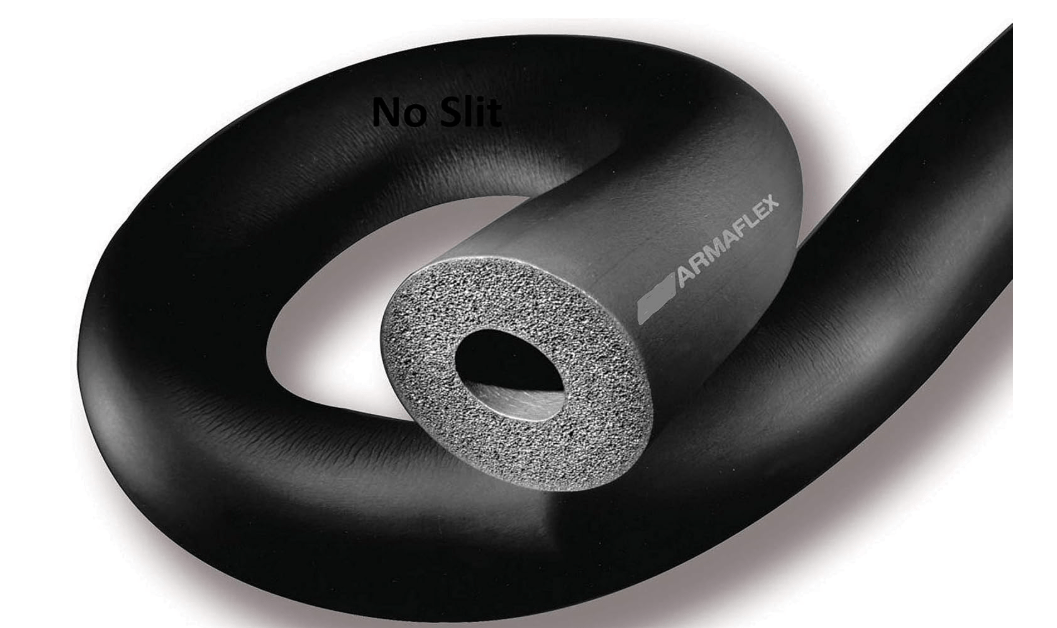
Product Description: When standard pool-noodle foam won’t cut it, Armacell Armaflex is the professional-grade elastomeric rubber tubing that plumbers trust. Unlike cheap open-cell foam that can absorb moisture over time, this closed-cell rubber structure completely blocks vapor transmission. This makes it an absolute powerhouse for insulating cold water lines in damp basements, preventing the pipes from sweating in the summer and freezing in the winter.
Price: $14.99
Key Features and Benefits:
-
Closed-cell elastomeric rubber construction prevents mold and condensation.
-
Pre-slit down the middle with self-sealing adhesive strips for rapid, airtight installation.
-
Highly flexible, making it easier to maneuver around slight bends than rigid foam.
-
Provides a clean, professional matte-black finish.
Pros and Cons:
-
Pros: Exceptional durability, entirely waterproof, takes paint well if exposed, completely stops pipe sweating.
-
Cons: More expensive than basic grey foam; the adhesive is extremely strong, meaning you only get one chance to align the seam correctly.
Amazon Customer Ratings and Reviews:
-
4.7/5 Stars. Reviewers frequently highlight the heavy-duty, premium feel of the rubber compared to hardware store alternatives. Many users note that the self-sealing adhesive is incredibly aggressive and holds up flawlessly over years of use.
Why it’s a good choice for the best 10 insulation for water pipes: It perfectly bridges the gap between cheap DIY foam and expensive commercial insulation, offering homeowners professional-level protection against freezing and moisture without requiring specialized tools to install.
Ideal Use Case: Basement cold water lines, indoor/outdoor AC line sets, and completely eliminating summer pipe condensation.
2. Best for Hot Water Pipes: Owens Corning ASJ Max Fiberglass Pipe Insulation
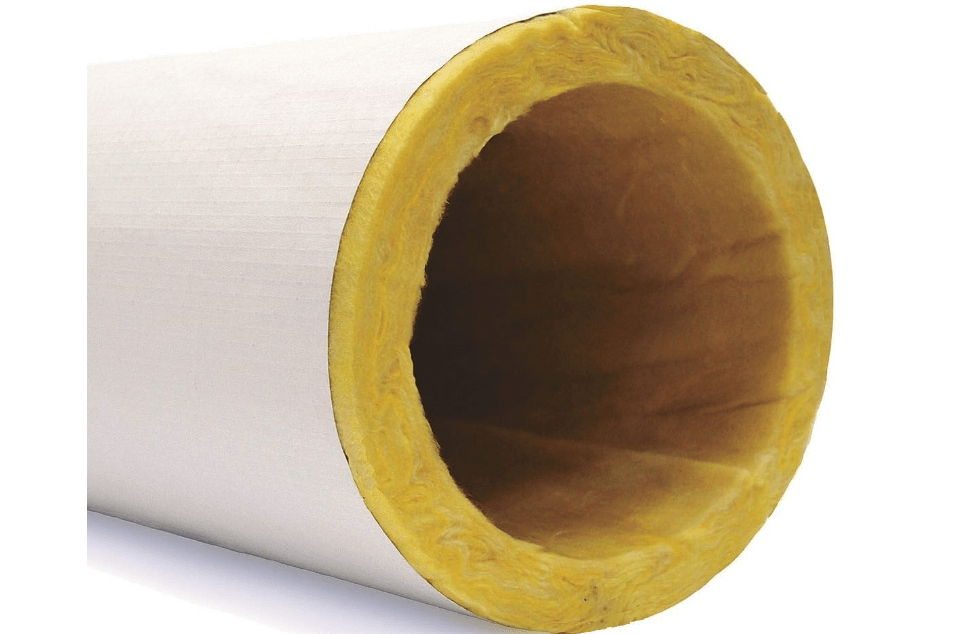
Product Description: When dealing with hot water lines heading out of your water heater or boiler, standard foam can warp, melt, or off-gas dangerous fumes. The Owens Corning ASJ (All-Service Jacketing) Max is a heavy-density, resin-bonded glass fiber tube designed specifically to handle extreme heat. It comes wrapped in a smooth, bright white poly-encapsulated jacket that not only looks incredibly professional but is easy to wipe clean.
Price:
Key Features and Benefits:
-
Incredible thermal threshold, safely withstanding pipe temperatures up to 1,000°F.
-
Features a self-sealing lap adhesive for quick closures.
-
The ASJ Max jacket resists mold, mildew, and water damage.
-
Delivers best-in-class R-value, aggressively trapping heat inside the pipe.
Pros and Cons:
-
Pros: Unmatched heat retention, fire-safe, looks highly professional, dramatically reduces heat loss from water heaters.
-
Cons: You must wear protective gear (gloves/mask/long sleeves) during installation to avoid fiberglass itch; the rigid material will not bend around corners.
Amazon Customer Ratings and Reviews:
-
4.6/5 Stars. Customers consistently rave about the immediate drops in their heating bills and how much faster hot water reaches their distant faucets after installing these sleeves.
Why it’s a good choice: Because foam is a hazard on high-heat pipes, fiberglass is the only safe, permanent, and highly efficient solution for heat retention, easily earning its spot on our list.
Ideal Use Case: Hot water heater output lines, steam pipes, radiant heating manifolds, and boiler rooms.
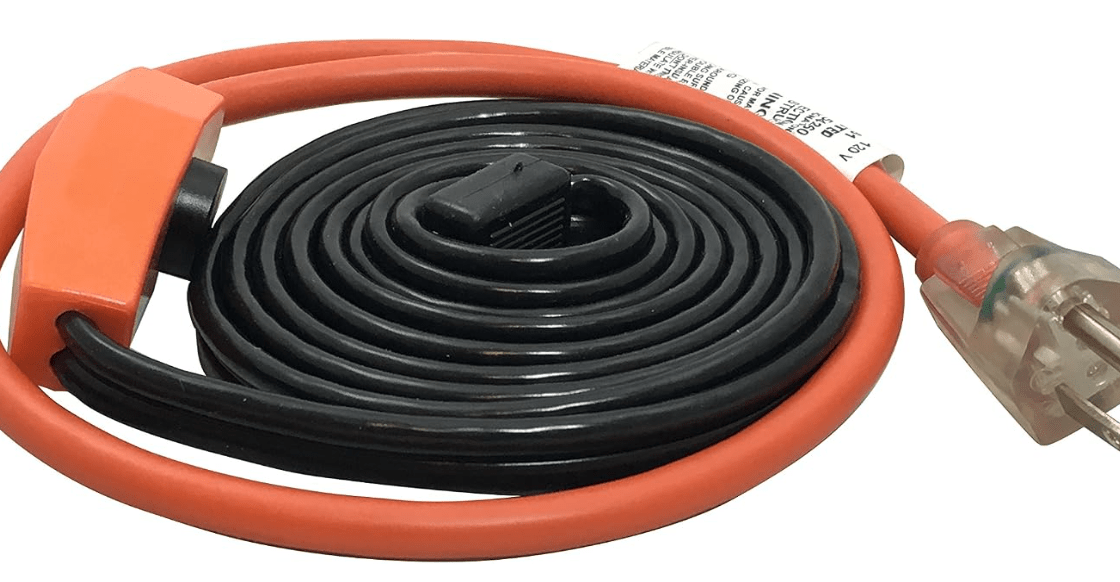
3. Best Active Freeze Protection: ThermoSoft NeverFreeze Pipe Tracing Cable
Product Description: Passive insulation (like foam or fiberglass) only traps the heat that is already in the pipe. But what happens to a pipe sitting in a sub-zero crawlspace when the water isn’t flowing? It freezes. The ThermoSoft NeverFreeze is a smart, self-regulating electric heating cable that you run along the pipe. It actively senses the ambient temperature and adjusts its heat output automatically to keep the water above freezing.
Price:
Key Features and Benefits:
-
Self-regulating conductive core means the cable will never overheat or melt your pipes.
-
Built-in thermostat ensures it only draws power when temperatures drop close to freezing.
-
Safe for use on both metal (copper/iron) and plastic (PVC/PEX) pipes.
-
Heavy-duty weather-resistant outer jacket.
Pros and Cons:
-
Pros: Provides a 100% guarantee against freezing in dead-end pipes; energy-efficient idle mode saves electricity; easy plug-and-play setup.
-
Cons: Requires an accessible, grounded electrical outlet; higher upfront cost than foam tubing.
Amazon Customer Ratings and Reviews:
-
4.8/5 Stars. This product boasts life-saving reviews from homeowners in the Midwest and Canada, sharing stories of how this cable helped their plumbing survive sub-zero blizzards without a single burst pipe.
Why it’s a good choice: It provides the ultimate peace of mind. For pipes highly vulnerable to ambient winter air, adding active heat is the only foolproof preventative measure.
Ideal Use Case: Unheated crawlspaces, mobile home underbellies, exterior well-pump lines, and drafty attics.
4. Best Budget Foam Tubes: Frost King Polyethylene Foam Pipe Insulation
Product Description: For standard indoor winterization on a tight budget, the Frost King Polyethylene Foam tubes are the classic, lightweight grey sleeves found in every local hardware store. They are designed for homeowners who need to insulate hundreds of feet of indoor plumbing quickly and affordably. While they lack the dense, waterproof nature of rubber elastomeric foam, they provide an excellent baseline defense against moderate cold and minor condensation.

Price:
Key Features and Benefits:
-
Pre-slit straight down the side for instant, snap-on application.
-
Incredibly lightweight and easy to trim to custom lengths using standard household scissors.
-
Available in a wide variety of diameters to fit everything from small copper lines to thick PVC.
Pros and Cons:
-
Pros: Highly affordable, installs in seconds, perfect for large-scale basement projects.
-
Cons: Lower R-value than rubber or fiberglass; degrades and turns brittle if exposed to direct UV sunlight outdoors; the built-in adhesive can weaken over time.
Amazon Customer Ratings and Reviews:
-
4.4/5 Stars. Reviewers praise the unbeatable value-for-money, frequently noting that it only took them a single afternoon to insulate their entire basement plumbing system.
Why it’s a good choice: When evaluating the best 10 insulation for water pipes, this product earns its place purely through cost-effectiveness. It is the most economical way to protect a climate-controlled basement’s plumbing.
Ideal Use Case: Indoor, climate-controlled spaces like basements, interior wall cavities, and garages where severe, direct sub-zero temperatures are not a primary threat.
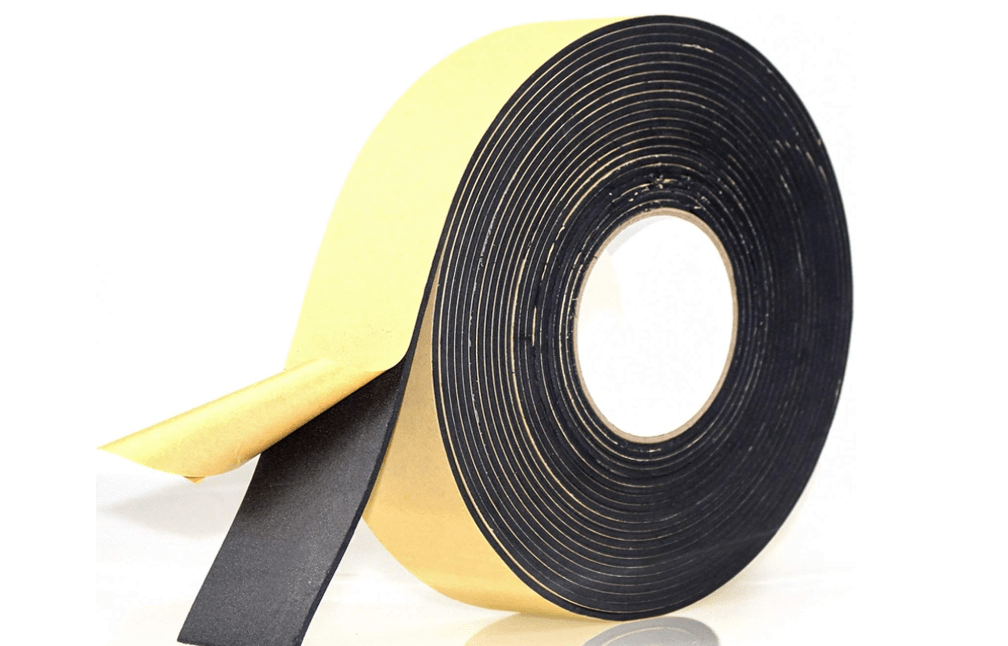
5. Best for Tight Spaces and Joints: Duck Brand Polyurethane Foam Insulation Tape
Product Description: Tubular foam is great for long, straight runs of pipe, but it fails completely at sharp 90-degree elbows, T-junctions, and complex water valves. That is where Duck Brand Polyurethane Foam Tape steps in. This is a thick, self-adhesive weatherization roll that wraps around your plumbing fixtures exactly like a medical bandage, ensuring no bare metal is left exposed to the cold air.
Price: $10.99
Key Features and Benefits:
-
Highly conformable, sponge-like polyurethane foam that compresses into tight gaps.
-
Backed by a strong adhesive that sticks firmly to copper, brass, iron, and PVC.
-
Creates a seamless thermal bridge across oddly shaped plumbing configurations.
Pros and Cons:
-
Pros: Fits easily into cramped wall cavities, wraps flawlessly around irregular shapes, stops localized dripping and sweating.
-
Cons: It would be entirely too time-consuming and expensive to wrap long straight pipes; lower overall R-value compared to thick tubular sleeves.
Amazon Customer Ratings and Reviews:
-
4.5/5 Stars. Users highlight its ease of use on tricky outdoor spigots and cramped under-sink water supply valves where traditional tubes simply will not fit.
Why it’s a good choice: Tubular insulation naturally leaves vulnerable gaps at joints. This tape is the perfect companion product to seal those vulnerable gaps perfectly, ensuring the integrity of your whole-house insulation.
Ideal Use Case: T-joints, elbows, complex water valves, outdoor spigot connections, and cramped wall cavities.
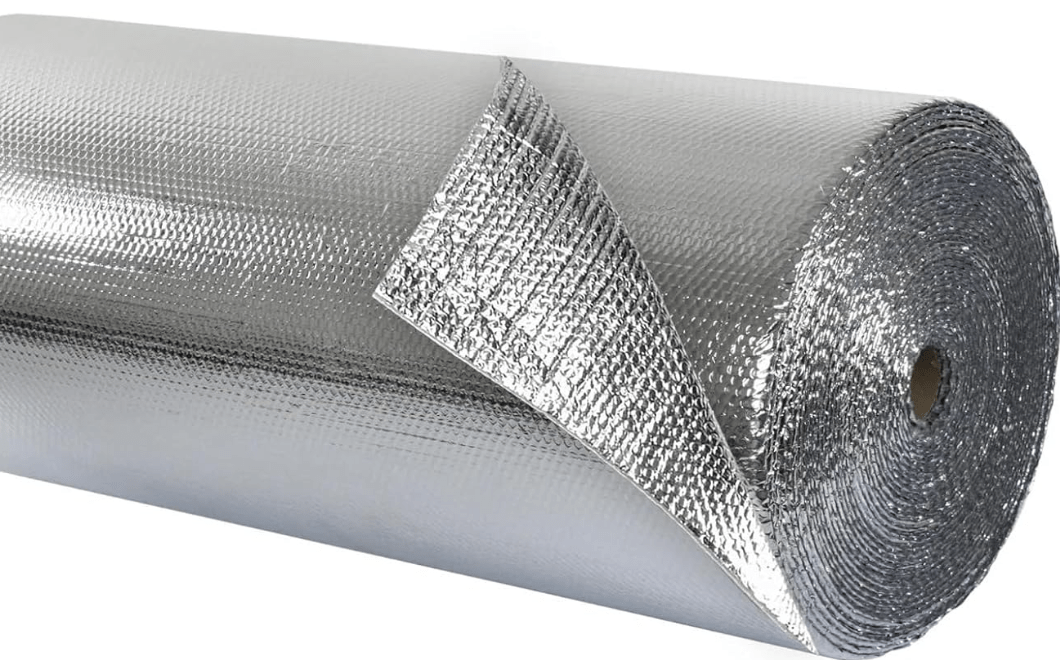
6. Best Reflective Wrap: US Energy Products Double Bubble Reflective Foil Wrap
Product Description: Unlike traditional foam or fiberglass that relies on sheer thickness to trap heat, this Double Bubble wrap relies on space-age radiant barrier technology. It consists of insulating polyethylene air bubbles sandwiched securely between two layers of 99% pure aluminum. Instead of absorbing temperatures, it actively reflects radiant heat away from the pipe.
Price:
Key Features and Benefits:
-
Reflects up to 97% of radiant heat.
-
Non-toxic, lightweight, and completely fiberglass-free (no itching).
-
Acts as a 100% complete vapor and moisture barrier when seams are properly taped.
Pros and Cons:
-
Pros: Excellent for keeping external heat out of cold water lines; mold-proof; very thin profile.
-
Cons: Does not have built-in adhesive (requires zip ties or foil tape to secure); its R-value depends heavily on leaving a slight air gap during installation.
Amazon Customer Ratings and Reviews:
-
4.6/5 Stars. Highlighted by users in hot climates (like Texas and Florida) who successfully used it to keep their cold tap water from running lukewarm during the brutal summer months.
Why it’s a good choice: It utilizes highly efficient reflective technology rather than bulk. It is exceptionally versatile and works just as well for HVAC ductwork as it does for oversized plumbing drains.
Ideal Use Case: Warm climates aiming to keep cold water lines ice-cold, wrapping large PVC drain pipes, and insulating pipes located in sweltering attics.
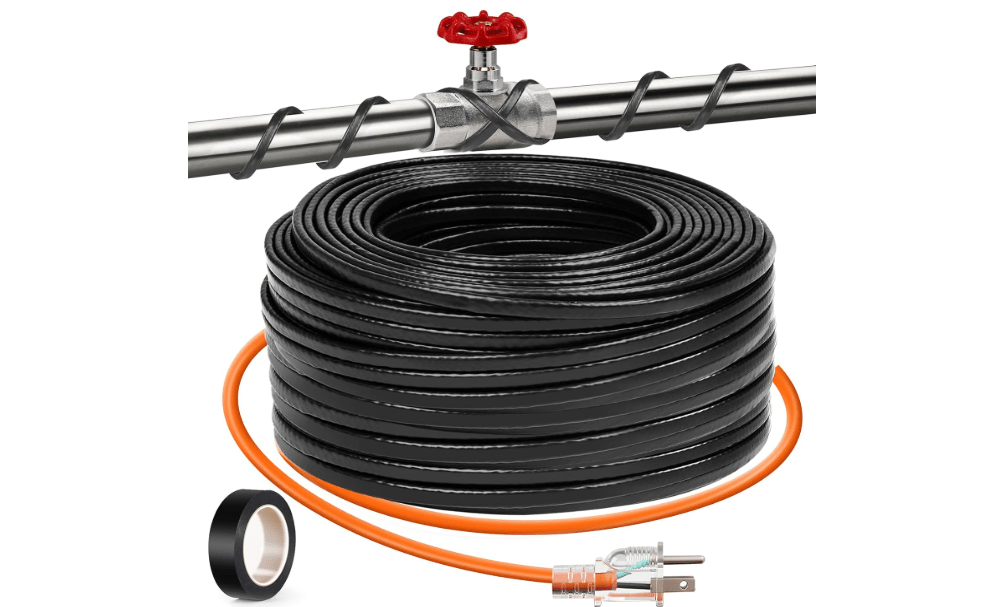
7. Best Heavy-Duty Outdoor Cable: Heat-Line Paladin for Pipe
Product Description: When a frozen pipe means a catastrophic loss of water to a remote cabin or a working farm, standard hardware-store solutions fall short. The Heat-Line Paladin is a commercial-grade, cCSAus-approved heating cable engineered for the absolute harshest winter environments. Unlike basic heat tape, the Paladin is rated for direct earth burial and completely wet locations.
Price:
Key Features and Benefits:
-
Advanced self-regulating conductive polymer technology.
-
Fully approved for direct earth burial and wet locations (can sit submerged in standing water).
-
Includes built-in GFCI (Ground Fault Circuit Interrupter) protection for maximum safety.
Pros and Cons:
-
Pros: Unmatched, industrial-level reliability; safe to bury directly in the soil; heavy-duty outer jacket resists tearing and crushing.
-
Cons: A premium price point that requires a significant upfront investment; overkill for mild, southern climates.
Amazon Customer Ratings and Reviews:
-
4.9/5 Stars. Commercial facility managers and agricultural users swear by its bulletproof reliability, noting it survives harsh winters that previously destroyed cheaper cables.
Why it’s a good choice: It is the ultimate fail-safe. If you have underground pipes or exposed lines in extreme northern climates, this is the system professionals trust to prevent thousands of dollars in ice damage.
Ideal Use Case: Off-grid cabins, working farms, shallow underground water lines, and severe northern winter climates.
8. Best Fiberglass Wrap for Valves: Frost King Foil-Backed Fiberglass Pipe Wrap
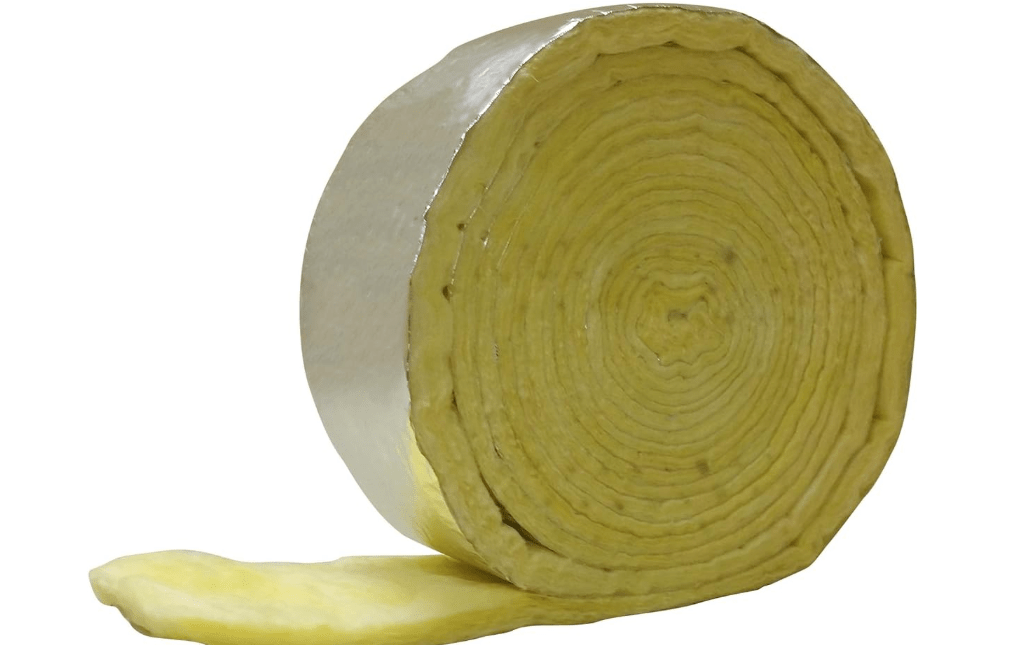
Product Description: When dealing with extremely hot boiler connections or irregular steam fittings, rigid fiberglass tubes won’t fit, and foam tape will melt. The Frost King Foil-Backed Pipe Wrap solves this by offering high-density fiberglass insulation in a flexible, 3-inch wide roll. The built-in vapor-barrier foil facing acts as an outer protective shell as you spiral it around complex, high-heat plumbing.
Price:
Key Features and Benefits:
-
3-inch width makes it easy to overlap securely.
-
Handles exceptionally high temperatures effortlessly.
-
The foil backing prevents moisture intrusion and reflects radiant heat back into the pipe.
Pros and Cons:
-
Pros: Wraps beautifully around complicated valve arrays; handles high heat safely; highly affordable.
-
Cons: Can be messy and irritating to work with due to loose fiberglass fibers; requires heat-rated tape at the ends to prevent it from unspooling.
Amazon Customer Ratings and Reviews:
-
4.3/5 Stars. Reviewers frequently mention its effectiveness on older, irregular plumbing in historic homes where standard modern tubes simply do not fit the archaic valve designs.
Why it’s a good choice: It perfectly combines the extreme heat resistance of traditional fiberglass with the flexible application of a tape wrap, solving the rigidity problem of solid fiberglass tubes.
Ideal Use Case: Boiler connections, irregular hot water heater fittings, steam pipes, and older home plumbing retrofits.
9. Best UV-Resistant Outdoor Foam: K-Flex Titan Flexible Closed-Cell Foam
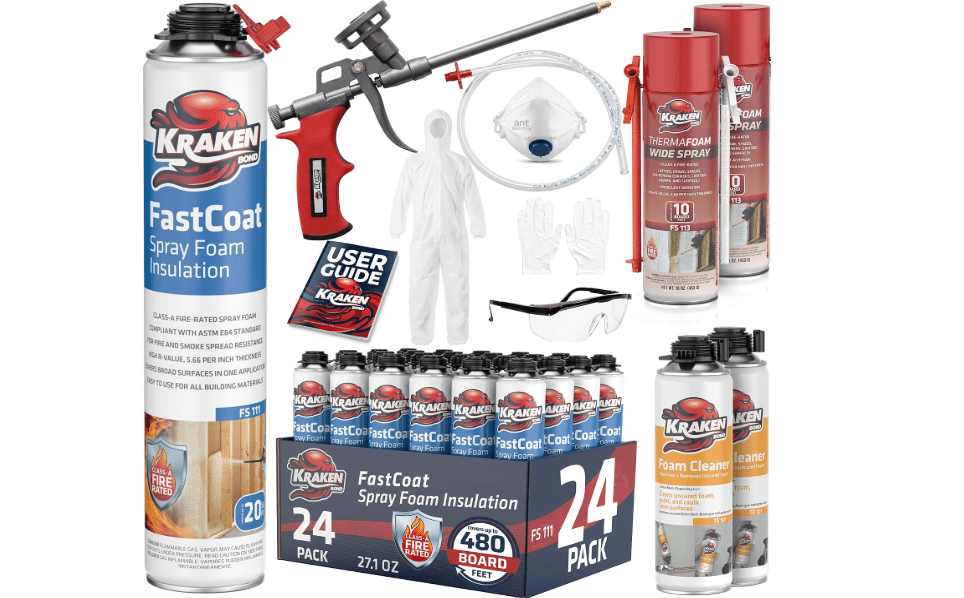
Product Description: Take standard polyethylene foam, put it outside in the summer sun, and it will turn into a crumbling, dusty mess in a matter of months. K-Flex Titan is a specialized elastomeric foam tube coated with a proprietary, co-extruded jacket specifically engineered to resist brutal UV rays and weather degradation.
Price:
Key Features and Benefits:
-
Built-in advanced UV protection prevents solar breakdown.
-
Tear-resistant outer jacket stands up to physical impacts and severe weather.
-
Maintains the extreme flexibility of standard elastomeric rubber.
Pros and Cons:
-
Pros: Will not crumble in the sun; stands up beautifully to accidental bumps from weed whackers; provides excellent R-value.
-
Cons: Noticeably higher cost than raw foam; harder to find locally in big-box hardware stores.
Amazon Customer Ratings and Reviews:
-
4.7/5 Stars. Users highlight its incredible longevity. Many reviewers note that after several years in direct sunlight, the K-Flex Titan still looks and performs exactly as it did on day one.
Why it’s a good choice: Outdoor plumbing requires outdoor-rated materials. The Titan jacket ensures this insulation lasts for years outdoors, saving you the hassle of re-insulating your exterior pipes every single autumn.
Ideal Use Case: Outdoor heat pump lines, exposed exterior AC refrigerant lines, and exterior plumbing constantly exposed to the sun.
10. Best Foil Tape for Sealing: Tesa Double-Sided Aluminum Foil Tape
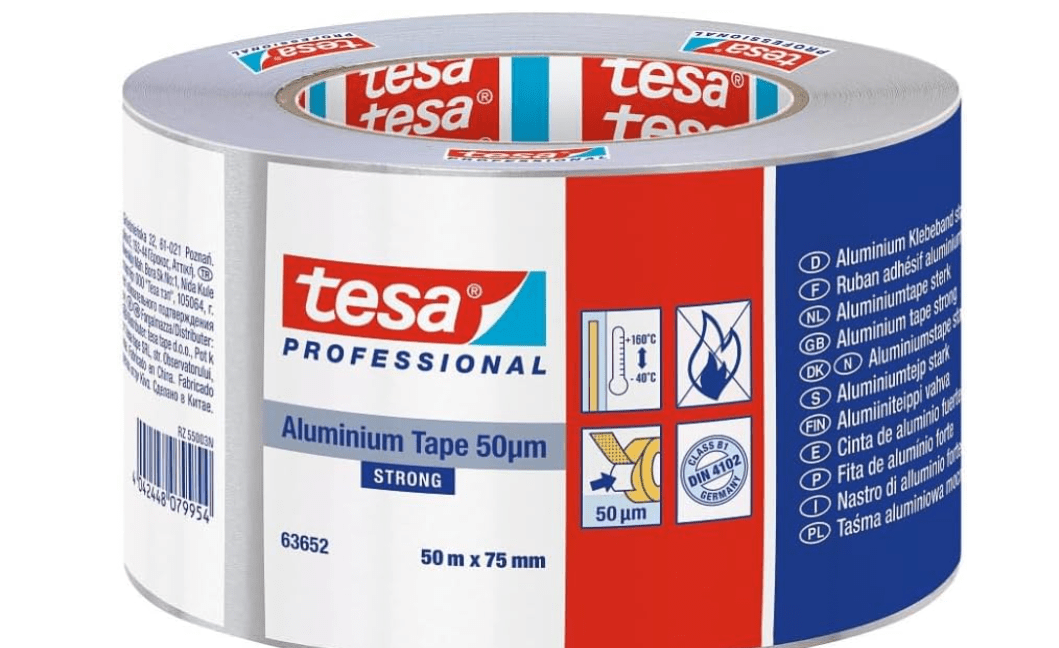
Product Description: While not an insulator on its own, your pipe insulation is only as effective as its weakest seam. Traditional duct tape eventually dries out, cracks, and peels away under temperature fluctuations. Tesa Aluminum Foil Tape is an industrial-strength sealing tape backed by an aggressive acrylic adhesive that bonds permanently to foam, fiberglass, and radiant wraps.
Price:
Key Features and Benefits:
-
Withstands extreme hot and cold temperature fluctuations without the adhesive failing.
-
Creates an entirely waterproof and airtight vapor seal.
-
The aluminum facing reflects heat and resists moisture penetration.
Pros and Cons:
-
Pros: Seals gaps completely and permanently; does not degrade over time like standard cloth tape; highly reflective.
-
Cons: The adhesive is so aggressive that if the tape folds back onto itself, it is nearly impossible to pull apart; easily crinkles if mishandled.
Amazon Customer Ratings and Reviews:
-
4.8/5 Stars. Customers rave about the incredible adhesion strength, often mentioning that it is the only tape they trust to seal their HVAC and plumbing insulation jobs securely.
Why it’s a good choice: Air gaps destroy insulation R-values. This tape is the mandatory finishing touch to ensure your wraps, tubes, and joints remain tightly sealed and fully optimized for years to come.
Ideal Use Case: Sealing the seams of foam tubes, securing the ends of reflective bubble wrap, patching torn vapor barriers, and wrapping end-caps.
V. Frequently Asked Questions (FAQ)
Should you insulate both hot and cold water pipes? Yes, but for entirely different reasons. Insulating hot water pipes prevents heat from escaping as the water travels from your heater to the faucet, significantly lowering your energy bills and providing faster hot water. Insulating cold water pipes protects them from freezing in the winter and prevents them from “sweating” (creating condensation) in humid summer environments, which stops mold growth and water damage.
Can I use pool noodles instead of pipe insulation? No. While they look similar to polyethylene foam tubes, pool noodles are highly flammable, lack proper thermal R-value ratings, and are not designed to withstand high heat or long-term moisture exposure. Always use code-compliant plumbing insulation to avoid fire hazards and ensure actual energy efficiency.
Do I need heat tape or just foam insulation? It depends on the pipe’s location. Foam insulation is passive; it only traps heat that already exists. If a water pipe is located in an unheated space (like a crawlspace or exterior wall) and experiences extended sub-zero temperatures with no water flowing, foam alone will not stop it from eventually freezing. In those deep-freeze scenarios, active heat tape (heating cables) is required to generate warmth and keep the water flowing.
How thick should pipe insulation be? Thickness determines the R-value. For indoor pipes in climate-controlled spaces, a standard 3/8-inch or 1/2-inch wall thickness is usually sufficient. For pipes in unheated basements, attics, or garages, upgrade to a 3/4-inch or 1-inch wall thickness. Always check your local building codes, as severe northern climates may require specific minimum R-values for unconditioned spaces.
Taking a weekend to assess your home’s plumbing and install the right insulation is one of the highest-ROI projects a homeowner can undertake. By choosing the right materials for your specific climate and pipe temperatures, you instantly safeguard your property against devastating winter bursts, eliminate summer condensation, and lock in lower monthly utility bills. Measure the diameter of your pipes, assess your home’s vulnerable cold zones, and invest in a high-quality insulation system today before the first deep freeze arrives.