
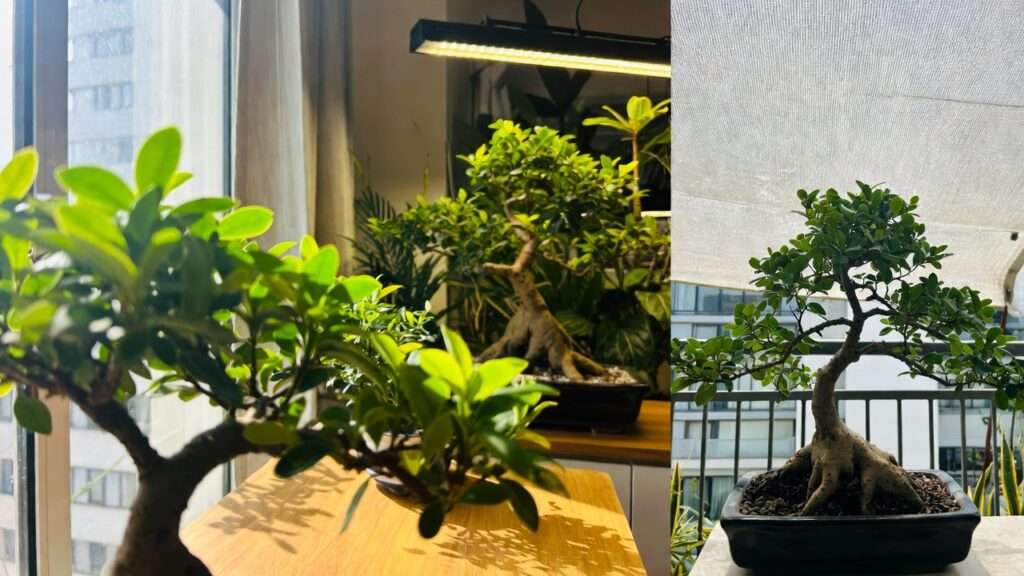
Have you ever poured your heart into caring for a beautiful bonsai—watering it meticulously, pruning with care—only to watch it grow weak, leggy, or drop leaves unexpectedly? 😔 The hidden reason is often lighting — one of the most overlooked yet crucial elements in bonsai success. Without the best lighting conditions for bonsai, even the hardiest tree struggles to photosynthesize properly, leading to stunted growth, pale foliage, or outright failure.
In my years of nurturing dozens of bonsai species—from resilient Ficus to sun-loving Junipers—I’ve seen firsthand how proper light transforms a mediocre tree into a vibrant, compact masterpiece. This ultimate guide dives deep into sunlight needs, indoor window strategies, grow light setups, species-specific advice, and common pitfalls to avoid. Whether you’re a beginner in a Dhaka apartment or an experienced enthusiast, you’ll discover practical solutions to give your bonsai the bright, balanced light it craves for thriving health. Let’s illuminate the path to bonsai perfection! 🌞
Why Lighting Matters More Than You Think for Bonsai Health
Light isn’t just “nice to have”—it’s the engine of life for your bonsai. Through photosynthesis, trees convert light energy into sugars for growth, strong branches, and dense foliage. Insufficient light causes etiolation (leggy, stretched growth with long internodes), weak ramification, and reduced vibrancy. Too much intense light, especially midday sun in hot climates, leads to leaf scorch, burnt tips, and stress 🔥.
Many beginners assume bonsai are delicate houseplants needing low light, but most species evolved outdoors under full sun. “Indoor bonsai” like Ficus or Jade are actually tropical/subtropical varieties that tolerate lower light better than temperate ones (like Pine or Maple), but they still crave bright conditions for optimal health. Proper lighting promotes compact form, smaller leaves, and that classic bonsai aesthetic we all love 🍃.
Signs of issues appear quickly: too little light shows as yellowing leaves, sparse growth, or pale color; excess causes crispy edges or browning. Fixing light early prevents irreversible damage!
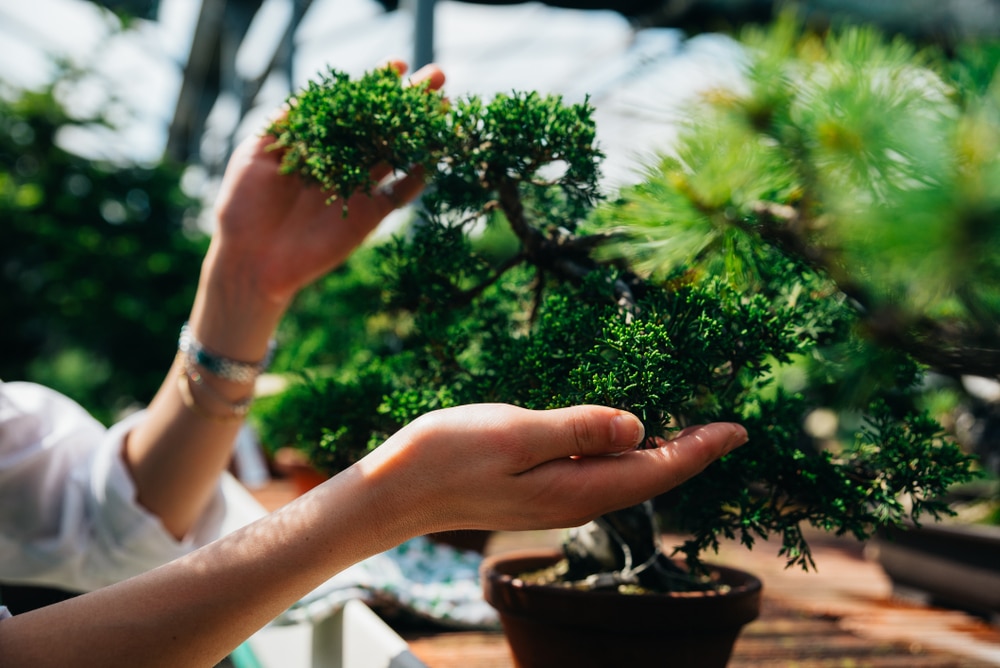
(These show healthy outdoor bonsai basking in ideal natural light—notice the vibrant, compact foliage!)
Understanding Bonsai Lighting Basics: Direct vs. Indirect, Intensity, and Duration
- Direct sunlight: Unfiltered rays from the sun—ideal for many species but can scorch in extreme heat.
- Indirect/bright light: Diffused or filtered through windows/sheer curtains—safer for indoor tropicals.
Intensity is measured in lux or PPFD (photosynthetic photon flux density). Outdoors, full sun hits 100,000+ lux; a bright south-facing window indoors might offer 5,000–20,000 lux—still far less!
General rule: Most bonsai need 4–8+ hours of bright light daily, with tropicals leaning toward 4–6 hours bright/indirect and temperate species craving 6–8+ hours direct. Seasons matter—longer in summer growth, shorter/protected in winter dormancy for temperate trees.
Use a free light meter app on your phone for quick checks—it’s eye-opening how dim indoor spots really are!
Best Lighting for Outdoor Bonsai Trees
Outdoor placement is the gold standard for most bonsai, mimicking natural habitats for seasonal cycles, stronger trunks, and better back-budding.
- Morning sun + afternoon shade is perfect in hot climates like Dhaka—morning rays energize without scorching midday heat 🌤️.
- Full-sun lovers (Juniper, Pine, Maple): 6–8+ hours direct sunlight for dense needles/foliage and vibrant colors.
- Rotate pots every few weeks for even growth on all sides.
- In summer extremes, use 30–50% shade cloth during peak hours to prevent burn.
Pro tip: Temperate species need full outdoor exposure year-round (except harsh winters—shelter from frost). They rarely thrive long-term indoors.

(Outdoor Pine bonsai thriving under bright sky—perfect example of direct sun benefits!)
Best Lighting Conditions for Indoor Bonsai – Window Placement Guide
Many start with indoor bonsai due to space—here’s how to maximize natural light 🏠.
- South-facing windows: Top choice! Provides longest, brightest exposure (often 6+ hours direct in clear weather).
- East-facing: Gentle morning sun—great for avoiding afternoon scorch.
- West-facing: Stronger afternoon light—good but watch for heat buildup.
- North-facing: Usually too dim—supplement immediately!
Place as close as possible to the window (within 1–2 feet). Use reflective surfaces (white walls/mirrors) to bounce extra light. For tropicals like Ficus, 4–6 hours bright/indirect works; move slightly back if scorching appears.
In low-light apartments, combine window + grow lights for best results.

(Beautiful indoor setups near windows—see how close placement maximizes light!)
Choosing the Right Bonsai Species for Your Lighting Situation
Match species to your available light—wrong choice dooms even expert care!
- High-light (outdoor/temperate): Juniper (6–8+ direct), Pine (full sun tolerant), Japanese Maple (bright but partial shade in heat), Elm — struggle indoors long-term.
- Medium-light tolerant (popular indoor): Ficus (4–6+ bright/indirect), Jade/Crassula (bright, can handle some direct), Fukien Tea (6–8 bright/indirect).
- Lower-light adaptable: Schefflera, Serissa — still need bright spots.
| Species | Min. Daily Light | Best Setup | Notes 🌳 |
|---|---|---|---|
| Juniper | 6–8+ hours direct | Outdoor full sun | Needs seasons; leggy indoors |
| Pine | 6–8+ hours direct | Outdoor full sun | Dense needles with strong light |
| Ficus | 4–6+ hours bright | South window or grow light | Forgiving tropical; popular |
| Jade (Crassula) | 4–6+ hours bright | Bright indirect/direct | Succulent; tolerates some shade |
| Maple | 6+ hours bright | Morning sun + shade | Stunning fall color outdoors |
Research your specific variety—local climate in Dhaka favors tropicals indoors with good light!
When Natural Light Isn’t Enough – Grow Lights for Bonsai Success 🌟
In places like Dhaka with shorter winter days, high humidity, or apartments with limited windows, natural light often falls short—especially during the cloudy monsoon season or shorter daylight hours. This is where grow lights become a game-changer for keeping your bonsai healthy and compact year-round ✨.
Signs you need supplemental lighting include:
- Leggy, stretched branches (etiolation)
- Smaller, paler leaves
- Slow or no new growth
- Leaf drop in lower canopy
Full-spectrum LED grow lights are the top choice today—efficient, low-heat, and mimicking natural sunlight with high PAR (Photosynthetically Active Radiation) values. Avoid cheap “plant bulbs” that lack proper spectrum; they waste energy and deliver poor results.
Key specs to look for:
- Color temperature: 5000–6500K (daylight white, not pink/purple grow lights unless for flowering)
- PPFD output: 200–400 µmol/m²/s at canopy level for most bonsai
- Wattage: 20–50W per small/medium tree; scale up for collections
- Coverage: 12–18 inches above canopy, adjustable height
Setup tips:
- Hang or clip lights 6–12 inches above the tree (closer for seedlings, farther to avoid burn)
- Use a timer: 12–16 hours/day for indoor-only trees (mimic long summer days)
- Rotate weekly for even exposure
- Combine with natural light when possible—e.g., window during day + lights in evening/morning
Popular beginner-friendly options include SANSI or Spider Farmer full-spectrum panels, or affordable clip-on LEDs from brands like Roleadro. In my own collection, switching to quality LEDs during Dhaka’s low-light months doubled winter growth on Ficus and Jade trees!
(These showcase real indoor bonsai setups under LED lights—notice the vibrant foliage and even growth!)
Common Lighting Mistakes Bonsai Owners Make (and How to Fix Them)
Even experienced growers slip up—here are the top pitfalls I’ve seen (and corrected) over the years:
- Mistake: Treating all bonsai as low-light houseplants Fix: Research species first—most need bright to full sun. “Indoor” labels are marketing; true indoor survival is rare without strong light.
- Mistake: Placing trees too far from windows Fix: Get within 1 foot of glass. Light intensity drops dramatically with distance (inverse square law!).
- Mistake: Using weak or wrong-spectrum artificial lights Fix: Upgrade to full-spectrum LEDs ≥5000K. Test with a phone light meter app.
- Mistake: No seasonal adjustments Fix: Reduce hours to 8–10 in winter for temperate trees (mimic dormancy); increase for tropicals.
- Mistake: Sudden direct sun exposure after low light Fix: Acclimate gradually over 1–2 weeks to prevent shock/scorch.
Avoid these, and you’ll see dramatic improvements in health and aesthetics 🍃.
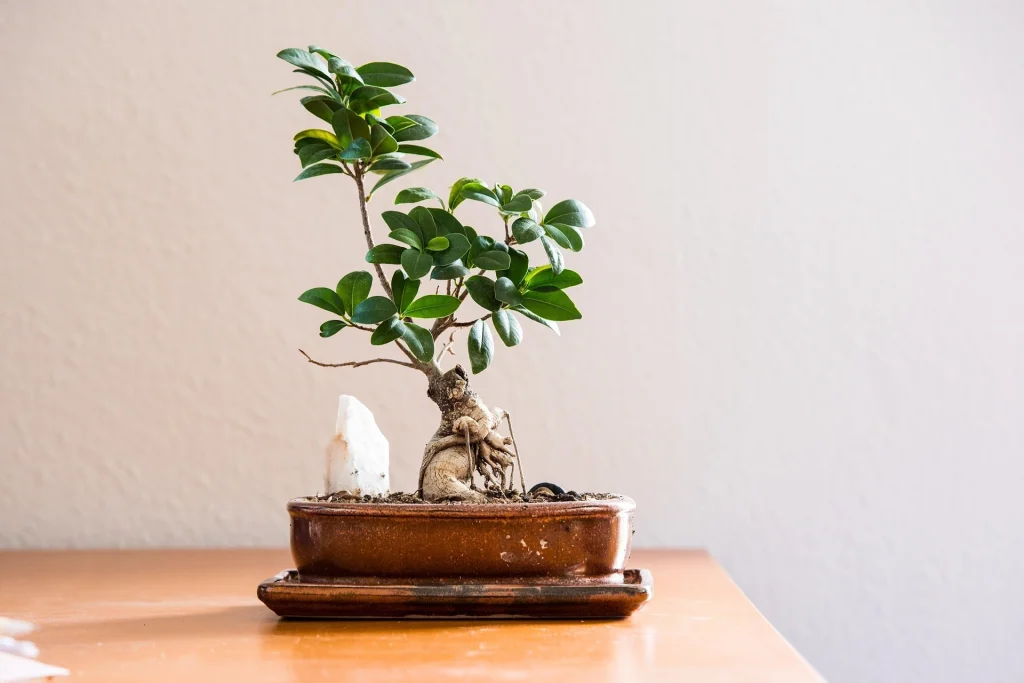
(Healthy compact bonsai vs. signs of light stress—proper conditions make all the difference!)
Step-by-Step: Optimizing Lighting for Your Specific Bonsai
Follow this checklist for quick wins:
- Identify your species and its light needs (use the table above).
- Measure current light: Use a free lux meter app—aim for 5,000+ lux minimum indoors.
- Choose best spot: South window priority; supplement if below target.
- Adjust seasonally: More in growth phase (spring/summer), protect/shade in peak heat.
- Monitor response: Watch new growth—compact internodes and rich color = success!
- Troubleshoot: If issues persist, add grow lights or move outdoors temporarily.
Simple text flowchart example:
- Enough natural light? → Yes → Monitor & rotate
- No → Add grow lights → Set timer & height → Check weekly
Expert Tips and Advanced Lighting Strategies
- Rotation ritual: Turn trees 90–180° every 7–10 days for symmetrical branching.
- Hybrid lighting: Use morning/afternoon natural + evening grow lights for extended “day” without heat stress.
- Acclimation protocol: When transitioning outdoors in spring, start in dappled shade, increase exposure daily.
- Personal insight: In humid Dhaka conditions, I pair bright south windows with oscillating fans under lights to prevent fungal issues and strengthen trunks.
These small tweaks create pro-level results 🌿.
Frequently Asked Questions (FAQs) ❓
Here are the most common lighting questions I receive from bonsai enthusiasts in Dhaka and around the world—answered with practical, experience-based advice:
How many hours of light do bonsai need exactly? It depends on the species:
- Temperate/outdoor types (Juniper, Pine, Maple): 6–8+ hours of direct or very bright light daily.
- Tropical indoor favorites (Ficus, Jade, Fukien Tea): 4–6+ hours of bright indirect light, or 6–8 hours under grow lights. Aim for the higher end during active growing seasons (spring–fall) and slightly less in winter for temperate species to encourage rest.
Can bonsai survive on artificial light alone? Yes—many tropical bonsai thrive exclusively under quality full-spectrum LED grow lights, especially in low-natural-light apartments or during Dhaka’s cloudy monsoon months. Temperate species struggle long-term without natural seasonal cues and full outdoor sun, but can be maintained indoors with powerful lights (16 hours/day) during winter.
What’s the best grow light for beginners on a budget? Start with a 20–40W full-spectrum LED clip-on or panel (5000–6500K, high PAR output) from reliable brands like SANSI, Roleadro, or Spider Farmer. Position 6–12 inches above the canopy and run 12–16 hours daily. Avoid pink/purple “blurple” lights—they’re less effective for foliage growth.
Do outdoor bonsai need shade in summer? In hot, humid climates like Dhaka (where temperatures often exceed 35°C), yes—provide 30–50% shade cloth or dappled afternoon shade during peak summer to prevent leaf scorch on sensitive species (e.g., Japanese Maple, younger Junipers). Full-sun lovers like Pines and some Elms usually handle direct sun fine if well-watered.
How do I know if my bonsai is getting enough light? Look for these positive signs: compact internodes (short spaces between leaves), rich green (or species-appropriate) color, steady new growth, and strong budding even on inner branches. Negative signs include pale/yellow leaves, long leggy shoots, sparse lower foliage, and weak overall vigor. A cheap lux meter app reading below 5,000–8,000 lux indoors usually means supplementation is needed.
Is morning sun better than afternoon sun for bonsai? Generally yes—morning sun is gentler, less likely to cause heat stress, and provides strong light when temperatures are cooler. Afternoon sun is more intense and hotter, so in tropical/subtropical areas, many growers prefer morning + partial afternoon shade.
Can too much artificial light burn my bonsai? Yes—especially if lights are too close (<6 inches) or too powerful without proper distance. LEDs run cool, but high-intensity ones can still cause bleaching or crispy tips if hung too low. Always start farther away and adjust based on leaf response.
Should I rotate my bonsai even under grow lights? Absolutely! Even the best grow lights have slight hot spots or uneven coverage. Rotate 90–180° every 7–10 days to promote symmetrical growth and prevent the tree from leaning toward the light source.
Conclusion: Light Up Your Bonsai Journey Today 🌞🌱
Mastering the best lighting conditions for bonsai is one of the fastest ways to transform average trees into stunning, healthy mini-landscapes. Whether you have a sunny balcony in Dhaka, a bright south-facing window, or rely on grow lights during the rainy season, the key principles remain the same:
- Match light intensity and duration to your species’ natural habitat
- Prioritize bright, direct light when possible (outdoors or near windows)
- Supplement intelligently with full-spectrum LEDs when natural light falls short
- Observe your tree closely—new growth tells you everything you need to know
Small adjustments—like moving a Ficus 30 cm closer to the window, adding a timer-controlled grow light for winter, or shading a Juniper during brutal midday heat—can yield dramatic improvements in compactness, color, and vigor within weeks.
Take a moment right now: assess your bonsai’s current spot, check its species light needs, and make one simple change today. You’ll be amazed at the difference proper lighting makes.
Have questions about your specific tree or setup? Drop a comment below—I’d love to help you troubleshoot and share more tips! Happy growing, and may your bonsai always bask in the perfect glow ✨🍃











