
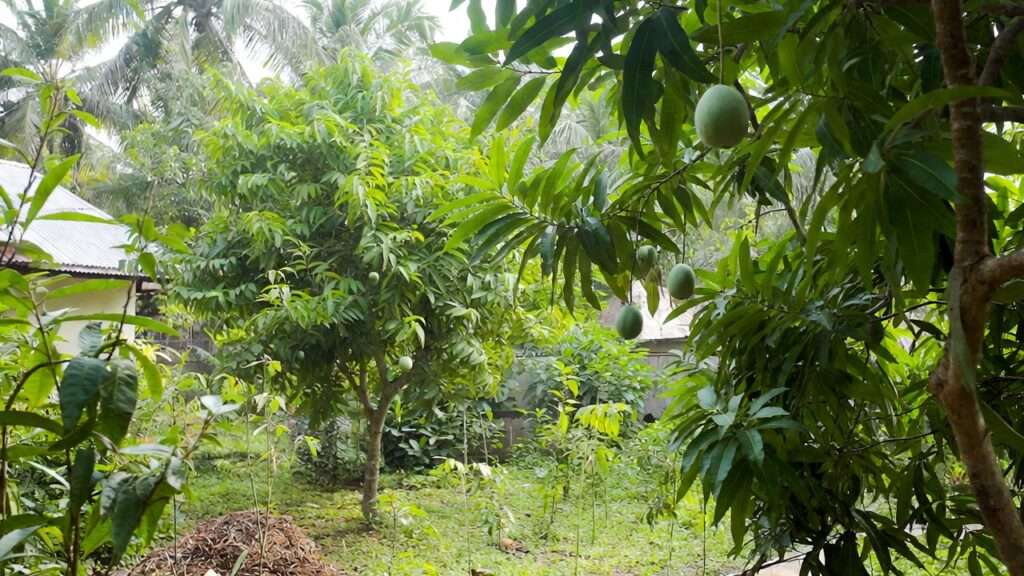
Imagine stepping into your backyard orchard, the air sweet with the scent of ripening peaches, apples heavy on the branches, and every bite bursting with juicy, homegrown flavor. 🍑 Now picture the disappointment when your trees produce only a handful of small, bland fruits—or worse, none at all. 😔 For many home gardeners and small-scale orchard keepers, this is a frustrating reality. The good news? The best organic fertilizers for fruit trees can transform lackluster trees into abundant producers, delivering bigger, tastier, and healthier harvests without relying on synthetic chemicals.
Organic fertilization builds living soil teeming with beneficial microbes, improves nutrient uptake slowly and sustainably, and supports long-term tree resilience against pests, diseases, and environmental stress. 🌱🦠 In this comprehensive guide, we’ll explore why fruit trees thrive with natural nutrition, the top-recommended organic options (backed by extension services, grower experiences, and recent trends), precise application techniques, homemade recipes, and pro tips to avoid common pitfalls. Whether you’re growing apples, citrus, stone fruits, or tropical varieties in your garden, these strategies will help you unlock massive yields and vibrant tree health. Let’s dive in and get your fruit trees thriving! 🌟
Why Fruit Trees Need Organic Fertilization (And When They Don’t) 🤔
Fruit trees are nutrient-hungry plants, but they don’t always need heavy feeding. Nitrogen (N) drives vigorous leaf and shoot growth, phosphorus (P) supports strong roots and flower/fruit set, and potassium (K) enhances fruit quality, flavor, disease resistance, and drought tolerance. Micronutrients like calcium (prevents issues like bitter pit in apples), magnesium, zinc, and iron are equally vital for overall vitality.
Signs your trees need feeding include:
- Annual shoot growth less than 8–12 inches (young trees) or 6–10 inches (mature ones)
- Pale, small, or yellowing leaves
- Sparse flowering or low fruit set
- Small, poorly colored, or bland-tasting fruit 🍏
However, over-fertilizing is a common mistake—it leads to excessive leafy growth at the expense of fruit, increases pest susceptibility, and can burn roots. Always start with a soil test (pH ideally 6.0–7.0 for most fruit trees) to check nutrient levels and avoid unnecessary applications. 🧪
Organic fertilizers shine here: They release nutrients gradually as soil microbes break them down, feed the soil food web, improve structure and water retention, reduce chemical runoff, and promote eco-friendly gardening. 🌍 Studies and extension recommendations (from sources like university programs) show organically managed trees often develop deeper roots, better drought resistance, and superior fruit flavor compared to synthetically fed ones.
Understanding NPK and Organic Sources 📊
Organic fertilizers typically have lower NPK numbers than synthetics (e.g., 4-6-2 vs. 10-10-10), but they provide balanced, slow-release nutrition plus trace elements and organic matter.
Key organic sources include:
- Nitrogen (N): Blood meal (12-0-0, fast-acting), feather meal (12-0-0, slow), soybean meal (7-2-1), alfalfa meal (2-1-2, soil-building)
- Phosphorus (P): Bone meal (3-15-0), rock phosphate (0-3-0, very slow)
- Potassium (K): Kelp/seaweed meal (1-0-4+), wood ash (0-0-5, use sparingly to avoid pH spikes), greensand (0-0-3+ trace minerals)
- Calcium & Micronutrients: Oyster shell flour, gypsum, or kelp for preventing deficiencies like blossom end rot in some fruits
Combining these creates customized blends tailored to your trees’ needs.
Top 10 Best Organic Fertilizers for Fruit Trees 🏆
Here’s a curated list of the most effective, widely recommended organic options based on grower results, OMRI-listed products, extension advice, and real-world performance for bigger, healthier harvests.
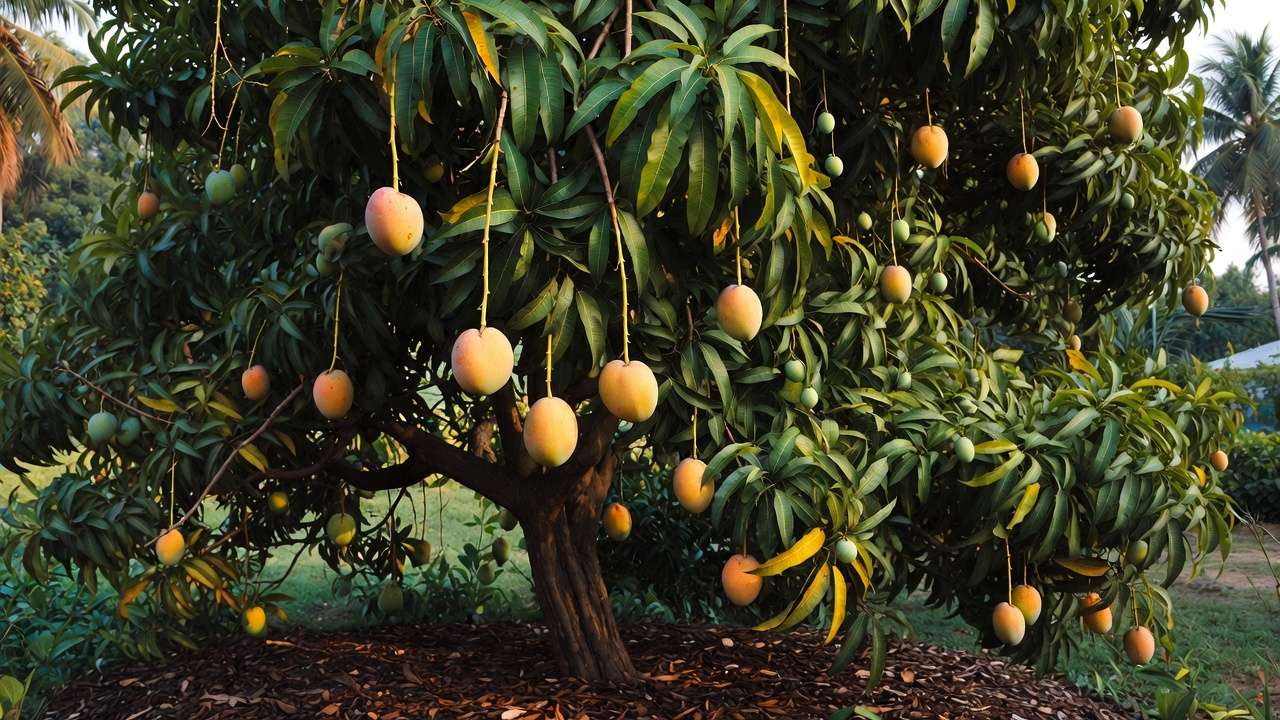
- Compost / Aged Manure (homemade or high-quality) – The #1 foundation 🌿🐄 Nothing beats well-aged compost or manure for building soil biology and providing balanced, slow-release nutrients (approx. 1-1-1). Apply 2–4 inches as mulch annually under the drip line. Boosts microbial life, improves drainage in clay soils, and consistently leads to healthier trees and tastier fruit.
- Down To Earth Fruit Tree Fertilizer (6-2-4) – OMRI-listed favorite for balanced feeding A go-to granular blend with fish bone meal, feather meal, and langbeinite. Excellent for apples, pears, plums, and tropicals. Promotes steady growth and abundant fruiting without excess foliage.
- Dr. Earth Natural Wonder / Fruit Tree Fertilizer – Probiotics + mycorrhizae for explosive root health 🦠 Features beneficial microbes, mycorrhizae, and a 3-2-1 or similar blend. Users report stronger roots, better nutrient uptake, and noticeably larger harvests—ideal for peaches, citrus, and avocados.
- True Organic Fruit & Nut Tree Food – Slow-release, versatile for all fruits 100% organic with a balanced formula suited to peach, cherry, lemon, walnut, and apple trees. Slow nutrient release supports season-long health and quality fruit.
- Blood Meal or Feather Meal – High-N quick/slow boost for young/vigorous trees Blood meal (fast) revives weak trees; feather meal (slow) prevents lush-but-fruitless growth. Great for young trees needing establishment.
- Soybean Meal or Alfalfa Meal – Plant-based, soil-building nitrogen Soybean (7-2-1) feeds gradually and enriches soil; alfalfa adds triacontanol for growth stimulation. Excellent eco-friendly choice.
- Fish Emulsion / Liquid Kelp – Foliar or soil drench for micronutrients + quick uptake 🌊 Fish emulsion (5-1-1) gives fast N boost; kelp adds trace elements and growth hormones. Spray leaves or drench soil during key stages like bloom or fruit set.
- Chicken Manure (pelletized, composted) – Classic slow-release powerhouse (e.g., Sup’R Green) High in N and slow-release; composted versions avoid burn. A staple for steady spring growth.
- Worm Castings + Compost Tea – Ultimate microbial booster 🪱 Worm castings (1-0-0+) teem with microbes; brew aerated compost tea for foliar/root drench. Transforms soil health and fruit quality.
- Specialty Blends (e.g., citrus-specific or homemade with bone meal + kelp) Citrus mixes often include extra micronutrients; custom blends allow tailoring (e.g., higher K for tropicals).
For each, apply per label or soil test—start conservatively for best results.
How to Choose the Right Organic Fertilizer for Your Fruit Trees 🧐
- By tree type: Apples/pears prefer moderate N (focus on balanced); stone fruits (peaches, plums) like higher early N; citrus needs balanced + micronutrients (iron, zinc); tropicals thrive on potassium-heavy feeds.
- By age/stage: Young trees (1–3 years) prioritize growth (higher N); mature trees focus on fruit quality (balanced or lower N).
- Soil test first: Adjust pH if needed (most fruit trees dislike extremes) and address deficiencies.
When and How to Apply Organic Fertilizers (Timing & Techniques) ⏰🌱
Timing is everything when feeding fruit trees organically. Applying at the wrong time can waste nutrients, encourage tender late-season growth vulnerable to frost, or even reduce next year’s fruiting.
Best Application Windows
- Primary feeding: Early spring, just as buds begin to swell but before full bloom (typically late February to early April in most temperate zones, or adjusted for your local climate). This supports new shoot growth, flowering, and fruit set when trees have the highest demand.
- Secondary/light feeding: Late spring to early summer (May–June), after fruit has set and is pea-sized. A lighter application here sustains fruit development without pushing excessive vegetative growth.
- Avoid: Mid-to-late summer (July onward) and fall. Late feeding stimulates new shoots that won’t harden before winter, increasing risk of cold damage and next year’s lower yields.
How Much to Apply Use your soil test and tree size as guides rather than blanket rates. A general rule of thumb for mature fruit trees (trunk diameter measured 4–6 inches above soil):
- Apply 0.1–0.2 pounds of actual nitrogen (N) per year of tree age or per inch of trunk diameter (whichever is smaller).
- Example: A 10-year-old apple tree with a 4-inch trunk might receive 0.4–0.8 lb actual N annually.
Convert to organic product amounts:
- Compost/manure: 20–40 lb per mature tree (spread as mulch)
- Granular blends (e.g., 6-2-4): 4–8 lb per mature tree
- Blood meal (12-0-0): 1–2 lb per mature tree Always divide total annual amount: 60–70% in early spring, 30–40% in late spring/early summer.
Application Techniques
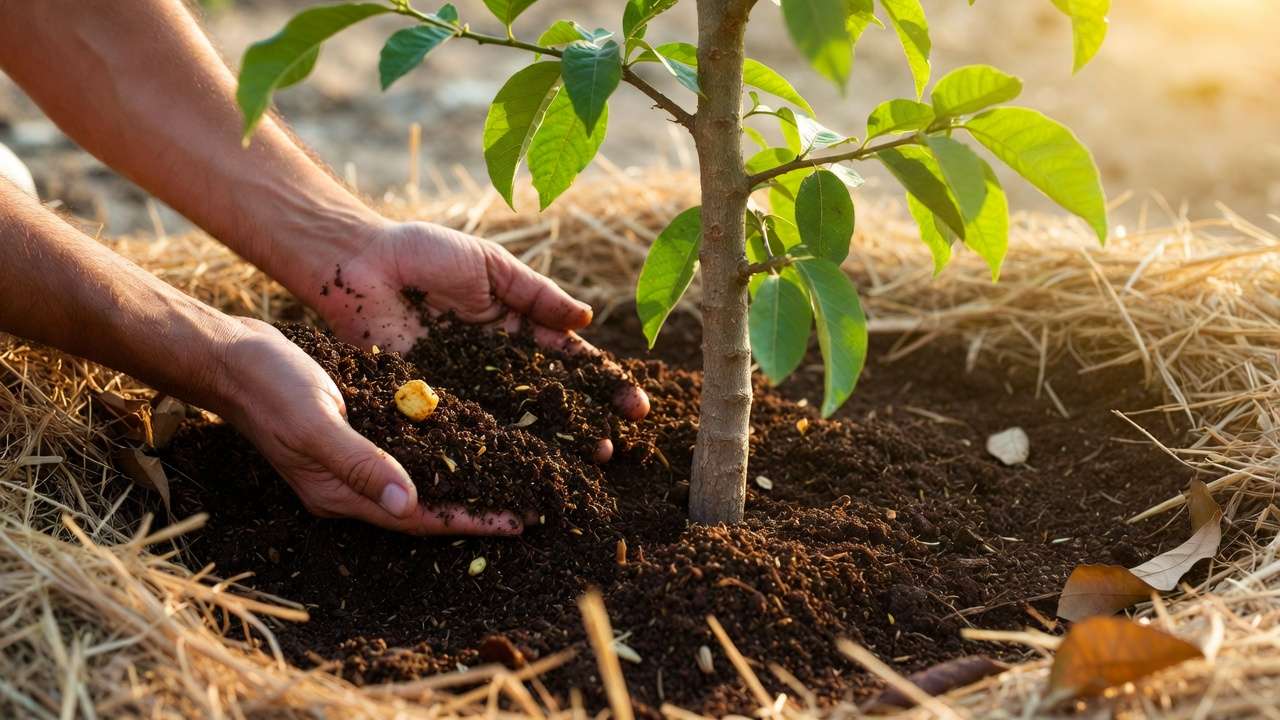
- Broadcast under the drip line 🌳 Spread evenly from the trunk out to (and slightly beyond) the drip line—the outer edge of the canopy where feeder roots are most active. Never pile fertilizer against the trunk (causes rot).
- Water in thoroughly 💧 After spreading, water deeply to move nutrients into the root zone. Organic materials need soil moisture and microbial activity to release nutrients.
- Top with mulch 🍂 Cover fertilized area with 2–4 inches of organic mulch (wood chips, straw, compost). This retains moisture, suppresses weeds, moderates soil temperature, and feeds microbes as it decomposes.
- Foliar sprays (supplemental) 🌿 Diluted fish emulsion or liquid kelp can be sprayed on leaves during early growth, bloom, or fruit sizing for quick micronutrient uptake—especially useful for zinc, iron, or magnesium deficiencies. Apply early morning or late afternoon to avoid leaf burn.
Pro Tip: In regions with heavy spring rains, split applications further to prevent leaching. In dry climates, combine fertilizing with irrigation for best results.
Homemade Organic Fertilizer Recipes for Fruit Trees 🏡
Making your own fertilizers saves money, recycles kitchen/yard waste, and lets you customize nutrition. Here are reliable, easy recipes gardeners love:
- Basic Compost Tea (All-Purpose Booster) 🍵
- Fill a 5-gallon bucket ⅓ full with finished compost or aged manure
- Top with water, stir well, let steep 3–7 days (stir daily; aerate with an aquarium pump for better results)
- Strain and dilute 1:10 with water
- Use as soil drench or foliar spray every 2–4 weeks in growing season. Rich in microbes and soluble nutrients.
- Banana Peel Potassium & Calcium Mix 🍌🥚
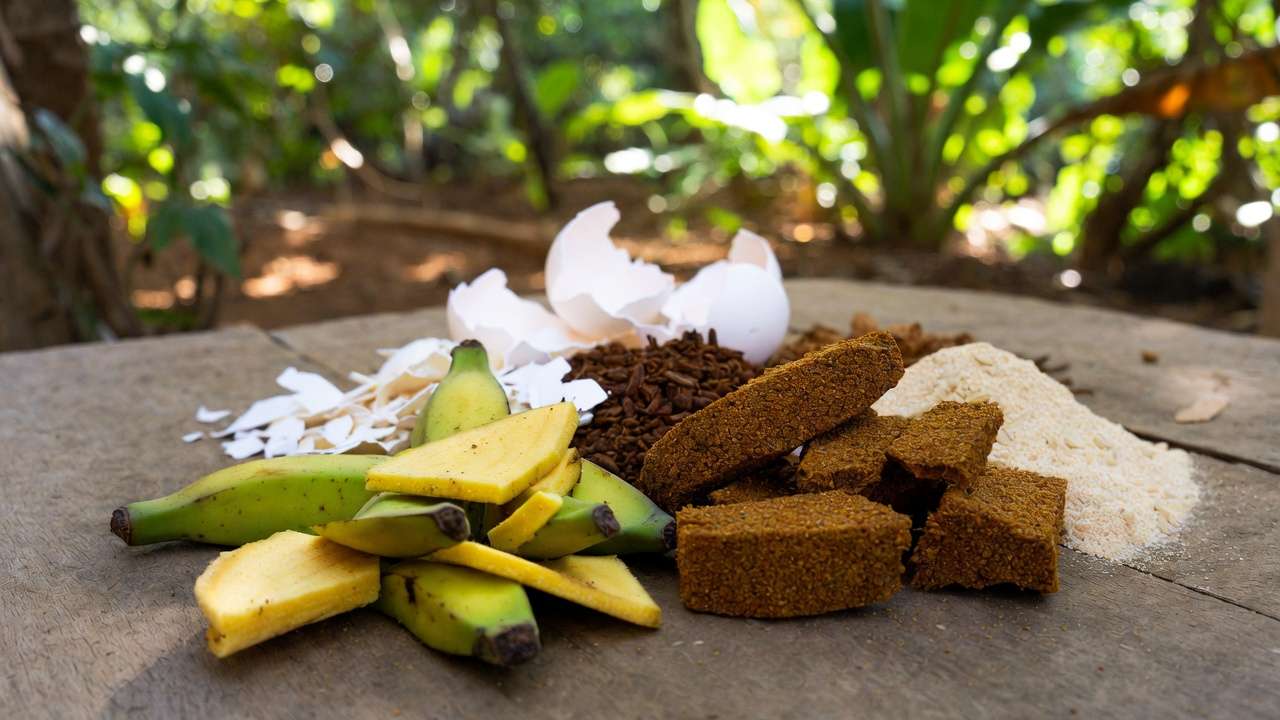
- Chop 4–5 banana peels + 6–8 clean, dried, crushed eggshells
- Bury shallowly around drip line or soak in water 1–2 weeks for liquid feed
- Great potassium/calcium boost for fruit sizing and preventing issues like bitter pit or blossom end rot.
- Alfalfa Meal Growth Stimulant 🌿
- Sprinkle 2–4 cups alfalfa meal under drip line in spring
- Or make tea: 1 cup alfalfa meal per gallon water, steep 3–5 days, dilute 1:10
- Contains natural growth hormones (triacontanol) that encourage strong shoots and flowering.
Important Safety Note: Always use fully composted materials to kill pathogens (especially manure). Avoid fresh chicken or horse manure directly on trees.
Common Mistakes to Avoid + Troubleshooting ⚠️
Even experienced gardeners slip up—here are the most frequent issues and fixes:
- Over-fertilizing → lush green leaves, few/no fruits, soft growth Fix: Reduce amounts, focus on balanced or lower-N feeds, and prune excess growth.
- Late-season feeding → winter dieback, reduced next-year buds Fix: Stop all feeding by mid-summer.
- Wrong pH or ignoring micronutrients → yellow leaves (chlorosis), poor fruit quality Fix: Soil test every 2–3 years; add sulfur to lower pH or lime to raise it; use kelp/fish for trace elements.
- Fertilizer burn → brown leaf tips/edges Fix: Water heavily immediately and reduce future doses.
- Applying only one product forever → nutrient imbalances over time Fix: Rotate sources (compost one year, balanced blend the next) and monitor tree response.
FAQs About Organic Fertilizers for Fruit Trees ❓
Is plain compost enough for fruit trees? Often yes—for maintenance on healthy soil. Add targeted boosts (kelp, bone meal) if fruit quality or growth lags.
What’s the best organic fertilizer for citrus trees? Balanced blends like Down To Earth or Dr. Earth, plus extra micronutrients via liquid kelp/fish emulsion. Citrus love slightly acidic soil (pH 6.0–6.5).
How often should I fertilize fruit trees organically? 1–2 times per year (early spring + optional light summer feed) is usually sufficient. Watch tree response rather than the calendar.
Are these safe for edible fruit? Yes—stick to OMRI-listed or fully composted materials, and observe any waiting periods on labels (most organics have none).
Can I use coffee grounds? Sparingly—they’re mildly acidic and add nitrogen, but too much can compact soil. Mix into compost first.
My young tree isn’t growing much—help! Give higher-N organics (blood meal, fish emulsion) in spring, ensure good watering/mulch, and check for root competition or pests.
Do organic fertilizers attract pests? Rarely—healthy, balanced feeding actually reduces pest pressure by making trees more resilient. Avoid fresh manure near trunks.
Conclusion 🌟🍏
Choosing and using the best organic fertilizers for fruit trees is one of the most rewarding steps you can take as a home gardener or small-scale orchard keeper. By feeding your trees with high-quality compost, trusted OMRI-listed blends like Down To Earth or Dr. Earth, nutrient-rich fish emulsion and kelp, or simple homemade recipes, you’re doing far more than just adding N-P-K—you’re nurturing an entire living soil ecosystem that supports stronger roots, more resilient trees, better disease resistance, and—most importantly—bigger, juicier, more flavorful harvests year after year. 🍑🍒
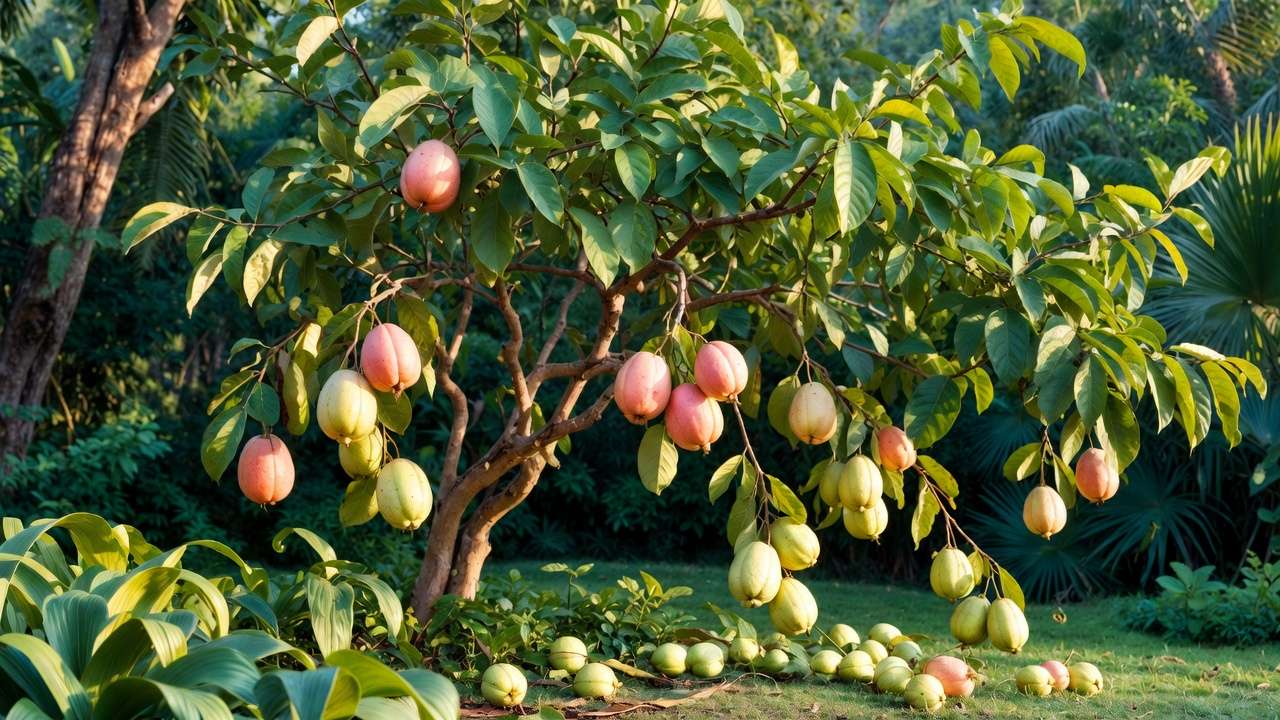
The difference shows up in the details: apples that snap with crisp sweetness instead of mealy texture, peaches that drip juice down your chin, citrus that actually tastes like sunshine. These results come from patience, observation, and consistent natural care rather than quick-fix chemicals.
Your Next Steps – Start Small & Observe
- Get a basic soil test this season (many local extension offices or affordable mail-in kits make it easy).
- Pick 2–3 options from the top 10 list that match your tree types, age, and growing conditions.
- Apply correctly in early spring, mulch generously, and keep notes on what you see: new shoot length, leaf color, fruit set, taste at harvest.
- Adjust next year based on what your trees are telling you. Gardening is an ongoing conversation with nature! 🌱
You don’t need a huge budget or fancy products—just thoughtful, organic inputs and a little attention. The reward? A backyard (or front-yard) filled with abundant, homegrown fruit you can be truly proud of.
Have you already tried any of these organic fertilizers? Which fruit trees are you growing, and what results have you seen? Drop a comment below—I’d love to hear your experiences and answer any follow-up questions! Happy growing! 🌳💚











