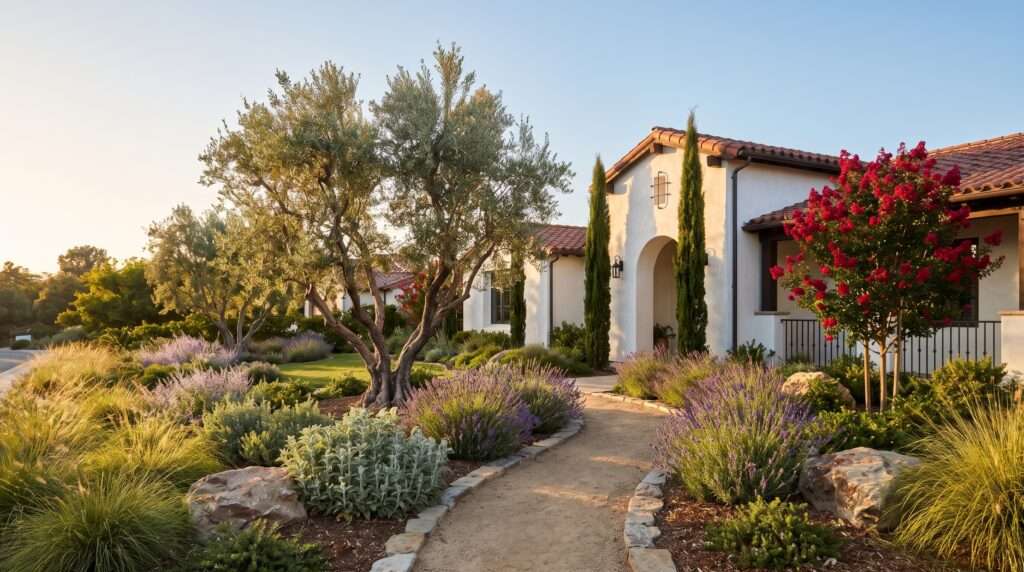
Planting the wrong tree in a California front yard is an expensive mistake that plays out in slow motion. One brutal summer heatwave can scorch a thirsty sapling, aggressive roots can crack sidewalks or invade sewer lines, and messy seed pods can trigger an HOA violation right alongside a sky-high water bill. Narrowing down the best 10 tree for front yard california homeowners can actually rely on means looking past pretty nursery photos and focusing on real-world survival.
The core challenge is balancing instant curb appeal and cooling shade with California’s demanding growing conditions. Between strict municipal water restrictions, compact suburban lot sizes, and wildly different microclimates—ranging from cool, foggy coastal strips to 105°F inland valleys—a tree that thrives in Northern California can quickly wither in a sun-baked Southern California lawn. You need a front yard focal point that elevates your property value without demanding daily irrigation, heavy pruning, or constant sidewalk cleanup.
To take the guesswork out of landscaping, we analyzed dozens of popular live-tree varieties and narrowed the field to the most reliable performers available from top-rated live-plant nurseries on Amazon. Every recommendation on this list was vetted against five strict criteria:
-
Proven Drought Tolerance: Ability to thrive on minimal supplemental water once established.
-
Root-System Safety: Non-invasive root habits that won’t buckle driveways, lift concrete walkways, or threaten underground sewer lines.
-
Microclimate Adaptability: Strong performance across California’s diverse USDA Hardiness Zones and Sunset Climate Zones.
-
Low Litter & Maintenance: Clean growth habits that keep parked cars, front steps, and HOA inspectors happy.
-
Verified Buyer Satisfaction: Consistent Amazon customer ratings reflecting careful nursery packaging, healthy root systems on arrival, and high first-year survival rates.
Whether you are framing a narrow coastal entryway or adding shade to a scorching inland yard, these ten picks deliver lasting California curb appeal without the usual landscaping headaches.
Quick Picks – Our Top 3 Front Yard Trees for California
If you want a fast, confident recommendation without reading every single review, start with our top three standouts:
-
Best Overall Curb Appeal: Arbequina Olive Tree — Delivers iconic silvery-green Mediterranean foliage, thrives on minimal water, and stays compact enough for suburban front yards.
-
Best Flowering Accent: Dynamite Red Crape Myrtle — Explodes with cherry-red blooms in scorching summer heat while keeping its root system safe near driveways and sidewalks.
-
Best Native Drought-Tolerant Tree: Western Redbud — A true California native with electric magenta spring blooms, pollinator appeal, and virtually zero summer watering needs once established.
Side-by-Side Comparison Table
In-Depth Reviews – The Best 10 Trees for a California Front Yard
1. Arbequina Olive Tree (Olea europaea) – Best Overall Mediterranean Curb Appeal
Product Description
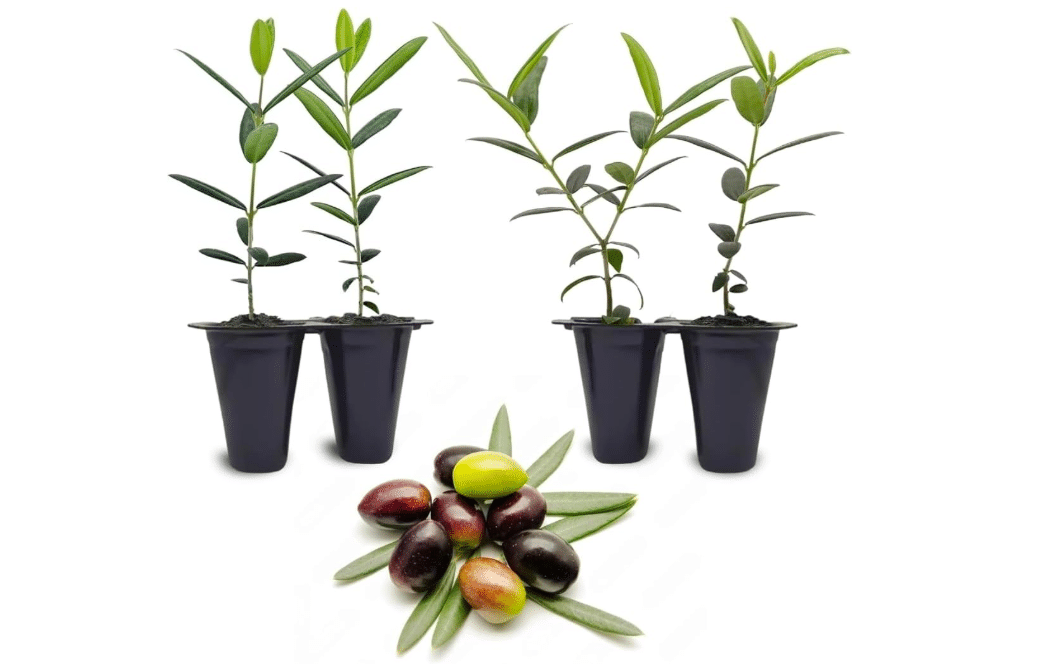
Nothing says “California estate” quite like the windswept silhouette of an olive tree. The Arbequina Olive Tree brings high-end Mediterranean architecture to everyday suburban front yards without the massive footprint of older heirloom varieties. Its narrow, willow-like evergreen leaves shimmer with a muted silvery-green underside that catches the afternoon sun and pairs effortlessly with stucco, modern farmhouse, Spanish Revival, and minimalist landscaping. As it matures, the trunk develops a sculptural, gnarled character that looks like it belongs in a Napa Valley vineyard. Unlike many ornamental trees that look bare for four months out of the year, the Arbequina keeps your front yard lush and structured all twelve months.
Price of the Product
$120.00
Key Features and Benefits
-
USDA Hardiness Zones: 8–11 (thrives across nearly all of Coastal, Southern, and Central Valley California).
-
Self-Pollinating: Produces small, mild, buttery olives on its own without needing a second tree (or can be lightly sprayed in spring if you prefer zero fruit).
-
Extreme Drought Tolerance: Once its root system establishes after year one, it handles dry California summers with deep, infrequent watering.
-
Container & In-Ground Versatility: Can be planted directly in the lawn or kept dwarfed in a large ceramic front-porch planter.
-
Non-Invasive Roots: Fibrous, well-behaved root system that rarely disturbs nearby walkways or driveways.
Pros and Cons
-
Pros:
-
Year-round evergreen foliage with unmatched architectural style.
-
Thrives in poor, rocky, or sandy California soils as long as drainage is good.
-
Naturally pest- and disease-resistant with minimal pruning required.
-
Tolerates coastal salt spray and triple-digit inland heat equally well.
-
-
Cons:
-
Ripening olives can stain concrete if planted directly over a driveway or walkway.
-
Slow-to-moderate growth rate (1–2 feet per year) requires patience if you buy a 1-gallon starter.
-
Does not tolerate soggy, poorly drained clay soil.
-
Amazon Customer Ratings and Reviews
4.5 out of 5 stars (based on hundreds of verified live-nursery reviews). Buyers consistently praise the sturdy packaging, intact soil plugs, and vibrant grey-green leaves upon arrival. Several California homeowners note that their 2- to 3-foot saplings doubled in fullness within their first two growing seasons, though a few reviewers recommend avoiding winter shipping to colder Northern California foothills until frost passes.
Why It’s a Good Choice for California Front Yards
California shares the exact Mediterranean climate where olive trees evolved over thousands of years. It handles hot, bone-dry summers and mild, wet winters without flinching, cutting your irrigation needs while instantly boosting your home’s perceived value.
Ideal Use Case / Who Should Buy It
Homeowners with sunny, well-drained front yards—especially those with Spanish, Mediterranean, or modern desert landscaping—who want a low-water, evergreen centerpiece that looks expensive year-round.
2. Dynamite Red Crape Myrtle (Lagerstroemia indica) – Best for Summer-Long Color
Product Description
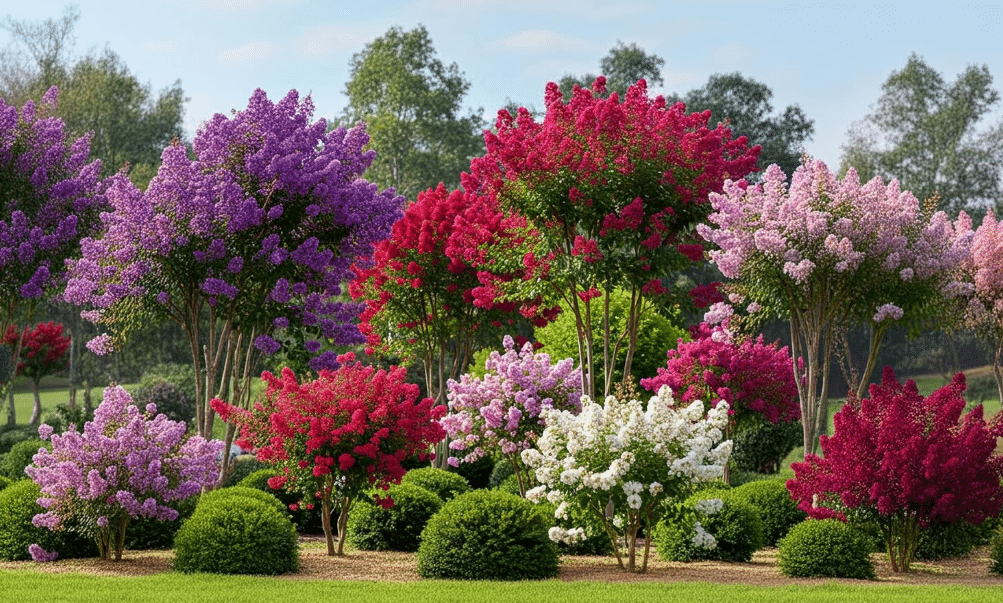
When most flowering trees finish blooming by May and fade into plain green for the rest of the year, the Dynamite Red Crape Myrtle is just getting started. Bred specifically for intense, true cherry-red blooms, this deciduous stunner erupts in massive ruffled flower clusters from midsummer straight through early fall. Even before the flowers open, the new spring foliage emerges with a crimson tint before maturing into deep, leathery green—and in autumn, the leaves shift to fiery orange-red before dropping to reveal smooth, mottled, cinnamon-colored exfoliating bark. It is one of the rare front yard trees that delivers genuine four-season visual interest.
Price of the Product
$115.00
Key Features and Benefits
-
USDA Hardiness Zones: 7–10 (ideal for inland Southern California, Central Valley, and warm Bay Area microclimates).
-
Heat-Loving Bloomer: Actually flowers heavier in blazing 95°F–105°F full sun.
-
Disease Resistance: Superior resistance to powdery mildew compared to older Crape Myrtle cultivars.
-
Sidewalk-Safe Roots: Non-aggressive root structure makes it a favorite for narrow front yard strips and parkways.
-
Multi-Trunk or Single-Trunk Training: Easily pruned into a classic vase-shaped multi-stem accent tree.
Pros and Cons
-
Pros:
-
Up to 100 days of vibrant red summer flowers when other trees look heat-stressed.
-
Virtually zero risk of lifting driveways, sidewalks, or foundation slabs.
-
Drought-tolerant once established and thrives in tough urban soils.
-
Attracts hummingbirds and beneficial pollinators all summer.
-
-
Cons:
-
Deciduous—drops its leaves in winter (though the sculptural bark remains attractive).
-
Struggles with powdery mildew if planted in cool, foggy, immediate coastal zones.
-
Needs full sun (at least 6–8 hours daily) to bloom heavily.
-
Amazon Customer Ratings and Reviews
4.6 out of 5 stars. Verified buyers highlight how quickly the Dynamite cultivar establishes and blooms—many report seeing their first red flower clusters in the very first summer after planting. Common praise centers on the thick, healthy stems and resilience during transit.
Why It’s a Good Choice for California Front Yards
Inland California homeowners often struggle to find flowering trees that don’t scorch in July and August. The Dynamite Crape Myrtle thrives on that exact heat while staying compact enough (15–20 feet) to sit comfortably under most power lines and within HOA height guidelines.
Ideal Use Case / Who Should Buy It
Homeowners in sunny inland valleys, Sacramento, Fresno, the Inland Empire, or warm suburban neighborhoods who want maximum summer color without worrying about cracked concrete.
3. Western Redbud (Cercis occidentalis) – Best California Native Flowering Tree
Product Description
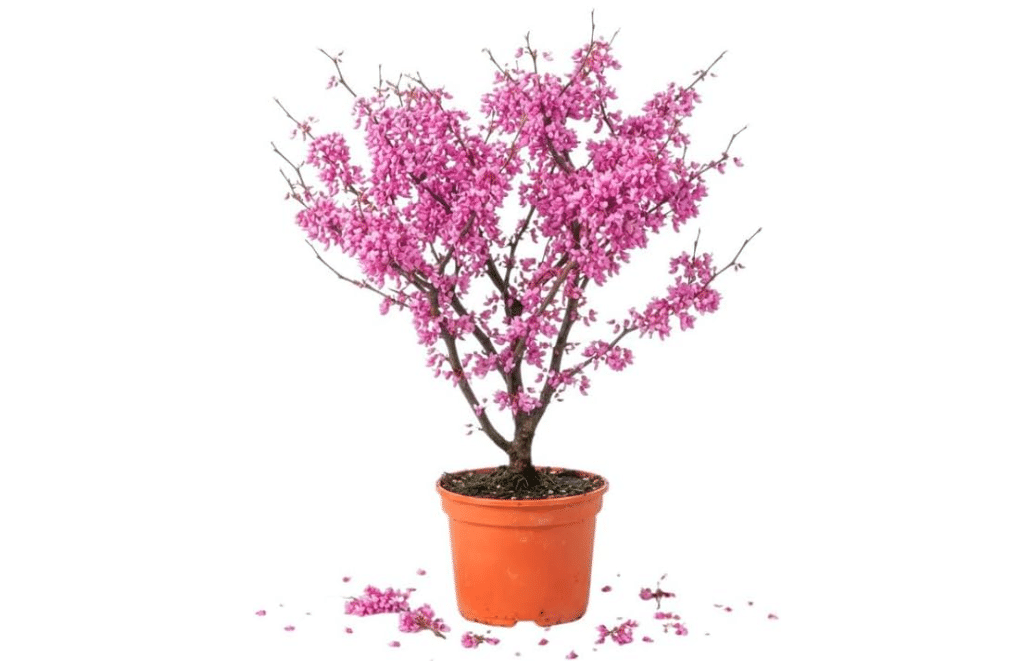
If you want a front yard tree that looks like a million bucks in spring and practically takes care of itself the rest of the year, look no further than the Western Redbud. Native to California’s foothills and canyons, this compact, multi-stemmed deciduous tree puts on one of the most dramatic floral shows in the West. In early spring, before a single leaf appears, its bare branches are completely smothered in clusters of electric magenta-pink pea-shaped blossoms. Once the flowers fade, rounded, heart-shaped blue-green leaves emerge, followed by decorative reddish-purple seed pods that hang like ornaments through summer and fall.
Price of the Product
Key Features and Benefits
-
USDA Hardiness Zones: 7–10 (naturally adapted to California’s foothill, coastal, and valley climates).
-
True Native Water-Saver: Requires virtually no summer water once established—in fact, overwatering in summer can harm it.
-
Pollinator Magnet: Early spring flowers provide critical nectar for native California bees, butterflies, and hummingbirds.
-
Compact Footprint: Tops out at 10–18 feet tall and wide, fitting effortlessly into small urban and suburban front yards.
-
Fire-Wise & Tough: Naturally adapted to poor, rocky, or dry California soils.
Pros and Cons
-
Pros:
-
Eligible for many local California municipal lawn-replacement and native-plant rebates.
-
Stunning magenta spring blooms and attractive heart-shaped foliage.
-
Non-invasive roots won’t damage walkways or underground pipes.
-
Virtually immune to most common garden pests.
-
-
Cons:
-
Dislikes heavy, frequent summer lawn irrigation (best planted in mulch or drip-irrigated beds rather than wet turf).
-
Slow to moderate growth rate in the first two years while it builds deep roots.
-
Seed pods drop in late fall, requiring light seasonal raking.
-
Amazon Customer Ratings and Reviews
4.5 out of 5 stars. Native-plant enthusiasts on Amazon rave about how hardy these saplings are once transplanted. Reviewers frequently mention that even small starter trees bounce back quickly in spring and attract bees immediately upon their first bloom.
Why It’s a Good Choice for California Front Yards
As California cities push harder for turf-removal and water-wise front yards, the Western Redbud is the gold standard. It delivers the romantic flowering look of an Eastern Redbud or Cherry Blossom without demanding the heavy water those non-native trees require.
Ideal Use Case / Who Should Buy It
Eco-conscious homeowners, xeriscape converts, and anyone with a compact front yard who wants a dazzling spring show with near-zero water bills.
4. Italian Cypress (Cupressus sempervirens) – Best for Narrow Front Yards & Privacy
Product Description
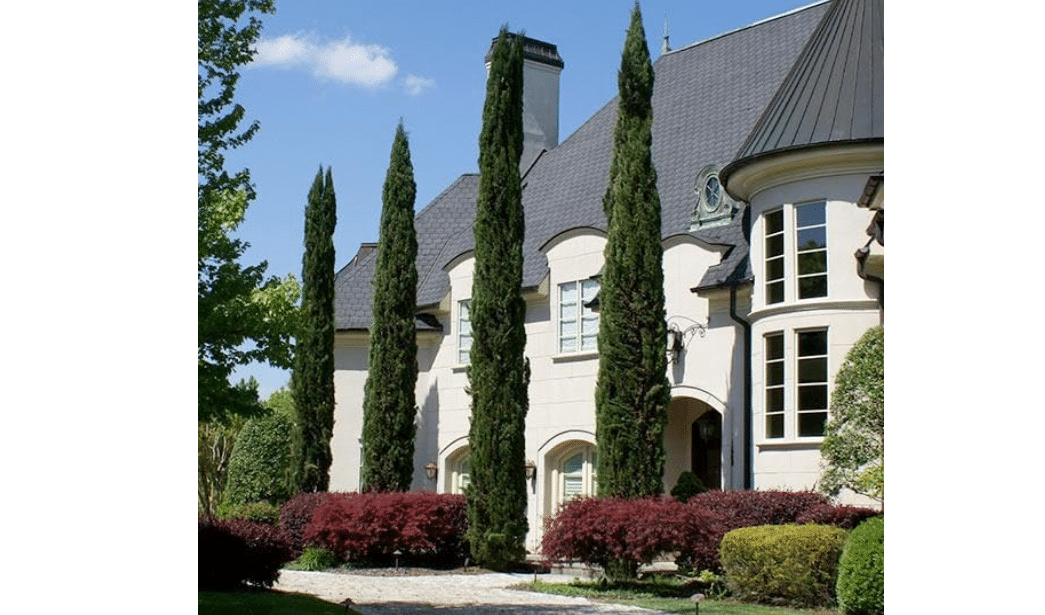
When your front yard is tight on square footage—or you need to frame a grand entryway, flank a garage, or screen out a neighbor’s second-story window—the Italian Cypress is unmatched. Growing like a living exclamation point, this ultra-slender columnar evergreen shoots straight upward to 30–40 feet while staying remarkably narrow at just 3 to 5 feet wide. Its dense, blue-green scale-like foliage requires almost zero shearing to hold its crisp, formal pencil shape. Whether planted as a symmetrical pair on either side of a front door or spaced in a row along a property line, it instantly adds Tuscan sophistication.
Price of the Product
$63.99
Key Features and Benefits
-
USDA Hardiness Zones: 7–11 (thrives statewide from San Diego to Northern California).
-
Ultra-Narrow Footprint: Fits into tight 4-foot-wide planting strips beside driveways and walkways.
-
Fast Vertical Growth: Adds 2 to 3 feet of height per year in full sun, giving you privacy and height quickly.
-
Zero Leaf Litter: Evergreen foliage stays clean year-round—no fall raking, no messy fruit, no staining petals.
-
Drought & Heat Hardy: Thrives in reflected heat off stucco walls and concrete driveways.
Pros and Cons
-
Pros:
-
Takes up almost zero horizontal yard space while adding dramatic architectural height.
-
Completely evergreen and clean—ideal for strict HOAs.
-
Requires virtually no pruning to maintain its slender columnar shape.
-
Highly drought-tolerant once its root system is established.
-
-
Cons:
-
Provides vertical accent and privacy, not wide overhead shade.
-
Susceptible to spider mites if stressed by extreme drought or dusty conditions.
-
Can develop heavy snow-load splaying in high mountain elevations (stick to valley and coastal areas).
-
Amazon Customer Ratings and Reviews
4.4 out of 5 stars. Customers appreciate that these trees arrive green, tightly boxed, and ready to plant. Many buyers order them in sets of two, four, or six to line driveways and report high survival rates when planted in full sun with well-draining soil.
Why It’s a Good Choice for California Front Yards
Many modern California subdivisions feature narrow side yards and compact front setbacks where wide-canopy trees simply won’t fit. The Italian Cypress solves the space problem while leaning into California’s classic Mediterranean architectural roots.
Ideal Use Case / Who Should Buy It
Homeowners with narrow lots, modern or Tuscan-style homes, or anyone needing a zero-mess privacy screen along a front property line or driveway.
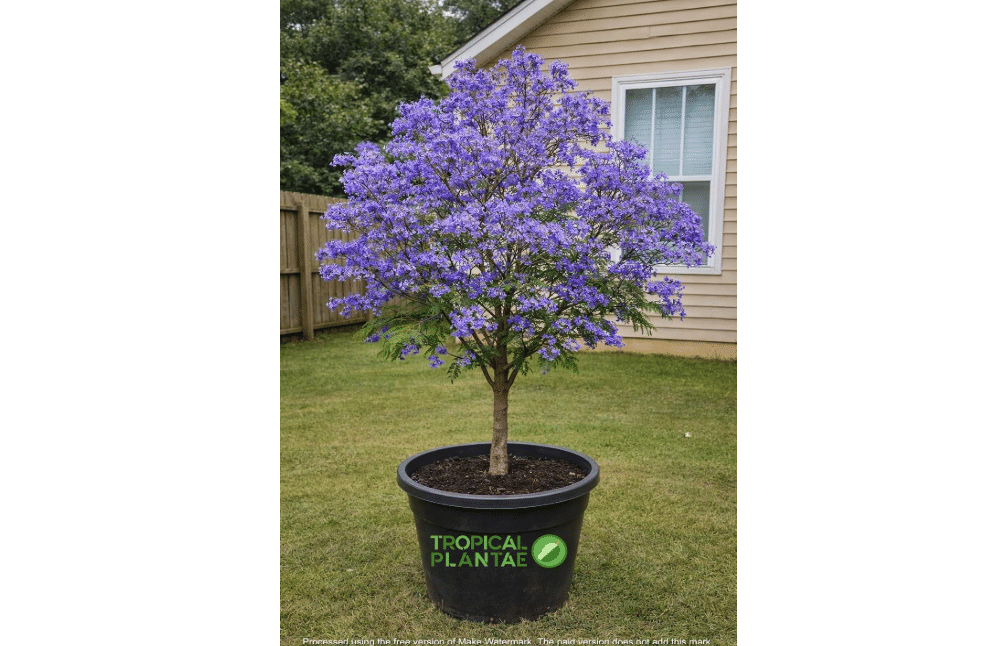
5. Jacaranda Tree (Jacaranda mimosifolia) – Best Showstopping Shade Tree for SoCal
Product Description
Few sights define late spring in Southern California like a mature Jacaranda in full bloom. From May through June, this wide-spreading shade tree transforms into a cloud of electric lavender-blue trumpet-shaped flowers that stop traffic and turn any front lawn into a neighborhood landmark. Even when not in bloom, its feathery, fern-like bright green foliage casts cool, dappled shade—allowing grass or drought-tolerant groundcovers to keep growing underneath rather than dying in pitch-black shadow. It is a true statement tree for homeowners with the space to let its graceful, umbrella-shaped canopy shine.
Price of the Product
Key Features and Benefits
-
USDA Hardiness Zones: 9b–11 (best suited for Southern California, coastal valleys, and frost-free parts of the Bay Area).
-
Filtered Shade: Airy bipinnate leaves cool your front lawn and home facade without blocking all sunlight.
-
Fast Growth Rate: Adds 2 to 3 feet per year in warm, sunny locations, creating usable shade quickly.
-
Drought-Tolerant Once Established: Thrives on deep, occasional watering during dry Southern California summers.
-
Pollinator Friendly: Attracts bees and hummingbirds throughout its long spring-to-early-summer bloom cycle.
Pros and Cons
-
Pros:
-
Unrivaled lavender-blue spring flower display that instantly elevates curb appeal.
-
Creates a wide, cooling canopy that can help lower summer indoor cooling costs.
-
Thrives in sandy, coastal, and inland Southern California soils.
-
-
Cons:
-
Drops spent purple blossoms in late spring—keep it away from parked cars and main walkways to avoid sticky petals.
-
Frost-sensitive; young trees will suffer dieback below 28°F (not ideal for cold Northern California inland zones).
-
Needs a spacious front yard (25–35 feet wide at maturity).
-
Amazon Customer Ratings and Reviews
4.3 out of 5 stars. Verified buyers love how quickly these saplings shoot up once planted in full sun. Reviewers note that the delicate fern-like foliage can look slightly droopy right out of the shipping box, but almost universally report that the trees perk up within 48 hours of watering and put on vigorous new growth within weeks.
Why It’s a Good Choice for California Front Yards
If you live in a frost-free California zip code and have a larger front lawn, nothing delivers more visual drama per dollar. It thrives in California’s dry heat and gives you the classic Los Angeles and San Diego streetscape aesthetic right on your own property.
Ideal Use Case / Who Should Buy It
Southern and Coastal California homeowners with medium-to-large sunny front lawns who want a breathtaking shade tree and don’t mind a brief, colorful carpet of fallen lavender petals in June.
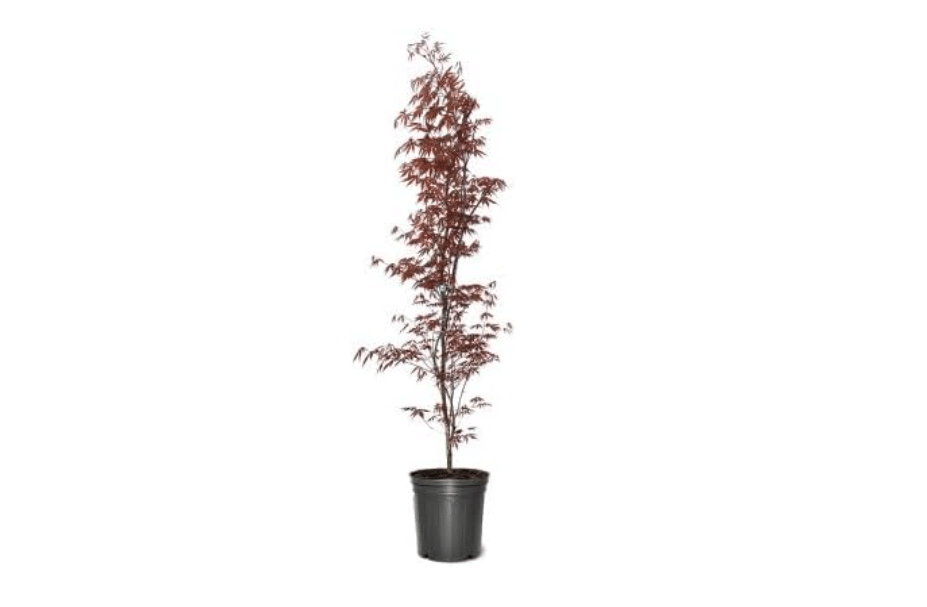
6. Japanese Maple (Acer palmatum – Bloodgood or Emperor I) – Best Focal Point for Shaded & NorCal Yards
Product Description
Not every California front yard bakes in 105°F sun. For north-facing entryways, foggy coastal lots, or Northern California and Bay Area homes, the Bloodgood or Emperor I Japanese Maple is the ultimate living sculpture. Celebrated for its deeply lobed, star-shaped crimson-burgundy leaves, this compact deciduous tree holds its rich red color through summer before igniting into brilliant scarlet in autumn. Even in winter, its graceful, twisting dark-red branches look like an art installation against stucco, wood siding, or stone walkways.
Price of the Product
Key Features and Benefits
-
USDA Hardiness Zones: 5–9 (ideal for Northern California, the Bay Area, coastal Central California, and shaded SoCal microclimates).
-
Compact, Non-Invasive Roots: Fibrous, shallow root system will never heave sidewalks, patios, or foundations.
-
Four-Season Architectural Beauty: Spring crimson foliage, summer burgundy shade, fiery autumn color, and sculptural winter branching.
-
Small-Space Friendly: Mature height of 15–20 feet makes it easy to place near front porches or entry courtyards.
-
Emperor I Advantage: Leafs out slightly later in spring, protecting tender foliage from late Northern California frosts.
Pros and Cons
-
Pros:
-
High-end, zen-garden curb appeal that fits modern, craftsman, and traditional homes.
-
Completely safe to plant near driveways, foundations, and underground utility lines.
-
Thrives in dappled shade where sun-loving flowering trees refuse to bloom.
-
-
Cons:
-
Leaves will scorch if exposed to harsh, unshaded inland afternoon sun (needs afternoon shade in hot valleys).
-
Requires more consistent moisture than desert-native trees.
-
Higher upfront cost due to specialized nursery grafting.
-
Amazon Customer Ratings and Reviews
4.6 out of 5 stars. Buyers consistently praise the vibrant leaf coloration right out of the box and the careful staking used during shipping. Several Northern California and Pacific Coast reviewers mention that their trees established effortlessly in partially shaded front beds with a layer of pine bark mulch.
Why It’s a Good Choice for California Front Yards
Many California homeowners struggle with shaded north-facing front yards where typical drought-tolerant trees get leggy or sparse. A Japanese Maple turns that shaded spot into the most eye-catching feature on the block.
Ideal Use Case / Who Should Buy It
Bay Area, Northern California, and coastal homeowners—or anyone with a partially shaded front courtyard—looking for a refined, sidewalk-safe focal point.
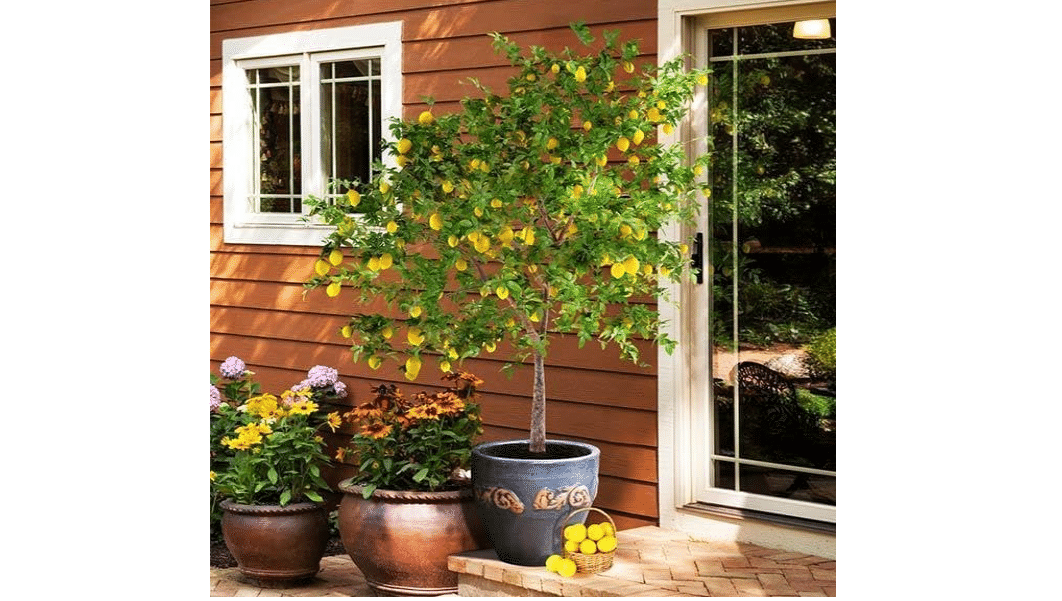
7. Improved Meyer Lemon Tree (Citrus × meyeri) – Best Compact Edible Front Yard Tree
Product Description
Why settle for a tree that only looks good when you can have one that smells incredible and stocks your kitchen year-round? The Improved Meyer Lemon Tree—a natural cross between a lemon and a mandarin orange—is a California front yard icon. It stays naturally compact (8 to 10 feet in the ground, or smaller in a container) with glossy, deep-green evergreen leaves, intensely fragrant white blossoms that perfume your entire front walkway, and thin-skinned, sweet-tart golden lemons that ripen nearly all year long.
Price of the Product
$60.99
Key Features and Benefits
-
USDA Hardiness Zones: 8–11 (thrives outdoors year-round across most of California).
-
Self-Pollinating & Everbearing: Produces blossoms and fruit simultaneously without needing a second citrus tree.
-
Fragrant Curb Appeal: Spring and fall blooms fill your front porch with sweet citrus blossom scent.
-
Dwarf-Friendly Size: Fits effortlessly into small front yards, side courtyards, or oversized terracotta patio pots.
-
High Yield: A single mature tree can easily produce 50 to 100+ lemons per year.
Pros and Cons
-
Pros:
-
Glossy evergreen foliage keeps your front yard looking lush in every season.
-
Delivers fresh, sweet, gourmet lemons steps from your front door.
-
Compact root system won’t threaten sidewalks or foundations.
-
-
Cons:
-
Strict California Department of Food and Agriculture (CDFA) shipping restrictions apply—always verify the Amazon seller ships legally within California.
-
Needs regular citrus fertilizer and consistent (though not soggy) watering for peak fruit production.
-
Protect with frost cloth if temperatures dip below 28°F.
-
Amazon Customer Ratings and Reviews
4.5 out of 5 stars. Verified buyers frequently report that their trees arrive with small green lemons or fragrant buds already attached. California shoppers highlight the fast transition from shipping container to thriving in-ground or patio centerpiece.
Why It’s a Good Choice for California Front Yards
Edible landscaping is booming across California. The Improved Meyer Lemon bridges the gap between ornamental beauty and practical homesteading, offering evergreen structure, incredible fragrance, and zero wasted space.
Ideal Use Case / Who Should Buy It
Homeowners with sunny, compact front yards, patio entryways, or edible gardens who want year-round greenery and fresh citrus without sacrificing curb appeal.
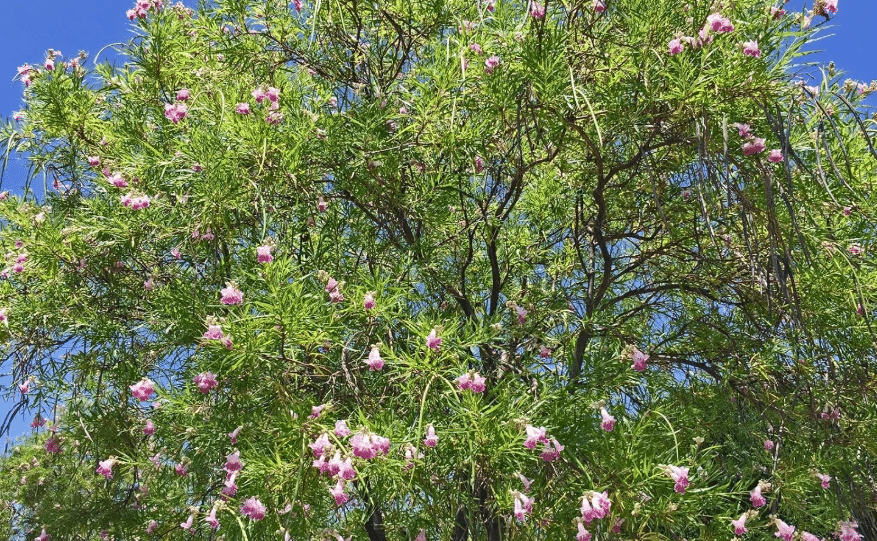
8. Desert Willow (Chilopsis linearis) – Best for Hot Inland & Desert California Yards
Product Description
Despite its name, the Desert Willow isn’t a water-hogging willow at all—it’s a tough-as-nails Southwest native related to the catalpa that thrives where other trees literally cook. Sporting slender, willow-like light green leaves on an airy, multi-stemmed frame, it erupts from late spring through early fall with clusters of ruffled, orchid-like trumpets in shades of pink, lavender, and burgundy. Hummingbirds treat it like a five-star resort, and its open canopy casts soft, cooling shade over gravel, decomposed granite, or native front yards.
Price of the Product
$8.25
Key Features and Benefits
-
USDA Hardiness Zones: 7–11 (built for Palm Springs, the Inland Empire, Central Valley, and dry foothill zones).
-
Extreme Heat & Drought Tolerance: Flourishes in 110°F+ heat on minimal deep watering once established.
-
Long Bloom Season: Flowers continuously from May through September, attracting hummingbirds and native bees.
-
Fast Establishment: Grows 2 to 3 feet per year, quickly filling out bare xeriscaped front yards.
-
Non-Invasive Roots: Safe to plant near driveways, walkways, and block walls.
Pros and Cons
-
Pros:
-
Virtually indestructible in scorching inland and desert California summers.
-
Gorgeous, fragrant orchid-like blooms all summer long.
-
Thrives in poor, alkaline, rocky, or sandy soils with zero fertilizer needed.
-
-
Cons:
-
Deciduous in winter and late to leaf out in spring (often late April).
-
Produces slender bean-like seed pods in fall (look for “seedless” or low-pod cultivars like ‘Bubba’ if you want minimal cleanup).
-
Dislikes heavy, constantly wet clay lawns.
-
Amazon Customer Ratings and Reviews
4.4 out of 5 stars. Desert and inland California buyers praise how fast these trees take off once planted in full sun. Many note that even a modest 1-gallon plant reaches 6 to 8 feet tall by its second summer and brings hummingbirds to the front yard almost immediately.
Why It’s a Good Choice for California Front Yards
If you live in an inland valley or desert community where summer water bills skyrocket, the Desert Willow gives you lush summer flowers and shade on a fraction of the water required by traditional lawn trees.
Ideal Use Case / Who Should Buy It
Homeowners in hot inland, foothill, or desert California zones converting thirsty grass into low-water, pollinator-friendly xeriscapes.
9. Little Gem Southern Magnolia (Magnolia grandiflora ‘Little Gem’) – Best Compact Evergreen with Fragrant Blooms
Product Description
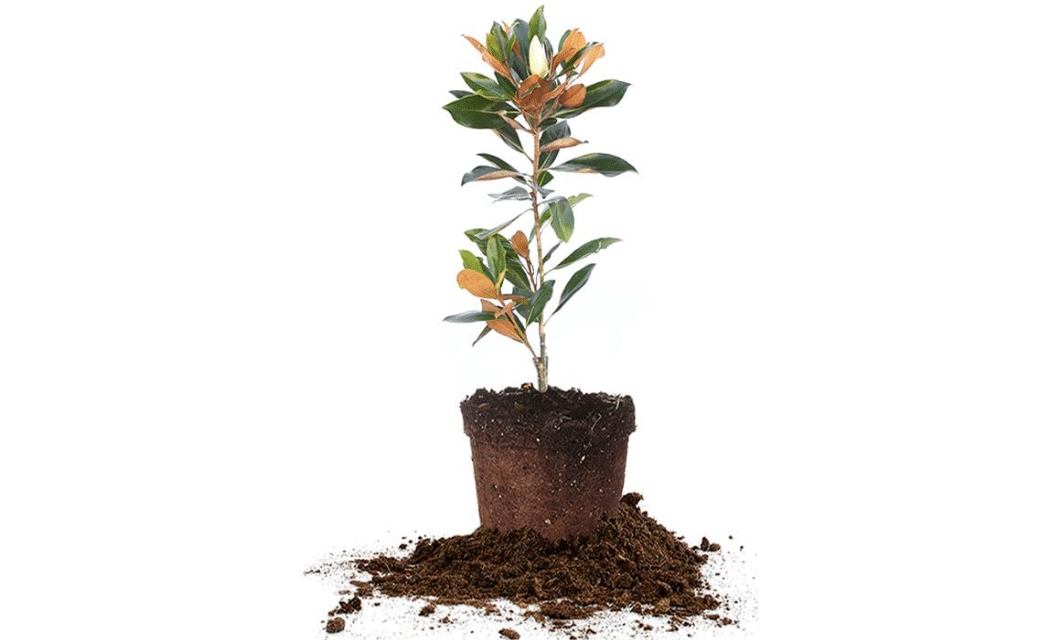
Traditional Southern Magnolias are legendary for their giant creamy-white flowers, but they grow 80 feet tall and drop mountains of leathery leaves—way too massive for most California front yards. The ‘Little Gem’ Magnolia solves that problem completely. Bred as a true dwarf cultivar, it tops out at a tidy 15 to 20 feet tall and just 8 to 10 feet wide. Its smaller, glossy dark-green leaves feature a rich, velvety bronze underside, and it produces fragrant, 4- to 6-inch pure white blossoms from late spring well into fall—blooming at a much younger age than standard magnolias.
Price of the Product
Key Features and Benefits
-
USDA Hardiness Zones: 7–10 (performs reliably across Coastal, Southern, and Northern California).
-
Compact Columnar Habit: Fits neatly into narrow front lawns, beside front porches, or as an espalier against a tall stucco wall.
-
Extended Bloom Window: Flowers on and off for up to six months rather than just a few weeks.
-
Evergreen Privacy: Dense foliage from top to bottom provides year-round structure and noise buffering.
-
Less Mess: Smaller leaves and a tighter canopy mean significantly less leaf drop than full-size magnolias.
Pros and Cons
-
Pros:
-
Classic, stately Southern Magnolia beauty scaled down for modern suburban lots.
-
Intoxicating lemon-scented white blooms and striking two-tone glossy/bronze foliage.
-
Naturally narrow shape requires very little pruning.
-
-
Cons:
-
Needs moderate, consistent moisture—not as drought-tolerant as an Olive or Palo Verde.
-
Still drops some tough leathery leaves year-round as new growth pushes out.
-
Slow-to-moderate growth rate (1–2 feet per year).
-
Amazon Customer Ratings and Reviews
4.6 out of 5 stars. Verified buyers rave about the glossy, undamaged foliage on arrival and how early these trees bloom—several report seeing their first fragrant white flowers in year one. Homeowners with smaller suburban lots frequently call it their favorite front yard upgrade.
Why It’s a Good Choice for California Front Yards
It gives you the timeless, upscale look of an evergreen magnolia without outgrowing your lot, lifting your sidewalk, or blocking your entire front facade.
Ideal Use Case / Who Should Buy It
Homeowners with traditional, craftsman, or colonial-style California homes who have moderate irrigation available and want an evergreen, fragrant centerpiece for a small-to-medium front yard.
10. Desert Museum Palo Verde (Parkinsonia ‘Desert Museum’) – Best Fast-Growing, Thornless Water-Wise Tree
Product Description
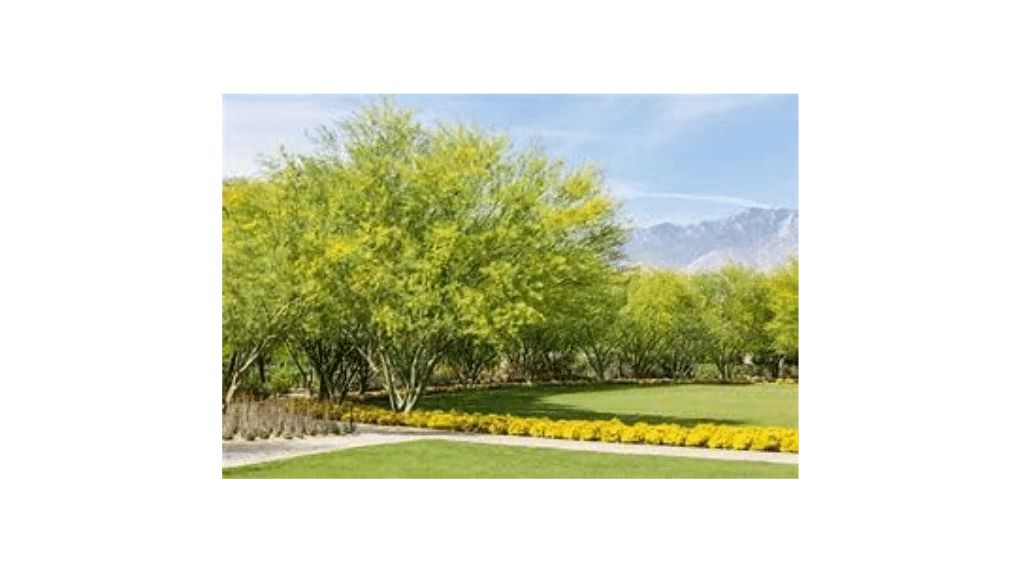
If you want fast, architectural shade and modern desert-chic style, the Desert Museum Palo Verde is in a league of its own. Unlike wild Palo Verdes that are covered in vicious thorns and drop heavy seed litter, this hybrid cultivar is completely thornless, upright, and remarkably clean. Its smooth, bright lime-green trunk and branches perform photosynthesis year-round—making the entire tree glow even when its tiny, feathery leaves thin out in winter. In spring, the canopy explodes into a dazzling cloud of bright canary-yellow flowers that lasts for weeks.
Price of the Product
$7.95
Key Features and Benefits
-
USDA Hardiness Zones: 8b–11 (thrives in Southern California, inland valleys, and desert regions).
-
100% Thornless: Safe for kids, pets, and planting near front walkways and driveways.
-
Rapid Growth Rate: Can grow 3+ feet per year, delivering filtered shade far faster than olives or redbuds.
-
Ultra-Low Water Needs: Thrives on deep, infrequent watering once established; hates soggy soil.
-
Striking Sculptural Form: Multi-trunk green bark pairs seamlessly with mid-century modern and contemporary California homes.
Pros and Cons
-
Pros:
-
Fast-growing shade tree that slashes front-yard water usage.
-
Completely thornless with dramatically reduced seed-pod litter compared to native Palo Verdes.
-
Unmistakable green bark provides modern architectural interest 365 days a year.
-
-
Cons:
-
Needs occasional structural pruning in its first 3–4 years to prevent wind-splitting in high-wind corridors.
-
Avoid overwatering—too much water causes weak, floppy top growth.
-
Not suited for cold Northern California zones with hard winter freezes below 15°F–20°F.
-
Amazon Customer Ratings and Reviews
4.5 out of 5 stars. Southwestern and Southern California buyers consistently praise its explosive growth rate and vibrant green bark. Reviewers emphasize staking the young tree loosely for the first year while its roots anchor deeply into native soil.
Why It’s a Good Choice for California Front Yards
It is the ultimate modern water-wise shade tree. It cools sun-baked front yards quickly, looks like it was chosen by a high-end landscape architect, and keeps your monthly water bill rock-bottom.
Ideal Use Case / Who Should Buy It
Homeowners with mid-century modern, contemporary, or desert-style front yards in sunny Southern or Inland California who want fast, thornless, low-water shade.
Buyer’s Guide – How to Choose the Right Front Yard Tree in California
Before clicking “Add to Cart,” run your front yard through these five California-specific checks to guarantee your new tree thrives for decades.
1. Match Your California Microclimate (Coastal vs. Inland vs. NorCal)
California spans USDA Hardiness Zones 5 through 11 and over 20 distinct Sunset Climate Zones.
-
Cool, Foggy Coastal Zones (San Francisco, Monterey, Coastal SoCal): Choose Arbequina Olive, Japanese Maple, Little Gem Magnolia, or Meyer Lemon. Avoid Crape Myrtles, which are prone to powdery mildew in cool coastal fog.
-
Hot Inland Valleys & Deserts (Sacramento, Fresno, Inland Empire, Palm Springs): Choose Dynamite Crape Myrtle, Desert Willow, Desert Museum Palo Verde, or Western Redbud. Avoid Japanese Maples in full, unshaded sun.
-
Mild Southern California Suburbs: Almost every tree on this list thrives here, with Jacaranda, Olive, Meyer Lemon, and Italian Cypress leading the pack.
2. Root System Safety (Protecting Sidewalks, Driveways & Sewer Lines)
Concrete repair in California easily costs thousands of dollars. As a rule of thumb:
-
Plant small-to-medium trees (Crape Myrtle, Western Redbud, Japanese Maple, Meyer Lemon) at least 6 to 8 feet from sidewalks, driveways, and foundations.
-
Plant larger shade trees (Jacaranda, Palo Verde) at least 12 to 15 feet from concrete and underground sewer lines.
-
Always call 811 (DigAlert) before digging to locate buried utility lines.
3. Water-Wise Landscaping & Drought Restrictions
“Drought-tolerant” does not mean “zero water on Day 1.” Every tree—even a California native like the Western Redbud—requires consistent deep watering during its first 12 to 18 months to build a deep root system. Once established, switch to deep, infrequent soakings every 2 to 4 weeks in summer to keep roots growing downward instead of toward the surface.
4. Mature Size, Power Lines & HOA Compliance
Always look straight up before you dig. If overhead utility lines run across your front yard, stick to trees that mature under 20 feet (Western Redbud, Meyer Lemon, Crape Myrtle, Little Gem Magnolia). Also check your HOA’s approved plant list and keep fruiting or heavy-blooming trees (Arbequina Olive, Jacaranda) set back from driveways so fallen fruit or petals don’t stain concrete or parked cars.
5. Buying Live Trees on Amazon: What to Expect
-
1-Gallon vs. 3-Gallon: A 1-gallon tree is budget-friendly and often establishes faster roots, while a 3-gallon tree gives you instant 3- to 4-foot curb appeal.
-
CDFA Compliance: California has strict agricultural laws to prevent pests (especially for citrus). Always double-check that the Amazon nursery ships legally to California zip codes.
-
Shipping Shock: Live trees may drop a few leaves after 3–5 days in a dark cardboard box. Unbox immediately, water thoroughly, and let the tree acclimate in bright shade for 2–3 days before planting.
Essential Planting & First-Year Care Tips for California Soil
-
Beat Heavy Clay or Sandy Soil (Avoid the “Bathtub Effect”): Dig your planting hole twice as wide as the root ball, but no deeper than the nursery pot. Backfill primarily with your native California soil rather than pure potting mix—filling a clay hole with rich compost traps water like a bathtub and rots the roots.
-
Plant High: Keep the root flare (where the trunk widens at the soil line) 1 to 2 inches above the surrounding grade so water drains away from the trunk.
-
Deep-Watering Schedule: During Year 1, water slowly and deeply 2 to 3 times per week in summer (once per week in cool weather) using a soaker hose or drip emitter placed at the root zone.
-
Mulch Like a Pro: Spread a 3-inch layer of organic wood-chip mulch in a 3-foot ring around the tree to keep roots cool during 100°F+ heatwaves and cut evaporation in half. Never pile mulch against the trunk—leave a 3-inch bare “donut” around the base to prevent trunk rot.
Frequently Asked Questions (FAQs)
What is the fastest-growing front yard tree for California?
The Desert Museum Palo Verde, Jacaranda, and Italian Cypress are the fastest growers on our list, regularly adding 2 to 3+ feet of height per year in full California sun.
Which front yard trees won’t crack my California driveway or sidewalk?
The Dynamite Red Crape Myrtle, Western Redbud, Japanese Maple, and Improved Meyer Lemon all have compact, non-invasive root systems that are safe near concrete walkways, driveways, and foundations when given basic clearance.
What is the best low-maintenance, no-mess tree for a California front yard?
The Italian Cypress is virtually mess-free year-round with zero fruit or leaf drop. If you want a broader canopy with minimal cleanup, a Western Redbud or Desert Museum Palo Verde (thornless and low-litter) are top low-maintenance picks.
When is the best time of year to plant a tree in California?
Fall through early spring (October to March) is the absolute best window. Cooler air temperatures and winter rains allow your tree to grow deep, drought-resistant roots before its first scorching California summer arrives.
Final Verdict – Which California Front Yard Tree Should You Buy?
Choosing from the best 10 tree for front yard california homeowners can plant comes down to matching your specific microclimate, yard width, and maintenance style:
-
For timeless, low-water Mediterranean curb appeal: Go with the Arbequina Olive Tree.
-
For blazing summer color in hot inland valleys: Choose the Dynamite Red Crape Myrtle.
-
For a true California native that slashes water bills: Plant the Western Redbud.
-
For tight spaces, narrow lots, or zero-mess privacy: Line your yard with Italian Cypress.
-
For shaded Northern California or coastal entryways: Invest in a Bloodgood Japanese Maple or Little Gem Magnolia.
Grab a tape measure, check your sun exposure and overhead lines, and order your tree ahead of the cool-season planting window—your front yard (and your water bill) will thank you for decades to come.