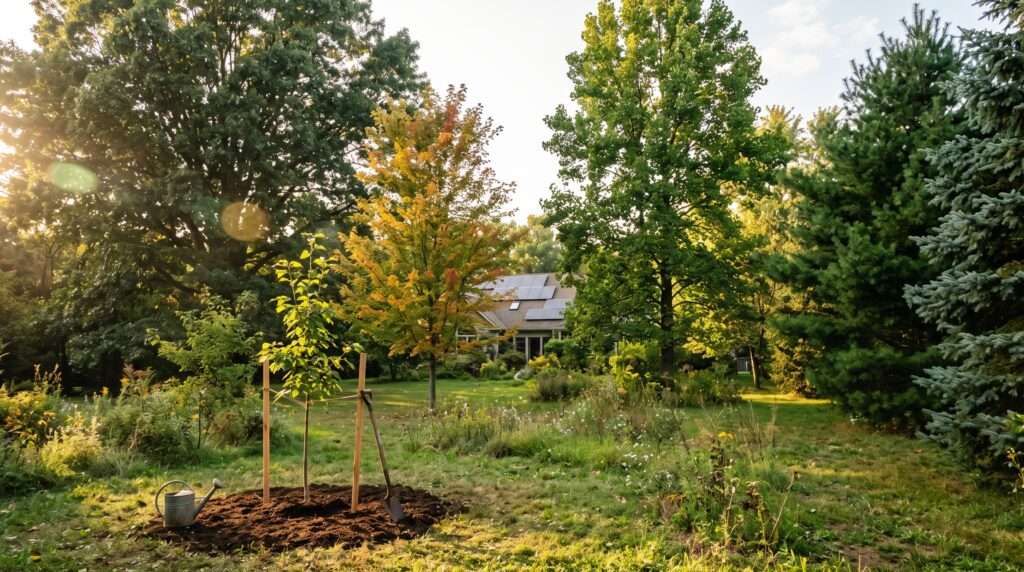
A single mature tree can absorb over 48 pounds of carbon dioxide per year, making your own backyard one of the most accessible and powerful tools in the global fight against climate change. If you want to make a tangible environmental impact right at home, planting any of the best 10 trees for carbon capture is exactly where you should start.
However, many well-meaning homeowners run into a frustrating roadblock. You want to offset your family’s carbon footprint, but you quickly become overwhelmed by the sheer volume of tree species, confusing climate zones, and endless nursery options available online. Choosing blindly is a costly mistake; planting the wrong species for your yard can lead to dead saplings, wasted money, and absolutely zero climate impact.
That is why we created this curated, data-driven guide. We have cut through the noise to help you invest in the right tree for your specific climate, available space, and environmental goals. Read on to discover the most effective, top-rated carbon-sequestering trees available for direct home delivery, so you can plant with confidence and watch your green investment thrive.
II. How to Choose the Right Carbon-Capturing Tree (Buying Guide)
Before adding a sapling to your cart, it is crucial to understand that not all trees fight climate change in the same way. To maximize your environmental impact and ensure your investment survives, consider these three critical factors:
1. Growth Rate vs. Lifespan
There is a fundamental trade-off in arboriculture: speed versus longevity. Fast-growing softwoods (like Poplars and Maples) rapidly pull CO2 out of the atmosphere, providing an immediate climate impact and quick shade. However, they generally have shorter lifespans. Conversely, slow-growing hardwoods (like Oaks and Walnuts) take decades to mature but lock away carbon in incredibly dense wood for centuries. The best approach for large properties is often to plant a mix of both.
2. Native Ecosystem Compatibility
Your USDA Hardiness Zone dictates whether a tree will thrive or perish. Planting a species native to your region guarantees better resistance to local pests and diseases, requiring less water and zero synthetic fertilizers. A tree that dies after three years releases its stored carbon back into the atmosphere, completely negating your efforts. Always match the tree to your local climate.
3. Canopy Size and Placement
Carbon capture isn’t the only environmental benefit trees provide. By planting large, deciduous trees on the south or west side of your home, you can naturally shade your house in the summer, drastically reducing your air conditioning usage and secondary carbon emissions. Always check the mature canopy width to ensure roots and branches won’t threaten your home’s foundation or power lines.
III. Detailed Product Comparison & Reviews: Best 10 Trees for Carbon Capture
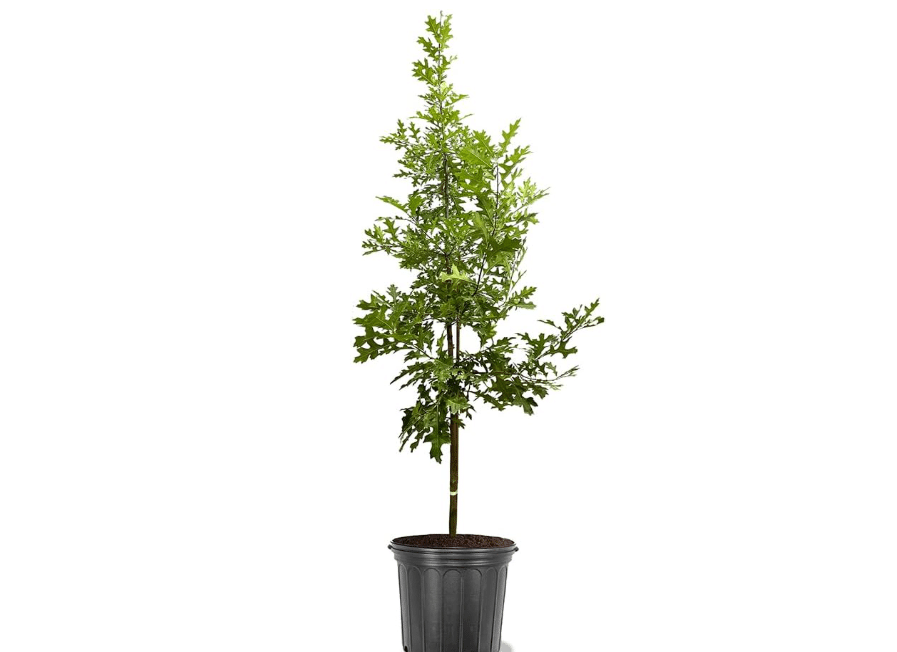
1. Northern Red Oak (Quercus rubra) Live Sapling
-
Product Description: The Northern Red Oak is a legendary ecosystem engineer and a heavyweight champion in the world of carbon sequestration. When you order a live sapling online, it typically arrives as a robust bare-root plant ready for immediate grounding. Known for its broad, symmetrical canopy and brilliant red autumn foliage, this hardwood develops massive, dense trunks capable of locking away carbon for up to 500 years.
-
Price:
-
Key Features & Benefits:
-
Grows up to 2 feet per year once its root system is fully established.
-
Supports over 500 species of native caterpillars and pollinators, making it an ecological powerhouse.
-
Capable of storing between 29 to 64 tons of carbon per acre in maturity.
-
-
Pros & Cons:
-
Pros: Extremely dense wood for secure, long-term carbon lock; exceptional wildlife value; highly drought-tolerant once mature.
-
Cons: Requires a very large yard (mature canopies reach 50+ feet wide); drops heavy acorns which can be a nuisance to mow over.
-
-
Amazon Customer Ratings & Reviews: ~4.4/5 stars. Reviewers frequently praise the robust, healthy root systems upon delivery and the vibrant foliage. Some buyers note the trees can experience shipping stress if ordered during peak mid-summer heat, recommending early spring or fall purchasing.
-
Why It’s a Good Choice for Carbon Capture: Its dense hardwood composition makes it one of the most secure long-term biological carbon vaults available to home gardeners. It doesn’t just capture carbon; it holds onto it for centuries.
-
Ideal Use Case: Large suburban yards, rural properties, and permaculture food forests with plenty of space away from structural foundations.
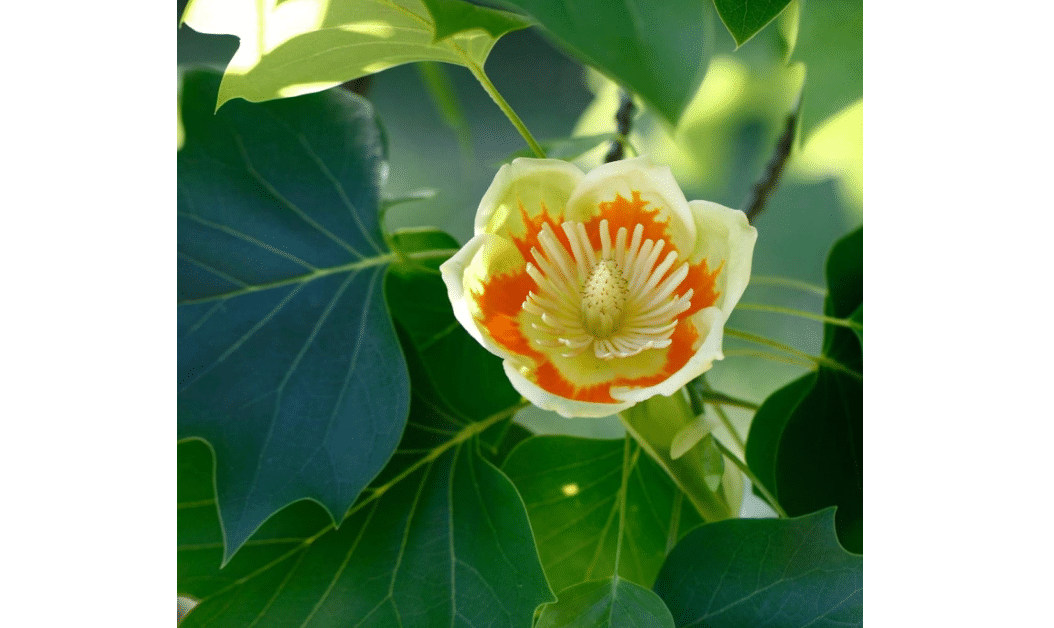
2. Tulip Poplar (Liriodendron tulipifera) Bare Root Tree
-
Product Description: Often shipped as a 2-3 foot dormant bare-root sapling, the Tulip Poplar is one of the tallest and fastest-growing hardwoods in North America. It features distinctive, uniquely shaped leaves and stunning yellow-green, tulip-like spring flowers. If you want to see your carbon impact materialize rapidly, this is the tree to plant.
-
Price: $33.00
-
Key Features & Benefits:
-
Explosive growth rate, often shooting up 2 to 3 feet annually in optimal conditions.
-
Can reach towering heights over 100 feet.
-
Large, broad leaves provide a massive surface area for intense photosynthesis and carbon drawdown.
-
-
Pros & Cons:
-
Pros: Rapid carbon sequestration; provides excellent instant shade; produces beautiful flowers that attract bees and hummingbirds.
-
Cons: Wood is relatively soft and prone to wind or ice damage; requires a lot of soil moisture to thrive.
-
-
Amazon Customer Ratings & Reviews: ~4.2/5 stars. Customers love how fast it shoots up in the first three years, transforming bare lawns into shaded oases. However, a few reviewers warn about planting it too close to driveways, as aphid infestations can cause a sticky sap drop on cars.
-
Why It’s a Good Choice for Carbon Capture: It offers a rare combination: the rapid atmospheric carbon drawdown typically reserved for softwoods, paired with a longer lifespan that ensures the carbon stays locked away for generations.
-
Ideal Use Case: Homeowners wanting fast shade, quick windbreaks, and a high-volume carbon offset in large, open spaces.
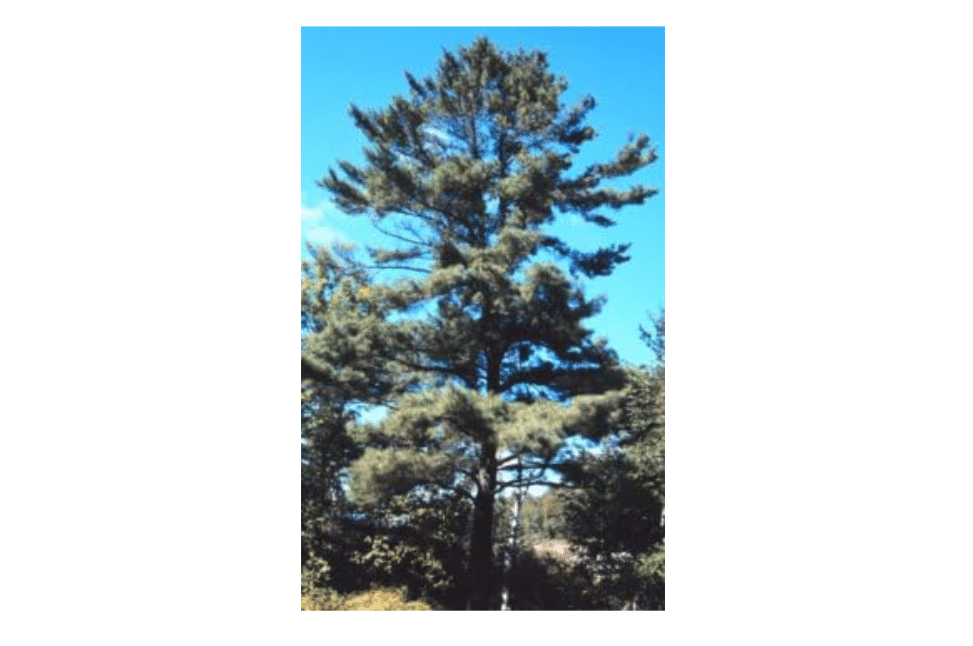
3. Eastern White Pine (Pinus strobus) Seedlings
-
Product Description: Typically shipped in affordable bundles or small plugs, this classic North American conifer is a foundational reforestation tree. The Eastern White Pine features soft, flexible blue-green needles that it keeps year-round, allowing for continuous, uninterrupted photosynthesis even in the dead of winter.
-
Price:
-
Key Features & Benefits:
-
Grows up to 150 feet tall with a 40-foot spread.
-
Evergreen canopy ensures 365-day carbon absorption.
-
A single tree can store over 1,000 kg of carbon over an 80-year lifespan.
-
-
Pros & Cons:
-
Pros: Year-round carbon absorption; acts as a brilliant winter windbreak to lower home heating costs; highly affordable to buy in bulk for large projects.
-
Cons: Susceptible to white pine blister rust in certain regions; drops acidic needles that gradually alter the pH of the surrounding soil.
-
-
Amazon Customer Ratings & Reviews: ~4.5/5 stars. Buyers consistently highlight incredibly high survival rates when planted in early spring. Because they are shipped as small seedlings, some customers note that patience is required for the first few years of growth.
-
Why It’s a Good Choice for Carbon Capture: While deciduous trees go dormant and stop capturing carbon in the winter, evergreens like the White Pine continue to photosynthesize, providing a steady, uninterrupted year-round carbon offset.
-
Ideal Use Case: Property boundary windbreaks, privacy screens, and large-scale residential reforestation projects.
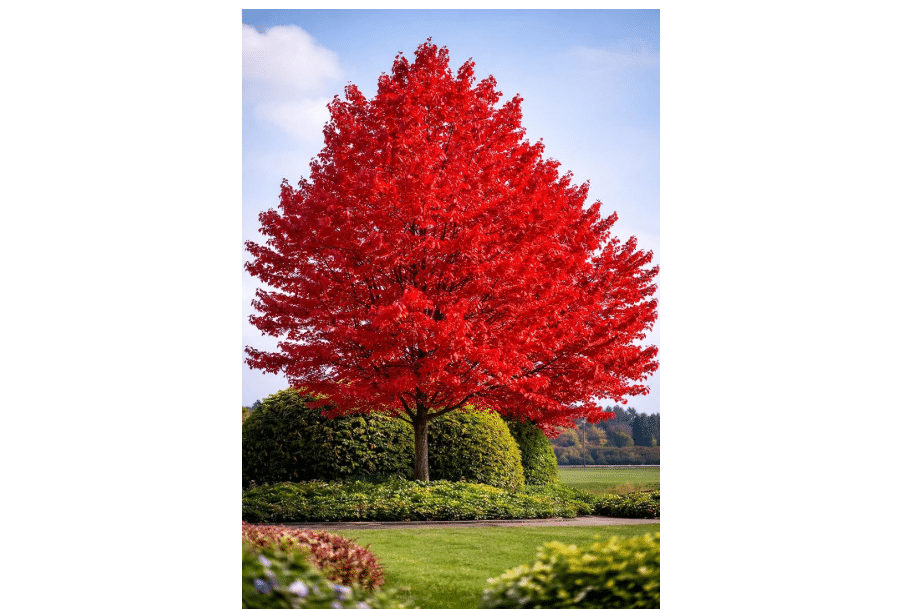
4. Red Maple (Acer rubrum) Live Plant
-
Product Description: The Red Maple is a versatile, highly adaptable deciduous tree usually shipped as an actively growing potted plant. Famous for its brilliant scarlet autumn foliage, this tree is a favorite for front-yard landscaping. It brings immense curb appeal while silently doing the heavy lifting of pulling greenhouse gases from the air.
-
Price: $55.00
-
Key Features & Benefits:
-
Thrives in a massive range of soil types, from boggy swamps to dry, rocky ridges.
-
Stores roughly 255 Mg of carbon per hectare in a mature forest setting.
-
Medium-to-fast growth rate, reaching 40 to 60 feet tall.
-
-
Pros & Cons:
-
Pros: Unmatched, fiery fall color; highly tolerant of poor, compacted urban soils; features a smaller, more manageable footprint than a sprawling oak.
-
Cons: Has a shallow, aggressive root system that can crack nearby sidewalks if planted improperly; the thin bark is easily damaged by lawnmowers and string trimmers.
-
-
Amazon Customer Ratings & Reviews: ~4.6/5 stars. This is one of the most popular trees on Amazon. Customers rave about the immediate pop of color and the secure, healthy packaging nurseries use. Minor complaints occasionally mention slow first-year growth as the tree focuses on root establishment.
-
Why It’s a Good Choice for Carbon Capture: Its incredible adaptability means it has an exceptionally high survival rate. A carbon-capturing tree only works if it lives, and the Red Maple is robust enough to survive in almost any yard, ensuring your environmental investment pays off.
-
Ideal Use Case: Front yard focal points, urban environments, and medium-sized suburban lawns.
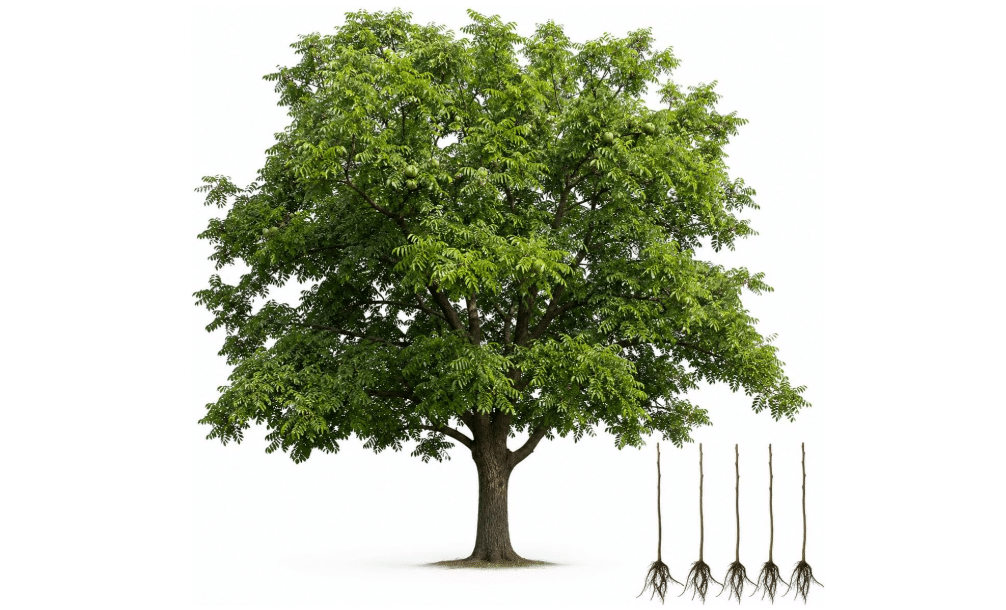
5. Black Walnut (Juglans nigra) Sapling
-
Product Description: The Black Walnut is a premium hardwood sapling that produces both high-value timber and edible, nutrient-dense nuts. Because it develops a massive taproot, it is usually shipped dormant or in specialized deep tree pots. It is a rugged, handsome tree that commands attention and respect in any landscape.
-
Price: $26.99
-
Key Features & Benefits:
-
Produces extremely dense, valuable dark wood.
-
Yields edible nuts for human or wildlife consumption.
-
Boasts incredible carbon density in both its thick trunk and expansive subterranean root biomass.
-
-
Pros & Cons:
-
Pros: Heavy, long-term carbon sink; provides a natural food source; highly resistant to many common tree diseases.
-
Cons: Secretes juglone, a natural chemical that inhibits the growth of nearby plants (especially tomatoes and peppers); messy, heavy nut drop in the fall.
-
-
Amazon Customer Ratings & Reviews: ~4.1/5 stars. Reviewers are highly pleased with the strong, healthy taproots upon delivery. Almost all negative reviews stem from uninformed buyers who didn’t realize the tree’s natural juglone production would kill their nearby vegetable gardens.
-
Why It’s a Good Choice for Carbon Capture: Black Walnut trees are true “ecosystem engineers.” They pack densely compressed carbon into heavy timber, making them one of the most efficient trees for permanent carbon storage per cubic foot of wood.
-
Ideal Use Case: Large homesteads, permaculture farms, and dedicated orchards placed far away from sensitive garden vegetables.
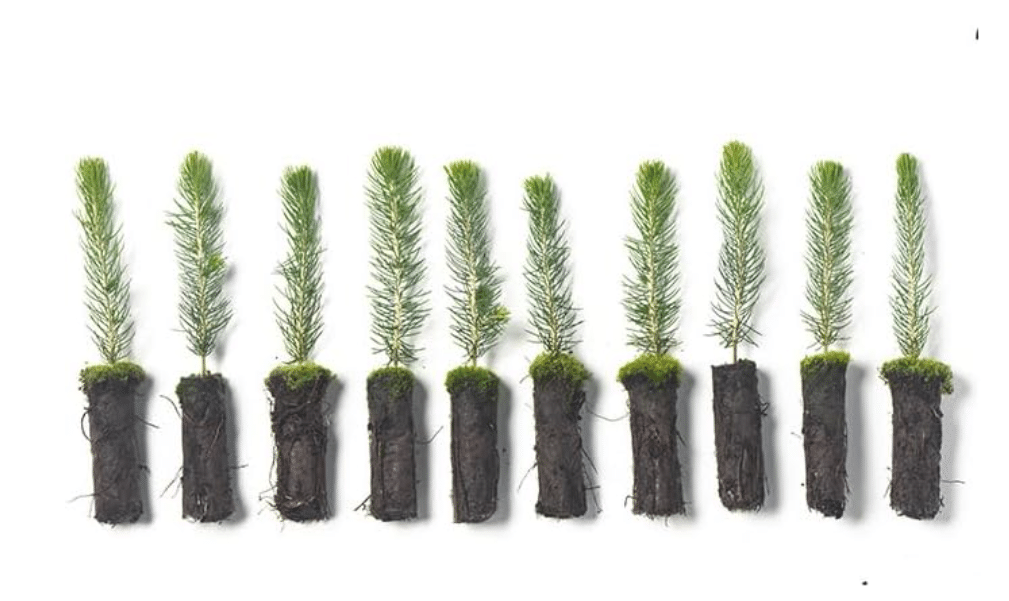
6. Colorado Blue Spruce (Picea pungens) Potted Tree
-
Product Description: A striking, silvery-blue evergreen conifer shipped securely in a gallon pot. The Colorado Blue Spruce is globally recognized for its rigid, beautifully tiered branches and exceptional hardiness in harsh weather. If your property endures heavy snow, freezing winds, and rocky dirt, this is the resilient carbon-capturer you need.
-
Price:
-
Key Features & Benefits:
-
Highly drought-resistant once the root system is established.
-
Captures approximately 593 kg of CO2 equivalent over a 50-year lifespan.
-
Maintains a tight, attractive pyramidal shape with minimal pruning.
-
-
Pros & Cons:
-
Pros: Gorgeous year-round aesthetic; survives in poor, rocky, and alkaline soils; provides excellent wildlife shelter in the dead of winter.
-
Cons: Slower growth rate compared to pines and deciduous softwoods; susceptible to needle cast diseases if planted in highly humid, stagnant climates.
-
-
Amazon Customer Ratings & Reviews: ~4.3/5 stars. Customers praise the secure shipping of potted spruces and their immediate visual impact upon unboxing. Some reviews from southern states mention browning needles, highlighting the importance of not overwatering and ensuring proper climate matching.
-
Why It’s a Good Choice for Carbon Capture: The Colorado Blue Spruce thrives in marginal, degraded soils where other carbon-capturing trees would simply fail. It allows homeowners with poor soil conditions to actively participate in carbon offset programs without heavily amending their land.
-
Ideal Use Case: Cold climates, poor-soil landscapes, high-altitude properties, and front-yard specimen plantings.
7. American Sycamore (Platanus occidentalis) Sapling
-
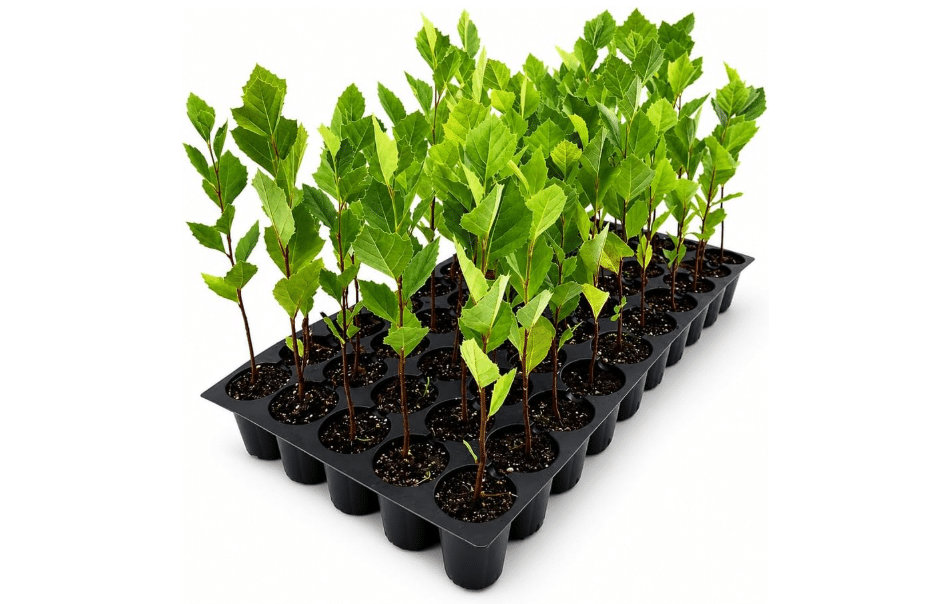
Product Description: The American Sycamore is a fast-growing colossus known for its distinctive mottled, peeling bark (revealing striking white, green, and tan patches) and massive, maple-like leaves. Shipped as a robust bare-root or potted plant, this tree is designed for massive open spaces where it can stretch its limbs without restriction.
-
Price: $29.97
-
Key Features & Benefits:
-
Phenomenal growth speed, capable of adding up to 6 feet per year in ideal conditions.
-
Develops one of the largest trunk diameters of any North American hardwood.
-
Colossal leaf surface area allows for maximum atmospheric gas exchange and photosynthesis.
-
-
Pros & Cons:
-
Pros: Incredibly fast shade and aggressive carbon drawdown; visually striking winter bark; easily tolerates wet, soggy ground and periodic flooding.
-
Cons: Highly susceptible to anthracnose (a fungal disease that causes early leaf drop); notoriously messy, constantly dropping large leaves, twigs, and fuzzy seed balls.
-
-
Amazon Customer Ratings & Reviews: ~4.2/5 stars. Buyers are repeatedly thrilled by the rapid vertical growth. A few note it arrived dormant and looked like a “dead stick” out of the box, only to explode with massive green leaves the following spring.
-
Why It’s a Good Choice for Carbon Capture: Its sheer volume is unmatched. The combination of a massive, water-heavy trunk and a colossal canopy allows the Sycamore to pull immense amounts of CO2 out of the air in record time.
-
Ideal Use Case: Properties with streams, wet lowlands, or vast acreage far away from gutters, driveways, and swimming pools.
8. Douglas Fir (Pseudotsuga menziesii) Seedlings
-
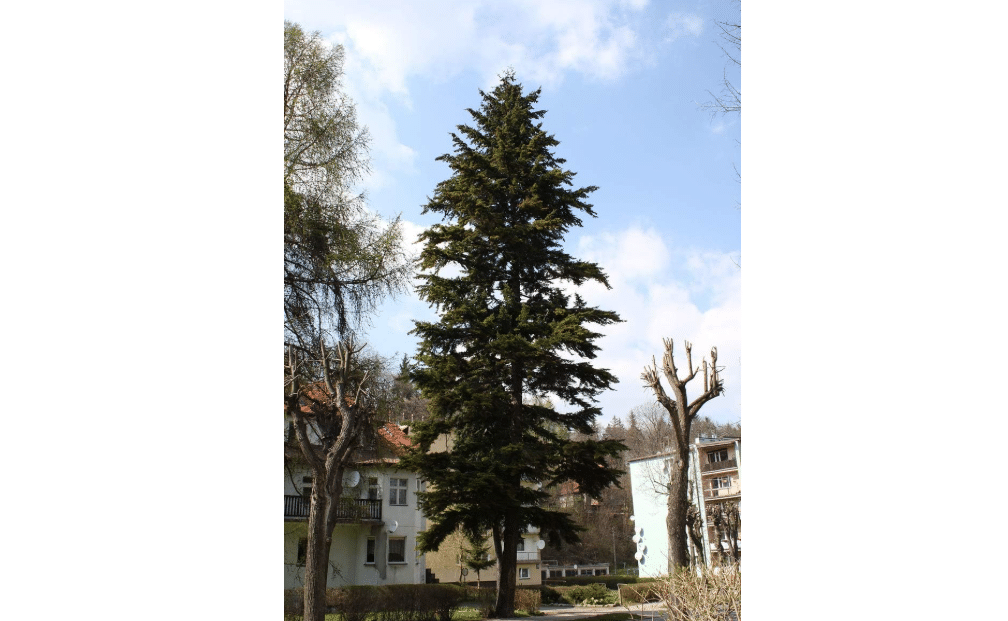
Product Description: A towering western evergreen shipped as root plugs or small pots. The Douglas Fir is not just a beloved Christmas tree; it is one of the most important timber and carbon-sequestering trees on the planet. This majestic conifer brings the rugged beauty of the Pacific Northwest straight to your backyard.
-
Price:
-
Key Features & Benefits:
-
Lives for centuries, ensuring a permanent atmospheric carbon sink.
-
Perfectly adapted needle structure for optimized, year-round photosynthesis.
-
The dominant carbon warrior in high-elevation and temperate rainforest ecosystems.
-
-
Pros & Cons:
-
Pros: Exceptional lifetime carbon storage capacity; beautiful, symmetrical growth habit; thrives in mountainous, cool regions.
-
Cons: Requires well-drained soil and will quickly die in standing water; struggles significantly in hot, highly humid southern states.
-
-
Amazon Customer Ratings & Reviews: ~4.4/5 stars. Forestry enthusiasts rate these seedlings highly for their overall survival rates. However, seasoned buyers warn that you must pay strict attention to your planting zones—these trees will not tolerate swampy southern heat.
-
Why It’s a Good Choice for Carbon Capture: Douglas Firs are incredibly efficient biological machines. They absorb significantly more CO2 than they release throughout their exceptionally long lifetimes, locking that carbon securely in dense, resinous wood.
-
Ideal Use Case: The Pacific Northwest, mountainous properties, dry and cool climates, and large-scale evergreen windbreaks.
9. Sweetgum (Liquidambar styraciflua) Live Plant
-
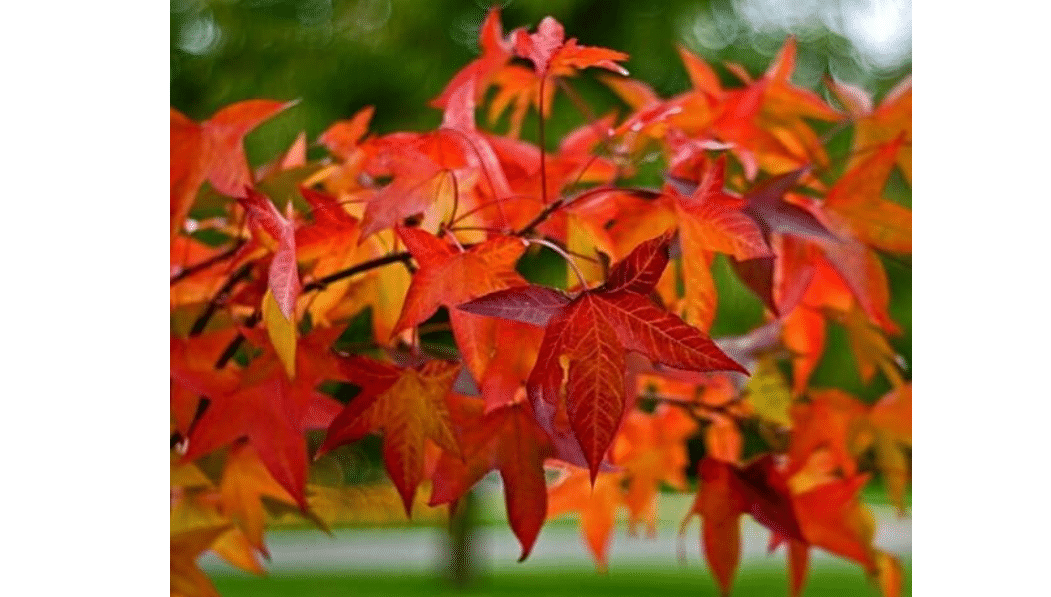
Product Description: A star-leaved deciduous tree usually shipped potted, the Sweetgum is legendary for putting on a brilliant, multi-colored autumn display. It is one of the rare trees that can showcase yellow, orange, purple, and vibrant red leaves all on the same canopy at the same time.
-
Price:
-
Key Features & Benefits:
-
Highly efficient photosynthesis (scientific studies show their biomass increases significantly in higher CO2 environments).
-
Excellent urban pollution tolerance, capable of scrubbing dirty city air.
-
Fast, upright growth habit reaching 60 to 80 feet tall.
-
-
Pros & Cons:
-
Pros: Spectacular, unmatched fall color; thrives in compacted, poor urban soils; highly resistant to deer and pests.
-
Cons: Drops spiky, woody “gumballs” in the winter that are painful to step on barefoot and very difficult to mow over.
-
-
Amazon Customer Ratings & Reviews: ~4.0/5 stars. The Sweetgum receives high marks for its striking foliage beauty, but customer reviews are heavily polarized by the spiky seed pods. Buyers either love the tree’s hardiness or regret planting it too close to pedestrian walkways.
-
Why It’s a Good Choice for Carbon Capture: The Sweetgum is scientifically proven to be highly responsive to elevated atmospheric CO2. In higher-carbon environments, its photosynthesis rate actually increases by up to 46%, making it a literal sponge for greenhouse gases.
-
Ideal Use Case: Urban forestry, deep property borders, and naturalized areas where the dropped seed pods aren’t a pedestrian hazard.
10. Silver Maple (Acer saccharinum) Bare Root
-
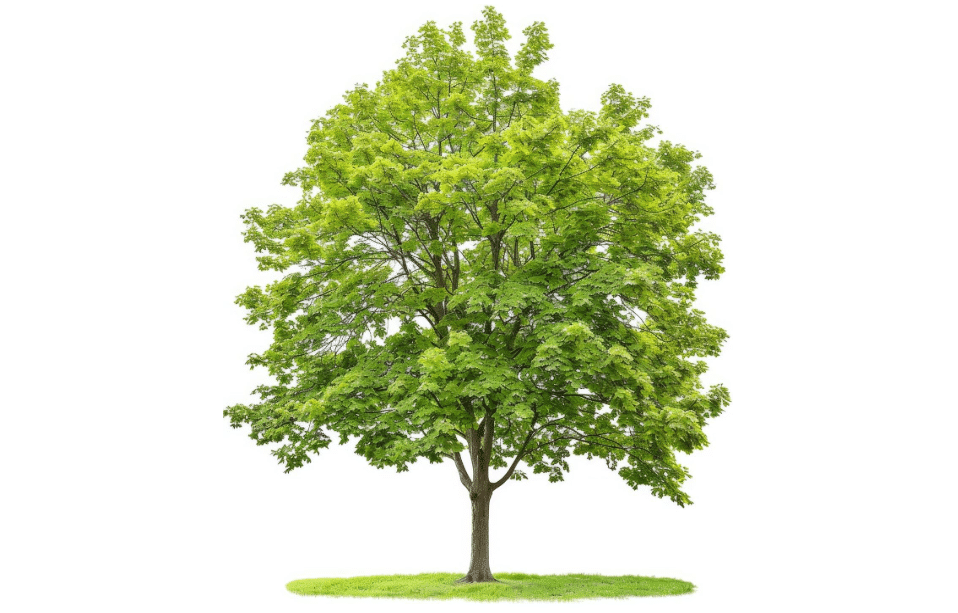
Product Description: A large, extremely fast-growing maple shipped in a dormant, bare-root state. It features deeply lobed, delicate leaves with silver undersides that shimmer beautifully in the wind. When you need a giant tree as fast as nature will allow, the Silver Maple delivers.
-
Price: $35.00
-
Key Features & Benefits:
-
Boasts one of the highest CO2 absorption capacities among all fast-growing deciduous trees.
-
Readily tolerates deep flooding and compacted soils.
-
Provides massive, sprawling shade within just a few years of planting.
-
-
Pros & Cons:
-
Pros: Almost indestructible in wet, swampy conditions; extremely rapid carbon sequestration; highly affordable to purchase.
-
Cons: The wood is notoriously weak and brittle, breaking easily in ice and heavy wind storms; roots are incredibly aggressive and will seek out and destroy old plumbing lines.
-
-
Amazon Customer Ratings & Reviews: ~4.1/5 stars. Customers deeply appreciate the cheap price tag and the incredibly fast growth for quick backyard privacy. However, tree care experts in the reviews frequently warn about planting them too close to homes due to the brittle branch structure.
-
Why It’s a Good Choice for Carbon Capture: When you need to pull carbon quickly and have an area where a dropped branch won’t damage any property, the Silver Maple offers unbeatable, high-speed biological sequestration.
-
Ideal Use Case: Floodplains, riverbanks, and the far, unused corners of large estates where wood breakage isn’t a safety or financial liability.
IV. Quick Comparison: Which Tree Should You Buy?
To make your buying decision as easy as possible, we have condensed the critical data into a streamlined, three-column comparison table.
V. Final Recommendation
Choosing the right tree for your property requires balancing your desire for immediate environmental impact with the long-term reality of tree care. Fast-growing softwoods like the Tulip Poplar and Silver Maple are fantastic for rapid carbon drawdown and immediate shade, but they require plenty of safe space to account for weaker wood. On the other hand, slow-growing hardwoods like the Northern Red Oak and Black Walnut are generational investments, packing incredibly dense amounts of carbon into wood that will stand for centuries.
For the vast majority of suburban homeowners looking to make a confident, low-risk purchase, the Red Maple stands out as the ultimate top pick. It strikes the perfect balance: it grows fast enough to satisfy your desire for a quick canopy, lives long enough to provide meaningful carbon sequestration, and is highly adaptable to a wide range of less-than-ideal residential soils. It delivers spectacular aesthetic value without taking up the monumental footprint of a Sycamore or Oak.
Before completing your checkout, take one last look at your USDA Hardiness Zone map. Verifying your climate ensures that the money you spend today turns into a thriving, carbon-capturing canopy tomorrow. Head over to Amazon to check current seasonal availability, and get your tree in the ground this spring to start aggressively offsetting your footprint.
VI. Frequently Asked Questions (FAQ)
How many trees do I need to plant to offset my family’s carbon footprint? The average American produces roughly 14 to 16 tons of carbon emissions per year. Since a single mature tree absorbs roughly 48 pounds of CO2 annually, it would take approximately 600 to 700 mature trees to completely offset one individual’s yearly emissions. While planting a few trees in your yard won’t bring your footprint to zero on its own, it drastically reduces your household’s net emissions, lowers cooling costs (saving more emissions), and contributes to a vital, cumulative global effort.
Is it better to buy bare-root trees or potted trees online? Both have distinct advantages. Bare-root trees are shipped while fully dormant, making them much cheaper to buy and ship. They adapt incredibly well to native soil because their roots aren’t spoiled by nutrient-rich potting soil, but they must be planted immediately upon arrival in early spring. Potted trees (live plants) are more expensive and heavier to ship, but they give you a head start on growth, can be planted at almost any time during the growing season, and provide instant visual gratification.
Do fast-growing trees or slow-growing trees absorb more carbon overall? Over a 10-year timeline, fast-growing trees (like Maples and Poplars) absorb significantly more carbon because they rapidly expand their biomass and leaf surface area. However, over a 100-year timeline, slow-growing hardwoods (like Oaks and Walnuts) absorb and retain far more carbon. Hardwoods create much denser wood, physically packing more carbon molecules into every cubic inch of their trunk, whereas fast-growing trees have “lighter,” more porous wood and shorter lifespans.