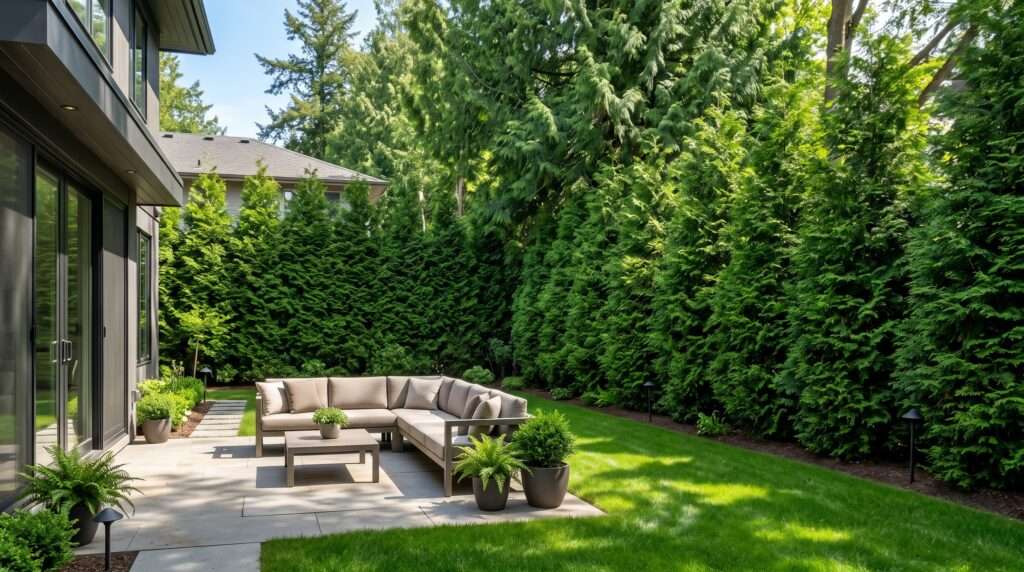
There is no backyard luxury quite like true privacy. Whether you are trying to block out nosy neighbors, muffle the hum of a noisy street, or simply hide an unsightly view next door, creating a secluded outdoor sanctuary is essential. If you want a lush, permanent solution, planting the best 10 trees for privacy fence is the ultimate way to transform your yard and reclaim your personal space.
Traditional wood and vinyl fences might seem like the easiest fix, but they come with significant drawbacks. They are expensive to install, require continuous maintenance to prevent rot or fading, and are frequently capped by strict HOA rules and local zoning height limits. A living barrier, on the other hand, steps right over those hurdles. A dense screen of evergreens is a superior, eco-friendly solution that easily outgrows municipal height restrictions while naturally filtering air, blocking heavy winds, and adding lasting property value to your landscape.
To help you skip the guesswork and make an informed investment, we have done the heavy lifting. We analyzed top-rated starter trees available on Amazon and top online nurseries, consulted with arboriculture experts, and combed through hundreds of verified customer reviews. The result is this definitive guide to the best 10 trees for privacy fence. Read on to compare growth rates, hardiness zones, and maintenance needs so you can confidently choose the perfect natural boundary for your home.
2. How to Choose the Right Privacy Tree (Buying Guide)
Before you hit “add to cart,” you need to match the tree to your specific yard. Buying the wrong tree can result in overgrown property lines, dying foliage, or constant pruning. Here are the four critical factors to consider:
-
Hardiness Zones: This is the most crucial step. A tree that thrives in the humid heat of Florida (Zone 9) might instantly die in a Vermont winter (Zone 4). Always check your USDA Hardiness Zone before buying.
-
Growth Rate vs. Longevity: It is tempting to buy the fastest-growing tree available (like the Leyland Cypress, which grows up to 5 feet a year). However, extremely fast growers often have shorter lifespans and weaker wood. If you can wait a few extra years, moderately growing trees often live much longer and require less maintenance.
-
Available Space & Mature Size: Do not just look at how tall a tree gets—look at its mature width. If you have a small suburban yard, a massive Thuja Green Giant might swallow your entire lawn. In tight spaces, opt for columnar trees like the Emerald Green Arborvitae or Sky Pencil Holly.
-
Maintenance & Deer Resistance: If you live in a rural area or near a forest, deer will view certain evergreens as an all-you-can-eat buffet. Opt for deer-resistant varieties if wildlife is common in your area. Additionally, consider whether the tree naturally maintains its shape or requires annual shearing.
3. Comparison Summary (At a Glance)
4. Detailed Product Reviews: The Best 10 Trees for Privacy Fence
1. Thuja ‘Green Giant’ Arborvitae (Best Overall for Fast Privacy)
-
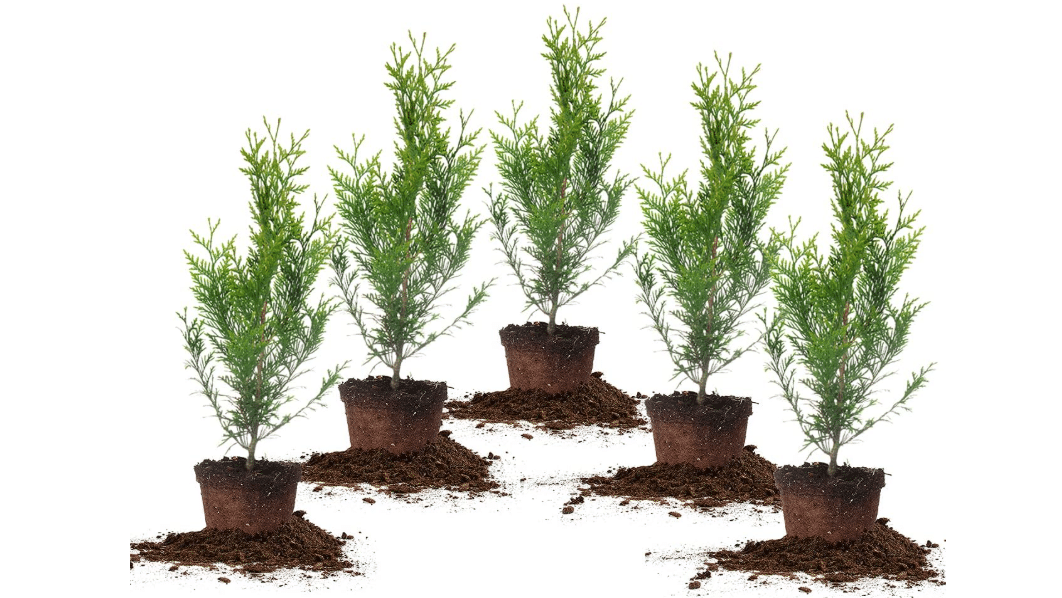
Product Description: The Thuja ‘Green Giant’ is the undisputed king of privacy trees. A vigorous, incredibly fast-growing evergreen, it features rich, dark green foliage that provides a dense, impenetrable screen down to the ground. It is highly adaptable and essentially disease-free, making it a favorite among landscapers.
-
Price: $89.99
-
Key Features & Benefits: Thrives in USDA Zones 5–9. It can grow an astonishing 3 to 5 feet per year once established. It tolerates a wide range of soil types and rarely requires pruning to maintain its classic pyramidal shape.
-
Pros and Cons:
-
Pros: Extremely fast growth rate; highly disease and pest resistant; stands up well to heavy ice and snow.
-
Cons: Requires significant horizontal space (matures at 12–18 feet wide); not suitable for tiny urban yards.
-
-
Amazon Customer Ratings and Reviews: Boasts an impressive average of 4.5/5 stars. Customers frequently praise how well-packaged the live plants arrive and marvel at the rapid growth rate during the first full spring. Minor complaints generally revolve around transplant shock if planted during extreme summer heat.
-
Why it’s a Good Choice For: Homeowners who need to block out a two-story view quickly without spending thousands of dollars on custom hardscape structures.
-
Ideal Use Case / Who Should Buy It: Buyers with medium-to-large properties (quarter-acre or more) in zones 5 to 9 who are looking for a quick, low-maintenance living wall.
2. Emerald Green Arborvitae (Best for Small Yards & Tight Spaces)
-
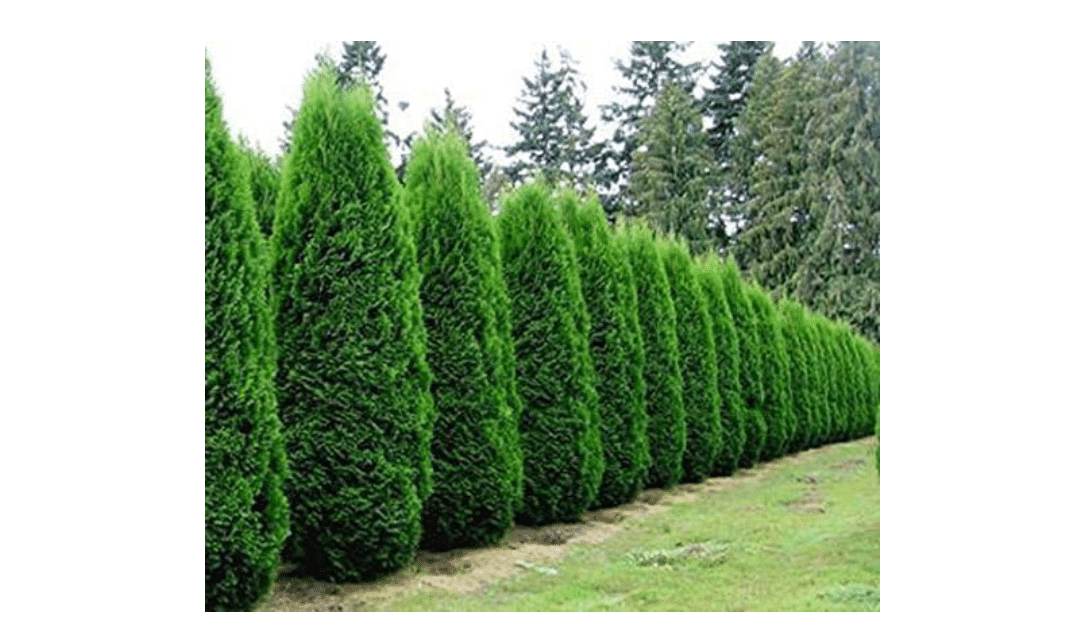
Product Description: If you love the look of an Arborvitae but simply don’t have the room for a massive Green Giant, the Emerald Green is your answer. It is a compact, elegant evergreen with glossy, bright green foliage that brilliantly holds its color throughout the freezing winter months.
-
Price: $59.99
-
Key Features & Benefits: Exceptionally cold hardy, thriving in USDA Zones 3–8. It naturally maintains a tight, narrow columnar shape, topping out at around 12-15 feet tall and only 3-4 feet wide.
-
Pros and Cons:
-
Pros: Perfect for tight property lines; absolutely zero shearing required to keep its shape; excellent cold tolerance.
-
Cons: Slower growth rate (roughly 6–12 inches per year); highly susceptible to deer browsing in rural areas.
-
-
Amazon Customer Ratings and Reviews: Holding strong at 4.6/5 stars. Urban and suburban buyers love the neat, formal appearance and ease of planting. The primary warning from rural buyers is that hungry deer will eat the bottom half of the tree in the winter if not sprayed or protected.
-
Why it’s a Good Choice For: Creating a formal, structured hedge right along a chain-link or wooden fence line without encroaching on valuable lawn space.
-
Ideal Use Case / Who Should Buy It: Urban and suburban homeowners with limited backyard space who need a tidy, narrow screen between closely built houses.
3. Leyland Cypress (Best for Maximum Height and Windbreaks)
-
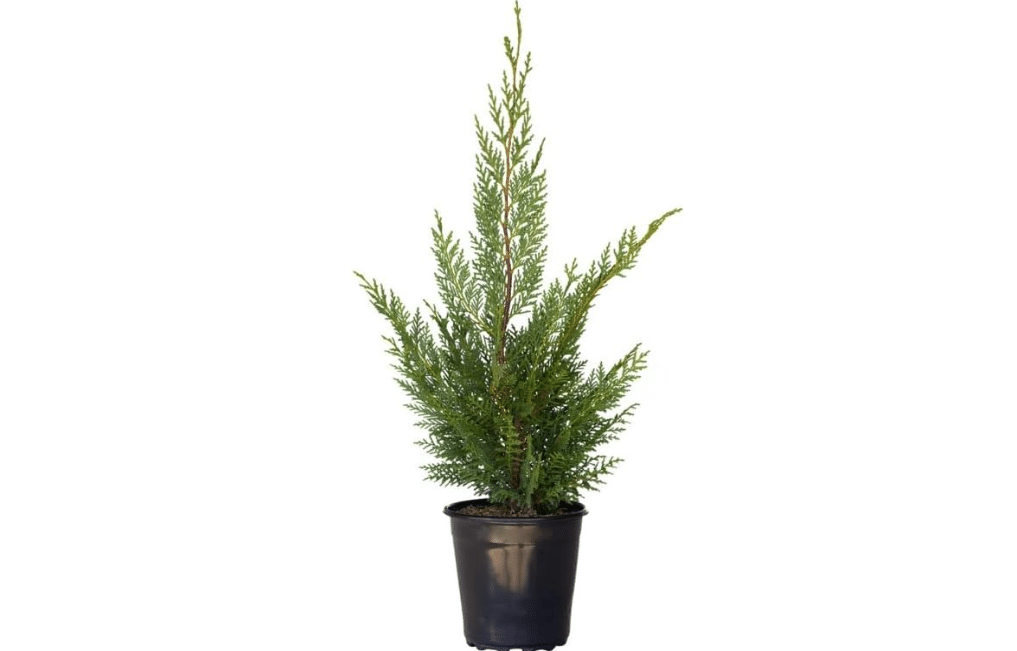
Product Description: The Leyland Cypress is the speed champion of the landscaping world. A feathery, soft-textured conifer, it shoots up incredibly fast to create a massive, dense screen. It is frequently used on large estates and farms to block noise, wind, and unsightly commercial views.
-
Price:
-
Key Features & Benefits: Grows an incredible 3–5+ feet per year in optimal conditions. It thrives in full sun across Zones 6–10 and handles salt spray well, making it a great option for coastal properties.
-
Pros and Cons:
-
Pros: Unbeatable growth speed for instant gratification; excellent for severe noise reduction and buffering heavy winds.
-
Cons: Relatively short-lived (15–25 years); prone to bagworms and canker disease in humid climates; requires frequent pruning if you want to control its immense size.
-
-
Amazon Customer Ratings and Reviews: Averages 4.3/5 stars. Reviewers love the “instant privacy” aspect and the soft foliage. Some negative reviews note that trees can arrive root-bound, and buyers warn that without proper spacing, they can quickly crowd each other out.
-
Why it’s a Good Choice For: Rural properties or large suburban lots that need to block out a busy highway, a commercial building, or create an immediate heavy windbreak.
-
Ideal Use Case / Who Should Buy It: Property owners prioritizing rapid vertical height and dense visual blocking over long-term (30+ years) landscaping investments.
4. Sky Pencil Holly (Best Narrow Broadleaf Evergreen)
-
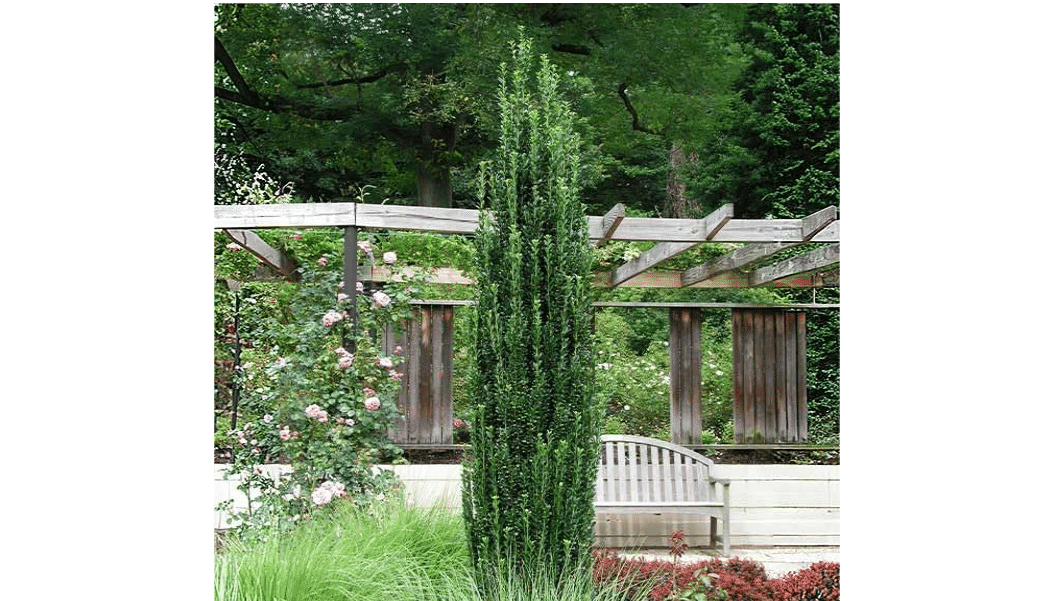
Product Description: Looking for something completely different? The Sky Pencil Holly is a unique, ultra-slender broadleaf evergreen shrub. It features dark, glossy, spineless leaves and grows straight up toward the sky, resembling a green pillar or pencil.
-
Price:
-
Key Features & Benefits: Reaches 6–10 feet tall but magically stays only 2 feet wide. It is female and produces small purple berries in the fall (if a male pollinator is nearby). Thrives in Zones 5–9.
-
Pros and Cons:
-
Pros: Takes up virtually zero horizontal yard depth; offers an elegant, modern architectural look; highly pollution tolerant.
-
Cons: Not tall enough to block second-story windows; slower growth rate; branches can splay outward if burdened by heavy, wet snow.
-
-
Amazon Customer Ratings and Reviews: Averages 4.4/5 stars. Customers rave about its ability to provide privacy on tight apartment patios and small decks. Some reviews mention that the tops can suffer winter burn in extreme cold (Zone 5) without a windbreak.
-
Why it’s a Good Choice For: Framing front entryways, lining narrow walkways, or creating a sharp, modern privacy wall around a small patio or pool deck.
-
Ideal Use Case / Who Should Buy It: City dwellers, townhome owners, or homeowners with very modern landscape designs who have almost no yard depth to spare.
5. Nellie Stevens Holly (Best Broadleaf for Southern Climates)
-
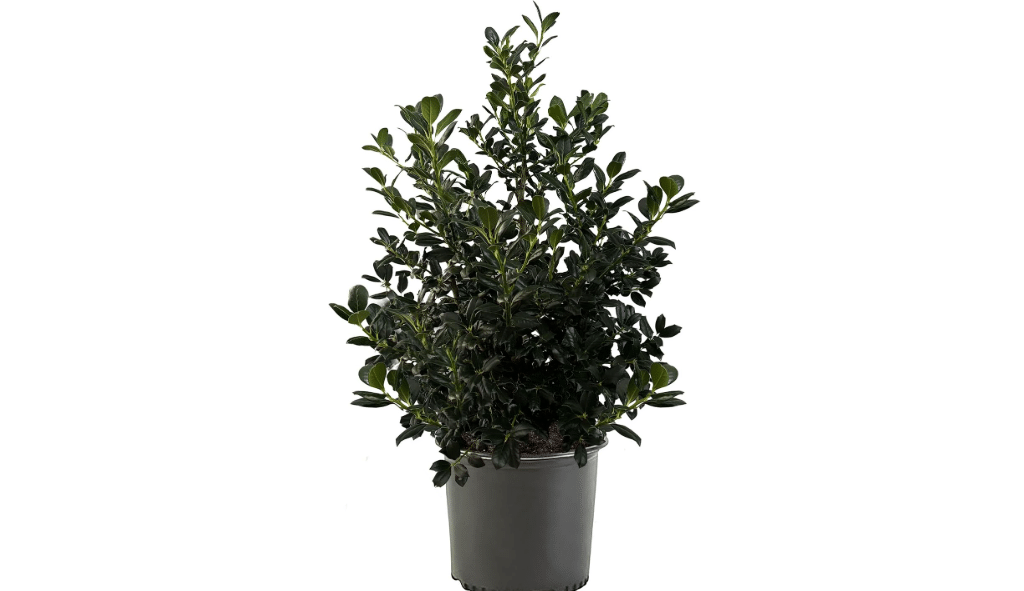
Product Description: A vigorous, dense broadleaf evergreen, the Nellie R. Stevens Holly is a classic Southern landscape staple. It features dark green, slightly spiny leaves and produces an abundance of bright red winter berries—notably, without needing a male pollinator plant nearby.
-
Price:
-
Key Features & Benefits: Grows rapidly to 15–25 feet tall. It boasts exceptional heat and drought tolerance, thriving comfortably in USDA Zones 6–9.
-
Pros and Cons:
-
Pros: Thrives in high summer heat and humidity; naturally robust and wide-bottomed; visually stunning year-round due to the festive red berries.
-
Cons: Leaves have prickly edges (making cleanup a bit painful); requires ample space to spread, reaching 10–15 feet wide at maturity.
-
-
Amazon Customer Ratings and Reviews: A stellar 4.7/5 stars. Customers praise its near-invincibility in brutal Southern heat and heavy clay soils. It is highly rated as a natural security fence due to the dense, prickly foliage.
-
Why it’s a Good Choice For: Creating an impenetrable, thorny barrier that keeps out unwanted wildlife and trespassers while doubling as a beautiful winter focal point.
-
Ideal Use Case / Who Should Buy It: Homeowners in the South or Mid-Atlantic who want a wide, classic-looking, heat-resistant hedge instead of a traditional conifer.
6. Italian Cypress (Best for Mediterranean & Formal Landscape Styles)
-
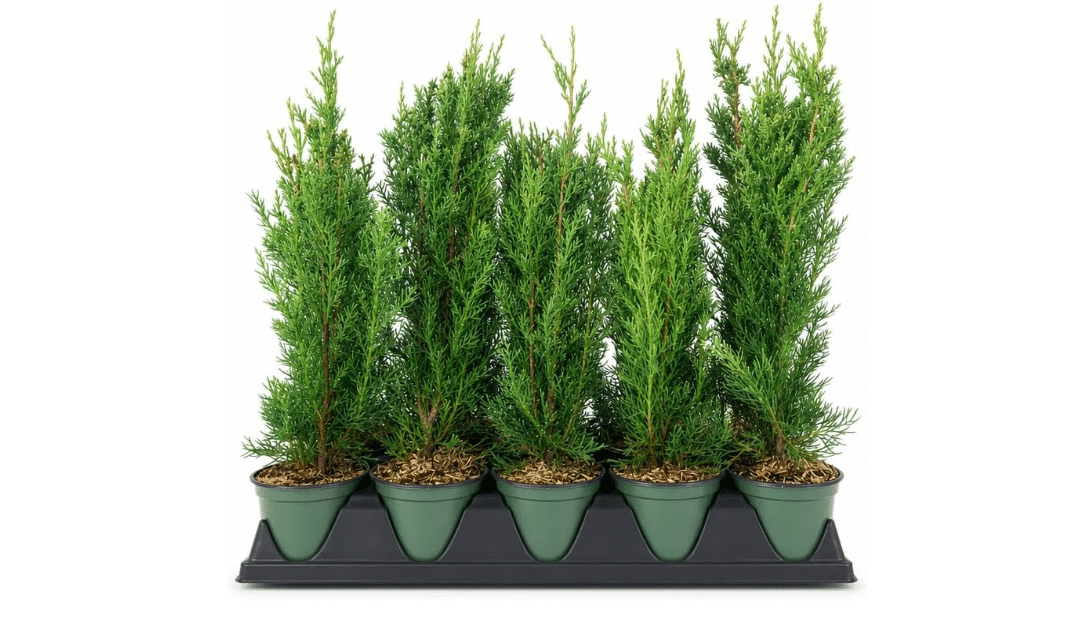
Product Description: The Italian Cypress is the classic, tall, skinny tree seen dotting Tuscan landscapes and luxury estates. It brings an unparalleled touch of elegance and dramatic vertical scale to any property, growing like a dark green, tightly packed spire.
-
Price: $68.97
-
Key Features & Benefits: Grows to a towering 30–40 feet tall while staying an astonishingly narrow 3–5 feet wide. It is highly drought-tolerant once established and thrives in USDA Zones 7–10.
-
Pros and Cons:
-
Pros: Extremely drought-resistant; zero encroachment on yard space; striking, high-end formal appearance.
-
Cons: Highly susceptible to spider mites; branches can flop outward under heavy rain or uncharacteristic snow; not cold hardy.
-
-
Amazon Customer Ratings and Reviews: Averages 4.5/5 stars. Buyers in California, Nevada, and Texas rave about its survival in arid conditions and its instant curb appeal. The few negative reviews mostly center on pest management for spider mites.
-
Why it’s a Good Choice For: Lining a long driveway, flanking a property line in an arid climate, or framing a large, modern home with bold architectural lines.
-
Ideal Use Case / Who Should Buy It: Homeowners in hot, dry climates wanting a sophisticated, high-end look without giving up any horizontal yard space.
7. Blue Arrow Juniper (Best Colorful Evergreen Screen)
-
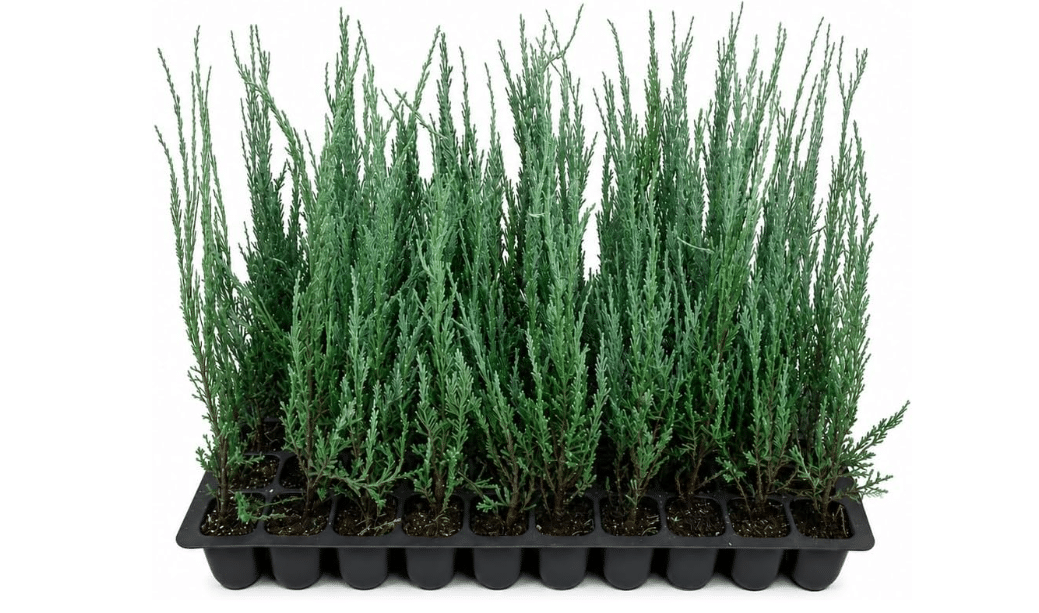
Product Description: Move away from standard green with the striking Blue Arrow Juniper. This narrow evergreen boasts powdery, silvery-blue foliage that provides stunning color contrast against traditional green lawns and darker broadleaf shrubs.
-
Price: $149.97.
-
Key Features & Benefits: Extremely cold hardy, surviving easily in USDA Zones 4–9. It tops out around 12–15 feet and maintains a remarkably tight, upright form (about 2 feet wide) without needing to be tied or sheared.
-
Pros and Cons:
-
Pros: Beautiful icy-blue tint; highly drought and cold tolerant; naturally deer resistant.
-
Cons: Can suffer from cedar-apple rust if planted near apple or crabapple trees; moderate growth rate compared to cypresses.
-
-
Amazon Customer Ratings and Reviews: Earns a solid 4.6/5 stars. Customers frequently highlight the aesthetic brilliance of the blue foliage and how well it handles freezing winds. Some mention it takes a full year to establish before rapid vertical growth begins.
-
Why it’s a Good Choice For: Breaking up the visual monotony of standard green hedges with a pop of cool color while still securing tight, narrow spaces.
-
Ideal Use Case / Who Should Buy It: Gardeners in cold or arid zones wanting a vibrant, low-maintenance screen that adds distinct landscape character.
8. Eastern Red Cedar (Best Native Tree for Poor Soils)
-
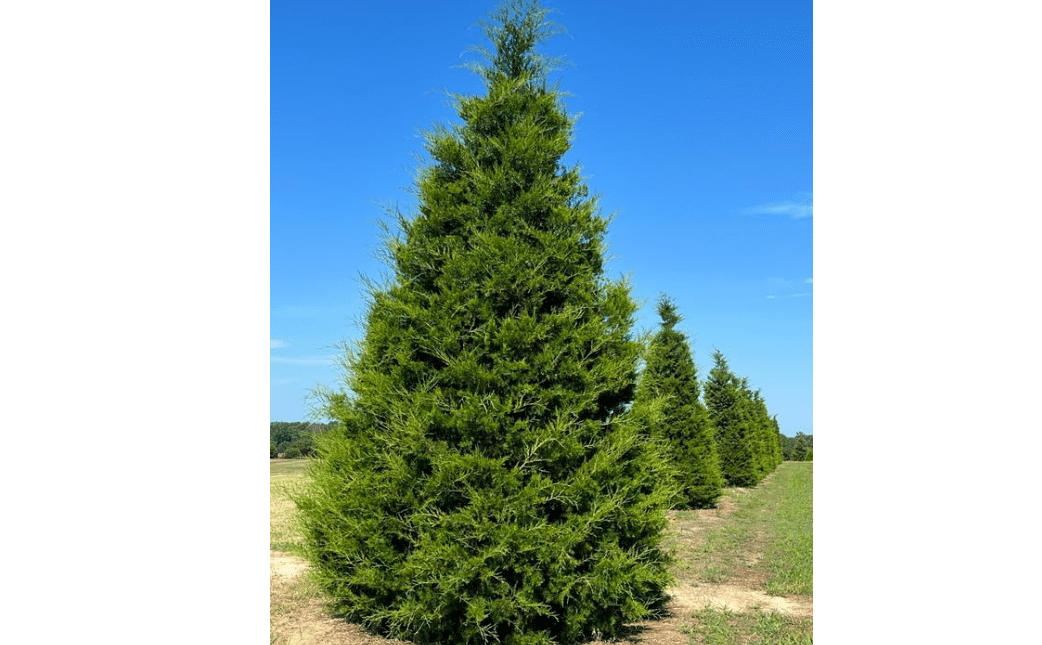
Product Description: Do not let the name fool you; the Eastern Red Cedar is actually a rugged, native North American juniper. It is incredibly tough, adaptable, and provides excellent winter habitat and berry food for local bird populations.
-
Price:
-
Key Features & Benefits: Reaches 30–50 feet tall and 10–20 feet wide. It tolerates poor, rocky, and dry soils, handles road salt easily, and thrives across a massive range of USDA Zones (2–9).
-
Pros and Cons:
-
Pros: Indestructible in terrible soils; excellent windbreak; highly deer resistant; supports native wildlife.
-
Cons: Foliage can turn slightly bronze or brown during harsh winters; serves as a host to cedar-apple rust.
-
-
Amazon Customer Ratings and Reviews: Averages 4.4/5 stars. Rural buyers focus on its incredible survival rate in neglected, un-irrigated areas. Reviewers warn to plant it well away from apple orchards.
-
Why it’s a Good Choice For: Naturalizing a large rural property line where installing irrigation systems and hauling soil amendments is impossible.
-
Ideal Use Case / Who Should Buy It: Rural landowners, off-grid property owners, or anyone dealing with tough, dry, rocky ground who needs an impenetrable barrier.
9. Norway Spruce (Best for Cold Climates and Snow Fencing)
-
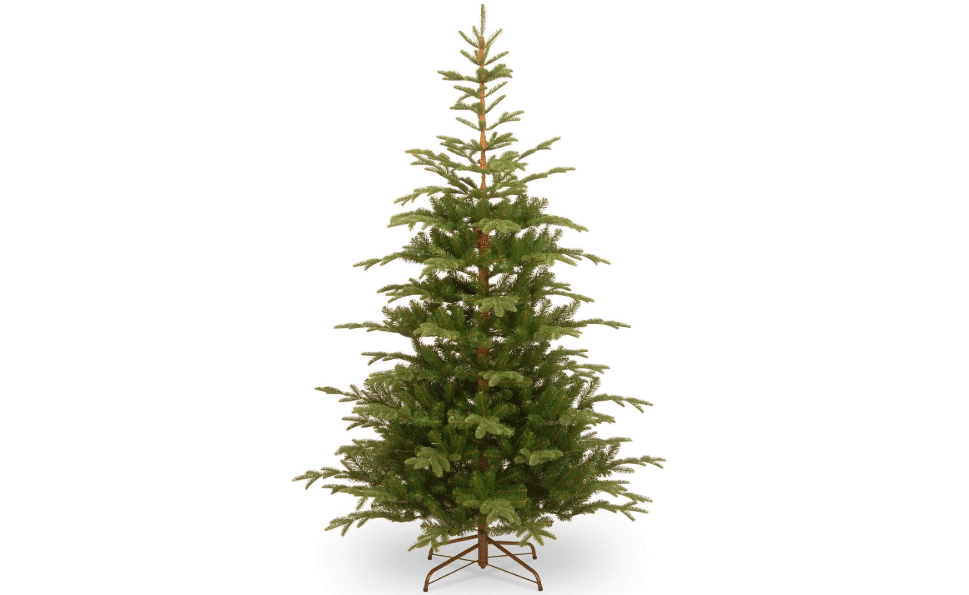
Product Description: A large, majestic evergreen, the Norway Spruce features dark green needles and classic drooping branches that sweep the ground. When planted in rows, these branches interlock to create a solid, impenetrable wall of green.
-
Price:
-
Key Features & Benefits: Grows rapidly to 40–60 feet tall and 25–30 feet wide. It is incredibly cold hardy (Zones 2–7) and is historically used as a primary windbreak on northern farms.
-
Pros and Cons:
-
Pros: Thrives in harsh northern winters; effectively blocks heavy wind and snow drifts; exceptionally long lifespan.
-
Cons: Takes up a massive amount of horizontal space; struggles with the humidity and deep heat of the South.
-
-
Amazon Customer Ratings and Reviews: Averages 4.5/5 stars. Excellent feedback comes from Midwest and Northern buyers regarding its survival in sub-zero temperatures. Buyers warn that it requires serious yard space to avoid crowding.
-
Why it’s a Good Choice For: Creating a dense, living snow fence to protect homes and driveways from harsh winter storms and heavy snowdrifts.
-
Ideal Use Case / Who Should Buy It: Homeowners with acreage in northern climates (Zones 2–7) who want a massive privacy wall that can shrug off a blizzard.
10. Carolina Sapphire Cypress (Best Fast-Growing Alternative to Leyland)
-
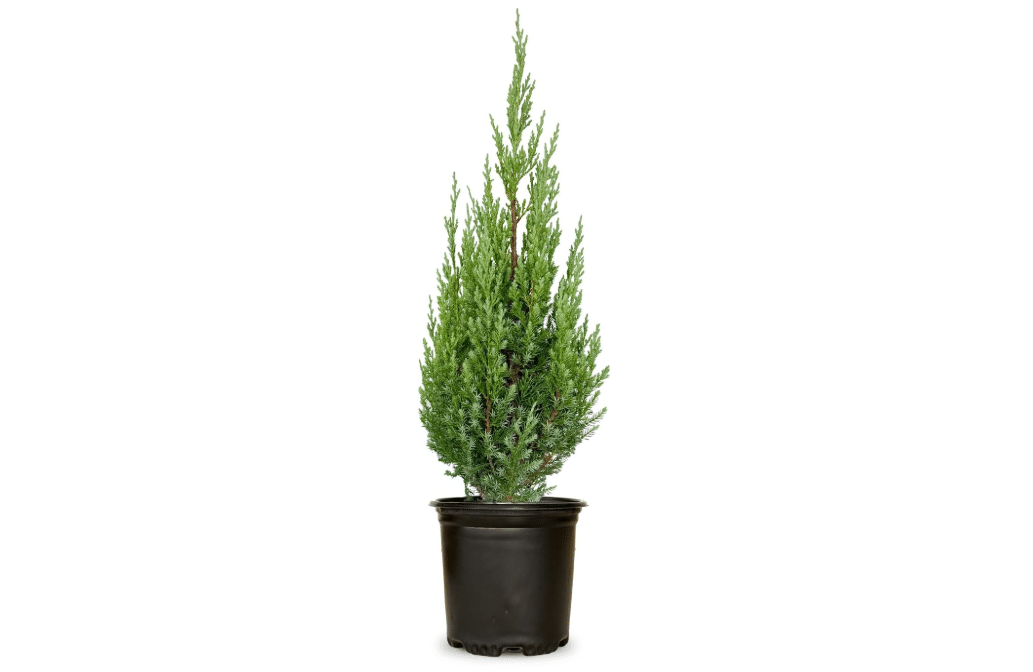
Product Description: If you want the speed of a Leyland Cypress but want better color and fewer disease issues, the Carolina Sapphire is a phenomenal choice. This fast-growing conifer features stunning lacy, silvery-blue foliage and emits a wonderful pine and citrus fragrance.
-
Price:
-
Key Features & Benefits: Grows 30–40 feet tall and 15–20 feet wide in Zones 6–9. It exhibits superior drought and heat tolerance compared to many other fast-growing evergreens.
-
Pros and Cons:
-
Pros: Beautiful color; incredibly fast grower; significantly more disease resistant than the Leyland Cypress.
-
Cons: Can develop a slightly open or unruly growth habit if not lightly pruned; strictly requires well-drained soil to avoid root rot.
-
-
Amazon Customer Ratings and Reviews: Holds a 4.6/5 star rating. Customers adore the unique blue color and the fresh citrus scent it brings to the yard. Cautions mostly revolve around overwatering clay soils, which can drown the roots.
-
Why it’s a Good Choice For: Providing rapid privacy with superior visual flair, better disease resistance, and an amazing aroma that elevates your outdoor living space.
-
Ideal Use Case / Who Should Buy It: Southern and Western buyers who want a large, fast-growing screen with unique aesthetic appeal to replace aging or diseased Leyland Cypresses.
5. How to Plant and Care for Your Privacy Trees
Investing in the best 10 trees for privacy fence is only half the battle; proper installation and care are what guarantee a lush, gap-free wall.
-
Proper Spacing: Never plant fast-growing trees too close together in a rush for instant privacy. For large trees like the Green Giant or Norway Spruce, space them 8 to 10 feet apart. For a dense windbreak, stagger them in a zigzag, double-row pattern. Narrow trees like the Emerald Green or Sky Pencil can be planted 2.5 to 3 feet apart.
-
Watering Regimen: Deep watering is critical during the first two years. Set up a soaker hose along the planting line and run it deeply 2–3 times a week during dry spells. Avoid shallow, daily watering, which promotes weak, surface-level root systems that cannot withstand drought or heavy winds.
-
Mulching and Fertilizing: Apply a 2-to-3-inch layer of hardwood mulch around the base of each tree (keeping the mulch a few inches away from the actual trunk to prevent rot). Wait until the tree’s second spring to apply a slow-release, evergreen-specific fertilizer to supercharge its vertical growth without burning new roots.
6. Conclusion & Final Verdict
Creating a living barrier out of the best 10 trees for privacy fence is one of the smartest investments you can make for your property’s value, security, and tranquility. The key to long-term success is simply matching the right tree to your specific yard size and climate zone.
If you have a large property and need a screen immediately, the Thuja ‘Green Giant’ remains the undisputed best overall choice for its speed and hardiness. For urban and suburban homeowners dealing with tight property lines, the Emerald Green Arborvitae provides the perfect narrow, low-maintenance wall. Finally, if you are fighting brutal Southern heat and want an impenetrable security hedge, the Nellie Stevens Holly will not disappoint.
Take a quick measurement of your fence line, double-check your USDA Hardiness Zone, and click through to Amazon to secure your starter trees. Planting season approaches quickly, and ordering your trees now ensures they have the time they need to establish strong roots before extreme weather hits.