
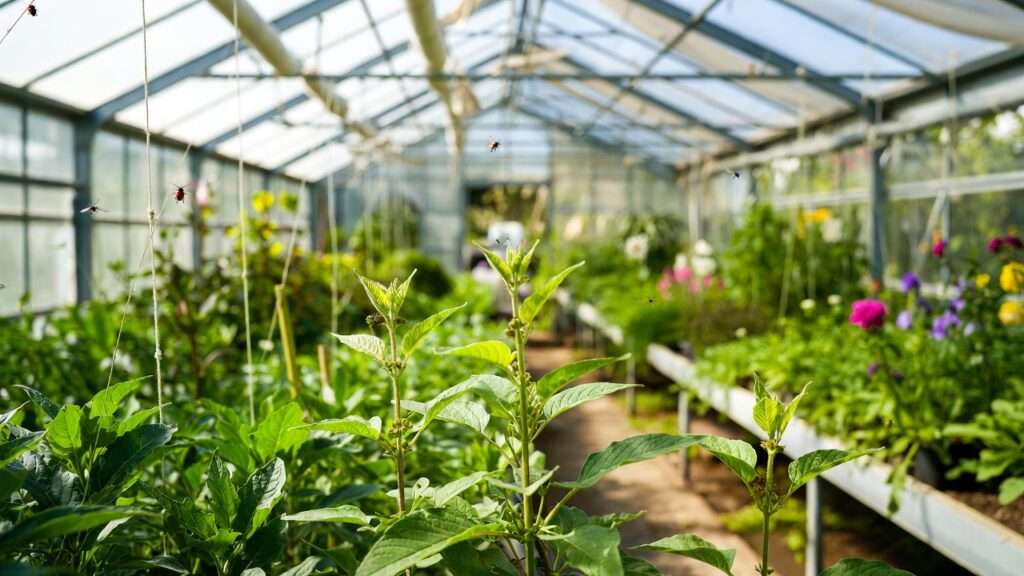
Imagine stepping into your greenhouse on a crisp morning and being greeted by thriving, vibrant plants — lush leaves, blooming flowers, and healthy fruits — all without the lingering smell of chemical sprays or the worry of toxic residues on your harvest. No more battling pesticide-resistant pests or harming beneficial insects and pollinators. This dream is not only possible; it’s becoming the standard for smart growers in 2026. Biological pest control for greenhouse plants is the sustainable, eco-friendly solution that harnesses nature’s own defenders to keep pests in check naturally.
As regulations tighten on synthetic pesticides and consumers demand cleaner, greener produce, biological control — using living organisms like predators, parasitoids, pathogens, and beneficial microbes — has proven its worth time and again. In commercial vegetable greenhouses across Europe and North America, many growers now rely on biological methods for over 70-90% of their pest management, achieving healthier crops, reduced costs over time, and compliance with organic standards. Whether you’re a home gardener with a small hobby greenhouse or a commercial producer growing tomatoes, cucumbers, herbs, or ornamentals, this ultimate guide will show you how to implement biological pest control for greenhouse plants effectively, step by step. Let’s turn your greenhouse into a balanced, thriving ecosystem! 🌱✨
Why Choose Biological Pest Control for Greenhouse Plants? 🤔
Greenhouses create perfect conditions for pests: stable warmth, humidity, and abundant food. But those same conditions make chemical pesticides risky — residues build up, pests develop resistance quickly, and beneficial insects (including pollinators) suffer collateral damage.
The Problems with Chemical Pesticides in Greenhouses
- Resistance buildup: Pests like spider mites and whiteflies evolve resistance after repeated exposure, rendering sprays ineffective.
- Environmental & health risks: Runoff harms waterways, residues affect food safety, and applicators face exposure hazards.
- Harm to beneficials: Broad-spectrum chemicals kill ladybugs, lacewings, and predatory mites — the very allies you need.
- Rebound infestations: Killing natural enemies often leads to pest resurgence worse than before.
Key Benefits of Biological Methods
- Safe & residue-free: Ideal for edible crops, pets, people, and pollinators — no waiting periods before harvest.
- Sustainable & self-perpetuating: Once established, many beneficials reproduce in the greenhouse, providing ongoing control.
- Cost-effective long-term: Initial investment in releases pays off through reduced sprays and healthier plants.
- Supports organic & premium markets: Many buyers pay more for biologically managed, chemical-free produce.
- Targets specific pests: Predators and parasitoids attack only their prey, preserving ecosystem balance.
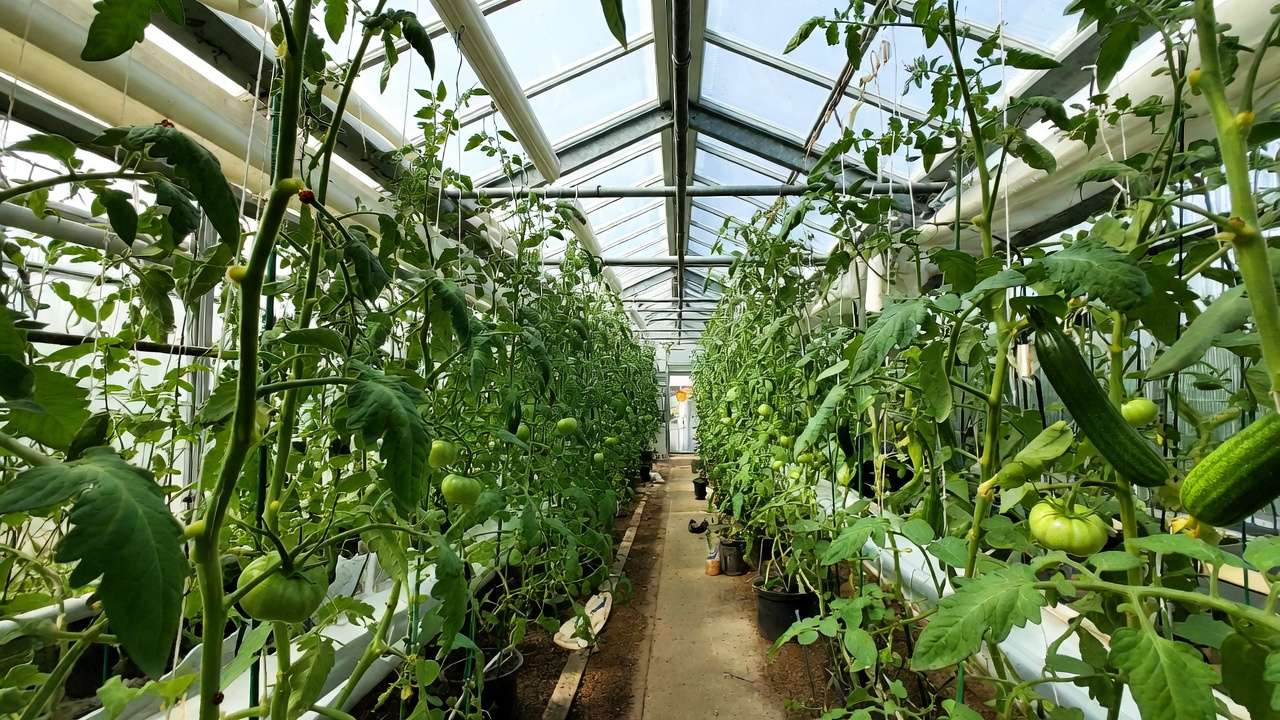
How Biological Control Fits into Integrated Pest Management (IPM) IPM is the gold standard: prevent problems first, monitor constantly, use biological controls as the foundation, and apply targeted interventions only when needed. Biological methods shine here because they work preventively — releasing beneficials early establishes a “living shield” before pests explode. 🛡️
Common Greenhouse Pests and Their Natural Enemies 🐜🔍
Knowing your enemy is half the battle. Here are the top troublemakers in greenhouses and their proven biological foes:
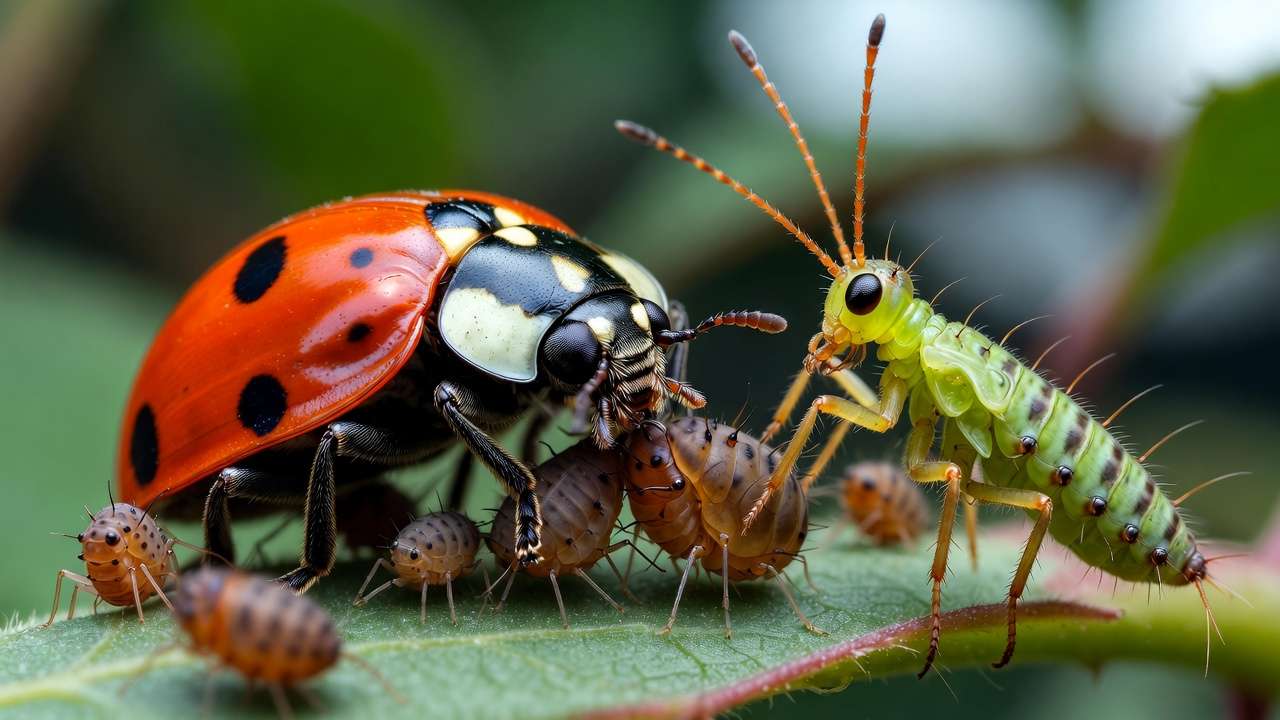
Aphids These soft-bodied sap-suckers cluster on new growth, causing curled leaves, honeydew, and sooty mold. Top biological controls:
- Ladybugs (e.g., Hippodamia convergens) — voracious adults and larvae devour dozens daily.
- Green lacewings (Chrysoperla carnea) — larvae are “aphid lions.”
- Parasitoid wasps (Aphidius colemani, Aphidius ervi) — lay eggs inside aphids, turning them into mummies.
- Aphid midges (Aphidoletes aphidimyza) — maggots feed on aphids.
Whiteflies Tiny winged pests on leaf undersides; they spread viruses and cause yellowing. Effective parasitoids:
- Encarsia formosa — classic success story in tomato greenhouses.
- Eretmocerus eremicus — great for hot conditions. Predators: Amblyseius swirskii mites hunt eggs and nymphs.
Spider Mites (e.g., two-spotted spider mite) Fine webbing, stippled leaves, and plant decline in dry, hot spots. Predatory mites:
- Phytoseiulus persimilis — specialist that devours spider mites rapidly.
- Amblyseius californicus or swirskii — generalists for prevention.
Thrips Silver streaks on leaves/flowers, virus vectors; hard to control due to hidden pupae. Controls:
- Orius insidiosus (minute pirate bug) — eats adults and larvae.
- Predatory mites (Amblyseius swirskii, Neoseiulus cucumeris).
- Nematodes (Steinernema feltiae) for soil stages.
Fungus Gnats & Soil Pests Larvae damage roots in moist soil. Solutions: Bacillus thuringiensis israelensis (Bti), Hypoaspis miles (Stratiolaelaps) mites, nematodes.
Mealybugs, Scale Insects & Others Sticky honeydew, sooty mold. Beneficials: Cryptolaemus montrouzieri (mealybug destroyer ladybug), parasitic wasps.
For quick reference, here’s a handy summary table (imagine this as a visual aid in the full article!):
| Pest | Damage Signs | Top Biological Controls | Effectiveness |
|---|---|---|---|
| Aphids | Curled leaves, honeydew | Ladybugs, lacewings, Aphidius wasps | High |
| Whiteflies | Yellowing, virus spread | Encarsia formosa, Amblyseius swirskii | Very High |
| Spider Mites | Webbing, stippling | Phytoseiulus persimilis, Amblyseius spp. | Excellent |
| Thrips | Silver scars, deformities | Orius, predatory mites, nematodes | Good-Excellent |
Types of Biological Control Agents for Greenhouse Plants 🦋
Predators — Hunt and eat pests directly (e.g., ladybugs, lacewings, predatory mites). Fast-acting for outbreaks.
Parasitoids — Lay eggs in/on pests; larvae consume hosts (e.g., parasitic wasps like Encarsia). Highly specific and efficient.
Pathogens & Microbial Controls — Infect and kill pests (e.g., Beauveria bassiana fungi, Bti bacteria, nematodes). Great for hard-to-reach areas.
Conservation vs. Augmentation — Encourage natural beneficials (conservation) or release purchased ones (augmentation — most common in greenhouses).
Step-by-Step Guide to Implementing Biological Pest Control 🌱🔧
Success with biological pest control isn’t about quick fixes — it’s about building a proactive, living defense system. Follow these proven steps, drawn from decades of commercial greenhouse experience (including programs from University of Connecticut, Cornell, and European growers where 70-90% of pest management is now biological).
Step 1: Scout and Monitor Regularly Prevention beats cure! Early detection is the cornerstone of any successful IPM program.
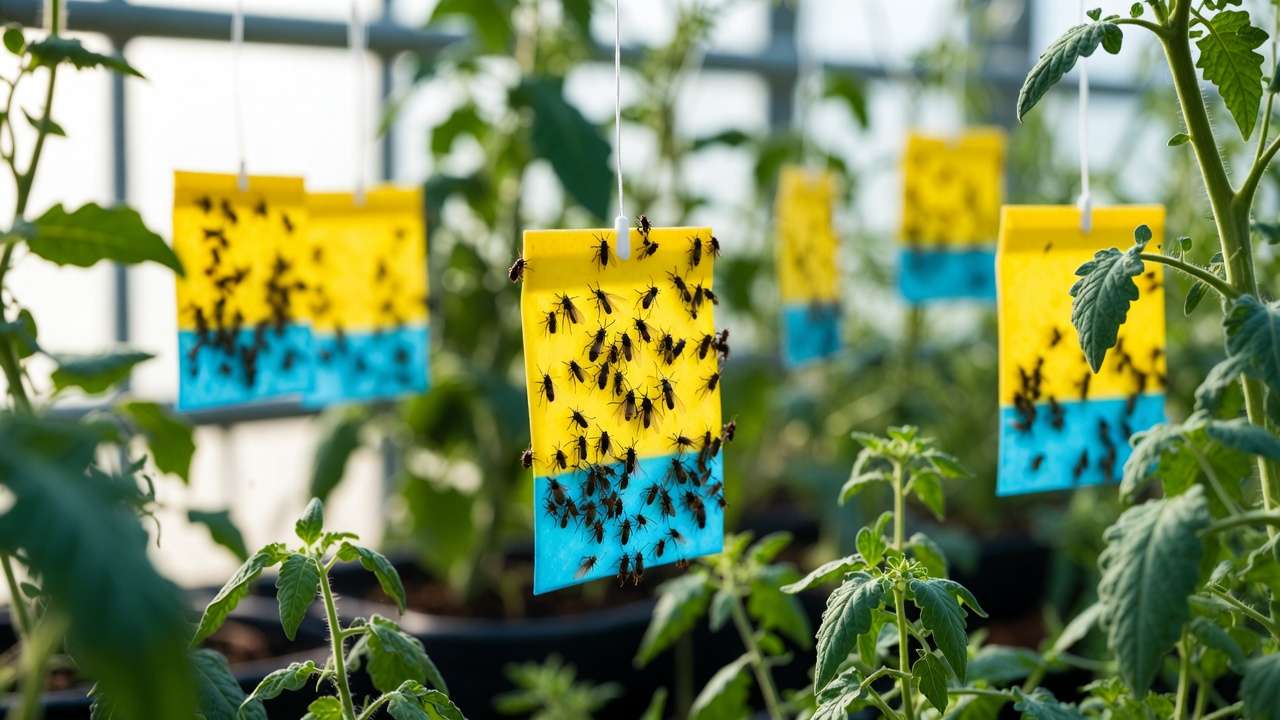
- Use yellow sticky traps for flying pests like whiteflies, fungus gnats, and thrips (place 1-2 per 100-200 sq ft).
- Employ blue sticky traps for thrips.
- Check plants twice weekly with a 10x hand lens — look under leaves, at growing tips, and in soil.
- Keep detailed records: pest counts, locations, and dates. Apps or simple spreadsheets help track trends.
- Set action thresholds (e.g., 1-2 aphids per plant for preventive releases).
Step 2: Prevent Pest Entry and Build Plant Health Healthy plants resist pests better!
- Install insect screens on vents (50-80 mesh) to block entry.
- Sanitize thoroughly between crops — remove plant debris, disinfect benches, and dip incoming plants if possible.
- Optimize environment: Maintain 70-85°F (21-29°C) days, 60-70% humidity (pests thrive in extremes), good airflow, and avoid over-fertilization (lush growth attracts aphids).
- Choose resistant varieties (e.g., certain tomato hybrids less prone to whiteflies).
- Use banker plants or habitat plants (e.g., marigolds for predatory mites) to support beneficials year-round.
Step 3: Choose and Source Quality Beneficials 🦟 Buy from reputable suppliers — quality matters! In 2026, trusted sources include:
- Arbico Organics
- Koppert Biological Systems
- Beneficial Insectary
- IPM Labs
- Greenmethods.com
- Griffin Greenhouse Supplies
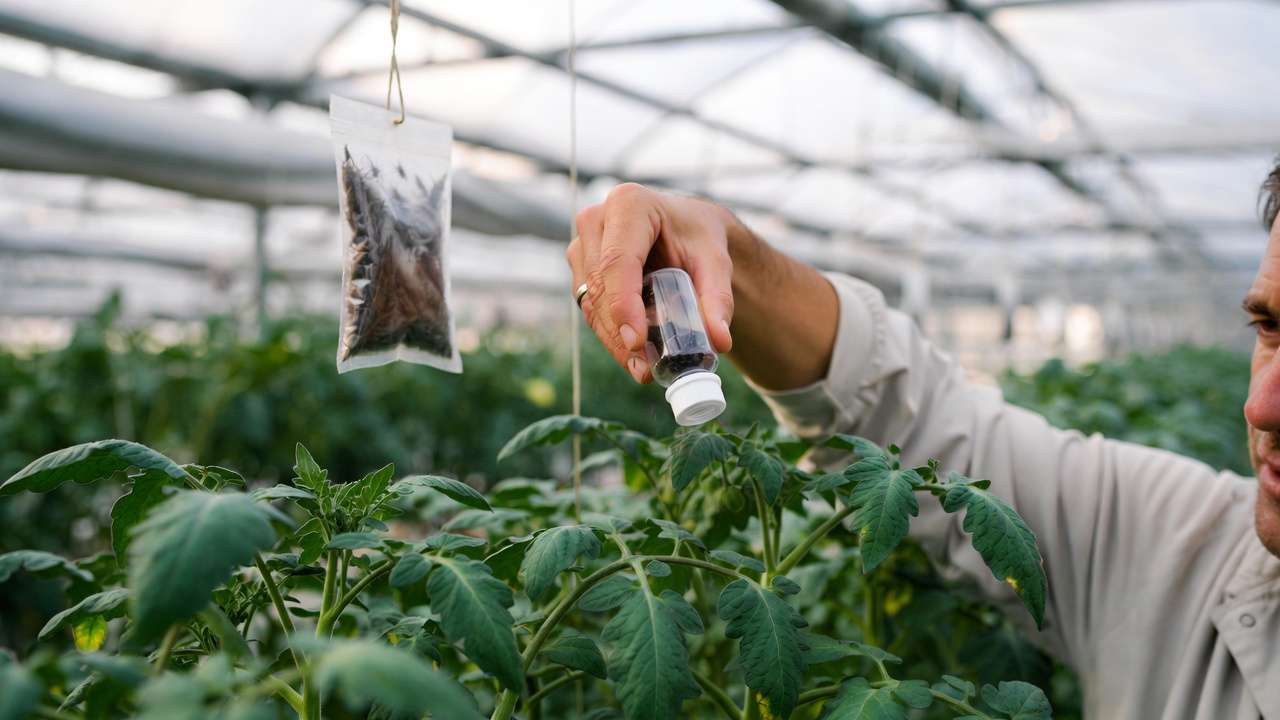
Order fresh shipments (many arrive in bottles or sachets), check expiration, and store properly (usually cool, dark conditions). Research release rates — e.g., Encarsia formosa at 1-5 per plant curative.
Step 4: Release and Establish Beneficials Timing is everything — release preventively or at first signs of pests.
- Preventive (inoculative): Low numbers early in the season to establish populations.
- Curative: Higher rates when pests are present.
- Release methods: Shake bottles over plants, hang sachets, or use shaker tubes.
- Optimal conditions: Release in morning/evening, avoid direct sun, ensure humidity >60% for mites, and temp 68-82°F (20-28°C) for most agents.
- Layer agents: Combine predators and parasitoids for broader coverage (e.g., Phytoseiulus + Amblyseius for mites).
- Avoid incompatible pesticides — wait 2-4 weeks after sprays, use only soft options like insecticidal soaps if needed.
Step 5: Maintain and Evaluate Success Monitor weekly — beneficials should increase while pests decrease.
- Use banker plants to sustain populations (e.g., bean plants with aphids for lacewings).
- Re-release if needed — many programs require multiple introductions.
- Adjust: If humidity drops, spider mites explode — boost misting.
- Celebrate wins: Seeing aphid mummies or mite webbing disappear is rewarding! 🎉
Expert Tips for Beginners
- Start small: Test on one bench or crop section.
- Layer controls: Don’t rely on one agent.
- Be patient: Results often appear in 1-4 weeks.
- Keep learning: Follow updates from extension services (e.g., UMass, Penn State) and attend grower conferences.
Real-World Success Stories and Case Studies 📈
Biological pest control has transformed commercial greenhouse production.
- Encarsia formosa on tomatoes: In British Columbia and Europe, growers reduced whitefly sprays dramatically. Parasitism rates often exceed 60-90%, with minimal damage. One long-term program saw 80% reduction in chemical use over 18+ years.
- Phytoseiulus persimilis on spider mites: Classic success since the 1960s — rapid knockdown, self-sustaining in many tomato and cucumber systems.
- Integrated programs in vegetables: Many Canadian and Dutch tomato/cucumber greenhouses now use 70-90% biological controls, combining Encarsia, predatory mites, Orius, and Aphidius — healthier crops, better market prices for “clean” produce.
- Home greenhouse wins: Hobby growers report aphid-free roses and pest-free herbs after introducing lacewings and ladybugs, with ongoing control from banker plants.
These aren’t exceptions — they’re the new standard for sustainable growing in 2026! 🌍
Potential Challenges and How to Overcome Them ⚠️
No system is perfect — here’s how to handle common hurdles:
Timing and Environmental Factors Beneficials are temperature/humidity-sensitive (e.g., Encarsia struggles below 68°F). Fix: Use climate control, release at optimal times, and monitor closely.
Compatibility with Other Controls Many pesticides kill beneficials. Fix: Choose “soft” options (neem, soaps), wait after sprays, and always check labels for compatibility.
Cost and Availability Initial releases cost $50-300+ per season (depending on size). Fix: Calculate ROI — reduced sprays save money long-term. Buy in bulk, use preventive strategies.
- Releasing too late (wait for low pest levels).
- Over-watering (favors fungus gnats).
- Ignoring scouting.
- Expecting 100% eradication (aim for below economic thresholds).
Advanced Tips for Maximizing Biological Control 🚀
- Banker plants: Keep small populations of pests + beneficials to sustain agents.
- Combine with microbials: Add Beauveria bassiana fungi or Bti for extra punch.
- Seasonal strategies: Preventive releases in spring; curative in summer peaks.
- Emerging trends in 2026: Improved formulations (e.g., slow-release sachets), new strains, and “eau de ladybug” repellents using ladybug odors to deter aphids naturally.
- Tech integration: Pair with sensors/apps for real-time pest monitoring.
Frequently Asked Questions (FAQs) ❓
How long until I see results? Usually 1-4 weeks, depending on pest levels and agent type. Parasitoids take longer (host dies in 7-14 days), predators faster.
Are beneficials safe for edible crops? Yes! No residues, perfect for tomatoes, herbs, veggies. Many are approved for organic use.
Can I use them in a small home greenhouse? Absolutely — start with 1-2 types (e.g., ladybugs + predatory mites). Scale to your space.
What if beneficials escape? Most are greenhouse-adapted and won’t thrive outdoors long-term. They stay where food is.
Do I still need any sprays? Rarely — only targeted soft options if thresholds are exceeded. IPM keeps them minimal.
How do I know if beneficials are working? Scouting! Look for pest decline, mummies (parasitoids), or increased beneficial sightings.
(And many more — this guide covers dozens of real grower questions!)
Conclusion 🎉
Biological pest control for greenhouse plants isn’t just an alternative — it’s the smart, future-proof way to grow healthier, safer, and more sustainable crops. By harnessing nature’s predators, parasitoids, and microbes, you create a balanced ecosystem that protects your plants naturally while cutting chemical use and costs.
Start small, scout diligently, release preventively, and watch your greenhouse transform into a thriving, pest-resistant oasis. Your plants (and the planet) will thank you! 🌱🐞
Have you tried biological controls yet? Share your experiences in the comments, subscribe for more expert plant care tips, and check out our guides on organic fertilizers or companion planting next.
Happy growing! ✨











