
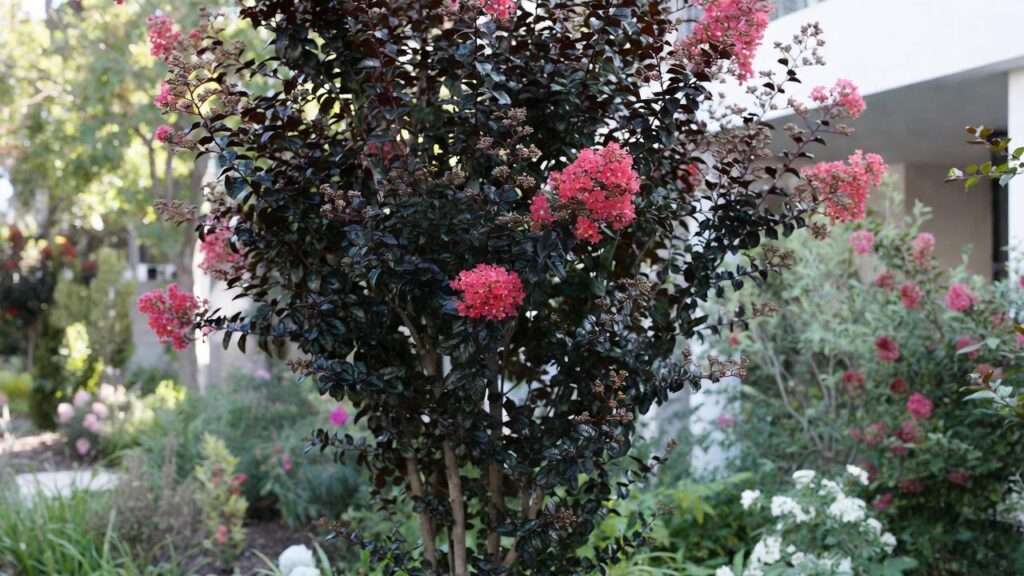
Picture this: A compact tree bursting with near-black foliage that provides a dramatic backdrop for explosive, jewel-toned blooms lasting up to 120 days through the heat of summer and into fall. Now imagine that same tree thriving with minimal fuss—resistant to the powdery mildew that plagues traditional crape myrtles, tolerant of drought once established, and perfectly sized for modern yards. That’s the magic of the Black Diamond crape myrtle tree.
Introduced as a revolutionary series bred by USDA researchers and popularized by J. Berry Nursery, the Black Diamond collection (Lagerstroemia indica hybrids) has transformed landscapes since its debut around 2012. These patented varieties feature burgundy-black leaves emerging in spring, holding their intense color through summer, and delivering vibrant flowers in shades of red, purple, pink, and white. Whether you’re a beginner gardener frustrated with disease-prone plants or a seasoned landscaper seeking high-impact, low-maintenance options, this guide will equip you with everything needed to grow show-stopping Black Diamond crape myrtles that elevate your outdoor space.
In the sections ahead, we’ll dive deep into varieties, planting techniques, ongoing care, pruning best practices (and how to avoid common pitfalls), troubleshooting, and creative landscaping ideas—all backed by horticultural expertise and real-world growing insights.
What Makes the Black Diamond Crape Myrtle So Special? 🔍🌳
The Revolutionary Dark Foliage and Bloom Contrast
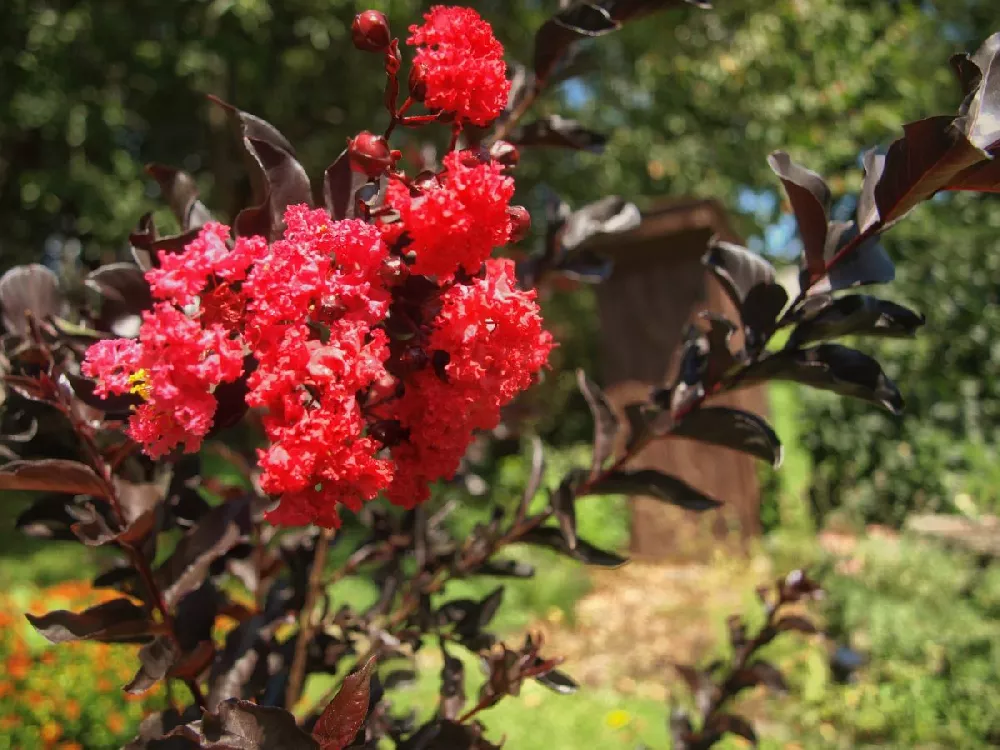
The standout feature of Black Diamond crape myrtles is their foliage—new leaves emerge deep burgundy to near-black, maturing to a glossy, dark purple-black that persists through the season. This creates unparalleled contrast with the crinkled, panicle blooms, making flowers appear even more vivid. Unlike traditional green-leaved Lagerstroemia, these provide multi-season interest: dramatic leaves in spring, prolific flowers in summer, and attractive exfoliating bark in winter.
History and Breeding Breakthrough (USDA Origins)
Developed by Dr. Cecil Pounders at the USDA Agricultural Research Service, the original “Ebony” series (rebranded as Black Diamond for marketing) resulted from selective breeding for dark foliage and superior disease resistance. These are essentially the same clones, with Black Diamond being the trademarked name from J. Berry Nursery. The breakthrough combined Lagerstroemia indica’s bloom power with enhanced traits for mildew resistance, creating a series that’s now the world’s leading dark-leaved crape myrtle brand.
Key Benefits: Low-Maintenance, Drought-Tolerant, and Mildew-Resistant 🛡️
Black Diamonds excel where older varieties struggle:
- Exceptional powdery mildew resistance: Unlike susceptible classics, these rarely show the white fungal coating, even in humid conditions.
- Drought tolerance: Once established (about 1-2 years), they handle dry spells beautifully.
- Compact size: Most mature at 10-12 feet tall and 8 feet wide, ideal for urban gardens.
- Long bloom time: Up to 4 months of flowers, attracting pollinators like butterflies and bees.
- Deer resistance and minimal pest issues round out their easy-care profile.
Popular Black Diamond Crape Myrtle Varieties: Which One is Right for You? 🎨
The Black Diamond series offers stunning options, each with unique bloom colors against the signature dark foliage. Here’s a breakdown of the most popular:
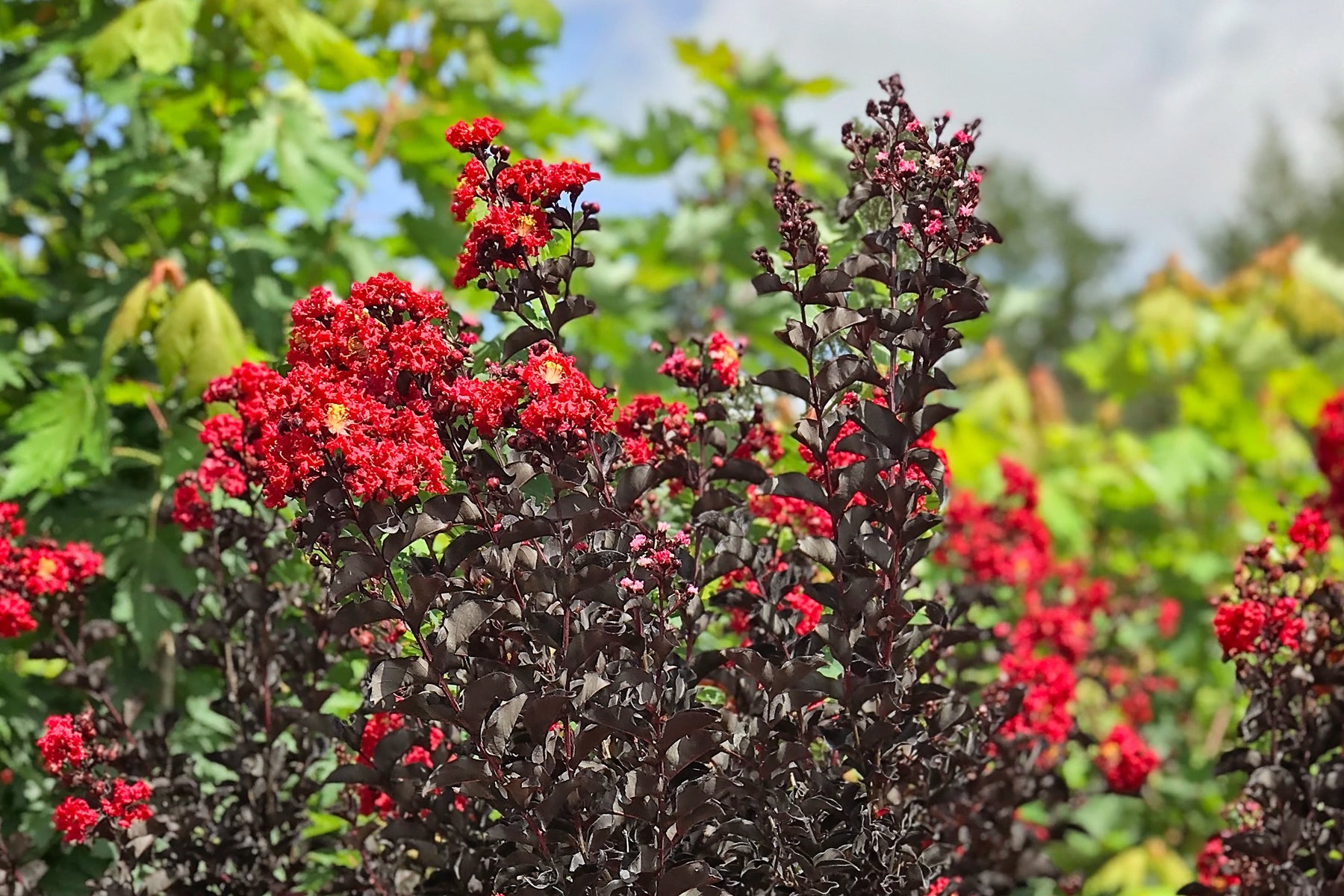
Best Red™ (Ebony Flame) – Deep Crimson Blooms
Considered the “classic” red, Best Red delivers rich, ruby-crimson flowers with excellent contrast. It has a balanced upright habit, reaching 10-12 feet, and is a heavy bloomer.
Crimson Red™ – Bushiest Growth with Intense Red Flowers
The bushiest of the reds, often staying closer to 10 feet. Features the deepest, most vivid red blooms and is the heaviest flowering red variety.
Red Hot™ – Brightest, Most Vibrant Red
The most upright and tree-like red, potentially the tallest at maturity (up to 12 feet). Blooms are a hot pink-tinged vibrant red—perfect for dramatic specimens.
Pure White™ – Striking Pure White Against Black Leaves
Pure, snow-white blooms pop spectacularly against the dark foliage, creating an elegant, high-contrast look. Great for moonlight gardens.
Mystic Magenta™ and Purely Purple™ – Rich Purple Options
Mystic Magenta offers vivid magenta-purple blooms and slight shade tolerance. Purely Purple (sometimes called Pure Purple) provides the truest, deepest purple flowers with a shrubby habit.
Other Standouts: Shell Pink™ and Blush™
Shell Pink features soft coral-pink blooms on an upright form. Blush offers light blush-pink flowers for a subtle, romantic vibe.
Variety Comparison Table
| Variety | Flower Color | Mature Height | Habit/Growth Notes | Best Use |
|---|---|---|---|---|
| Best Red™ | Deep crimson red | 10-12 ft | Balanced upright | Specimen or hedge |
| Crimson Red™ | Intense deep red | ~10 ft | Bushiest, heaviest bloomer | Borders, mass plantings |
| Red Hot™ | Vibrant red w/ pink | 10-12 ft | Most upright/tree-like | Focal point tree |
| Pure White™ | Pure white | 10-12 ft | Upright | Contrast planting |
| Purely Purple™ | Deep purple | 10-12 ft | Shrubby | Mixed borders |
| Mystic Magenta™ | Vivid magenta | 10-12 ft | Shade tolerant | Partial shade areas |
| Shell Pink™ | Coral pink | 10-12 ft | Upright | Soft accents |
| Blush™ | Light blush pink | 10-12 ft | Compact | Containers or small spaces |
Ideal Growing Conditions for Thriving Black Diamonds ☀️💧
Black Diamond crape myrtles thrive in warm climates and adapt well with proper care. They perform best under specific conditions that maximize their dark foliage intensity and bloom production.
USDA Hardiness Zones (6-10) and Cold Tolerance Tips ❄️
Black Diamonds rate hardy in USDA Zones 7-10, with many varieties pushing into Zone 6 with protection. In colder areas like Zone 6, select hardier reds (e.g., Best Red™ or Crimson Red™) and plant in spring for root establishment. Mulch heavily around the base in fall (3-4 inches of organic mulch, kept away from the trunk) and wrap young trees in burlap during harsh winters. Established plants often survive dips to 0°F with dieback but rebound vigorously in spring.
Sunlight Requirements: Full Sun for Maximum Color and Blooms
Full sun—at least 6-8 hours direct daily—produces the darkest foliage and most prolific flowers. In partial shade, leaves lighten to burgundy-green, and blooming reduces significantly. Avoid northern exposures or heavy tree overhang. Southern or western-facing sites yield the best results.
Soil Preferences: Well-Draining, pH 5.5-7.0
These hybrids tolerate a range of soils but prefer slightly acidic to neutral (pH 5.5-7.0) and excellent drainage. Heavy clay causes root rot; amend with compost or pine bark. Sandy soils work well with added organic matter for moisture retention. Test soil pH and amend with sulfur if too alkaline.
Growth Rate and Mature Size: 10-12 Feet Tall, 8 Feet Wide (2-4 Feet/Year Initially)
Expect moderate to fast growth: 2-4 feet per year in the first few seasons under ideal conditions, slowing as they mature. Most reach 10-12 feet tall and 8 feet wide, making them perfect intermediates—larger than dwarfs, smaller than traditional 20+ foot crape myrtles.
Step-by-Step Planting Guide for Success 🕳️🌱
Proper planting establishes a strong foundation for years of beauty.
Best Time to Plant (Spring or Fall)
Plant in spring after the last frost in cooler zones, or fall (6-8 weeks before first frost) in warmer areas for root development without heat stress.
Site Selection and Spacing Tips
Choose a spot with full sun and good air circulation to minimize any potential issues. Space 8-10 feet apart for individual specimens or 6-8 feet for hedges.
How to Plant: Hole Size, Amendments, and Mulching
- Dig a hole twice as wide and just as deep as the root ball.
- Mix native soil with 20-30% compost or aged manure.
- Place the tree so the root flare (where roots meet trunk) sits slightly above soil level.
- Backfill gently, water deeply to settle soil, and eliminate air pockets.
- Apply 2-3 inches of mulch in a 3-foot diameter ring, keeping it away from the trunk.
:max_bytes(150000):strip_icc()/ga_379b76fbcd354bf4_spcms-1-fd5f389903304f82a3cfe2d066d27a56-96f9781f23e443cda423532f16ff736e.jpeg)
Container Growing for Colder Zones or Patios 🪴
Black Diamonds excel in large containers (15-25 gallons minimum) with drainage holes. Use high-quality potting mix amended with perlite. Water more frequently and fertilize regularly. In winter, move pots to a sheltered spot or insulate.
Essential Care Routine: Watering, Fertilizing, and Maintenance 💦🌿
Once established, these trees prove remarkably low-maintenance.
Watering Schedule: Establishment vs. Mature Trees (Drought-Tolerant Once Established)
Water deeply (1-2 inches weekly) during the first year, especially in summer. After establishment, they tolerate drought well—supplement only during prolonged dry spells. Avoid overhead watering to keep foliage dry.
Fertilizer Recommendations: Slow-Release Balanced Formulas in Spring
Apply a slow-release, balanced fertilizer (e.g., 10-10-10 or rose fertilizer) in early spring as new growth emerges. Avoid late-season feeding, which encourages tender growth susceptible to frost. Organic options like compost tea work great too.
Mulching Best Practices for Moisture Retention and Weed Control
Renew mulch annually to 3 inches deep. Organic mulches (pine bark, hardwood) conserve moisture, moderate soil temperature, and suppress weeds.
Pruning Mastery: Avoid “Crape Murder” and Achieve Perfect Shape ✂️🌳
Pruning ranks among the most misunderstood aspects of crape myrtle care—and Black Diamonds prove no exception. Done correctly, it enhances natural form, encourages blooming, and maintains compact size. Done poorly (the infamous “crape murder”), it leads to weak, knobby growth and reduced flowers.
When to Prune: Late Winter/Early Spring
Prune during dormancy—late winter to early spring before new growth emerges (typically February to early March in Zones 7-10). This timing allows you to see the branch structure clearly and promotes vigorous spring growth.
Techniques for Tree Form vs. Shrub Form
- For single-trunk tree form: Select 3-5 strong main trunks early on. Remove lower branches gradually to expose attractive bark.
- For multi-stem shrub form: Allow natural suckering at the base for a fuller look.
- General rules: Remove crossing branches, inward-growing ones, and any thinner than a pencil. Cut back lateral branches to outward-facing buds.
Avoid topping or cutting main trunks to stubs—this triggers weak, whip-like growth that blooms poorly.

Removing Suckers and Deadheading for Reblooming
Routinely remove basal suckers (watersprouts) to maintain shape. Deadhead spent blooms mid-summer if desired—many Black Diamonds rebloom without it, but light trimming encourages a second flush.
Common Pruning Mistakes and How to Fix Them ⚠️
- Crape murder: Severe topping. Fix by selective thinning over 2-3 years to restore natural form.
- Over-pruning young trees: Let them establish structure first.
- Pruning too late: Leads to frost damage on new growth.
Common Problems and Proven Solutions 🐛🦠
Black Diamonds breed for superior resistance, but no plant proves invincible. Here’s what to watch for and how to handle it.
Powdery Mildew Resistance (Why Black Diamonds Excel)
Traditional crape myrtles often suffer white fungal coating, but Black Diamonds’ breeding makes them highly resistant—even in humid climates like the Southeast.
Dealing with Aphids, Scale, and Sooty Mold
Aphids may appear on new growth, excreting honeydew that leads to sooty mold. Crape myrtle bark scale (an emerging pest) shows as white/gray felt on twigs with black sooty mold. Control with horticultural oil or insecticidal soap sprays in spring. Systemic imidacloprid works for severe scale (use cautiously around pollinators).

Leaf Spot, Cercospora, and Other Rare Issues
Occasional leaf spot occurs in wet seasons. Improve air circulation and avoid overhead watering. Fungicides rarely needed.
Winter Protection in Zone 6
Mulch roots heavily and consider burlap wraps for young plants during extreme cold.
Landscaping Ideas to Maximize Visual Impact 🏡✨
The dramatic foliage and blooms make Black Diamonds versatile stars.
Specimen Tree in Small Yards
Plant as a focal point—Pure White™ against dark evergreens creates stunning contrast.
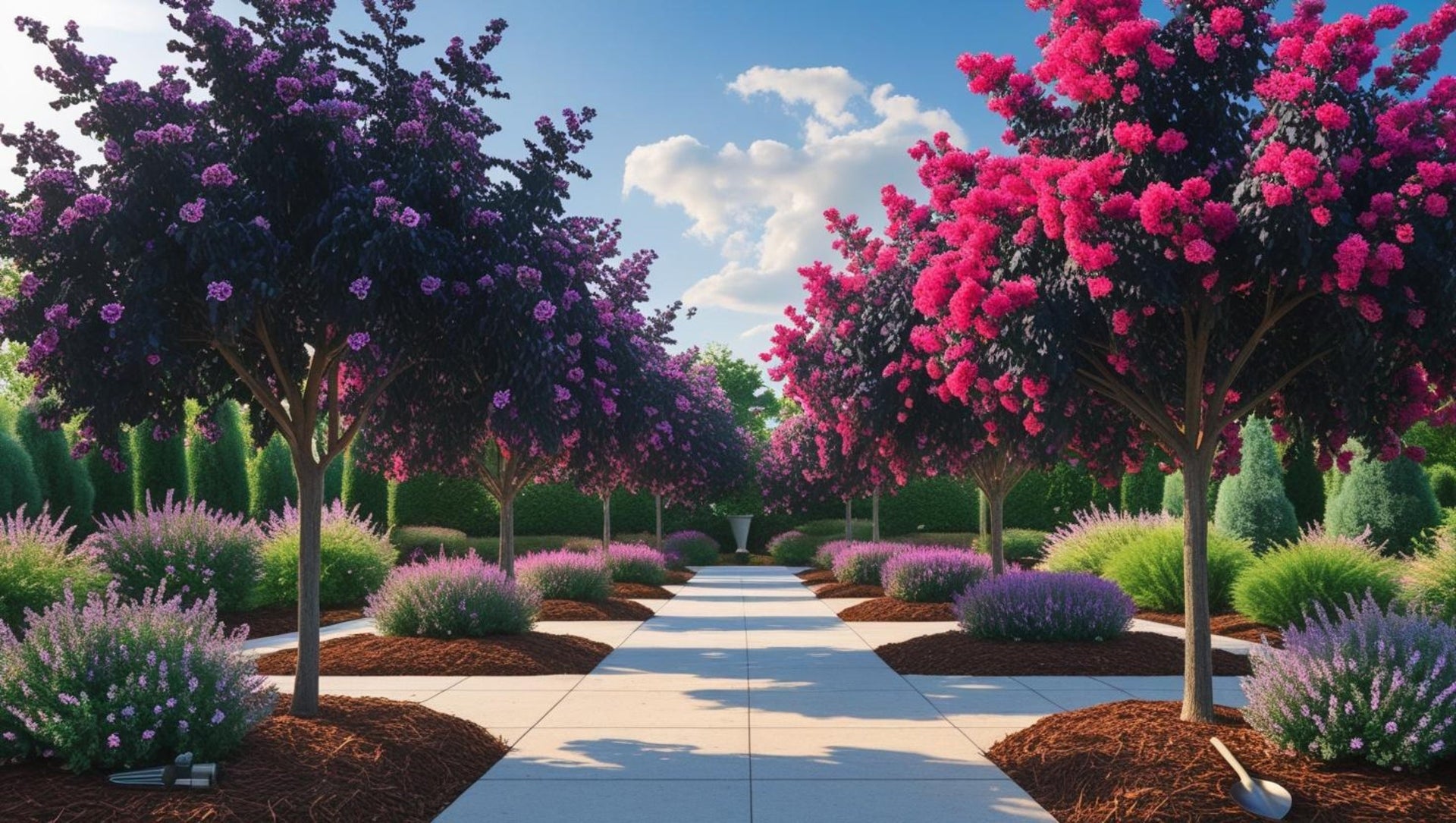
Hedges, Borders, and Mixed Plantings (Alternate Colors for Drama)
Space 6-8 feet for informal hedges. Alternate red and purple varieties for a colorful screen.
Container Accents and Patio Features
Use large pots on decks—perfect for colder zones (move indoors or protect in winter).
Companion Plants: Contrasting Foliage and Flowers
Pair with gold-leaved plants (like ‘Limelight’ hydrangea), silver Artemisia, or knockout roses for layered interest.
Expert Tips for Pro-Level Results from Years of Experience 👩🌾
- Darkest foliage: Full sun + slight phosphorus boost in fertilizer.
- Maximum blooms: Avoid high-nitrogen fertilizers; prune lightly.
- Propagation: Softwood cuttings in summer root easily with rooting hormone.
- Rejuvenation: For older, leggy plants, cut to 12-18 inches in late winter—they rebound beautifully.
Frequently Asked Questions (FAQs) ❓
How tall do Black Diamond crape myrtles grow? Most reach 10-12 feet tall and 8 feet wide, though growth varies by variety and conditions.
Are they really resistant to powdery mildew? Yes—bred specifically for high resistance; rarely an issue even in humid areas.
Can I grow them in containers? Absolutely! Use large pots (20+ gallons) and bring indoors or protect in winter below Zone 7.
When do they bloom? Mid-summer through fall (June-October in most zones), up to 120 days.
What’s the difference between varieties like Best Red and Crimson Red? Best Red offers balanced growth; Crimson Red stays bushier with deeper blooms.
Do they attract pollinators? Yes—butterflies, bees, and hummingbirds love them.
How fast do they grow? 2-4 feet per year initially, slowing at maturity.
Are Black Diamonds deer-resistant? Moderately—deer may browse young growth, but mature plants rarely suffer damage.
Can I plant them near foundations? Yes—roots prove non-invasive.
Do they lose leaves in winter? Deciduous; leaves drop, revealing beautiful exfoliating bark.
Conclusion: Transform Your Landscape with Black Diamond Magic 🌑💥
The Black Diamond crape myrtle tree delivers unmatched drama with its near-black foliage and vibrant, long-lasting blooms—all while requiring minimal care and resisting common pitfalls like powdery mildew. Whether you seek a stunning specimen, colorful hedge, or container accent, these hybrids provide years of effortless beauty.
Follow this comprehensive guide, and you’ll enjoy healthy, thriving trees that elevate your garden season after season. Ready to add one (or several) to your landscape? Your yard will thank you. 🌸✨











