
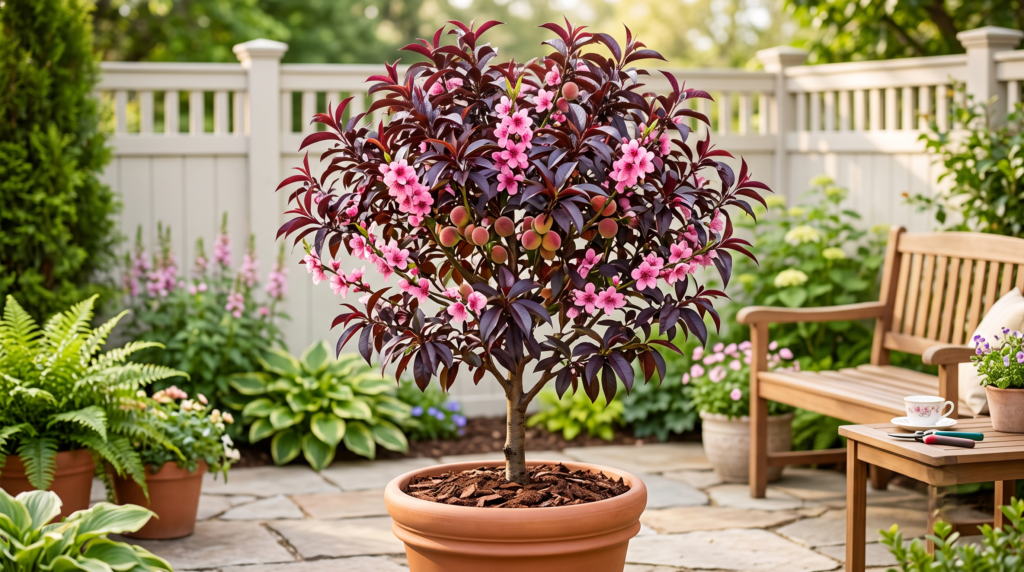
Imagine stepping onto your patio in early spring and being greeted by a burst of dramatic, deep burgundy foliage vividly contrasting against a canopy of soft, delicate pink blossoms. If you want to turn this striking vision into reality, the bonfire peach tree is the ultimate centerpiece for your landscape.
However, cultivating dwarf fruit trees so they remain vigorous year after year—producing both show-stopping leaves and viable fruit—can be challenging. Many gardeners struggle with faded foliage, poor fruit yield, or mysterious wilting. Having spent years diving deep into plant diagnostics and soil health management, I have seen exactly where the common pitfalls lie. In this comprehensive, skyscraper-level guide, we will explore the exact, science-backed steps needed to nurture a Prunus persica ‘Bonfire’ from a young sapling to a flourishing garden focal point. 🌟
Let’s dig into the ultimate blueprint for growing a masterpiece.
II. What Makes the Bonfire Peach Tree So Unique? 🧐
Before getting your hands dirty, it is crucial to understand the distinct botanical profile of this specific cultivar. The Bonfire Peach is not your average orchard tree; it is a specialized genetic dwarf designed for high visual impact and tight spaces.
A True Dwarf Variety 🌱
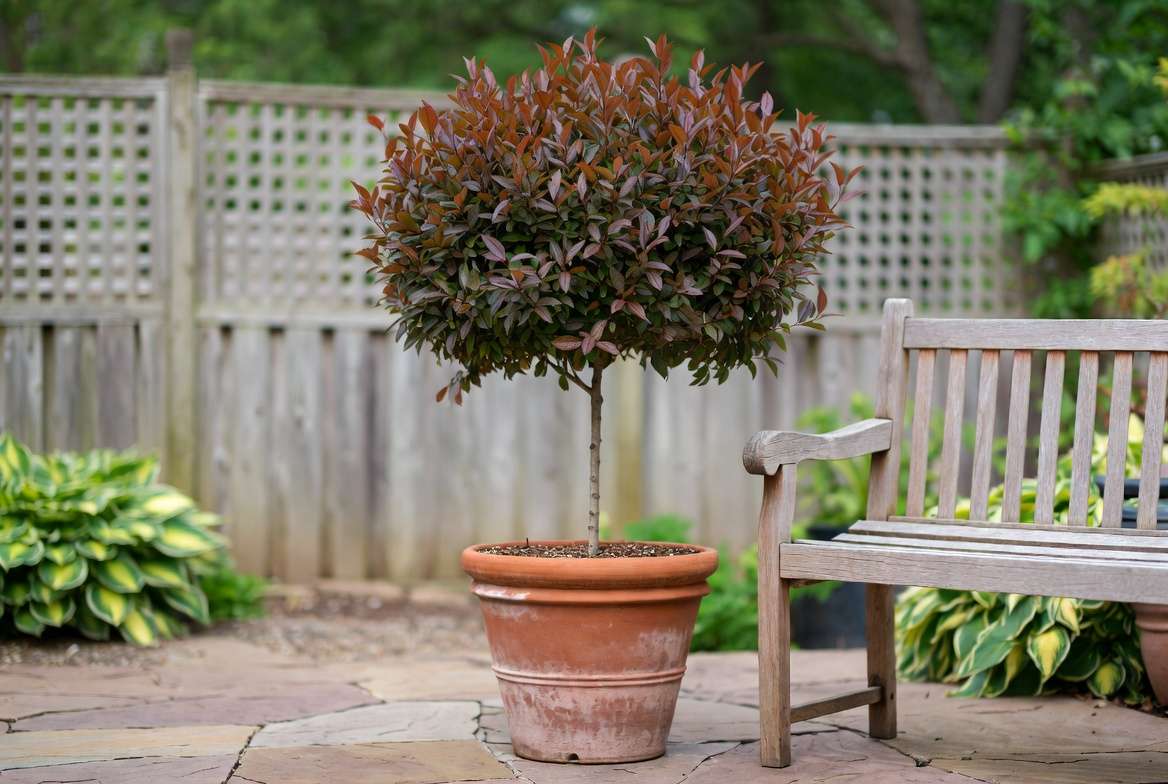
Unlike standard peach trees that can tower 15 to 25 feet high and require massive root space, the Bonfire is a true genetic dwarf. Even at full maturity, it typically caps at a highly manageable 5 to 6 feet in height and width. Its natural growth habit is dense and rounded, making it the perfect candidate for small urban gardens, balcony planters, and patio containers. You get all the majesty of a fruit-bearing tree without needing an acre of land.
Edible vs. Ornamental: The Great Debate 🥧
One of the most frequent questions surrounding this tree is: Can you actually eat the peaches?
Yes! While the Bonfire is primarily categorized and sold as an ornamental tree due to its spectacular red, purple, and bronze foliage, it does produce real fruit. However, managing your harvest expectations is key. These peaches are not the massive, dripping-with-juice freestone varieties you buy at the farmer’s market. Bonfire peaches are smaller, have a very firm texture, and boast a sharp, tart flavor profile.
Instead of eating them fresh off the branch, they shine brightest in the kitchen. Their firmness makes them exceptional for canning, baking into rustic galettes, or boiling down into spiced preserves.
III. Ideal Growing Conditions for Vibrant Color ☀️
The striking visual appeal of the Bonfire Peach relies heavily on its environment. Providing the right foundational elements will dictate whether your tree boasts deep crimson leaves or fades into a lackluster green.
Sunlight: The Secret to Deep Red Leaves 🌞
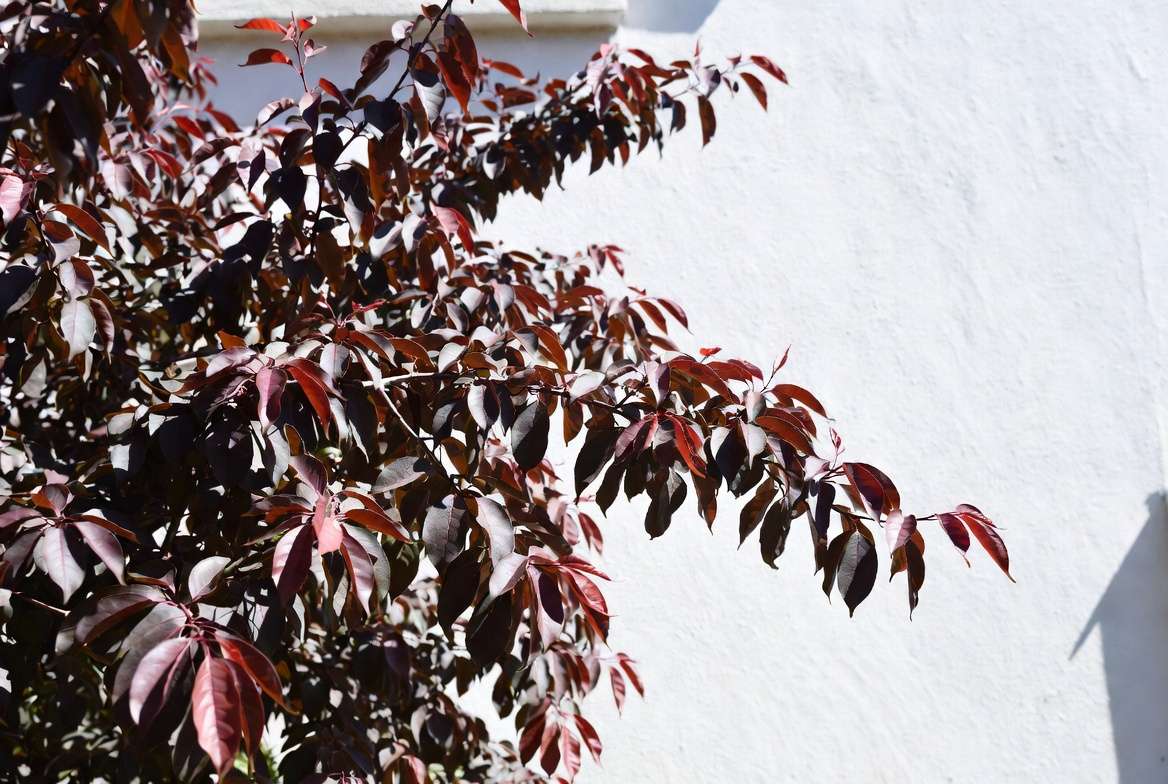
Sunlight dictates color. The rich burgundy pigmentation in the leaves is caused by compounds called anthocyanins. To produce and maintain these pigments, the tree requires full, unfiltered sunlight—a minimum of 6 to 8 hours daily. If planted in partial shade, the tree will not only produce fewer spring blossoms but the foliage will also revert to a muddy, unremarkable green. When selecting a planting site, prioritize a south-facing or west-facing exposure to maximize daily light intake.
Building the Perfect Soil Foundation 🪱
The secret to resilient plant cultivation always lies beneath the surface. Poor soil health is the number one culprit behind dwarf tree decline. Because these trees are often grown in containers or tight garden borders, optimizing the soil structure and biological health is non-negotiable.
The Ideal Soil Mix:
-
Drainage is Everything: Peach trees despise “wet feet.” Roots left sitting in waterlogged soil will quickly succumb to root rot.
-
The Recipe: Create a well-draining, loamy blend. Mix high-quality topsoil with generous amounts of aged compost to introduce essential microbial life. Fold in perlite or coarse horticultural sand (about 20% of the total volume) to ensure superior aeration.
-
pH Levels: Aim for a slightly acidic soil pH between 6.0 and 7.0. If you are unsure of your baseline, a simple home soil test can provide the exact metrics needed to amend your soil accurately before planting.
Climate and Hardiness Zones 🌡️
The Bonfire Peach thrives in USDA Hardiness Zones 5 through 8. Like all peach varieties, it requires a specific dormant period during the winter to trigger spring blooming. This tree needs approximately 400 “chill hours” (hours spent between 32°F and 45°F). If you live in a tropical climate without cold winters, the tree will struggle to break dormancy and will fail to bloom or fruit.
IV. Step-by-Step Planting Guide 🪴
Whether you are planting directly in the garden bed or potting it up for patio display, correct installation sets the stage for decades of growth.
Ground Planting vs. Container Growing 🏺
-
Ground Planting: Ideal for long-term stability and extensive root development. Ensure the planting site isn’t at the bottom of a slope where rainwater naturally pools.
-
Container Growing: The Bonfire Peach is a stellar container specimen. Select a heavy-duty resin or thick terracotta pot (minimum 15 to 20 gallons) to prevent the tree from blowing over in heavy winds. Crucial: Ensure the pot has multiple, large drainage holes at the base.
(Pro-Tip for Creators: The striking contrast between a vibrant terracotta pot, the rich dark soil mix, and the tree’s crimson foliage makes for incredible garden photography. Snapping a few high-quality, vertically oriented photos immediately after planting provides perfect, eye-catching visual assets for garden blogs or Pinterest pins! 📸)
The Planting Process 🛠️
-
The Dig: Dig a hole (or prepare your container) so that it is twice as wide as the root ball, but no deeper.
-
Root Teasing: Gently tease the outer roots of the tree before placing it in the soil. This prevents the roots from girdling (growing in a circle and eventually strangling the tree).
-
Positioning: Place the tree so the graft union (the swollen bump near the base of the trunk) sits at least 2 inches above the soil line. Burying the graft union will kill the tree.
-
Mulching: Apply a 2-to-3-inch layer of organic mulch (like shredded bark) around the base to retain moisture and regulate soil temperature. Keep the mulch pulled a few inches away from the trunk itself to prevent bark rot and deter boring insects.
V. Essential Care & Maintenance Routine 💧
Once your tree is planted, establishing a consistent care routine is what separates a surviving tree from a thriving one. Because it is a dwarf variety, the Bonfire Peach responds incredibly well to attentive, targeted maintenance.
Mastering the Watering Schedule 🚿
Watering requires a delicate balance. The goal is to keep the soil consistently moist but never soggy.
-
The First Year: Young, newly planted trees need extra hydration to establish their root systems. Water deeply once or twice a week, depending on rainfall and summer heat.
-
Established Trees: Once established, they are somewhat drought-tolerant, but prolonged dry spells will cause the foliage to drop and fruit to shrivel.
-
Container Care & The “Finger Test”: Potted trees dry out much faster than ground-planted trees. During peak summer, you may need to water your container tree daily. Rely on the “finger test”—push your index finger two inches into the soil. If it feels dry at your fingertip, it is time to water. If it is still moist, hold off.
Fertilizing for Foliage and Fruit 🍂
To push out that glorious, dense canopy of purple leaves and develop fruit, your tree needs fuel. However, over-fertilizing can burn the roots and cause rapid, weak growth that is highly susceptible to pests.
-
The Right Blend: Use a balanced, slow-release organic fertilizer formulated specifically for fruit trees (an N-P-K ratio around 10-10-10 or slightly higher in phosphorus to encourage blooming).
-
The Timeline: Apply the fertilizer in early spring, just before the buds begin to swell. A second, lighter application can be done in early summer once the fruit has set. Avoid fertilizing late in the season, as you do not want to encourage new growth right before the tree goes dormant for winter.
Pruning Techniques for Dwarf Trees ✂️
The beauty of the Bonfire Peach is its naturally compact, rounded shape, which means it requires significantly less pruning than standard orchard varieties.
-
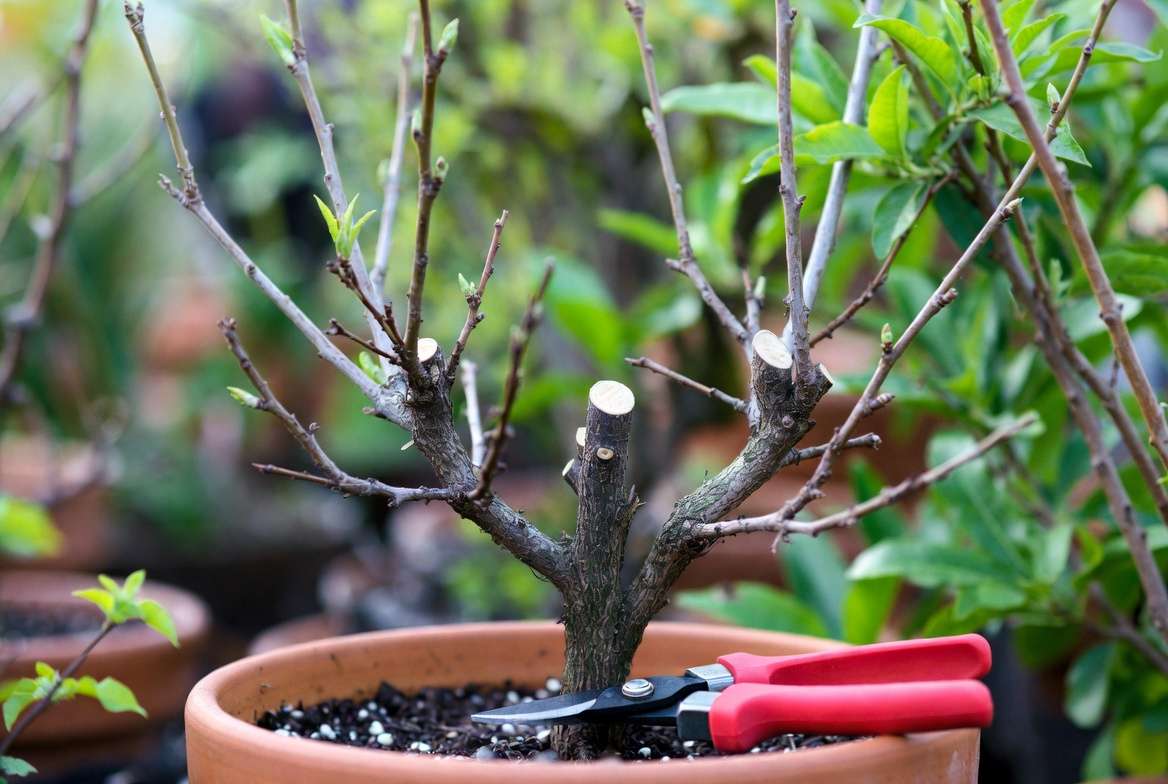
When to Prune: Late winter or very early spring, while the tree is still fully dormant.
-
The 3 D’s: Always start by removing the 3 D’s—Dead, Damaged, or Diseased wood.
-
Creating an Open Center: Gently thin out the interior crossing branches to create a “goblet” or open-center shape. Proper plant diagnostics show that increasing airflow and light penetration into the center of the canopy drastically reduces the risk of fungal infections and ensures even ripening of the fruit.
VI. Proactive Pest & Disease Management 🛡️
Staying ahead of pests and diseases through accurate diagnostics and preventative care is the hallmark of an expert gardener.
Preventing Peach Leaf Curl 🍂
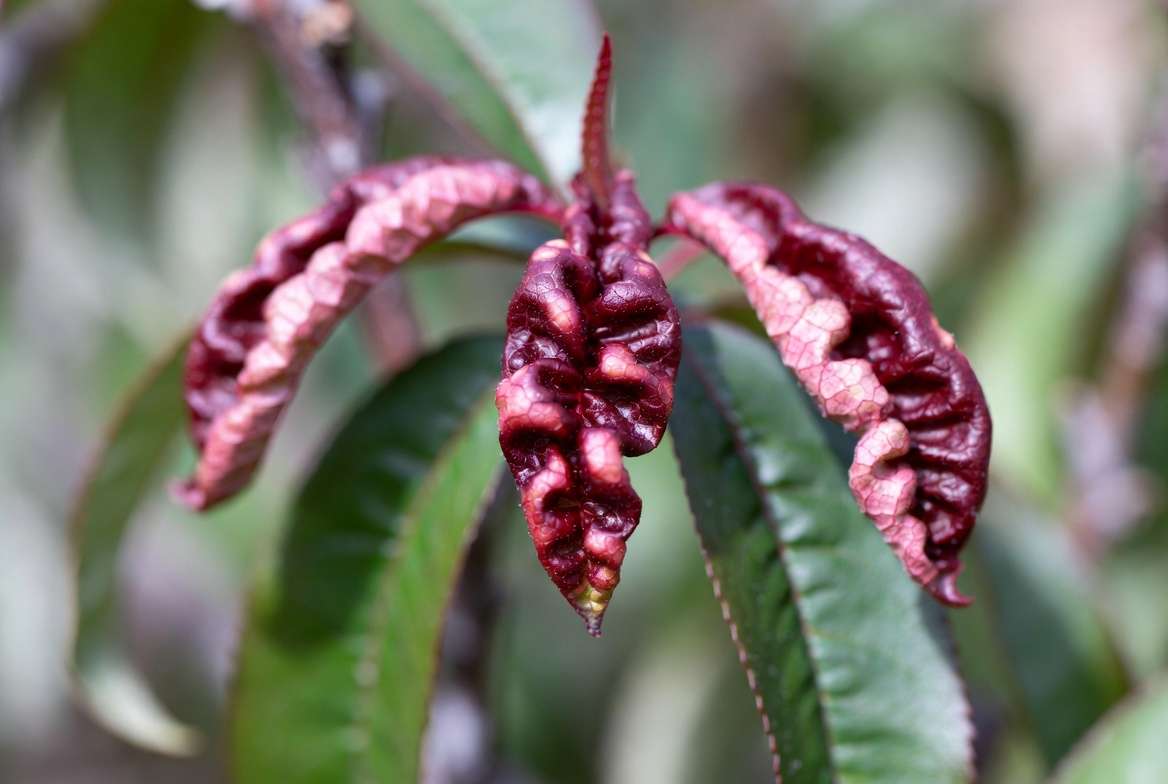
Peach leaf curl is a notorious fungal disease (Taphrina deformans) that targets Prunus species. It causes the striking red leaves to become severely blistered, thickened, and puckered before turning yellow and dropping off prematurely.
-
The Action Plan: Once you see the symptoms, it is too late to treat the current year’s foliage. The secret is prevention. Apply a dormant copper fungicide spray twice a year: once in late autumn after the leaves have fallen, and again in late winter, just before the buds break.
Beating Common Pests 🐛
-
Peach Tree Borers: These clearwing moths lay eggs near the base of the trunk. The larvae burrow into the bark, which can quickly kill a dwarf tree. Keep mulch away from the trunk to remove their hiding spots, and inspect the base regularly for gummy sap mixed with sawdust (frass).
-
Aphids: These tiny pests love clustering on tender new growth, sucking the sap and causing the leaves to curl. A strong blast of water from the hose is often enough to dislodge them. For heavier infestations, apply organic cold-pressed neem oil in the evening, or introduce beneficial predators like ladybugs into your garden ecosystem.
VII. Styling Your Garden with the Bonfire Peach 📸
Because this tree is primarily grown for its ornamental value, its placement in your landscape design is critical.
Companion Planting 🌼
Pairing your tree with the right companions not only creates a beautiful vignette but also supports the tree’s health.
-
Pest Deterrents: Plant French marigolds or alliums (like garlic and ornamental chives) around the base. Their strong scents naturally deter borers, aphids, and nematodes.
-
Pollinator Magnets: Underplant with low-growing, early-blooming perennials like creeping phlox or sweet alyssum to attract bees and ensure your peach blossoms are heavily pollinated.
Creating a Visual Focal Point 🎨
The dramatic burgundy foliage demands attention. To make it pop, place the tree against a contrasting background. A bright white fence, a light-colored stucco wall, or a backdrop of vivid lime-green hostas or bright chartreuse sweet potato vines will make the dark leaves look almost electric. Structuring your garden for high visual contrast not only makes your patio feel like a professional landscape but also creates incredible opportunities for capturing stunning, high-resolution media. A well-framed shot of those pink spring blossoms against deep purple leaves makes for scroll-stopping YouTube thumbnails, engaging Pinterest pins, and compelling blog graphics.
VIII. The Harvest: From Branch to Kitchen 🧺
Late summer brings the reward for your hard work: the fruit harvest.
When Are Bonfire Peaches Ready to Pick? ⏱️
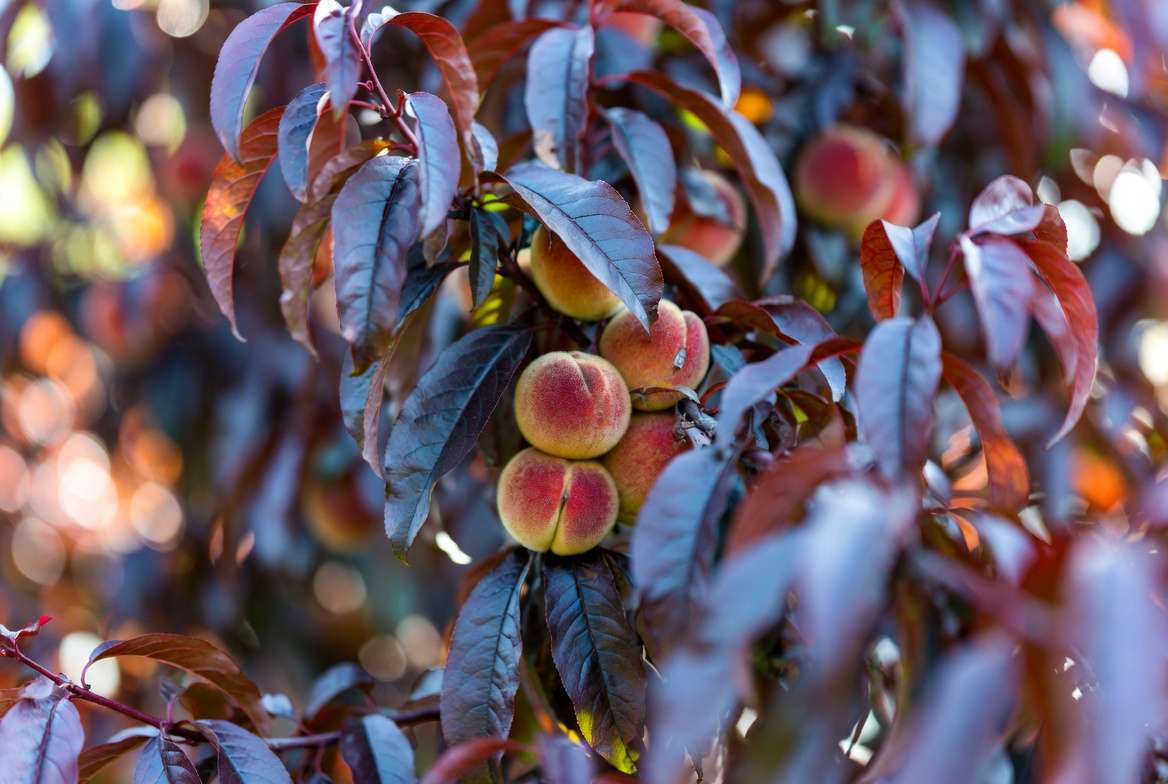
Bonfire peaches typically ripen in late August to early September. Because the tree’s leaves are so dark, you have to look closely to spot the fruit hiding beneath the canopy!
-
Visual Cues: Look at the “ground color” (the part of the peach not facing the sun). It should change from green to a creamy yellow.
-
Tactile Cues: The fruit should have a slight “give” when gently squeezed. Do not pull hard; a ripe peach will easily detach from the branch with a gentle twist.
A Quick & Easy Bonfire Peach Recipe 🍯
Since these peaches are firm and tart, they hold their shape beautifully when cooked.
-
Rustic Spiced Peach Jam: Pit and dice 4 cups of Bonfire peaches. Toss them in a saucepan with 2 cups of sugar, a squeeze of fresh lemon juice, a dash of cinnamon, and a pinch of nutmeg. Simmer on low heat for 45 minutes until thick and syrupy. Pour into sterilized jars. The tartness of the peach balances perfectly with the sugar, creating a complex, bright flavor that elevates your morning toast!
IX. Frequently Asked Questions (FAQs) ❓
Why are my Bonfire Peach tree leaves turning green? The most common reason for green leaves on a Bonfire Peach is a lack of sunlight. The tree needs 6 to 8 hours of direct sun to maintain its deep red and purple pigmentation. If it is in a pot, try moving it to a sunnier location.
Do I need two trees for cross-pollination? No! The Bonfire Peach tree is self-fruitful (self-pollinating). A single tree will successfully bloom and produce fruit all on its own.
Can this tree survive winter in a pot? Yes, but potted trees are more vulnerable to freezing temperatures than ground-planted trees because their roots lack the insulating warmth of the earth. If you live in Zone 5 or 6, wrap the container in bubble wrap or burlap, or move the pot into an unheated garage or shed during the harshest winter months to protect the root ball.
X. Conclusion: Enjoying Your Garden Masterpiece 🌸
Growing a thriving bonfire peach tree is an incredibly rewarding experience that blends ornamental beauty with homegrown utility. By prioritizing essential growing conditions—full sunlight, excellent soil drainage, and proactive preventative care—you can easily cultivate a spectacular specimen that transforms your patio or garden into a vibrant oasis.
Whether you are enjoying the delicate pink blossoms of spring, the fiery foliage of summer, or harvesting your tart little peaches in early autumn, this tree offers year-round intrigue.
Now it is your turn to get planting! Have you successfully grown a dwarf peach tree on your patio, or are you planning to add this stunning variety to your landscape this season? Share your garden design ideas or any questions in the comments below—and don’t forget to bookmark this guide for your spring planting routine! 🌱✨











