
Have you ever admired a championship-level bonsai with those delicate, intricate twig pads that scream ancient maturity — only to look at your own tree and see long, leggy shoots instead of refined branching? 😩 You’re not alone. Many bonsai enthusiasts struggle with achieving bonsai ramification techniques for fine branching, the key process that turns sparse skeletons into lush, twiggy masterpieces. The good news? With the right techniques, timing, and patience, you can dramatically improve your tree’s density and elegance, often seeing real progress within just 1–3 growing seasons. 🌱
In this in-depth guide, we’ll dive deep into proven bonsai ramification techniques for fine branching — from foundational pruning to advanced pinching and defoliation — while covering species-specific strategies, common pitfalls, and a full seasonal calendar. Whether you’re working on a Japanese maple, Chinese elm, juniper, or pine, these methods will help you build that coveted dense, mature twig structure. Let’s transform your bonsai from “promising” to “pro-level” together! 🚀
Here’s a stunning example of what dedicated ramification can achieve on a Japanese maple:
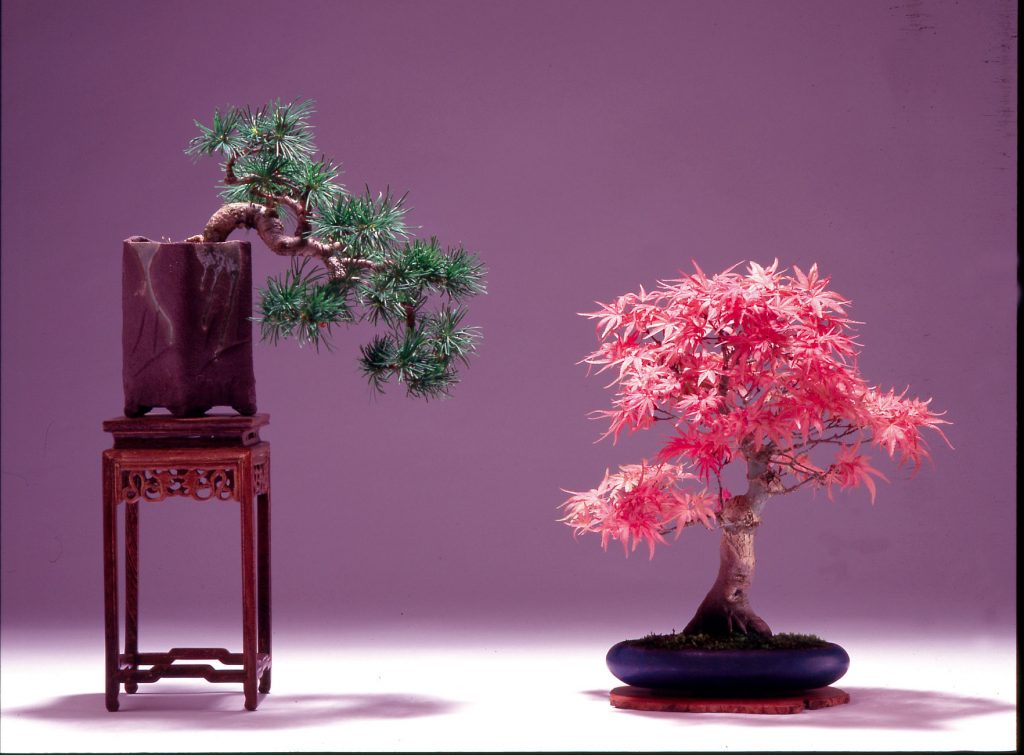
(Left: Early spring growth showing potential; Right: A beautifully ramified specimen with fine, dense branching.)
What Is Bonsai Ramification and Why Focus on Fine Branching? 🌳
Ramification in bonsai refers to the subdivision of branches — starting from primary limbs, splitting into secondary branches, then tertiary, and finally developing fine twigging (quaternary and beyond). Fine branching creates short internodes, numerous back-buds, and compact pads that give the tree an aged, forest-like realism. 🍃
Why prioritize it?
- It creates the illusion of great age, even on younger material.
- Dense twig structure improves overall balance, silhouette, and foliage distribution.
- It helps manage energy flow, preventing weak inner branches while strengthening outer pads.
- Fine ramification enhances nebari (surface roots) visibility and branch taper indirectly through repeated cycles.
Coarse ramification shows thick forks and long extensions, while fine ramification delivers even, delicate networks. The difference is night and day — think sparse vs. lush canopy.
Understanding Tree Physiology Behind Ramification 🧬
Success starts with understanding how trees respond to intervention. Apical dominance — driven by auxin hormones produced at shoot tips — directs energy upward, suppressing side and back buds. Strategic pruning and pinching break this dominance, redirecting resources to lateral growth and dormant buds.
Strong roots, balanced nutrition (especially nitrogen for growth, phosphorus/potassium for budding), adequate sunlight (6+ hours direct), and proper watering are non-negotiable foundations. Weak trees won’t ramify well — always prioritize health first. As veteran bonsai artists often say: “Healthy root ramification supports branch ramification — repot regularly and fertilize smartly!” 🌱
Essential Tools and Preparation for Success 🛠️
Gather these before diving in:
- Concave cutters (for clean branch removal without scars)
- Knob cutters (for precise bud/jin work)
- Sharp bonsai scissors or finger pinchers (for delicate pinching)
- Aluminum or copper wire (1/3 branch thickness rule)
- Wire cutters and pliers
Quick health checklist:
- Vigorous growth this season?
- Recent repot (within 1–2 years)?
- Balanced fertilizer regime?
Timing matters most — spring for structure, summer for refinement. 📅
Here are some reliable bonsai tools sets perfect for ramification work:

Core Bonsai Ramification Techniques for Fine Branching ✂️
1. Structural Pruning to Build the Framework
In early development (yamadori or nursery stock), focus on primary/secondary branches. Remove crossing, inward-growing, or vertical shoots. Select opposing or alternate forks at 45–60° angles for natural taper. Prune back to 2–3 nodes to encourage bifurcation.
Tip: Avoid whorls of 3+ branches — they create weak points.
2. Maintenance Pruning and Directional Pruning
Once the basic structure exists, prune new shoots back to 2–3 leaves/nodes during growth season. This forces side branching and shortens internodes. Use “clip and grow” for gradual refinement — let shoots extend, then cut back hard.
Never over-prune weak trees; remove no more than 30–40% foliage at once.
3. Pinching: The Key to Fine, Dense Twigging 🌟
Pinching is your secret weapon for tertiary+ branching! During active growth, pinch soft new shoots (candle stage for conifers, 3–5 leaves for deciduous) with fingers or fine scissors. This stimulates back-budding and creates compact pads.
- Japanese maples: Pinch new extensions to 1–2 leaves when they emerge.
- Junipers: Pinch “candles” in spring/early summer.
- Pines: Candle-cut in spring, needle-pluck later.
Do it every 2–4 weeks — consistency builds magic. See this close-up of maple pinching in action:

4. Defoliation for Accelerated Ramification ⚡
For vigorous deciduous species (maples, elms, beeches), partial or full defoliation in early-mid summer removes large leaves, forcing smaller replacement foliage and denser buds.
Step-by-step:
- Ensure tree is strong and in full sun.
- Cut leaves, leaving petioles.
- Fertilize lightly after 2 weeks.
- New buds appear in 3–6 weeks — smaller and more numerous!
Avoid on conifers or weak trees — risk of dieback is real. Before/after examples:

5. Wiring to Position and Speed Up Ramification
Wiring opens pads, improves light/airflow, and encourages even budding. Apply after structural pruning, then pinch new growth. Use aluminum for most (forgiving), copper for pines (stronger hold).
Rule: Wire at 1/3 branch thickness max; check every 4–8 weeks to avoid scars. Combine with pruning for faster results.
Wiring in progress — note the careful placement:

Species-Specific Ramification Strategies 🌲🍁
Different species respond uniquely to ramification techniques due to growth habits, budding back strength, and leaf/candle behavior. Tailoring your approach maximizes results and prevents stress. Here are proven strategies for popular bonsai subjects.
Deciduous Broadleaves (Japanese Maple, Trident Maple, Chinese Elm, Beech) These species back-bud vigorously and respond dramatically to pinching + defoliation.
- Japanese Maple (Acer palmatum): Pinch new shoots to 1–2 leaves as they extend (spring–summer). Defoliate fully in early summer for tiny replacement leaves and explosive fine twigging. Expect rapid refinement — many achieve dense pads in 2–4 seasons.
- Chinese Elm (Ulmus parvifolia): Similar to maples but more forgiving. Pinch regularly, defoliate 1–2 times per summer. Great for beginners building fine branching quickly.
- Beech (Fagus spp.): Slower but rewards patience. Light pinching + partial defoliation; avoid heavy cuts on weak trees.
Here are progression examples showing ramification development on Chinese elms:

(Left to right: Young stage → Mid-development → Mature fine branching.)
Conifers (Juniper, Pine, Spruce) Conifers require candle/needle work instead of leaf pinching.
- Junipers (Juniperus spp.): Pinch new “candles” (extension growth) in spring/early summer when soft. Finger-pinch or scissor-cut to 1/3–1/2 length to force dense side shoots. Repeat 2–3 times per season for fine pads. Wiring helps open structure for better light.
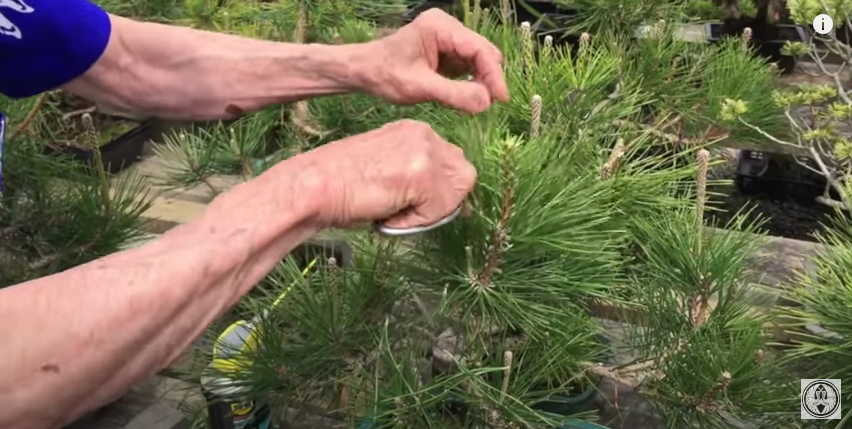
- Pines (Pinus spp.): Two-phase candle pruning. In spring, remove all candles on weak areas, leave partial on strong; cut remaining candles back when needles start extending (late spring/early summer). Needle plucking in fall removes old needles to improve airflow and encourage back-budding.
- Spruce: Similar to pines but more delicate — light pinching only.
Close-ups of pine candle pruning in action:
Special Cases
- Trident Maple (Acer buergerianum): Extremely vigorous — can handle aggressive defoliation twice a summer for super-fine twigs.
- Ficus (tropicals): Pinch anytime during warm growth; they ramify fast indoors/outdoors with bright light.
Quick comparison table (text version for clarity):
- Species | Best Technique | Frequency | Speed of Results
- Japanese Maple | Pinching + Defoliation | Every 2–4 weeks | Fast (1–3 yrs)
- Chinese Elm | Pinching + Defoliation | Every 2–4 weeks | Very fast
- Juniper | Candle pinching | 2–3x per season | Moderate
- Pine | Candle cutting + needle pluck | Spring + fall | Slower (3–7 yrs)
Step-by-Step Year-Round Ramification Calendar 📅
Consistency across seasons builds cumulative density. Here’s a practical timeline (temperate northern hemisphere; adjust ±1 month for your climate):
Spring (March–May)
- Structural pruning on dormant trees.
- Let initial flush grow out, then pinch/candle-cut as extensions appear.
- Fertilize heavily to fuel strong growth.
Summer (June–August)
- Peak refinement: Pinch new shoots every 2–4 weeks.
- Defoliate deciduous (once or twice) in early-mid summer.
- Wire branches to improve pad structure and light penetration.
- Monitor for pests; maintain high humidity/light.
Fall (September–November)
- Light cleanup pruning — remove weak/leggy shoots.
- Needle pluck pines; final wiring adjustments.
- Reduce fertilizer; prepare for dormancy.
Winter (December–February)
- Rest period: No major work.
- Evaluate structure, plan next season’s cuts.
- Protect from extreme cold; check wiring for biting in.
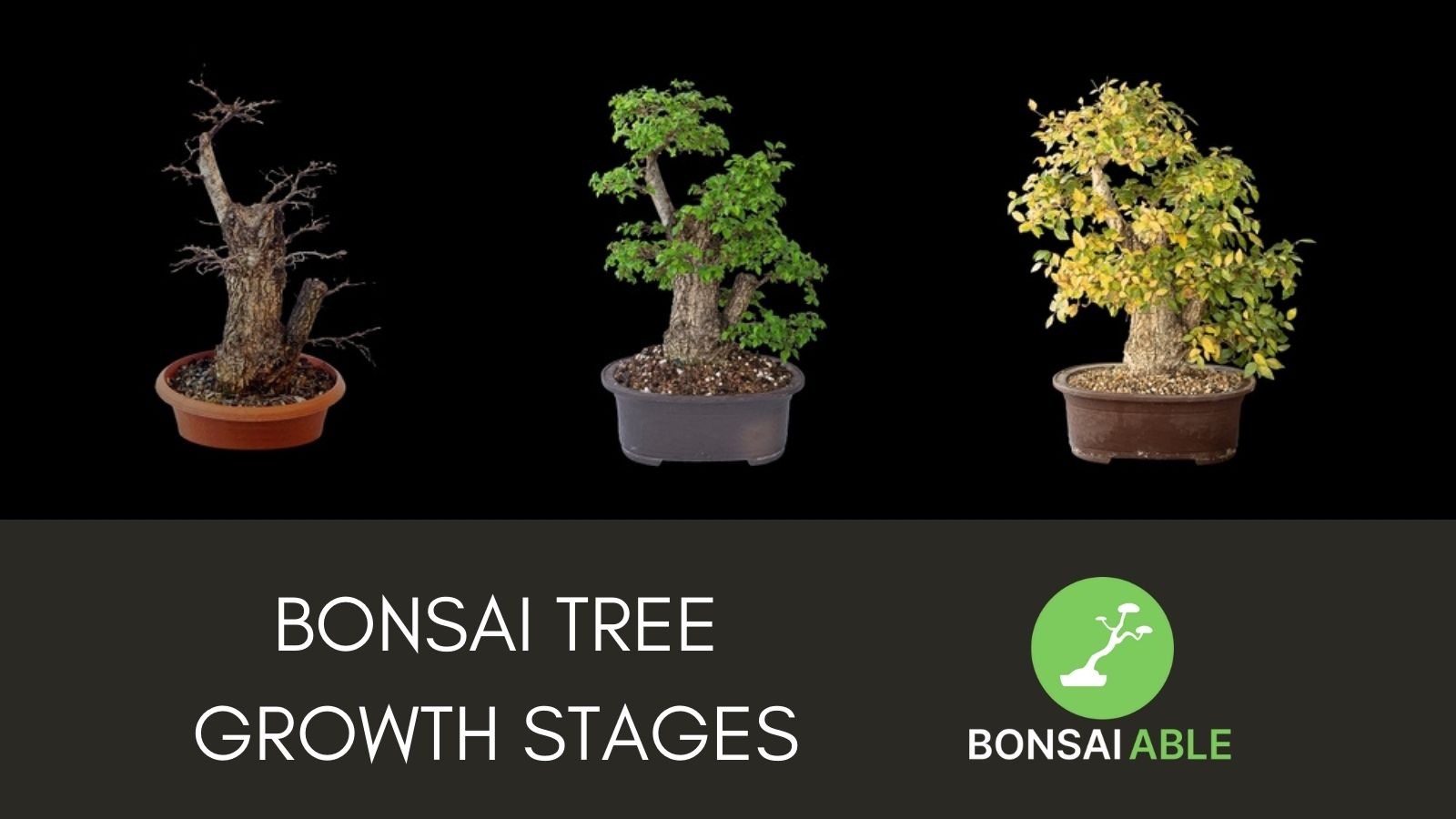
Visual growth stages illustration (general bonsai progression showing ramification over time):
Common Mistakes and How to Avoid Them 🚫
Even experienced growers slip up — here are the top pitfalls:
- Over-pinching or over-defoliating weak/vigorous trees → dieback or exhaustion. Solution: Always assess tree health first; start conservatively.
- Ignoring apical dominance → long, straight tips dominate. Solution: Pinch tips relentlessly during growth.
- Wrong timing (e.g., defoliating in heat/drought or on conifers) → leaf scorch or no back-budding. Solution: Follow species-specific windows.
- Neglecting aftercare → no fertilizer/water post-technique → stalled recovery. Solution: Boost NPK balanced feed + shade for 1–2 weeks after heavy work.
- Poor tool hygiene → disease spread. Solution: Disinfect cutters between trees.
Expert Tips and Advanced Insights 🌟
- Balance energy: Strengthen weak pads by removing competing strong shoots temporarily (sacrifice branches).
- Observe internode length — shorter = better ramification. Aim to halve it each cycle.
- Long-term vision: True fine twig structure often takes 3–10+ years of annual refinement. Celebrate small wins!
- Pro insight: “Ramification is 80% observation and patience, 20% technique. Watch how your tree responds and adjust.” — echoed by many master bonsai artists.
FAQs About Bonsai Ramification Techniques for Fine Branching ❓
How long does it take to develop fine branching? 1–3 seasons for noticeable density on deciduous; 3–7+ years for conifers with consistent work.
Can beginners safely use defoliation? Yes, on strong deciduous like maples/elm — but start with partial defoliation and ensure excellent aftercare.
What if my tree doesn’t back-bud after pruning/pinching? Check health (roots, light, nutrition). Older wood buds less; use sacrifice branches or wait for next flush.
What’s the difference between pinching and pruning? Pinching = soft new growth removal for fine twigs; pruning = harder cuts on woody branches for structure.
Do tropical bonsai like Ficus need different ramification? They ramify easily year-round with pinching in bright conditions — no dormancy issues.
Can I ramify in a small pot? Yes, but vigorous growth needs adequate roots/soil first. Repot every 1–2 years.
Is wiring necessary for fine branching? Not mandatory, but it dramatically helps by opening pads for even light and budding.
What fertilizer is best during ramification? Balanced organic (e.g., 10-10-10) spring/summer; higher P/K in late summer for budding strength.
My pine has uneven candles — what now? Balance by removing more from strong areas; let weak catch up over seasons.
Can over-ramification make leaves too small? Yes — if extreme, let grow out 1 season to regain vigor, then resume.
Conclusion: Your Path to Mature, Twiggy Bonsai 🌿
Mastering bonsai ramification techniques for fine branching is the single biggest upgrade you can give your trees. By combining structural pruning, regular pinching, strategic defoliation (where appropriate), wiring, and species-tailored timing, you’ll gradually build those dense, elegant twig pads that make people stop and say, “That looks ancient!”
Start simple: Pick one technique (like consistent pinching this season) and apply it faithfully. Track progress with photos — the transformation is rewarding. Your bonsai isn’t in a hurry; neither should you be. Enjoy every pinch, every new bud, and the quiet joy of shaping living art. 🌳
Have you tried any of these methods? Which species are you working on? Drop a comment below — I’d love to hear your progress and answer questions! Happy ramifying! ✨











