
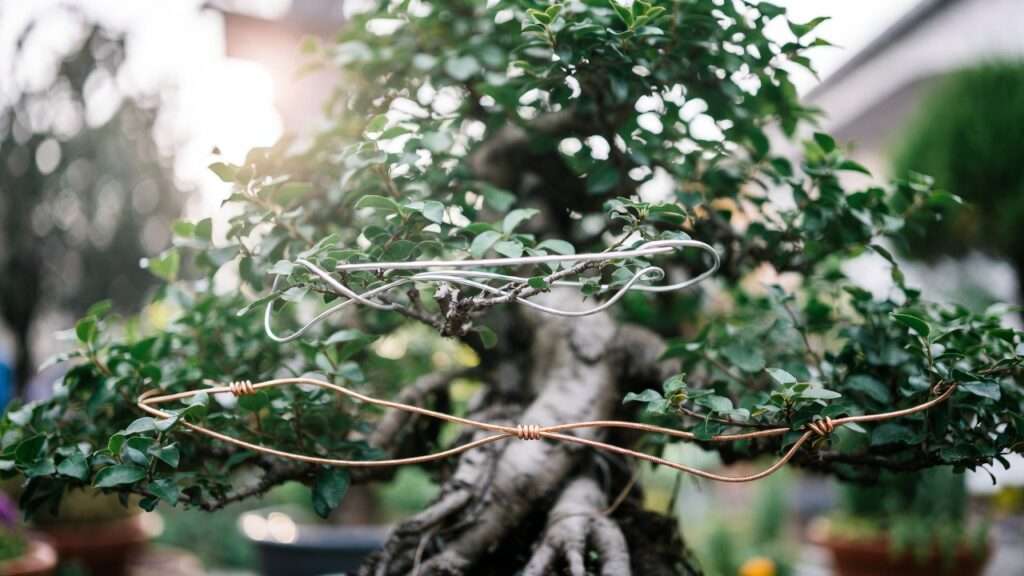
Imagine finally coaxing that stubborn branch into the elegant curve you’ve envisioned for months… only to watch it slowly spring back or, worse, crack under the wrong wire’s grip. 😩 Many bonsai enthusiasts face this exact frustration when starting out with wiring — the heart of shaping your miniature tree into a living work of art. The good news? Choosing the right bonsai wire types and uses makes all the difference between beautiful, lasting bends and damaged branches or visible scars.
In this in-depth guide, we’ll dive deep into the two primary bonsai wire types: anodized aluminum and annealed copper. We’ll compare their properties, strengths, weaknesses, best applications, and real-world decision-making tips so you can confidently select — and apply — the perfect wire for your specific tree species, branch size, and skill level. Whether you’re a beginner shaping your first Japanese maple or an intermediate grower refining a pine’s dramatic cascade style, understanding bonsai wire types and uses will help you achieve professional-level results while protecting your tree’s health. Let’s get wiring! 🌟
What Is Bonsai Wire and Why Does the Type Matter? 🤔
Bonsai wiring is the essential technique for training branches and trunks into artistic positions that mimic aged, windswept trees in nature. By wrapping wire around limbs and gently bending them, you guide growth over months until the tree “remembers” the new shape.
The wire type you choose directly impacts:
- Holding power — how well it maintains the bend against the tree’s natural springiness.
- Ease of application and removal — crucial for avoiding mistakes.
- Risk of damage — including bark scarring (“wire bite”) or branch breakage.
- Aesthetics — visibility on the bark as the tree develops.
- Compatibility — with different species like delicate deciduous trees (maples, elms, azaleas) vs. vigorous conifers (pines, junipers, spruces).
Avoid generic hardware-store wire (like steel or non-annealed copper) — it’s too stiff, unworkable, or damaging. Stick to bonsai-specific anodized aluminum or annealed copper for safe, effective styling. These materials are soft enough when applied yet strong enough to hold position. 🚫
The Two Main Bonsai Wire Types: Aluminum and Copper Compared ⚖️
Aluminum Bonsai Wire (Anodized) 🟢
Anodized aluminum wire is coated for corrosion resistance and often comes in green, black, or silver tones to blend better with bark. It’s soft, highly malleable, and doesn’t harden significantly as you bend it.
Pros:
- Extremely beginner-friendly — easy to wrap, adjust, and unwrap without special tools beyond basic cutters.
- Forgiving on thin or delicate bark (ideal for maples, azaleas, ficus, and other deciduous/tropical species).
- Affordable and widely available — great for practice or large projects.
- Mistakes are easy to correct; you can unwind and reapply without much hassle.
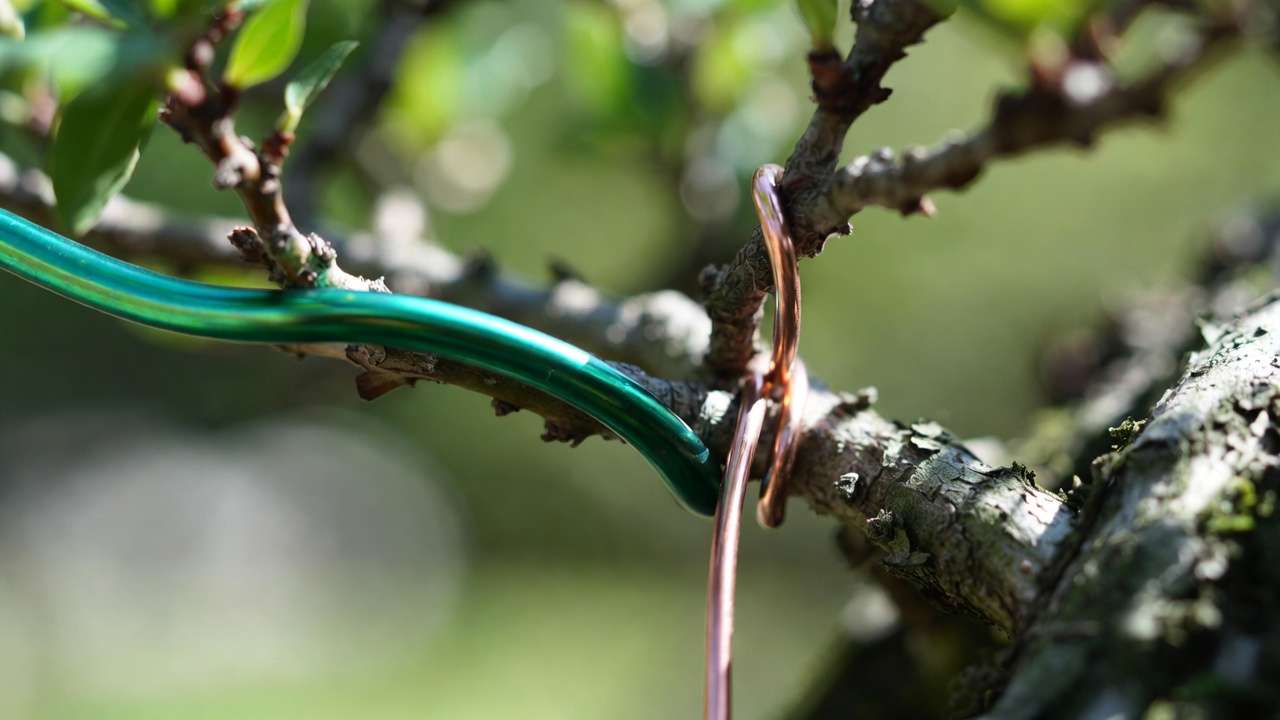
Cons:
- Less holding power per diameter — you’ll need thicker wire (often 1–2 sizes larger) for the same strength, making it more visible.
- Can look bulkier on refined trees.
- May not hold aggressive bends on fast-growing or stiff conifers long-term.
Best uses: Beginners, practice sessions, deciduous trees, thin branches, shohin/mame (tiny) bonsai, or when gentle handling is key. Many pros still use aluminum for secondary pads or detail work even on advanced trees.
Copper Bonsai Wire (Annealed) 🔴
Annealed copper starts soft after heat treatment but work-hardens (stiffens) as you bend and apply it, locking the shape more securely over time. It oxidizes to a natural patina that blends beautifully with bark.
Pros:
- Superior strength — thinner gauges hold thicker/heavier branches effectively (often 1–2 sizes smaller than aluminum for equivalent hold).
- Excellent long-term set on vigorous growers; work-hardening prevents rebound.
- Less visible — thinner wire means more of your beautiful tree shows through.
- Preferred by professionals for structural wiring on conifers.
Cons:
- Steeper learning curve — harder to bend precisely and remove (requires sharp wire cutters; unwinding can be tricky).
- Higher risk of over-bending or cracking branches if you’re inexperienced.
- More expensive and less forgiving for corrections.
- Can mark delicate bark more aggressively if left too long.
Best uses: Conifers (Japanese black/white pine, juniper, spruce), heavy/structural branches, yamadori (wild-collected) trees, advanced styling, or when discretion and lasting hold are priorities.
Side-by-Side Comparison Table (Aluminum vs Copper) 📊
| Feature | Aluminum (Anodized) | Copper (Annealed) |
|---|---|---|
| Strength per gauge | Moderate (needs thicker wire) | High (thinner for same hold) |
| Holding power | Good short-term; some rebound possible | Excellent long-term; work-hardens |
| Ease of application | Very easy, forgiving | Moderate (requires practice) |
| Visibility on tree | More noticeable (thicker needed) | Less noticeable (thinner works) |
| Cost | Affordable | Higher |
| Best tree types | Deciduous, tropical, thin-bark | Conifers, vigorous growers |
| Skill level | Beginners to intermediate | Intermediate to advanced |
| Risk of scarring | Lower if monitored | Higher if left too long |
This table highlights why there’s no universal “best” — it depends on your tree and goals! 🌳
How to Choose the Right Wire: Decision Guide for Your Bonsai 🗂️
Follow this quick framework:
- Are you a beginner or practicing new techniques? → Start with aluminum. It’s forgiving and cheap for trial-and-error. 🌱
- Working on conifers, pines, or heavy branches? → Copper for superior hold and discretion. 🔥
- Tree has thin/delicate bark (e.g., Japanese maple, azalea, Chinese elm)? → Aluminum is safer to minimize scarring.
- Want the most natural, refined look with minimal wire showing? → Copper wins.
- Budget or availability limited? → Aluminum gets the job done.
- Hybrid approach (most pros do this): Use copper for primary structure/trunk/heavy limbs, aluminum for finer pads, twigs, and adjustments.
Pro insight: Many experienced bonsai artists keep both on hand. Start with aluminum to build confidence, then graduate to copper for show-quality refinement. No shame in using what works for your current tree!
Bonsai Wire Sizes and Gauges: The Practical Chart 📏
Selecting the correct wire diameter is just as important as choosing the type. The golden rule among bonsai experts is: wire thickness should be about 1/3 the diameter of the branch you’re bending (or slightly less for copper due to its strength). Too thin, and the branch springs back; too thick, and it’s hard to apply or looks unsightly.
Standard bonsai wire gauges range from 1.0 mm (very fine) to 6.0 mm+ (for thick trunks). Here’s a practical quick-reference guide based on common practice:
- 1.0–1.5 mm: Fine twigs and ramification (secondary/tertiary branches).
- 2.0–2.5 mm: Small to medium branches (light shaping).
- 3.0–3.5 mm: Medium branches and pads.
- 4.0–5.0 mm: Structural/primary branches.
- 5.0–6.0 mm+: Trunks or very heavy limbs (often double-wired or use guy wires/jacks instead).
Key difference: Copper typically holds with 1–2 sizes smaller than aluminum for the same branch. For example, a 10 mm branch might need 4.0 mm aluminum but only 3.0 mm copper.
Here are some real-world visual references for wire gauges and applications:
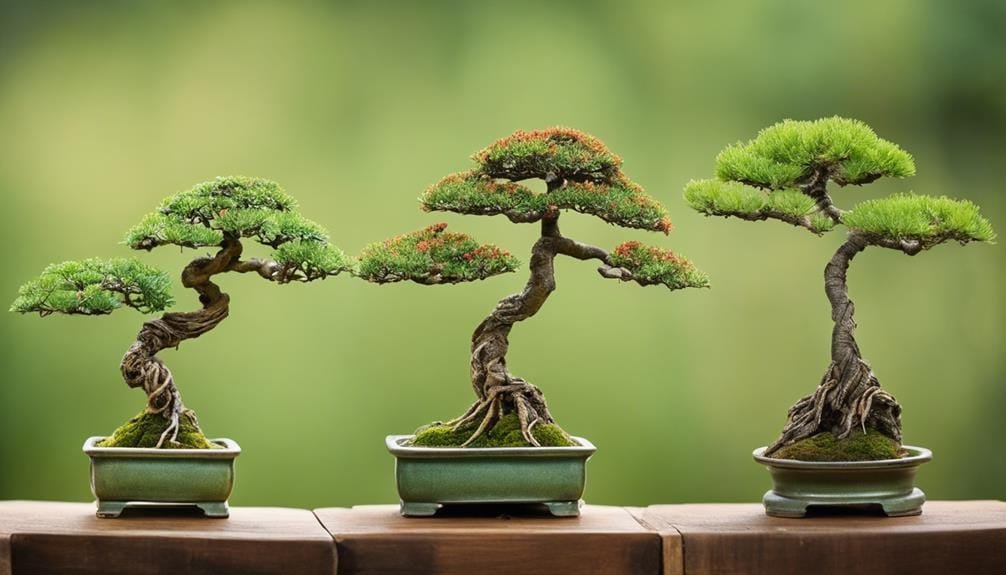
These charts (popular in bonsai communities) show adjustments by species — conifers often need +1 size stronger, while soft deciduous like maples or ficus use -1 size gentler. Always buy high-quality annealed copper or anodized aluminum from reputable bonsai suppliers (avoid cheap generic rolls that aren’t properly softened). Starter kit recommendation: 1.5 mm, 2.5 mm, 4.0 mm aluminum + 1.5 mm and 2.5 mm copper. 🛒
Step-by-Step Wiring Techniques: From Beginner to Advanced 🛠️
Proper technique prevents most common problems. Gather these tools first:
- Bonsai wire cutters (sharp, flush-cut)
- Concave branch cutters
- Raffia (palm fiber) for protecting thick/delicate branches
- Gloves (optional, for grip)
Preparation:
- Wire when the tree is hydrated but not during peak growth (best in late winter/early spring or fall for most species).
- Prune first, then wire — branches are more flexible after defoliation or light trimming.
Basic Wiring Steps:
- Cut a length of wire ~1.5× the branch length.
- Anchor one end by hooking it under the trunk/branch junction or around a fork.
- Wrap at a 45° angle — coils should be even, spaced about 1 coil width apart, no overlaps or big gaps.
- Support the branch with one hand underneath while bending slowly with the other — apply gradual pressure to avoid snaps.
- For double-branch wiring (pairing opposite branches): Use one continuous wire to connect both for mutual support.
- Bend in small increments over days/weeks if needed — never force!
Advanced Techniques:
- Raffia wrapping: Soak raffia, wrap thick branches before wiring to cushion bark and distribute pressure (essential for copper on maples or azaleas).
- Directional bending: Wire in the direction you want growth to encourage — bend toward the desired apex.
- Trunk wiring: Start from base, spiral up; use heavier wire or double for thick trunks.
Here are helpful step-by-step visuals showing hands-on wiring:
Always check weekly for wire bite (indentations in bark) — remove immediately if tight!
Common Mistakes and How to Avoid Them ⚠️
Even experienced growers slip up sometimes. Top pitfalls include:
- Using wire that’s too thin → Branch rebounds; solution: Follow the 1/3 rule and test hold gently.
- Over-tightening or sharp bends → Cracks/breaks; bend gradually and support the branch.
- Leaving wire on too long → Deep scarring; inspect monthly — most branches set in 3–12 months depending on species/growth rate.
- Wiring against natural growth direction → Stresses tree; work with the wood’s flow.
- Ignoring seasonal timing → Wiring during summer heat can cause dieback; prefer dormant or slow-growth periods.
Pro tip: If a branch starts to bite in, cut the wire off carefully (don’t unwind if embedded) and re-wire later with raffia protection. Patience prevents permanent damage! 🛡️
After Wiring: Maintenance, Removal, and Next Steps 🔄
Once wired:
- Monitor growth — vigorous species (pines, junipers) may need checks every 4–6 weeks; slower ones (maples) every 2–3 months.
- Remove when the branch holds position without wire (snap test: it shouldn’t spring back much).
- Safe removal: Cut wire at coils, gently unwind or clip sections — never pull hard.
- Post-removal: If rebound occurs, use guy wires, clamps, or re-wire. Continue pinching/pruning to refine pads.
Many trees need 2–3 wiring cycles over years for full refinement. Wiring is iterative — embrace it as part of the bonsai journey! 🌱
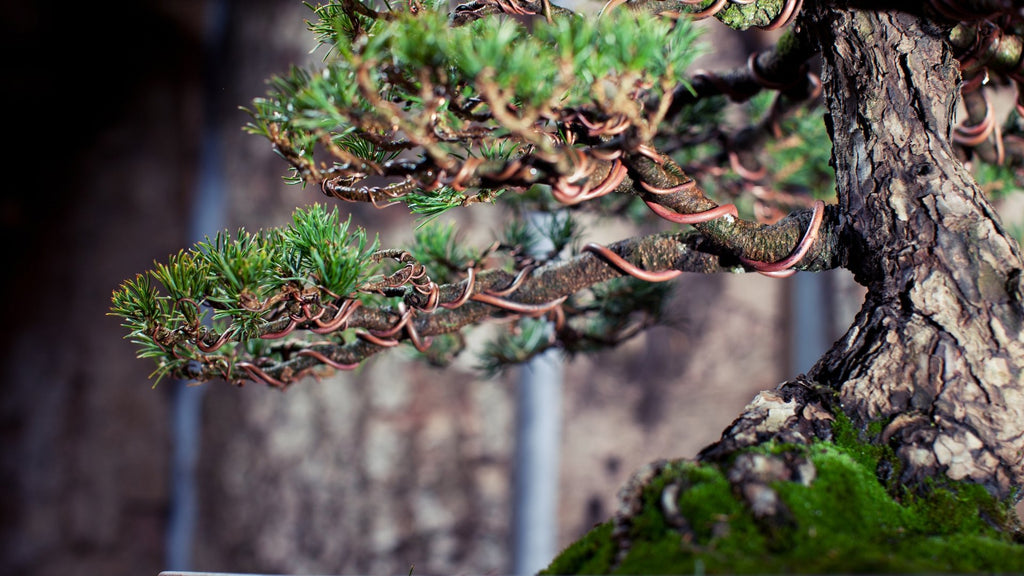
Here are examples of wired trees in action:
Real-World Examples and Case Studies 🌳
Seeing theory in action helps everything click. Here are three practical examples drawn from common bonsai journeys (including my own observations over years of working with hundreds of trees and mentoring growers).
Example 1: Young Japanese Maple – Aluminum Success Story A 5-year-old Acer palmatum with thin, reddish bark needed first major styling to create an informal upright with gentle pads.
- Wire chosen: 2.0 mm and 1.5 mm anodized aluminum (green).
- Why aluminum? Delicate bark scars easily; beginner-friendly adjustments were needed during the learning phase.
- Result: Branches set beautifully in 4–5 months with almost no visible bite. The thinner pads were refined later with the same wire. Aluminum allowed easy corrections when one branch angled too sharply.
- Visual takeaway: Aluminum blends decently on lighter bark and is forgiving during initial training.

Here’s what a well-wired Japanese maple looks like during the process:
Example 2: Mature Juniper – Copper’s Superior Holding Power A collected (yamadori) Juniper procumbens nana had thick, heavy primary branches that kept lifting upward despite initial attempts with aluminum.
- Wire chosen: 3.5 mm and 4.0 mm annealed copper for main limbs, 2.0 mm for secondary pads.
- Why copper? Aluminum (even 5.0 mm) wasn’t holding against the strong upward growth habit of juniper. Copper’s work-hardening locked the dramatic downward bends needed for cascade style.
- Result: After 8 months, branches stayed exactly where placed with minimal wire visibility thanks to thinner gauges. Only light touch-ups were needed later.
- Lesson: For conifers and heavy structural work, copper almost always outperforms aluminum in the long run.
Real example of copper wiring on a juniper in progress:
Example 3: Mistake Turned Learning Opportunity – Pine with Aluminum A young Pinus thunbergii (Japanese black pine) was wired entirely with aluminum (3.0–4.0 mm) to save cost.
- Problem: Vigorous spring growth caused significant rebound; branches lifted noticeably within 3 months.
- Fix: Rewired with 2.5 mm copper for primaries — immediate improvement in hold. Aluminum was kept only for the finest twig work.
- Takeaway: Never underestimate conifer springiness. Starting with aluminum on pines often leads to double the work.
These cases show there’s rarely a “wrong” choice — but there is usually a more efficient one depending on species and goals.
FAQs: Bonsai Wire Types and Uses ❓
Is aluminum or copper better overall? Neither is universally better. Aluminum wins for beginners, delicate trees, and affordability. Copper excels for conifers, heavy branches, long-term hold, and refined appearance. Most serious hobbyists eventually use both.
Can I reuse copper wire? Yes — annealed copper can be straightened and re-annealed (heat to red-hot then quench) if you have the setup. Many growers reuse it multiple times. Aluminum is generally single-use as it work-hardens less reversibly.
What if I only have one type right now? Use what you have! Just adjust gauge accordingly (go thicker with aluminum, be extra gentle with copper on thin bark). You’ll learn faster by doing.
How long should I leave wire on? Depends on species and growth rate:
- Fast growers (elms, ficus, some junipers): 2–6 months
- Moderate (maples, pines): 4–12 months
- Slow (spruce, beech): up to 18 months Always check monthly for bite marks and remove before deep scarring occurs.
Where should I buy good bonsai wire? Reputable sources:
- Specialized bonsai nurseries (e.g., Brussel’s Bonsai, Eastern Leaf, Mirai Live shop)
- Japanese brands: Masakuni, Kaneshin, or Midori
- Avoid very cheap Amazon/eBay rolls — they’re often not properly annealed or anodized. A good starter coil set costs $20–50 and lasts years.
Do I need to protect the bark every time? Not always. Raffia or paper tape is essential for thick branches (>10 mm), copper on thin-barked trees, or aggressive bends. For light work on hardy species, you can wire directly — just monitor closely.
Final Thoughts: Level Up Your Bonsai Styling Today 🌟
Mastering bonsai wire types and uses — aluminum vs copper — is one of the biggest leaps you can make in your bonsai journey. There’s no magic “best” wire; the right choice comes down to understanding your tree’s personality, your current skill level, and the look you’re aiming for.
Start simple: Grab a coil of aluminum, practice on sacrifice branches or nursery stock, and build confidence. When you’re ready for more control and elegance, add copper to your toolkit. Soon you’ll intuitively reach for the right spool every time.
Wiring is where science meets art — where patience, observation, and gentle guidance turn a young plant into a miniature masterpiece. So go ahead: pick up that wire this weekend, take before photos, and begin shaping your tree. The results (and the lessons) will surprise and delight you. 🌸
Have you wired a tree recently? Which type did you use and how did it turn out? Drop your experience (or questions!) in the comments below — I love hearing from fellow bonsai growers and helping troubleshoot. Happy wiring! ✂️🌳











