
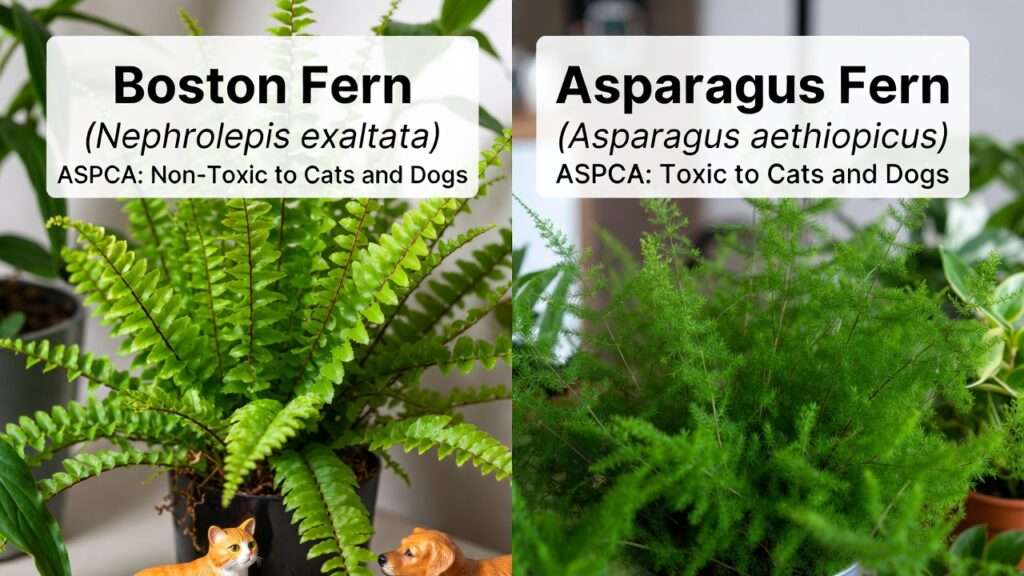
Imagine this: You walk into your cozy living room, only to spot your curious cat batting playfully at dangling fronds or your dog sneaking a nibble from a lush hanging basket. 😿 Your heart skips a beat—is that plant toxic? If you’re a pet parent who also loves filling your home with beautiful, airy greenery, this exact worry hits home all too often.
Boston fern vs. asparagus fern toxicity is one of the most common searches among houseplant enthusiasts with furry family members. Both plants offer that soft, feathery look perfect for brightening indoor spaces, boosting humidity, and even purifying air. But here’s the crucial difference: one is generally safe, while the other poses mild risks.
According to the ASPCA (American Society for the Prevention of Cruelty to Animals), the classic Boston fern (Nephrolepis exaltata ‘Bostoniensis’) is non-toxic to cats and dogs. In contrast, the asparagus fern (Asparagus densiflorus, often sold as Sprengeri or emerald fern) is listed as toxic (mild to moderate), potentially causing gastrointestinal upset, oral irritation, or skin reactions.
This comprehensive guide breaks it all down so you can make confident, pet-safe choices. We’ll cover identification, exact toxicity details, symptoms to watch for, emergency steps, safer alternatives, and expert care tips for pet-friendly homes. By the end, you’ll know exactly which fern (or similar plant) belongs in your space without the stress. Let’s dive in and create a worry-free green oasis! 🌱❤️
Quick Comparison: Boston Fern vs. Asparagus Fern at a Glance 🆚
Here’s a clear side-by-side to answer your burning question right away:
| Feature | Boston Fern | Asparagus Fern |
|---|---|---|
| Scientific Name | Nephrolepis exaltata ‘Bostoniensis’ | Asparagus densiflorus (cv. Sprengeri) |
| ASPCA Toxicity Status | Non-toxic to cats & dogs ✅ | Toxic to cats & dogs (mild) ⚠️ |
| Key Toxins | None significant; fiber may cause mild upset | Sapogenins (steroidal saponins), needle-like crystals |
| Ingestion Symptoms | Rare; possible mild vomiting/diarrhea from large amounts | Vomiting, diarrhea, abdominal pain, drooling, oral irritation |
| Skin Contact | Generally safe | Possible allergic dermatitis/rash |
| Berry Risk | No berries | Berries more toxic than foliage |
| Pet Safety Verdict | Safe choice for pet households 🌟 | Best avoided or kept out of reach |
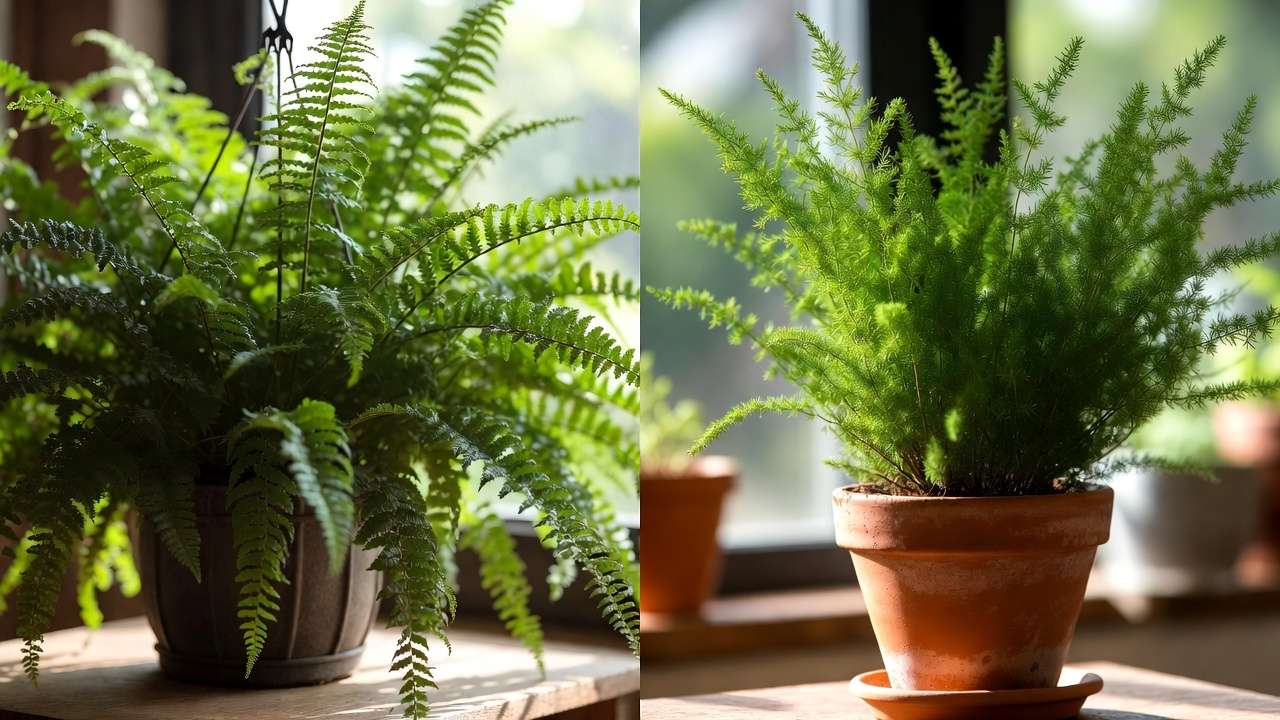
This table draws directly from ASPCA listings and pet poison resources—reliable authorities every vet recommends.
What Is a Boston Fern? Identification and Appeal 🌿
The Boston fern is a true fern beloved for its elegant, arching fronds covered in soft, feathery leaflets. It grows in dense, fountain-like clumps, often reaching 2–3 feet tall and wide when happy. The fronds are bright green, delicate, and give that classic “jungle” vibe without being prickly.
Why do so many plant lovers (and pet parents) adore it?
- Air-purifying qualities help remove indoor toxins.
- Thrives in indirect light and high humidity—ideal for bathrooms or kitchens.
- Non-toxic status makes it a top pick for homes with cats who love batting at leaves or dogs who chew curiously.
If your pet nibbles occasionally, you can breathe easy—no severe toxins here.
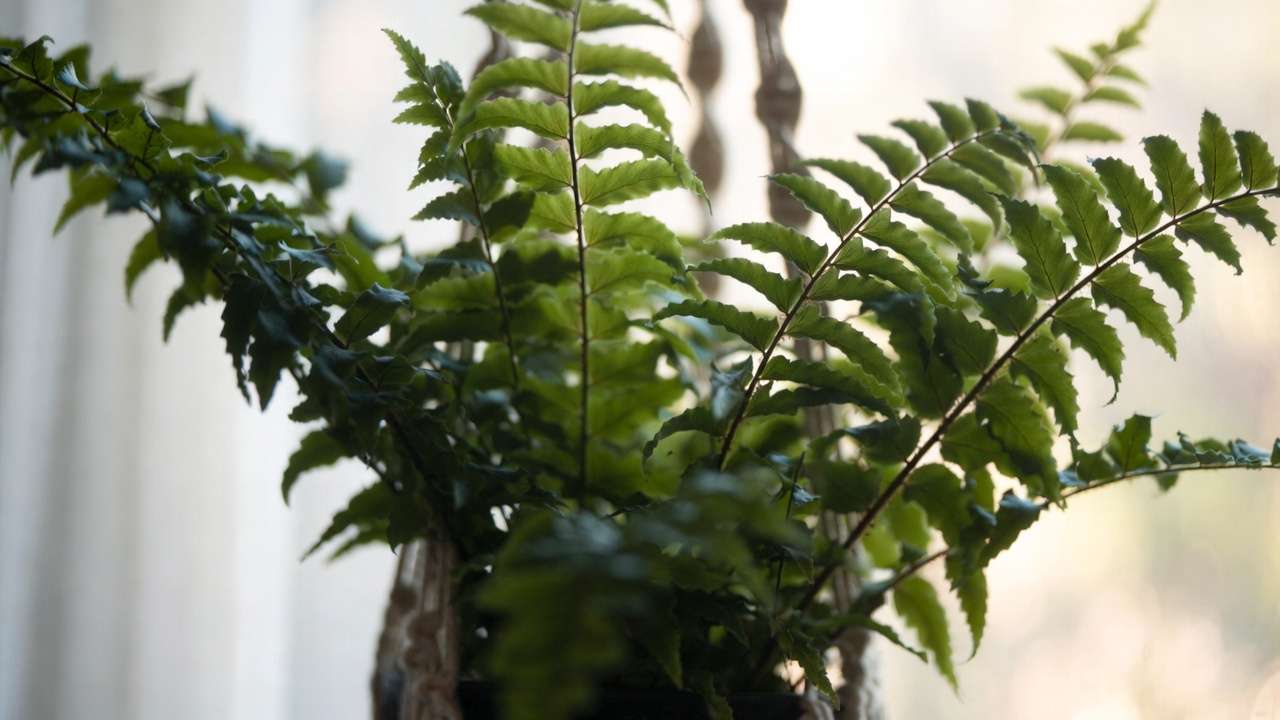
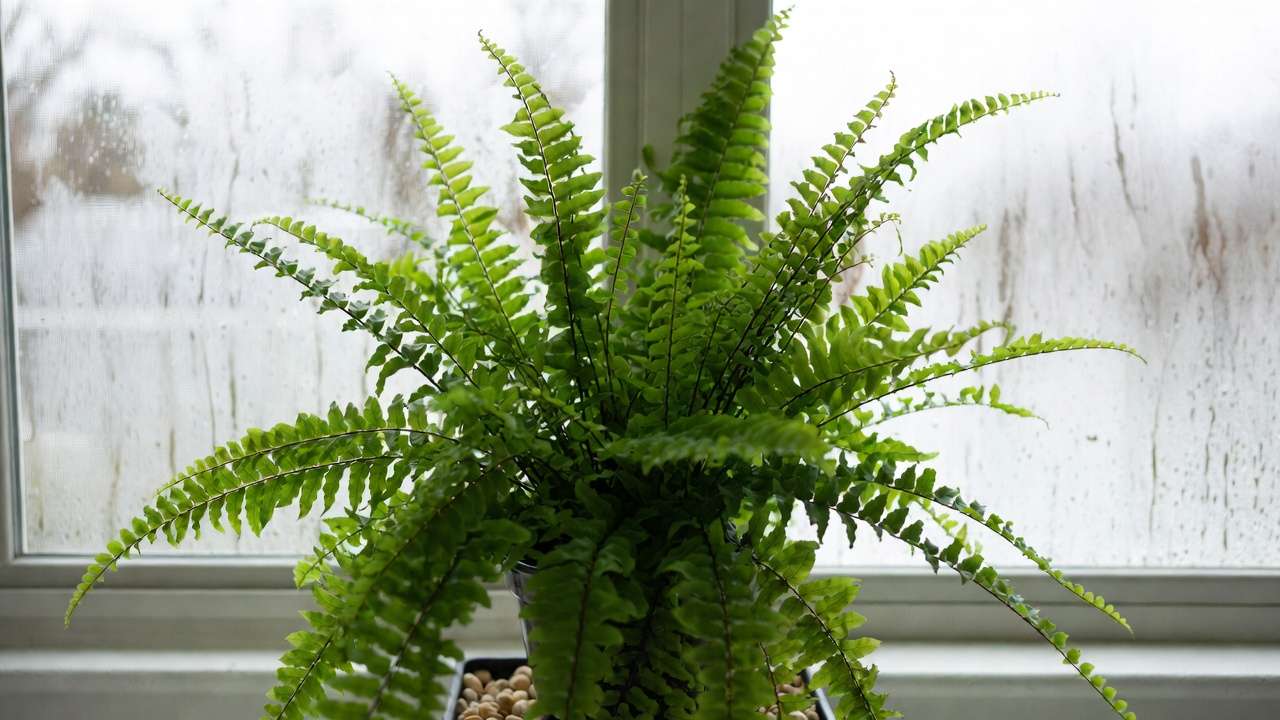
(Image: Lush Boston fern in a hanging basket, showing soft green fronds – perfect for visualizing pet-safe greenery!)
What Is an Asparagus Fern? (And Why the Name Confuses People) ❓
Despite the “fern” in its name, the asparagus fern isn’t a true fern at all—it’s in the Asparagus genus (same family as edible asparagus!). This misnomer leads to many mix-ups.
Key features:
- Feathery, needle-like “leaves” (actually cladophylls—flattened stems).
- Small white flowers that turn into bright red berries (more common outdoors or in mature plants).
- Dense, bushy growth; popular varieties include Sprengeri (trailing), Plumosa (lacy), and emerald feather.
People often buy it thinking it’s as safe as a Boston fern, but the botanical difference matters—its sapogenins and irritating crystals make it risky.
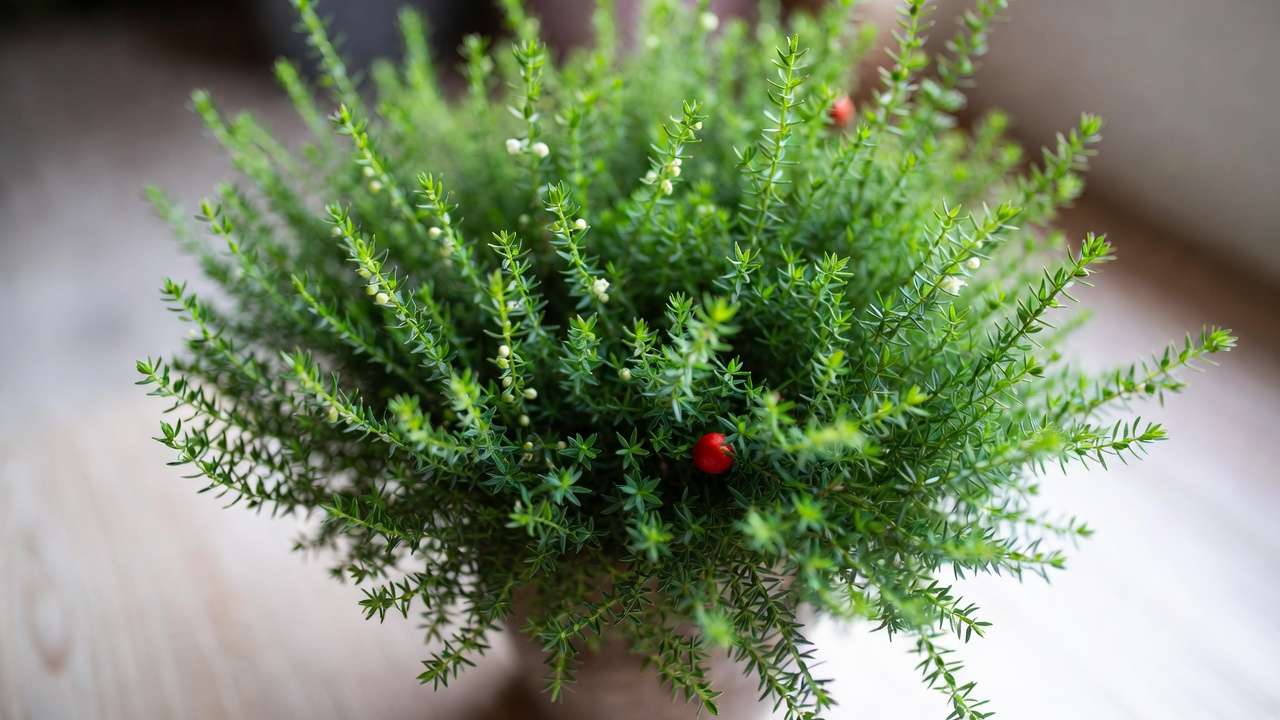
(Image: Close-up of asparagus fern foliage with needle-like texture and potential red berries – spot the difference!)
Toxicity Breakdown: Boston Fern 🐱🐶
ASPCA official verdict: Non-toxic to dogs and cats.
Vets and pet poison experts confirm: No major toxins like saponins, oxalates, or alkaloids. If your pet munches a large amount (unlikely, as ferns aren’t super tasty), you might see mild gastrointestinal upset—think temporary vomiting or loose stools from indigestible fiber. This resolves quickly with rest and water, no vet trip usually needed.
Real-world insight: Thousands of pet owners grow Boston ferns indoors without issues. It’s a staple in “pet-safe plant” lists from sources like Pet Poison Helpline and veterinary blogs.
Toxicity Breakdown: Asparagus Fern ⚠️
ASPCA official verdict: Toxic to dogs and cats (mild to moderate effects).
The culprits? Steroidal sapogenins and sharp calcium oxalate-like crystals in the foliage and especially berries. Ingestion can lead to:
- Vomiting and diarrhea (often foamy or with abdominal discomfort).
- Excessive drooling and mouth irritation.
- In rare cases, more persistent GI upset.
Repeated skin contact (e.g., brushing against it daily) may cause allergic dermatitis—red, itchy rashes. Berries pose higher risk than leaves.
Severity note: Rarely fatal, but uncomfortable enough to warrant monitoring. If your pet shows symptoms, contact a vet or ASPCA Poison Control (888-426-4435) promptly.
Side-by-Side Symptom Comparison Table
| Plant | Common Ingestion Symptoms | Skin Contact Risk | Severity (Typical) | Vet Visit Recommended? |
|---|---|---|---|---|
| Boston Fern | Mild GI upset (if large quantity) | Minimal | Very low | Rarely |
| Asparagus Fern | Vomiting, diarrhea, drooling, pain | Allergic rash/dermatitis | Mild-moderate | Yes, if symptoms appear |
Always err on caution—better safe than sorry with pets!
What Should You Do If Your Pet Eats One of These Ferns? Emergency Guide 🚑🌿
Stay calm—most fern-related incidents are mild, but quick action makes all the difference. Here’s a clear, step-by-step protocol based on recommendations from the ASPCA Animal Poison Control Center, Pet Poison Helpline, and veterinary best practices.
-
Identify the plant immediately Take a quick photo of the chewed plant (fronds, berries if present) and note which one it is. This saves precious time when speaking to a professional. If you’re unsure, compare it to the identification descriptions and images earlier in this article.
-
Estimate the amount ingested A few nibbles? A whole branch? A couple of berries? Larger quantities or berries (especially from asparagus fern) increase the chance of noticeable symptoms.
-
Observe your pet closely for the next 1–12 hours Typical onset of symptoms: 30 minutes to 6 hours. Watch for:
- Vomiting or retching
- Diarrhea (especially if foamy or bloody)
- Excessive drooling or pawing at the mouth
- Lethargy, loss of appetite, or abdominal tenderness
- Skin redness/scratching (if contact dermatitis is suspected)
-
Do NOT induce vomiting at home unless specifically instructed by a vet or poison control expert. Inducing vomiting can sometimes cause more harm (e.g., aspiration).
-
Call for professional advice right away if ANY symptoms appear—or if you’re worried
- ASPCA Animal Poison Control: (888) 426-4435 (may charge a consultation fee)
- Pet Poison Helpline: (855) 764-7661 (fee may apply)
- Your local emergency vet clinic
Have these details ready: pet’s breed, age, weight, exact plant (Boston or asparagus fern), amount eaten, time since ingestion, and current symptoms.
-
Supportive home care while waiting for guidance (only if no symptoms yet and expert approves):
- Offer small amounts of water to prevent dehydration.
- Withhold food for 4–6 hours to rest the stomach, then reintroduce bland food (boiled chicken + rice) if advised.
- Keep your pet in a quiet, comfortable area.
Pro tip from plant-savvy vets: Boston fern incidents almost never require intervention beyond observation. Asparagus fern cases more often lead to a vet visit for anti-nausea medication or fluids if vomiting is persistent.
Prevention Hacks: Keep Curious Pets Away from Plants 🛡️🐾
Even safe plants can cause upset if eaten in huge quantities. Here are practical, pet-friendly ways to enjoy greenery without worry:
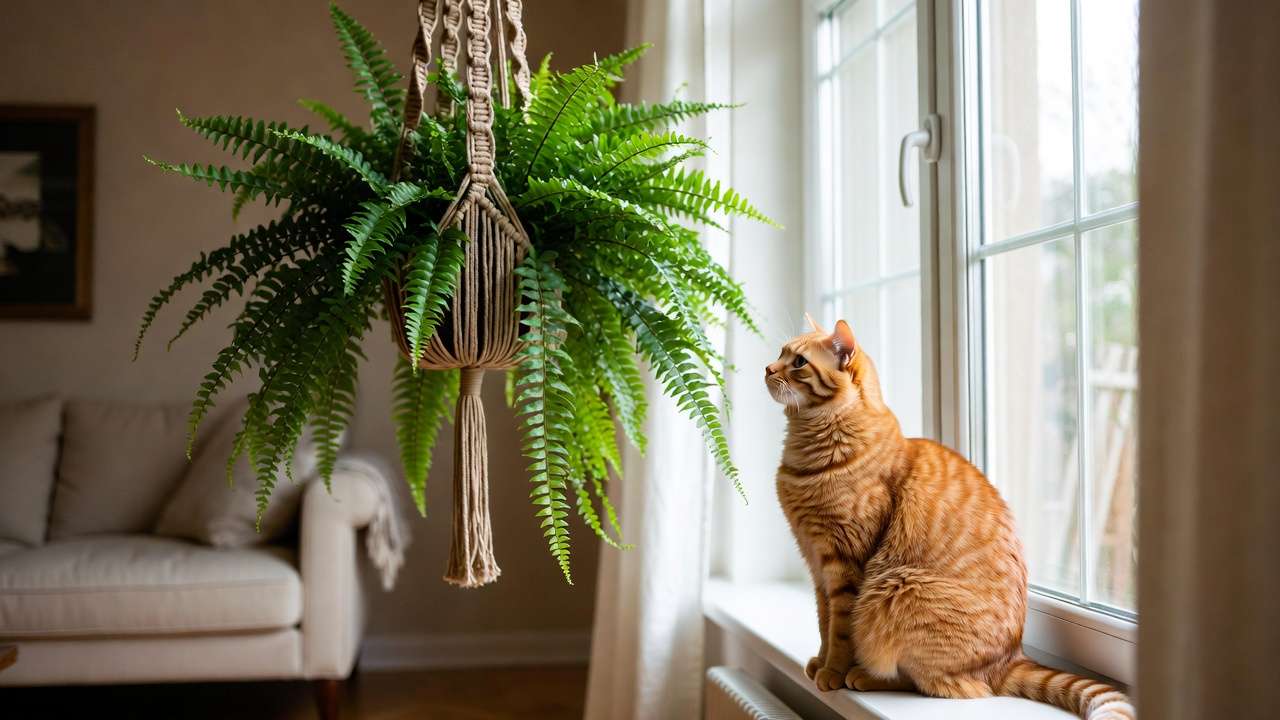
- Hang them high — Boston ferns look gorgeous in macramé hangers or on tall plant stands.
- Use stable, heavy pots — Prevents tipping and playful batting.
- Natural deterrents — Lightly mist leaves with diluted citrus essential oil spray (pet-safe dilution: 10–15 drops per 8 oz water; test small area first). Cats especially dislike citrus scents.
- Distraction & training — Provide cat grass, catnip toys, or puzzle feeders to redirect chewing energy. Reward ignoring plants with treats.
- Designated “pet jungle” zones — Create one high shelf or room with only proven-safe plants.
(Image suggestion: A Boston fern elegantly suspended in a macramé hanger above a playful cat’s reach – safe and stylish!)
Pet-Safe Alternatives to Asparagus Fern (If You Love That Feathery Look) 🌱✨
If the asparagus fern’s delicate, airy appearance drew you in but the toxicity warning changed your mind, you’re in luck—there are many lush, non-toxic lookalikes that give the same soft, tropical vibe.
Top pet-safe fern & fern-like recommendations (all ASPCA-listed non-toxic):
- Boston Fern — Your safest, most similar option 🌟
- Maidenhair Fern (Adiantum spp.) — Super delicate, lacy fronds; loves humidity
- Button Fern (Pellaea rotundifolia) — Compact, rounded leaflets; easier to care for
- Bird’s Nest Fern (Asplenium nidus) — Broad, wavy leaves; architectural beauty
- Staghorn Fern (Platycerium spp.) — Dramatic wall-mounted “antlers”; very pet-proof when elevated
- Rabbit’s Foot Fern (Davallia spp.) — Fuzzy rhizomes; trailing & whimsical
- Holly Fern (Cyrtomium falcatum) — Tough, glossy leaves; great for lower light
- Autumn Fern (Dryopteris erythrosora) — Coppery new growth; color interest
Bonus non-fern alternatives with similar texture:
- Spider Plant (Chlorophytum comosum) — Arching, grass-like babies
- Parlor Palm (Chamaedorea elegans) — Feathery fronds, classic indoor palm
- Calathea or Maranta (prayer plants) — Striped, soft foliage
All of these are widely available, beginner-friendly, and genuinely safe around cats and dogs.
(Image: Side-by-side collage of pet-safe ferns: Boston, maidenhair, bird’s nest, and button fern – inspiration for your next plant purchase!)
How to Care for Boston Ferns in Pet-Friendly Homes 🌿💚
Since the Boston fern is the clear winner for pet households, let’s make sure yours thrives.
Ideal Growing Conditions
- Light: Bright, indirect (east or north window best). Avoid direct sun to prevent scorching.
- Humidity: 50–70% — Use a pebble tray, humidifier, or group with other plants.
- Water: Keep soil consistently moist but not soggy. Water when top inch feels dry.
- Soil: Well-draining potting mix with peat or coco coir.
- Temperature: 65–75°F (18–24°C); no cold drafts.
Pet-Proofing While Caring
- Mist with plain water (not fertilizer) to avoid residue pets might lick.
- Fertilize sparingly during growing season (spring–summer) with diluted, balanced houseplant fertilizer.
- Prune brown fronds with clean scissors to keep it tidy and less tempting.
Troubleshooting Common Issues (Pet-Safe Solutions Only)
- Brown tips → Increase humidity or flush soil to remove fertilizer salts.
- Pests (mealybugs, scale) → Wipe with neem oil solution or insecticidal soap (pet-safe when dry).
- Drooping → Check for underwatering or root rot—adjust accordingly.
Expert Insights and Vet Recommendations 🩺🌿
As someone who has followed houseplant trends, pet health reports, and veterinary toxicology updates for years, I can tell you that fern-related calls to poison control centers are surprisingly common—but rarely dramatic.
Key takeaways from trusted sources:
- ASPCA Animal Poison Control Center consistently ranks Boston fern as non-toxic across dogs, cats, horses, and even smaller pets like rabbits. Their database (updated regularly) shows almost zero serious cases tied to Nephrolepis exaltata cultivars.
- Pet Poison Helpline (a veterinary toxicology service used by thousands of clinics) echoes this: Boston fern incidents are typically “mild GI upset at worst” from overeating fibrous plant material. Asparagus fern, however, appears frequently in their call logs—usually mild vomiting/diarrhea, occasionally requiring anti-emetics or subcutaneous fluids for comfort.
- Board-certified veterinary toxicologists often emphasize: The biggest risk with asparagus fern is misidentification. Many owners buy what’s labeled “asparagus fern” thinking it’s just another safe fern, only to discover later it belongs to a different genus with saponins.
Myth-busting time:
- “All ferns are safe for pets” → False. True ferns (Polypodiopsida class) like Boston, maidenhair, and bird’s nest are generally non-toxic. But “fern-like” imposters (asparagus fern, lucky bamboo in some cases) can carry risks.
- “A little nibble won’t hurt” → Usually true for Boston fern; less reliably true for asparagus fern, especially if berries are involved.
Long-term advice from vets who treat both indoor plants and pets: Build your collection around proven-safe species first. Once your home jungle is established with Boston ferns, spider plants, parlor palms, and calatheas, you’ll have far fewer emergency scares.
Frequently Asked Questions (FAQs) ❓🐾
Here are the most common questions pet owners type into search bars when comparing these two ferns:
1. Is Boston fern toxic to cats? No—Boston fern is non-toxic to cats according to the ASPCA. Mild stomach upset is possible from eating a lot, but no serious poisoning occurs.
2. Is asparagus fern toxic to dogs? Yes, mildly to moderately. Dogs may experience vomiting, diarrhea, drooling, or abdominal discomfort after ingestion. Berries are riskier than foliage.
3. What’s the main difference between Boston fern and asparagus fern? Boston fern is a true fern (soft, feathery true leaves) and non-toxic. Asparagus fern is not a true fern (needle-like cladophylls), contains saponins, and is mildly toxic.
4. Are there any ferns that are truly 100% pet-safe? Yes—Boston fern, maidenhair fern, button fern, bird’s nest fern, staghorn fern, rabbit’s foot fern, and holly fern are all ASPCA non-toxic and widely recommended for pet households.
5. What if my pet eats asparagus fern but shows no symptoms? Monitor closely for 12–24 hours. Many pets experience only very mild or no effects from small amounts. If no vomiting, diarrhea, or lethargy appears, they’re likely fine—but call poison control for peace of mind if you’re concerned.
6. Can I keep asparagus fern if I put it way up high? Possible, but not ideal. Cats can jump surprisingly high, and dogs may pull down hanging baskets. If you love the look, opt for a confirmed non-toxic alternative instead.
7. Do Boston ferns drop spores that could harm pets? No—Boston fern spores are harmless. They’re microscopic and don’t cause toxicity or irritation.
8. How do I stop my cat from chewing my Boston fern? Provide cat grass or silver vine, use citrus-scented deterrents (diluted), place the plant out of reach, or distract with interactive toys. Most cats lose interest once they realize it’s not very tasty.
9. Are the red berries on asparagus fern more dangerous? Yes—berries contain higher concentrations of sapogenins and are more appealing to curious pets, leading to a higher likelihood of noticeable symptoms.
10. Should I switch all my plants to Boston ferns now? Not necessarily all—but if you have cats or dogs who like to nibble, prioritizing ASPCA non-toxic plants (starting with Boston fern) dramatically reduces risk and stress.
Conclusion: Choose Wisely and Enjoy Your Green Oasis Safely 🌿❤️🐱🐶
After breaking down the science, symptoms, real-world vet reports, and practical alternatives, the verdict is clear:
- Boston fern wins hands-down as the pet-safe choice for that classic feathery, lush look. It’s non-toxic, beautiful, air-purifying, and thrives in the same humid, indirect-light spots most homes offer.
- Asparagus fern, while undeniably pretty, carries enough mild toxicity risk (especially from berries and sapogenins) that it’s best left off the shopping list—or at minimum kept completely inaccessible—in homes with cats, dogs, or other curious pets.
You don’t have to sacrifice style for safety. Fill your space with Boston ferns, maidenhair ferns, bird’s nest ferns, spider plants, and parlor palms, and you’ll have a vibrant, jungle-like interior that’s genuinely worry-free.
Your pets will thank you, your air quality will improve, and you’ll finally be able to enjoy your plants without that nagging “what if” feeling every time you catch a paw reaching up.
Have you already added a Boston fern to your collection? Or discovered a favorite pet-safe plant we didn’t mention? Drop your experiences in the comments—I read and reply to every one! 🌱
And if you found this guide helpful, consider subscribing for more in-depth pet-safe plant guides, care tips, and seasonal indoor gardening advice. Happy (and safe) growing! 🪴✨











