
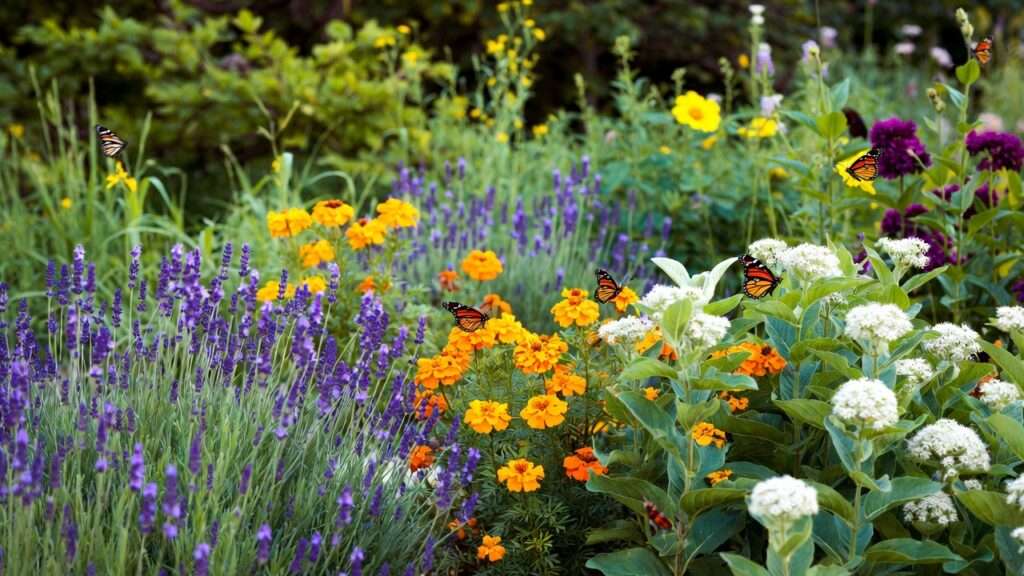
Picture this: Your garden is alive with the gentle flutter of colorful butterflies dancing from bloom to bloom on a sunny afternoon. The air is filled with the sweet scent of flowers, and you spot monarchs, swallowtails, and painted ladies sipping nectar without a care. Then, reality hits — aphids are clustering on your roses, caterpillars are munching through your veggies, and suddenly you’re tempted to reach for a spray bottle. 😩
But here’s the good news: you don’t have to choose between a thriving butterfly haven and a pest-free garden. The key lies in smart, nature-inspired choices — especially butterfly-friendly plants vs. pest control strategies that work together harmoniously. By selecting dual-purpose plants and using eco-friendly methods, you can create a balanced ecosystem where pollinators flourish and harmful pests stay naturally in check — all without toxic chemicals that could harm butterflies, caterpillars, bees, or other beneficial insects.
In this comprehensive guide, we’ll explore why butterflies matter, the common pitfalls when mixing butterfly attraction with pest issues, and proven plant recommendations plus practical strategies to achieve the best of both worlds. Whether you’re tending a small balcony in Mathba, a backyard veggie patch in Barisal Division, or a larger ornamental garden, these tips will help you build a sanctuary that’s beautiful, biodiverse, and low-maintenance. Let’s turn that “vs.” into a peaceful “and”! ✨
Why Butterflies Matter in Your Garden 🦋
Butterflies are more than just pretty visitors — they’re essential pollinators and key indicators of a healthy environment. As adults, they transfer pollen between flowers, helping fruits, vegetables, and wild plants reproduce. Many species, like monarchs, rely on specific host plants to lay eggs, supporting the next generation of caterpillars.
Globally, pollinators (including butterflies) support the reproduction of 75–95% of flowering plants, which in turn provide food and habitat for countless other creatures. But butterfly populations have declined sharply due to habitat loss, climate shifts, and pesticide use. By creating welcoming spaces, you’re not just beautifying your yard — you’re contributing to biodiversity conservation right at home.
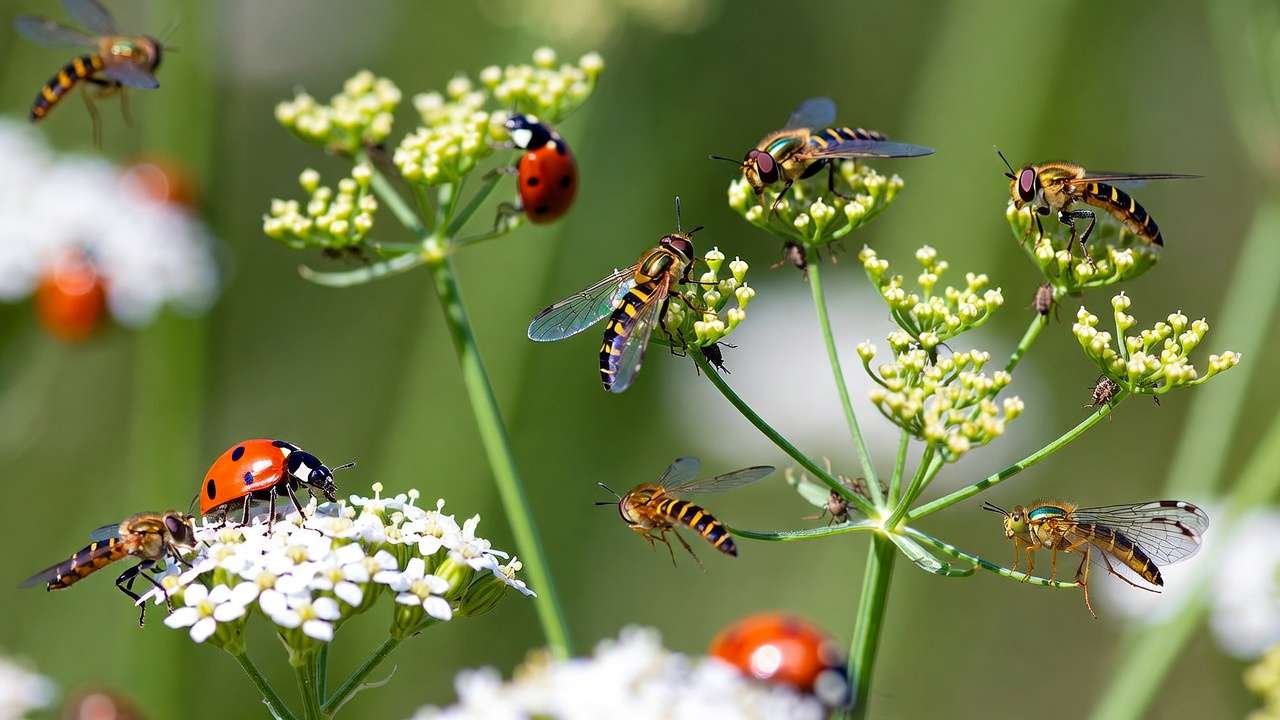
Bonus: A butterfly-friendly garden often attracts beneficial insects too — ladybugs, lacewings, hoverflies, and parasitic wasps — that act as natural pest controllers by preying on aphids, caterpillars, and other troublemakers. It’s nature’s built-in pest management team! 🐞
The Problem: When Butterfly Plants Invite (or Become) Pests 🐛
Many gardeners excitedly plant nectar-rich flowers or host plants like milkweed, only to face unexpected pest surges. Some popular butterfly attractors (such as certain brassicas for swallowtails) can become caterpillar buffets if not managed. Milkweed, the essential host for monarchs, frequently hosts aphid colonies that look alarming (though they rarely kill healthy plants).
Traditional fixes like broad-spectrum pesticides create a vicious cycle: they wipe out caterpillars (future butterflies), kill beneficial predators, and leave your garden vulnerable to rebound pest outbreaks. The result? Fewer butterflies and more frustration.
The good news? You don’t have to sacrifice one for the other. Strategic plant selection and companion techniques resolve this tension beautifully.
The Smart Solution: Dual-Purpose Plants That Attract Butterflies AND Help Control Pests 🌸🚫🐛
The real magic happens with plants that serve double duty: providing nectar or host support for butterflies while repelling pests or drawing in beneficial predators. Here are the top performers, backed by gardening experts and real-world success.
Top Plants That Repel Pests While Feeding Butterflies
- Lavender (Lavandula spp.) 🌿 — Its strong aromatic oils repel mosquitoes, moths, flies, and even some fleas. The purple blooms are irresistible to butterflies and bees. Plant in sunny, well-drained spots; it’s drought-tolerant once established.
- Marigolds (Tagetes spp.) 🌼 — Famous for their pest-repelling scent that deters aphids, whiteflies, nematodes, and tomato hornworms. Bright orange/yellow flowers draw butterflies and hoverflies (whose larvae eat aphids). French marigolds work especially well as companions.
- Mint & Lemon Balm (Mentha spp. & Melissa officinalis) 🍃 — Powerful mosquito and ant repellents; mint flowers attract pollinators (grow in pots to prevent spreading!). Lemon balm adds a citrusy twist while luring beneficials.
- Basil (Ocimum basilicum) 🌱 — Repels flies, mosquitoes, and hornworms; allow some to flower for butterfly visits. Great near tomatoes!
- Catnip (Nepeta cataria) 😺 — Deters aphids, flea beetles, squash bugs, and mosquitoes; butterflies love the blooms. Bonus: cats might visit too!
Nectar Powerhouses That Also Attract Beneficial Predators
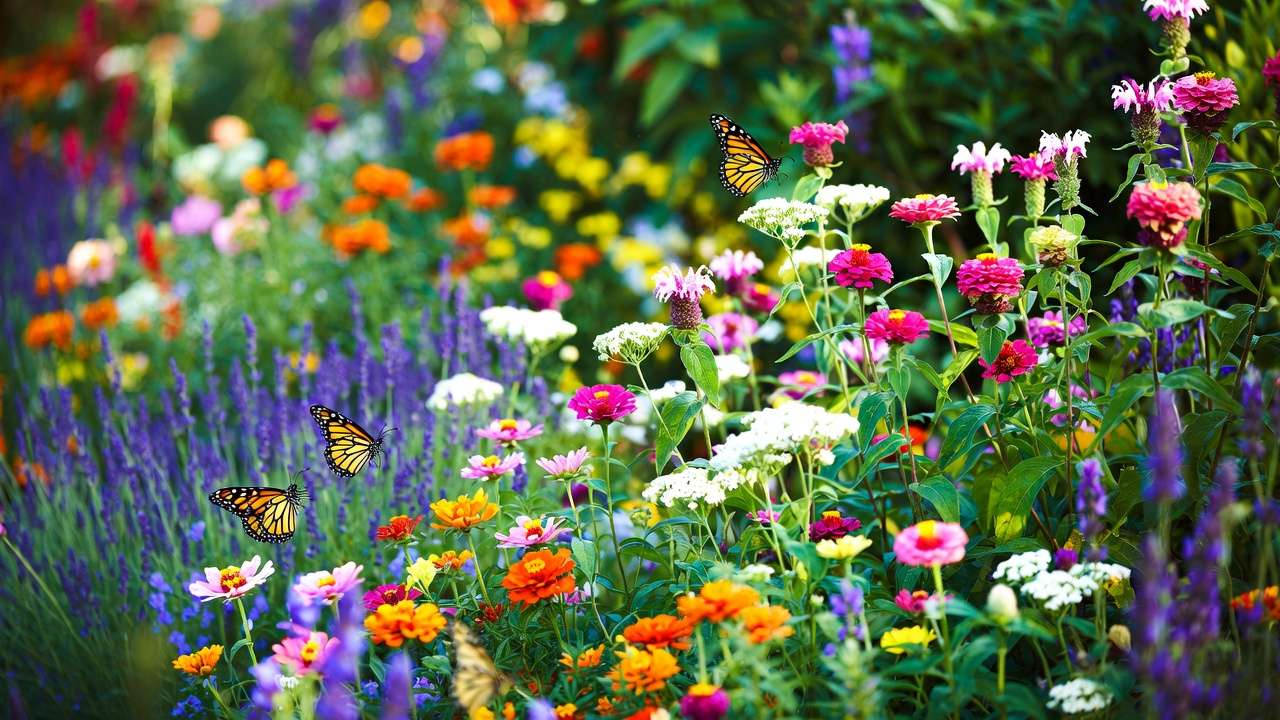
- Yarrow (Achillea millefolium) ⭐ — Flat flower heads are magnets for ladybugs, lacewings, hoverflies, and parasitic wasps — all top aphid-eaters. Butterflies adore the blooms in pink, white, or yellow.
- Dill, Fennel, Cilantro, Parsley 🌿 — Umbel-shaped flowers attract tiny parasitic wasps and hoverflies that target pest caterpillars. These also host black swallowtail butterflies!
- Bee Balm (Monarda spp.) 🔥 — Tubular flowers pull in butterflies, hummingbirds, and predatory insects. Its minty scent helps deter some pests.
- Zinnias & Cosmos 🌺 — Easy annuals with long bloom seasons; they draw butterflies and beneficials that patrol for pests.
Essential Butterfly Host Plants That Fit the Balance
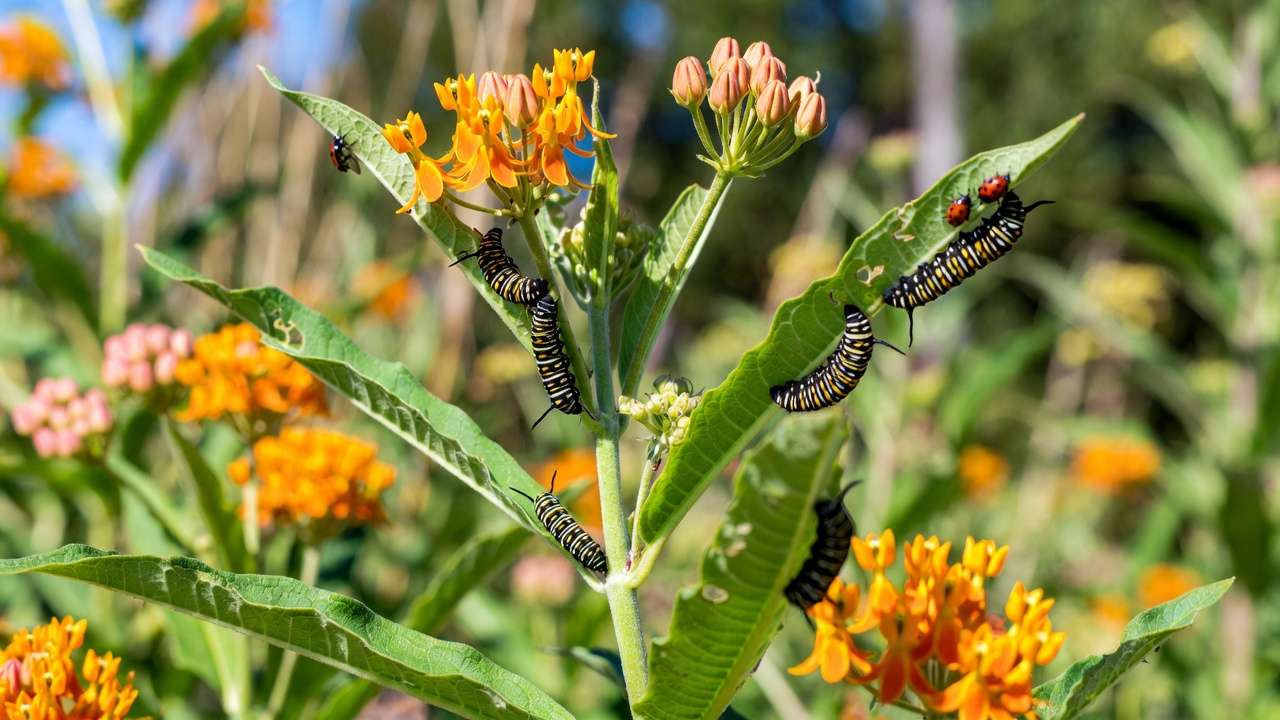
- Milkweed (Asclepias spp., especially Butterfly Weed – Asclepias tuberosa) 🧡 — The monarch’s only host; plant multiple for caterpillars. Aphids may appear, but ladybugs usually handle them. Pair with yarrow or marigolds for extra control.
- Parsley, Dill, Fennel — Host black swallowtails; grow extras so you share with caterpillars without losing your harvest.
These plants create a self-regulating system: nectar feeds butterflies, hosts support larvae, and repellents/beneficial attractors keep bad bugs low.
Advanced Strategies: Building a Balanced Butterfly-Pest-Control Garden 🏡
Now that you know the best dual-purpose plants, let’s put them into action with proven garden design and management techniques. These methods turn your space into a self-sustaining ecosystem where butterflies thrive and pests rarely reach damaging levels.
Companion Planting Techniques
Companion planting is the backbone of natural pest management in butterfly gardens. The goal is synergy: plants work together to confuse, repel, or trap pests while supporting pollinators.
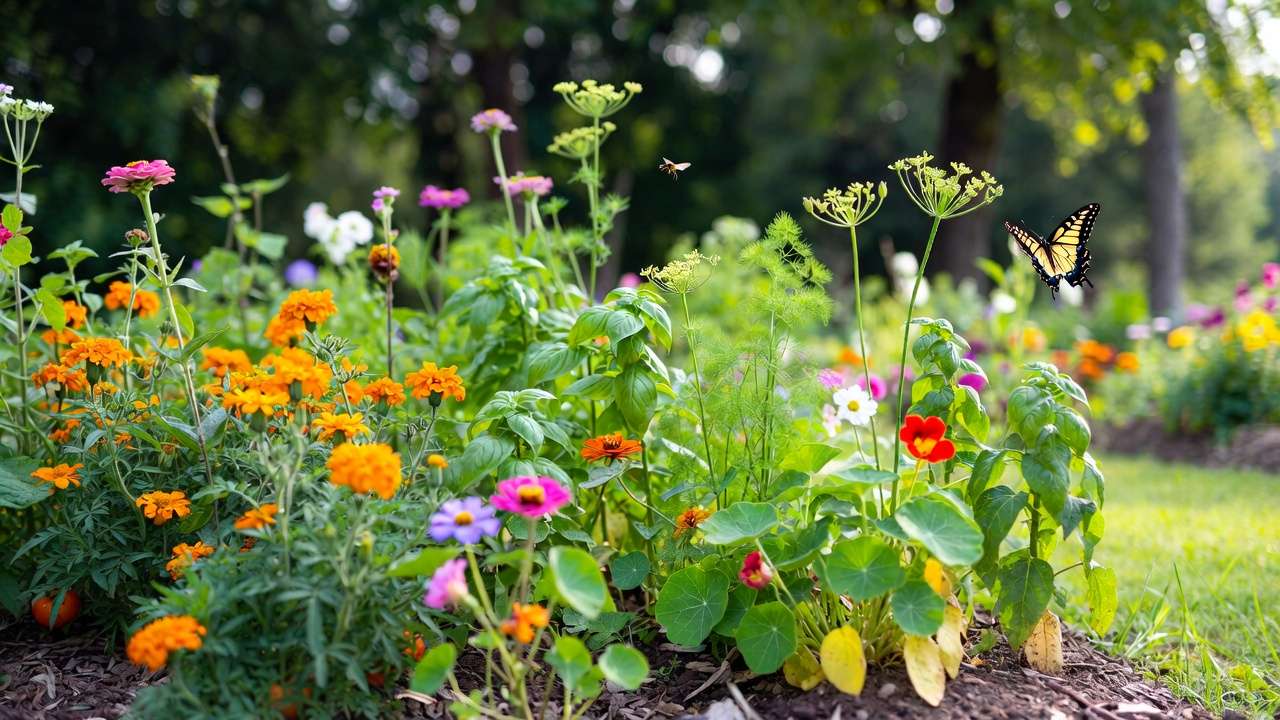
- Surround vulnerable crops with strong-scented repellents. For example, plant marigolds in a ring around tomato plants to deter hornworms and nematodes, while zinnias and cosmos nearby provide butterfly nectar.
- Create “insectary borders” along the edges of beds or pathways. Mix yarrow, dill, fennel, lavender, and bee balm in a sunny strip. These flat or umbel flowers act like billboards for beneficial insects — ladybugs, lacewings, hoverflies, and tiny parasitic wasps will patrol the area and keep aphid and caterpillar numbers in check.
- Use trap crops strategically. Nasturtiums are fantastic: aphids and cabbage worms love them more than most vegetables. Plant a few nasturtiums at the edge of your plot as a sacrificial lure, then hand-pick or rinse off the pests to protect your main crops. Butterflies (especially some skippers and blues) will still visit the bright blooms.
Pro tip: Rotate trap crops and companions each season to prevent pest adaptation.
Garden Design Tips for Success
A thoughtful layout maximizes both beauty and function:
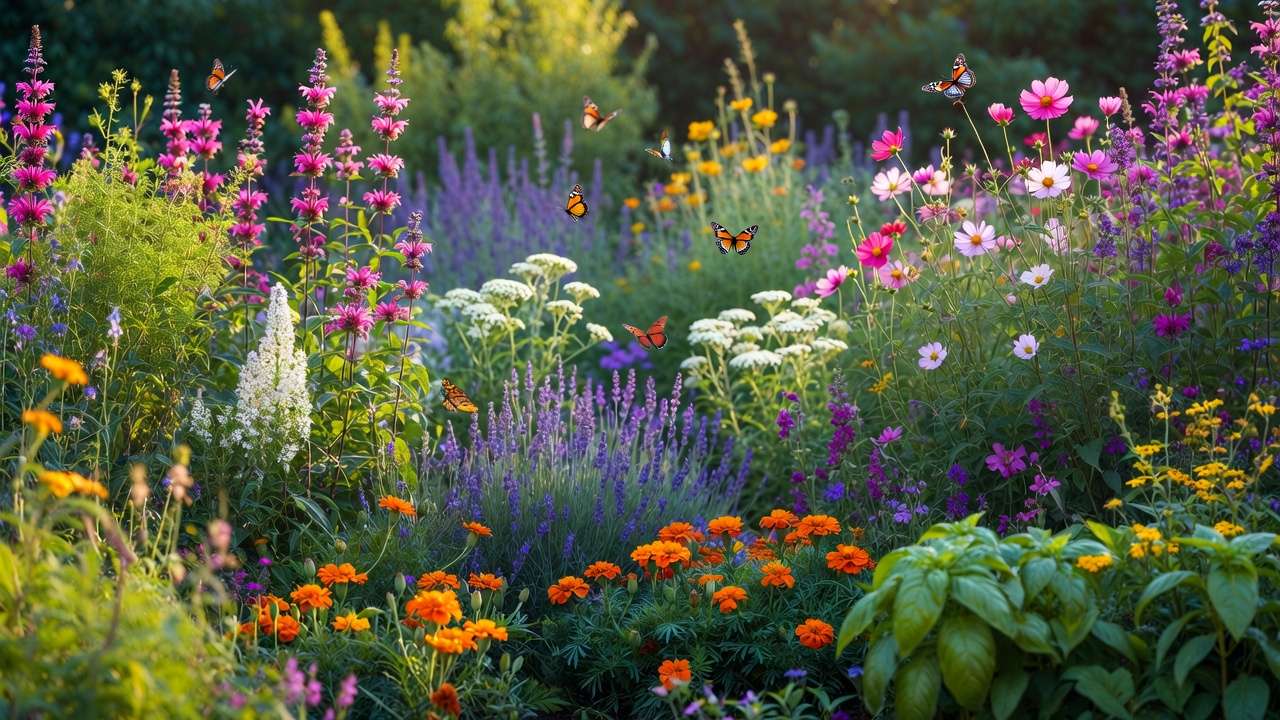
- Layer your plants — Place tall nectar producers (bee balm, zinnias, cosmos) at the back, medium-height companions (lavender, yarrow, fennel) in the middle, and low-growing repellents (marigolds, catnip, creeping thyme) at the front. This creates visual depth and easy access for butterflies and beneficials.
- Ensure season-long blooms — Butterflies need continuous nectar from spring through fall. In Bangladesh’s warm climate, start with early-blooming lantana and butterfly bush (Buddleja, if non-invasive in your area), transition to summer zinnias and cosmos, then finish with goldenrod or late asters.
- Sun, water, and soil — Most of these plants prefer full sun (6+ hours) and well-drained soil. Mulch with organic material (straw, dried leaves) to retain moisture and suppress weeds without chemicals.
- Regional tweaks for Mathba & Barisal Division — High humidity and monsoon rains suit many of these plants well. Grow mint, basil, and lemongrass in raised beds or containers to prevent waterlogging. Choose heat-tolerant milkweed varieties like Asclepias curassavica (tropical milkweed) for monarchs, but monitor aphid levels closely during the wet season.
Non-Plant Natural Pest Controls Safe for Butterflies
Even the best plant combinations occasionally need a little help. These methods are 100% butterfly-safe when used correctly:
- Hand-picking — Remove larger caterpillars (e.g., hornworms) or clusters of aphids by hand in the early morning. Drop them into soapy water.
- Strong water spray — Blast aphids and spider mites off plants with a hose every few days — most won’t return.
- Row covers — Lightweight insect netting over brassicas or young veggies prevents egg-laying by cabbage butterflies and other pests while allowing light and air through. Remove during peak butterfly flight times if you want egg-laying on host plants.
- Encourage wildlife — Install bird feeders, birdbaths, or toad houses. Birds, toads, and lizards eat many pest species. A small bat box can reduce night-flying moths.
- Mild homemade sprays — Mix 1 tsp mild liquid soap (castile or dish soap without degreasers) in 1 liter of water and spray on aphids or whiteflies in the evening. Test on a small area first and avoid spraying open flowers where butterflies are feeding.
Common Mistakes to Avoid 😬
Even experienced gardeners slip up sometimes. Here are the biggest pitfalls:
- Spraying broad-spectrum pesticides — Even “organic” ones like pyrethrin or rotenone can kill caterpillars and beneficials.
- Planting only one type of host — Monarchs need multiple milkweed plants; swallowtails need extras of dill/parsley so you don’t lose your whole crop.
- Ignoring plant diversity — Monocultures invite pest explosions. Aim for at least 8–10 different species.
- Overwatering or poor drainage — Soggy soil stresses plants and invites fungal issues that weaken them to pests.
- Removing all caterpillars — A few munch marks are normal and mean future butterflies! Tolerate light feeding on host plants.
Real-Life Examples & Case Studies 🌟
- Small balcony in urban Mathba
- Setup: 4 large pots with lavender + zinnias, 2 pots of marigolds + basil, 1 pot of milkweed, and a hanging basket of nasturtiums.
- Result: Butterflies (common grass yellows, lime butterflies) visit daily; aphids appear on nasturtiums but are controlled by hand and ladybugs drawn by zinnias. No sprays needed.
- Medium backyard veggie garden
- Layout: Tomato rows edged with marigolds, a central insectary bed of yarrow + dill + fennel, milkweed and parsley in corners.
- Outcome: Hornworms stayed low thanks to parasitic wasps; black swallowtails laid eggs on extra parsley; monarch caterpillars thrived on milkweed without defoliating it completely.
- Larger ornamental bed
- Design: Bee balm and cosmos drifts, lavender borders, yarrow clumps, milkweed accents.
- Payoff: Painted ladies, common jezebels, and occasional monarchs; pest pressure minimal due to constant beneficial insect activity.
Quick Reference Table: Top 10 Dual-Purpose Plants Chart 📊
| Plant | Attracts Butterflies Because | Pest Control Benefit | Ease of Growing (1–5) | Bloom Time (BD climate) |
|---|---|---|---|---|
| Lavender | Fragrant purple spikes | Repels mosquitoes, moths, flies | 4 | Year-round with care |
| Marigolds | Bright orange/yellow blooms | Deters aphids, whiteflies, nematodes | 5 | Summer–fall |
| Yarrow | Flat flower clusters | Attracts ladybugs, lacewings, parasitic wasps | 5 | Summer–monsoon |
| Bee Balm | Tubular red/pink/purple flowers | Draws predatory insects + hummingbirds | 4 | Summer |
| Zinnias | Long-lasting colorful daisy-like | Nectar + attracts hoverflies | 5 | Summer–fall |
| Dill/Fennel | Umbel flowers | Hosts black swallowtail + attracts beneficials | 4 | Summer–monsoon |
| Milkweed (tuberosa/curassavica) | Orange/pink clusters | Monarch host; aphids managed by ladybugs | 4 | Summer–fall |
| Basil | White/purple flowers when flowering | Repels flies, mosquitoes, hornworms | 5 | Year-round |
| Mint/Lemon Balm | Small tubular blooms | Strong mosquito/ant repellent | 4 (contain it!) | Summer–monsoon |
| Catnip | Lavender-blue spikes | Repels aphids, flea beetles, squash bugs | 4 | Summer |
Frequently Asked Questions (FAQs) ⭐
Can I use any pesticides in a butterfly garden? Avoid broad-spectrum and systemic pesticides completely. If absolutely necessary, use targeted insecticidal soap or neem oil very early in the morning or late evening, and only on non-flowering parts — never when butterflies are active.
What if caterpillars eat all my plants? Plant extras of host species (e.g., 5–10 milkweed plants instead of 1–2). Most healthy plants recover from light to moderate feeding. If damage is severe, hand-remove some caterpillars to share the bounty.
Best beginner plants for butterfly + pest balance? Start with marigolds, zinnias, basil, and lavender — they’re easy, widely available in Bangladesh, and give quick results.
How to attract monarchs specifically without issues? Plant multiple Asclepias curassavica or A. tuberosa. Pair with yarrow and marigolds. Tolerate some aphids — they usually attract ladybugs within days.
Are non-native plants okay? Many excellent choices (marigolds, zinnias, lantana) are non-native but not invasive in most of Bangladesh. Avoid highly invasive species like certain Buddleja cultivars in natural areas.
Conclusion: Create Your Harmony Garden Today! 🌟 You no longer have to view butterfly-friendly plants and pest control as opposites. By choosing dual-purpose companions, designing with beneficial insects in mind, and using gentle management techniques, you can enjoy a garden buzzing with life — colorful wings, buzzing bees, and natural pest balance — all without harmful chemicals.
Start small: Pick 3–5 of the plants from the chart, arrange them thoughtfully, and observe the magic unfold over the coming months. Your little corner of Mathba can become both a butterfly sanctuary and a naturally resilient space.











