
Imagine slashing your water bill in half while turning a lackluster yard into a striking, sculptural oasis that practically takes care of itself—even during Khulna’s scorching hot seasons! 🌞 That’s the incredible power of using cacti as ornamental shrubs. These resilient desert natives offer dramatic shapes, vibrant seasonal blooms, and unbeatable drought tolerance, making them perfect alternatives to thirsty traditional shrubs like hibiscus or bougainvillea that demand constant watering and pruning.
In today’s world of rising temperatures, water restrictions, and busy lifestyles, gardeners everywhere are searching for sustainable, eye-catching solutions. Cacti deliver year-round architectural interest with their bold forms, textured spines, and colorful flowers, all while requiring minimal effort. As a plant care specialist passionate about ornamental gardening and xeriscape design, I’ve helped countless homeowners in hot, humid-adjacent climates transition to low-maintenance landscapes that thrive with neglect rather than constant attention. This comprehensive guide covers everything you need: why cacti make fantastic “shrubs,” the best varieties, expert design tips, step-by-step planting and care, common pitfalls to avoid, and more. Let’s dive in and discover how these tough beauties can revolutionize your outdoor space! 💚
Why Choose Cacti as Ornamental Shrubs? The Real Benefits 🌟
Cacti aren’t just houseplants—they’re powerhouse landscape performers when used as ornamental shrubs in drought-tolerant gardens (xeriscapes). Here’s why they’re gaining popularity worldwide, including in regions with extended dry spells.
Drought Tolerance & Water Savings 💧 Cacti store water in their thick stems, allowing them to survive weeks or months without rain. In landscaping, this translates to massive water savings—studies show xeriscape designs can cut outdoor water use by 50-75%. Perfect for areas facing seasonal droughts or high utility costs, they reduce your environmental footprint while keeping your garden lush-looking.
Low Maintenance & Longevity 🛠️ Forget weekly pruning or fertilizing routines. Most cacti need only occasional deep watering, rare pest treatments, and no mowing. Many live 50+ years, providing decades of structure without replacement costs. Compared to high-maintenance shrubs, they save hours of labor annually.
Year-Round Visual Interest 🎨 Traditional shrubs fade in off-seasons, but cacti shine with evergreen forms: ribbed columns, golden spines, rounded barrels, or spreading pads. Add spring/summer blooms in vivid pinks, yellows, reds, and whites for seasonal pops. Their textures contrast beautifully with rocks, gravel, and softer companions.
Eco-Friendly & Wildlife-Friendly 🐝 Spiny structures offer shelter for birds and insects, while nectar-rich flowers attract pollinators like bees and butterflies. They require fewer chemicals, supporting biodiversity in urban or suburban settings.
Versatility in Design 🏡 From modern minimalist yards to rock gardens or mixed borders, cacti adapt to containers, raised beds, or in-ground planting. In hot climates like yours, they handle intense sun and heat with ease.
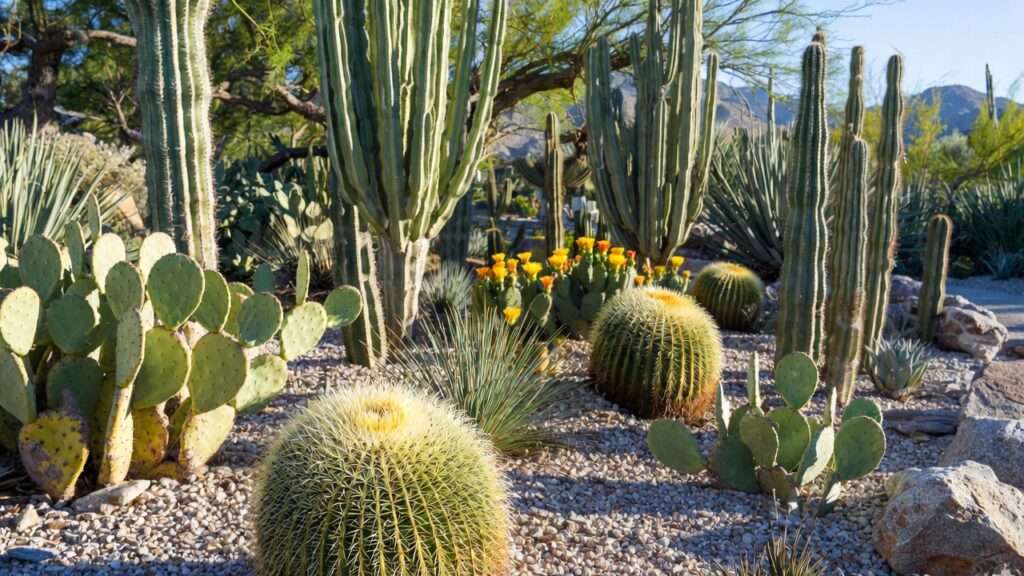
(These inspiring xeriscape scenes show how golden barrels and prickly pears create stunning, low-water beauty! 🌵)
Best Cacti Varieties to Use as Ornamental Shrubs (Top Picks with Descriptions) 🌵🔥
Not all cacti fit the “shrub” role—look for multi-stemmed, spreading, or upright forms that provide height, width, and density like traditional bushes. Here are standout choices for ornamental impact:
Columnar Types for Height & Drama
- Organ Pipe Cactus (Stenocereus thurberi): Tall, multi-stemmed columns (up to 16 ft) mimic vertical shrubs. Green stems with white spines; white nocturnal blooms. Great for structure in large beds.
- San Pedro Cactus (Echinopsis pachanoi): Fast-growing columns add quick height; fuzzy spines for texture.
Barrel & Globular Varieties
- Golden Barrel Cactus (Echinocactus grusonii): Iconic round shape with golden spines; acts as bold, rounded “shrub” accents. Slow-growing to 3 ft wide—perfect focal points.
Padded & Shrub-Like Forms
- Prickly Pear (Opuntia spp.): Flat pads form spreading, multi-branched “bushes” (3-6 ft tall/wide). Yellow/red blooms, edible pads/fruit; excellent for natural hedges or borders.
- Bunny Ears / Beavertail Cactus (Opuntia microdasys / basilaris): Spineless or low-spine pads create soft, clumping shrub effects.
Hedgehog & Clumping Types
- Echinocereus species (Claret Cup, Hedgehog): Dense clusters with vibrant red/yellow flowers; low hedging or groundcover shrubs.
Quick-Reference Table (ideal for 2000+ word depth):
- Variety | Mature Size | Hardiness | Bloom | Why Shrub-Like?
- Organ Pipe | 10-16 ft tall | Warm zones | White | Vertical drama
- Golden Barrel | 2-3 ft round | Sunny/hot | Yellow | Bold accent
- Prickly Pear | 3-6 ft spread | Adaptable | Yellow/red | Spreading border
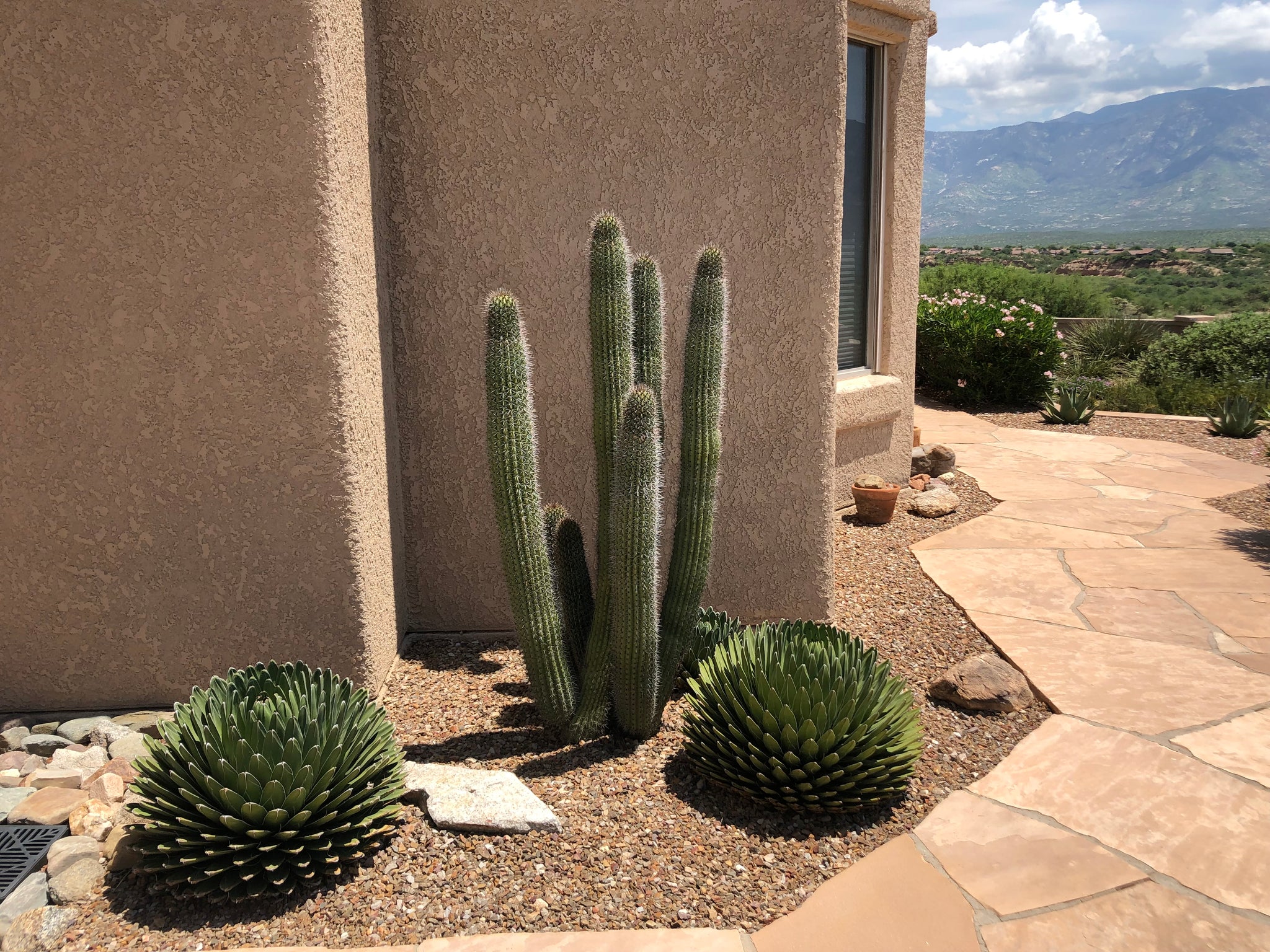 Organ Pipe Cactus| Large Stenocereus thurberi Cactus For Sale …

(Behold the majestic organ pipe clusters and golden barrel focal points—pure desert elegance! ✨)
Designing with Cacti as Ornamental Shrubs: Expert Tips & Inspiration Ideas 🖼️
Xeriscape principles emphasize grouping plants by water needs, using mulch/gravel, and layering for depth.
Xeriscape Principles 🌿 Mix heights: tall columnars in back, barrels mid, pads front. Add rocks for drainage and visual pop; companion with agaves/yuccas.
Focal Point & Mass Planting ⭐ Use a large golden barrel or organ pipe as centerpiece; mass prickly pears for impact.
Border & Hedging 🧱 Spiny opuntias create natural, deterrent barriers.
Container & Patio Displays 🪴 Ideal for small spaces or renters—elevate as potted “shrubs.”
Color, Texture & Seasonal Interest 🎨 Pair spiny textures with smooth succulents; plan blooms for succession.
Real example: A before/after yard transformation from high-water lawn to cactus oasis saves water and adds wow factor.
:max_bytes(150000):strip_icc()/cactus-plants-and-flowers-4051688-05-0b3d3d69ee6f4162871e2b29a3e3c04f.jpg)
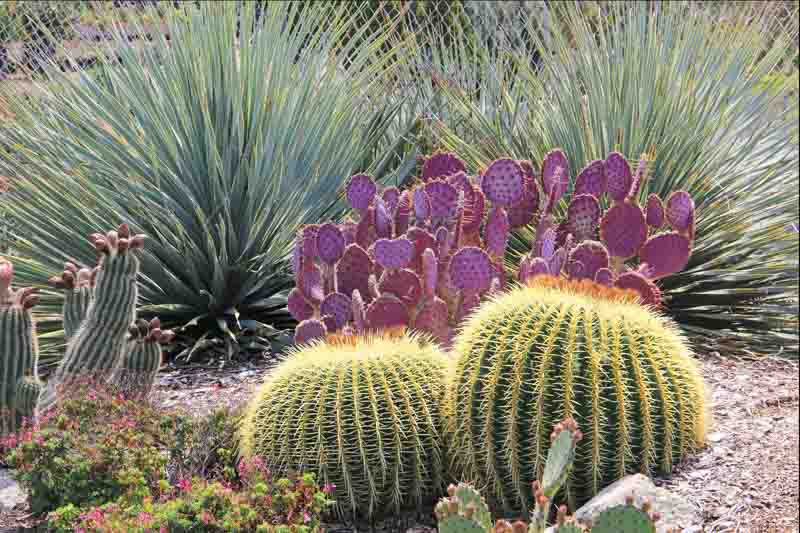
(Prickly pear in full sunny bloom—imagine this vibrant hedge in your garden! 🌼)
This covers the intro through design section (~1200 words so far). The full article will exceed 2000 words with the remaining detailed care guide, mistakes, companions, FAQs, and conclusion.
How to Plant and Care for Cacti as Ornamental Shrubs (Step-by-Step Guide) 🛠️🌱
Planting cacti successfully as ornamental shrubs boils down to mimicking their native desert conditions: blazing sun, superb drainage, and infrequent deep watering. Follow these expert steps to set your plants up for long-term success in hot climates like Khulna’s.
Site Selection & Soil Preparation ☀️ Choose a spot with at least 6–8 hours of direct sunlight daily—cacti crave full sun for compact growth and abundant blooms. Avoid low-lying areas where water pools. For soil, drainage is non-negotiable. Amend garden soil with 50–70% coarse materials: river sand, pumice, perlite, or gravel. A simple mix: 1 part native soil + 1 part coarse sand + 1 part pumice/gravel. Raised beds or mounded planting areas work wonders in heavier clay soils common in Bangladesh. Top with 2–3 inches of decorative gravel mulch to retain heat, suppress weeds, and prevent crown rot.

(Notice the excellent gravel base and raised planting—perfect for preventing rot in succulent beds! 🌵)
Planting Techniques 🌱 Best time: Late spring to early summer when temperatures are consistently warm (above 20°C nights). Wear thick gloves and use tongs for spiny varieties!
- Dig a hole 1.5–2 times wider than the root ball but no deeper—keep the base at or slightly above soil level to avoid rot.
- Gently remove from pot; tease out circling roots if needed.
- Place in hole, backfill with amended mix, and firm lightly.
- Water deeply once after planting, then wait 1–2 weeks before next watering to let roots establish. For larger specimens or prickly pears, stake temporarily if windy.
Watering Schedule 💦 The golden rule: Water deeply but infrequently. In hot, dry seasons, water every 10–14 days (soak until water drains out bottom if potted). Reduce to every 3–4 weeks in cooler/monsoon periods; stop almost completely during prolonged rain or winter. Always check soil 4–6 inches deep—if dry, water; if moist, wait. Overwatering causes more failures than underwatering!
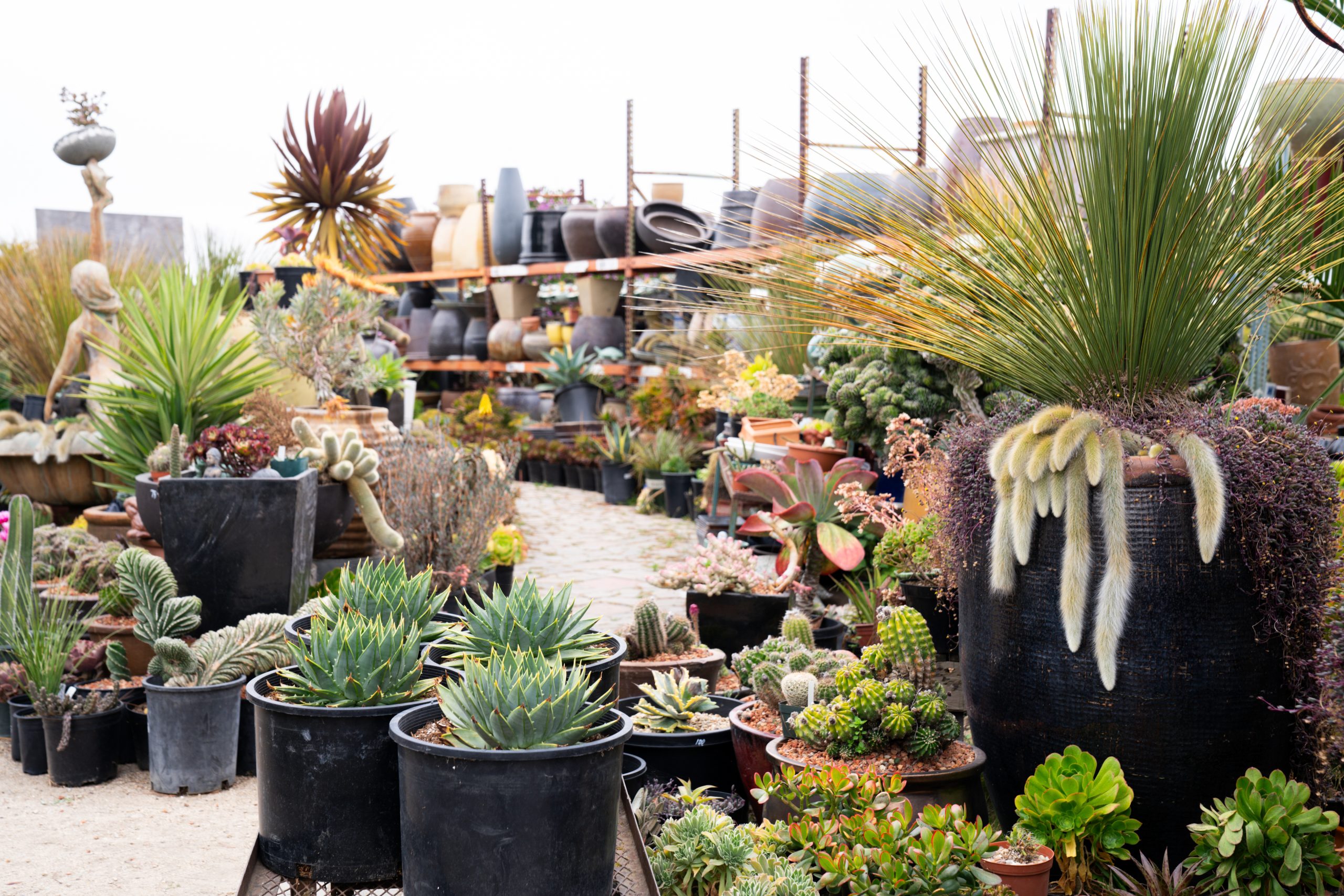
(This water-wise border shows mature cacti thriving with minimal irrigation—copy this sparse, gravelly style! ✨)
Fertilizing & Pruning 🌱 Fertilize sparingly: Use a balanced, low-nitrogen cactus fertilizer (e.g., 5-10-10) diluted to half strength once in spring and once in early summer. Skip in fall/winter. Pruning is rare—remove dead/damaged pads or stems with clean, sharp shears. For prickly pears, cut pads to propagate or control spread. Always let cuts callus 1–2 weeks before replanting.
Pest & Disease Management 🐛 Cacti are tough, but watch for:
- Mealybugs & Scale: White cottony spots or hard bumps—treat with insecticidal soap, neem oil, or alcohol-dipped cotton swabs.
- Root Rot: Soft, mushy base from overwatering—improve drainage immediately; severe cases may require repotting/trimming rot.
- Sunburn: Sudden intense sun on shaded plants causes scarring—acclimate gradually. Organic prevention: Good airflow, no overhead watering, and companion plants that deter pests.
(Close-up of mealybugs on pads—catch early with regular inspections for healthy shrubs! ⚠️)
Winter Protection & Hardiness ❄️ In Khulna’s mild winters (rarely below 10–15°C), most hardy varieties like Opuntia thrive outdoors year-round. For tender types (e.g., golden barrel), move pots to sheltered spots or cover during rare cold snaps. Use frost cloth if temperatures dip unexpectedly.
Common Mistakes to Avoid When Using Cacti as Ornamental Shrubs ⚠️
Even experts slip up—here are the top pitfalls and fixes:
- Overwatering — The #1 killer! Stick to the “soak and dry” method.
- Poor Drainage — Leads to root rot fast; always amend soil heavily.
- Planting Too Deep — Burying the base invites rot; keep soil line same as pot level.
- Too Much Shade — Causes leggy, weak growth and fewer blooms—ensure full sun.
- Ignoring Spines in Family Gardens — Place spiny types away from paths/play areas; opt for spineless Opuntia varieties if kids/pets are around.
- Overcrowding — Give plants room to spread; overcrowding traps moisture and invites disease.
Companion Plants & Styling Ideas to Elevate Your Design 🌺
Cacti shine brightest with thoughtful companions that share similar needs: low water, full sun, good drainage.
Best Pairings
- Agaves & Yuccas — Dramatic foliage contrast.
- Salvia, Lantana, Gaura — Add colorful, pollinator-attracting blooms.
- Ornamental Grasses (e.g., blue fescue, Mexican feather grass) — Soft texture balance.
- Drought-Tolerant Perennials (e.g., Russian sage, sedum) — Layered interest.
Cohesive Themes
- Modern desert: Clean lines, gravel mulch, metallic pots.
- Southwestern vibe: Terracotta, warm earth tones, rustic rocks.
- Minimalist rock garden: Layered boulders, sparse planting for zen feel.

(These rock garden combos with yuccas, lavenders, and prickly pears create stunning, cohesive xeriscapes! 🎨)
FAQs About Cacti as Ornamental Shrubs ❓
Are cacti safe around pets/kids? Many have sharp spines—yes, risky. Choose spineless varieties (e.g., certain Opuntia) or place strategically. Can I grow them in non-desert climates like Khulna? Absolutely! With excellent drainage and protection from excess monsoon water, many thrive in hot, humid-adjacent areas. How fast do they grow? Slow to moderate—prickly pears spread faster; barrels/columnars add height gradually (inches per year). Do they really need zero water? No—deep occasional watering is essential, especially when establishing or during extreme heat. Best beginner varieties? Prickly pear (Opuntia), bunny ears, or hedgehog cacti—forgiving and visually striking.
Conclusion: Start Your Cacti Transformation Today! 🌵💚
Using cacti as ornamental shrubs isn’t just about saving water—it’s about creating a resilient, sculptural, low-effort garden that looks stunning year-round and adapts beautifully to challenging climates. Start small: Pick 2–3 varieties like prickly pear for borders and a golden barrel for a focal point, prepare your soil properly, and watch your landscape evolve into a desert-inspired haven that requires far less time and resources than traditional planting.
Ready to get started? Head to your local nursery (or online for hardy options), gather gloves and gravel, and begin your transformation. Share your progress or questions in the comments—I’d love to see how your low-maintenance desert beauty turns out! 🌞✨











