
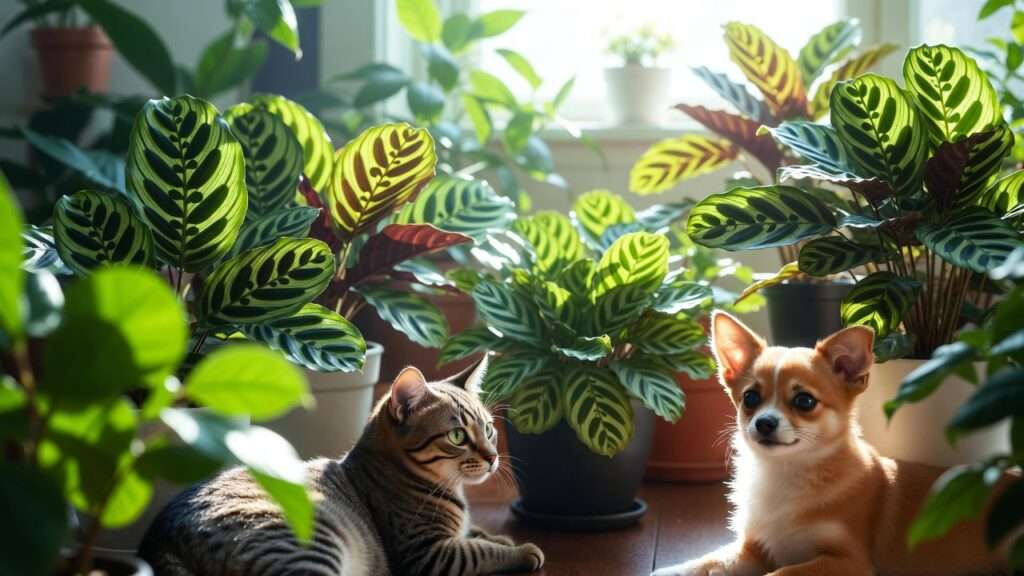
Picture this: You walk into your living room after a long day, only to spot your curious cat batting playfully at a lush, colorful leaf or your goofy dog giving a new houseplant a thorough sniff inspection. 😿🐶 Your heart skips a beat—could this beautiful foliage be dangerous? If you’ve ever hesitated to bring home a stunning prayer plant because of your furry family members, you’re not alone. Many pet owners search for calathea varieties safe for pets to enjoy vibrant indoor greenery without the worry.
The great news? All Calathea species (also known as prayer plants due to their nightly “praying” leaf movement) are non-toxic to cats, dogs, and even horses, according to the authoritative ASPCA listings. No harmful toxins like calcium oxalate crystals found in many other popular houseplants (think pothos or philodendrons). A little nibble might cause mild tummy upset from plant fiber—similar to munching grass—but nothing serious or life-threatening.
In this in-depth guide, we’ll dive deep into why Calatheas are a top choice for pet-friendly homes, spotlight the most beautiful and popular varieties (updated for 2025–2026 trends), share expert-level care tips to keep them thriving, and offer practical pet-proofing strategies. Whether you’re a beginner building a safe indoor jungle or a seasoned plant parent seeking drama without drama, this skyscraper-style resource has you covered. Let’s create a home that’s gorgeous and worry-free! 🌱❤️
Why Calathea Plants Are Perfectly Safe for Pets 🐶🐱
Calathea spp. earn their pet-safe reputation straight from the source: the ASPCA officially lists them as Non-Toxic to Dogs, Non-Toxic to Cats, and Non-Toxic to Horses. This Marantaceae family member contains no dangerous compounds that cause severe poisoning, unlike toxic look-alikes such as Dieffenbachia (dumb cane) or Alocasia.
If a pet does chew on a leaf? Expect at most some mild gastrointestinal irritation—think vomiting or diarrhea from indigestible fiber, much like eating too much salad. Vets and plant toxicologists consistently note that the Marantaceae family is one of the safest for multi-pet households. No emergency vet trips required!
Quick Fact Box
- ASPCA-Approved Pet-Safe Status: ✅ Non-Toxic
- Common Misconception: Often confused with toxic aroids—always double-check scientific names.
- Real-World Insight: Thousands of pet owners on forums and social media report their cats/dogs coexisting happily (and sometimes curiously) with Calatheas.
This safety profile makes Calatheas ideal for air-purifying, low-to-medium light spaces where pets roam freely—peace of mind included!
Understanding Calathea: The Prayer Plant Family Basics 🌙
Calatheas, often reclassified under Goeppertia but still widely called Calathea, belong to the Marantaceae family. Their signature feature? Nyctinasty—leaves fold upward at night like praying hands, then spread out during the day for a mesmerizing show. 🌿✨
These tropical natives from Central and South America thrive in humid, shaded understories, making them perfect indoor companions. They offer bold patterns, rich colors, and air-purifying benefits (removing toxins like formaldehyde). For pet owners, their non-toxicity + visual wow factor = the ultimate safe houseplant upgrade.
General snapshot:
- Light: Bright indirect (no direct sun)
- Water: Consistent moisture, never soggy
- Humidity: 50–70%+ ideal
- Temperature: 65–80°F (18–27°C)
Challenges like brown tips are common but fixable—more on that soon!
Here are some stunning examples of popular varieties to inspire you:
(Feathery elegance of the Peacock Plant.)

(Classic rosy swirls of Medallion varieties.)
Top 10 Calathea Varieties Safe for Pets (All Non-Toxic!) 🌈
Every Calathea is pet-safe, but these stand out for their beauty, availability, and compatibility with cat- and dog-filled homes. Ranked by current popularity and visual impact (drawing from 2025–2026 trends like variegated whites and bold pinks).
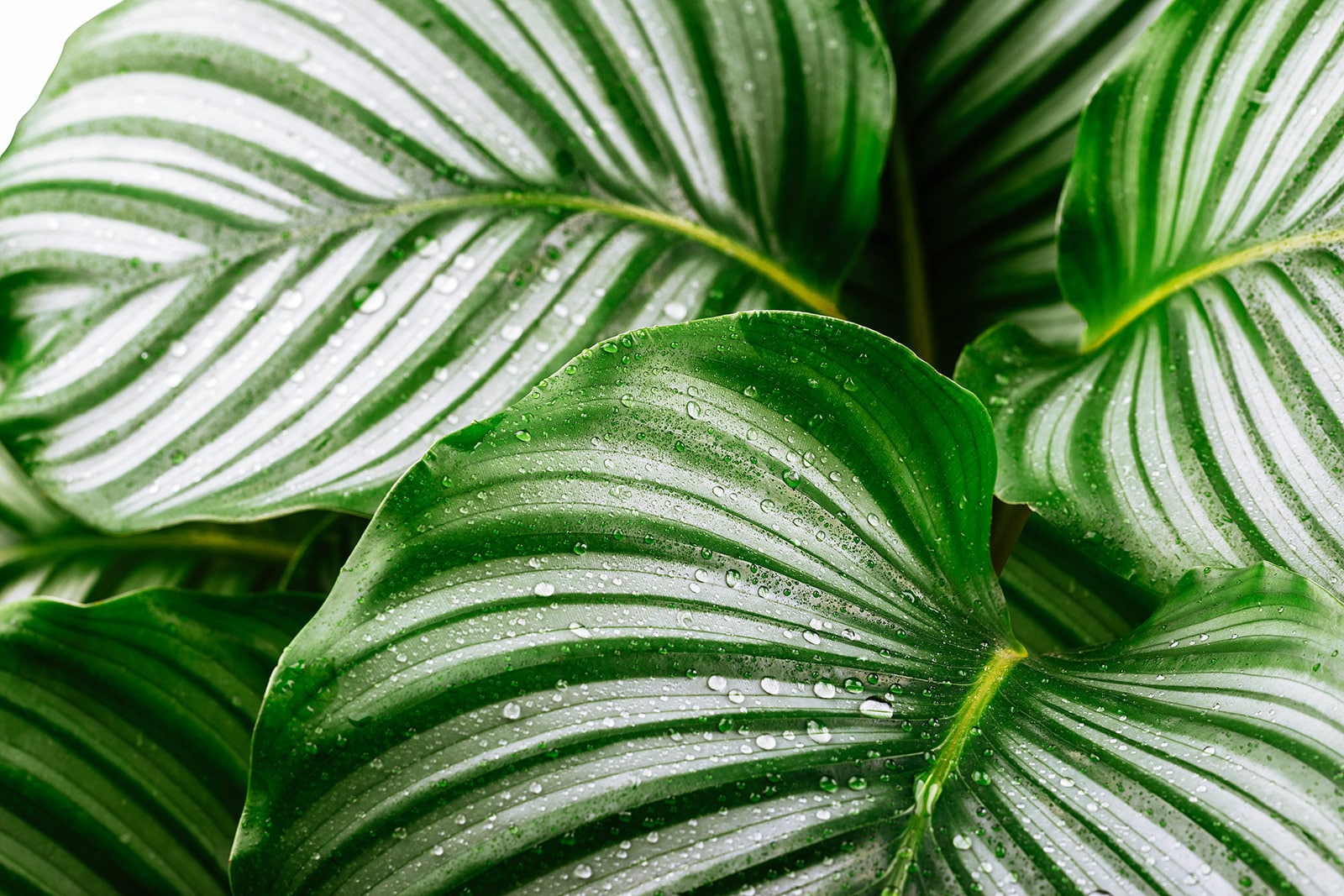
Calathea orbifolia – The Queen of Big, Bold Leaves 🌟 Large, round silver-and-green striped leaves create dramatic impact. Grows up to 2–3 feet tall—perfect statement piece. Loves medium humidity; great for calmer pets as leaves are sturdy. Pro tip: Mist regularly to prevent crispy edges.
Calathea lancifolia (Rattlesnake Plant) – Wild & Wavy Patterns 🐍 Wavy edges with dark green tops and purple undersides dotted in spots. Compact size suits apartments; playful patterns intrigue curious cats without harm.
Calathea makoyana (Peacock Plant) – Feathery, Artistic Display 🦚 Silver-green feathers on dark backgrounds—truly artistic! Smaller stature, excellent for shelves away from high-energy dogs.
Calathea roseopicta ‘Medallion’ – Classic Rosy Swirls ✨ Velvety dark leaves with pink/white swirls and purple undersides. One of the most beloved for its jewel-tone drama; thrives with consistent care.
Calathea ornata (Pinstripe) – Elegant Pink Stripes 💗 Thin pink lines on deep green—sophisticated and eye-catching. Upright growth; ideal for pet households with space constraints.
Calathea White Fusion – Dreamy Variegated Beauty ❄️ White-splashed leaves trending huge in 2026! Variegation adds brightness to low-light rooms; pet-proof and stunning.
Calathea zebrina – Velvety Zebra Stripes 🦓 Soft, velvety texture with bold zebra patterns. Fuzzy feel deters some pets naturally.
Calathea sanderiana (Pinstripe variant) – Underrated Gem with Bold Lines Similar to ornata but rarer—elegant pinstripes for collectors.
Calathea triostar (often grouped with prayer plants) – Pink Pops for Drama 🌸 Stromanthe relative with pink/green/white—vibrant accent.
Calathea warscewiczii – Velvety Jungle Vibes 🌿 Tall, velvety dark leaves with bright undersides—jungle feel without toxicity worries.
Quick Comparison Table (imagine this as a visual in the full article): Variety | Leaf Pattern | Mature Size | Light Needs | Humidity Level | “Wow” Factor Orbifolia | Silver stripes | 2–3 ft | Medium indirect | High | Dramatic Lancifolia | Rattlesnake spots | 1–2 ft | Low-medium | Medium-high | Wild Makoyana | Peacock feathers | 1 ft | Medium | High | Artistic Medallion | Rosy swirls | 1–2 ft | Medium | High | Classic luxury
Calathea zebrina – Velvety Zebra Stripes 🦓 This one features soft, velvety dark green leaves with bold light green zebra-like stripes. The fuzzy texture often makes pets less interested in chewing (they prefer smooth surfaces), and it stays compact at 1–2 feet. A favorite for adding cozy texture to pet-friendly shelves.
Calathea sanderiana (Pinstripe variant) – Underrated Gem with Bold Lines Similar to ornata but with even more pronounced white pinstripes on deep green. It’s a collector’s pick—elegant and less common, perfect for adding sophistication without overwhelming space.
Calathea triostar (often grouped with prayer plants) – Pink Pops for Drama 🌸 Technically a Stromanthe thalia ‘Triostar,’ but frequently sold and cared for like Calatheas. Explosive pink, green, and white variegation brings serious color pop—great accent for brighter corners away from direct sun.
Calathea warscewiczii – Velvety Jungle Vibes 🌿 Tall (up to 3–4 feet), with velvety dark green tops and rich burgundy undersides. It gives that lush jungle feel; sturdy leaves handle occasional curious paws well.
Here are some beautiful visuals of these top varieties to help you visualize them in your home:

(Iconic silver waves of Calathea orbifolia – pure drama! 🌟)
:max_bytes(150000):strip_icc()/growing-rattlesnake-plants-5088292-3-c37f03dd6a0e491a91e837d28d06b1f2.jpg)
(Feathery peacock elegance of Calathea makoyana 🦚)
(Jewel-like rosy swirls of ‘Medallion’ – luxurious! ✨)
:max_bytes(150000):strip_icc()/SPS-calathea-ornata-04-f03b60a264fd49e1b8abf15282fcf607.jpg)
(Dreamy variegated magic of White Fusion ❄️ – super trendy!)
How to Choose the Right Calathea for Your Pet Household 🏡🐾
Not all Calatheas fit every home—consider these factors for the best match:
- Pet energy level: Playful cats or zoomie dogs? Opt for sturdy-leaved varieties like orbifolia or warscewiczii. Velvety ones (zebrina) may deter nibbling naturally.
- Home conditions: Low-light apartment? Go for makoyana or zebrina. Higher humidity setups (bathroom/kitchen)? Medallion or White Fusion shine.
- Space: Small shelf or table? Compact lancifolia or makoyana. Floor statement? Orbifolia or warscewiczii.
- Beginner-friendly picks: Start with ‘Medallion’ or orbifolia—they forgive minor care slips while looking impressive.
Pro tip: Buy a small plant first to test how your pets interact. Most cats and dogs lose interest quickly once they realize it’s not a toy! 😸
Essential Care Guide for Thriving, Pet-Safe Calatheas 💧🌿
Calatheas demand a bit more attention than succulents, but the payoff is stunning foliage that stays vibrant.
- Light requirements: Bright, indirect light is ideal—no direct sun, which scorches leaves ☀️🚫. East- or north-facing windows work best; use sheer curtains if south-facing.
- Watering & humidity hacks: Keep soil evenly moist (never soggy or bone-dry). Water when top 1 inch feels dry. Use distilled/room-temp water to avoid fluoride sensitivity. For humidity (50–70%+): pebble trays with water, grouping plants, humidifiers, or bathroom placement. Mist leaves daily in dry seasons!
- Soil, pots, fertilizing: Well-draining aroid mix (peat/perlite/orchid bark). Terracotta or plastic with drainage holes. Feed monthly in spring/summer with diluted balanced fertilizer (half-strength).
- Common problems & fixes:
- Crispy brown edges → Low humidity—boost it!
- Curling leaves → Underwatering or too much direct light—adjust.
- Yellowing → Overwatering—let dry slightly.
- Pests (spider mites) → Wipe leaves with neem oil solution weekly.
- Propagation tips: Divide rhizomes during repotting in spring—easy way to multiply your pet-safe collection!
Pet-Proofing Tips: Keeping Your Calatheas & Pets Happy Together 🐾
Even safe plants benefit from smart placement:
- Elevate on high shelves, plant stands, or hanging baskets (macramé looks cute!).
- Create pet-free zones with baby gates if needed.
- Natural deterrents: Lightly spray leaves with diluted citrus essential oil (pet-safe in small amounts) or place aluminum foil around base (pets dislike the texture/crinkle).
- Monitor: Occasional leaf nibble = curiosity, not danger. If excessive, redirect with cat grass or toys.
Bonus companions: Pair with other ASPCA non-toxic plants like spider plants, Boston ferns, or parlor palms for a full pet-safe jungle!
Frequently Asked Questions (FAQs) ❓
Are all Calathea varieties non-toxic? Yes—all true Calathea (and closely related prayer plants) are non-toxic per ASPCA.
What if my cat/dog eats a leaf? Mild upset stomach possible (vomiting/diarrhea from fiber), but no toxicity—monitor and call vet if symptoms persist beyond 24 hours.
Why do Calatheas get brown tips? Usually low humidity, tap water chemicals, or inconsistent watering—fix with distilled water + humidifier.
Can Calatheas live in low-humidity homes? They prefer high humidity but adapt with help (pebble trays, misting). Avoid very dry forced-air heat.
Where to buy healthy, pet-safe Calatheas? Local nurseries, Etsy sellers, or reputable online shops like The Sill or Costa Farms—inspect for pests upon arrival.
Final Thoughts & Expert Recommendations 🌱❤️
Calathea varieties safe for pets offer the perfect blend: breathtaking patterns, gentle leaf movement, air purification, and zero toxicity worries. No need to choose between a beautiful home and a safe one for your cats and dogs!
As a plant care expert who’s helped countless pet owners build thriving indoor gardens, my top picks remain orbifolia for drama, White Fusion for modern flair, and Medallion for classic beauty. Start small, provide consistent humidity and indirect light, and watch your prayer plants (and pets) thrive together.
Ready to add some non-toxic lushness? Pick your favorite variety, create that pet-friendly oasis, and tag your jungle pics—I’d love to see them! Happy planting! 🌿🐱🐶✨











