
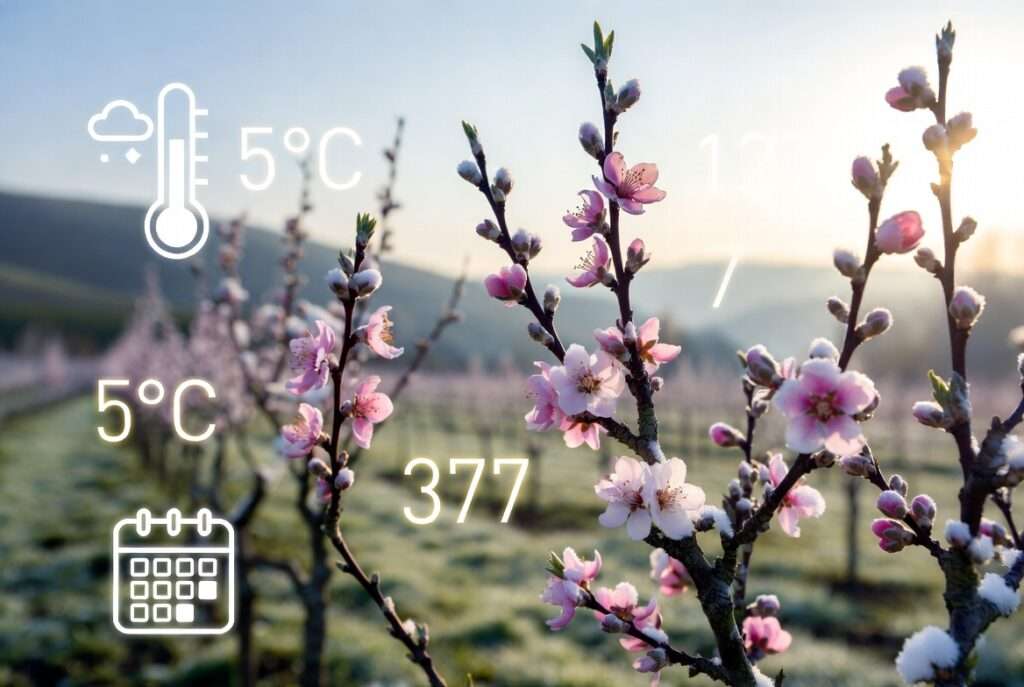
You’ve spent weeks scrolling through nursery catalogs, dreaming of baskets overflowing with juicy peaches, crisp apples, and sweet cherries from your own backyard orchard. But when spring finally arrives, your trees barely bloom—or worse, the flowers drop before fruit ever sets. The hidden culprit? You never calculated your local chilling hours. 🌡️
Calculating chilling hours for orchard planning is the single most important (and often overlooked) step that separates a thriving home orchard from a disappointing one. In this comprehensive guide, we’ll walk you through exactly how to measure chilling hours for your specific location, decode the different calculation models, match the perfect fruit tree varieties to your climate, and future-proof your planting decisions—even as winters grow warmer due to climate change. Whether you’re in a cool temperate zone or a warm tropical area like Dhaka, Bangladesh, this guide gives you the expert tools and real-world examples you need to plant with confidence. Let’s turn your orchard dreams into a delicious reality! 🌱
What Exactly Are Chilling Hours (and Why Your Trees Can’t Skip Them)? ❄️🍏
Fruit trees aren’t just “sleeping” through winter—they’re actively accumulating a biological requirement called chilling hours (also known as chill units or chill portions). This is the total number of hours the tree experiences at specific cool temperatures while dormant. Once that requirement is met, the tree is ready to break bud, flower, and set fruit when spring warmth arrives.

Without enough chilling hours, trees may:
- Leaf out late or unevenly
- Produce weak flowers or none at all
- Drop fruit prematurely
- Suffer from “delayed foliation” or poor fruit quality
The Science of Winter Dormancy in Fruit Trees During dormancy, fruit trees build up hormones and enzymes that “unlock” growth in spring. Cool temperatures (roughly 0–7.2°C or 32–45°F) trigger this process. Too little chill keeps the tree stuck in limbo; too much (in very cold climates) isn’t usually a problem for most varieties, but insufficient chill is the #1 reason new orchards fail in warmer regions.
Chill Hours vs. Chill Units vs. Chill Portions — Which Model Should You Use? Not all chill is created equal! Here’s a quick comparison:
| Model | How It Works | Best For | Pros | Cons |
|---|---|---|---|---|
| Simple Chill Hours (0–7.2°C) | Counts every hour between 32–45°F | Beginners, quick estimates | Easy to calculate | Less accurate in variable weather |
| Utah Chill Units | Weighted points for different temp ranges (negatives for warm hours) | Most temperate climates | More precise | Needs hourly data |
| Dynamic Chill Portions | Two-stage model (intermediate → portion); warm hours can “undo” some chill | Warm or fluctuating climates (e.g., Bangladesh, California) | Most accurate & stable | More complex to calculate |
The Utah model (developed by Richardson et al., 1974) is the gold standard for most home orchardists because it accounts for how warm spells can actually cancel out some chilling.

The Dynamic model (chill portions) is gaining popularity in warmer areas because it better predicts real-world bud break.
How Insufficient Chilling Shows Up in Your Orchard Look for these red flags next spring:
- 🌸 Flowers open unevenly or very late
- 🍒 Fruit is small, misshapen, or bland
- 🍃 Leaves emerge wrinkled or in patches
- 🌳 Overall tree looks “tired” even after a mild winter
If you’ve seen any of these, it’s time to master calculating chilling hours for orchard planning!
Why Calculating Chilling Hours Is the #1 Step in Smart Orchard Planning 🌍📍
Skipping this step is like buying shoes without checking your foot size—you might get lucky, but you’ll probably end up disappointed (and out of pocket). Here’s why it matters so much:
The Real Cost of Getting It Wrong
- Up to 70–90% yield loss in the first 2–3 years
- Wasted money on trees that never produce
- Years of frustration watching neighbors’ orchards thrive while yours struggles
How Chilling Hours Affect Flowering, Pollination & Fruit Quality Chilling synchronizes bloom time with pollinators and weather. Trees that meet their chill requirement bloom uniformly and set fruit reliably. Those that don’t? Bloom is staggered, pollination fails, and you get tiny or no harvests.
Bonus Benefit: Future-Proofing Your Orchard Against Climate Change Winters are warming globally. Research shows many regions are already losing 100–300 chilling hours per decade. By learning to calculate chilling hours accurately today and choosing flexible low-chill varieties, you’re building resilience into your orchard for 2030 and beyond. In places like Dhaka, where winters are already short and mild, this knowledge is pure gold.
Step-by-Step: How to Calculate Chilling Hours for Your Exact Location 🔢❄️
This is the heart of calculating chilling hours for orchard planning. Follow these methods in order—from simplest to most accurate—so you can confidently choose the right fruit trees. 🌟
Method 1: The Simple “0–7.2°C” Chill Hour Count (Beginner-Friendly) The easiest way for new orchardists is to count every hour when temperatures stay between 32°F (0°C) and 45°F (7.2°C). Temperatures below freezing don’t add extra value, and anything above 45°F adds nothing.
How to do it practically:
- Check your local weather station data (hourly temperatures from November 1 to February 28/29 in the Northern Hemisphere).
- Sum up all qualifying hours.
- Average the last 5–10 years for reliability.
Many free weather apps and sites like Weather Underground or local agricultural extensions provide this data. For Dhaka and surrounding areas in Bangladesh, typical winter chill accumulation is quite low—often under 200–400 hours in a mild season—making low-chill varieties essential.
Method 2: The Utah Chill Unit Model (Most Accurate for Most Regions) Developed by researchers at Utah State University, this model is more sophisticated because it weights different temperature ranges and subtracts “negative” units from warm spells that can reverse some chilling.
Key weighting (approximate):
- Below 34°F (1.1°C): 0 units
- 34–36°F: 0.5 units
- 36–48°F (most effective): 1.0 unit
- 48–54°F: 0.5 units
- 54–60°F: 0 units
- 60–65°F: –0.5 units (reverses chill)
- Above 65°F: –1.0 unit
Pro tip: Use online calculators that pull hourly data automatically. Many university extension sites offer Utah model viewers. This model works especially well in temperate areas with occasional warm winter days.
Method 3: The Dynamic Chill Portions Model (Best for Warmer or Variable Climates) This modern two-stage model is ideal for places like Bangladesh, where winters are short, mild, and fluctuating. It recognizes that warm temperatures can undo partial chilling before a “portion” is fully accumulated and locked in.
A “chill portion” is harder to accumulate than a simple hour, but once achieved, it’s stable. The Dynamic model often predicts bud break more accurately in subtropical and warming climates.
Free Tools & Websites You Can Use Today
- University of California Fruit & Nut Research Chill Calculator (supports multiple models)
- AgroClimate Chill Hours Calculator (great for mapping)
- Local meteorological department data or apps like CIMIS-style stations
- Google Sheets/Excel templates: Download hourly data and apply the formulas (I recommend starting with a simple 0–7.2°C counter)
Pro Tip: Build Your Own 5-Year Average with Local Weather Data Create a personal spreadsheet:
- Column A: Date
- Column B: Average hourly temp
- Use formulas to tally chill hours/units/portions
- Average across years for your microclimate
This gives you far more accurate numbers than general maps, especially in urban Dhaka (where heat islands reduce chill) versus cooler hillside areas in Sylhet.
Chilling Requirements of Popular Fruit Trees — Quick-Reference Guide 🥭🍒🍑
Here’s a comprehensive, practical table compiled from university extensions and nursery data. Use this as your shopping list when calculating chilling hours for orchard planning. Requirements vary slightly by variety—always check the specific cultivar tag.
Comprehensive Chilling Hours Table (approximate ranges using 32–45°F / 0–7.2°C model):
| Fruit Tree | Low-Chill Varieties (<400 hrs) | Medium (400–800 hrs) | High-Chill (>800 hrs) | Best Suited For |
|---|---|---|---|---|
| Apple | Anna, Dorsett Golden, Ein Shemer (200–400) | Fuji, Gala, Granny Smith (500–700) | Braeburn, Rome (800+) | Warm to cool climates |
| Peach | Desert Gold, Florida Prince, Bonanza (200–400) | Goldcrest, May Pride (500–700) | Elberta (800+) | Warm subtropical |
| Nectarine | Double Delight, Sunhome (200–400) | Fantasia (500–700) | — | Warm areas |
| Plum (Japanese) | Methley, Santa Rosa, Satsuma (200–400) | Beauty, Burbank (400–600) | — | Low to medium chill |
| Cherry | Low-chill sweet cherries limited; Stella alternatives | — | Most sweet cherries (800+) | Cooler zones |
| Apricot | Katy, Gold Kist (200–400) | Harcot (600–700) | — | Medium chill |
| Pear | Low-chill Asian pears (300–500) | Moonglow, Bartlett (600+) | — | Medium to high |
| Blueberry | Misty, O’Neal, Sunshine Blue (150–300) | Sharpblue (400–600) | Elliot (700+) | Acidic soil, low chill |
| Fig | Celeste, Brown Turkey (100–200) | — | — | Very low chill, warm |
| Pomegranate | Wonderful, Eversweet (100–200) | — | — | Low chill, drought tolerant |
Low-Chill Heroes for Warm Climates (especially useful in Dhaka and similar regions) In areas with limited winter chill like much of Bangladesh, focus on these stars:
- Apples: Anna (often called the “tropical apple”) and Dorsett Golden — both produce reliably with under 400 hours.
- Peaches: Florida Prince or Desert Gold — bred for subtropical success.
- Plums: Methley and Santa Rosa — flavorful and forgiving.
- Figs and Pomegranates: Almost zero chill needed; perfect beginner trees that thrive in heat and humidity.
- Blueberries: Southern highbush low-chill types in containers with acidic soil mix.
High-Chill Varieties for Cooler Regions If you garden in higher elevations or northern Bangladesh/Sylhet hills with more consistent cool nights, you can enjoy classic favorites like Braeburn apples, Elberta peaches, or traditional European pears.
Always buy from reputable nurseries that list exact chill requirements for your chosen variety. 🌳
How to Match Fruit Trees to Your Climate Zone Like a Pro 🌡️🌳
Finding Your USDA Hardiness Zone + Chill Zone First, know your hardiness zone (temperature extremes), then layer on chill accumulation. Tools like the USDA Plant Hardiness Map or local equivalents help, but combine them with your personal chill calculation.
Microclimate Magic — Don’t Trust the Map Blindly
- Urban areas (like Dhaka) trap heat → fewer chill hours
- Elevated or open fields → more chill
- South-facing walls or near pavement → warmer microclimates (good for low-chill, risky for early bloom)
- Windbreaks and shade can influence local temperatures
Real Example: Orchard Planning for a Dhaka-Area Backyard vs. a Sylhet Hillside In a typical Dhaka backyard, you might accumulate only 150–350 chill hours in a mild winter. Plant low-chill heroes: Anna apple, Florida Prince peach, Methley plum, and plenty of figs/pomegranates. Space trees for good air flow to reduce humidity-related diseases.
In cooler Sylhet hills, you could successfully grow medium-chill varieties like Fuji apples or standard plums, enjoying crisper fruit quality thanks to more chill and cooler nights.
Expert Case Study: How One Bangladeshi Farmer Increased Yield 3x by Switching Varieties A small-scale grower near Gazipur replaced high-chill peaches with low-chill Florida Prince and added pollinator-friendly plums. After proper chill matching and basic soil amendments, his harvest jumped dramatically within two seasons. The key? He tracked local weather for two winters before replanting. Stories like this prove that calculating chilling hours for orchard planning pays off handsomely!
Advanced Orchard Planning Tips Most Guides Miss ✨📋
Combining Chilling Hours with Soil, Sun & Water Needs Chill is only one piece. Ensure full sun (6–8 hours), well-draining soil, and consistent moisture. Test soil pH—most fruit trees prefer 6.0–7.0; blueberries need acidic conditions (5.0–5.5).
Pollination Partners & Spacing Secrets Many varieties need a compatible pollinizer nearby. Plant at least two different cultivars of the same fruit within 50–100 feet. Proper spacing (10–20 feet depending on rootstock) prevents competition and improves air circulation.
2026 Climate Update — How Warming Winters Are Changing Chill Requirements Global data shows many regions losing 100–300 chill hours per decade. In warmer parts of South Asia, this trend makes low-chill and dynamic-model-friendly varieties even more critical. Choose flexible options and consider planting a mix of chill requirements as insurance.
Cute Bonus: Kid-Friendly Low-Chill Trees for Family Orchards 🍎👨👧 Figs, pomegranates, and low-chill peaches are forgiving, colorful, and fun for children to harvest. Their quick growth and lower maintenance make family orchard dreams come true faster!
7 Common Mistakes That Kill New Orchards (and How to Avoid Them) ❌🚫
- Ignoring local chill data → Always calculate for your spot, not a general map.
- Choosing high-chill varieties in warm areas → Stick to low-chill heroes.
- Planting without pollinators → Add compatible partners.
- Poor site preparation → Test soil and improve drainage first.
- Overwatering or underwatering during establishment → Consistent but not soggy moisture.
- Expecting instant results → Trees need 2–4 years to fruit well.
- Forgetting microclimate → Observe your yard for a full season before planting.
Avoid these, and your success rate skyrockets! 🌱
Your Complete Orchard Planning Checklist ✅
- Calculate your 5-year average chill hours (simple or Utah model)
- Choose varieties matching or slightly below your chill total
- Select pollinizer pairs
- Test and amend soil
- Plan spacing and sun exposure
- Source healthy trees from trusted nurseries
- Track weather the first two winters
- Mulch, water wisely, and prune correctly
Print this checklist and keep it handy!
Frequently Asked Questions (FAQs) ❓
How many chilling hours does my area get? It varies yearly. Use local weather data or extension calculators for your exact spot. In Dhaka, expect lower numbers (often 150–400); cooler northern or hilly areas get more.
Can I grow apples in a warm climate? Yes! Low-chill varieties like Anna and Dorsett Golden perform beautifully with proper care.
What if my trees get too many chilling hours? Usually not a big problem—most varieties tolerate extra chill. The bigger risk is insufficient chill.
Best low-chill peach varieties for Bangladesh? Florida Prince, Desert Gold, and similar subtropical selections are excellent starters.
Do chilling hours reset every year? Yes, accumulation starts fresh each dormant season (typically November onward).
How does climate change affect this? Warming winters mean fewer chill hours in many places. Plan with low-chill and adaptable varieties for long-term success.
Conclusion
Mastering calculating chilling hours for orchard planning empowers you to select the right fruit trees for your climate and build an orchard that actually delivers abundant, delicious harvests year after year. No more guessing or disappointing springs—just smart, science-backed decisions that save time, money, and frustration.
Now it’s your turn: Grab your local weather data, run the numbers using one of the methods above, and start matching varieties with confidence. Download a simple chill-tracking spreadsheet from reputable extension sites, or share your location in the comments for personalized suggestions from fellow readers.
Your dream orchard is closer than you think. Plant wisely, observe carefully, and enjoy the sweet rewards of homegrown fruit! 🌳🍑✨











