
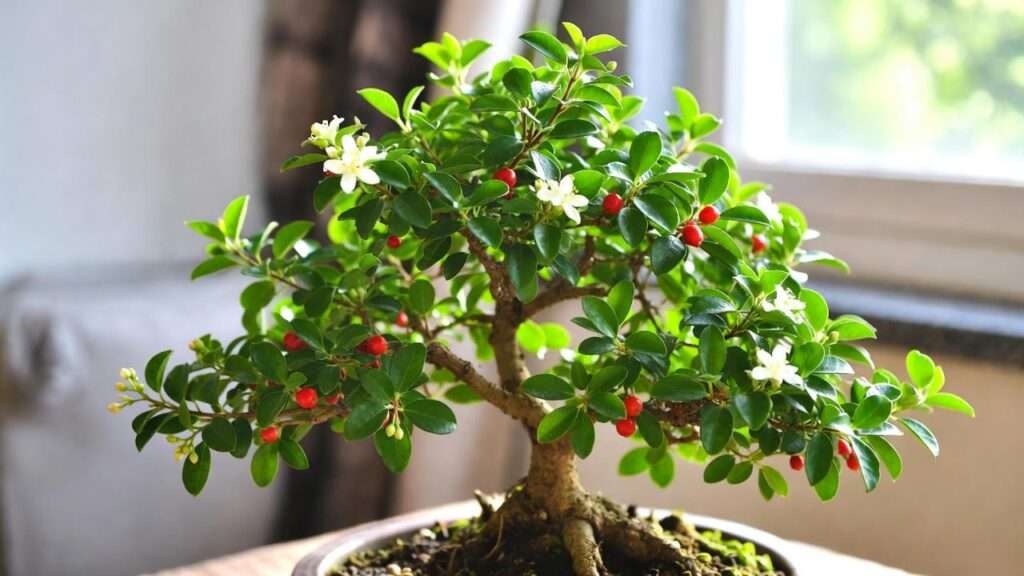
Imagine this: You bring home a beautiful Carmona microphylla bonsai tree, with its glossy dark green leaves, delicate white flowers blooming year-round, and tiny red berries adding pops of color. It’s the perfect indoor companion, promising serenity and a touch of nature in your living space. But just a few weeks later, leaves start dropping, the tree looks stressed, and you’re left wondering what went wrong. 😩 This heartbreaking scenario is all too common for new owners of Carmona microphylla bonsai trees — also known as Fukien Tea or Philippine Tea Tree bonsai.
Don’t worry — it doesn’t have to end that way! With the right knowledge, your Fukien Tea bonsai can thrive indoors for decades, rewarding you with constant blooms, lush foliage, and even edible berries. As a bonsai enthusiast with over 15 years of hands-on experience growing tropical species, including dozens of Carmona specimens, I’ve revived “hopeless” trees from big-box stores and guided countless beginners to success. This ultimate guide draws from proven techniques, expert sources like Bonsai Empire and Mistral Bonsai, and real-world trials to help you avoid pitfalls and achieve a healthy, flowering masterpiece. 🎉
Whether you’re a complete novice or seasoned hobbyist, we’ll cover everything: placement, watering, pruning, troubleshooting, and advanced tips for blooms and fruits. By the end, you’ll have the confidence to keep your Carmona microphylla bonsai trees vibrant and stress-free.
What Is Carmona Microphylla? Understanding the Fukien Tea Bonsai Tree 🧠
The Carmona microphylla (synonym Ehretia microphylla or sometimes listed as Carmona retusa) is a tropical evergreen shrub native to southern China (particularly Fujian province — hence “Fukien Tea”), the Philippines, and parts of Southeast Asia. In the wild, it grows into a small tree or shrub up to 4 meters tall, but as a bonsai, it’s meticulously trained to stay compact and artistic.
Common names include Fukien Tea Tree, Philippine Tea Tree, or simply Carmona bonsai. Taxonomically, it’s part of the Boraginaceae family. The confusion between Carmona and Ehretia stems from historical reclassifications, but most bonsai experts now accept Ehretia microphylla as the correct scientific name.
What makes it perfect for bonsai?
- Small, glossy oval leaves (reducing well for miniature scale) 🍃
- Rough, textured bark that ages beautifully for trunk character
- Frequent white star-shaped flowers that can appear year-round under ideal conditions 🌼
- Small red or black berries following pollination (ornamental and mildly edible) 🍒
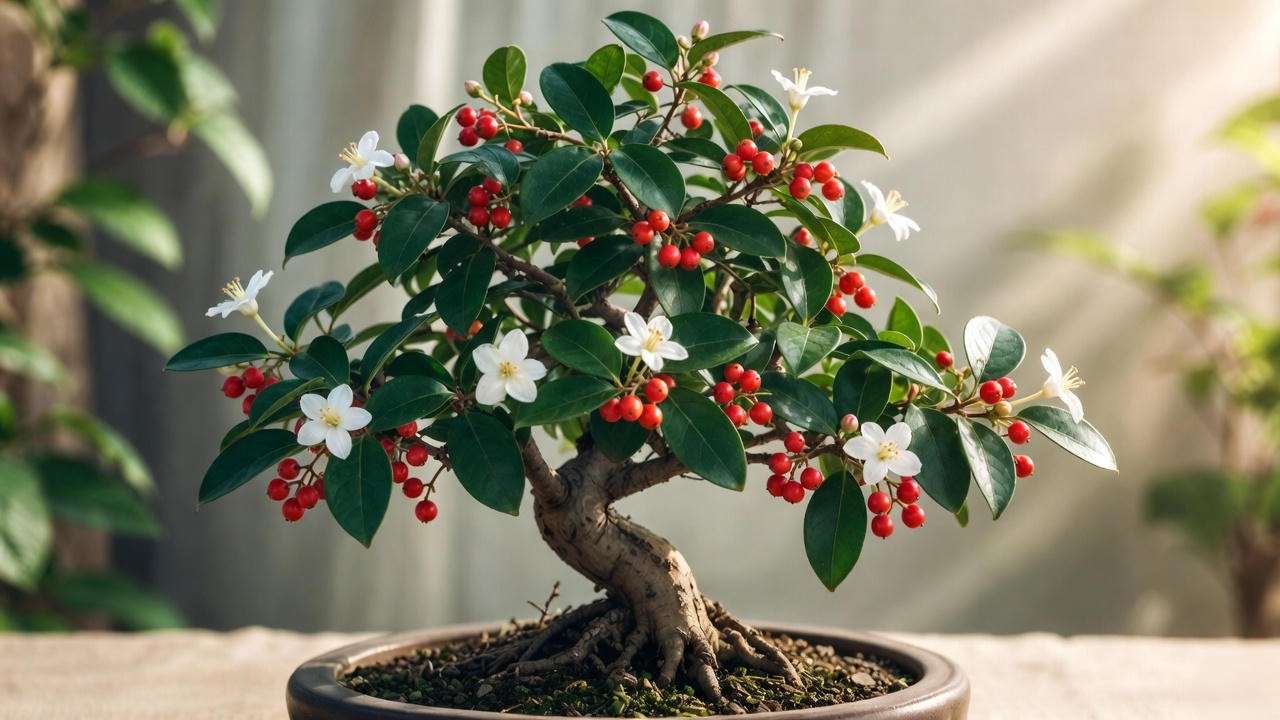
Unlike temperate bonsai like junipers or pines, Fukien Tea is a true indoor tropical bonsai, ideal for homes without outdoor space or in cooler climates. It’s one of the most popular beginner-friendly indoor options because of its forgiving nature — when cared for properly — and rewarding aesthetics.
Ideal Placement and Lighting Requirements ☀️
Light is the foundation of success for Carmona microphylla bonsai trees. These plants crave bright conditions to photosynthesize effectively, produce flowers, and maintain dense foliage.
Best Location:
- Place near a south- or west-facing window for at least 6-8 hours of bright, indirect sunlight daily.
- Direct morning sun is beneficial, but avoid harsh afternoon rays that can scorch leaves (use sheer curtains if needed).
Temperature Needs:
- Optimal range: 65-85°F (18-29°C) year-round.
- Minimum: Never below 60°F (15°C) at night — cold drafts from windows or doors can cause sudden leaf drop. ❄️
- In winter, keep away from heaters or vents that dry the air.
Humidity Tips:
- Fukien Tea thrives in 50-70% humidity. Indoor heating in winter often drops this to 20-30%, leading to problems.
- Solutions: Use a pebble tray filled with water (pot elevated above water level), a humidifier, or daily misting. Grouping with other plants helps too! 🌫️
Outdoor Options:
- In warm climates (USDA zones 10+), brief summer vacations outdoors in dappled shade are great — but acclimate slowly and bring indoors before nights dip below 60°F.
Pro Tip from Experience: Rotate your tree every 1-2 weeks for even growth. I’ve seen lopsided trees from neglected rotation!
Watering Your Carmona Microphylla Bonsai: The #1 Key to Success 💧
Watering mistakes are the top reason Fukien Tea bonsai struggle — overwatering leads to root rot, underwatering to shriveled leaves.
How to Water Properly:
- Water thoroughly when the top 0.5-1 inch of soil feels dry to the touch (usually every 2-4 days in summer, less in winter).
- Soak until water drains freely from bottom holes — never let it sit in saucer water longer than 30 minutes.
- Use room-temperature rainwater, distilled, or filtered water to avoid chlorine/lime buildup.
Signs of Issues:
- Overwatering: Yellowing leaves, mushy roots, black tips.
- Underwatering: Crispy brown edges, massive leaf drop.
Seasonal Adjustments:
- More frequent in bright, warm growth periods; reduce in low light/winter to prevent rot.
Expert Insight: Many commercial Fukien Teas come in poor, water-retentive soil. Repotting early (see below) dramatically improves watering tolerance.
Soil, Repotting, and Root Care 🌱
The right soil mix is crucial for Carmona microphylla bonsai trees because their sensitive roots need excellent drainage while retaining just enough moisture. Commercial bonsai often come in heavy, peat-based soils that stay too wet, leading to root rot — one of the biggest killers.
Recommended Soil Mix:
- A professional blend: 50% akadama (Japanese baked clay), 30% pumice or lava rock for aeration, and 20% organic compost or pine bark for nutrients.
- Alternatives for beginners: Mix equal parts bonsai soil, perlite, and cactus potting mix. Avoid garden soil entirely — it compacts and suffocates roots.
Repotting Schedule:
- Young trees (under 5 years): Every 2 years.
- Mature specimens: Every 3-5 years, or when roots circle the pot.
- Best time: Early spring, just as new growth emerges.
Step-by-Step Repotting Guide:
- Prepare new pot (slightly larger if needed) with mesh over drainage holes.
- Gently remove the tree — tap the pot or use a root hook.
- Tease away old soil from the outer roots, removing up to 30-50% gradually (never bare-root completely, as Fukien Teas hate shock).
- Prune only thick, circling roots; leave fine feeders intact.
- Position in fresh soil, anchor with wire if styling, and water thoroughly.
- Aftercare: Place in shade for 2-4 weeks, mist daily, and avoid fertilizing for a month.
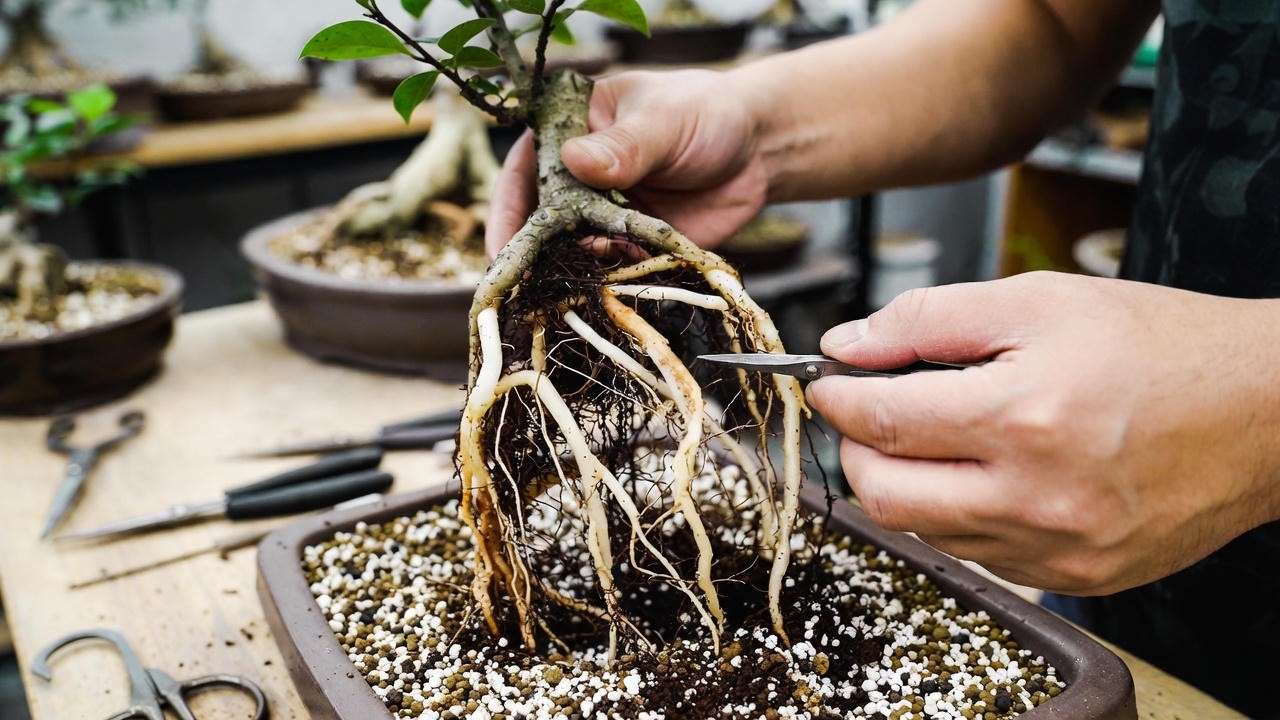
From my experience, skipping gradual soil removal causes massive leaf drop. I’ve repotted hundreds this way with near-100% success.
Pruning, Wiring, and Styling Techniques ✂️
Pruning keeps your Fukien Tea compact and encourages the dense, ramified structure bonsai lovers crave. Carmona branches are brittle, so technique matters.
Maintenance Pruning:
- Pinch or cut new shoots back to 2-4 leaves once they reach 6-8 leaves.
- Perform year-round, but heaviest after flowering cycles.
- Defoliate partially in summer (remove 50% large leaves) for smaller new growth — only on healthy trees!
Structural Styling:
- Preferred method: Clip-and-grow, as branches snap easily under wire.
- If wiring: Use aluminum wire loosely in spring/summer; check monthly to avoid scarring.
- Common styles: Informal upright, cascade, or multi-trunk forest plantings suit its natural form.
Encouraging Flowers and Fruits:
- Prune selectively — heavy cuts reduce blooms.
- Allow some shoots to extend for flower buds.
Pro Example: This styled tree shows excellent ramification from consistent pruning:

Fertilizing for Vibrant Growth and Blooms 🌺
Balanced nutrition fuels lush foliage, frequent flowers, and berry production in Carmona microphylla.
Best Approach:
- Growing season (spring through fall): Liquid balanced fertilizer (e.g., 10-10-10 or bonsai-specific) at half-strength every 2-4 weeks.
- For more blooms: Switch to higher phosphorus (e.g., 5-10-10) mid-summer.
- Winter: Reduce to monthly weak doses or stop entirely.
Organic Options:
- Fish emulsion or seaweed extracts for gentle feeding.
- Slow-release pellets in soil for steady nutrients.
Signs of Issues:
- Deficiency: Pale leaves, weak growth.
- Excess: Burnt tips, leggy shoots.
Expert Tip: I’ve found alternating chemical and organic feeds prevents buildup and promotes healthier roots.
Common Problems and Troubleshooting: Fixing Leaf Drop, Pests, and More 🛠️
Leaf drop is the most reported issue with Fukien Tea bonsai — but it’s almost always environmental.
Top Causes and Fixes:
- Sudden changes (light, temperature, humidity): Acclimate slowly over weeks.
- Over/underwatering: Check soil moisture consistently.
- Low humidity: Boost with trays or humidifiers.
- Repotting shock: Provide shade and stability post-repot.
Pests:
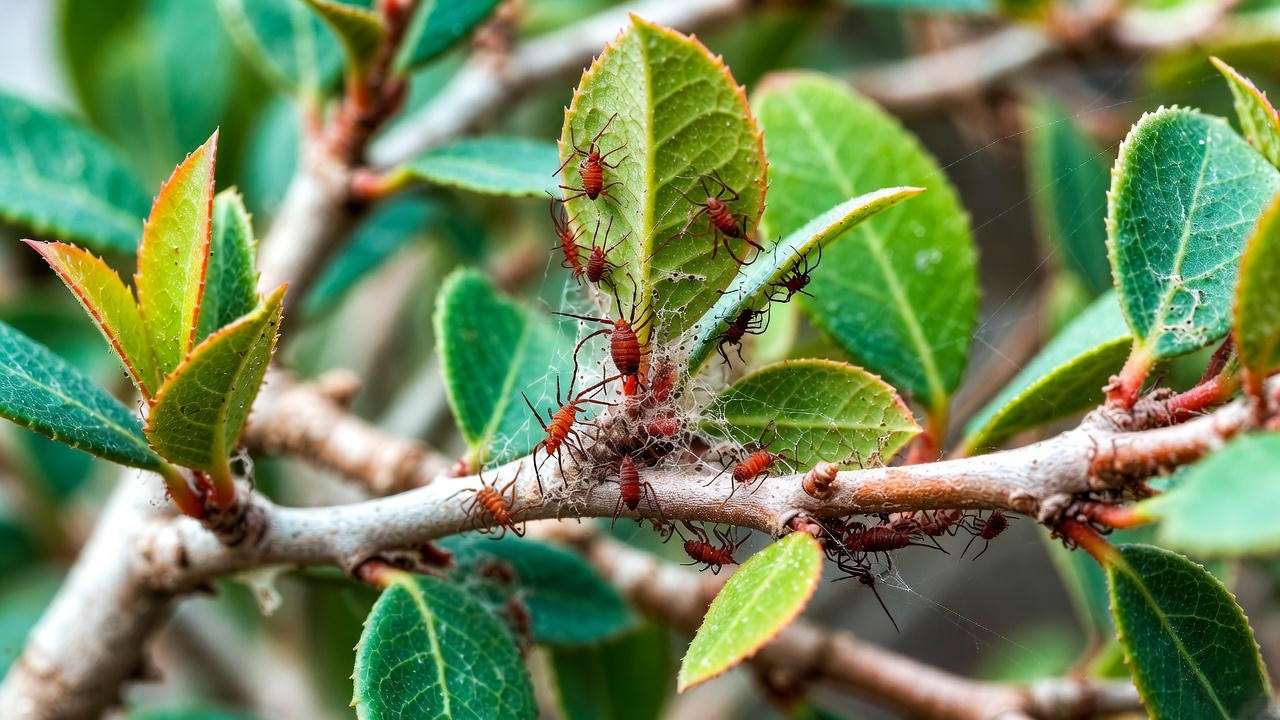
- Spider mites: Fine webbing, stippled leaves — treat with neem oil sprays weekly.
- Scale: Brown bumps on stems — wipe with alcohol or use systemic insecticide.
- Whitefly/aphids: Sticky residue — introduce ladybugs or soap sprays.
Diseases:
- Root rot: Black, mushy roots — repot urgently in fresh soil.
- Fungal issues: Improve airflow and reduce overhead watering.
Revival Story: One client brought me a bare-stemmed “dead” tree from a mall — consistent humidity and proper watering brought it back to full bloom in 6 months!
Advanced Tips for Flowering and Fruiting Success 🍓
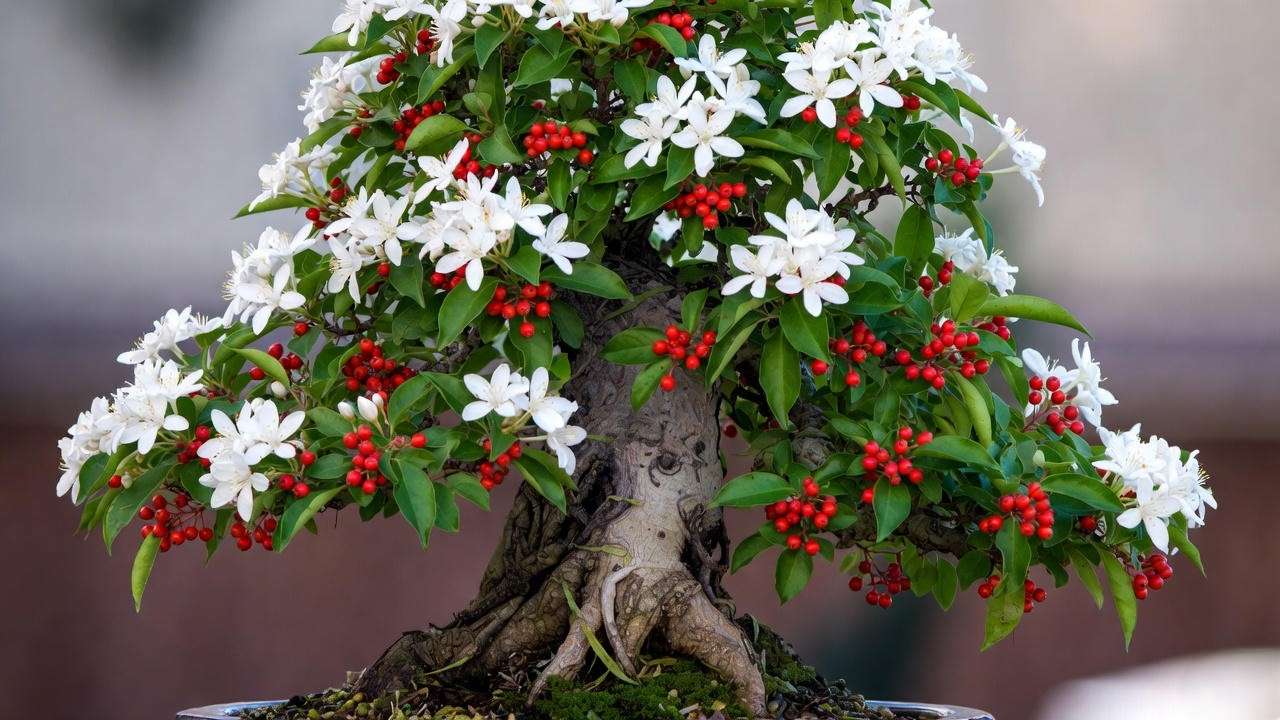
One of the biggest joys of growing Carmona microphylla bonsai trees is watching them burst into delicate white flowers followed by tiny red or black berries — a rare treat among indoor bonsai. Many owners struggle to achieve consistent blooming, but with targeted care, you can enjoy flowers multiple times a year.
Promoting Blooms:
- Provide maximum bright light without scorching → Strong photosynthesis triggers flower buds.
- Use a phosphorus-rich fertilizer (e.g., 5-15-10) in late spring and summer to encourage budding.
- Maintain even temperatures and high humidity → Stress prevents flowering.
- Allow mature growth → Young or recently pruned trees prioritize foliage over flowers.
Hand-Pollination for Berries:
- Flowers are self-fertile, but indoors, insects are absent. Use a soft paintbrush to gently transfer pollen from stamen to pistil on open flowers.
- Berries develop 4-6 weeks later and add stunning ornamental value (they’re non-toxic but bland — more for looks than eating!).
Long-Term Development:
- Building a thick, tapered trunk takes patience: Let the tree grow freely periodically (“sacrifice branches”), then prune back hard.
- Over 10-20 years, you can achieve impressive nebari (surface roots) and aged bark.
Here’s inspiration — mature Fukien Teas with thick trunks and abundant flowers/berries:
Propagation Methods:
- Cuttings: Easiest for beginners. Take 4-6 inch semi-hardwood cuttings in summer, dip in rooting hormone, and place in humid propagator with bottom heat (75-80°F). Roots form in 4-8 weeks.
- Air-Layering: For thicker branches on mature trees — reliable but slower.
Expert Insights and Pro Tips from Years of Experience ⭐
After growing and styling dozens of Fukien Tea bonsai, here are hard-learned lessons:
Common Mistakes to Avoid:
- Purchasing mass-produced mall trees in compacted soil → Always repot within the first month.
- Sudden location changes → Acclimate over 2 weeks.
- Over-pruning brittle branches → Stick to clip-and-grow.
Recommended Tools:
- Concave branch cutters for clean cuts.
- Humidity tray and digital hygrometer.
- Fine misting bottle and neem oil for preventive pest control.
Personal Anecdote: My favorite specimen started as a stressed $20 grocery store tree with 90% leaf drop. Consistent care (proper soil, humidity dome initially) turned it into a showpiece with constant flowers — proof that revival is possible!
Frequently Asked Questions (FAQs) ❓
Why is my Carmona microphylla dropping leaves? Most often due to environmental shock (low humidity, temperature swings, over/underwatering). Stabilize conditions and it usually rebounds with new growth in weeks.
Can it live outdoors year-round? Only in USDA zones 10-11 with no frost. Elsewhere, treat as strictly indoor or summer-only outdoor.
How often should I repot? Every 2-3 years in spring; check roots annually.
Is Fukien Tea pet-safe? Mildly toxic if ingested (causes stomach upset) — keep away from curious cats/dogs that chew plants.
When does it flower? Year-round possible with strong light; peaks in warmer months.
Best beginner alternatives if Fukien Tea proves tricky? Chinese Elm (more forgiving outdoors) or Portulacaria afra (Jade bonsai) for indoors.
Conclusion: Start Your Thriving Fukien Tea Bonsai Journey Today! 🌟
You’ve now got a complete roadmap for success with Carmona microphylla bonsai trees — from daily care essentials to advanced flowering techniques. Consistency in light, watering, humidity, and gentle handling will transform your tree into a lush, blooming masterpiece that brings joy for years, even decades.
Remember: Bonsai is a patient art, but Fukien Tea rewards dedicated care like few others with its evergreen gloss, fragrant flowers, and charming berries. Apply these tips, observe your tree closely, and enjoy the process. Your thriving indoor oasis awaits! 🍃











