
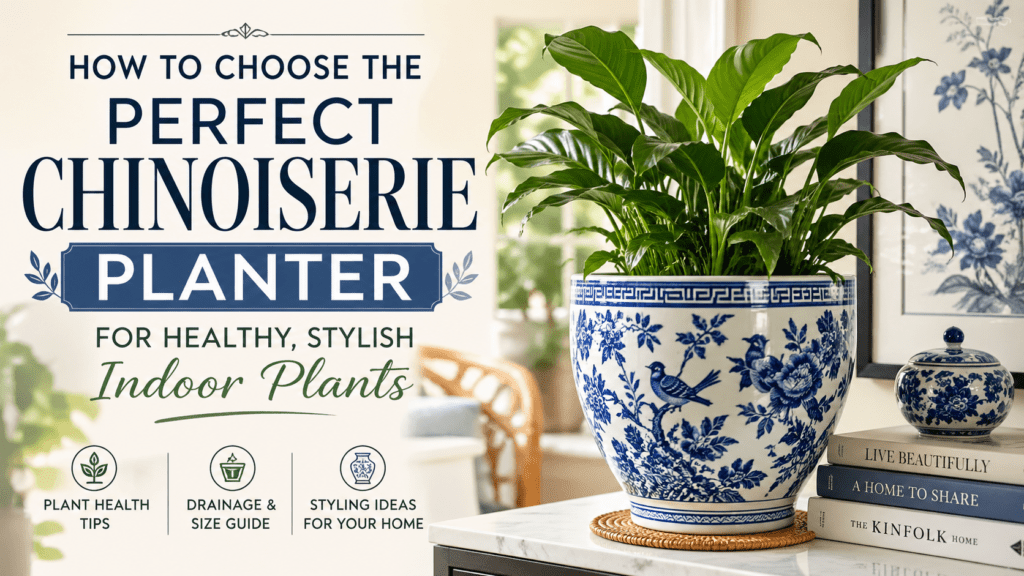
A stunning chinoiserie planter can instantly elevate your indoor garden—but here’s the truth most plant owners learn the hard way: not all beautiful planters are good for your plants. 😬
If you’ve ever watched a healthy plant slowly decline after repotting it into a decorative container, you’re not alone. The wrong planter can lead to root rot, poor drainage, and stunted growth—no matter how much care you give.
This guide will show you how to choose the perfect chinoiserie planter that not only enhances your home décor but also supports thriving, healthy plants 🌿. Whether you’re a beginner or a seasoned plant parent, you’ll learn how to balance style, function, and long-term plant health—like a true expert.
Table of Contents
Toggle🎨 What Is a Chinoiserie Planter? (And Why It’s So Popular)
🌿 Definition and Origins of Chinoiserie Style
Chinoiserie (pronounced shin-wah-zuh-ree) is a European artistic style inspired by traditional Chinese motifs and craftsmanship. It dates back to the 17th and 18th centuries, when Asian art heavily influenced Western interior design.
The hallmark features include:
- Blue-and-white porcelain patterns 🎐
- Floral, bird, and landscape motifs
- Intricate hand-painted details
When applied to planters, chinoiserie creates a timeless, elegant container that feels both classic and fresh.
🏡 Why Plant Lovers Are Choosing Chinoiserie Planters
Today, chinoiserie planters are trending for good reason:
- ✨ They instantly upgrade any indoor space
- 🪴 They complement both minimalist and maximalist interiors
- 📸 They photograph beautifully for social media
But beyond aesthetics, choosing the right one can directly impact your plant’s health—which is where many people go wrong.
🌱 Why Your Planter Choice Directly Impacts Plant Health
💧 Drainage: The #1 Factor Most People Ignore
Here’s the hard truth: most decorative chinoiserie planters don’t have drainage holes.
Without proper drainage:
- Excess water accumulates at the bottom
- Roots become waterlogged
- Oxygen is cut off
- Root rot develops
👉 Even one overwatering mistake in a sealed planter can damage your plant permanently.
🌬️ Airflow, Soil Health, and Root Development
Healthy roots need oxygen—not just water. A well-designed planter allows:
- Proper air circulation through soil
- Balanced moisture retention
- Healthy microbial activity
Glazed porcelain (common in chinoiserie planters) is non-porous, meaning it does not breathe like terracotta. This makes proper watering technique even more critical.
🌡️ Material Matters: Porcelain vs. Other Materials
Chinoiserie planters are typically made from glazed ceramic or porcelain. Here’s how they compare:
| Material | Pros ✅ | Cons ❌ |
|---|---|---|
| Porcelain | Stylish, durable, retains moisture | Poor airflow, heavy |
| Terracotta | Breathable, great drainage | Less decorative |
| Plastic | Lightweight, affordable | Less aesthetic appeal |
👉 Expert insight: Porcelain is excellent for controlled environments—but requires more mindful care.
🏺 Key Features to Look for in the Perfect Chinoiserie Planter

✔️ Proper Drainage System (or How to Add One)
Always prioritize drainage. You have three options:
- Buy a planter with built-in drainage holes
- Drill a hole (if material allows)
- Use the pot-in-pot method (highly recommended)
👉 Pro tip: Place pebbles at the bottom only if combined with proper drainage—not as a substitute.
📏 Size and Proportion for Plant Growth
Choosing the wrong size can stress your plant.
- Too small → root-bound plant
- Too large → excess soil retains water
💡 Ideal rule: Choose a planter 1–2 inches larger than the root ball.
🧱 Quality of Porcelain and Glazing
Not all chinoiserie planters are created equal. Look for:
- Smooth, even glaze finish
- No cracks or weak spots
- Hand-painted or high-quality printed patterns
Higher-quality planters last longer and are safer for plants.
⚖️ Weight and Stability Considerations
Porcelain planters are heavier than plastic—which is both good and bad:
✅ More stability for tall plants
❌ Harder to move
👉 If you’re placing a large plant indoors, weight can actually prevent tipping accidents.
🌼 Matching Chinoiserie Planters with the Right Plants
🌿 Best Indoor Plants for Chinoiserie Planters

Some plants thrive better in porcelain containers:
- 🪴 Snake Plant (low water needs)
- 🌿 Pothos (adaptable and forgiving)
- 🌳 Fiddle Leaf Fig (benefits from stable base)
- 🌱 ZZ Plant (excellent for beginners)
These plants tolerate slightly reduced airflow and controlled moisture.
🌵 Plants to Avoid (and Why)
Avoid placing these directly in non-draining chinoiserie planters:
- ❌ Succulents (require fast drainage)
- ❌ Cacti (prone to root rot in moisture-retentive soil)
- ❌ Herbs (need frequent watering balance)
👉 These plants prefer breathable materials like terracotta.
🌸 Styling Tips for Visual Harmony
Balance aesthetics with plant shape:
- Tall plants → pair with narrow, tall planters
- Trailing plants → use rounded or elevated pots
- Bold foliage → match with subtle patterns
✨ The goal: let both the plant and planter shine without competing.
🛠️ Common Mistakes to Avoid When Using Chinoiserie Planters
Even experienced plant owners make these mistakes:
- 🚫 Using decorative pots without drainage
- 🚫 Overwatering due to glossy surfaces
- 🚫 Ignoring plant-specific needs
- 🚫 Choosing style over function
👉 Expert tip: A beautiful planter should support life, not risk it.
🧑🌾 Expert Tips for Maintaining Healthy Plants in Decorative Planters
💡 Use the “Pot-in-Pot” Method
This is the safest and most recommended technique:
- Keep your plant in its nursery pot
- Place it inside the chinoiserie planter
- Remove it when watering
✔️ Prevents water buildup
✔️ Maintains proper drainage
💧 Smart Watering Techniques
- Check soil before watering (don’t guess!)
- Use a moisture meter for accuracy
- Water less frequently than in terracotta
👉 Remember: glazed planters retain moisture longer.
🌿 Soil Mix Recommendations
Use a well-draining indoor mix:
- Potting soil + perlite
- Add orchid bark for airflow
- Avoid dense, compact soil
🏡 How to Style Chinoiserie Planters in Your Home Like a Pro
🛋️ Placement Ideas for Maximum Impact
- Entryways for a welcoming feel
- Shelves for layered design
- Coffee tables as focal points
🎨 Color Coordination and Pattern Balance
- Pair blue-white planters with neutral backgrounds
- Avoid too many competing patterns
🪴 Grouping Planters for a Designer Look
- Use odd-number groupings (3 or 5)
- Vary heights and sizes
- Mix plant textures
✨ This creates a curated, magazine-worthy look.
💰 Budget vs. Luxury Chinoiserie Planters: What’s Worth It?

When choosing a chinoiserie planter, price can vary dramatically—from budget-friendly options to high-end collector pieces. But does spending more actually benefit your plants? Let’s break it down 👇
💵 Affordable Options That Still Look Premium
You don’t need to overspend to get a beautiful, functional planter.
What to expect in budget-friendly planters:
- Machine-printed patterns (still visually appealing)
- Standard ceramic material
- Lightweight construction
👉 Best for:
- Beginners testing décor styles
- Smaller plants
- Temporary setups
💡 Expert tip: Always prioritize drainage and size over price. A $10 planter with proper drainage is better than a $100 sealed pot.
💎 When to Invest in High-End Pieces
Luxury chinoiserie planters often feature:
- Hand-painted designs 🎨
- Thicker, more durable porcelain
- Unique artisan craftsmanship
👉 Worth it if:
- You’re designing a long-term indoor plant display
- You want statement décor pieces
- You value durability and artistic detail
💡 Expert insight: High-end planters tend to last decades, making them a sustainable and cost-effective investment over time.
🌍 Sustainability Considerations 🌱
Choosing the right chinoiserie planter isn’t just about aesthetics—it can also reflect eco-conscious decisions 🌎
🌿 Eco-Friendly Materials and Longevity
- Porcelain is long-lasting and reusable
- Reduces need for frequent replacements
- Minimizes waste compared to plastic pots
🛠️ Supporting Artisan Craftsmanship
Many premium chinoiserie planters are handmade. Supporting these products:
- Encourages traditional artistry
- Promotes ethical production
- Adds cultural value to your home
♻️ Reduce, Reuse, Repurpose
- Reuse planters for different plants over time
- Repurpose cracked pots as decorative holders
- Avoid disposable décor trends
👉 A well-chosen planter can last a lifetime—making it one of the most sustainable décor choices available.
❓ Frequently Asked Questions (FAQs)
❓ Can chinoiserie planters be used outdoors?
Yes—but with caution. Most porcelain planters are not frost-resistant. Extreme weather can cause cracking. If used outdoors, place them in covered or mild environments.
❓ Do all chinoiserie planters need drainage holes?
Ideally, yes. If your planter doesn’t have one, use the pot-in-pot method to protect your plant from root rot.
❓ How do I prevent root rot in decorative pots?
- Avoid overwatering
- Use well-draining soil
- Ensure excess water can escape
- Monitor soil moisture regularly
❓ Are chinoiserie planters safe for all plant types?
Not all. They work best for plants that tolerate moderate moisture levels. Avoid using them directly for succulents or cacti unless proper drainage is ensured.
❓ How do I clean and maintain porcelain planters?
- Wipe with a damp cloth regularly 🧼
- Avoid harsh chemicals
- Clean mineral deposits with diluted vinegar
🧠 Final Thoughts: Balancing Beauty and Plant Health
A chinoiserie planter is more than just a decorative accessory—it’s part of your plant’s living environment 🌿
The key takeaway?
👉 Never sacrifice plant health for aesthetics.
When chosen thoughtfully, the right planter will:
- Support strong root development 🌱
- Prevent common plant care issues
- Elevate your home with timeless elegance ✨
By understanding drainage, material, plant compatibility, and styling, you can confidently select a planter that nurtures your plants while enhancing your space.











