
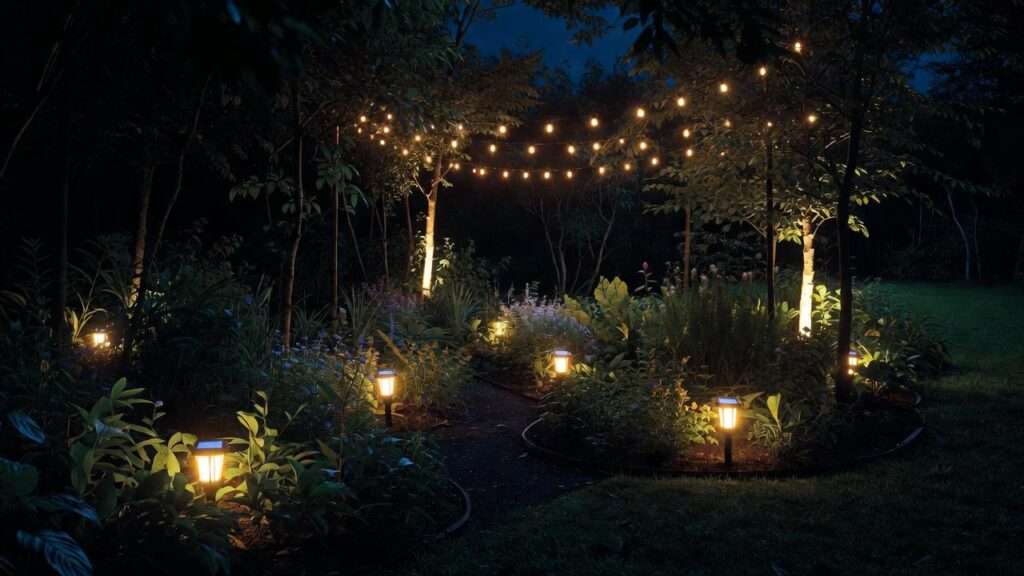
Imagine stepping out into your small garden after sunset in Dhaka’s humid evenings — the air still warm, perhaps with a light drizzle lingering from the afternoon rain. Instead of stumbling in the dark or seeing only shadows, your favorite hibiscus blooms glow softly 🌺, your dwarf mango tree stands dramatically silhouetted against the night sky 🍃, and a cozy seating nook invites you to relax with a cup of tea. The once-cramped space feels magical, larger, and safer. But for many small garden owners, especially in urban Bangladesh where space is limited and monsoons are relentless, poor lighting choices lead to glare, wasted energy, plant damage, or simply an underwhelming night view.
If you’re searching for choosing the right lighting for small gardens, you’re likely facing this exact challenge: how to illuminate without overwhelming the area, highlight your beloved plants and trees, ensure safety during rainy seasons, and keep things eco-friendly and budget-smart. As a plant and tree care expert with years of helping homeowners in tropical climates like ours turn tiny plots into enchanting retreats, I can tell you — the right lighting doesn’t just brighten; it transforms.
In 2025-2026, trends lean heavily toward sustainable, smart solutions: powerful solar LEDs that charge even on cloudy Dhaka days ☀️, layered designs for depth, and warm color temperatures (2700K-3000K) that mimic golden-hour sunsets without scorching foliage. LEDs save up to 90% energy compared to old halogens, and solar options eliminate wiring hassles in rain-prone areas. This comprehensive guide walks you through every step — from assessment to installation — with plant-specific tips, common pitfalls to avoid, and real-value ideas to make your small garden shine brighter than ever. Let’s turn your outdoor oasis into an evening paradise! 🌙🍃
Why Lighting Matters for Small Gardens 🌟
Lighting isn’t just decorative in a small garden — it’s essential for extending usability, especially in our subtropical climate where evenings are long and inviting year-round. Here’s why investing time in choosing the right lighting for small gardens pays off:
- Extend Your Enjoyment: Well-lit spaces let you savor evenings outdoors, whether tending to night-blooming jasmine or hosting family chats under the stars. In Dhaka’s humid heat, a glowing garden becomes your private escape after a busy day.
- Highlight Plant Features: Strategic uplighting reveals the elegant form of a Japanese maple’s branches or the texture of fern fronds, turning ordinary plants into nighttime stars 🌴. It showcases architectural shapes without daylight.
- Create Illusions of Space: Clever placement — like washing light across walls or using mirrors — makes tiny yards feel expansive. Layered lighting adds depth, preventing flat, cramped vibes.
- Boost Safety & Security: Pathways lit prevent trips on uneven stones during monsoons; motion-sensor lights deter intruders in urban settings. Low-glare options keep eyes comfortable.
- Eco & Plant Benefits: Modern LEDs run cool (no heat burn on leaves), and solar choices reduce electricity bills and carbon footprint — perfect for eco-conscious gardeners in Bangladesh.
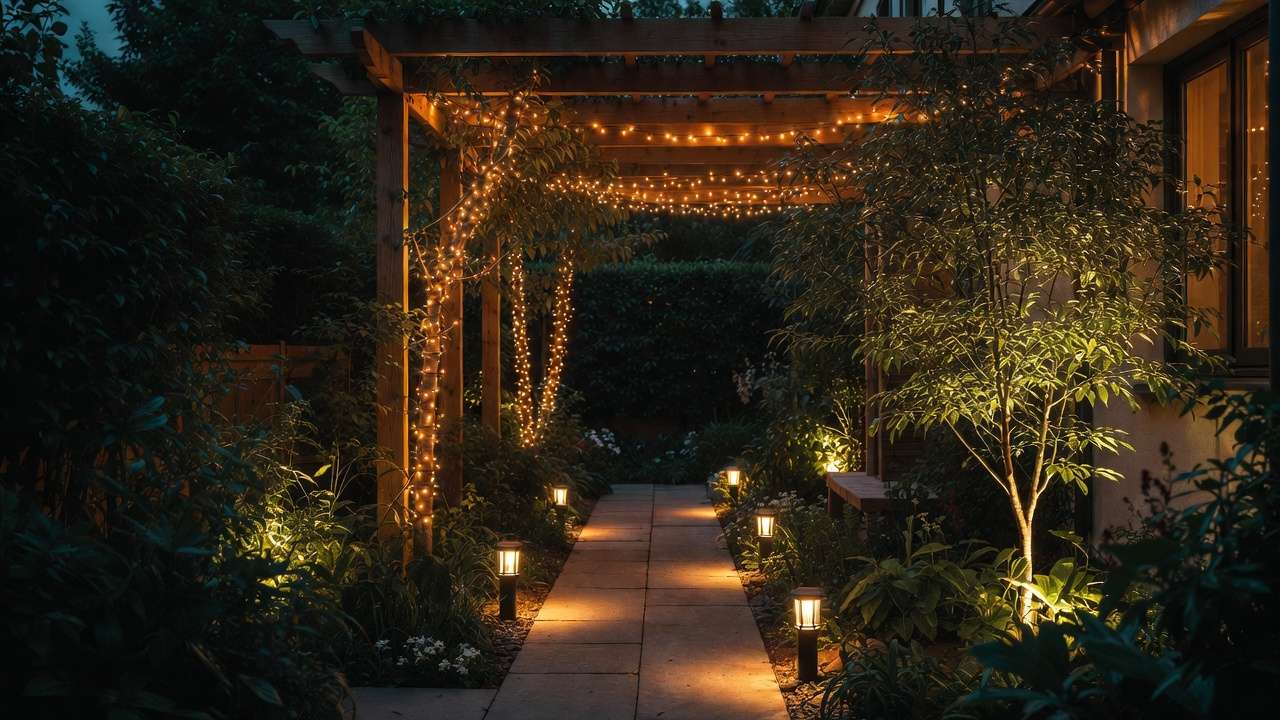
Poor lighting wastes potential; the right choices protect plants, save energy, and enhance beauty. Ready to assess your space? Let’s dive in!
Step-by-Step Guide: How to Assess Your Small Garden Needs 📏
Before buying a single fixture, map your garden properly — this prevents costly mistakes like overbuying or misplaced lights.
- Sketch Your Layout: Grab paper or a phone app and draw your space to scale. Mark focal points: tall trees (e.g., your prized neem or fruit tree 🌳), flower beds with roses or marigolds, seating areas, pathways, and boundaries like walls or fences.
- Define Your Goals: Ask yourself:
- Relaxation (soft ambient glow for evenings)?
- Plant showcasing (accent on specific trees or pots)?
- Safety (bright paths during rain)?
- Entertaining (brighter zones for gatherings)? Prioritize 2-3 goals to avoid clutter.
- Consider Local Constraints: In Dhaka, high humidity and heavy monsoon rains demand IP65+ waterproof ratings (fully dust-tight and protected against jets of water). Limited power outlets favor solar. Budget: Start low (BDT 5,000-15,000 for basics) and scale up.
- Evaluate Existing Light: Note streetlights or neighbor glare — they can wash out your setup. Test at dusk: Walk your garden and note dark spots or hazards.
This assessment ensures lighting complements your plants, not competes. Next, understand the types that work best in tight spaces.
Understanding Lighting Types for Small Spaces 💡
Layering is key in small gardens — combine types for balanced, professional results without overwhelming the area.
Ambient Lighting: Soft Overall Glow ✨
Creates mood and gentle fill light. Ideal for making the whole space feel welcoming without harsh spots.
- Best options: Warm string lights draped over pergolas or fences, fairy lights wrapped around trees, or small solar lanterns.
- Why it works small: Low wattage, flexible placement — no bulky fixtures.
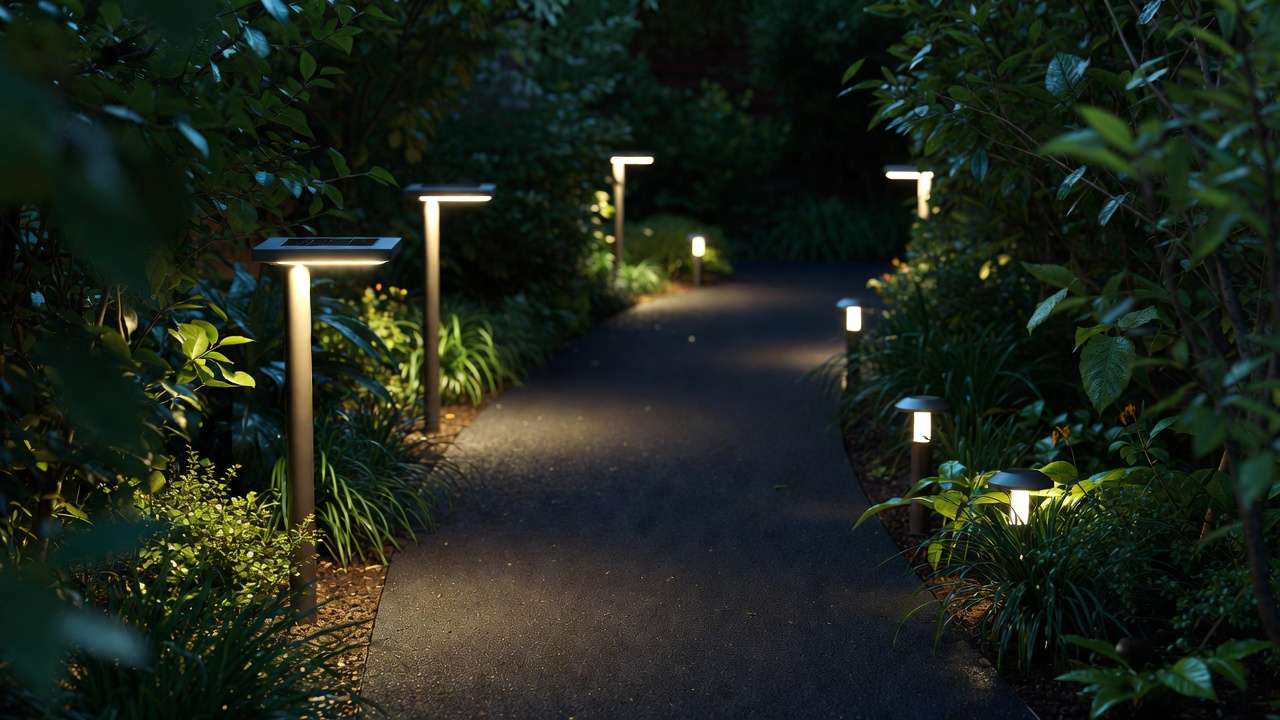
Task Lighting: Practical Illumination 🛤️
Ensures safe movement — crucial in rainy seasons when paths get slippery.
- Best options: Low-profile bollards (knee-high), solar path stakes, or recessed deck/step lights.
- Tip: Space 1-1.5 meters apart along walkways for even coverage.
Accent Lighting: Highlight Plants & Features 🌺
Draws eyes to your stars — trees, sculptures, or vibrant beds.
- Best options: Spiked uplights for trees (angle 30-45° for drama), wall washers for beds, or adjustable spotlights.
- Pro move: Use for “moonlighting” — lights high in trees filtering down like natural moonlight.
Layering Light: The Key to Balance ⚖️
Never rely on one type! Ambient + task + accent creates depth:
- Ambient sets the scene.
- Task guides feet.
- Accent adds wow. Avoid flat lighting — it makes small spaces feel smaller.
Here are some inspiring visuals of small garden lighting in action:
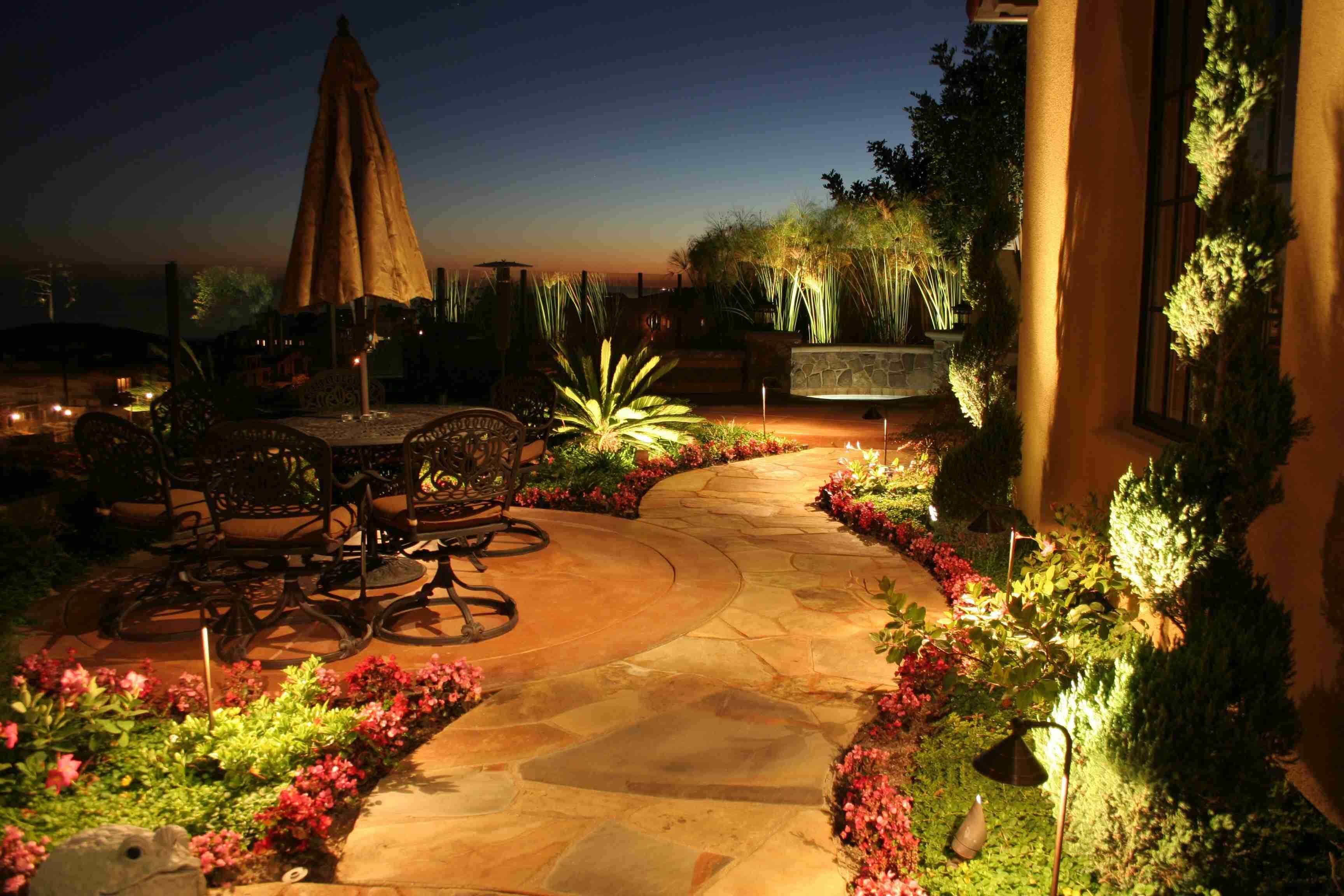
These examples show layered, plant-focused designs that feel spacious and enchanting! 🌟
Best Lighting Fixtures for Small Gardens in 2025-2026 ☀️
The lighting market has evolved dramatically, with 2025-2026 bringing more powerful, weather-resistant, and smart-integrated options perfect for small urban gardens in humid, rainy climates like Dhaka. Here are the standout choices that balance performance, plant safety, and space efficiency.
- Solar-Powered Fixtures (Top recommendation for most small gardens): No wiring needed, zero electricity bills, and they thrive even on cloudy days with modern high-efficiency panels. Popular models include motion-activated path lights and string lights with built-in timers.
- LED Low-Voltage Systems: Extremely energy-efficient (up to 90% savings), run cool to the touch (no risk of burning delicate leaves), and last 50,000+ hours. Dimmable and often compatible with smart plugs.
- Compact & Hidden Fixtures: Slim bollards (just 10-15 cm wide), recessed ground lights, and adjustable spike uplights that disappear during the day.
- Smart & Tech-Integrated Trends: App-controlled via Bluetooth/Wi-Fi, color-changing (for festive evenings), motion sensors, and voice control — ideal for busy homeowners who want automation.
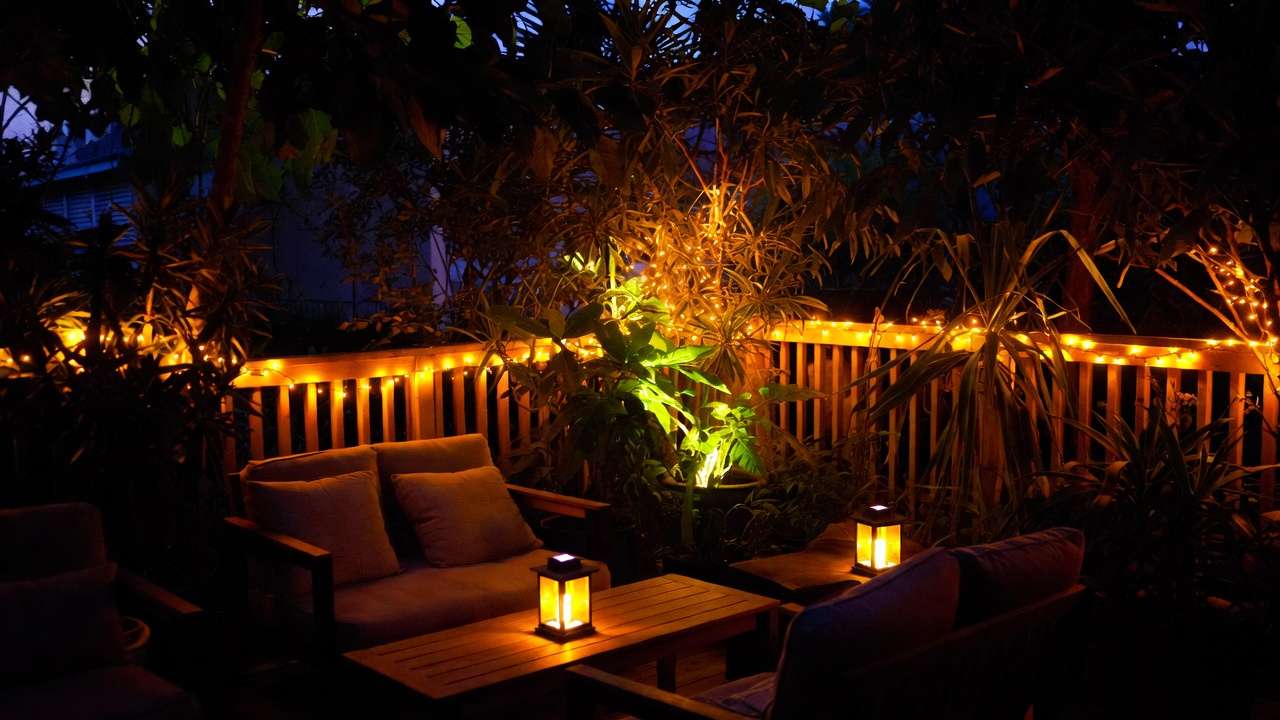
Quick Comparison Table (perfect for small gardens):
| Fixture Type | Best For | Pros | Cons | Approx. Cost (BDT) | Recommended Brands/Models (2025-2026) |
|---|---|---|---|---|---|
| Solar Path Stakes | Walkways & steps | Easy install, eco-friendly, no wiring | Performance drops in heavy shade | 2,000–8,000 | AloftSun, Hampton Bay, LITOM |
| LED Uplights (Spiked) | Trees & focal plants | Dramatic shadows, adjustable angle, cool | Needs low-voltage transformer | 3,000–12,000 | Philips Hue, Hinkley, VOLT |
| Warm String/Fairy Lights | Ambiance & overhead | Charming, flexible, creates cozy feel | Can tangle if not stored properly | 1,500–6,000 | Govee Outdoor, Brightech, Twinkly |
| Low Bollards | Pathways & borders | Sleek, subtle, excellent for rain | Slightly higher upfront cost | 5,000–15,000 | Kichler, Hinkley, Gama Sonic |
| Wall Washers / Grazers | Flower beds & walls | Illuminates textures, expands space feel | Needs careful placement | 4,000–10,000 | WAC Lighting, Focus Industries |
| Smart Motion Sensors | Security + convenience | Saves energy, auto-on when needed | Requires app setup | 6,000–18,000 | Ring, Philips Hue Outdoor, Eve |
Pro tip: Start with a mix of solar path stakes + warm string lights + 2-3 uplights for trees. This layered setup costs under BDT 20,000 and delivers professional results! 🌟
Plant & Tree-Specific Lighting Tips 🌴🍃
As a plant care expert, I always emphasize that lighting should celebrate and protect your greenery — not harm it. Here’s how to light different plants and trees beautifully in small spaces:
- Uplighting Trees: Position spike uplights 30–45° from the base to create stunning shadow play on textured bark (perfect for neem, mango, or crepe myrtle trees 🌳). For smaller trees like Japanese maple or dwarf citrus, one 5–10W LED uplight is usually enough. Avoid shining directly into the canopy — it can stress leaves.
- Highlighting Flower Beds & Shrubs: Use soft wall washers or angled spotlights on roses, hibiscus, marigolds, or jasmine. Warm white (2700K) preserves true flower colors and prevents the “bleached” look from cool white lights.
- Protecting Delicate Plants: Never use hot halogen bulbs — they can scorch foliage, especially in humid Dhaka summers. Stick to cool-running LEDs (under 40°C surface temp). For succulents or ferns, use very low-wattage accent lights to avoid drying them out.
- Seasonal Adjustments: During monsoons, increase path and task lighting for safety. In cooler dry months, soften ambient lights for cozy evenings. Night-blooming plants like tuberose or moonflower love gentle moonlight-style filtering from high tree-mounted lights.
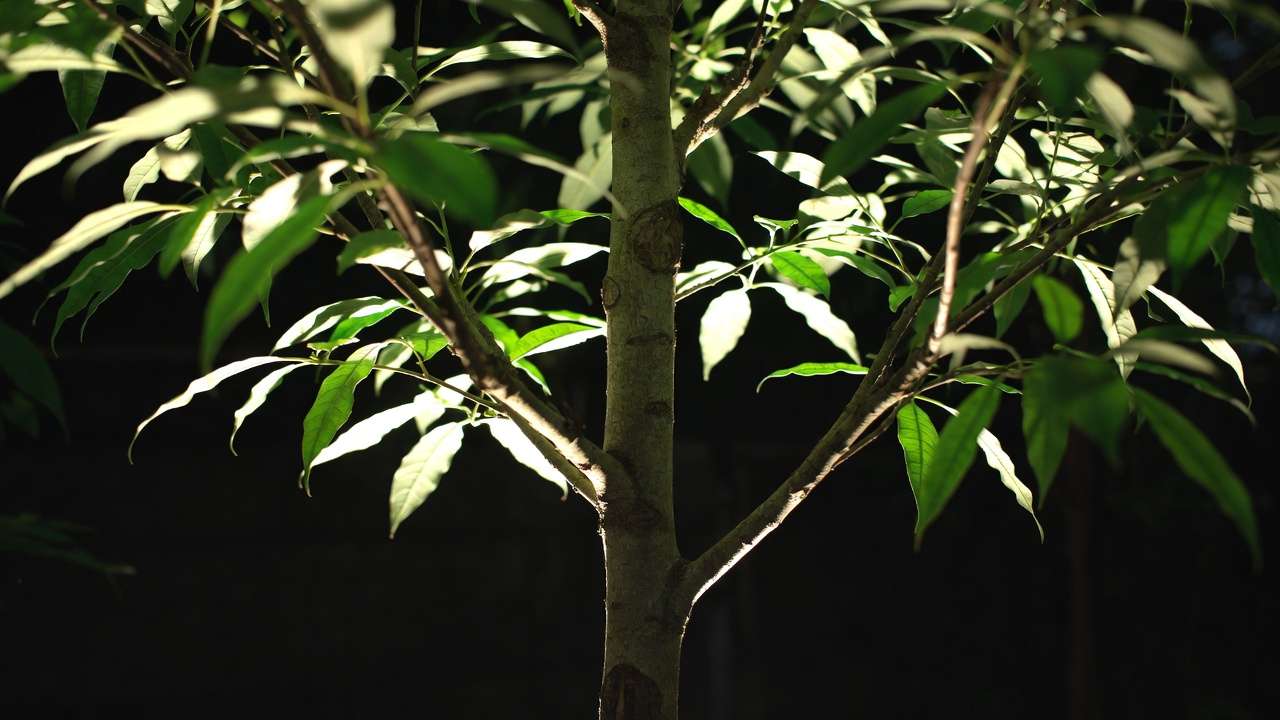
Expert insight: Plants respond best to warm 2700K–3000K light — it mimics the golden hour and promotes relaxation for you too! 🌙
Common Mistakes to Avoid & Pro Tips 🚫✨
Even experienced gardeners make these errors — here’s how to dodge them:
- Mistake: Over-lighting → creates glare and makes the space feel smaller.
- Fix: Use dimmers and start with fewer fixtures. Aim for “pools of light” rather than uniform brightness.
- Mistake: Choosing cool white (5000K+) bulbs → harsh, unnatural look that washes out plant colors.
- Fix: Always choose warm white (2700K–3000K) for gardens.
- Mistake: Poor placement → lights shining into eyes, windows, or neighbor’s yards.
- Fix: Angle uplights upward, shield task lights, use louvers or hoods.
- Pro Tips:
- Reflect light off light-colored walls or a small garden mirror to double the glow and make space feel bigger 🪞.
- Use timers or smart sensors to save energy and mimic natural dusk-to-dawn cycles.
- Test everything at dusk before final installation — walk the garden and adjust.
- Start small: Add 3–5 fixtures first, then expand as you see what works.
Installation Basics & Maintenance 🔧🛠️
Installing garden lighting is straightforward for most small setups, especially with today’s solar and plug-and-play options. Here’s a practical breakdown tailored to Dhaka’s climate and typical small urban gardens.
- DIY vs. Professional Installation:
- Solar fixtures (path stakes, string lights, small uplights): 100% DIY-friendly. No electrician needed — just stake them into soft soil or use weighted bases on concrete patios. Takes 1–2 hours for a full small garden setup.
- Low-voltage LED systems (wired uplights, bollards): Slightly more involved. You’ll need a transformer (usually placed indoors or in a weatherproof box) and low-voltage cable run along edges or buried shallowly (5–10 cm deep). If you’re comfortable with basic tools, it’s doable; otherwise, hire a local electrician (BDT 2,000–5,000 for a small job).
- Smart systems: Follow app instructions — pairing takes minutes, but placement planning is key.
- Safety First (Especially in Monsoon Season):
- Choose IP65 or IP67 rated fixtures (fully waterproof, dust-tight).
- Use low-voltage (12V–24V) wherever possible — much safer than mains 220V.
- Keep cables away from walkways; secure with clips or bury them.
- Install ground-fault circuit interrupters (GFCI) for any plugged-in transformers.
- Maintenance Tips for Long-Lasting Results:
- Clean fixtures monthly during monsoon — wipe off dust, pollen, and water spots to maintain brightness.
- Check solar panels for shade from growing trees; trim branches if needed.
- Replace rechargeable batteries in solar lights every 1–2 years (most use standard AA/AAA NiMH).
- Inspect cables and connections after heavy storms.
- In dry winter months, wipe down fixtures to prevent dust buildup that dims output.
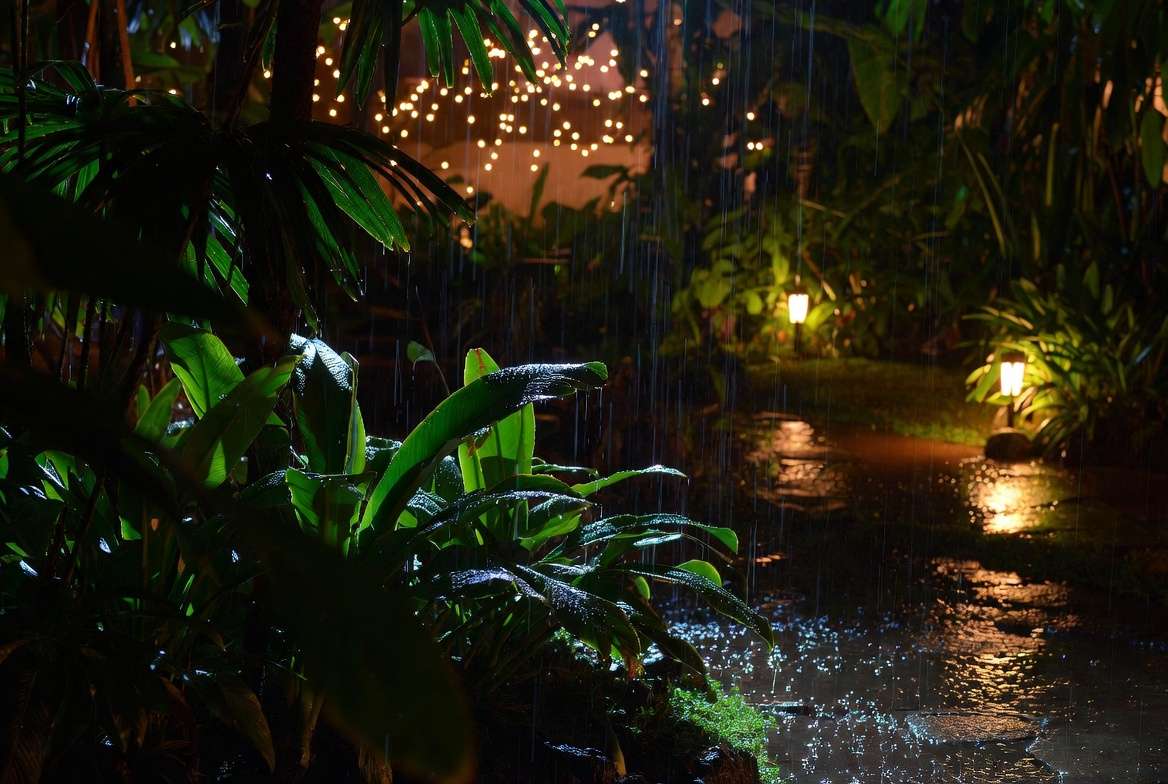
With proper care, quality LED and solar lights last 5–10+ years — a smart investment for your garden’s beauty and your wallet! ☀️
Budget-Friendly Ideas & Inspiration Gallery 💰✨
You don’t need a big budget to create a stunning small garden glow. Here are tiered ideas that deliver maximum impact:
- Low-Budget Wins (BDT 5,000–15,000):
- 10–20 solar path stakes along walkways + warm white string lights draped over a fence or small pergola.
- Add 2 cheap solar uplights for your favorite tree or potted plant.
- Result: Safe paths, cozy ambiance, plant highlights — perfect starter setup.
- Mid-Range Layered Setup (BDT 15,000–35,000):
- Solar path lights + 4–6 LED uplights for trees/shrubs + dimmable string lights.
- Include a couple of smart motion-sensor wall lights for security.
- Result: Professional depth, energy savings, and evening magic.
- Premium Touch (BDT 35,000+):
- Full smart system (Philips Hue or similar) with app control, color options for festivals (Eid lights in green & gold? 🎉), and automated schedules.
- Hidden recessed uplights + grazing wall lights for a luxe feel.
Inspiration Ideas to Visualize: Here are some real-world examples of small garden lighting done right — notice how they use layering, warm tones, and plant-focused placement to feel spacious and inviting.
These show exactly how subtle, thoughtful lighting turns tiny spaces into dreamy retreats! 🌙
FAQs ❓
What is the best type of lighting for small gardens? A layered combination: ambient (string/fairy lights), task (path lights), and accent (uplights for plants/trees). This creates depth and avoids a flat or cluttered look.
Are solar lights effective in small gardens in Dhaka? Yes — modern high-efficiency panels work well even on cloudy or short winter days. Choose models with larger panels and lithium batteries for best monsoon performance.
How many lights do I need for a small garden (e.g., 50–100 sqm)? Start with 6–12 fixtures: 4–6 path lights, 2–4 uplights, and 1 string/fairy set. Add more only if needed after testing.
Can outdoor lighting harm my plants or trees? Yes, if using hot bulbs (halogens) or very bright cool lights. Stick to cool-running LEDs (2700K–3000K warm white) and avoid direct blasting on leaves — your plants will thrive.
What’s the ideal color temperature for garden lighting? 2700K–3000K warm white. It mimics sunset, flatters plant colors, and creates a relaxing mood — far better than harsh daylight whites.
Conclusion 🌟🍃
Choosing the right lighting for small gardens isn’t just about brightness — it’s about creating an extension of your home where plants, trees, and evenings come alive safely, beautifully, and sustainably. With layered solar LEDs, warm tones, and plant-focused placement, even the tiniest Dhaka balcony or backyard can feel like a private enchanted oasis.
Start small: Sketch your space tonight, pick 3–5 starter fixtures, and test at dusk. You’ll be amazed how quickly your garden transforms from “forgotten after sunset” to “favorite evening spot.” Your hibiscus, mango tree, and cozy chair are waiting to shine! 🌹🍎
If you try any of these ideas, I’d love to hear how it turned out — drop a comment or share your before-and-after photos. Happy gardening and happy glowing evenings! ✨











