
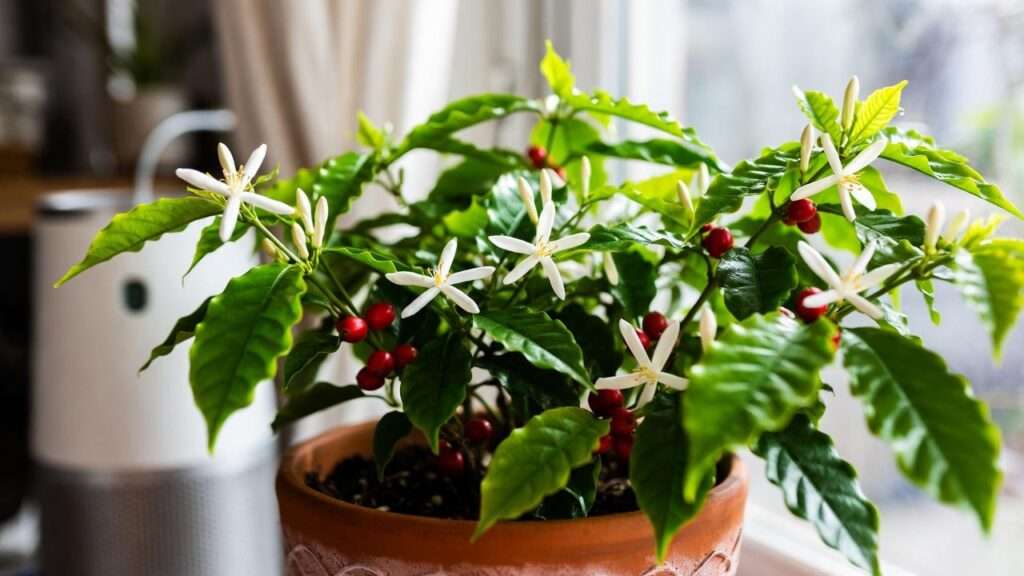
Imagine stepping into your living room on a quiet Saturday morning, reaching past glossy emerald leaves, and plucking a handful of bright-red coffee cherries from your very own coffee plant houseplant. Nine months later, you’re sipping the freshest, most aromatic cup of coffee you’ve ever tasted — grown, harvested, and roasted by you. Sounds like a tropical dream? It’s not. Thousands of indoor gardeners (myself included) have turned Coffea arabica into one of the most rewarding and surprisingly forgiving houseplants on the planet.
Hi, I’m Alex — horticulturist, former coffee-farm volunteer in Costa Rica, and the slightly obsessed owner of more than 30 indoor coffee plants over the past eight years. Some started as sad $12 grocery-store rescues; others are now 6-foot bushy beauties that gift me up to half a pound of homegrown beans every year. In this complete guide, I’m handing you everything I’ve learned (the successes, the disasters, and every pro trick in between) so your coffee plant houseplant doesn’t just survive — it thrives, flowers, and eventually rewards you with real coffee.
Ready to grow the coolest houseplant conversation piece ever? Let’s dive in. 🌱
Meet Your New Houseplant: Coffea arabica 101 🌱
The coffee plant you can grow indoors is almost always Coffea arabica — the same species responsible for roughly 60–70 % of the world’s coffee. Native to the cool, shady understory of Ethiopian cloud forests (1,000–2,000 m elevation), arabica is naturally suited to the exact conditions many of us already have at home: moderate light, high humidity, and stable temperatures.
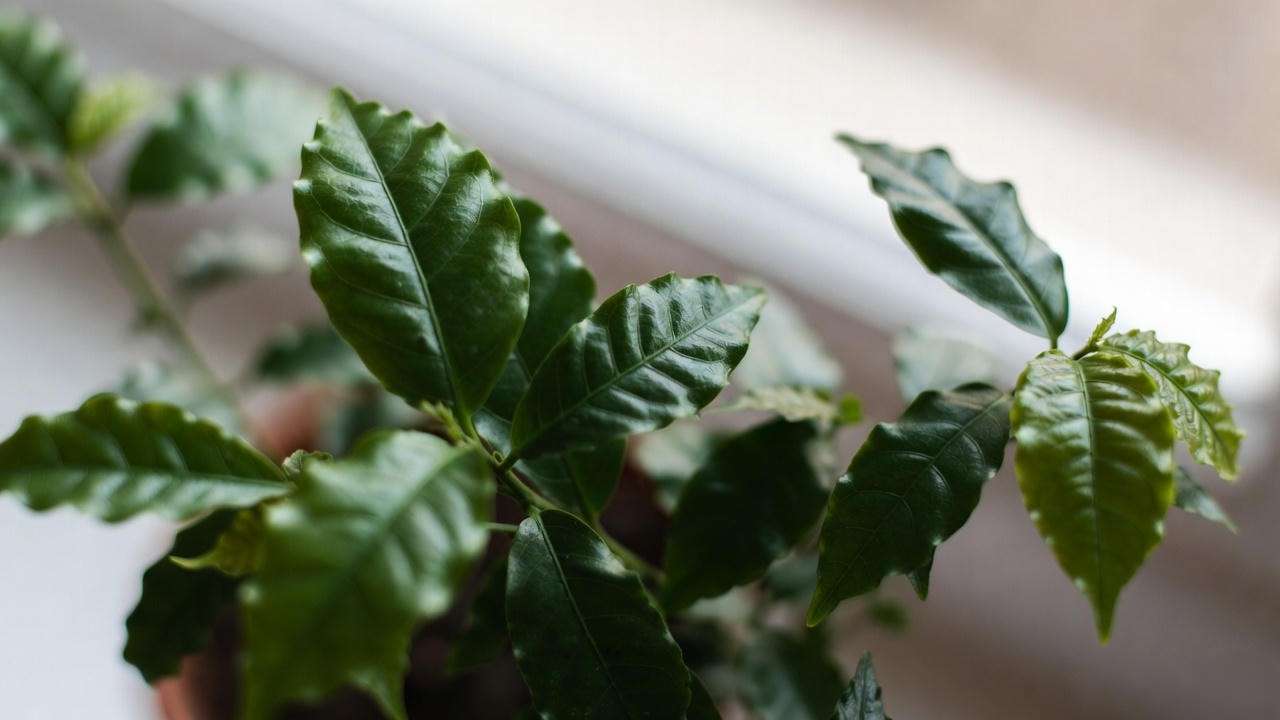
Why coffee plants make incredible houseplants
- Stunning year-round glossy foliage
- Fragrant jasmine-like white flowers (smell amazing!)
- The holy grail: actual edible coffee cherries
- Surprisingly pest-resistant once established
- Air-purifying bonus (NASA clean-air study plant)
Arabica vs Robusta indoors Robusta (Coffea canephora) tolerates hotter, lower-elevation conditions but grows into a scraggly, less attractive tree indoors and rarely flowers without commercial-scale conditions. Stick with arabica — varieties like ‘Caturra’, ‘Catuaí’, or unnamed nursery hybrids all perform beautifully.
Realistic size & timeline
- Year 1–2: 1–3 ft tall, mostly vegetative growth
- Year 3–4: first flowers possible (usually 5–7 ft indoors)
- Mature indoor height: 4–7 ft with pruning
- Average indoor harvest: ½–1 lb green beans per year from a healthy 5+ year-old plant
Choosing the Perfect Coffee Plant to Bring Home 🛒
Success starts at the nursery.
Red flags to avoid
- Brown leaf tips or edges (chronic underwatering or salt burn)
- Soggy soil + fungus gnats (root rot waiting to happen)
- Mealybugs hiding in new growth
- Tiny pot + giant plant (root-bound and stressed)
Green flags
- Deep green, glossy leaves with no spots
- New growth at the tips
- Slightly moist (not wet) soil
- Firm stems that don’t wobble in the pot
Where I buy
- Local specialty nurseries or botanical gardens
- Reputable online sellers (Logee’s, Glasshouse Works, Etsy sellers with 1000+ reviews)
- Big-box stores only during spring/summer when turnover is high
Seed vs cutting vs mature plant
- From seed: fun project, 6–12 months behind
- From 6–12″ cutting: my favorite — 2-year head start
- Mature 3–4 ft specimen: instant gratification (and flowers possible next season)
The Ideal Light Setup — The #1 Make-or-Break Factor ☀️
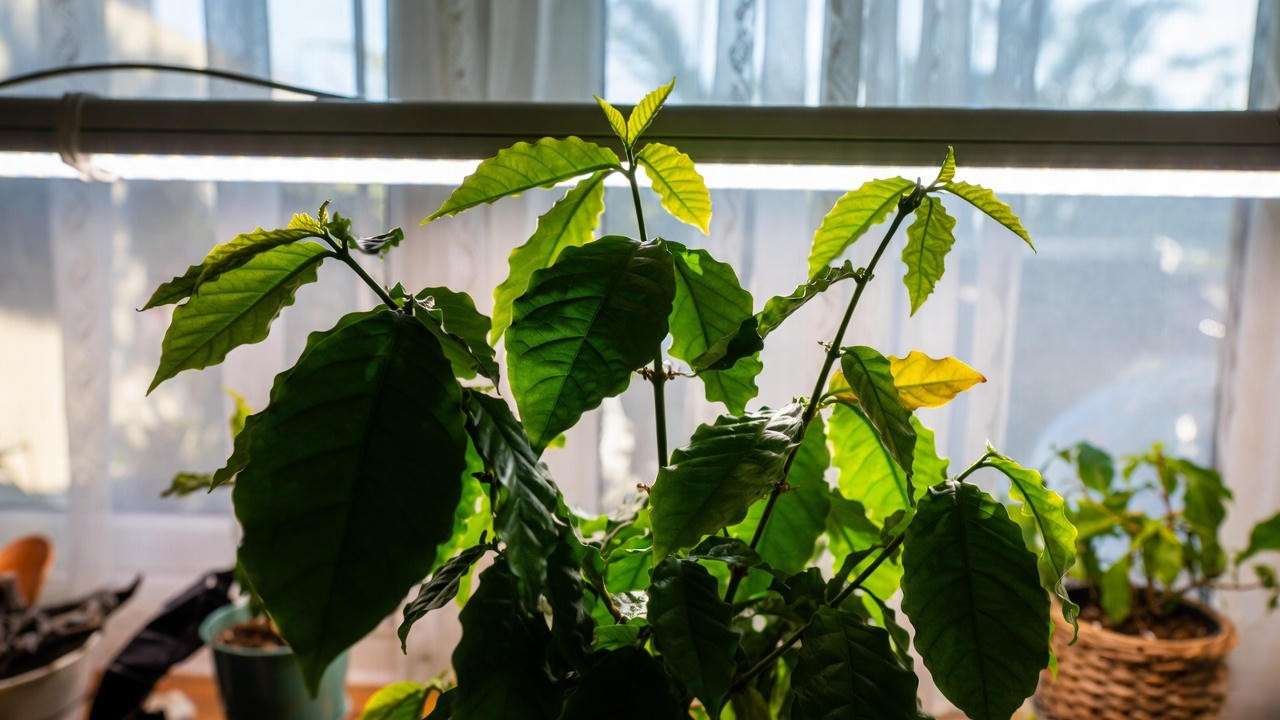
Light is the single biggest reason coffee plants fail indoors.
Exact requirement Bright indirect light equivalent to 1,000–2,500 foot-candles (roughly east-facing window or 4–6 hours gentle morning sun). Direct afternoon sun = scorched leaves in under an hour.
Best windows ranked
- East (perfect)
- West with sheer curtain
- South with 3–6 ft distance or sheer curtain
- North only with strong supplemental grow lights
My grow-light setup (2025 recommendations)
- Barrina T8 4-ft linked strips or Spider Farmer SF-1000 (dimmable)
- Hang 12–18″ above foliage
- 12–14 hours daily
- PPFD target: 200–400 µmol/m²/s at leaf level
Pro tip: If new leaves are pale and stretched → more light. If leaves have brown patches or bleached spots → too much direct sun.
Soil, Pot, and Root Happiness — Get This Right or Lose Your Plant 🪴
Coffee plants hate wet feet. In the cloud forests, they grow in loose, volcanic soil that drains in seconds. Replicate that, and you’ll have a happy plant for decades.
My bullet-proof coffee plant soil recipe (I’ve used this on 30+ plants)
- 40 % high-quality indoor potting mix (FoxFarm Ocean Forest or similar)
- 30 % orchid bark or fine fir bark
- 20 % perlite or pumice
- 10 % worm castings or well-aged compost
This mix stays airy, drains instantly, yet holds just enough moisture. pH ends up around 6.0–6.5 — perfect.
Store-bought alternatives that work
- Cactus/succulent mix + 20 % extra perlite
- African violet mix lightened with bark
- Rosy Soil Indoor Potting Mix (my current lazy-day favorite)
Pot choice is non-negotiable Terracotta or unglazed clay every single time. Plastic traps moisture and is the #1 cause of root rot in coffee plants. Go one size up from nursery pot (e.g., 6″ → 8–10″) and make sure it has a drainage hole the size of a quarter.
Repotting timing & my secret for bushier plants
- Repot only in early spring when new growth appears
- Bare-root and gently tease/prune circling roots by 20–30 % — this triggers massive branching
- Top-dress with worm castings every spring instead of full repotting once the plant is >4 ft
Watering Mastery — Never Kill Your Coffee Plant Again 💧
Overwatering kills more coffee plants than every pest combined.
The only schedule you need
- Spring–summer: water when the top 2 inches are dry (roughly every 7–10 days)
- Autumn–winter: let top 3–4 inches dry (every 14–21 days)
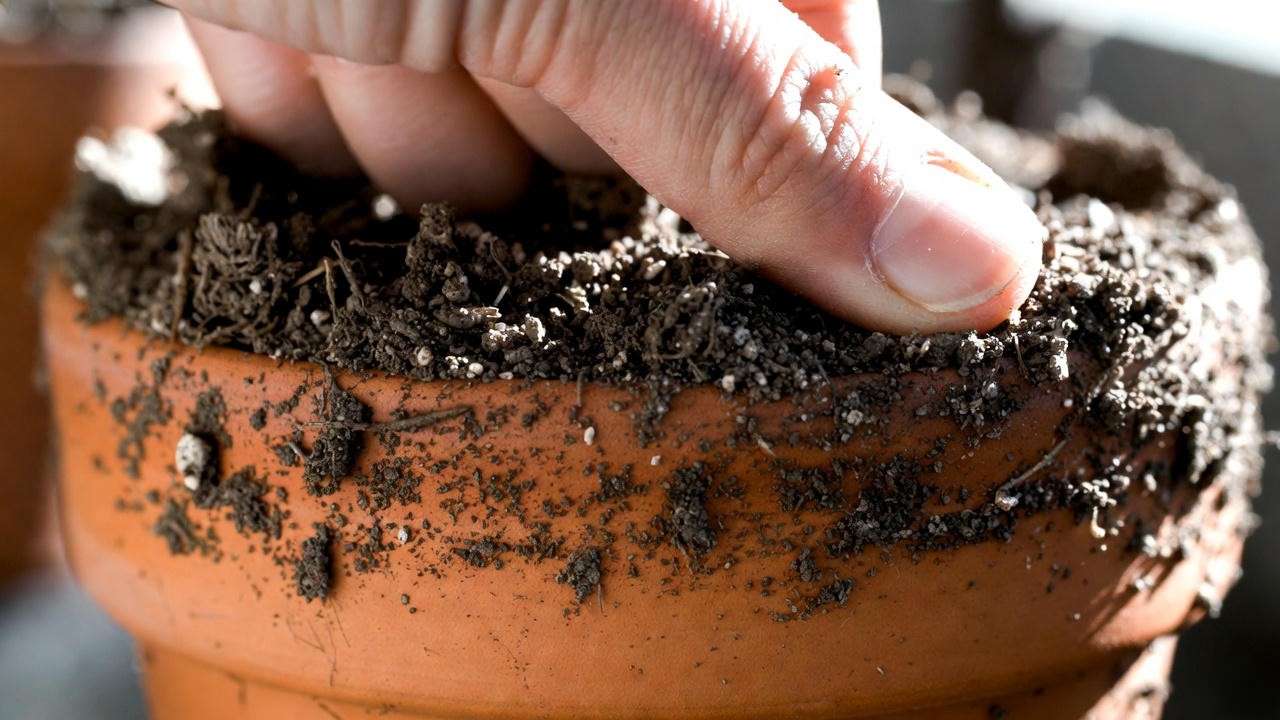
- Always use the “knuckle test” — stick your finger in; if soil sticks, wait.
Overwatering vs underwatering cheat sheet
- Overwatering → yellow lower leaves, soggy soil, fungus gnats, stem mush
- Underwatering → crispy brown tips/edges, drooping but soil bone-dry
Water quality matters Tap water high in chlorine/chloramine or salts = brown leaf tips in 3–6 months. Let tap water sit 24 hrs or, better yet, use rainwater, distilled, or reverse-osmosis water. I collect rainwater in barrels — my plants grow 40 % faster.
Bottom-watering hack Place pot in a saucer of water for 20–30 min once a month. Forces even moisture and flushes salts.
Humidity & Temperature — Recreate the Cloud Forest at Home 🌫️
Arabica evolved at 18–26 °C (65–80 °F) and 60–80 % humidity. Most homes are 30–40 % in winter — spider-mite city.
Ideal ranges
- Day: 20–26 °C (68–79 °F)
- Night: never below 15 °C (59 °F)
- Humidity: 50 % minimum, 70 % ideal
5 humidity hacks that actually work
- Cool-mist humidifier on a smart plug (Inkbird controller = game changer)
- Large pebble tray with water just below pebbles
- Group with other plants (transpiration gang)
- Glass cloche or IKEA greenhouse cabinet for young plants
- Daily misting (least effective long-term but makes leaves shiny for photos)
Winter survival tip Keep 3–5 ft away from heating vents. A $15 thermo-hygrometer is the best $15 you’ll ever spend.
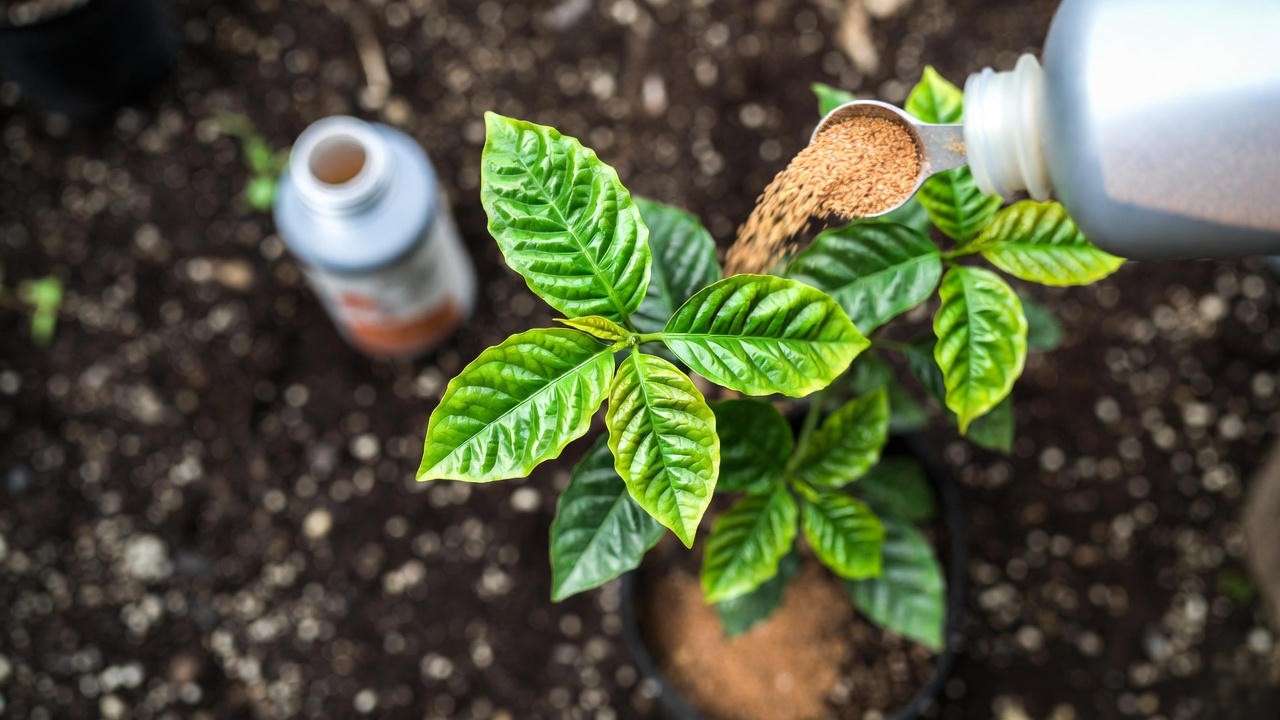
Fertilising for Glossy Leaves and Actual Coffee Beans 🌱✨
Coffee plants are light-to-moderate feeders, but the right nutrients trigger flowering.
My exact fertiliser routine
- March–September: every 2 weeks with balanced liquid (e.g., Dyna-Gro Foliage-Pro 7-9-7 or Jack’s 20-20-20 at ½ strength)
- June–August: switch one feeding per month to high-potassium bloom booster (0-10-10 or similar) — this is the flower trigger
- October–February: zero fertiliser (plant is semi-dormant)
Organic option Alternate worm-castings tea + liquid kelp + fish emulsion. Slightly slower growth but incredible flavour in the beans.
The coffee-ground myth Used coffee grounds acidify soil too much and can cause nitrogen lockout. Compost them instead.
Pruning & Shaping — Turn a Leggy Stick into a Bushy Beauty ✂️🌿
Without pruning, coffee plants grow tall, skinny, and top-heavy — think awkward teenager phase.
When to prune Anytime you see new growth in spring/summer. Never prune in autumn/winter; the plant needs every leaf for energy storage.
My 3-step method for maximum bushiness
- Cut the main stem just above a leaf node at desired height (usually 18–24″ for first prune).
- Remove any weak/bottom branches completely.
- Tip-prune every new shoot once it has 4–6 leaves — this forces two new branches every time.
After 2–3 cycles, you’ll have a gorgeous, full shrub instead of a stick.
Propagation bonus Those pruned tips root in water or moist perlite in 4–6 weeks. Dip in cinnamon (natural antifungal) → 95 % success rate in my kitchen window.
Flowers, Cherries, and Harvesting Your Own Coffee Beans! ☕🌸
This is why we’re really here.
What triggers flowering
- Plant age: minimum 3–4 years (sometimes 2 with perfect care)
- Mature size: at least 4–5 ft and 30+ leaf nodes
- Cool night temps: 15–18 °C (59–64 °F) for 4–6 weeks in late winter
- Potassium boost + 14-hour days
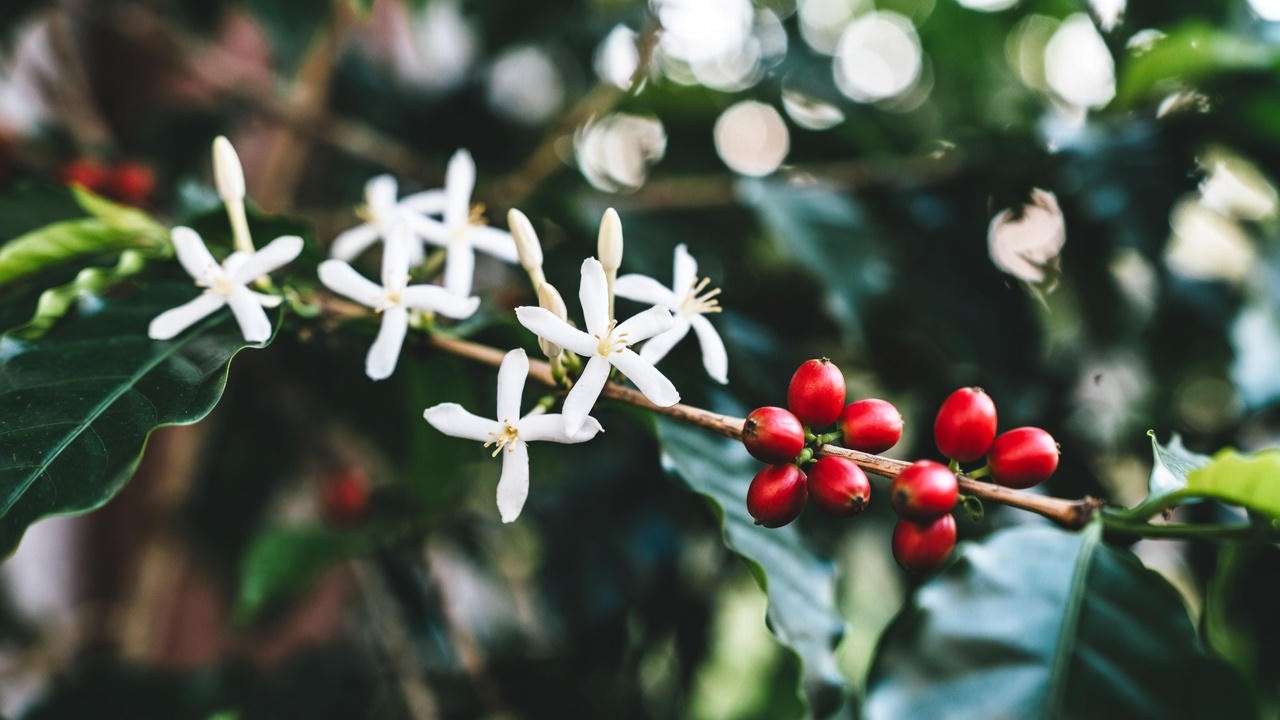
Hand-pollination (because bees don’t visit your living room) Flowers last only 2–3 days. Use a tiny paintbrush or cotton swab — gently dab the centre of each flower in the morning. One plant can self-pollinate, but success jumps from ~20 % to 80 % with your help.
Timeline from flower to coffee
- Day 0: jasmine-scented white flowers
- Week 2–4: tiny green “pins”
- Month 3–6: green cherries grow to olive size
- Month 7–9: cherries turn yellow → red → deep crimson
- Harvest when 90 % of cherries on a branch are deep red and slightly soft.
Home processing — wet method (my preferred)
- Squeeze pulp off the beans (wear gloves — it’s messy!)
- Ferment beans in water 24–48 hrs (changes flavour dramatically)
- Rinse until water runs clear
- Dry on screens for 2–4 weeks until parchment cracks
- Hull parchment, roast in a popcorn popper or oven at 220 °C for 12–18 min
- Rest beans 24–48 hrs, then brew the freshest coffee of your life.
One mature plant = 300–800 cherries → ~½–1 lb roasted coffee per year. That’s 50–100 perfect cups.
Common Problems & How to Fix Them FAST 🆘
Brown leaf tips/edges → low humidity or salt buildup. Leach pot with 3× water volume + raise humidity. Yellow lower leaves → normal aging (1–2 per month) OR overwatering. Check roots. Sudden leaf drop → cold draught, repotting shock, or root rot. Keep temps stable. Spider mites → tiny webs + stippling. Shower plant + 3× neem oil spray 7 days apart. Scale → brown bumps on stems. Alcohol swab + systemic imidacloprid if severe. No flowers after 4+ years → not enough light, potassium, or cool nights. Fix all three.
Year-Round Care Calendar (Printable Checklist) 📅
| Month | Light | Water | Fertiliser | Other Tasks |
|---|---|---|---|---|
| Jan–Feb | 12–14 h | Every 3 weeks | None | Cool nights for flower trigger |
| Mar–Apr | 14 h | Every 10 days | Start feeding | Repot & prune |
| May–Aug | Max natural | Every 7 days | Every 2 weeks | Hand-pollinate flowers |
| Sep–Oct | 12–14 h | Every 10–14 | Last feed Sep | Harvest ripe cherries |
| Nov–Dec | 12–14 h | Every 3 weeks | None | Protect from dry heat |
Expert Tips from 8+ Years of Growing Coffee Plants Indoors 🏆
- Dust leaves monthly — increases photosynthesis 20–30 %
- Sprinkle cinnamon on fresh cuts = zero fungal issues
- Use banana-peel water (soak peels 48 h) for natural potassium boost
- Run a fan 2–4 h daily = stronger stems, fewer pests
- Rotate pot ¼ turn weekly for even growth
FAQ ☕
Q: How tall do coffee plants grow indoors? A: 4–7 ft with pruning; up to 10 ft if you let them go wild.
Q: Can I grow a coffee plant in low light? A: It will survive, but won’t flower or produce beans. Bright indirect is non-negotiable.
Q: Why is my coffee plant not flowering? A: Usually lack of light, potassium, or cool nights. See checklist above.
Q: Are coffee plants toxic to cats/dogs? A: Unroasted beans and cherries contain caffeine — toxic in large amounts. Ripe red cherries are the biggest risk. Keep out of reach or grow high.
Q: How many beans can one indoor plant produce? A: ½–1 lb roasted coffee per year once mature (50–100 cups).
Q: Can you grow coffee from store-bought beans? A: Roasted = dead. Raw green beans sometimes work but take forever and low germination.
Final Brew ☕❤️
Eight years ago I brought home a half-dead $12 coffee plant from a hardware store. Today I have a jungle corner that perfumes my entire apartment with jasmine every spring and gives me the freshest coffee on earth every winter.
Your first homegrown cup — bright, floral, tasting like nothing in any café — is absolutely worth every brown leaf you’ll ever fix along the way.
Now go water your coffee plant (or order one — I’ll help you pick the perfect starter). Drop your progress photos in the comments; I answer every single one.
Happy growing.











