
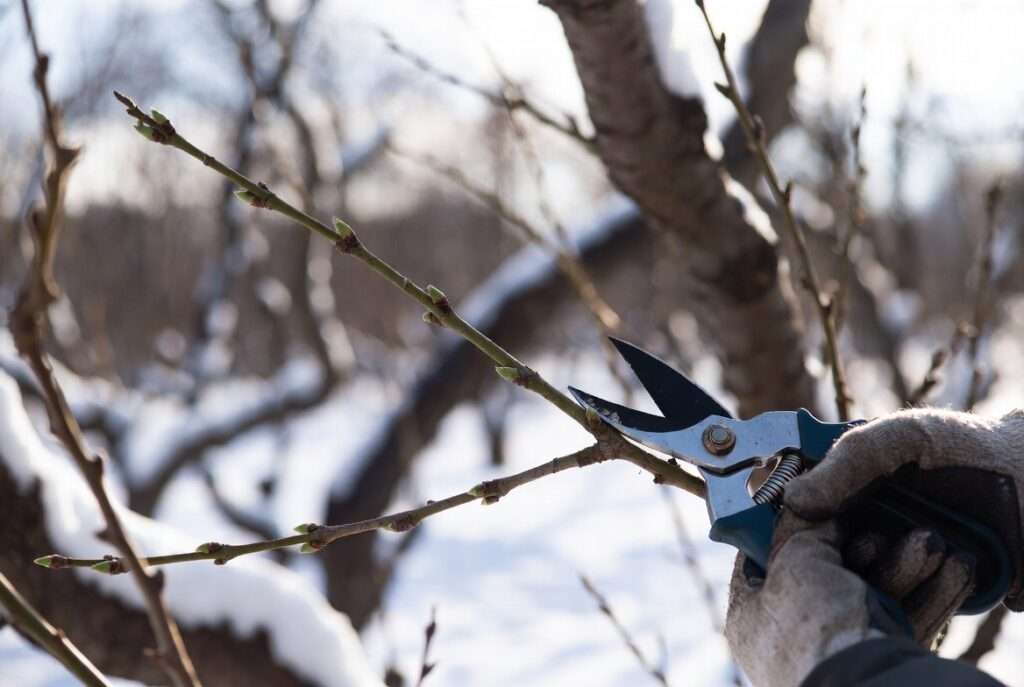
Imagine turning a single beloved fruit tree into a diverse backyard orchard bursting with heirloom apples, juicy peaches, or rare cherry varieties — all starting from a handful of carefully chosen winter branches. For home gardeners, backyard orchardists, and passionate tree enthusiasts, collecting scion wood in winter is the essential first step that unlocks the magic of grafting. This dormant-season technique lets you propagate true-to-type varieties, preserve rare genetics, boost disease resistance, and create multi-graft “fruit cocktail” trees that produce an abundance of different fruits on one plant. 🍎🌳
In this comprehensive guide, you’ll discover the science behind winter collection, the best timing by climate and species, how to select premium scion wood, precise cutting and labeling methods, foolproof storage techniques, and expert tips to dramatically improve your grafting success rates. Whether you’re a beginner eager to try your first graft or an experienced propagator looking to refine your skills, this article delivers practical, actionable advice grounded in horticultural best practices and real-world experience from university extension guidelines and seasoned grafters.
By following these steps, you’ll avoid common pitfalls like desiccation, mold, or premature bud break that ruin scions, and instead harvest vigorous material ready for spring success. Let’s dive deep into making your winter pruning sessions twice as productive and rewarding!
Why Collect Scion Wood in Winter? The Science and Benefits 🌡️
Trees enter a state of dormancy during winter, a protective phase where growth halts, energy reserves concentrate in the wood and roots, and buds remain tightly closed. This biological timing makes collecting scion wood in winter ideal for grafting because the scion (the upper variety portion) stays inactive while the rootstock can begin active growth in spring, promoting strong vascular union formation.
Key advantages include:
- Higher viability and storage potential — Dormant wood withstands months of cool storage without sprouting or drying out excessively.
- Cost-effective propagation — Multiply favorite varieties without buying expensive nursery stock.
- Preserving genetics — Maintain heirloom, disease-resistant, or locally adapted cultivars that might otherwise be lost.
- Creating custom trees — Graft multiple varieties onto one rootstock for extended harvest seasons and space efficiency.
- Sustainability boost — Reduce reliance on commercial nurseries and support biodiversity in home orchards.
From my years working with fruit tree propagation, I’ve seen gardeners transform modest yards into productive mini-orchards simply by mastering winter scion collection. University extensions like Michigan State University and Missouri IPM emphasize that dormant collection aligns perfectly with the cambium’s readiness for spring grafting, leading to take rates often exceeding 80-90% when done correctly.
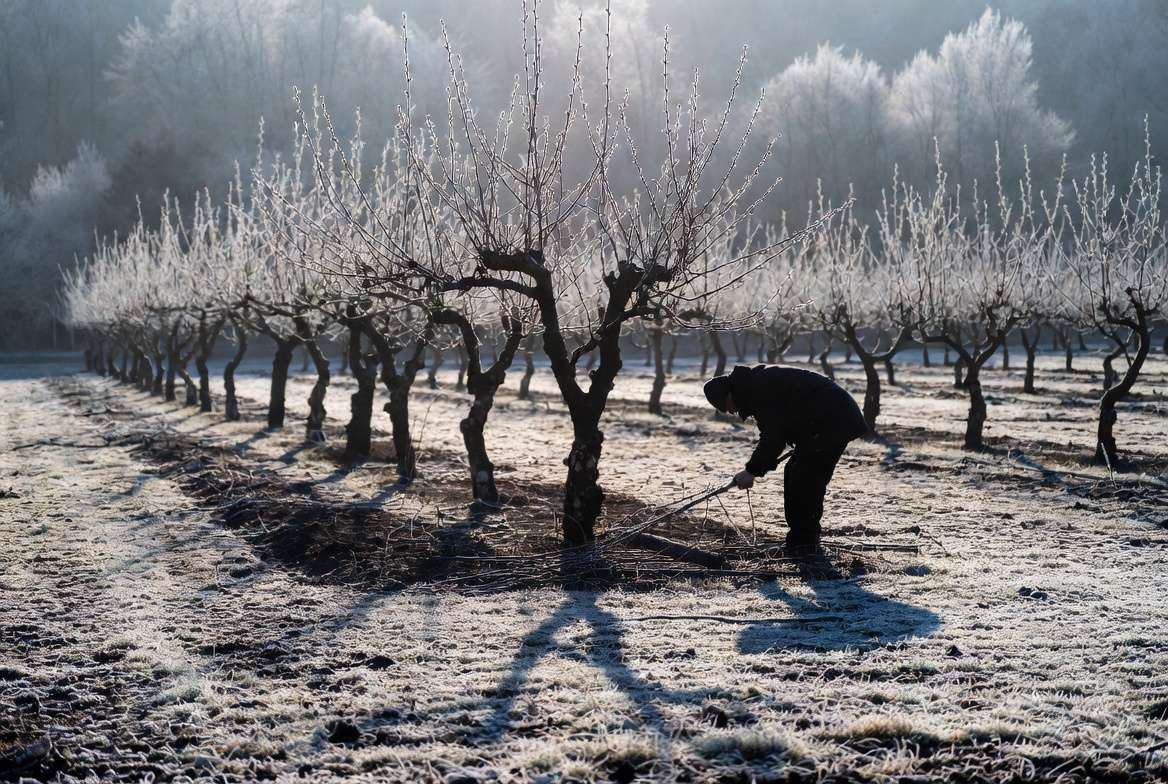
Winter collection also pairs beautifully with routine pruning, turning “waste” branches into valuable propagation material while improving tree structure and airflow.
When Is the Best Time for Collecting Scion Wood in Winter? ⏰
Timing is everything in collecting scion wood in winter. The goal is to harvest while the tree is fully dormant — after sufficient chilling hours but well before bud swell signals the start of spring growth.
General window: Late December through early March in temperate climates, depending on your USDA hardiness zone and local weather patterns. Avoid cutting during extreme cold snaps below 20°F (-6°C), as this can damage tender tissues.
Species-specific guidelines:
- Stone fruits (peaches, plums, apricots, cherries): Collect earlier, often January, because they tend to break dormancy sooner in milder winters.
- Pome fruits (apples, pears, quince): Later, typically February to early March, as they require more chilling and stay dormant longer.
- Nuts (walnuts, chestnuts, etc.): Similar to pome fruits, but check for regional variations.
In warmer southern zones or mild winters, collect earlier to prevent early bud activity. In colder northern areas (like Michigan or Maine), late January to mid-March works well once the deepest cold has passed. Always monitor for bud swell — pointed vegetative buds should remain tight and inactive.
Signs the tree is ready:
- No visible green or swelling at bud bases.
- Wood feels firm and dormant (not brittle from extreme freeze).
- Recent pruning or natural leaf drop has occurred.
Pro tip: Track your local chill hours and last frost dates. In regions like Toronto or the Pacific Northwest, early March collections often yield fresher scions with less long-term storage risk.
Selecting the Right Scion Wood: Quality Matters Most 🔍
Not all branches make good scions. Selecting high-quality material directly impacts grafting success and future fruit production.
Characteristics of ideal scion wood:
- Diameter: Pencil-thick (¼ to ½ inch / 6–12 mm) — matches most rootstocks perfectly for strong unions.
- Length: Collect 12–24 inch (30–60 cm) lengths initially; you can cut shorter (6–10 inches with 3–4 buds) later for bench grafting.
- Age: One-year-old terminal growth (last season’s shoots) — straight, with well-spaced internodes.
- Buds: Narrow, pointed vegetative (leaf) buds preferred over plump, round flower/fruit buds. Focus on the lower two-thirds of the shoot for higher carbohydrate reserves that fuel initial growth after grafting.
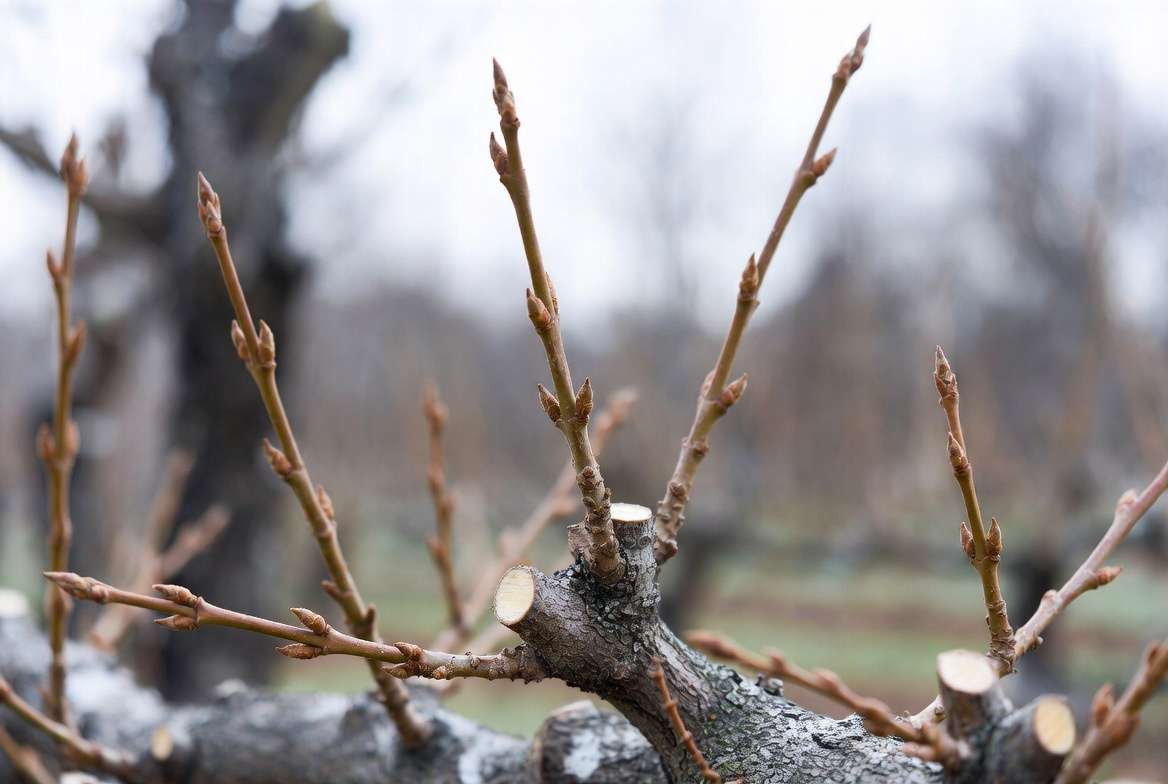
Where to cut and what to look for:
- Choose healthy, vigorous branches from the upper or outer canopy that received good sunlight (these produce stronger buds).
- Avoid water sprouts (vigorous upright shoots from older wood), suckers from below the graft union, or diseased/insect-damaged wood.
- Prioritize branches that have fruited successfully in previous seasons — tag them during summer harvest for easy winter identification.
- Ensure the source tree is true-to-type and disease-free.
Expert insight: Terminal shoots with short internodes and mature buds in the basal section often perform best because they carry more stored energy. Thin or overly thick wood can work but requires more skill in matching to rootstock.
Step-by-Step: How to Collect Scion Wood in Winter ✂️
Follow this professional process for clean, viable scions:
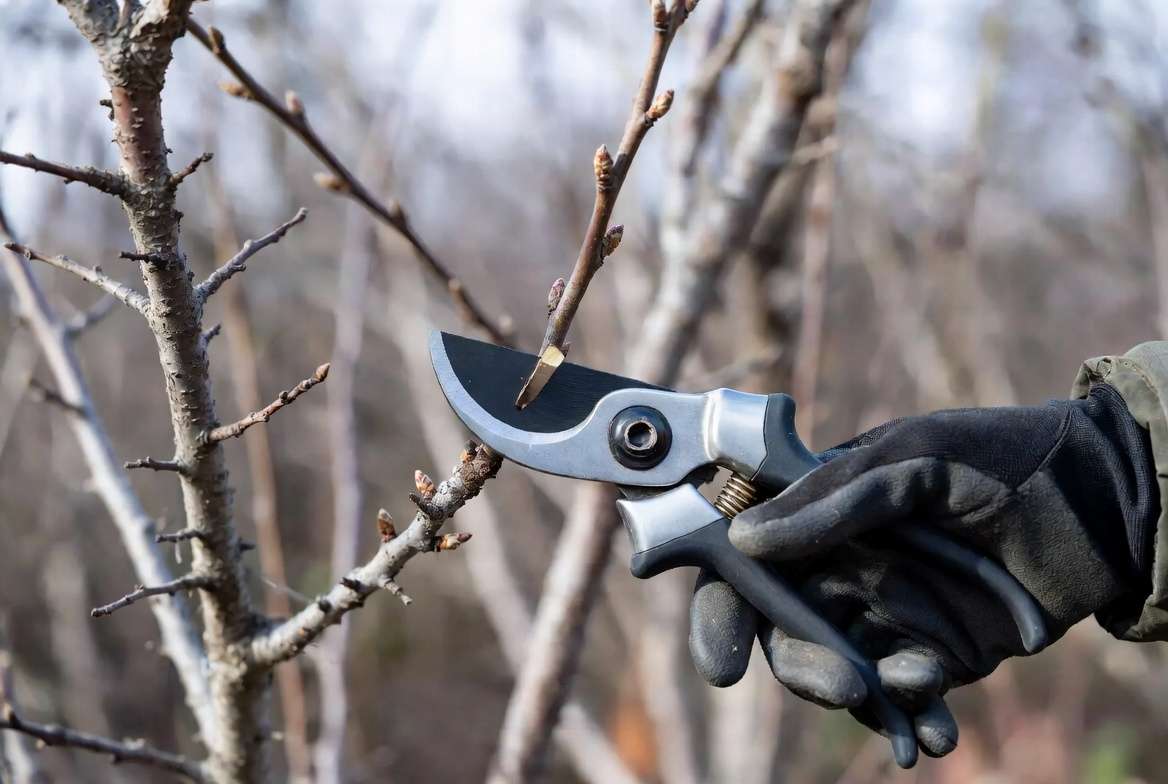
- Prepare your tools — Sharp, sterilized bypass pruners or grafting knife, rubbing alcohol or bleach solution for disinfection, permanent marker and labels, plastic bags, and damp paper towels. Wear gloves for safety.
- Choose the day — Collect on a mild, dry winter day when temperatures are above freezing but buds remain dormant.
- Make clean cuts — Cut scions at a 45-degree angle above the top bud and a straight cut at the base. Take longer pieces initially to allow trimming damaged ends later.
- Label immediately — Note variety name, collection date, and source tree. Accurate labeling prevents mix-ups, especially when building a diverse collection.
- Handle gently — Place cut ends in water temporarily if needed, then wrap in slightly damp (not wet) paper towels to prevent drying. Avoid excessive moisture that invites mold.
Sterilize tools between different trees to prevent disease transmission. Work efficiently — prolonged exposure to wind or sun can desiccate fresh cuts.
Storing Scion Wood Successfully Until Grafting Time ❄️
Proper storage keeps scions dormant and hydrated for weeks or months until grafting season.
Recommended methods:
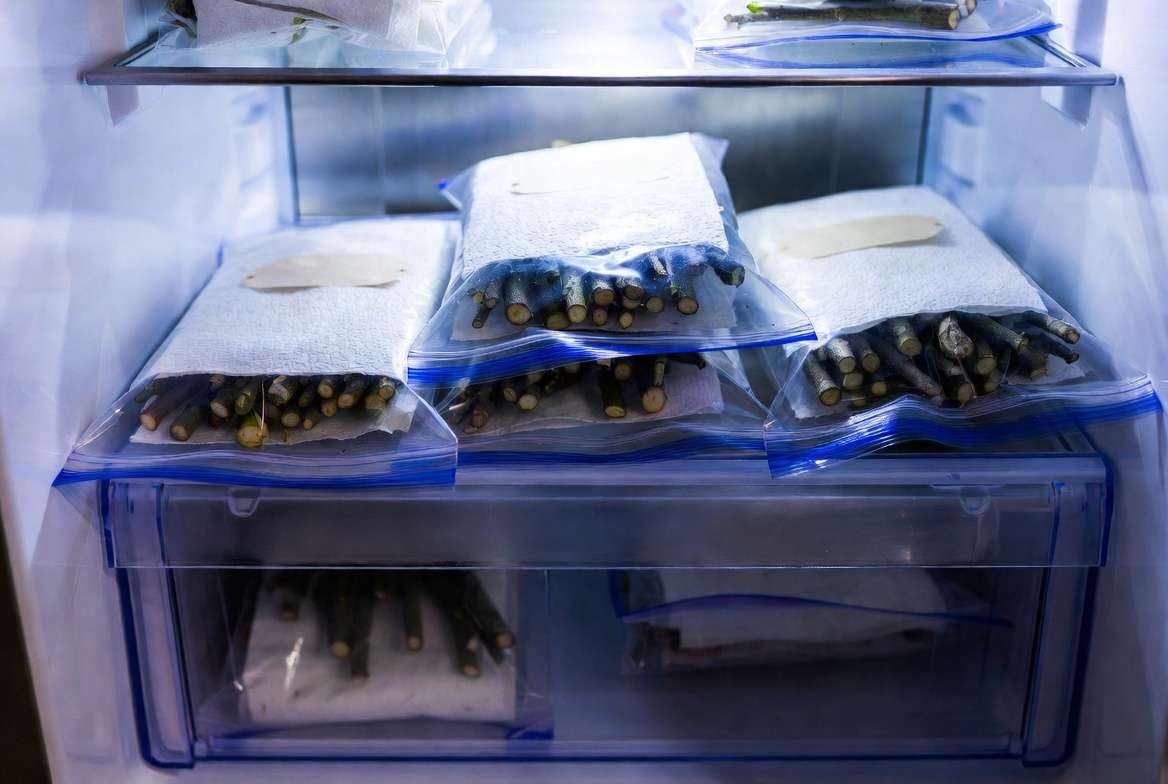
- Refrigerator storage (most common for home growers): 32–38°F (0–3°C). Wrap bundles in lightly damp paper towels or newspaper, place in sealed ziplock bags (or triple-bag if near fruit). Store in the crisper drawer away from ethylene-producing produce like apples or bananas, which can trigger premature sprouting.
- Cool basement, garage, or root cellar: Similar temperatures in a dark, stable environment.
- Moisture balance: Aim for high humidity without standing water — a few condensation droplets inside the bag indicate ideal conditions.
How long can scion wood be stored?
- Apples and pears: Up to 3–4 months or more with good conditions.
- Stone fruits: Often shorter (4–8 weeks) due to earlier dormancy break.
Common storage mistakes to avoid:
- Freezing temperatures (damages buds).
- Temperature fluctuations (causes condensation and mold).
- Overly wet or completely dry conditions.
- Storing near ripening fruit.
Check scions every 1–2 weeks, remove any showing mold or sprouting, and refresh damp towels if needed. Some grafters dip cut ends in wax or use Parafilm for extra protection against desiccation.
Common Mistakes to Avoid When Collecting Scion Wood in Winter ❌
Even experienced gardeners can lose valuable scions due to small oversights. Here are the most frequent errors and how to sidestep them for reliable results.
Timing errors that reduce viability:
- Collecting too early during extreme cold snaps (below 20°F / -6°C) can cause internal tissue damage.
- Waiting too late until buds begin swelling leads to premature growth in storage and poor graft take.
- Ignoring species differences — stone fruits often need earlier collection than pome fruits.
Poor selection and cutting issues:
- Choosing water sprouts or overly vigorous upright shoots with low carbohydrate reserves.
- Taking wood with mostly fruit/flower buds instead of narrow vegetative buds.
- Cutting from diseased, shaded lower branches, or suckers below the graft union (these won’t be true-to-type).
- Using wood that’s too thin, too thick, or from unpruned old trees with short growth.
Storage failures and prevention:
- Allowing scions to dry out completely or become overly wet (mold risk).
- Storing at fluctuating temperatures or near ethylene-producing fruits like apples and bananas, which trigger early sprouting.
- Freezing the scions (home freezers are too cold and damage buds).
- Failing to label clearly, leading to mix-ups during grafting season.
Legal and ethical considerations:
- Respect patented varieties — many modern fruit trees are protected; propagating them for sale may violate plant patent laws. Stick to heirlooms or your own trees for personal use and sharing.
By avoiding these pitfalls, your grafting success rate can improve significantly. In my experience propagating dozens of varieties over the years, the biggest difference comes from meticulous selection and consistent cool-moist storage.
After Collection: Preparing Scions for Grafting and Beyond 🌿
Once winter passes and spring grafting season arrives, proper preparation ensures your stored scions perform at their best.
Inspecting and preparing scions before use:
- Remove from storage and check for firmness, plump buds, and no mold or desiccation.
- Trim any dried or damaged ends with a sharp, sterilized knife.
- Cut scions to final length (usually 6–10 inches with 3–5 good vegetative buds).
- Rehydrate slightly if needed by standing cut ends in clean water for a few hours (not overnight).
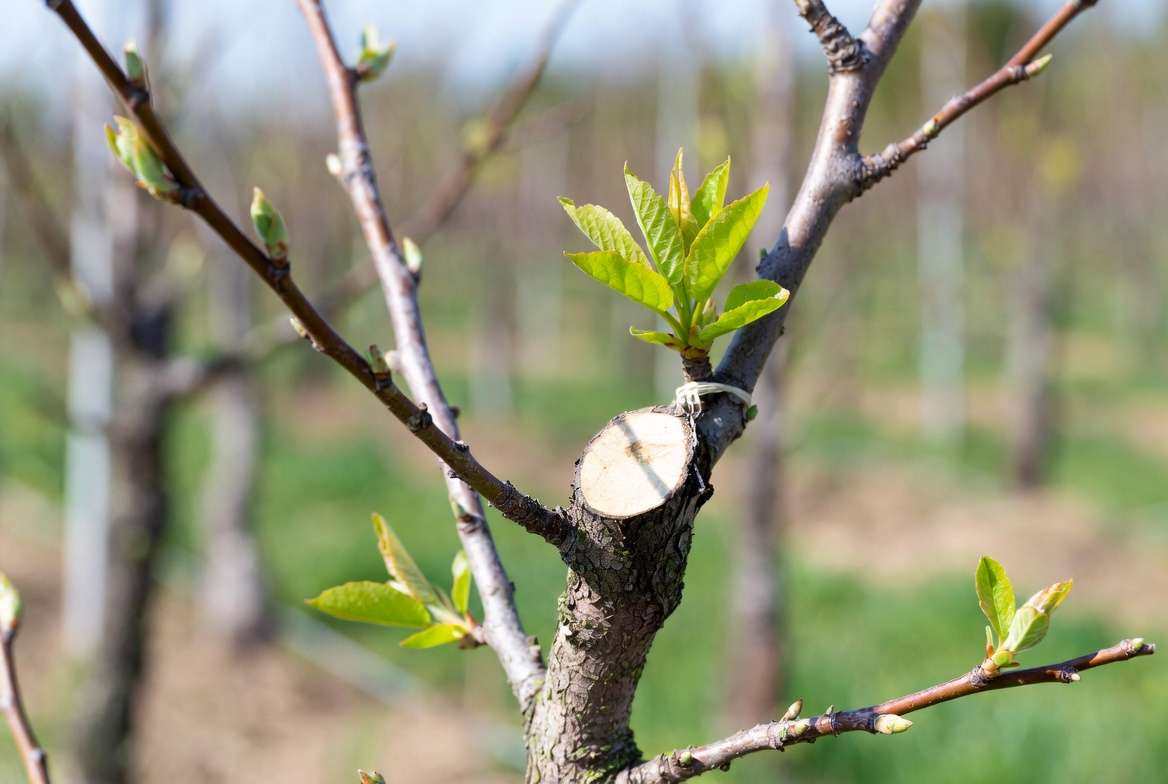
Matching scion to rootstock basics:
- Aim for similar diameters between scion and rootstock for best cambium alignment.
- Use compatible combinations — most apples graft well on apple rootstocks, but cross-genus grafts are riskier.
Quick overview of popular grafting techniques:
- Whip-and-tongue graft: Excellent for bench grafting dormant scions and rootstocks of similar size; provides strong mechanical support.
- Cleft graft: Ideal for larger rootstocks or top-working mature trees.
- Bark graft: Best when bark is slipping in spring.
For detailed step-by-step instructions on these methods, check related guides on fruit tree grafting techniques and post-graft care.
Post-graft care for higher success rates:
- Seal graft unions with grafting tape, wax, or Parafilm to prevent drying.
- Provide shade and consistent moisture to the new union.
- Monitor for suckers from the rootstock and remove them promptly.
- Protect young grafts from extreme weather, animals, and pests.
Successful grafting rewards patience and attention to detail — many first-time grafters see 70-90% take rates when following these principles.
Advanced Tips and Expert Insights for Higher Grafting Success Rates 🚀
To elevate your results beyond basic methods, consider these advanced strategies drawn from extension research and long-term orchard experience.
Improving success with pre-girdling or other techniques:
- Some grafters girdle (remove a ring of bark) selected branches the previous summer to concentrate carbohydrates in the lower section, creating premium scion wood.
- Collect from the lower two-thirds of the shoot where energy reserves are highest.
Climate adaptation: Collecting in mild winters or warmer zones:
- In southern or mild-winter areas (like parts of Dhaka or warmer USDA zones), collect earlier and minimize storage time to avoid early bud break.
- In very cold regions, wait until after the hardest freezes but before any thaw-induced swelling.
Scaling up: Collecting for scion exchanges or community orchards:
- Join local scion exchanges or online fruit tree communities to share and acquire rare varieties.
- Label thoroughly and collect extra — one successful graft can multiply into many future trees.
- For mailing scions, use sturdy packaging with damp (not wet) material and ship quickly in cool conditions.
Sustainability angle: Preserving heirloom and rare varieties:
- Collecting scion wood in winter plays a vital role in conserving genetic diversity. Many old orchard varieties disappear without active propagation.
- By saving wood from productive, disease-resistant, or flavorful trees, you contribute to resilient home food systems and biodiversity.
Additional pro tips:
- Use Parafilm or grafting wax on cut ends during long storage for extra moisture protection.
- For stone fruits prone to drying, shorter storage periods work better.
- Track your results year to year — note variety, collection date, storage method, and graft success to refine your personal technique.
Frequently Asked Questions (FAQs) About Collecting Scion Wood in Winter ❓
Can I collect scion wood on a warm winter day? Yes, as long as the tree remains fully dormant with no bud swell. Mild days above freezing are actually more comfortable and less stressful on the tree than extreme cold.
What if buds start swelling during storage? Remove and use those scions immediately if possible, or discard them. Swollen buds indicate the scion is breaking dormancy and will likely fail to graft well.
Is it okay to collect from very young or old trees? Young trees may lack sufficient one-year growth, while very old trees often produce short or weak new shoots. Moderate-aged, healthy, well-pruned trees usually provide the best material.
How do I transport scions if sharing with friends? Wrap in damp paper towels, place in sealed plastic bags, and keep cool during transport. For mailing, use insulated packaging and ship quickly.
What are the differences between collecting for bench grafting vs. field grafting? Bench grafting (done indoors on dormant material) allows more precise cuts and higher control. Field grafting (on established trees in spring) often uses cleft or bark methods when bark slips. Storage needs are similar, but field grafts may benefit from fresher scions with minimal storage time.
How long can scion wood realistically be stored? Apples and pears: 3–6 months in ideal refrigerator conditions (32–38°F). Stone fruits: often 4–8 weeks. Always prioritize freshness when possible.
Should I avoid water sprouts entirely? Not always — they can provide straight, vigorous wood, but discard excessively lush ones with low stored carbohydrates. Use the more mature basal sections.
Do I need to sterilize tools between every tree? Yes, especially if moving between different species or trees with potential disease history. A quick wipe with alcohol or bleach solution prevents spreading pathogens.
Conclusion: Start Collecting Scion Wood This Winter for a Bountiful Future 🌟
Mastering collecting scion wood in winter opens the door to endless possibilities in your garden or orchard. By understanding dormancy, selecting premium material, cutting carefully, storing properly, and avoiding common mistakes, you’ll set yourself up for high-success grafting season after season.
This seasonal ritual combines practical tree care with the joy of propagation — turning pruning waste into new life, preserving cherished varieties, and creating unique, productive trees tailored to your space and tastes. Whether you dream of a multi-variety apple tree, disease-resistant peaches, or a backyard full of heirloom fruits, the foundation starts with quality dormant scions harvested at the right time.
Take action this winter: Grab your pruners on a mild day, follow the steps outlined here, and watch your grafting success soar. Your future self (and your taste buds) will thank you!
Share your own experiences with collecting scion wood in winter in the comments below — what varieties have you had the most success with? Which storage trick works best in your climate? Subscribe to our plant care and tree care newsletter for more in-depth guides on grafting techniques, seasonal pruning, rootstock selection, and sustainable orchard management.
Happy grafting, and may your unions be strong and your harvests abundant! 🍏🌳✨











