
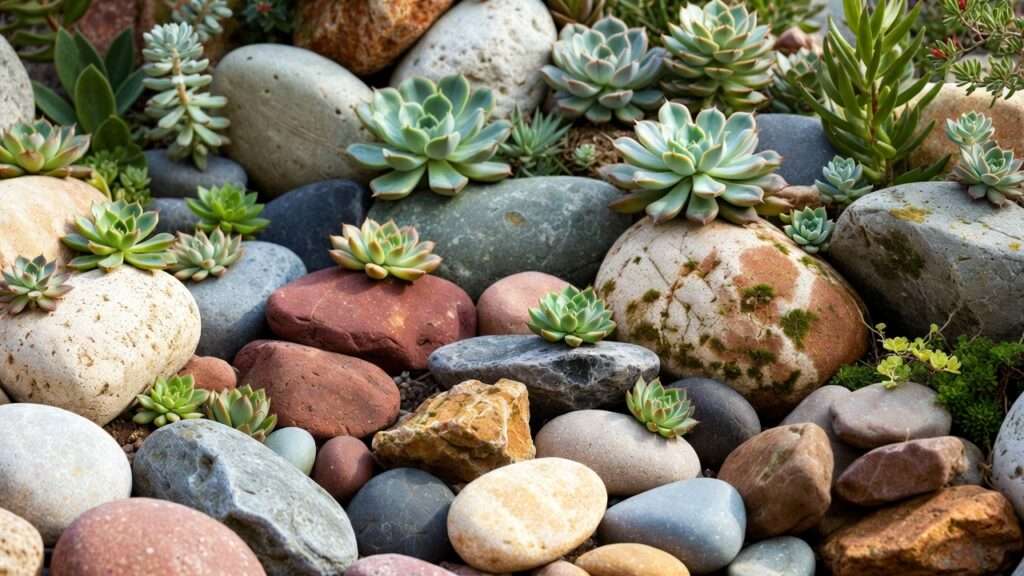
Imagine transforming a plain succulent pot into a breathtaking mini desert landscape that not only looks professionally styled but also helps your plants stay healthier with less effort. That’s the real magic of combining decorative stones and succulents! Whether you’re a beginner dipping your toes into plant care or a seasoned green thumb looking to elevate your displays, this simple yet powerful technique boosts aesthetics while solving common issues like root rot, soil erosion, and pesky pests. 🌵✨
In this ultimate guide, we’ll dive deep into why this combo works wonders, how to choose the right stones, the best succulent varieties to pair them with, step-by-step creation tutorials, pro design tips, maintenance advice, and inspiring examples. By the end, you’ll have everything you need to create thriving, eye-catching arrangements that demand attention—indoors or out. Let’s get started! 💚
Why Combine Decorative Stones and Succulents? The Real Benefits 🏆
Succulents are already low-maintenance stars, but adding decorative stones (often called top dressing or mulch) takes them to the next level. This isn’t just about looks—it’s about smarter plant health and easier care.
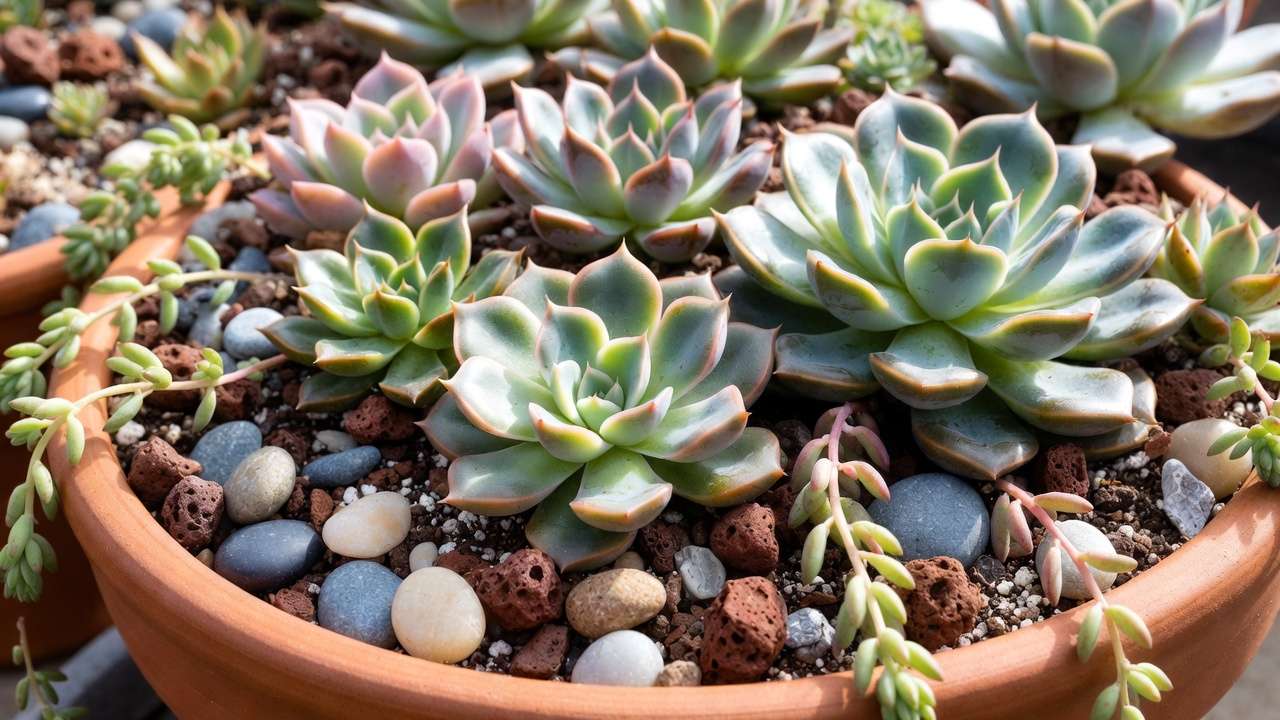
Key Advantages for Plant Health and Longevity 🌱
One of the biggest perks is dramatically improved drainage and reduced risk of root rot—the #1 killer of succulents. Stones allow excess water to flow away quickly while keeping the soil surface drier, preventing fungal issues. They also regulate soil temperature: light-colored stones reflect heat in hot climates (perfect for tropical areas like Bangladesh!), while darker ones absorb warmth to encourage root growth in cooler spots. 🥶🔥
Stones prevent soil splash during watering or rain, stopping erosion and keeping lower leaves clean and dry—no more muddy foliage leading to rot! They deter pests too: a thick layer (at least 1/3 inch) blocks fungus gnats from laying eggs in moist soil, a common indoor headache. Plus, porous options like pumice or lava rock add aeration and trace minerals over time. 🌬️
Aesthetic and Design Power-Ups 🎨
Bare soil looks unfinished, but stones create a polished, professional vibe that mimics natural desert habitats. They enhance succulent colors—think vibrant rosettes popping against contrasting pebbles—and add texture contrast for depth. Your pots or gardens instantly become stunning focal points, whether on a windowsill or in a backyard rockery. Many enthusiasts report their arrangements feel “complete” and more vibrant after adding stones. 📸
Choosing the Perfect Decorative Stones for Succulents 🪨
Not all stones are created equal—pick ones that support drainage and match your setup.
Best Types of Stones and Materials (with pros/cons)
- River pebbles / polished stones — Smooth, natural look; great for indoor pots. Pros: Aesthetic appeal, easy to clean. Cons: Can retain some moisture in humid climates.
- Lava rock / scoria — Porous volcanic rock; excellent for drainage and aeration. Pros: Lightweight, adds minerals, deters pests. Cons: Sharp edges (handle carefully).
- Pumice or perlite chunks — Super airy and lightweight. Pros: Top-tier drainage, ideal for beginners. Cons: Can blow away outdoors.
- Granite, quartz, or colored pebbles — Vibrant accents. Pros: Color variety for creative designs. Cons: Avoid dense ones that hold water.
- Crushed gravel or bonsai top dressing mixes — Versatile and affordable. Pros: Customizable textures. Cons: Ensure inorganic to avoid rot.
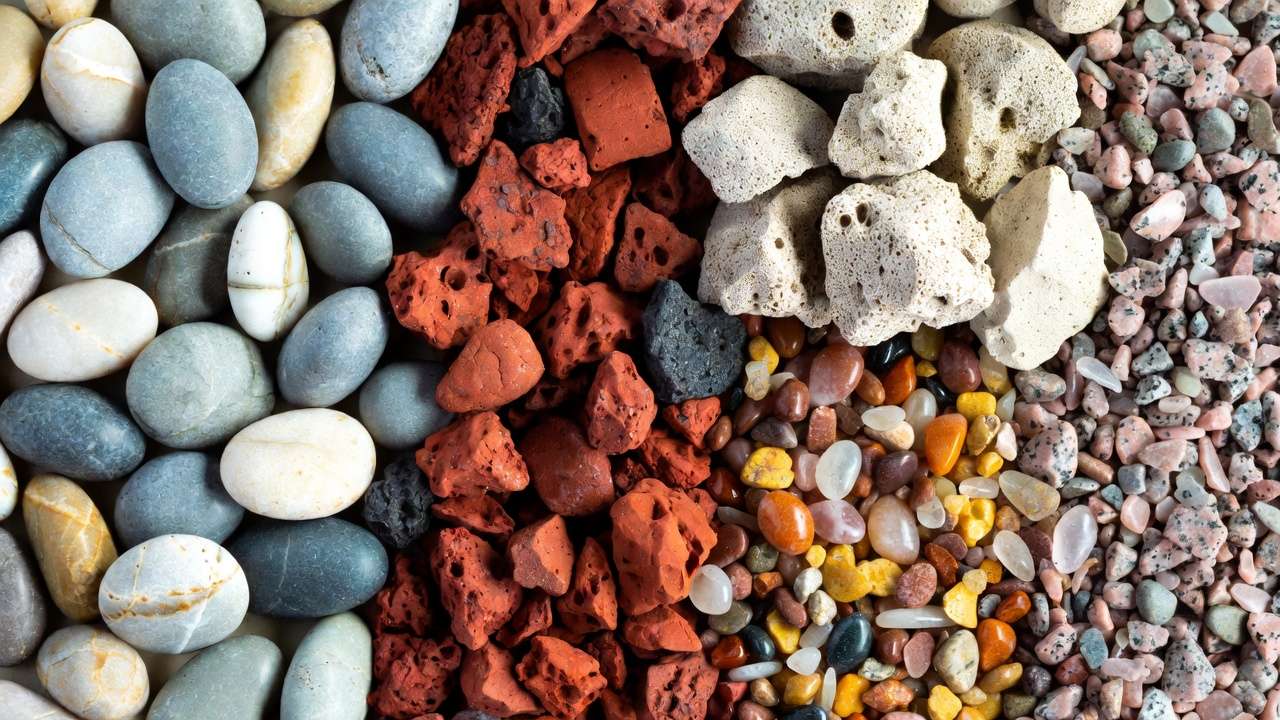
Color Matching Tips Complement succulent hues for harmony: purple stones pair beautifully with Graptoveria or purple-tinged Echeveria, white pumice contrasts green varieties for a fresh look, and earthy reds enhance fiery Aloes. In bright sun, lighter stones prevent overheating roots. 🌈
Size Guide Use larger stones (1/2–1 inch) for bottom drainage layers in pots, and smaller (1/4 inch or pea-sized) for top dressing. Aim for 1/2–1 inch thick top layer—enough to cover soil fully without burying stems.
Expert insight: Skip overly water-retentive dense rocks in humid areas; opt for porous types to keep things airy. Always rinse stones before use to remove dust!
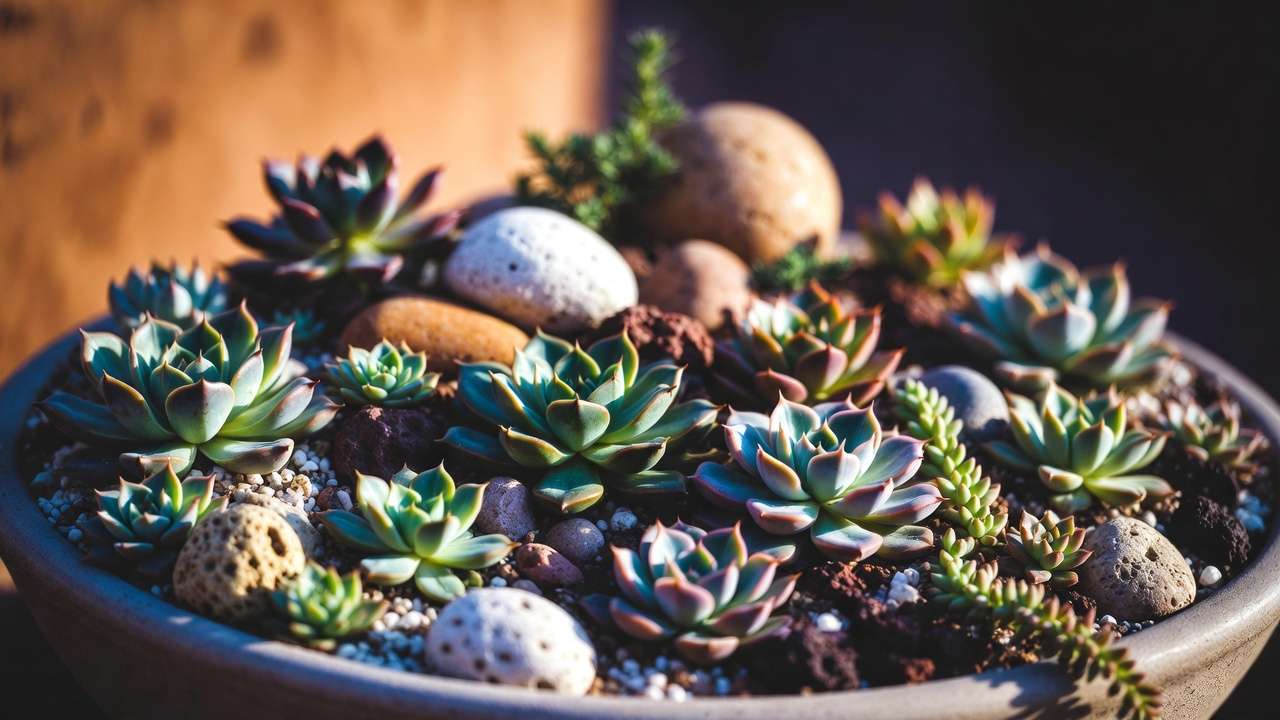
Here are some inspiring examples of succulent arrangements with decorative stones:

These visuals show how stones make colors pop and create that professional finish! 🌟
Essential Succulents That Pair Beautifully with Stones 🌵
Top Succulent Varieties for Stone Arrangements
- Rosette types — Echeveria, Graptopetalum, Sempervivum (Hens and Chicks): Compact and colorful, perfect for pots.
- Trailing/cascading — Sedum, String of Pearls: Drape over edges for dynamic flow.
- Dramatic uprights — Mini Aloe, Agave, Crassula (Jade): Add height and structure.
- Colorful hybrids — Variegated or pastel varieties for visual interest.
Plant + Stone Pairing Ideas
- Ghost Plant (Graptopetalum) + purple pebbles: Ethereal contrast.
- Jade Necklace (Crassula marnieriana) + pink/grey gravel: Subtle elegance.
- Echeveria with lava rock: Rugged, natural desert feel.
- Hens and Chicks + rugged scoria: Cozy alpine vibe.
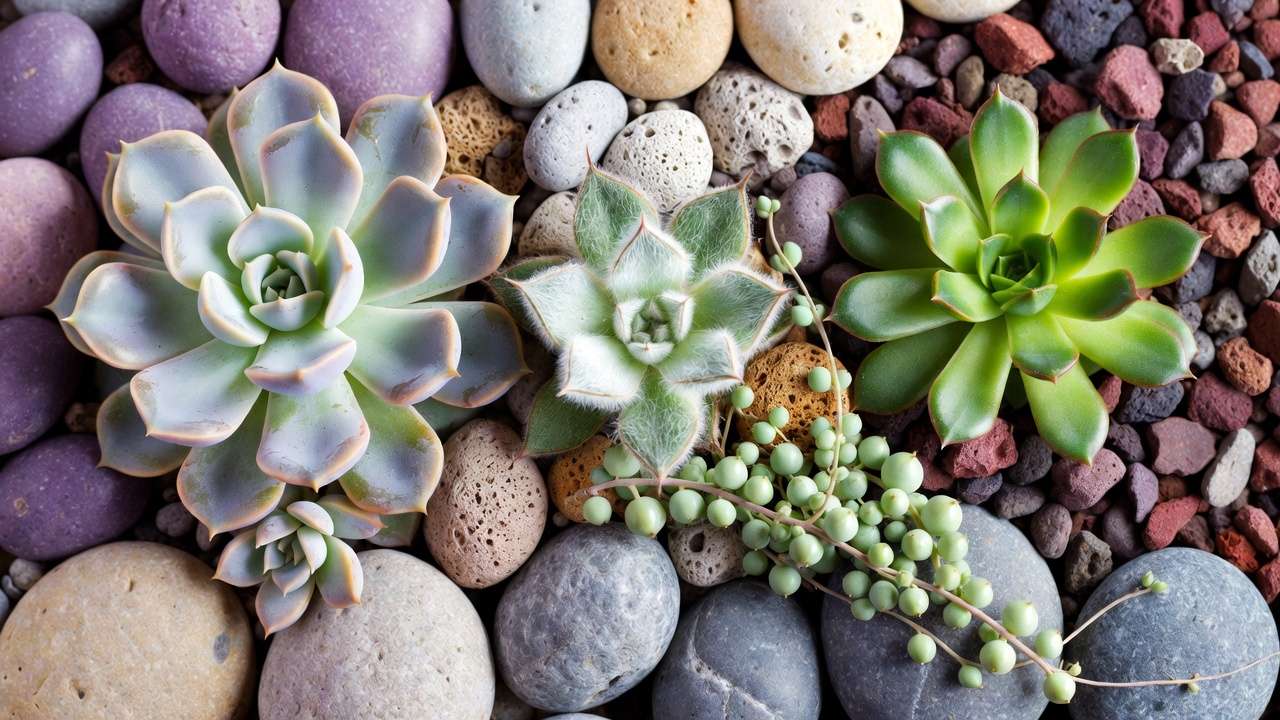
These pairings ensure harmony—stones highlight plant textures without overwhelming them. 🌈
Step-by-Step: How to Create Stunning Succulent + Stone Arrangements 🛠️
Now comes the fun part—actually building your masterpiece! These instructions work for both beginners and experienced growers, and they scale from tiny 4-inch pots to large outdoor rock gardens.
Materials You’ll Need (quick checklist)
- Succulent plants of your choice
- Well-draining cactus/succulent potting mix (or make your own: 50% potting soil + 50% perlite/pumice/sand)
- Decorative stones (top dressing + optional drainage layer)
- Pot/container with drainage holes (essential!)
- Small trowel or spoon
- Tweezers (for precise planting of tiny rosettes)
- Spray bottle for gentle watering
- Optional: activated charcoal (for extra mold prevention), small decorative elements (mini figurines, driftwood)
Basic Pot Arrangement Tutorial (step-by-step)
- Prepare the container Select a pot with at least one drainage hole. If using a decorative container without holes, add a thick bottom layer of stones (1–2 inches) to create a false drainage zone.
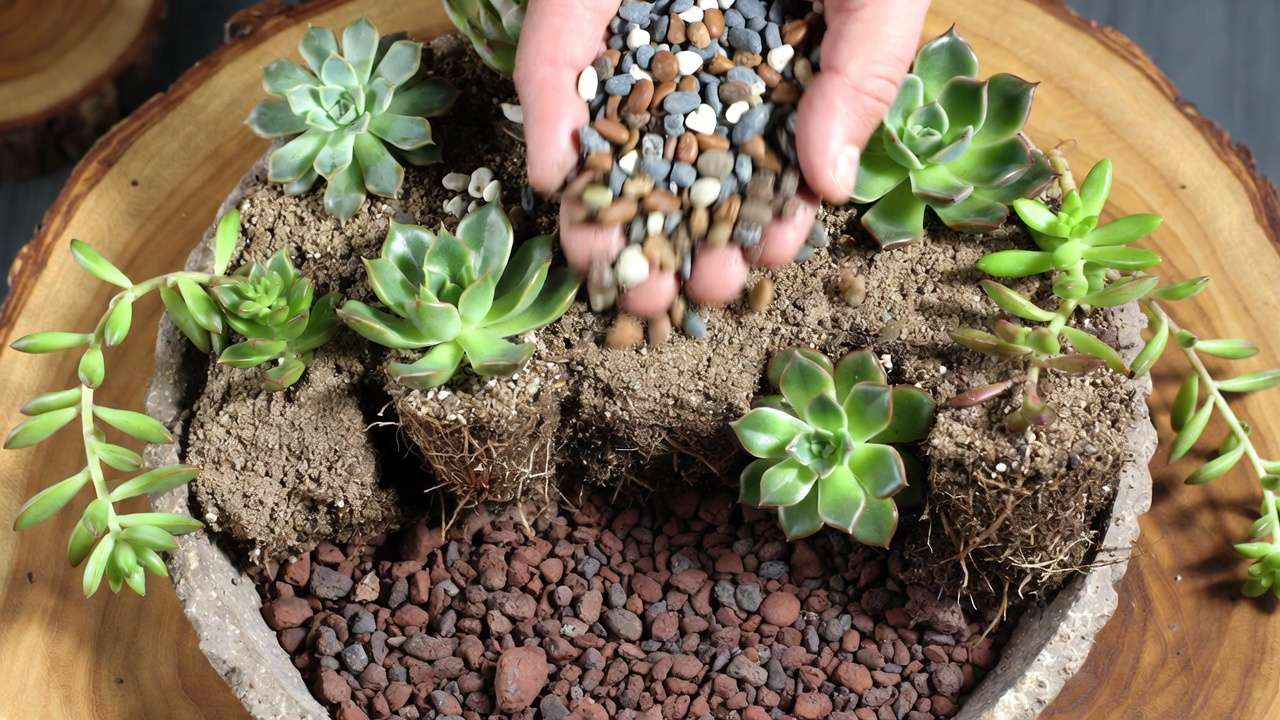
- Add the drainage foundation Place a 1–2 inch layer of larger stones, lava rock, or broken pottery shards at the bottom. This prevents soil from clogging the hole and gives roots an escape route for excess water.
- Fill with gritty soil Add your succulent mix, leaving about 1 inch of space from the rim. Gently tap the pot to settle the soil without compacting it too much.
- Plant your succulents Arrange plants while still in their nursery pots first to test the layout. Use the “rule of thirds” — place the tallest or most eye-catching succulent off-center. Remove plants from pots, gently tease apart any circling roots, and plant at the same depth they were growing before. Space them 1–2 inches apart (they’ll fill in over time). Use tweezers for delicate babies.
- Apply the top dressing Carefully pour or spoon your chosen decorative stones over the soil surface until it’s completely covered (about ½–1 inch thick). Leave a small gap around each stem so air can circulate and prevent rot. Smooth gently with your fingers or a small brush.
- Finishing touches Mist lightly to settle dust, then wait 5–7 days before giving a thorough soak (bottom watering is ideal). Add tiny accents like a polished crystal or piece of driftwood if desired—but keep it minimal for that clean, natural look. 🌟
Advanced Ideas – Rock Gardens, Terrariums & More
- Mini outdoor rock garden — Use larger natural stones to create “hills” and “valleys,” planting succulents in pockets of gritty soil between rocks. Great for sunny balconies or yards in Barisal’s warm climate!
- Shallow dish garden — Low bonsai-style dishes work beautifully. Layer stones in varying sizes to mimic a landscape.
- Terrarium with open top — Use glass bowls or vases (no lid!) with very porous stones to maintain airflow.
- Vertical living wall or hanging planter — Secure stones with wire mesh or coco liner, then tuck succulents into crevices.
Pro tip: Photograph your “before” and “after” — the transformation is always dramatic and motivating! 📷
Design Tips from the Pros: Creating Harmony and Balance ✨
Great succulent arrangements feel intentional, not random. Here are principles I’ve refined over years of designing displays for homes, offices, and garden shows.
Principles of Succulent + Stone Design
- Contrast vs. harmony — Pair smooth polished stones with spiky Aloes for drama, or soft rounded pebbles with plush Echeveria for calm elegance.
- Rule of thirds & focal points — Position your star plant (largest rosette or tallest upright) at an intersection of imaginary thirds lines.
- Height and texture variation — Combine trailing, rosette, and upright forms. Mix stone textures (rough lava + smooth river pebbles) for interest.
- Seasonal adjustments — In hot, humid Bangladesh summers, favor light-colored stones to keep roots cooler. In cooler months, darker stones can help retain some warmth.
Common Mistakes to Avoid ⚠️
- Overcrowding — Give plants room to grow; cramped succulents stretch and weaken.
- Blocking drainage holes — Always check after adding stones.
- Using organic mulch (wood chips, bark) — It decomposes, holds moisture, and invites rot/fungus.
- Ignoring light & water needs — Stones don’t change a plant’s basic requirements; match species to your spot.
- Over-watering after topping — The dry surface tricks many into watering too soon. Wait until soil is bone-dry 2 inches down.
Maintenance Tips for Long-Lasting Beauty 🌿
The beauty of stone-topped succulents is how low-maintenance they become.
Watering, Care, and Troubleshooting
- Stones reduce evaporation slightly, so you may water 10–20% less often than bare-soil pots. Always check soil moisture with your finger or a wooden skewer.
- Bottom-water when possible: set pot in a saucer of water for 10–15 minutes, then drain completely.
- Prune leggy growth and propagate cuttings to refresh arrangements every 1–2 years.
- Remove fallen leaves promptly to prevent mold.
- Refresh top dressing every 2–3 years if it gets displaced or dirty.
Seasonal Care Guide
- Hot/wet season (March–October in Bangladesh) — More frequent checks for rot, excellent airflow, light-colored stones preferred.
- Cooler/dry season (November–February) — Slightly more water, darker stones can help. Protect tender varieties from chilly nights.
- Indoor tips — Rotate pots every 2 weeks for even light; supplement with grow lights in low-sun rooms.
Inspiring Real-World Examples and Gallery Ideas 📸
Here are some proven combinations that consistently wow visitors:
- Desert Zen — Echeveria ‘Perle von Nürnberg’ + light grey pumice + small pieces of driftwood. Soft pastel perfection.
- Fiery Rockscape — Mini Agave attenuata + red lava rock + black polished pebbles. Bold and modern.
- Cascading Jewel — String of Pearls + tiny white river pebbles + trailing Sedum burrito. Romantic and delicate.
- Alpine Cluster — Sempervivum (Hens and Chicks) in various colors + rugged scoria + moss accents. Cozy and textured.
- Monochrome Magic — All-green Crassula ovata + white quartz pebbles. Clean, minimalist elegance.
In my own collection, switching to lava rock top dressing cut my fungus gnat problems by over 80% while making every pot look showroom-ready. Small changes, big impact! 🌵
Frequently Asked Questions (FAQ) ❓
Can I use any rocks from outside? Not recommended unless cleaned thoroughly (boil or bake at 200°C for 30 min to kill pathogens). Store-bought decorative stones are safer and pre-washed.
Do stones make succulents need less water? Slightly—by reducing surface evaporation—but never rely on them to skip watering checks.
Best stones for indoor vs. outdoor? Indoors: polished river pebbles, pumice (quiet, dust-free). Outdoors: lava rock, scoria (weather-resistant, excellent drainage).
How thick should top dressing be? ½–1 inch is ideal—enough to fully cover soil but not bury stems.
Are decorative stones safe for pets/kids? Smooth, non-toxic stones (river pebbles, quartz) are generally safe. Avoid sharp lava rock in reach of curious toddlers or chew-happy cats.
Conclusion: Start Your Thriving Stone + Succulent Journey Today! 🚀
Combining decorative stones and succulents is one of the simplest ways to instantly upgrade both the beauty and health of your plants. You get professional-looking displays, fewer pest and rot problems, easier care, and arrangements that truly thrive.
This weekend, grab one pot, a bag of stones, and a couple of succulents—start small and watch the magic happen. Your windowsill, balcony, or garden will thank you!
Share your creations in the comments—I’d love to see how you make this technique your own. Happy planting! 🌿💎✨











