
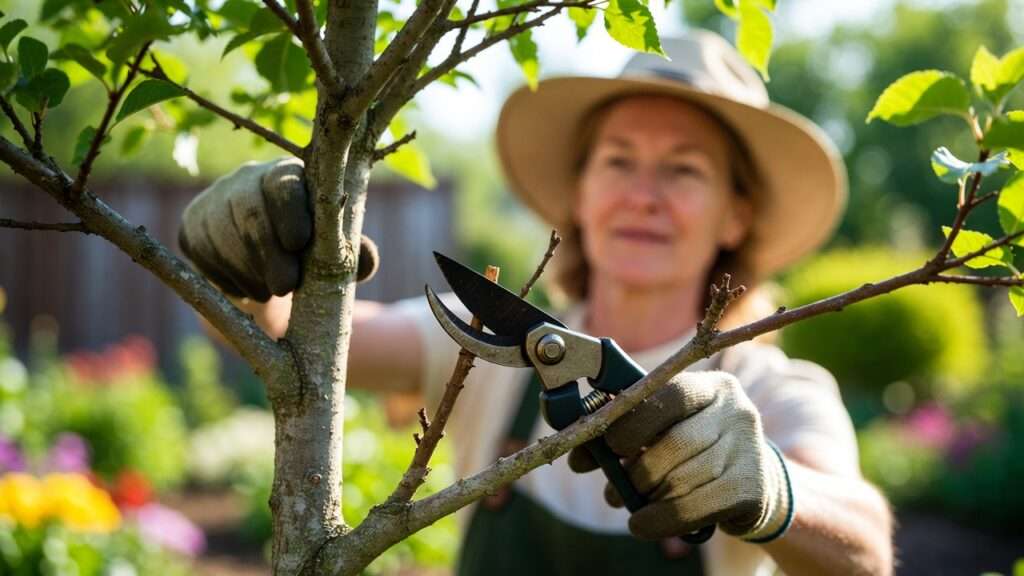
Have you ever stepped back from your freshly “tidied” tree or shrub, only to watch it struggle with weak growth, ugly watersprouts, or even disease the following season? 😩 You’re not alone—many well-meaning gardeners make pruning errors that cause more harm than good. Pruning is one of the most powerful tools in plant care, promoting better airflow, stronger structure, vibrant blooms, abundant fruit, and overall longevity. But when done incorrectly, it stresses plants, invites pests and pathogens, and can shorten a tree’s life dramatically.
Common pruning mistakes to avoid include topping, over-pruning, flush cuts, and timing errors—these top the list of issues arborists see every day. In this in-depth guide, we’ll explore the most frequent mistakes, explain the plant biology behind why they hurt, share real-world examples, and provide expert-backed fixes and prevention strategies. Drawing from standards like those from the International Society of Arboriculture (ISA) and university extension resources, this article goes beyond basic lists to deliver actionable, comprehensive advice that helps you prune like a pro. By the end, you’ll have the confidence to make cuts that enhance rather than endanger your garden treasures! 🌳💚
Why Proper Pruning Matters: The Science Behind It 🔬
Trees and shrubs aren’t just pretty—they’re living systems that compartmentalize wounds, defend against decay, and rely on leaves for photosynthesis to produce energy. Pruning removes tissue, so every cut creates a wound that the plant must seal using its branch collar (a swollen area of specialized cells at the branch base).
When you prune correctly:
- You improve light penetration and air circulation, reducing fungal diseases.
- You direct energy to desired growth, encouraging stronger branches and better blooms/fruit.
- You maintain structural integrity, preventing weak attachments that could fail in storms.
But mistakes disrupt this natural process. Over-pruning removes too much foliage (the tree’s “food factories”), leading to starvation, sunscald on exposed bark, and root dieback. Poor cuts damage the branch collar, allowing decay fungi to enter. Improper timing exposes fresh wounds to peak pest/disease seasons.
Key rule from arborists: Never remove more than 15–25% of the live canopy in one session for most trees (less for stressed plants). This preserves enough leaves for recovery while achieving your goals. 🌱
The Top Common Pruning Mistakes to Avoid ⚠️
Here are the most damaging errors, ranked by how frequently they appear in landscapes and how severely they impact health. Each includes why it’s tempting, the consequences, examples, fixes, and how to do it right.
1. Topping Trees – The #1 Killer Cut 🌳🚫
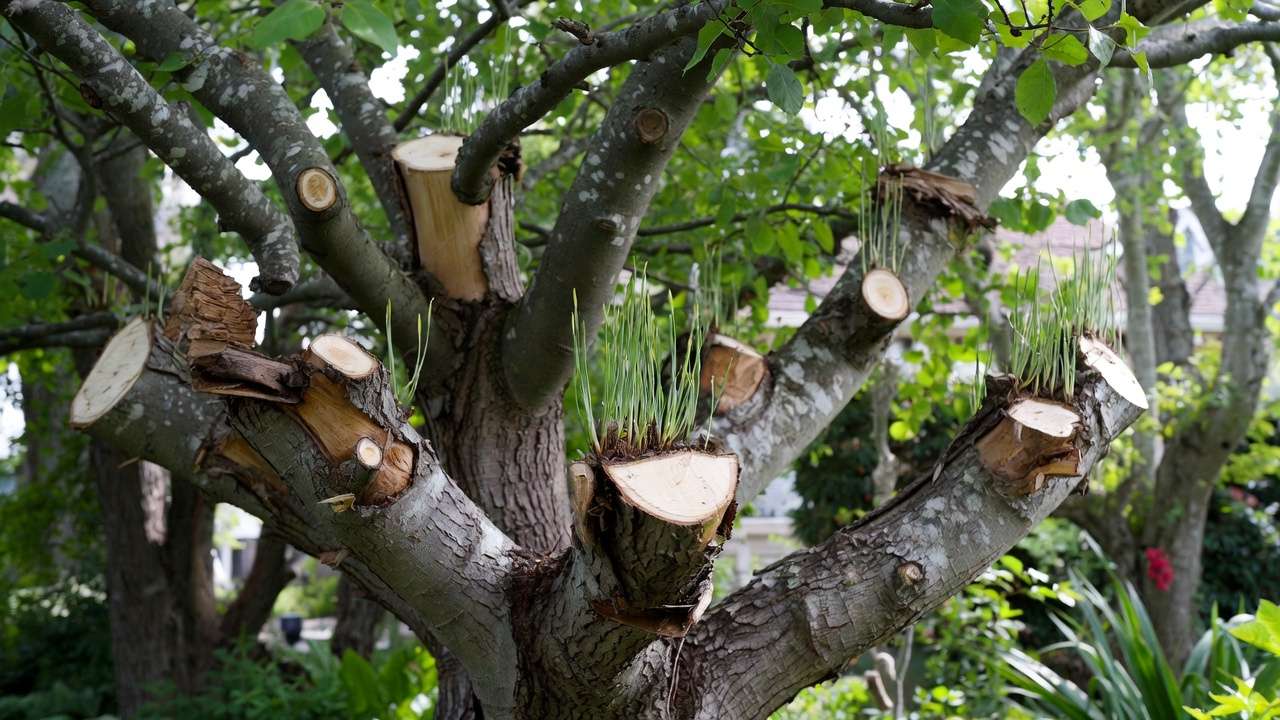
Topping (cutting large branches or the leader straight across to stubs) is often done to “control height” or reduce storm risk—but it’s one of the worst things you can do.
Why common? Homeowners think it keeps trees small and safe. Consequences: Removes the tree’s natural apical dominance, triggering explosive regrowth of weak, poorly attached watersprouts (vertical shoots). These grow fast but break easily in wind. Large wounds decay rapidly, inviting insects, fungi, and structural failure. Topped trees often die prematurely or become hazards, costing more in future removal. Arborists call it “hat-racking” for good reason—it’s ugly and harmful.
Examples: A majestic oak reduced to stubs sprouts dense, broom-like growth; a maple becomes prone to breakage.
Fix if already done: Avoid further topping. Select the strongest watersprout as a new leader and thin others over years. For severe cases, consult a certified arborist for crown reduction or removal.
Prevention: Use crown reduction—cut back to a lateral branch at least 1/3 the diameter of the removed part, preserving natural shape.
2. Over-Pruning or Lion-Tailing 🦁✂️
Lion-tailing removes inner branches, leaving foliage only at branch ends—like a lion’s tail.
Why common? People want to “open up” the canopy or let more light through. Consequences: Sudden exposure causes sunscald (bark cracking), weakens branch unions, and reduces photosynthesis, leading to stress, dieback, and vulnerability to pests/drought.
Examples: Over-thinned maples develop scorched bark; shrubs become leggy and sparse inside.
Fix: Gradual thinning over 2–3 seasons. Restore inner growth by fertilizing/watering and avoiding further heavy cuts.
Prevention: Thin selectively—remove crossing/dead branches first, keeping even distribution.
3. Pruning at the Wrong Time of Year ⏰
Timing affects wound healing, sap flow, and disease risk.
Why common? Convenience or lack of knowledge. Consequences: Pruning spring bloomers in winter removes next year’s buds—no flowers! Summer cuts on oaks risk oak wilt; dormant pruning on bleeding trees (maples) causes sap loss.
Seasonal Guide (general for temperate climates):
- Late winter/early spring (dormant): Most deciduous trees/shrubs (oaks, elms, fruit trees).
- After flowering: Spring bloomers (lilac, forsythia, azalea).
- Summer: Light pruning or bleeders (birch, maple).
- Anytime: Dead/diseased branches.
Fix: Adjust future timing; prune bloomers post-bloom next year.
Prevention: Research your plant’s bloom/wood type (old vs. new wood).
4. Flush Cuts – Removing the Branch Collar 🔴
Cutting flat against the trunk removes the protective collar.
Consequences: Slow/no healing, decay spreads into trunk.
Examples: Apple trees develop cavities; maples rot internally.
Fix: If decay starts, monitor; severe cases need arborist intervention.
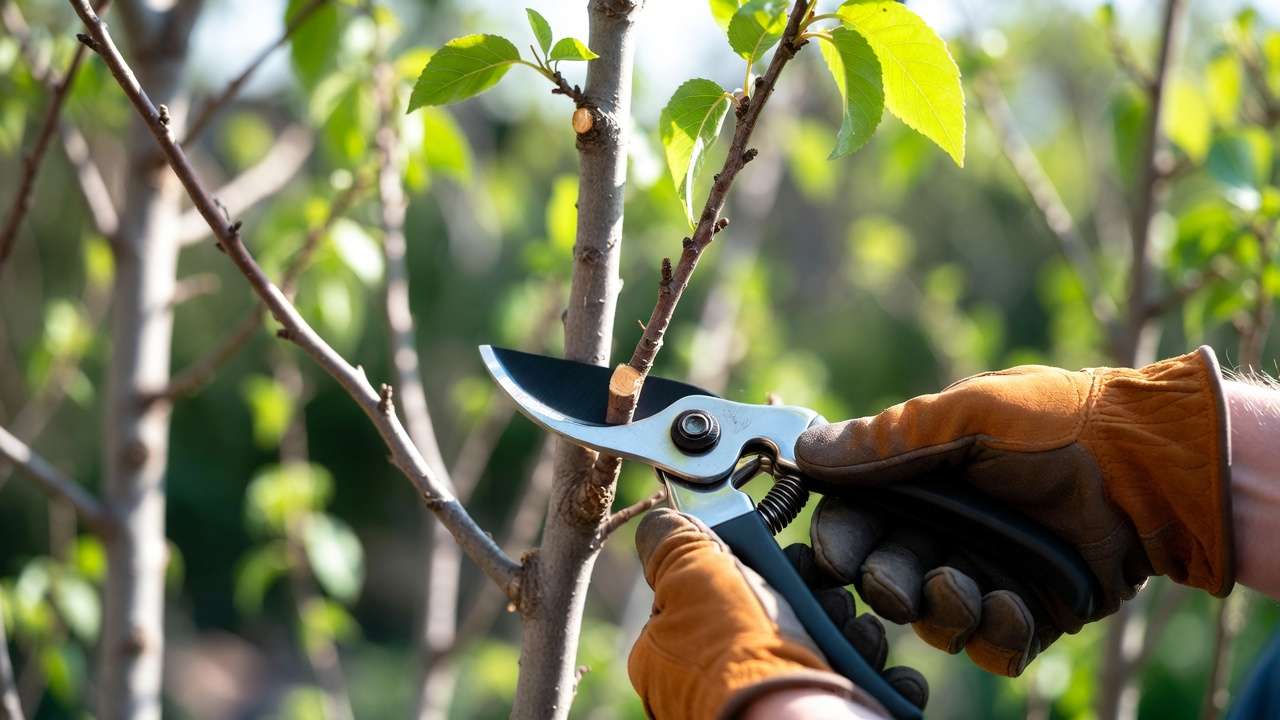
Prevention: Cut just outside the collar (swollen ridge), angled to shed water.
5. Leaving Stub Cuts 🪵
Leaving long stubs after cuts.
Consequences: Stubs die back, attract insects, harbor disease.
Fix: Re-cut to collar if possible.
Prevention: Always cut to a lateral or collar.
6. Using Dull or Wrong Tools 🔧😵
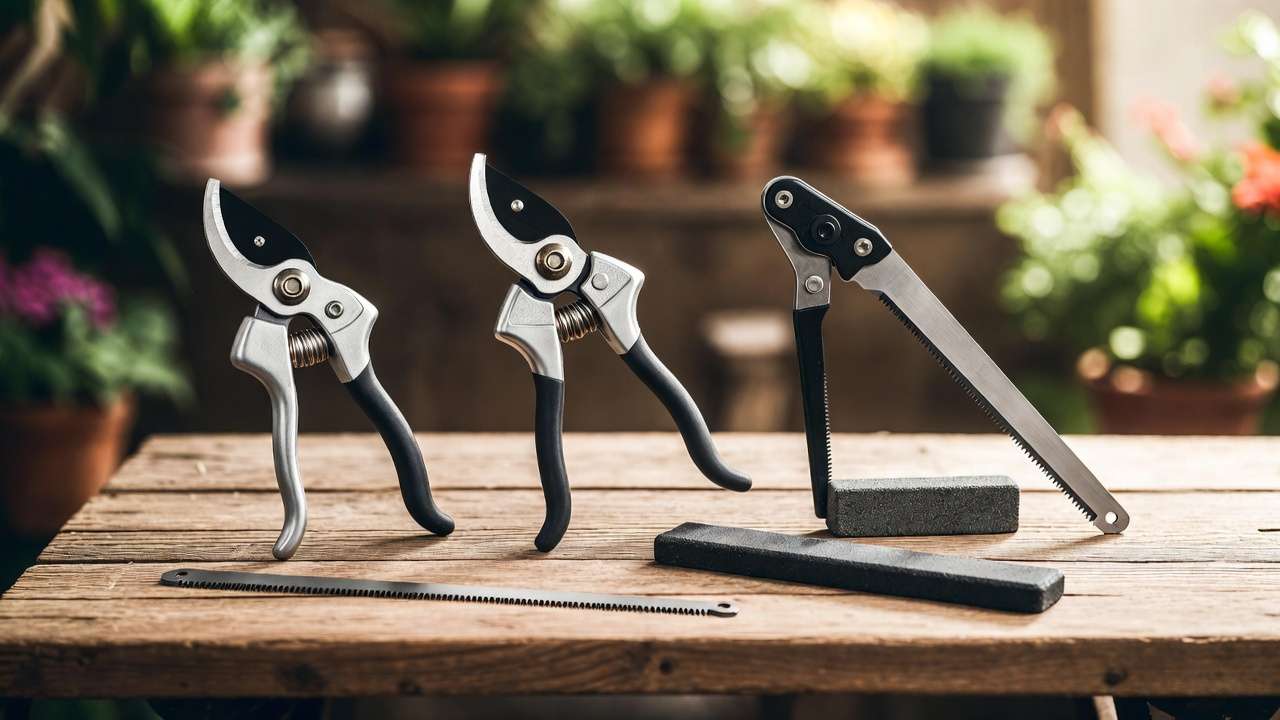
Dull blades tear bark; wrong tools (e.g., anvil pruners on live wood) crush tissue.
Consequences: Jagged wounds invite infection.
Fix: Sharpen/replace tools.
Prevention: Use bypass pruners for live branches, loppers/saws for larger; sharpen regularly.
7. Ignoring the Three-Cut Method for Large Branches 🛠️
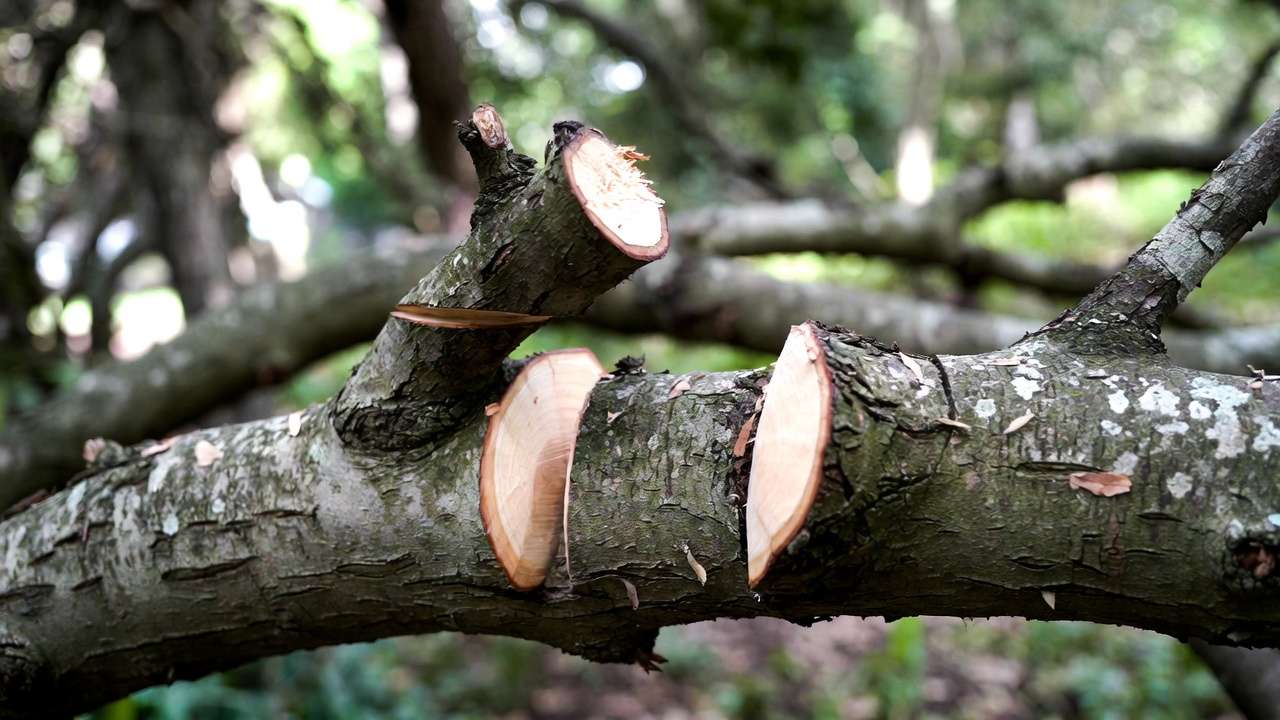
One-cut drops heavy limbs, tearing bark.
Consequences: Large tears expose cambium, slow healing.
Step-by-step:
- Undercut 6–12″ out, 1/3 through.
- Top cut above undercut to drop branch.
- Final cut outside collar.
Prevention: Always use for >1–2″ branches.
8. Pruning Without a Clear Goal 🎯❓
Random cuts for “tidiness.”
Consequences: Unnatural shape, stress.
Prevention: Assess first—remove dead/diseased/crossing, then shape.
9. Cutting Off Future Flowers or Fruit 🌸🍎
Pruning old-wood bloomers too early.
Examples: No roses on new-wood types if cut wrong.
Prevention: Know cycle—old wood (spring bloomers) after flower; new wood (summer) dormant.
10. Shearing Instead of Selective Thinning ✂️🌿
Hedge-style shearing on trees/shrubs.
Consequences: Dense outer, weak interior; disease pockets.
Prevention: Thin for natural form.
11. Pruning in Bad Weather or Unsafe Conditions ⚡🌧️
Wet/slippery days increase slips/poor cuts.
Prevention: Dry, calm days; use safety gear.
12. Neglecting Aftercare 💧
No water/mulch post-prune.
Consequences: Slow recovery.
Prevention: Water deeply, mulch, avoid fertilizer right away.
Best Practices: How to Prune Like a Pro 🌟
- Plan: Walk around, identify goals (health, shape, safety).
- Tools: Sharp bypass pruners, loppers, pole saw/pruner, gloves, safety glasses.
- Start small: Dead/diseased first, then crossing/rubbing, structural.
- Young vs. mature: Train young for good structure; maintain mature lightly.
- Call pros: For large trees, power lines, or disease signs—find ISA-certified arborists.
Real-Life Examples & Before/After Insights 📸
Imagine a topped maple: Before—tall but safe-looking; after years—weak sprouts, decay. Revival: Selective thinning restores balance (suggest photos of topped vs. properly reduced trees).
Over-pruned rose: Bare canes recover with gradual cuts and care.
Quick Reference: Pruning Dos and Don’ts Checklist ✅❌
Do:
- Prune with purpose 🌱
- Use sharp, clean tools 🔪
- Cut outside branch collar
- Limit to 15–25% removal
- Prune dormant when possible
- Aftercare: Water + mulch
Don’t:
- Top trees 🚫
- Over-prune
- Flush or stub cuts
- Prune at wrong time
- Shear trees
- Prune without assessing
Frequently Asked Questions (FAQs) ❓
Can over-pruned trees recover? Yes—many do with time, water, and light future pruning, but severe cases may not.
When is the best time to prune fruit trees? Late winter dormant for most (apples, pears); after bloom for stone fruits to avoid disease.
How do I fix a topping mistake? Thin watersprouts, select strong leader; may take years.
Is it okay to prune in summer? Light pruning yes; avoid heavy on stressed plants.
Conclusion: Prune Smart for a Thriving Garden 🎉
Avoiding these common pruning mistakes transforms your approach from potential harm to true plant nurturing. Mindful cuts respect biology, leading to resilient, beautiful trees and plants that shade, bloom, and fruit for decades. Start small, observe results, and don’t hesitate to consult experts. Your garden will thank you with lush health and joy! 🌳❤️











