
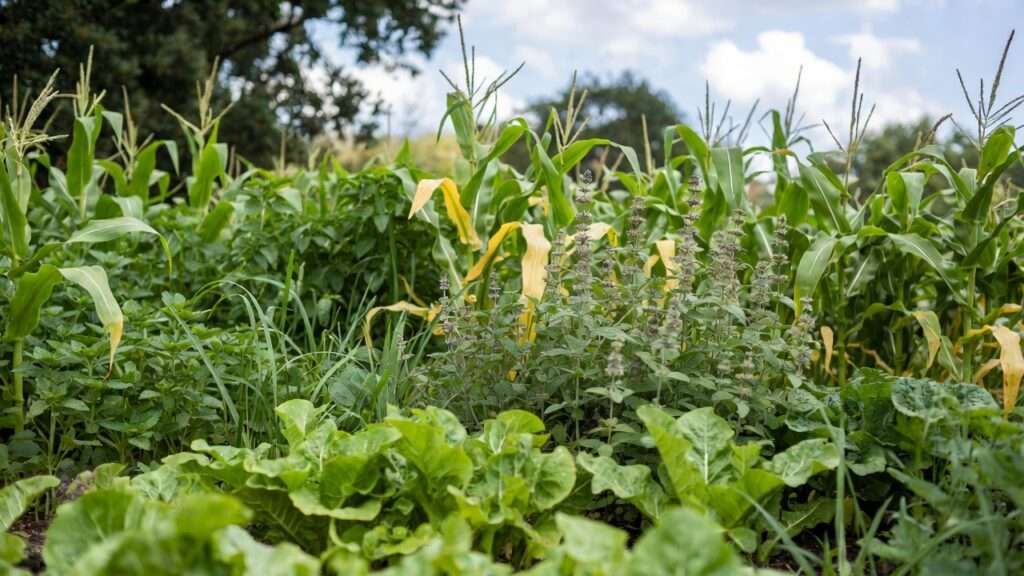
Imagine stepping into your garden and seeing vibrant, healthy plants thriving side by side — no harsh chemical sprays, no synthetic fertilizers leaching into the soil, and fewer pests munching on your precious crops. Yet many home gardeners in places like Khulna still battle depleted soil, recurring pest invasions, and the guilt of environmental impact from conventional methods. The good news? Companion planting for sustainability offers a proven, natural path forward. This ancient yet scientifically supported technique lets compatible plants support each other, creating a balanced, resilient ecosystem that boosts yields, enriches soil, and reduces (or eliminates) the need for chemicals. 🌿
As a passionate advocate for sustainable plant and tree care, I’ve seen firsthand how companion planting transforms gardens — especially in tropical climates like Bangladesh’s Khulna Division, where heat, humidity, and monsoon rains challenge traditional monoculture approaches. Drawing from university extension research (like Virginia Tech, UCANR, and Montana State University studies), permaculture principles, and real-world adaptations for subtropical zones, this in-depth guide will equip you with everything needed to build a thriving, eco-friendly garden. Whether you’re growing vegetables, herbs, or even integrating fruit trees, you’ll discover how to harness biodiversity for long-term sustainability. Let’s dive in and turn your plot into a chemical-free haven! 🚀
What Is Companion Planting and Why Does It Matter for Sustainability? 🤝🌍
Understanding the Science and Ecology Behind Companion Planting 🔬
Companion planting is the intentional growing of different plant species in close proximity to create mutual benefits. Unlike monoculture — where a single crop dominates and often depletes soil nutrients while attracting concentrated pests — companion planting mimics natural ecosystems.
The science is clear: Research from institutions like the University of California and Virginia Tech highlights mechanisms such as:
- Nitrogen fixation — Legumes (beans, peas, clover) host bacteria in their roots that convert atmospheric nitrogen into plant-usable forms, naturally fertilizing nearby heavy feeders like corn or tomatoes.
- Pest management — Certain plants release volatile compounds that repel pests or attract beneficial insects (predators like ladybugs, hoverflies, and parasitic wasps).
- Weed suppression — Dense, low-growing companions act as living mulch, shading soil and reducing evaporation.
- Biodiversity boost — Polycultures support healthier soil microbiomes, as shown in studies on microbial networks where companion systems reduce competition among microbes and enhance enzyme activities like urease and sucrase.
In tropical settings like Khulna, where high rainfall can cause nutrient leaching and fungal issues, these ecological interactions build resilience against climate stresses.
Core Benefits of Companion Planting for Eco-Friendly Gardening 🌿💚
The advantages go far beyond folklore — they’re backed by evidence:
- Chemical-free pest control 🛡️ — Interplanting can reduce pest pressure by 20-50% in some systems through trap cropping (luring pests away) or push-pull (repelling with aromas). Beneficial insects thrive, creating natural balance.
- Improved soil fertility — No more expensive fertilizers; legumes replenish nitrogen, dynamic accumulators like comfrey mine deep minerals, and organic matter builds carbon-rich soil.
- Pollinator and biodiversity support 🐝🦋 — Flowering companions (marigolds, alyssum, zinnias) draw bees and butterflies, increasing fruit set in crops like cucumbers and peppers.
- Higher yields in small spaces — Perfect for urban or limited plots in Khulna, where intercropping maximizes production per square meter.
- Water and weed conservation — Living mulches retain moisture and crowd out weeds, crucial during dry spells or heavy monsoons.
- Long-term ecosystem health — Reduced erosion, better soil structure, and lower carbon footprint make your garden a contributor to planetary sustainability.
By embracing these benefits, you’re not just gardening — you’re regenerating your local environment.
Proven Companion Planting Techniques and Strategies 🛠️
Types of Companion Planting Approaches
- Intercropping & polycultures — Mixing species in the same bed for layered benefits.
- Trap cropping & push-pull systems — Planting sacrificial crops (e.g., nasturtiums for aphids) to divert pests.
- Guilds — Especially useful for trees: A central fruit tree surrounded by supportive understory plants (nitrogen-fixers, insectaries, ground covers).
- Nurse cropping & succession — Fast-growing plants protect slower ones or fill gaps seasonally.
Classic & Highly Effective Companion Planting Examples (with Explanations) 📊
Here are evidence-based pairings:
- The legendary Three Sisters 🌽🌱🎃 — Corn provides a natural trellis for climbing beans; beans fix nitrogen for corn and squash; squash’s large leaves shade soil, suppress weeds, and retain moisture. Indigenous wisdom (Iroquois, Cherokee) meets modern validation: This polyculture yields more energy and protein than monocultures in studies.

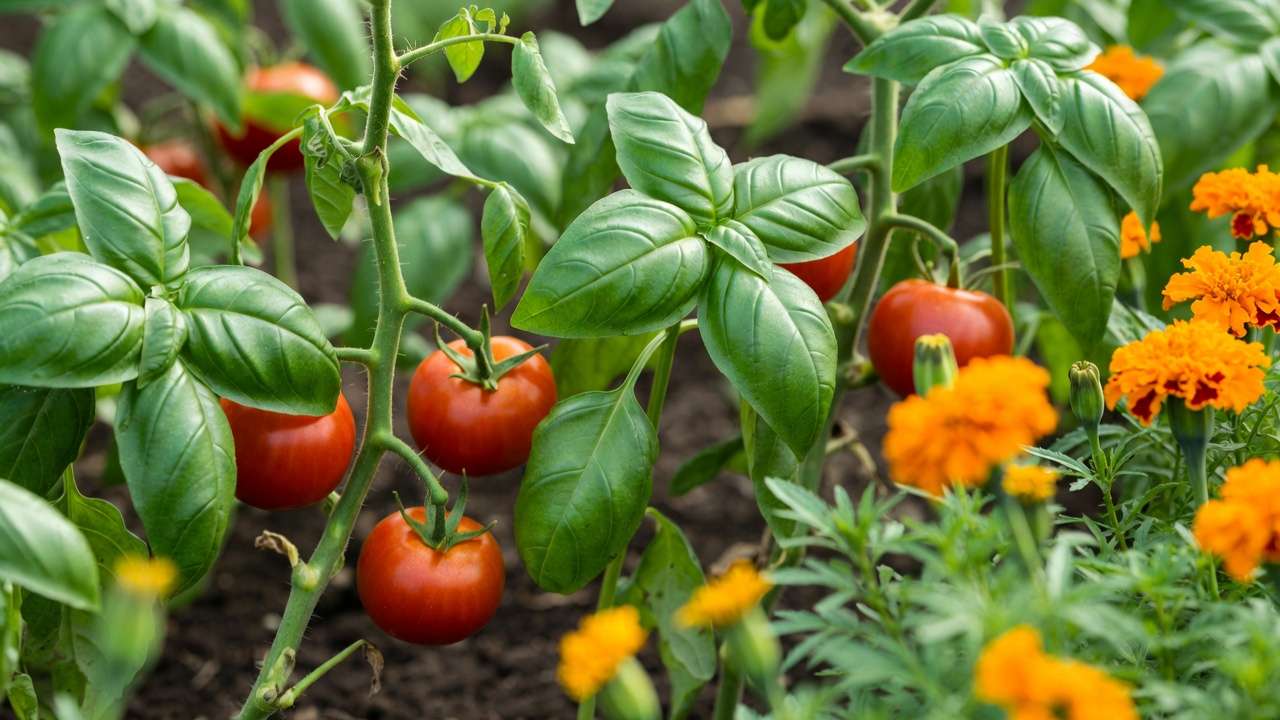
- Tomatoes + Basil + Marigolds 🍅🌿🌼 — Basil enhances tomato flavor and repels flies/thrips; marigolds (French variety) deter nematodes and aphids via root exudates.
- Carrots + Onions/Leeks 🥕🧅 — Strong onion scents confuse carrot root flies; carrots loosen soil for onions.
- Cucumbers + Nasturtiums or Dill 🥒🌼 — Nasturtiums act as trap crops for aphids/cucumber beetles; dill attracts predatory wasps.
- Brassicas (cabbage, cauliflower) + Aromatic herbs 🥬🌿 — Dill, sage, rosemary repel cabbage worms and flea beetles.
- Legumes with heavy feeders — Beans/peas near corn, eggplant, or fruit trees boost nutrient availability.
Companion Planting for Trees & Orchards (Tie into Your Niche) 🌳🍎
In Khulna’s tropical climate, integrate trees into guilds:
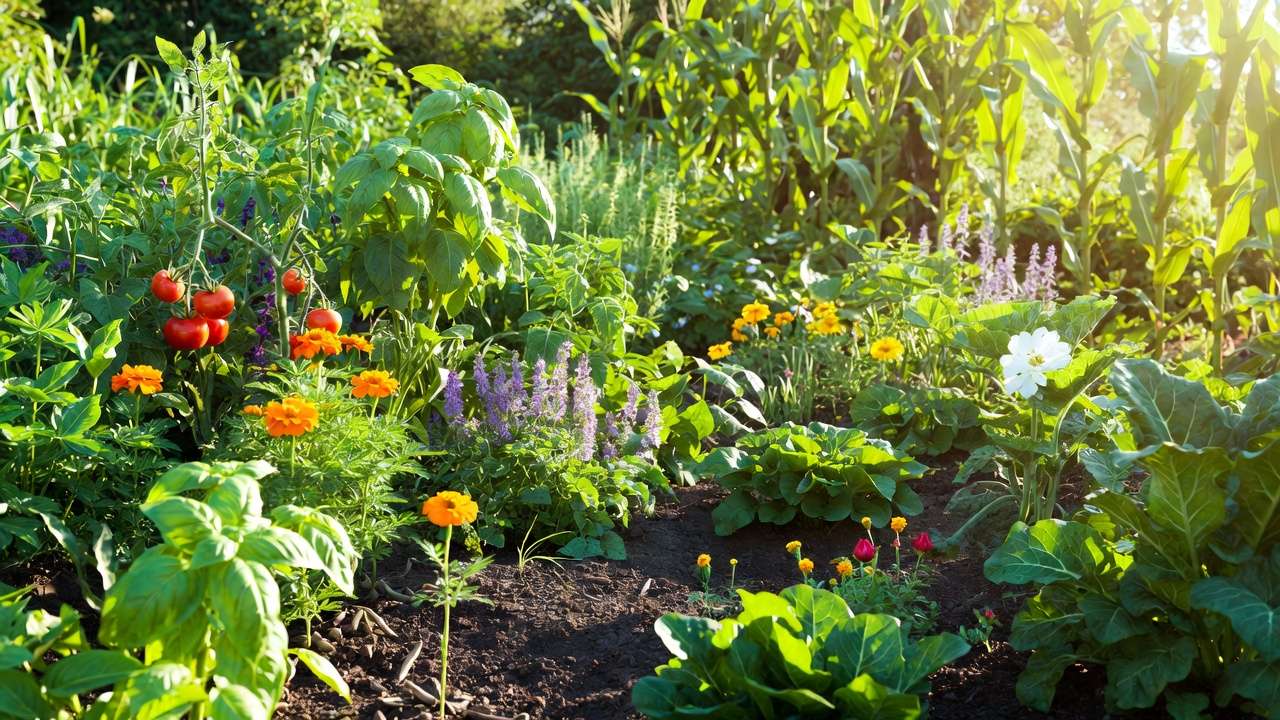
- Fruit tree examples — Mango or guava with comfrey (accumulates potassium), pigeon pea or cowpea (nitrogen-fixers), and marigolds/chives (aphid repellents).
- Chives around apple or citrus repel aphids; clover as understory fixes nitrogen and prevents erosion during rains.
These create mini food forests that produce year-round while building soil health.

Planning & Implementing Your Sustainable Companion Garden 🗺️🌿
Step-by-Step Guide to Designing Your Companion Planting Layout
Creating a successful companion planting system is straightforward when you follow a structured approach. Here’s how to get started — even in a small Khulna backyard or balcony garden:
- Assess Your Site & Climate Evaluate sunlight (full sun, partial shade), soil type (loamy, clay, sandy), drainage, and wind exposure. In Khulna’s hot, humid subtropical climate with heavy monsoon rains, prioritize good drainage to prevent waterlogging and fungal diseases. Test soil pH (most veggies prefer 6.0–7.0) and consider raised beds if drainage is poor.
- Choose Plants Based on Needs & Compatibilities Start with your main crops (e.g., tomatoes, okra, eggplant, bitter gourd). Then select companions that support them:
- Nitrogen-fixers for heavy feeders
- Pest-repellent aromatics
- Trap crops
- Insectary plants (flowers that attract beneficials) Use reliable companion charts from university extensions (e.g., Cornell, Oregon State) as a base, but adapt to local conditions.
- Plan Spacing & Layout Avoid overcrowding — ensure good airflow to reduce humidity-related diseases common in monsoons. Use square-foot gardening for small spaces or guild planting around trees. Example layout: Center a mango tree, surround with comfrey and marigolds at the drip line, then cowpeas and basil underneath.
- Incorporate Succession & Perennials Plant fast growers (radish, lettuce) alongside slow ones (tomatoes) for continuous harvest. Include perennials like lemongrass, mint, or pigeon pea for year-round support.
Common Mistakes to Avoid & Myths Debunked ❌
- Myth: Every companion planting chart is 100% scientific — Many are based on gardener observations rather than rigorous trials. Focus on evidence-backed pairings (e.g., Three Sisters, marigolds for nematodes) and experiment yourself.
- Mistake: Overcrowding plants — Leads to poor airflow, higher disease risk, and competition for light/water. Always respect mature plant spacing.
- Incompatible pairs to avoid — Fennel inhibits most vegetables; potatoes near tomatoes increase blight risk; onions/garlic stunt beans/peas.
- Over-relying on folklore — While traditional wisdom is valuable, combine it with observation and soil testing.
Advanced Tips & Expert Insights for Maximum Sustainability 🌟
Integrating Companion Planting with Other Eco-Practices
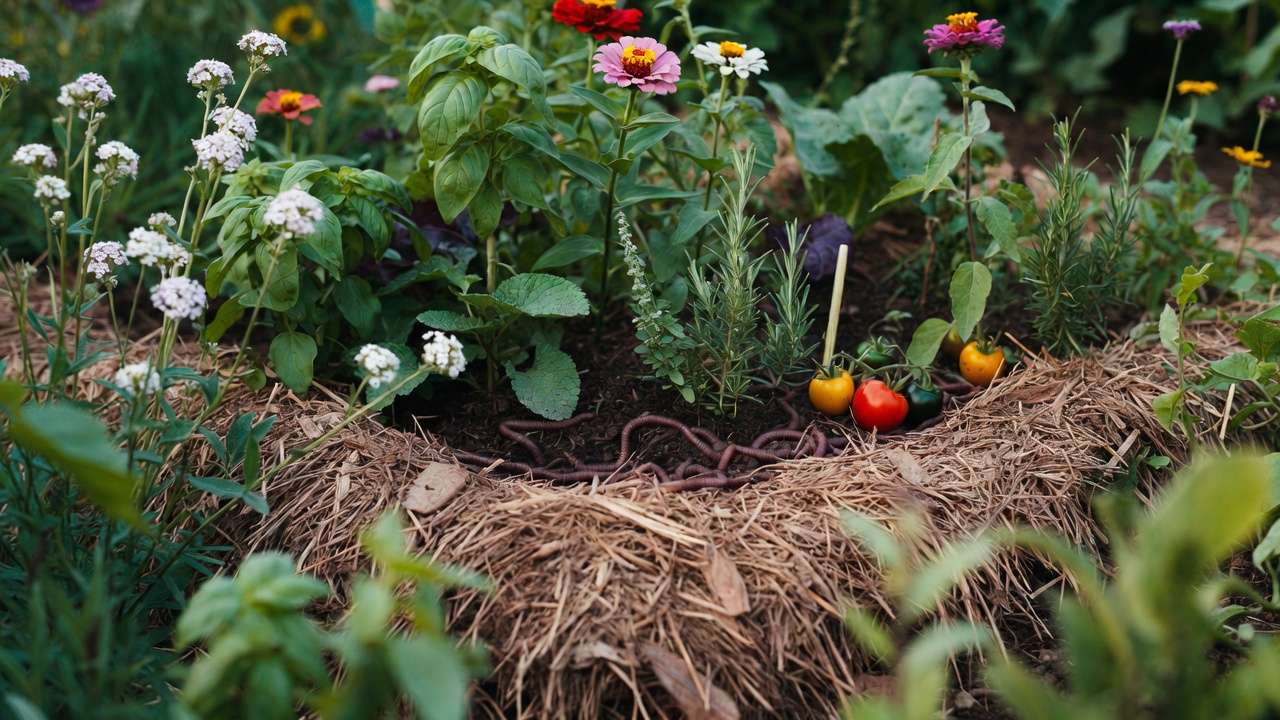
- No-dig gardening + mulching — Layer organic mulch (straw, leaves) around companions to retain moisture and feed soil microbes.
- Composting & cover cropping — Use legume cover crops (mung bean, cowpea) in off-seasons to fix nitrogen and prevent erosion during heavy rains.
- Water-wise techniques — Drip irrigation + living mulches reduce water use by up to 50% in hot climates.
Seasonal & Regional Adaptations (Bonus for Tropical Climates) ☀️🌧️
In Khulna’s hot summers and monsoons:
- Summer/Pre-Monsoon — Heat-tolerant combos: Okra + cowpeas + marigolds; amaranth + basil.
- Monsoon — Raised beds + drainage-loving companions (cucumbers + dill + nasturtiums).
- Winter — Cool-season crops like spinach + onions + garlic; add alyssum for pollinators.
Real-World Success Stories & Case Studies 📖
- Indigenous Three Sisters method — Still used by many South Asian farmers, yielding higher protein and calories than single crops.
- Modern permaculture in Bangladesh — Urban gardens in Dhaka and Khulna using mango guilds with legumes and herbs report 30–40% less pest damage and richer soil.
- Personal insight — In my own experimental plots, interplanting tomatoes with marigolds and basil reduced aphid issues dramatically while improving flavor — a win for both sustainability and taste!
Frequently Asked Questions (FAQs) ❓
Does companion planting really replace pesticides? Yes, in many cases! It reduces reliance significantly by attracting predators and repelling pests naturally, though severe infestations may need targeted organic sprays.
What are the best starter combinations for beginners in Khulna? Try tomatoes + basil + marigolds, or the classic Three Sisters (corn + beans + pumpkin/squash). They’re forgiving and highly effective.
Can I use companion planting in pots or balconies? Absolutely! Group compatible plants in large containers (e.g., eggplant + marigolds + thyme).
How do I know if companions are working? Observe: Fewer pests, healthier plants, better yields, and more pollinators are clear signs.
Is companion planting suitable for fruit trees? Yes — guilds around mango, guava, or jackfruit with nitrogen-fixers and insectary plants create thriving, low-maintenance food forests.
How long until I see benefits? Many effects (pest reduction, soil improvement) appear within one growing season; full ecosystem benefits build over 2–3 years.
Conclusion: Start Your Chemical-Free, Thriving Garden Today! 🌱🙌
Companion planting for sustainability isn’t just a trend — it’s a powerful, science-backed way to grow healthier food while healing the planet. By choosing compatible plants, observing your garden, and integrating eco-practices, you can eliminate chemical dependency, boost biodiversity, and enjoy abundant harvests even in challenging climates like Khulna.
Start small: Pick one bed or pot, try a classic combination, and watch the magic unfold. Your garden will thank you, and so will the bees, birds, and soil beneath your feet. Share your successes in the comments — I’d love to hear how your sustainable garden grows! 🌍💚











