
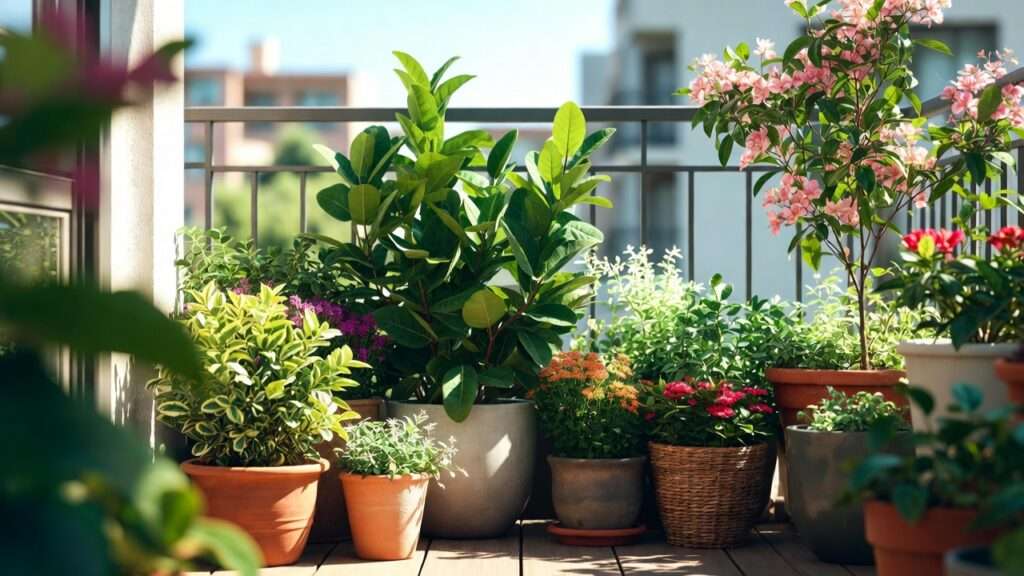
Imagine stepping onto your balcony or patio and being greeted by lush green foliage, delicate seasonal blooms, or even the fresh scent of citrus — all thriving in beautiful containers, without ever needing to plant in the ground. For millions of people living in apartments, townhouses, condos, or homes with tiny yards, this dream is not only possible — it’s surprisingly achievable.
Container-friendly shrubs and small trees are the secret weapon of modern small-space gardening. They bring vertical structure, year-round interest, privacy, color, fragrance, and even edible harvests to patios, balconies, rooftops, and tiny courtyards — places where full-sized trees or in-ground planting simply isn’t an option.
Whether you’re a renter who can’t dig up the soil, a homeowner wanting flexible design, or just someone craving more nature in a compact urban life, the right potted shrubs and small trees can completely transform your outdoor (or indoor-outdoor) space. 🌱
In this in-depth guide, you’ll discover:
- The very best container-friendly shrubs and small trees proven to thrive in pots
- Expert tips on choosing containers, soil, watering, and long-term care
- Design ideas that make small spaces feel larger, more private, and more beautiful
- Native and eco-friendly options that support pollinators and wildlife
- Common mistakes to avoid so your plants stay healthy for years
Having worked with container gardeners across different climate zones for many years, I’ve seen which varieties consistently outperform expectations — and which ones disappoint even experienced growers. This article draws together the most reliable, beautiful, and practical choices so you can skip the trial-and-error phase. 💚
Let’s turn your small outdoor space into a stunning, living retreat.
Why Choose Container-Friendly Shrubs and Small Trees? 🌳🪴
Container gardening isn’t just for annual flowers and herbs anymore. Woody plants — shrubs and small trees — are increasingly popular for patios and balconies because they deliver several unique advantages:
1. Instant structure and maturity Unlike perennials or annuals that take years to fill out, many dwarf shrubs and small trees already look impressive the moment you bring them home.
2. Flexibility and mobility You can rearrange your garden for better light, move plants out of harsh winter winds, or bring tender specimens indoors during extreme cold. This is especially valuable for renters or people in variable climates.
3. Perfect control over growing conditions You choose the soil mix, drainage, and fertilizer — critical advantages when native soil is poor, compacted, or nonexistent.
4. Year-round interest in small spaces Evergreens provide winter structure, flowering shrubs bring seasonal drama, fruiting trees offer edible rewards, and colorful foliage plants create multi-season beauty.
5. Space efficiency Dwarf and compact cultivars stay manageable in containers for many years, delivering tree-like presence without overwhelming a small area.
However, not every shrub or tree is suitable for long-term container life. The best container-friendly shrubs and small trees share certain characteristics:
- Naturally compact or dwarf growth habit
- Adaptable, relatively shallow root systems
- Tolerance for periodic dry spells (pots dry out faster than ground soil)
- Good resistance to common container pests and diseases
When you choose the right varieties, container woody plants can live happily for 10–20+ years with proper care.
Key Factors to Consider Before Planting 🛠️
Success with container shrubs and trees starts long before you bring any plant home. Here are the most important decisions to make:
1. Container Size Matters — A Lot Most shrubs and small trees need containers that are:
- Minimum 18–24 inches wide and deep for the first few years
- 24–30+ inches for long-term growth of medium-sized specimens
- Always have multiple drainage holes (add more if needed)
A too-small pot restricts roots, causes frequent wilting, and shortens the plant’s lifespan.
2. Material Choices
- Glazed ceramic / terracotta: Classic look, good insulation, but heavy
- Fiberglass / resin: Lightweight, durable, great for balconies
- Wood / metal: Stylish, but need liners to prevent rot or rust
- Fabric pots: Excellent aeration and drainage, very lightweight
3. Soil – Never Use Garden Soil in Pots Use a high-quality potting mix designed for containers. A good recipe:
- 50–60% premium potting soil
- 20–30% perlite, pumice or coarse sand for drainage
- 10–20% compost or aged pine bark for nutrition
Avoid cheap mixes that compact quickly or hold too much water.
4. Location – Sun, Wind, and Exposure Analyze your space honestly:
- Full sun (6+ hours) → Mediterranean, fruit trees, many flowering shrubs
- Part shade → Japanese maples, hydrangeas, pieris, some hollies
- Windy balconies → Choose tough, flexible plants and heavier pots
5. Watering Reality Check Pots dry out significantly faster than ground soil — especially in summer. Be prepared to water more frequently, or install a simple drip irrigation system for consistency.
6. Overwintering Considerations In colder climates (USDA zones 6 and below), many container plants need extra protection:
- Move to a sheltered spot
- Insulate pots
- Group pots together
- Use anti-desiccant sprays on evergreens
Getting these fundamentals right dramatically increases your success rate.
Best Evergreen Shrubs and Small Trees for Containers (Year-Round Interest) 🌲❄️
Evergreens are the backbone of any container garden on a patio or balcony. They provide structure, privacy, and color through the coldest months when everything else looks bare. These dwarf or compact varieties are specifically bred or selected to stay manageable in pots for many years without becoming root-bound too quickly.
Dwarf Alberta Spruce (Picea glauca ‘Conica’) This classic mini-Christmas tree lookalike forms a perfect, dense pyramid shape with soft, bright-green needles. It grows slowly (about 2–4 inches per year) and tops out at 6–8 feet in a container over a decade or more — ideal for flanking doorways or creating formal accents. Hardy in USDA zones 2–8, it prefers full sun to part shade and tolerates some wind once established. Tip: Rotate the pot every few weeks for even growth. 🌲
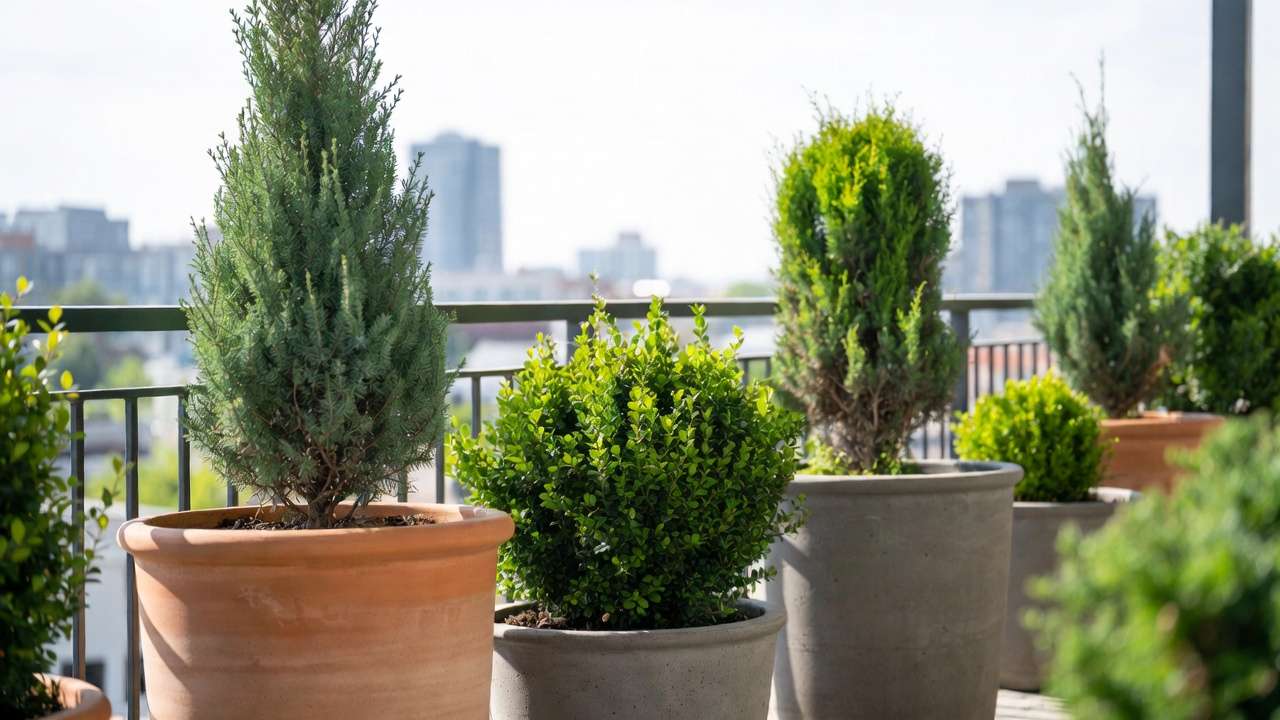
Boxwood (Buxus spp., e.g., ‘Green Velvet’ or ‘Green Mountain’) Boxwoods are timeless for topiary lovers. These dense, small-leafed evergreens can be sheared into balls, cones, or hedges in pots. ‘Green Velvet’ stays naturally rounded at 3–4 feet, perfect for small balconies. They thrive in zones 5–9, handle part shade well, and are deer-resistant in many areas. Pro tip: Use slow-release fertilizer in spring to maintain that lush, dark-green color year-round.
Dwarf Mugo Pine (Pinus mugo cultivars like ‘Mitsch Mini’ or ‘Slowmound’) For texture and toughness, few beat dwarf mugo pines. Their short, twisted needles give a rugged, bonsai-like feel without the fuss. Most stay under 3–5 feet tall and wide in containers, loving full sun and well-drained soil (zones 2–7). They’re wind- and drought-tolerant once established — great for exposed balconies. Add one for a modern, sculptural vibe. 🌲
Compact Arborvitae (Thuja occidentalis, e.g., ‘Tater Tot®’ or ‘Anna’s Magic Ball®’) These globe-shaped or mounded dwarfs from Proven Winners are super low-maintenance evergreens. ‘Tater Tot®’ grows to just 1–2 feet tall and wide — perfect for tight spaces or grouping in pots. Bright chartreuse new growth on ‘Anna’s Magic Ball®’ adds cheer. Zones 3–8, full sun to part shade. They’re excellent for year-round privacy screens when planted in a row of matching containers.
Japanese Holly (Ilex crenata ‘Sky Pencil’) This narrow, columnar holly reaches 6–10 feet tall but only 2–3 feet wide — ideal for tight balcony corners or as living pillars. Glossy dark-green leaves stay neat without much pruning. Zones 5–9, it handles sun or shade and is more pest-resistant than traditional hollies.
Expert Insight Evergreens anchor your design and prevent the “empty winter pot” syndrome. Pair a tall narrow one (like ‘Sky Pencil’) with rounded forms for balance. In colder zones, wrap pots in burlap or bubble wrap and mulch the soil surface to protect roots from freeze-thaw cycles. ❄️
Best Flowering and Deciduous Shrubs for Seasonal Drama 🌸🍂
For bursts of color, fragrance, and pollinator appeal, deciduous and flowering shrubs shine in containers. They may lose leaves in winter, but the payoff in spring/summer/fall is worth it.
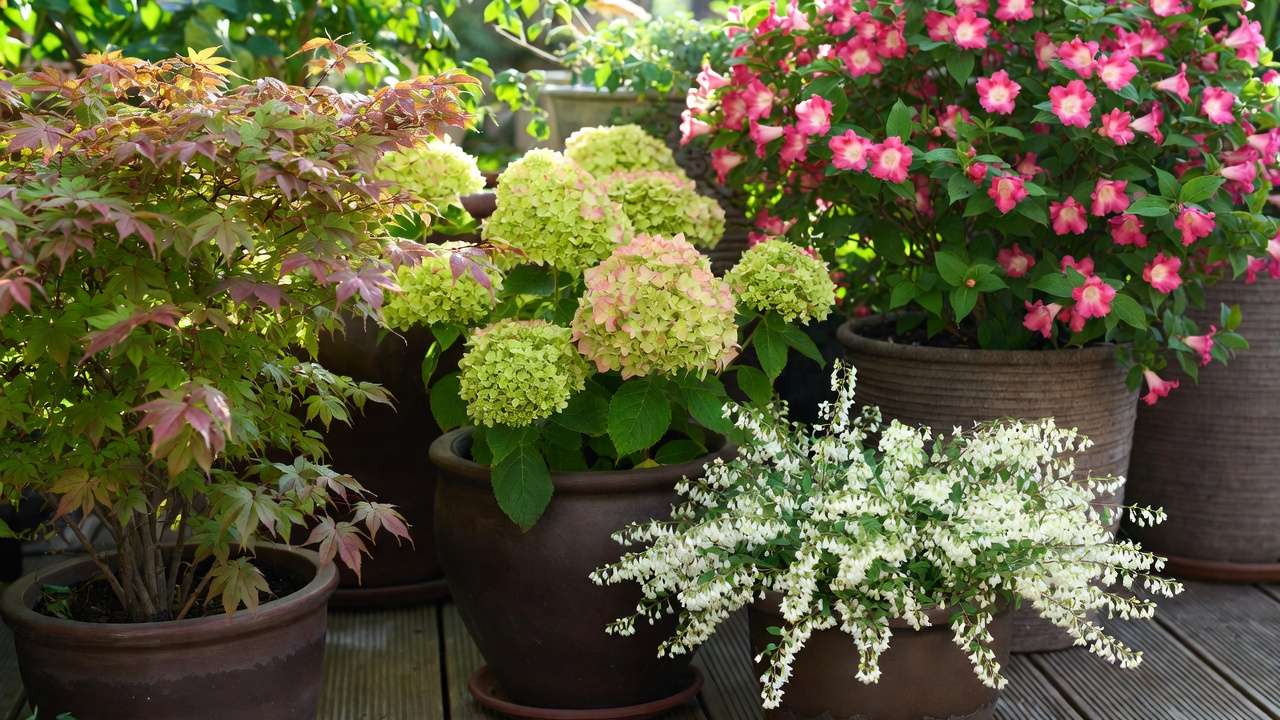
Dwarf Hydrangea (Hydrangea macrophylla or paniculata, e.g., ‘Little Lime’ or ‘Invincibelle’) Compact hydrangeas deliver huge mophead or cone-shaped blooms on plants that stay 3–5 feet tall in pots. ‘Little Lime’ turns from lime-green to pink as summer progresses. Zones 3–9 (paniculata types are hardier). They love morning sun + afternoon shade and consistent moisture — use a moisture meter to avoid wilting.
Japanese Maple (Acer palmatum dwarf cultivars, e.g., ‘Crimson Queen’ or ‘Red Dragon’) The queen of fall color! Lacy, dissected leaves emerge red or green and explode into fiery oranges, reds, and purples in autumn. Dwarfs stay 4–8 feet in containers. Zones 5–9, they prefer dappled shade and protection from hot afternoon sun and wind. A single specimen in a stylish pot becomes instant focal-point art.
Pieris japonica (Japanese Andromeda) Early-spring drooping clusters of bell-shaped white or pink flowers, followed by brilliant new foliage (often red or bronze). Compact varieties like ‘Mountain Fire’ reach 4–6 feet. Zones 5–8, part shade to shade. Deer-resistant and evergreen-ish in mild climates.
Dwarf Crape Myrtle (Lagerstroemia indica dwarfs) Vibrant summer blooms in pink, red, or white, plus peeling bark for winter interest. Many new dwarfs stay under 5 feet. Zones 7–10 (some hardy to 6), full sun. Heat- and drought-tolerant once established.
Weigela (e.g., ‘Wine & Roses’ or dwarf types) Tubular flowers in pink/red attract hummingbirds all summer. Foliage often purple or variegated. Zones 4–8, full sun for best bloom.
These add multi-season excitement — plan for foliage interest even after flowers fade.
Top Small Trees That Thrive in Pots (Architectural Stars) 🌳🍋
While most people think “trees” belong only in large yards, many small-statured or naturally compact tree species adapt beautifully to long-term container life. These selections offer height, form, shade, fragrance, or even fruit — all while staying under control in a large pot.
Olive Tree (Olea europaea, especially ‘Arbequina’ or ‘Little Ollie’) Few plants scream Mediterranean elegance like a potted olive. ‘Arbequina’ is naturally compact and can produce small olives with cross-pollination and ideal conditions. Silvery-green foliage stays evergreen, and the gnarled trunk adds character over time. Zones 8–11 (or treat as patio tropical in colder areas — bring indoors below 20°F / -6°C). Full sun, excellent drainage, drought-tolerant once established. Perfect for sunny patios or balconies.
Citrus Trees (Dwarf Lemon, Lime, Orange, Kumquat, etc.) Nothing beats the joy of picking your own lemons or limes from a patio pot. Improved Meyer Lemon, Bearss Lime, and Calamondin Orange are among the most reliable for containers. Fragrant white spring flowers, glossy evergreen leaves, and colorful fruit make them four-season stars. Zones 9–11 outdoors; grow indoors or in a sunny porch during winter in colder regions. They need 6–8 hours of direct sun, regular feeding, and protection from temperatures below 32°F / 0°C. 🍋✨
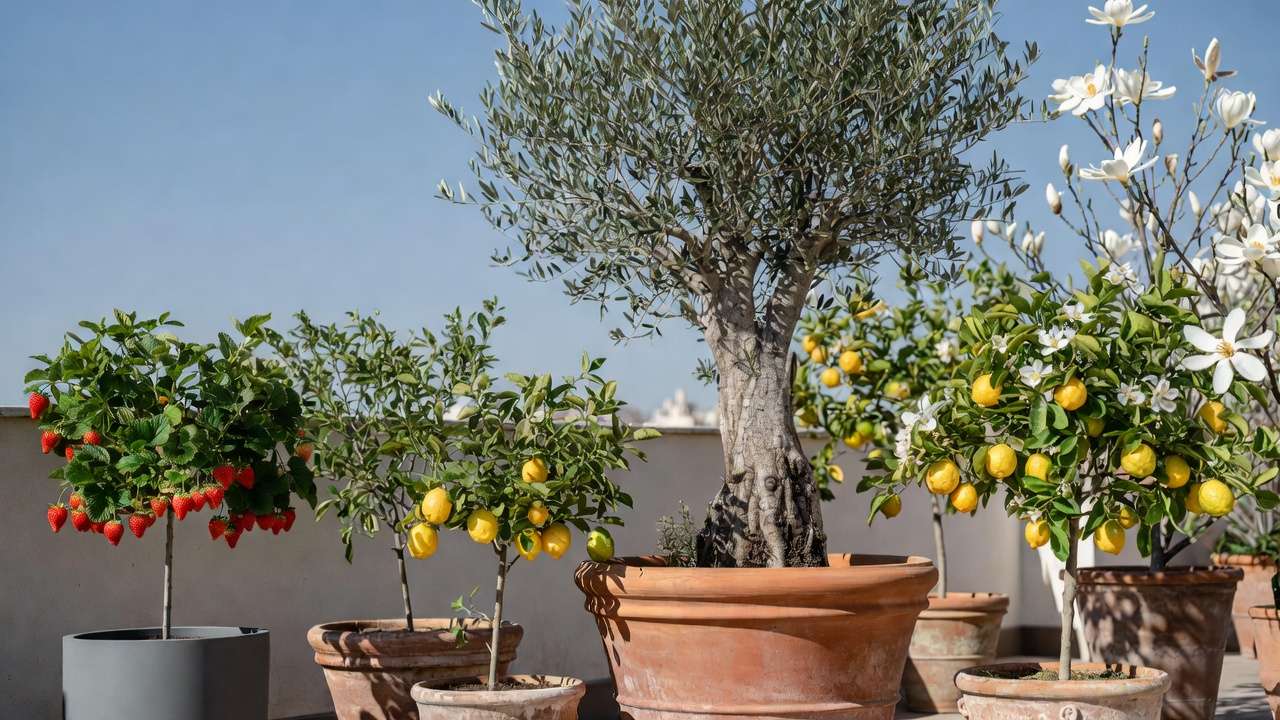
Star Magnolia (Magnolia stellata) This early-spring showstopper bursts into star-shaped white (or pale pink) fragrant flowers before the leaves emerge — often one of the first blooms of the year. Compact forms stay 6–10 feet tall in containers with slow growth. Zones 4–8, prefers full sun to part shade and consistent moisture. A single specimen in a statement pot becomes a neighborhood conversation piece.
Dwarf Crabapple (Malus spp., e.g., ‘Sargent’ or ‘Tina’) Spring clouds of pink or white blossoms, small persistent fruit that attracts birds, and attractive fall color. ‘Sargent’ stays naturally small (6–8 feet) and rounded. Zones 4–8, full sun. Fruiting adds wildlife value even on a tiny balcony.
Strawberry Tree (Arbutus unedo) A personal favorite for year-round intrigue: evergreen leaves, bell-shaped pinkish-white fall flowers, and strawberry-like red fruit that ripen over winter. Grows slowly to 8–12 feet in a large container. Zones 7–10, full sun to part shade. The quirky fruit and peeling cinnamon bark make it endlessly interesting.
Expert Tip for Small Trees in Pots Choose the largest container you can reasonably manage (30–36+ inches wide/deep for long-term success). Root prune and refresh soil every 3–5 years to prevent stunting. Stake young trees if your balcony is windy. 🌳
Native and Eco-Friendly Container Options (Sustainability Focus) 🐝🌿
Growing native plants — even in containers — supports local pollinators, birds, and beneficial insects far more effectively than most exotics. These North American natives (or close regional equivalents) perform well in pots and bring ecological benefits to urban spaces.
Serviceberry (Amelanchier alnifolia or A. arborea compact forms) Multi-stemmed small tree or large shrub with delicate white spring flowers, edible summer berries (great for birds and humans), and brilliant orange-red fall color. Zones 2–9, full sun to part shade. A true four-season native superstar.
Highbush Blueberry (Vaccinium corymbosum dwarf cultivars, e.g., ‘Top Hat’ or ‘Northsky’) Compact (2–4 feet), produces delicious berries, vivid red fall foliage, and attracts pollinators. Needs acidic soil (mix peat moss or use azalea/camellia blend). Zones 3–7, full sun. Edible landscaping at its best — even on a balcony.
Inkberry Holly (Ilex glabra ‘Shamrock’ or ‘Compacta’) Native evergreen with glossy black-green leaves and black berries (on female plants). Excellent for privacy or foundation-style planting in pots. Zones 5–9, sun to shade, wet-soil tolerant. A great substitute for boxwood in eco-conscious gardens.
Virginia Sweetspire (Itea virginica ‘Little Henry’) Fragrant white summer flower racemes, brilliant red fall color, and adaptable nature. Zones 5–9, part shade to sun. Pollinator magnet and deer-resistant in many areas.
Choosing natives helps reverse some of the habitat loss caused by urbanization — even a few pots make a meaningful difference.
Creative Design Ideas and Combinations for Patios & Balconies 🎨🪴
The magic of container gardening lies in how you combine plants. Use these proven design formulas to make even the smallest space feel intentional, lush, and larger than it is.
Thriller–Filler–Spiller Adapted for Woody Plants
- Thriller: One tall, dramatic focal plant (e.g., ‘Sky Pencil’ holly, dwarf olive, or star magnolia)
- Filler: Mid-height rounded shrubs (dwarf hydrangea, boxwood globe, pieris)
- Spiller: Trailing companions like ivy, creeping thyme, or low-growing sedums around the base
Example combo for a sunny balcony corner:
- Center: Dwarf citrus tree
- Surround: Two compact lavender or rosemary pots
- Base: Cascading dichondra or sweet potato vine
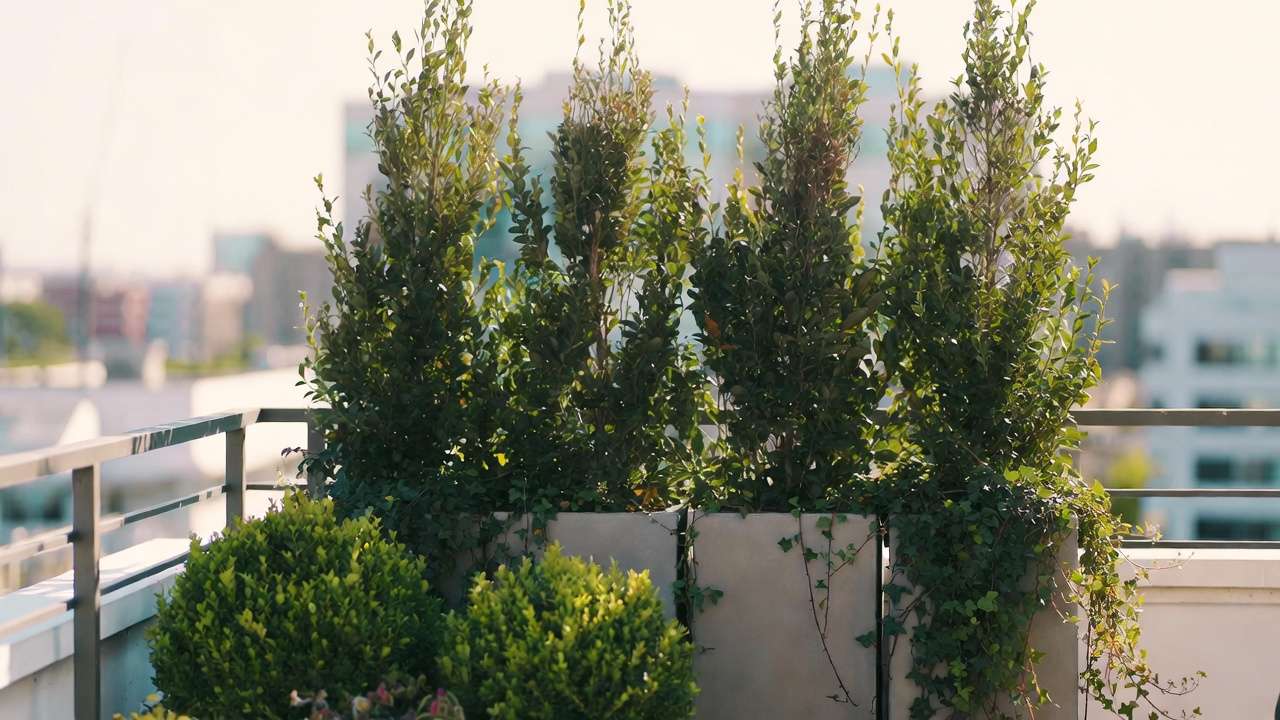
Privacy Screen Strategy Line up 3–5 matching large pots with narrow evergreens (‘Sky Pencil’ holly, ‘Tater Tot®’ arborvitae, or columnar juniper). Space them 18–24 inches apart for a living green wall that blocks neighbors or street views without feeling heavy.
Color-Themed Collections
- All-White Serenity: White-flowering hydrangea + variegated euonymus + silver-leaved olive
- Autumn Fire: Japanese maple + serviceberry + red-twig dogwood (Cornus sericea ‘Kelseyi’ dwarf)
- Pollinator Paradise: Blueberry + weigela + lavender + inkberry
Edible Container Garden Group fruiting small trees and shrubs:
- Dwarf lemon or lime
- Highbush blueberry
- Compact fig (‘Little Miss Figgy’)
- Rosemary and thyme as fillers
Add a small trellis for a climbing edible like miniature kiwi or passionflower if your balcony allows.
Seasonal Refresh Trick Keep the evergreen “bones” year-round (boxwood, mugo pine) and swap in seasonal color pots (spring bulbs, summer annuals, fall mums) around the base. This keeps the display fresh without replacing major plants.
Pro tip: Elevate some pots on sturdy plant stands or inverted pots to create layers and improve airflow/drainage.
Essential Care Guide: Keeping Your Container Shrubs and Trees Thriving 🛠️💧
Watering
- Check soil moisture 2–3 inches deep daily in summer; every 3–5 days in cooler months.
- Water thoroughly until it runs out the bottom.
- Use a moisture meter for precision — especially helpful for balconies where wind speeds drying.
- Morning watering reduces fungal risk.
Fertilizing
- Apply slow-release granular fertilizer (e.g., Osmocote or similar 14-14-14) in early spring.
- Supplement with liquid seaweed/fish emulsion every 4–6 weeks during active growth (March–September).
- Reduce or stop in winter.
Pruning & Shaping ✂️
- Light shaping in late winter/early spring before new growth.
- Remove dead, crossing, or inward-growing branches.
- For formal shapes (boxwood balls), shear 2–3 times per season.
- Never remove more than 1/3 of growth at once.
Pest & Disease Prevention Common issues:
- Aphids/scale → blast with water or use insecticidal soap
- Spider mites (hot/dry conditions) → increase humidity, use neem oil
- Root rot → ensure excellent drainage; avoid overwatering
Repotting & Root Pruning Every 2–4 years (spring is best):
- Remove plant, trim 1–2 inches off root ball circumference
- Refresh with new potting mix
- Move to slightly larger pot if desired
Winter Protection (Cold Climates) ❄️
- Move pots against house wall or into unheated garage
- Wrap pots in burlap/bubble wrap
- Mulch soil surface 2–3 inches deep
- Anti-desiccant spray on evergreens in late fall
Common Mistakes to Avoid ⚠️
- Starting with too-small pots → leads to frequent repotting stress
- Using garden soil → compacts and drowns roots
- Ignoring drainage → #1 cause of container plant death
- Placing tender plants in full winter wind → desiccation kills evergreens
- Over-fertilizing → burns roots, especially in small pots
- Forgetting to rotate pots → uneven growth toward light
Avoid these, and your container shrubs and trees will reward you for many seasons.
FAQs: Quick Answers to Top Reader Questions ❓
Can I grow these in very small balconies (under 10 sq ft)? Yes — choose true dwarfs like ‘Tater Tot®’ arborvitae, ‘Little Lime’ hydrangea, or ‘Top Hat’ blueberry. Use 14–18 inch pots and group 2–3 together.
Which are best for full sun vs. shade? Full sun: Olive, citrus, crape myrtle, mugo pine, lavender companions Part shade/shade: Japanese maple, pieris, hydrangea (some), inkberry, serviceberry
How do I protect them in winter in cold climates? Group pots, insulate sides, mulch top, move to sheltered spot. Hardy to zone 4–5 plants usually survive with protection; bring zones 8+ indoors.
Are there truly low-maintenance options? Top picks: Dwarf mugo pine, boxwood, ‘Tater Tot®’ arborvitae, inkberry — minimal pruning, drought-tolerant once established.
Can these produce fruit or flowers reliably in pots? Yes — especially citrus, blueberry, dwarf crabapple, serviceberry, and compact fig. Ensure enough sun, proper feeding, and pollination (hand-pollinate citrus indoors if needed).
Conclusion: Bring Your Outdoor Space to Life Today! 🚀🌿
Your balcony, patio, or tiny courtyard doesn’t have to stay empty or boring. With the right container-friendly shrubs and small trees, you can enjoy privacy, color, fragrance, wildlife support, and even homegrown fruit — all in pots that move when you do.
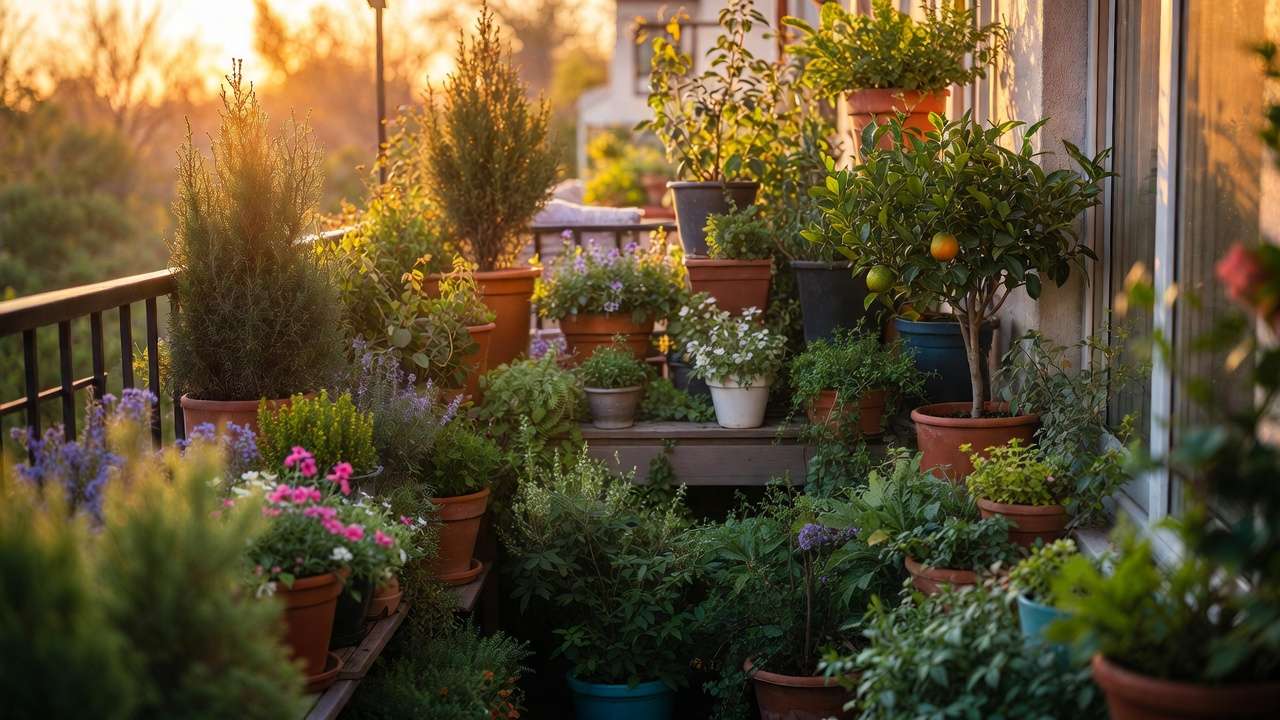
Start small: Pick one evergreen anchor and one seasonal star from the lists above. Invest in good pots and soil. Give them consistent (but not fussy) care. Within one growing season, you’ll have a living, breathing retreat that feels much bigger than its footprint.
I’d love to hear what you plant first — drop a comment or tag your container garden photos! 🌱 Happy planting, and may your small space bloom beautifully. 💚











