
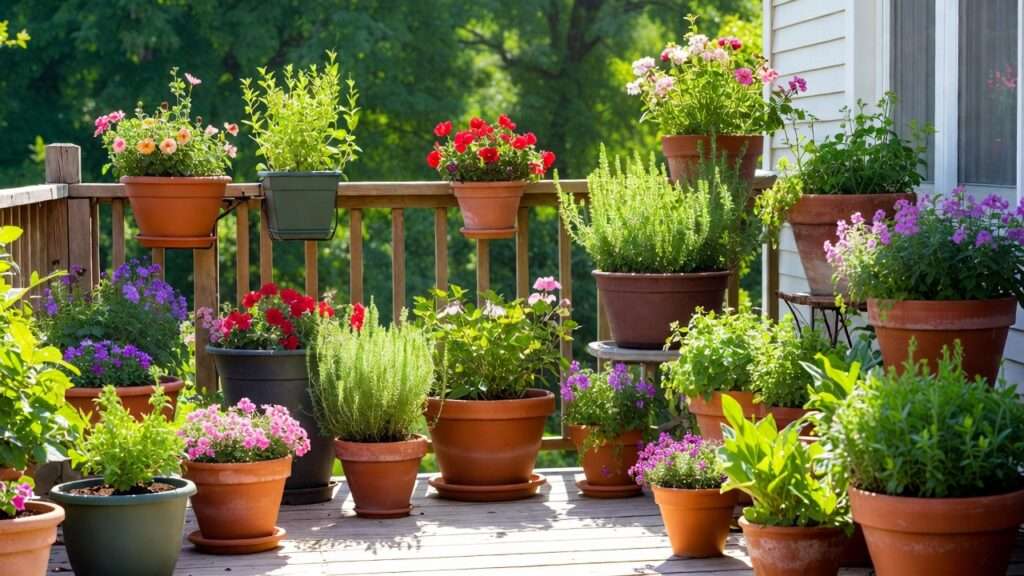
Imagine stepping onto your patio or deck and being greeted by vibrant blooms, fresh herbs ready for picking, and lush greenery that turns a plain hard surface into your personal outdoor oasis. No sprawling yard? No problem! Container gardening on patios and decks is the perfect solution for urban dwellers, apartment residents, or anyone with limited outdoor space who craves homegrown beauty and bounty. 🌱
As a dedicated plant care specialist with years of experience helping gardeners transform balconies, decks, and patios into thriving green havens, I’ve seen firsthand how container gardening outperforms traditional methods in many ways—better soil control, easier pest management, and the freedom to move plants as seasons or sunlight shift. Whether you’re dreaming of colorful flowers that attract pollinators, compact veggies for fresh salads, or aromatic herbs snipped straight into dinner, this guide delivers expert, step-by-step advice to help your plants not just survive, but truly thrive. Let’s dive in and create that lush, low-maintenance paradise you’ve been envisioning! 😊
(Word count so far: ~280)
Why Container Gardening on Patios and Decks Works So Well 🌟
Container gardening shines on patios and decks because it turns challenging hardscapes into productive, flexible spaces. Unlike in-ground planting, containers give you full control over soil quality, drainage, and mobility—key advantages when dealing with concrete, wood, or limited square footage.
You can chase the sun by rolling pots to sunnier spots, protect delicate plants from heavy rain or wind, and avoid common yard issues like compacted soil, weeds, or burrowing pests. 🌞 Plus, containers reduce soil-borne diseases and make watering more targeted.
That said, challenges exist: pots dry out faster than garden beds, weight can stress decks (especially upper levels), and wind exposure on elevated decks can topple tall plants. The good news? These are easily solved with smart choices—like lightweight materials, proper drainage, and wind-resistant groupings. Backed by horticultural best practices from sources like university extensions and proven container pros, container setups often yield healthier plants with less effort once established. Ready to get started? Let’s choose the right tools! 🪴
:max_bytes(150000):strip_icc()/27625_FernswithCarmen__26w_preview-74b3e018cc384972a958e4dd4e5ac789.jpg)
Choosing the Right Containers for Patios and Decks 🪴
The foundation of success starts with your pots—pick wisely for longevity, plant health, and deck safety.
Material Options and Pros/Cons
- Plastic: Lightweight, affordable, durable, and frost-resistant—ideal for movable setups on decks. Great for beginners!
- Terracotta: Breathable and classic-looking, but heavy, porous (dries fast), and prone to cracking in cold winters.
- Ceramic/Glazed: Stylish with excellent insulation; holds moisture better but can be heavy and expensive.
- Wood or Fabric: Natural aesthetic, good drainage; fabric pots (like grow bags) are super lightweight and promote air pruning for healthier roots. Self-watering pots are a game-changer for busy gardeners—they reduce watering frequency by up to 50%! 💧
Size and Shape Recommendations
Go big whenever possible! Minimum 12–18 inches deep and wide for most veggies and perennials—larger pots (14+ inches) retain moisture longer, support bigger root systems, and need less frequent watering. For herbs or small flowers, 10–12 inches works; for tomatoes or dwarf fruit, aim for 18–24 inches. Tall, narrow pots suit vertical accents; wide, shallow ones for sprawling spillers.
Drainage Essentials
Always ensure drainage holes—drill them if needed! Use pot feet, risers, or saucers to elevate pots and protect deck surfaces from stains or rot. For upper decks, check weight limits (filled large pots can exceed 50–100 lbs)—opt for lightweight plastic or foam-filled bases if concerned. ⚖️ Pro tip: Add a layer of gravel or broken pottery at the bottom for extra drainage without fillers that steal soil space.
Selecting the Best Plants for Container Success 🌸🍅
Plant choice is where the magic happens—focus on compact, heat-tolerant varieties suited to pots.
Top Flowers for Color and Pollinators
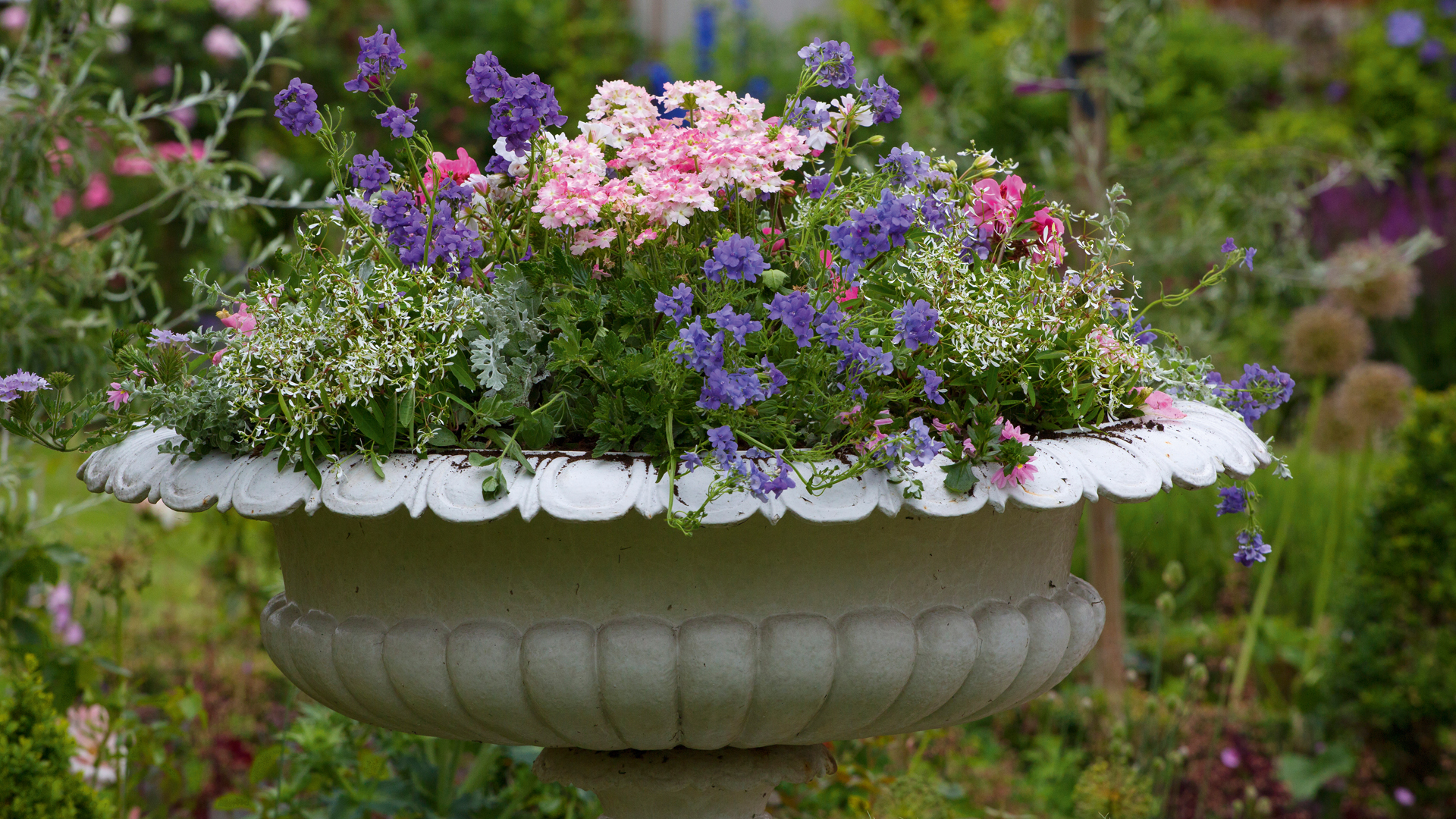
Heat-loving annuals like petunias, geraniums, lantana, verbena, and calibrachoa cascade beautifully and bloom all summer. For foliage interest, try heuchera (coral bells), coleus, or ornamental grasses. Perennials like lavender or dwarf conifers add year-round structure.
Best Vegetables and Herbs for Patios/Decks
Compact heroes: ‘Tumbling Tom’ or ‘Patio Princess’ cherry tomatoes, bush beans, peppers, lettuce, radishes, and dwarf eggplants. Herbs thrive together—basil, rosemary, thyme, parsley, and mint in one large pot create a fragrant kitchen garden. 🌿
Fruit and Edible Options
Strawberries (everbearing varieties), dwarf citrus, patio peaches, or raspberries like ‘Shortcake’ work wonders. Add vertical climbers: compact cucumbers or pole beans on trellises.
Shade vs. Sun Plant Lists
Full sun: Lantana, zinnias, salvia, tomatoes. Partial shade: Impatiens, begonias, hostas, ferns. Match plants to your space’s light for best results!
Soil, Planting, and Design Tips for Stunning Results 🎨
The Perfect Potting Mix Recipe
Skip garden soil—it compacts and harbors pests. Use high-quality potting mix with peat moss/coir, perlite/vermiculite for drainage, and compost for nutrients. DIY tweak: Add extra perlite for better airflow in hot patios. Top with mulch to retain moisture.
Thriller, Filler, Spiller Technique
This pro formula creates balanced, eye-catching combos:
- Thriller: Tall focal plant (e.g., ornamental grass or canna).
- Filler: Mounding mid-height (e.g., geraniums or coleus).
- Spiller: Trailing over edges (e.g., sweet potato vine or lobelia).

Color, Texture, and Height Play
Mix monochromatic schemes for elegance or vibrant contrasts for energy. Focus on foliage for low-maintenance longevity.
Vertical Gardening and Arrangement Ideas
Maximize tiny spaces with trellises, hanging baskets, stacked planters, or railing pots. Group at varying heights for depth—place tall ones as backdrops, cluster smaller for focal points. 📈
Watering, Fertilizing, and Maintenance Mastery 💦
Containers dry fast—check soil daily (top inch dry? Water!). Morning watering minimizes evaporation; mulch helps retain moisture.
Fertilize every 2–4 weeks with slow-release or liquid organic options, especially for edibles. Prune deadheads, watch for aphids (hose off or use neem), and use companions like marigolds for natural pest control. 🛡️
Common issues: Root rot from poor drainage, yellow leaves from nutrient lack—fix with adjustments.
Seasonal Care and Year-Round Strategies 🍂❄️
One of the biggest advantages of container gardening is how adaptable it is across seasons—your patio or deck can stay beautiful and productive almost year-round with a little planning.
Spring Setup and Planting Timeline Start indoors 6–8 weeks before your last frost date (check your local frost dates—essential for success!). Sow seeds for tomatoes, peppers, and herbs in trays, or buy healthy seedlings from a reputable nursery. Once nighttime temperatures stay reliably above 50°F (10°C), gradually harden off plants by exposing them to outdoor conditions for increasing periods. Transplant into pots after the danger of frost passes. Early bloomers like pansies, violas, and primroses can go out sooner for instant color. 🌷
Summer Heat Survival Tips Containers heat up quickly on sunny patios, stressing roots.
- Water deeply in the early morning so foliage dries before night (reduces fungal risk).
- Apply 1–2 inches of organic mulch (bark, straw, or cocoa hulls) on top of soil to cut evaporation by up to 30%.
- Group pots together to create shade for each other’s roots.
- Use light-colored pots—they reflect heat better than dark ones.
- Move heat-sensitive plants (ferns, impatiens) to shadier spots during heatwaves. Pro tip: Install shade cloth (30–50% density) over particularly exposed areas on hot decks. ☀️
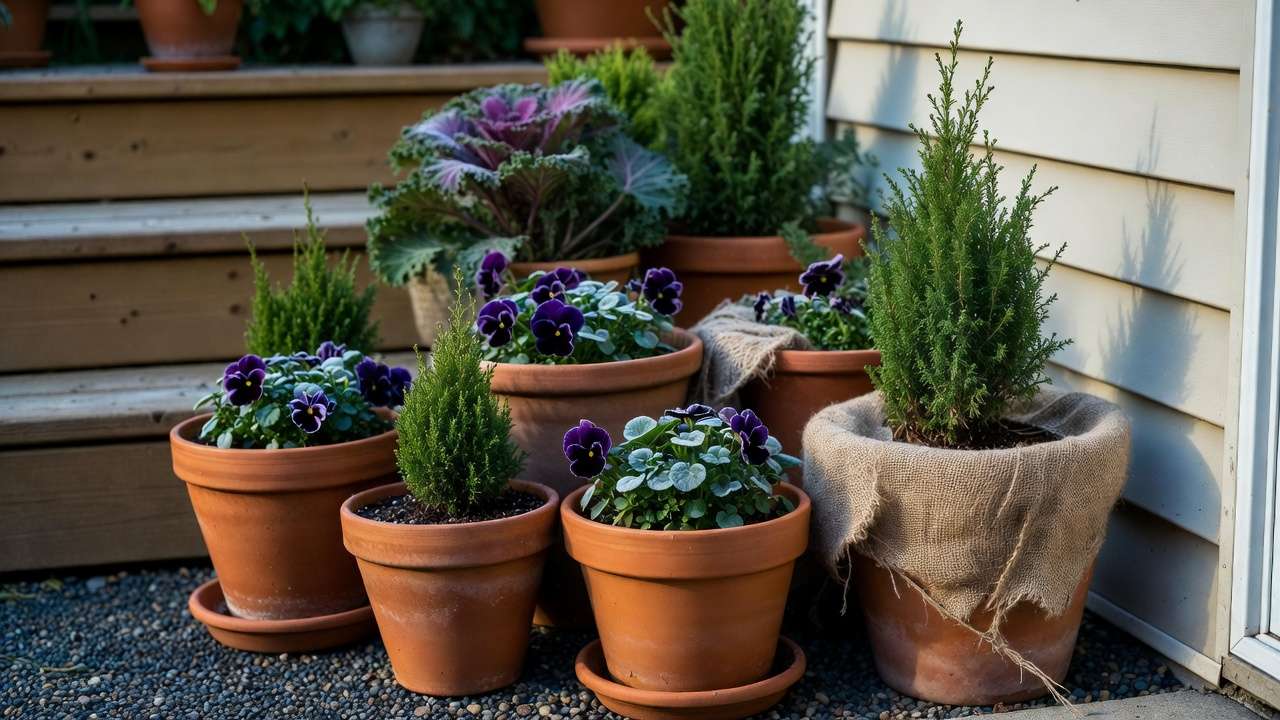
Fall Cleanup and Overwintering As nights cool, bring tender annuals and tropicals indoors or treat them as annuals. Cut back perennials by half, remove spent flowers, and apply a light dose of slow-release fertilizer. For hardy perennials and small shrubs in pots:
- Cluster pots against a south-facing wall for wind protection.
- Wrap pots in bubble wrap or burlap to insulate roots.
- Mulch heavily over the soil surface.
- Water sparingly but don’t let soil dry out completely—roots still need moisture even when dormant.
In very cold climates (zones 5 and below), consider moving pots to an unheated garage or sheltered porch during deep freezes, watering just enough to keep roots from desiccating. ❄️
Extending the Season Use mini hoop houses, cloches, or cold frames over pots in fall and early spring to gain several extra weeks of growth. For winter interest, plant evergreen dwarf conifers, winter pansies, kale, or ornamental cabbage. A few strings of solar fairy lights woven through greenery can make your winter deck magical even when little is blooming. ✨
Creative Ideas and Inspiration to Elevate Your Space ✨
Ready to go beyond basics? Here are proven, eye-catching ways to turn a simple patio into a showstopper:
- Themed Container Gardens
- Herb Kitchen Garden: One large rectangular planter filled with basil, oregano, chives, thyme, and parsley—place it near your grill or kitchen door.
- Pollinator Haven: Mix nectar-rich lantana, salvia, zinnias, and bee balm with a small birdbath or shallow dish of water for butterflies and bees. 🦋
- Tropical Oasis: Cannas, elephant ears, colocasia, and mandevilla on trellises for bold drama.
- Succulent & Cactus Display: Low-water, sun-loving echeveria, sedum, and agave in shallow terracotta bowls—perfect for hot, dry decks.
- Budget-Friendly Upcycling Turn old galvanized buckets, wooden crates, wheelbarrows, or even vintage suitcases into charming planters. Drill drainage holes and line with landscape fabric if needed. These unique containers add personality at a fraction of the cost.
- Vertical and Multi-Level Designs for Tiny Patios
- Wall-mounted pockets or living wall systems for herbs and trailing flowers.
- Tiered plant stands or ladder shelves to create height without taking floor space.
- Hanging baskets and macramé holders on railings or overhead hooks.
- Corner trellises for climbing nasturtiums, sweet peas, or mini cucumbers. 📈
- Real-Life Transformation Examples Many of my clients start with just three pots and end up with a full edible landscape. One urban balcony went from bare concrete to a salad bar with cherry tomatoes, lettuce towers, and strawberries—yielding fresh produce weekly all summer. Another deck became a private retreat with layered foliage textures and soft lighting. Your space can do the same!
Common Mistakes to Avoid (and How to Fix Them) 🚫
Even experienced gardeners make these slip-ups—here’s how to sidestep them:
- Using pots that are too small → Roots become cramped, plants stunt. Fix: Repot into containers at least 2–4 inches larger in diameter every 1–2 years.
- Skipping drainage holes → Root rot kills fast. Fix: Always add holes; use pot feet or risers.
- Watering inconsistently → Stresses plants, invites pests. Fix: Stick a finger 1–2 inches into soil daily; water when dry.
- Choosing sun-loving plants for shady decks (or vice versa) → Poor blooming or leggy growth. Fix: Match plants to actual light conditions—observe your space at different times of day.
- Forgetting to fertilize → Yellow leaves and weak flowering. Fix: Feed every 2–4 weeks during active growth.
- Overcrowding containers → Competition for water and nutrients. Fix: Follow the thriller-filler-spiller rule and give each plant breathing room.
Quick-reference troubleshooting table:
| Problem | Likely Cause | Quick Fix |
|---|---|---|
| Yellow lower leaves | Overwatering / nutrient lack | Improve drainage; fertilize |
| Wilting despite water | Root-bound / heat stress | Repot or shade + mulch |
| Leggy, stretched growth | Insufficient light | Move to sunnier spot |
| Brown leaf tips | Low humidity / fluoride | Mist leaves; use rainwater if possible |
| Few flowers | Wrong variety / poor feeding | Switch to blooming types; fertilize |
Frequently Asked Questions (FAQs) ❓
Can I grow tomatoes successfully on a shady deck? Yes, but choose shade-tolerant varieties like ‘Sweet 100’ cherry tomatoes or patio types bred for containers. You’ll get fewer fruits than in full sun, but still plenty for fresh eating.
How much weight is safe for my deck? Most residential decks handle 50–100 lbs per square foot. A large 24-inch pot filled with soil and plant can weigh 80–150 lbs. Distribute weight evenly, avoid clustering heavy pots in one spot, and consult a structural engineer if your deck is older or elevated.
What are the easiest beginner plants for patios and decks? Start with: petunias, geraniums, marigolds, basil, mint, lettuce, and succulents. They forgive small mistakes and give quick wins.
Do I need special soil for edibles? Use organic potting mix labeled for vegetables or containers. Avoid cheap mixes with high filler content. Add compost or worm castings for extra nutrition.
How do I keep mosquitoes away from saucers? Empty saucers after watering, or add a few drops of dish soap to standing water to break surface tension.
Can I leave perennials in pots over winter in cold climates? Yes, with protection—insulate pots, mulch heavily, and shelter from wind. Some (lavender, rosemary, heuchera) are surprisingly hardy when roots are guarded.
Final Thoughts + Call to Action 🌿
Container gardening on patios and decks isn’t just about growing plants—it’s about reclaiming your outdoor space, enjoying fresh flavors at your fingertips, and creating a living, breathing extension of your home. Start small, observe what thrives in your unique microclimate, and let your garden evolve naturally. With the right containers, soil, plant choices, and consistent (but not overwhelming) care, even the tiniest deck can become a lush, productive retreat.
I’ve watched countless beginners go from “I kill every plant” to harvesting their own tomatoes and herbs in one season. You can too! 🌱
What will you plant first? Drop a comment below with your patio/deck size, light conditions, or dream plants—I’d love to give you personalized starter suggestions. Happy gardening, and here’s to thriving green spaces, no yard required! 😊











