
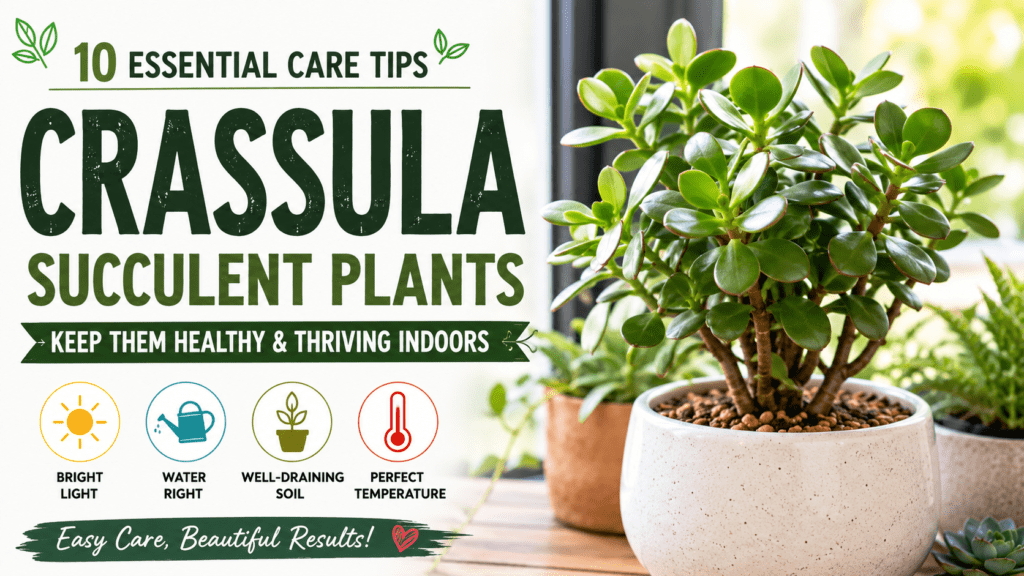
Have you ever bought a beautiful succulent, only to watch it slowly become soft, leggy, or lifeless a few weeks later? 😔 You’re not alone. Many plant lovers struggle with succulent care because they unknowingly treat these drought-loving plants like ordinary houseplants.
The good news? Crassula succulent plants are actually among the easiest indoor plants to grow when you understand their basic needs. With the right balance of sunlight, watering, soil, and care, these stunning succulents can thrive for years — adding beauty, calmness, and fresh greenery to your home 🪴✨
Whether you’re caring for a classic Jade Plant or exploring other varieties of Crassula, this expert guide will walk you through everything you need to know. From avoiding root rot to choosing the perfect pot, these practical care tips are designed to help beginners and experienced plant parents alike grow healthier, happier succulents indoors.
🌵 What Are Crassula Succulent Plants?
Crassula is a large genus of succulent plants known for their thick, fleshy leaves and easy-care nature. Native mainly to South Africa, these plants evolved in dry climates where they learned to store water in their leaves and stems 🌞
Today, Crassula plants are loved worldwide because they:
- Require minimal maintenance
- Adapt well to indoor environments
- Come in many attractive shapes and colors
- Thrive in small spaces like apartments and offices
The most popular type is the Jade Plant (Crassula ovata), often considered a symbol of luck and prosperity 🍀
🌿 Popular Types of Crassula Succulent Plants
🪴 Jade Plant (Crassula ovata)
The classic favorite with thick green leaves and tree-like growth.
🪴 String of Buttons (Crassula perforata)
Known for its stacked triangular leaves that look like buttons on a string.
🪴 Campfire Crassula
Features fiery red edges when exposed to bright sunlight 🔥
🪴 Baby Necklace
A compact succulent with tightly packed bead-like foliage.
🪴 Silver Springtime
Beautiful silver-green leaves with soft texture and compact growth.
☀️ Tip #1 — Give Crassula Succulent Plants the Right Amount of Light

Lighting is the single most important factor for healthy succulent growth 🌞
One of the biggest mistakes people make is placing Crassula plants in dark corners. While these plants tolerate indoor conditions better than many succulents, they still need plenty of light to maintain compact, healthy growth.
🌞 Best Indoor Lighting Conditions
Crassula succulent plants thrive in:
- Bright indirect sunlight
- 4–6 hours of filtered light daily
- East-facing or south-facing windows
Morning sunlight is usually ideal because it’s gentler than harsh afternoon rays.
If your home lacks natural light, consider using a grow light 💡 during winter months.
🚨 Signs Your Crassula Needs More Light
Watch for these common warning signs:
- Long stretched stems
- Pale green leaves
- Large gaps between leaves
- Leaning toward the window
This condition is called etiolation, and it weakens the plant over time.
☀️ Signs of Too Much Sun
Although Crassula enjoys sunlight, intense direct exposure can cause:
- Brown scorch marks
- Wrinkled leaves
- Faded color patches
Move the plant slightly away from harsh afternoon sun if you notice these symptoms.
✅ Expert Tip
Rotate your plant every 1–2 weeks to encourage even growth and prevent leaning 🌿
💧 Tip #2 — Water Properly to Avoid Root Rot

If there’s one thing that kills more succulents than anything else, it’s overwatering 💦
Crassula plants store water in their leaves, which means they prefer dry conditions rather than constantly moist soil.
💦 Use the “Soak and Dry” Method
This is the safest watering technique for succulents:
- Water the soil thoroughly
- Allow excess water to drain completely
- Wait until the soil dries out fully before watering again
Never water on a fixed weekly schedule. Instead, always check the soil first.
🌱 How Often Should You Water?
Watering frequency depends on:
- Season
- Temperature
- Pot type
- Humidity levels
- Light exposure
General Indoor Guideline:
| Season | Watering Frequency |
|---|---|
| Spring/Summer | Every 10–14 days |
| Fall/Winter | Every 3–4 weeks |
🚨 Signs of Overwatering
Overwatered Crassula plants often develop:
- Mushy stems
- Yellow leaves
- Black spots
- Dropping foliage
🌵 Signs of Underwatering
Underwatered plants may show:
- Wrinkled leaves
- Dry edges
- Thin foliage
💡 Pro Tip
Always water the soil directly — avoid wetting the leaves whenever possible.
🪴 Tip #3 — Choose the Best Soil for Healthy Root Growth
Healthy roots are the foundation of healthy succulents 🌱
Regular garden soil or standard potting mix holds too much moisture for Crassula plants, increasing the risk of fungal disease and root rot.
🌿 Why Succulents Need Fast-Draining Soil
In nature, Crassula plants grow in sandy, rocky environments where water drains quickly.
Their roots need:
- Excellent airflow
- Quick drainage
- Minimal water retention
🌵 Best Soil Mix for Crassula Succulent Plants
A quality succulent mix usually contains:
- Coarse sand
- Perlite
- Pumice
- Lightweight organic matter
🧪 Easy DIY Succulent Soil Recipe
You can create your own mix at home:
- 2 parts cactus potting mix
- 1 part perlite
- 1 part coarse sand
This combination helps prevent soggy roots while supporting healthy growth.
✅ Expert Insight
Avoid heavy clay soils because they trap water around the roots for too long.
🏺 Tip #4 — Use Pots With Proper Drainage

Even perfect soil won’t save your succulent if the pot has poor drainage 🚫💧
🪴 Why Drainage Holes Matter
Drainage holes allow excess water to escape, preventing root suffocation and fungal issues.
Without drainage:
- Water accumulates at the bottom
- Roots stay wet too long
- Rot develops quickly
🏺 Best Pot Materials
🌿 Terracotta Pots
Best overall option because they:
- Absorb extra moisture
- Improve airflow
- Reduce overwatering risk
🌿 Ceramic Pots
Beautiful and decorative but may retain more moisture.
🌿 Plastic Pots
Lightweight and affordable but hold water longer.
📏 Pot Size Mistakes to Avoid
Choosing a pot that’s too large can cause:
- Excess soil moisture
- Slow drying
- Root problems
A slightly snug pot is usually best for succulents.
🌡️ Tip #5 — Maintain the Ideal Temperature and Humidity
Crassula succulent plants thrive in warm, dry indoor environments 🌤️
🌞 Ideal Temperature Range
The ideal indoor temperature is:
- 65–80°F (18–27°C)
Most homes naturally fall within this range, making Crassula perfect for indoor growing.
❄️ Can Crassula Plants Tolerate Cold?
Not very well.
These succulents dislike:
- Frost
- Freezing temperatures
- Cold drafts near windows
If temperatures fall below 50°F (10°C), growth may slow or damage can occur.
💨 Humidity Needs
Unlike tropical houseplants, Crassula plants prefer:
- Low humidity
- Good air circulation
High humidity can encourage fungal disease and pest problems.
💡 Helpful Tip
Avoid placing succulents near humidifiers or steamy bathrooms.
🌿 Tip #6 — Fertilize Crassula Succulent Plants the Right Way

Succulents are light feeders, but occasional nutrients can improve growth and leaf color 🌱✨
🌼 Best Fertilizers for Succulents
Choose:
- Balanced liquid fertilizer
- Low-nitrogen succulent fertilizer
- Organic cactus plant food
Dilute fertilizer to half strength to avoid burning the roots.
📅 How Often to Fertilize
Feed only during active growth:
- Spring
- Early summer
Generally:
- Once every 4–6 weeks is enough
Avoid fertilizing during winter dormancy.
🚨 Signs of Overfertilizing
Too much fertilizer may cause:
- Weak floppy growth
- Salt buildup on soil
- Brown leaf tips
✅ Expert Recommendation
Always water lightly before fertilizing to protect the roots.
✂️ Tip #7 — Prune and Propagate for Fuller Growth
One of the most rewarding parts of growing Crassula succulent plants is how easy they are to propagate 🌿💚
Pruning not only improves appearance but also encourages stronger, bushier growth.
🌱 Benefits of Pruning
Regular pruning helps:
- Remove weak stems
- Shape the plant
- Encourage branching
- Improve airflow
Use clean, sharp scissors or pruning shears.
🌿 How to Propagate Crassula Succulent Plants
✂️ Stem Cutting Method
- Cut a healthy stem
- Let it dry for 1–2 days
- Place it in dry succulent soil
- Water lightly after roots begin forming
🍃 Leaf Propagation
Healthy leaves can also produce baby plants when placed on soil.
🌱 Common Propagation Mistakes to Avoid
Even though propagation is simple, beginners often make a few mistakes that prevent success.
🚫 Avoid These Errors
- Watering cuttings immediately after planting
- Using wet soil
- Skipping the callusing process
- Placing cuttings in deep shade
✅ Expert Tip
Always allow cuttings to dry and form a protective callus before planting. This reduces the risk of rot dramatically.
🐛 Tip #8 — Prevent Common Pests and Diseases Naturally

Healthy Crassula succulent plants are naturally resilient, but pests and diseases can still appear — especially indoors where airflow is limited 🐞
The good news? Most issues are preventable with early care and observation.
🐛 Common Pests That Affect Crassula Plants
🐞 Mealybugs
These tiny white cotton-like insects hide in leaf joints and suck plant sap.
🕷️ Spider Mites
Very small pests that create fine webbing and cause leaf discoloration.
🪰 Fungus Gnats
Usually appear when soil stays wet too long.
🌿 Natural Pest Control Solutions
🌱 Neem Oil Spray
A safe and effective organic treatment for many succulent pests.
🧴 Isopropyl Alcohol Treatment
Use a cotton swab dipped in diluted rubbing alcohol to remove mealybugs.
🌬️ Improve Air Circulation
Good airflow helps reduce fungal problems and pest outbreaks.
🚨 Common Diseases and Prevention
💧 Root Rot
Usually caused by:
- Overwatering
- Poor drainage
- Heavy soil
🍂 Powdery Mildew
Appears as white powder on leaves in humid conditions.
⚫ Black Stem Rot
Often caused by fungal infection from excess moisture.
📌 Early Warning Signs You Should Never Ignore
Watch closely for:
- Sticky leaves
- Sudden leaf drop
- Black spots
- Soft stems
- White fuzz or webs
Catching problems early can save your plant before serious damage occurs.
🍂 Tip #9 — Seasonal Care Tips for Year-Round Health

Crassula succulent plants don’t need the exact same care all year long 🌦️
Adjusting your routine seasonally can dramatically improve plant health and longevity.
🌸 Spring and Summer Care
This is the active growing season.
During warmer months:
- Water more frequently
- Fertilize lightly
- Increase sunlight exposure
- Monitor rapid growth
This is also the best time for:
- Repotting
- Propagation
- Pruning
🍁 Fall and Winter Dormancy Care
Growth naturally slows during colder months.
During dormancy:
- Reduce watering significantly
- Stop fertilizing
- Keep plants away from cold drafts
- Maintain bright light exposure
Many succulent deaths occur in winter because owners continue summer watering habits ❄️
🌨️ Indoor Winter Survival Tips
Protect Plants From:
- Freezing windows
- Heater vents
- Sudden temperature swings
💡 Helpful Tip
If natural sunlight decreases during winter, supplement with grow lights for healthier growth.
🌟 Tip #10 — Styling and Decorating With Crassula Succulent Plants

One reason Crassula plants are so popular is their incredible decorative value 🏡✨
Their sculptural shapes and low-maintenance nature make them ideal for modern indoor spaces.
🏡 Best Indoor Placement Ideas
🌿 Office Desk
Adds greenery without requiring constant care.
🌿 Sunny Kitchen Windows
Perfect for bright indirect light.
🌿 Bedroom Corners
Creates a calming atmosphere.
🌿 Floating Shelves
Excellent for showcasing smaller Crassula varieties.
🌵 Companion Plants That Pair Well
Create stunning succulent displays with:
- Snake plants
- Haworthia
- Echeveria
- Zebra cactus
- Aloe vera
These plants share similar care requirements, making maintenance easier.
🎨 Create an Aesthetic Succulent Display
Design Ideas:
- Use terracotta pots for a natural look
- Mix varying heights and textures
- Combine pebbles and decorative stones
- Create minimalist arrangements
📸 Google Discover Tip
Original styled plant photography can dramatically improve engagement and sharing potential.
⚠️ Common Mistakes People Make With Crassula Succulent Plants
Even experienced plant owners sometimes struggle with succulent care. Avoiding these common mistakes can save you months of frustration 🌿
🚫 Mistake #1 — Watering Too Frequently
Succulents prefer dry conditions.
Better Solution:
Wait until the soil dries completely before watering again.
🚫 Mistake #2 — Using Pots Without Drainage
Decorative pots may look nice, but trapped moisture quickly causes root rot.
Better Solution:
Always use containers with drainage holes.
🚫 Mistake #3 — Keeping Plants in Dark Rooms
Low light leads to weak, stretched growth.
Better Solution:
Place near bright windows or use grow lights.
🚫 Mistake #4 — Ignoring Early Pest Problems
Small infestations can spread quickly indoors.
Better Solution:
Inspect leaves regularly and isolate infected plants immediately.
🚫 Mistake #5 — Overfertilizing
Too many nutrients can weaken succulents instead of helping them.
Better Solution:
Feed lightly during active growth only.
📌 Quick “Do This Instead” Table
| Common Mistake 🚫 | Better Solution ✅ |
|---|---|
| Watering every week | Water only when soil dries |
| Using regular garden soil | Use cactus/succulent mix |
| Keeping in dark corners | Provide bright indirect light |
| Oversized pots | Use snug pots with drainage |
| Ignoring pests | Inspect leaves weekly |
🧠 Expert Care Tips Most Beginners Don’t Know

These lesser-known techniques can dramatically improve the health and appearance of your Crassula succulent plants 🌱
🌬️ Improve Airflow Indoors
Good air circulation:
- Reduces fungal disease
- Prevents pests
- Helps soil dry evenly
Avoid overcrowding plants together.
💧 Try Bottom Watering Occasionally
Place the pot in shallow water for several minutes and allow roots to absorb moisture naturally.
Benefits include:
- Stronger root development
- Reduced overwatering risk
- Better moisture control
🔄 Rotate Your Plant Monthly
This prevents leaning and promotes symmetrical growth.
🍃 Clean Dust From Leaves
Dust blocks sunlight and reduces photosynthesis.
Simply wipe leaves gently using:
- A soft cloth
- A dry microfiber towel
🚪 Quarantine New Plants
Always isolate new succulents for 1–2 weeks before placing them near existing plants.
This prevents accidental pest outbreaks indoors 🐞
❓ Frequently Asked Questions About Crassula Succulent Plants
🌿 How often should I water Crassula succulent plants?
Water only when the soil becomes completely dry. Frequency varies depending on temperature, season, and light exposure.
☀️ Can Crassula plants survive in low light?
They can tolerate low light temporarily, but long-term low light causes weak, stretched growth.
🍂 Why are my Crassula leaves falling off?
Common causes include:
- Overwatering
- Sudden temperature changes
- Poor lighting
- Root stress
🐶 Are Crassula succulent plants toxic to pets?
Some varieties, including Jade Plants, can be mildly toxic to cats and dogs if ingested. Keep them out of reach of curious pets.
🌱 How fast do Crassula plants grow indoors?
Growth is usually moderate. With proper light and care, noticeable growth often occurs during spring and summer.
🌤️ Can I grow Crassula outdoors?
Yes — in warm climates with mild winters. Outdoor plants need protection from frost and excessive rain.
🛠️ Recommended Tools and Supplies for Crassula Care

Using the right tools can make succulent care easier and more successful 🌿
🌱 Essential Supplies
- Succulent soil mix
- Terracotta pots
- Moisture meter
- Grow lights
- Pruning scissors
- Neem oil spray
- Decorative top dressing stones
💡 Expert Recommendation
Investing in proper drainage and lighting is far more important than buying expensive fertilizers.
🌿 Conclusion: Healthy Crassula Succulent Plants Start With Simple Care Habits
Crassula succulent plants are beautiful, resilient, and surprisingly easy to grow once you understand their natural needs 🌵✨
By focusing on:
- Proper lighting
- Careful watering
- Fast-draining soil
- Good airflow
- Seasonal adjustments
—you can enjoy thriving succulents that remain healthy for many years indoors.
Remember: successful succulent care isn’t about constant attention. It’s about consistency, observation, and avoiding common mistakes 💚
Whether you’re growing a classic Jade Plant or building a full succulent collection, Crassula plants are an excellent choice for beginners and experienced plant lovers alike.











