
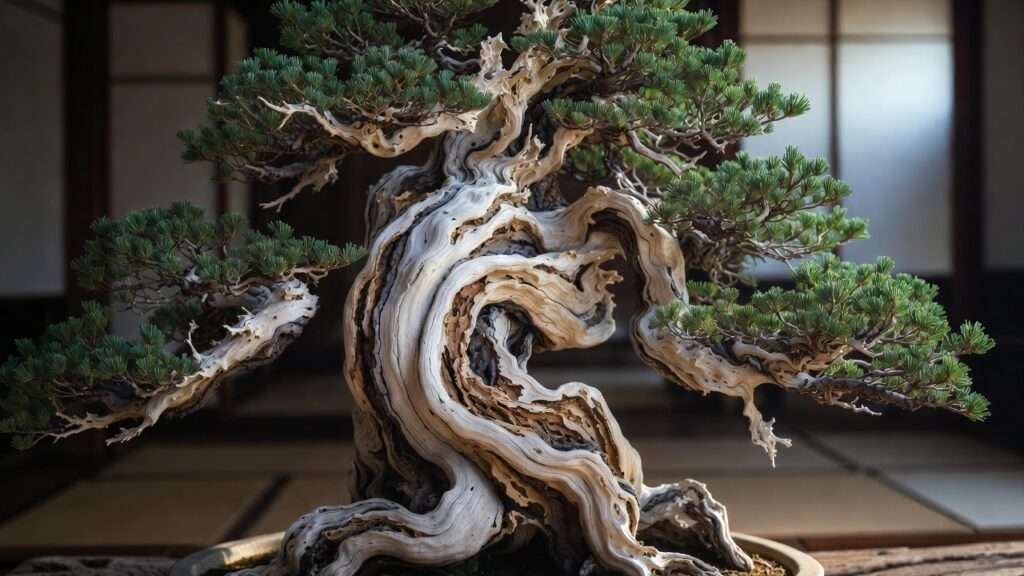
Imagine standing before a young juniper, its trunk still smooth and youthful, and within a few careful hours transforming it into an ancient survivor — bark stripped away to reveal sun-bleached, twisted deadwood that tells a story of relentless mountain winds and timeless endurance. That’s the transformative power of creating unique bonsai driftwood effects. 🌲🔥
For bonsai enthusiasts, adding jin (dead branches), shari (trunk deadwood strips), and sharimiki (full driftwood style) isn’t just a technique — it’s an art form that instantly adds decades of apparent age, dramatic contrast, and profound character to your tree. These features turn ordinary specimens into captivating showpieces, hide wiring scars or trunk flaws, and create that sought-after “wild, weathered” aesthetic that makes collectors pause in awe.
Yet many growers hesitate: Will it harm my tree? Will the deadwood look fake or cartoonish? How do I make it truly unique instead of cookie-cutter? If you’ve ever stared at your bonsai wishing it looked more rugged and storied, this in-depth guide is for you.
With over two decades of hands-on experience styling hundreds of conifers (especially junipers and pines), I’ve refined these techniques through trial, workshops with Japanese masters, and exhibit-level trees. Here you’ll find step-by-step instructions, species recommendations, tool advice, artistic design principles, aftercare secrets, and inspiration to help you craft standout driftwood effects safely and beautifully. Let’s turn your bonsai into living art that stops people in their tracks. 🌟

Understanding Bonsai Deadwood: Jin, Shari, and Sharimiki Explained 📚
Deadwood — or “deadwood features” in bonsai terminology — refers to intentionally created or preserved areas of dead tissue that mimic natural weathering. These elements are especially powerful in coniferous species, where they contrast sharply with vibrant live foliage.
What is Jin? ⚡ Jin consists of dead branches or branch tips stripped of bark and cambium, often tapered and twisted to resemble lightning strikes, wind damage, or old snags. A well-executed jin adds vertical drama and draws the eye upward, emphasizing branch structure and movement.
What is Shari? 🌊 Shari creates barkless strips or patches along the trunk, typically following the natural flow of live veins. These weathered areas evoke trees that have survived avalanches, rock slides, or intense sun exposure, revealing smooth, silvery wood beneath.
What is Sharimiki (Driftwood Style)? 🏖️ Sharimiki takes shari to the extreme: large portions (sometimes 60–80%) of the trunk become deadwood, resembling sun-bleached driftwood washed ashore. The live veins remain narrow ribbons that supply the foliage, creating high-contrast, sculptural forms. This style is iconic in Shimpaku juniper and demands careful planning to keep the tree alive and vigorous.
These techniques work together harmoniously. A single bold jin can accent a branch line, while flowing shari adds trunk interest, and full sharimiki delivers breathtaking drama. The goal? Balance — too much deadwood overwhelms the tree; too little misses the opportunity for impact. 🌿
Choosing the Right Tree Species for Stunning Driftwood Effects 🌱
Not every species responds equally well to deadwood creation. Conifers with fibrous, stringy wood and naturally peeling bark excel.
Top Recommendations:
- Shimpaku Juniper (Juniperus chinensis ‘Shimpaku’) — The gold standard for sharimiki. Its bark naturally flakes, and deadwood bleaches beautifully to silvery-white.
- Other Junipers (Procumbens, Sabina, etc.) — Great for bold jin and shari with good texture.
- Japanese Black Pine (Pinus thunbergii) & White Pine — Produce striking, rugged jin; wood is harder but carves well.
- Yew (Taxus), Cedar (Cedrus), Larch (Larix) — Excellent for natural-looking deadwood with interesting grain.
Species to Approach Cautiously: Deciduous trees like maples, elms, or olives have softer wood that rots easily and doesn’t bleach attractively. If you must use them, limit to small jin only and seal meticulously.
When selecting material, prioritize trees with:
- Thick, tapered trunks
- Interesting nebari (surface roots)
- Some natural dead areas to expand upon
- Strong live veins visible under bark
A pre-bonsai yamadori (wild-collected) specimen with natural dieback is often the fastest path to impressive driftwood effects. 🌲

Essential Tools and Materials for Safe, Professional Deadwood Creation 🛠️
Quality tools make the difference between amateurish results and museum-worthy deadwood.
Must-Haves:
- Jin pliers — For gripping and twisting fibers without crushing
- Concave branch cutters — Clean removal of branches
- Sharp carving knives & chisels (various sizes)
- Rotary tool (Dremel-style) with carving bits — For detailed texturing
- Lime sulfur solution — Bleaches and preserves deadwood (dilute properly!)
- Protective gear — Gloves, eye protection, mask (lime sulfur fumes are strong)
- Wood hardener/sealant (optional) — For extra rot prevention
Beginners: Start with manual tools to develop feel. Advanced: A variable-speed rotary tool unlocks incredible detail. Always sterilize tools between trees to prevent disease spread. ⚙️
Step-by-Step Guide: Creating Natural Jin on Branches 🌿
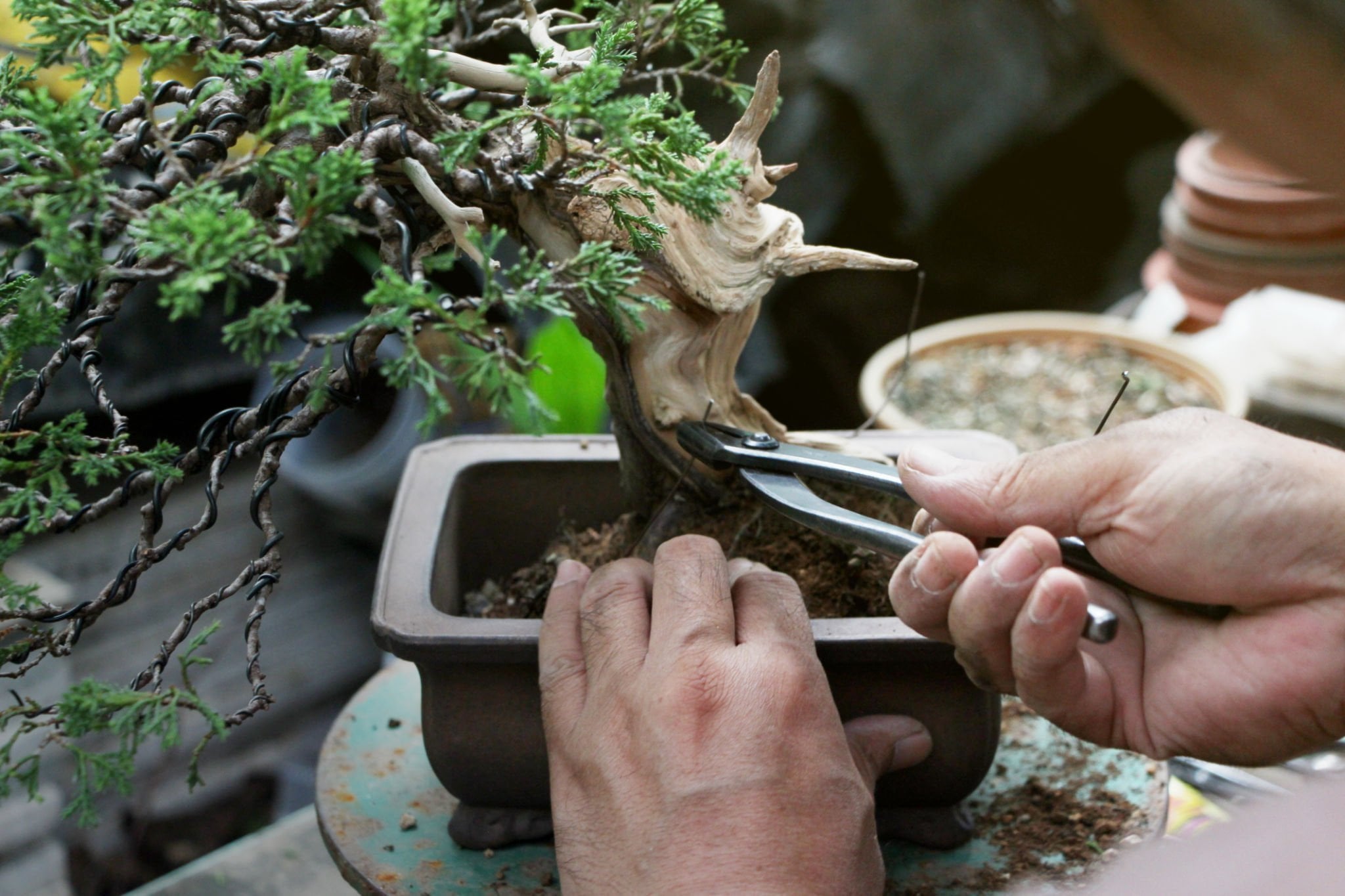
Creating convincing jin is one of the most rewarding deadwood techniques. Here’s a detailed, safe process:
- Assess and Plan — Study the tree’s live veins (visible as slight ridges or color differences). Place jin on branches that follow or complement these veins to maintain health.
- Remove Bark — In late spring/early summer (when sap is flowing), use a sharp knife to score around the branch section. Peel bark carefully with jin pliers, leaving a clean edge.
- Strip & Twist — Grip fibers with pliers and gently twist/pull to create natural striations. Avoid straight cuts — nature is irregular.
- Refine Texture — Use a knife or rotary tool to round edges, hollow small areas, and add subtle grooves for realism. Taper toward the tip.
- Apply Lime Sulfur — Brush on 1:10–1:20 diluted solution (test first). It whitens wood and acts as a preservative. Reapply 2–3 times over weeks for depth.
- Seal Base — Apply cut paste or wound sealant where deadwood meets live tissue.
Pro Tip: Create “reverse taper” jin — wider at the base, narrowing upward — for a more aged appearance. Avoid removing more than 30–40% of a branch’s surface to prevent dieback.
Common mistake: Over-stripping, causing the branch to die. Start small and observe how the tree responds. 🪚
Step-by-Step Guide: Mastering Shari on the Trunk 🌊
Shari — those elegant, barkless strips running down the trunk — is where driftwood effects truly start to feel ancient and windswept. Done poorly, it looks like a bad scrape; done masterfully, it flows like natural erosion. Here’s the proven process I use on my own trees:
- Map Live Veins First — Before any cut, gently scrape a small test area of bark to reveal the live cambium channels (they appear as slightly greener or moister lines). Plan shari paths to run parallel or gently curve around these veins — never cross them completely, or you’ll starve foliage.
- Safe Bark Removal — Work in spring/early summer when the tree is actively growing. Score the outline of your shari shape with a sharp knife. Use the tip to lift and peel bark in long strips. For wider shari, work in sections to avoid tearing live tissue.
- Carve Depth and Texture — Once bark is off, use chisels or a rotary tool to remove a thin layer of outer wood (1–3 mm max). Create subtle ridges, grooves, and hollows — mimic natural weathering by making edges irregular and slightly raised in places. Avoid perfectly smooth surfaces; real driftwood has character.
- Refine Transitions — Feather the edges where deadwood meets live bark so there’s no harsh line. A soft, gradual taper makes it look like the tree has worn away over centuries.
- Bleach & Preserve — Apply lime sulfur (diluted 1:15 to 1:20) with a brush. Let it dry fully (sunny days speed this), then reapply 2–4 times over weeks for that signature silvery patina. The sulfur also deters insects and fungi.
Expert Variations:
- Flame shari — Narrow at the base, widening upward like rising fire.
- Spiral shari — Gentle helical strips for dynamic movement.
- Patchy shari — Irregular islands of deadwood for a more rugged, storm-survived look.
Common pitfall: Removing too much too quickly. Always leave at least 30–40% live bark on the trunk. Monitor for stress (yellowing needles) and pause if needed. With patience, shari can evolve beautifully over years. 🌲
Advanced Sharimiki (Full Driftwood Style): Pushing Boundaries for Unique Masterpieces 🏆
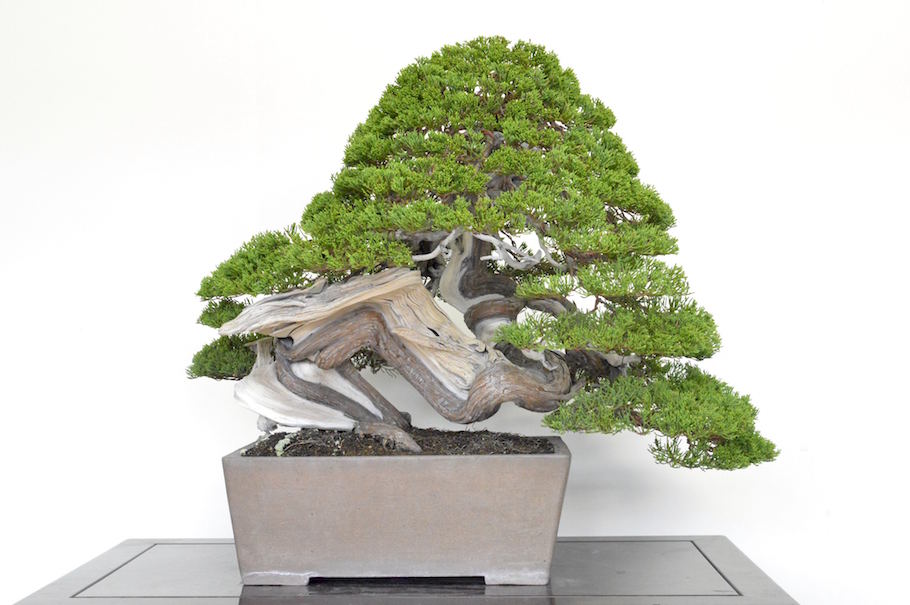
When you want maximum drama, sharimiki turns the trunk into a bleached skeleton with narrow live veins threading through like lifelines. This is advanced territory — but incredibly rewarding.
When to Attempt Full Sharimiki:
- The tree has a thick, interesting trunk.
- It already shows some natural dieback or heavy branching.
- You’re working with resilient species like Shimpaku juniper.
Key Techniques:
- Preserve multiple live veins — at least 2–3 narrow strips running from roots to apex.
- Remove bark and outer wood in stages over 1–3 years to reduce shock.
- Hollow areas strategically (uro technique) for added depth, but never compromise vein health.
- Create contrast: Leave some rough, dark wood patches amid the bleached areas for realism.
Creative Ideas for Uniqueness:
- Integrate small jin branches emerging from dead zones.
- Carve subtle wave patterns or mountain ridges into large deadwood faces.
- Combine with dramatic nebari — expose roots partially for a “windswept shore” theme.
I’ve seen (and created) award-winning sharimiki where the deadwood tells a story: one side storm-blasted and stark, the other sheltered and lush. The contrast is mesmerizing. Always prioritize tree vigor — weak trees won’t survive extensive work. 🌄

Making Your Driftwood Effects Truly Unique: Artistic Tips & Inspiration 🎨
Technical skill creates deadwood; artistry makes it unforgettable. Here are principles I’ve honed over years of styling:
- Storytelling — Ask: What hardship did this tree survive? Lightning? Avalanche? Use deadwood placement to imply that history.
- Asymmetry & Balance — Avoid symmetrical shari; nature is irregular. Place bold jin on one side for tension.
- Hide Flaws — Use shari to cover old scars, poor taper, or awkward bends.
- Combine Styles — Pair sharimiki with literati for elegance or cascade for drama.
Inspiration Gallery Ideas (Visualize These):
- A twisting Shimpaku with flame-like shari rising like phoenix wings.
- A pine with multiple jin branches resembling skeletal arms reaching skyward.
- A full sharimiki juniper where live foliage crowns a ghostly, silver trunk.
Study photos from masters like Kimura, Kawamoto, or modern exhibits. Adapt, don’t copy — your personal touch makes it unique. ✨
Aftercare and Long-Term Maintenance of Deadwood Features 🧴
Once you’ve created beautiful jin, shari, or sharimiki, the real work begins: keeping the deadwood looking pristine while ensuring the live portions of the tree stay healthy for years to come.
Lime Sulfur Application Schedule
- First coat: Immediately after carving (diluted 1:15–1:20).
- Second & third coats: Every 7–14 days for the first month.
- Maintenance: Reapply once or twice per year in spring to refresh the silvery-white color and boost preservation. Pro tip: On very hot, sunny days, the bleaching happens faster — cover the pot if you want slower, more even results.
Protection from Rot and Pests
- Keep deadwood dry — avoid overhead watering that soaks the carved areas.
- In humid climates, consider a light annual application of wood preservative (non-toxic bonsai-grade products).
- Watch for fungal growth (black spots or soft wood); gently scrape and re-treat with stronger lime sulfur if needed.
- Insects rarely attack properly treated deadwood, but inspect regularly.
Seasonal Care Adjustments
- Winter: Protect from extreme freeze-thaw cycles — deadwood can crack. Move to sheltered spot or use anti-desiccant spray on live parts.
- Summer: Increase watering frequency to support live veins; fertilize lightly to maintain vigor.
- Wiring note: Never wire directly over fresh deadwood — it can crush fibers and create unnatural marks.
Over time (2–10+ years), deadwood naturally weathers further: edges soften, color deepens to antique silver-gray, and tiny cracks add realism. Embrace this slow evolution — it’s part of what makes driftwood-style bonsai so captivating. ⏳
Common Mistakes and How to Avoid Them ❌
Even experienced artists occasionally slip up. Here are the pitfalls I see most often — and how to sidestep them:
- Over-carving / Removing too much live tissue
- Symptom: Branch tip dieback, yellowing foliage, or trunk shrinkage.
- Prevention: Always leave at least 30–40% live bark/veins. Work in stages over months/years.
- Creating unnaturally straight or mechanical lines
- Deadwood should flow organically. Avoid ruler-straight shari or perfectly cylindrical jin.
- Fix: Use twisting/pulling motions and reference photos of real weathered trees.
- Ignoring tree health during the process
- Working on a weak or recently repotted tree is risky.
- Rule: Only carve when the tree is vigorous (strong new growth, good color).
- Wrong timing (wrong season)
- Carving in late fall/winter when sap flow is low increases dieback risk.
- Best window: Late spring through mid-summer.
- Poor lime sulfur technique
- Too strong a mix burns live edges; too weak gives dull results.
- Always test on a small hidden area first.
Recovery Tips if Things Go Wrong
- Dieback on a jin branch? Prune back to live tissue and seal.
- Rot starting? Scrape affected area thoroughly, treat with lime sulfur, and let dry out.
- Tree stressed? Reduce sun, increase humidity, and fertilize lightly until it stabilizes.
Mistakes are teachers — many of my most striking deadwood features came after correcting earlier over-ambitious attempts. Patience is your best tool. 🌱
FAQs: Your Top Questions Answered ❓
Is deadwood creation safe for my tree? Yes — when done correctly on suitable species with proper technique and aftercare. You’re removing bark and surface wood, but preserving live veins keeps the tree alive and thriving. Start small if you’re nervous.
How long does it take to see beautiful results? Initial bleaching shows in 1–4 weeks. Full aged patina and softening of edges can take 1–5 years. The beauty deepens with time.
Can beginners try jin, shari, or sharimiki? Absolutely start with jin on a sacrifice branch or inexpensive nursery stock. Shari is intermediate; full sharimiki is advanced. Build confidence gradually.
What’s the best time of year to create deadwood? Late spring to mid-summer when the tree is actively growing and sap flow helps healing at live/dead borders.
Are there alternatives to lime sulfur? Some artists use hydrogen peroxide for lighter bleaching or simply let wood weather naturally (slower, grayer result). Lime sulfur remains the most reliable for bright white and preservation.
How can I make deadwood look older faster? Multiple lime sulfur coats + sun exposure accelerate bleaching. Gentle sanding or wire-brushing can add instant texture, but use sparingly to avoid artificial appearance.
Will deadwood features harm the tree long-term? Not if you maintain live vein health and prevent rot. Many 50–100+ year-old bonsai have extensive deadwood and remain vigorous.
Feel free to ask more in the comments — I love helping readers troubleshoot their specific trees! 🌲
Final Thoughts: Elevate Your Bonsai Artistry Today 🌟
Creating unique bonsai driftwood effects through jin, shari, and sharimiki is one of the most powerful ways to express your personal vision in this living art form. These techniques don’t just add age — they add soul, turning a simple tree into a silent witness of imagined storms, sun, and survival.
The key ingredients are observation, patience, respect for the tree’s life force, and the courage to experiment. Start with one small jin on a branch you can afford to lose. Watch how the tree responds. Refine. Repeat. Before long, you’ll have a piece that feels undeniably yours.
Your next masterpiece is waiting in the live veins of the tree on your bench. Grab your tools, trust your eye, and begin creating. The bonsai community is richer when we all share our unique interpretations of nature’s drama.
Happy carving — and may your deadwood gleam like ancient silver under the sun. 🌿✨🚀











