
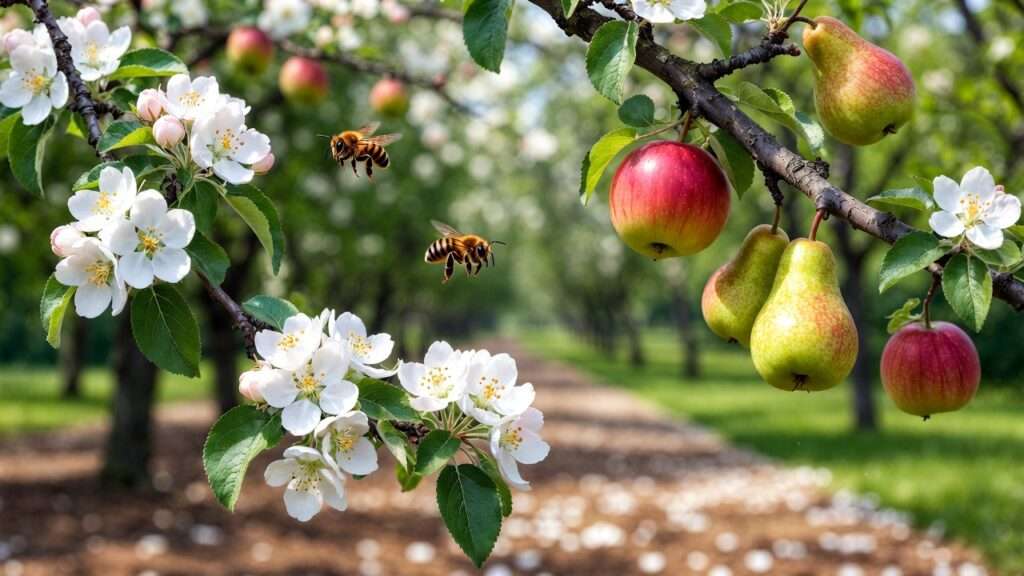
Imagine this: You’ve carefully planted your beautiful apple or pear trees, nurtured them through seasons of pruning, watering, and fertilizing… only to watch those pretty spring blossoms fade away with barely a handful of fruit. 😩 Sound familiar? If your home orchard or backyard trees are underperforming, the most common culprit isn’t pests, poor soil, or bad weather—it’s often a simple misunderstanding of cross-pollination needs for apples and pears.
As a passionate fruit tree enthusiast and horticulturist with years of hands-on experience growing and advising on home orchards (drawing from university extension resources like WSU Tree Fruit, Missouri Extension, and practical trials in diverse climates), I can tell you: getting this right transforms modest trees into abundant producers. Proper cross-pollination leads to heavier crops, larger fruit, more consistent yearly yields, and healthier trees overall. 🌟
In this comprehensive guide, we’ll debunk myths (yes, apples and pears almost never pollinate each other!), explain the science simply, provide detailed variety charts and pairings, share step-by-step planning tips, troubleshoot common issues, and equip you with everything needed for success. Whether you’re a beginner planting your first trees or an experienced grower aiming for maximum harvests, you’ll walk away ready to boost your fruit production. Let’s dive in!
What Is Cross-Pollination and Why Do Apples & Pears Need It? 🤔
Cross-pollination is the transfer of pollen from the anther (male part) of one flower to the stigma (female part) of another flower on a different tree of the same species. This process fertilizes the ovule, leading to fruit development and seed formation.
Most apple (Malus domestica) and pear (Pyrus communis for European, Pyrus pyrifolia for Asian) varieties are self-incompatible—meaning pollen from the same tree (or even the same variety) won’t work due to genetic barriers. This is nature’s way of promoting genetic diversity and stronger offspring.
Key factors for successful cross-pollination:
- Compatible varieties — Pollen must come from a genetically compatible partner.
- Bloom time overlap — Flowers must open at the same time (categorized in flowering groups 1-6, from very early to late).
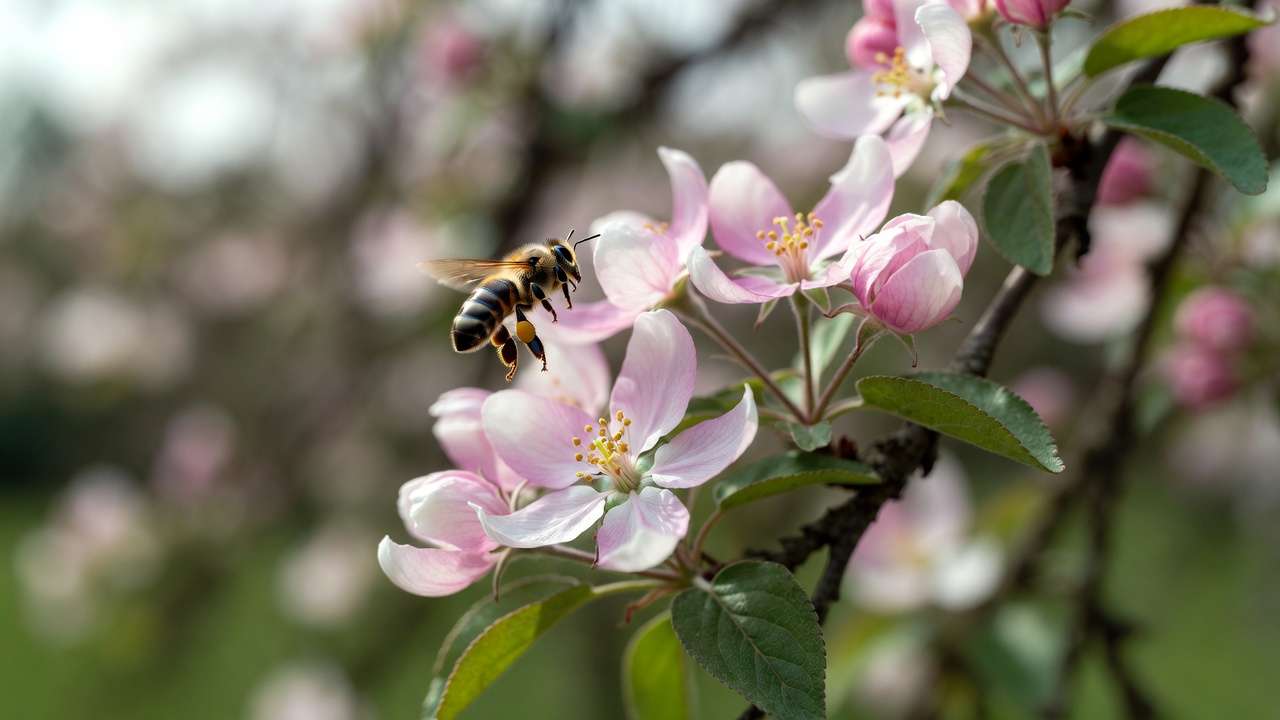
- Pollinators — Primarily honeybees and wild bees 🐝 that carry pollen between trees (wind plays a minor role).
- Proximity — Trees should be within 50-150 feet (15-50 meters) for efficient bee activity; closer is better in larger spaces.
Apples generally require cross-pollination for good fruit set— even “self-fruitful” varieties produce more and better fruit with a partner. Pears follow a similar pattern, though some European types are partially self-fruitful (but still benefit hugely from cross-pollination).
Without it? You get sparse, small, or no fruit— a heartbreakingly common issue for home growers!
The Big Myth: Can Apples Pollinate Pears (or Vice Versa)? ❌
One of the most persistent myths in home gardening is that an apple tree can pollinate a pear tree (or the other way around), leading to “apple-pears” or hybrid fruit. Spoiler: This almost never happens in practice.
Apples and pears belong to different genera (Malus vs. Pyrus) within the Rosaceae family. Their pollen is incompatible in nearly all cases—genetic differences prevent fertilization. Reliable sources like Washington State University Tree Fruit Extension and Missouri Extension confirm: Stick to same-species pollination for reliable results.
Why the myth lingers? Similar bloom times in some climates and the shared family make it seem plausible. Rare exceptions exist in experimental crosses, but they’re not practical for home orchards and won’t produce viable fruit consistently.
Bottom line: For dependable harvests, pair apples with apples and pears with pears (or compatible crabapples for apples). No magical apple-pear hybrids here! 😄
Cross-Pollination Requirements for Apple Trees 🍏
Why Most Apples Need a Pollinizer
Virtually all apple varieties require cross-pollination for commercial-quality yields. Even partially self-fruitful ones (like Golden Delicious or Granny Smith) set more fruit, larger sizes, and more evenly when paired with a compatible partner.
Triploid varieties (e.g., Gravenstein, Jonagold, Mutsu, Winesap) have sterile pollen—they can’t pollinate others and need two diploid pollinizers (not another triploid).
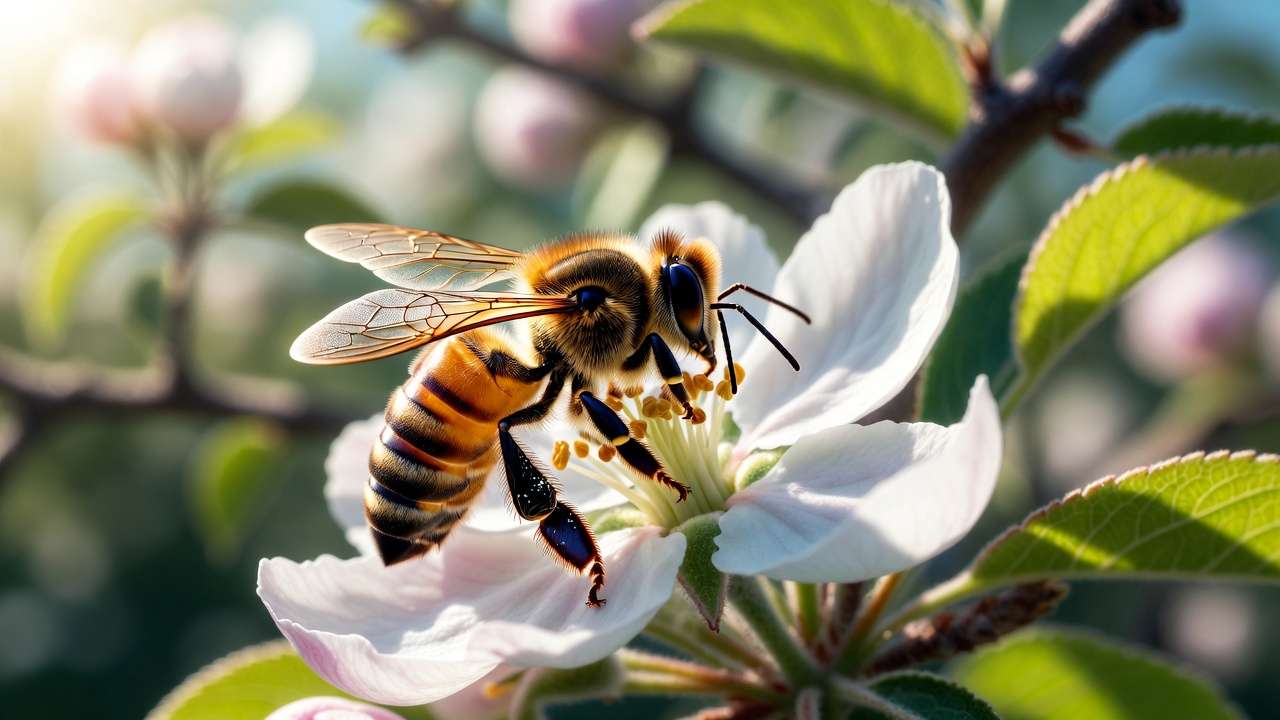
Flowering Groups and Bloom Time Matching
Apples are grouped by bloom period (1 = very early, 6 = very late). Overlap of at least two groups is ideal:
- Group 1-2: Early bloomers (e.g., Gravenstein, Vista Bella)
- Group 3-4: Mid-season (most common, e.g., Gala, Honeycrisp)
- Group 5-6: Late (e.g., Granny Smith, Fuji)
Use tools like Orange Pippin’s pollination checker for precise matches in your region.
Best Apple Pollinator Varieties & Popular Pairings ⭐
Universal pollinators (abundant pollen, long bloom):
- Golden Delicious
- Crabapples (Dolgo, Snowdrift, Manchurian, Evereste—scab-resistant options shine!)
- Honeycrisp (great pollen producer)
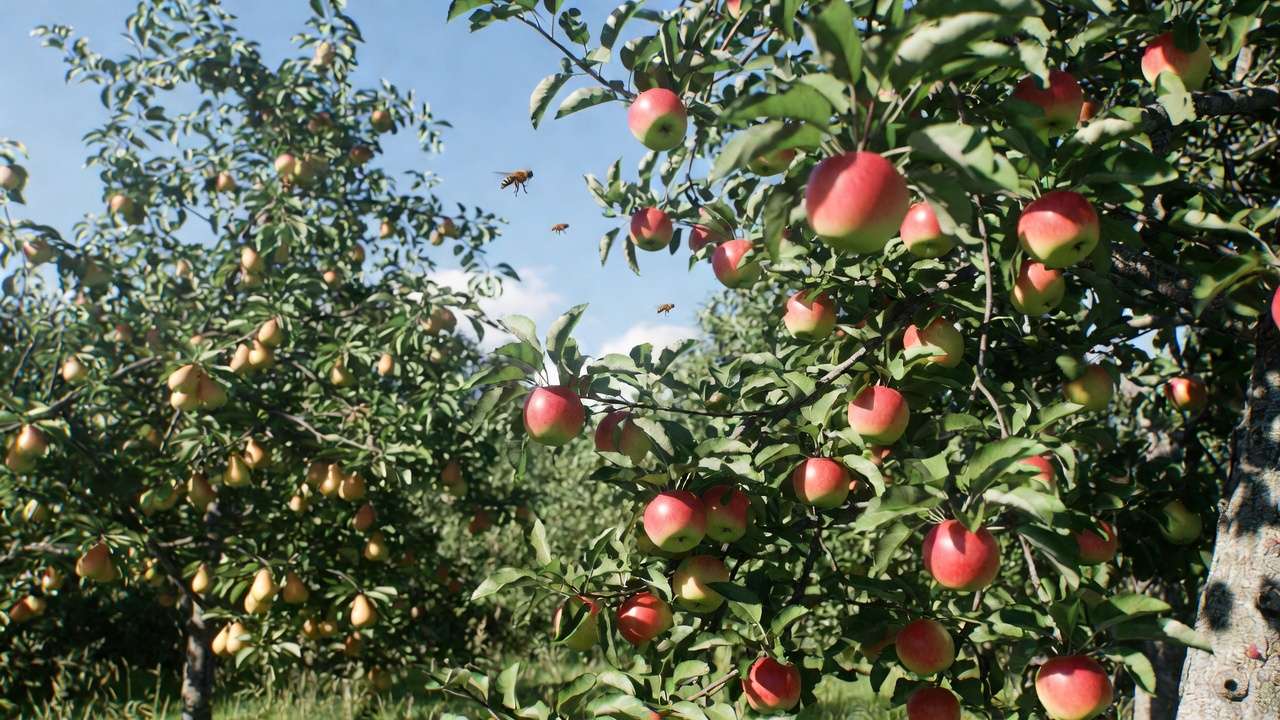
Here are popular pairings (based on extension charts and nursery data):
- Gala → Honeycrisp, Golden Delicious, Fuji
- Honeycrisp → Empire, Fuji, Golden Delicious, Gala
- Fuji → Golden Delicious, Granny Smith, Honeycrisp
- Granny Smith → Gala, Golden Delicious, Pink Lady
- Red Delicious → Golden Delicious, Gala, Honeycrisp
- Braeburn → Golden Delicious, Fuji
- Pink Lady → Gala, Golden Delicious
Triploid examples needing extra help:
- Jonagold → Needs two diploids like Golden Delicious + Gala
Crabapples are fantastic: Plant one near your main trees for reliable pollination plus beautiful blooms 🌸 and wildlife benefits.
Special Cases: Self-Fruitful Apples
Varieties like Golden Delicious, Empire, or Liberty can set some fruit alone but yield dramatically better (up to double) with cross-pollination. Always pair if possible!
Cross-Pollination Requirements for Pear Trees 🍐 (continued from previous section)
Pear Self-Fertility Myths & Realities
Pears are a bit more forgiving than apples in some cases, but the myth that “most pears are fully self-fruitful” still causes disappointment for many gardeners.
- European pears (Pyrus communis): Most require cross-pollination for consistent, heavy crops. Varieties often labeled “partially self-fruitful” (Bartlett, Anjou, Bosc, Comice, Conference) will set some fruit on their own in good conditions, but yields are usually light, irregular, and fruits tend to be smaller. A compatible partner dramatically increases both quantity and quality.
- Asian pears (Pyrus pyrifolia): Almost all need cross-pollination from another Asian pear variety. They rarely set meaningful fruit without one.
Expert note: Even partially self-fruitful European pears often produce biennial bearing (heavy one year, light the next) unless cross-pollinated. Pairing them reliably turns inconsistent trees into reliable producers. 🌟
Bloom Time & Compatibility Groups
Like apples, pears are classified into flowering groups 1–6 (early to late bloom). Successful pollination requires at least partial overlap in bloom period.
Common groupings (based on UK/EU and US extension data):
- Group 1: Very early (e.g., Conference in warmer climates)
- Group 2: Early (e.g., Clapp’s Favorite, Moonglow)
- Group 3: Mid-early (e.g., Bartlett, Seckel)
- Group 4: Mid (e.g., Anjou, Bosc, Comice)
- Group 5: Mid-late (e.g., Packham’s Triumph)
- Group 6: Late (e.g., Winter Nelis)
Always aim for varieties in adjacent or same groups for best results.
Recommended Pear Pollinator Varieties & Charts 📊
Versatile, strong pollinators (abundant pollen, long bloom, widely compatible):
- Bartlett (also called Williams in some regions)
- Bosc
- Moonglow
- Seckel (small but excellent pollen donor)
- Conference (very reliable in many climates)
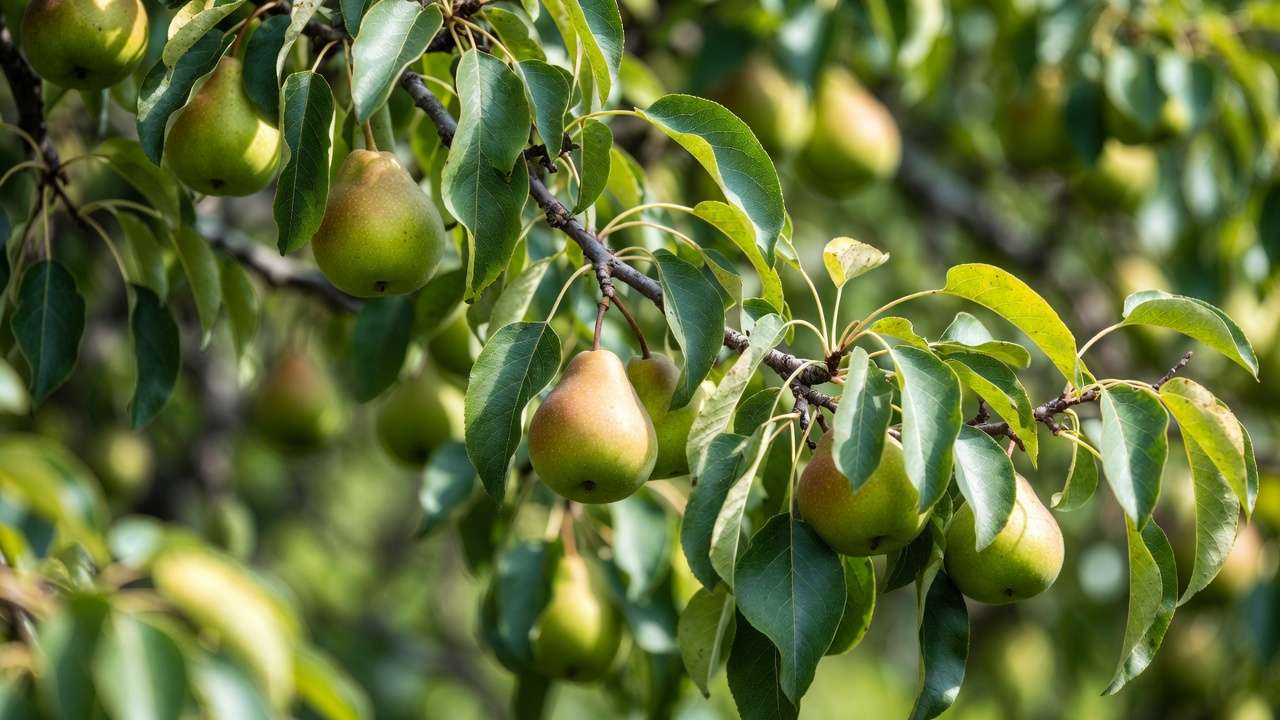
Here are some of the most popular and reliable pairings:
European Pear Pairings
- Bartlett → Anjou, Bosc, Comice, Seckel, Moonglow
- Anjou (d’Anjou) → Bartlett, Bosc, Comice, Moonglow
- Bosc → Bartlett, Anjou, Comice, Seckel
- Comice → Bartlett, Anjou, Bosc, Seckel
- Conference → Bartlett, Anjou, Bosc
- Seckel → Bartlett, Bosc, Comice (note: Seckel is poor at pollinating Bartlett)
Asian Pear Pairings (all Asian-to-Asian recommended)
- 20th Century (Nijisseiki) → Shinseiki, Hosui, Kosui, Chojuro
- Hosui → 20th Century, Shinseiki, Chojuro
- Shinseiki → 20th Century, Hosui, Kosui
- Chojuro → 20th Century, Hosui, Shinseiki
Important incompatibility note: Seckel is a poor pollinator for Bartlett (and vice versa in some cases). Always double-check with local extension charts or tools like Orange Pippin.
European vs. Asian Pears: Can They Cross-Pollinate?
In many cases yes—especially if bloom times overlap. European pollen can often fertilize Asian pears and vice versa, producing viable (though sometimes oddly shaped) fruit on the receiving tree.
This is a great option for small gardens: plant one European and one Asian pear with similar bloom times for mutual benefit. Many home growers report excellent success with combinations like Bartlett + 20th Century or Anjou + Hosui.
Still, same-type pairing remains the safest bet for maximum reliability.
How to Choose & Plant for Perfect Cross-Pollination Success 🛠️
Now that you understand the requirements, here’s a practical, step-by-step roadmap to set up your apple and pear trees for reliable pollination and big harvests.
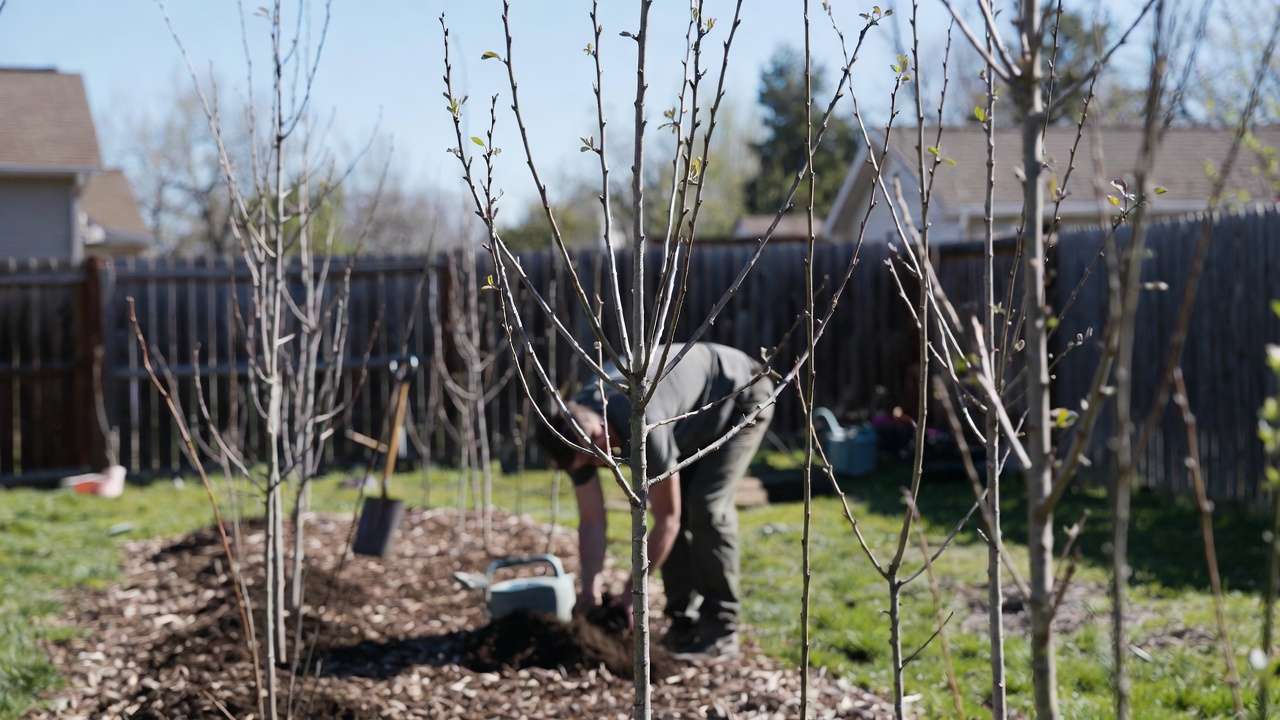
- Assess Your Space & Goals Measure the area where trees will go. Most standard apple and pear trees need 15–25 feet (5–8 m) between them, but semi-dwarf (12–18 ft spacing) and dwarf (8–12 ft) options work beautifully in smaller yards. Decide on variety goals: fresh eating, cooking, cider, long storage? This narrows your choices.
- Check Your Climate & Hardiness Zone Apples and pears thrive in USDA zones 4–9 (most common 5–8). Check your local chill hours (hours below 45°F/7°C needed for dormancy break).
- Low-chill varieties (e.g., Anna apple, Shinseiki pear) for warmer climates like parts of Bangladesh or southern zones.
- High-chill types (e.g., Honeycrisp, Bosc) for cooler regions.
- Select Compatible Varieties with Bloom Overlap Use these quick rules:
- Choose at least two varieties from the same species.
- Pick from the same or adjacent flowering groups.
- Include one strong, universal pollinator if possible (Golden Delicious or crabapple for apples; Bartlett or Moonglow for pears).
- For tiny spaces: Buy a multi-variety grafted tree (e.g., 3-in-1 apple combo) or add a single crabapple.
- Planting Tips for Pollination Success
- Distance: Keep pollinizer trees within 50–150 ft (ideally 30–100 ft). Bees forage efficiently in this range.
- Planting time: Late winter/early spring (dormant season) or fall in mild climates.
- Positioning: Place the pollinizer upwind if possible—bees often work into the wind.
- Multiple trees: Plant at least two (or three for triploids). More = better insurance.
- Crabapple strategy: One well-placed flowering crabapple can pollinate 5–10 apple trees. Choose disease-resistant cultivars like ‘Evereste’ or ‘Indian Summer’.
- Smart Alternatives for Limited Space
- Multi-grafted trees: One tree with 2–4 varieties already grafted (common in nurseries).
- Espalier or cordon training: Grow varieties along a wall or fence—perfect for small gardens.
- Container growing: Dwarf varieties on patio or balcony (still need cross-pollination—use two pots).
Pro tip: Before buying, use free online pollination charts (e.g., Orange Pippin Pollination Checker, Dave Wilson Nursery chart, or WSU Extension tools). Enter your varieties and see instant compatibility matches. 🌟
Common Mistakes & Troubleshooting Poor Fruit Set ⚠️
Even with good planning, issues arise. Here are the top culprits and fixes:
- Mistake #1: Planting a single variety → No cross-pollination = little to no fruit. Fix: Add a compatible partner ASAP (even grafting helps).
- Mistake #2: Wrong bloom timing or triploid varieties → Bloom mismatch or sterile pollen = failed pollination. Fix: Verify flowering groups; replace triploids with diploids or add extra pollinizers.
- Mistake #3: Too far apart → Bees don’t travel far enough. Fix: Relocate younger trees or plant a crabapple bridge.
- Other common causes of poor set
- Frost during bloom → Damages flowers. Protect with row covers or site selection.
- Wet, cold, or windy bloom weather → Bees stay home.
- Lack of pollinators → Fewer bees = less pollen transfer.
- Nutrient imbalance or over-fertilizing nitrogen → Promotes leaves over flowers/fruit.
- Biennial bearing → Tree exhausts itself one year. Thin fruit aggressively in heavy years.
Quick fixes for low bee activity:
- Plant bee-friendly flowers nearby (lavender, borage, clover 🐝).
- Avoid insecticides during bloom.
- Consider renting a beehive for 2–3 weeks during flowering (very effective for small orchards).
If fruit set starts but drops off: Thin young fruitlets to 1–2 per cluster (6–8 inches apart) so the tree can support bigger, better apples/pears.
Bonus Tips for Maximum Harvests from Your Apple & Pear Trees 🌟
- Attract & Protect Pollinators — Create a bee haven with early and late-blooming flowers. Provide water sources. Never spray during bloom.
- Pruning for Better Blooming — Open-center or modified central-leader pruning improves light and air flow → more flower buds.
- Fertilization & Soil Care — Balanced fertilizer in early spring; avoid excess nitrogen late in season. Test soil pH (6.0–6.8 ideal).
- Regional Adaptations — In warmer subtropical areas (like parts of Khulna or similar climates), prioritize low-chill varieties and protect from late heat waves.
- Patience Pays Off — Most trees need 3–7 years to reach full production. Young trees focus on roots and structure first.
Frequently Asked Questions (FAQs) ❓
Do I really need two apple trees? Yes, for reliable heavy crops. One tree often gives poor or no fruit.
Can an apple pollinate a pear (or vice versa)? Almost never. They’re different species—stick to same-type pairing.
What if I only have space for one tree? Choose a self-fruitful variety (e.g., Golden Delicious apple) and accept lighter yields, or plant a multi-grafted tree, or add a nearby crabapple.
What are the best beginner apple/pear pairs?
- Apples: Gala + Golden Delicious or Honeycrisp + Fuji
- Pears: Bartlett + Anjou or 20th Century + Hosui (Asian)
How far apart should pollinizer trees be? 50–150 feet max; closer is always better.
Why do my trees bloom but drop fruit? Likely insufficient pollination, late frost, or natural June drop (thin remaining fruitlets).
Are crabapples good pollinators? Yes—one of the best! Long bloom, abundant pollen, disease resistance.
Do Asian pears need European pears? No, but they often work if bloom overlaps. Asian-to-Asian is safest.
Conclusion 🎉
Mastering cross-pollination needs for apples and pears is the single biggest step most home growers can take toward bumper crops. By choosing compatible varieties, matching bloom times, planting strategically, and supporting pollinators, you’ll turn those hopeful spring blossoms into baskets of juicy, homegrown fruit year after year.
Take action today: Check your current trees’ varieties, consult a pollination chart, and plan your next addition. Your future self (and your family’s taste buds) will thank you! 🍎🍐
Have questions about your specific trees or climate? Drop a comment below—I’d love to help tailor advice for your garden. Happy growing! 🌱











