

Imagine stepping into your backyard orchard in late summer and being greeted by branches laden with perfect, juicy apples, plump peaches, and clusters of cherries — far more abundant than last year. The secret? A thriving community of native pollinators you’ve nurtured with one straightforward, rewarding DIY project. 😍🍎
Many home orchard enthusiasts face disappointing harvests: misshapen fruit, sparse yields, or even entire branches with no set fruit at all. The culprit is often insufficient pollination, worsened by declining bee populations, habitat loss, and unpredictable spring weather. A DIY orchard pollination station directly solves this problem by creating a dedicated, bee-friendly hub that provides essential nesting sites, safe water sources, and supplemental forage. This attracts and supports efficient native pollinators like blue orchard mason bees, which can be up to 100 times more effective at pollinating fruit trees than honeybees!
In this in-depth guide, I’ll share proven, expert-recommended strategies drawn from years of orchard management and pollinator conservation experience. You’ll get detailed step-by-step instructions, science-backed tips, regional considerations, and ways to track real improvements in your fruit set. No need for expensive commercial hives or chemical interventions — just simple, natural enhancements that boost your yields while supporting biodiversity. Let’s turn your orchard into a pollinator paradise! 🌿✨
Why Pollination Matters in Your Orchard (Problem & Benefits)
Pollination is the make-or-break factor for fruit production in most orchard trees. Apples, pears, cherries, plums, peaches, and apricots require cross-pollination from compatible varieties, delivered primarily by insects. Without enough pollinators visiting blossoms at the right time, flowers drop without setting fruit, or fruits develop unevenly and small.

In recent years, habitat fragmentation, pesticide use, and climate shifts have reduced native bee numbers dramatically. Honeybee colonies (often rented for commercial orchards) face their own challenges, leaving home growers underserved.
Enter native solitary bees, especially the blue orchard mason bee (Osmia lignaria). These gentle, non-aggressive pollinators emerge early in spring — perfectly timed for fruit tree blooms — and their “messy” pollen-carrying style (pollen on their entire body rather than neat baskets) ensures superior transfer. Studies show one mason bee can pollinate as effectively as hundreds of honeybees for certain crops. 🐝💪
By building a DIY orchard pollination station, you:
- Increase fruit set and quality naturally
- Reduce dependency on external pollinators
- Enhance garden biodiversity
- Combat global pollinator decline in your own space
The result? Healthier trees, bigger harvests, and the joy of a buzzing, vibrant ecosystem. 🌟
Understanding Your Orchard’s Pollination Needs
Common Pollinator Challenges in Home Orchards
Home orchards often lack diverse, continuous habitat. Mowed lawns, bare soil, or pesticide-treated areas leave few nesting spots or food sources. Spring blooms demand early foragers, but cold snaps or wet weather can limit activity. Urban or suburban settings compound habitat loss.
Key Pollinators to Target in Orchards
- Blue orchard mason bees (Osmia lignaria): Top choice for fruit trees — early active, cold-tolerant, excellent pollinators.
- Other mason bees and leafcutter bees: Extend the season.
- Bumblebees: Great for buzz pollination in tomatoes or berries nearby.
- Hoverflies, butterflies, and minor honeybee support.
Focusing on solitary bees yields the biggest orchard impact with minimal management.
Core Components of an Effective DIY Orchard Pollination Station
A successful station integrates three pillars: nesting (bee hotels), water (puddling stations), and forage (pollinator plants). These work synergistically — nesting draws bees in, water keeps them healthy and local, and nearby blooms provide energy without competing with your fruit trees. 🏠💧🌼
Step-by-Step: Building Your Bee Hotel (Nesting Station) 🏠🐝
Materials You’ll Need (Budget-Friendly & Safe)
- Untreated hardwood blocks (oak, maple, or birch — avoid pressure-treated or fresh cedar) or logs
- Bamboo reeds, hollow stems, or paper/cardboard tubes (for variety)
- Drill with bits (especially 5/16″ or 8mm for blue orchard bees)
- Waterproof roof material (wood overhang, metal flashing)
- Screws, wire mesh (optional for predator protection)
- Sandpaper for smoothing holes
Total cost: Often under $20 using scraps!

Best Designs for Orchard Success
For blue orchard bees, prioritize drilled wood blocks: 5/16″ (about 8mm) diameter holes, 6 inches deep. This size maximizes female offspring (deeper holes = more females = stronger future populations). Mix in smaller (1/4″) and larger (3/8″) holes for species diversity. Bundle 20–50 tubes/blocks in a box no larger than 12–18″ wide to minimize disease spread.
Reed bundles attract leafcutters; avoid plastic straws (mold risk).
Step-by-Step Build Instructions
- Build a protective frame: Create a wooden box (6–8″ deep, open front, sloped roof for rain runoff). ☔
- Prepare nesting materials: Drill holes smoothly into blocks (no splinters — sand edges). Leave 3/4″ spacing between holes for landing. Seal one end of tubes with mud or tape.
- Assemble: Pack tightly into frame (no glue — easy annual refresh).
- Add safeguards: Fine mesh over front if birds/rodents are issues.
Placement Tips for Maximum Orchard Impact
Mount 3–6 feet high, facing southeast for morning sun (bees warm up faster). Position within 100–300 feet of fruit trees — closer is better for efficiency, but not directly on trunks (avoid ants). Install multiple small stations for even coverage. Hang or mount securely before early spring bloom. 🌞
Creating a Safe Pollinator Watering Station 💧🪨
Why Water is a Game-Changer (Especially in Dry Spells)
Bees use water to cool nests, dilute food, and regulate humidity. In orchards, dry springs force bees to travel far, reducing pollination time. A nearby source keeps them loyal to your trees!
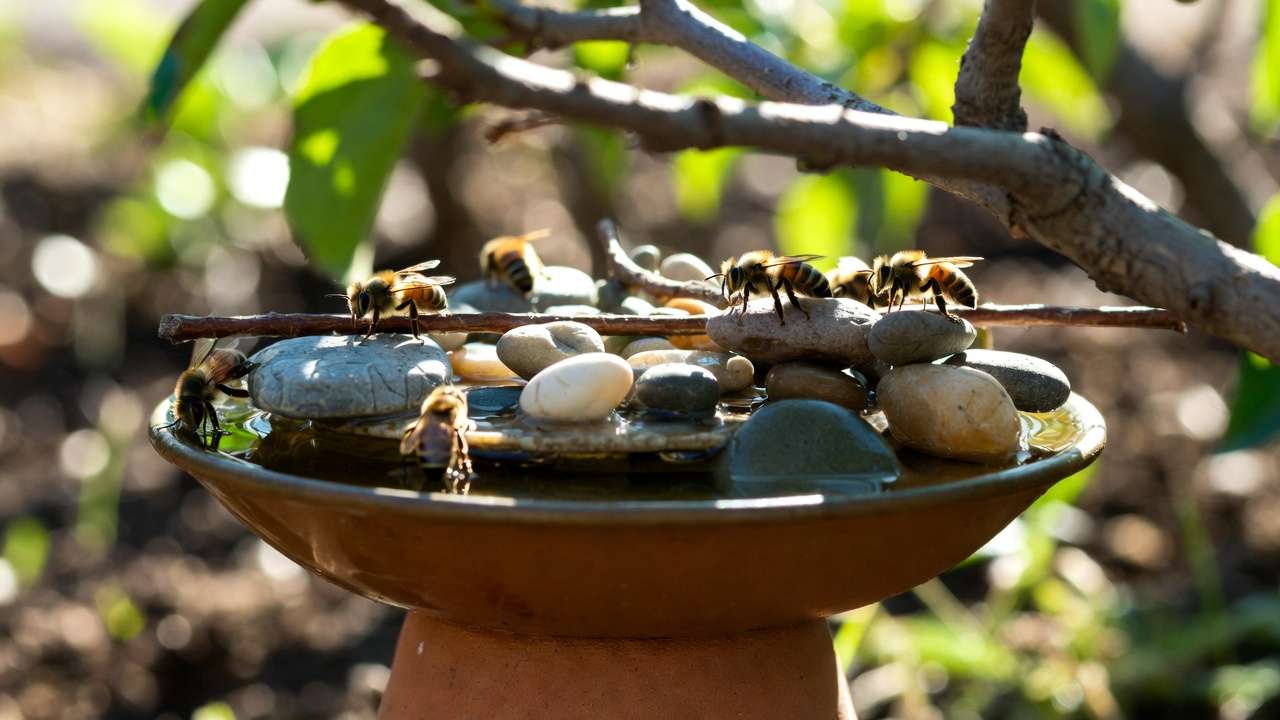
Easy DIY Ideas (From Super Simple to Enhanced)
- Pebble-filled saucer: Fill a shallow dish or terracotta saucer with clean pebbles/rocks/twigs. Add water to just below pebble tops — bees land safely without drowning.
- Rock puddling zone: Arrange flat stones in a low tray, trickle water slowly (drip from bottle).
- Repurposed bird bath: Add landing rocks/moss for extra appeal.
Refresh every few days; use dechlorinated or rainwater.
Placement & Maintenance Best Practices
Near (but not under) the bee hotel in partial sun/shade. Avoid chemicals; keep clean to prevent algae/mosquitoes. In hot climates, add multiple stations! 🌊
Planting a Mini Pollinator Forage Zone Around Your Station 🌼🍯
To keep your attracted pollinators happy, healthy, and working efficiently in your orchard, provide nearby supplemental blooms. This creates a continuous food source, especially important when fruit tree blossoms are short-lived or weather limits foraging. The goal is not to compete with your fruit trees but to extend the season and fill gaps — early spring boosters before tree bloom, mid-season support during peak activity, and late blooms to help bees prepare for winter.
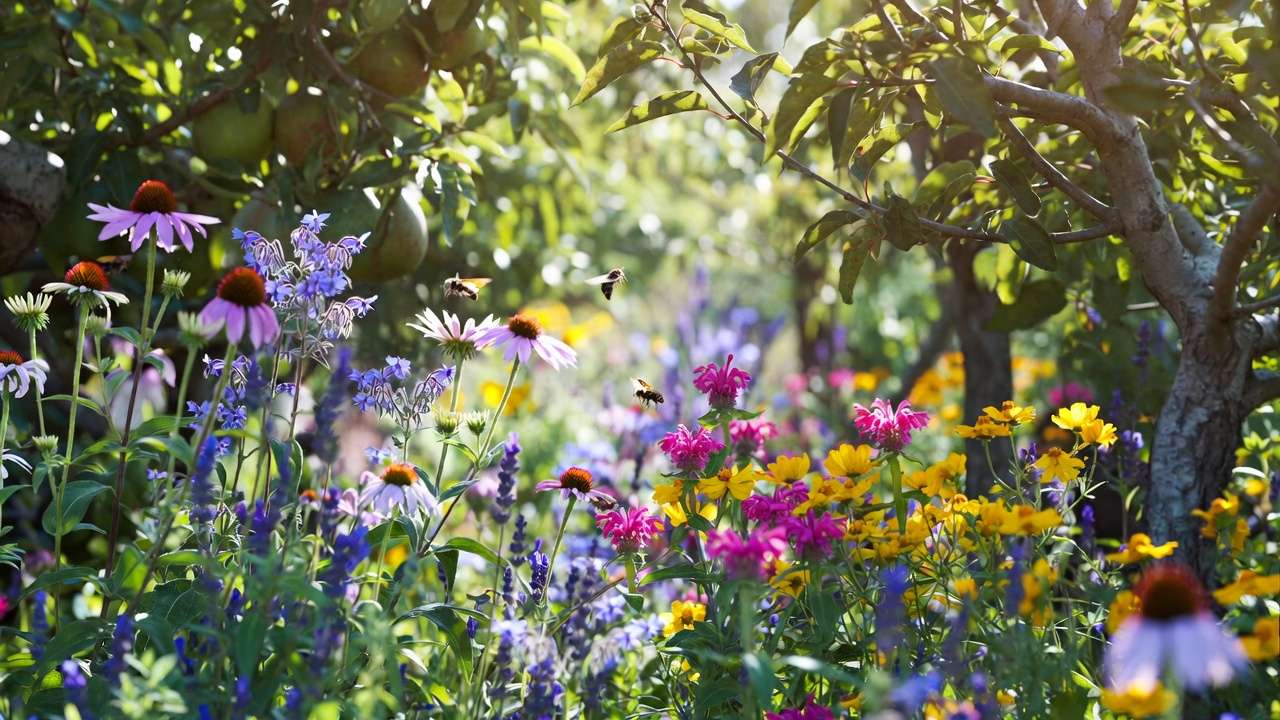
Best Companion Plants for Orchard Pollination
Focus on nectar- and pollen-rich flowers that are easy to grow, low-maintenance, and preferably native or well-adapted to your region. Native plants are ideal because they co-evolved with local pollinators, offering higher-quality resources and supporting specialist bees.
- Early bloomers (critical for blue orchard mason bees emerging in late winter/early spring):
- Crocus, snowdrops, winter aconite, or hellebores 🌷
- Pussy willow (Salix discolor) or other willows
- Native options: Virginia bluebells (Mertensia virginica), red columbine (Aquilegia canadensis), or globe gilia
- Mid-season supporters (during and after fruit tree bloom):
- Borage (Borago officinalis) — bees adore the blue star flowers!
- Comfrey (Symphytum officinale) — buzzing with activity, great understory plant
- Bee balm / wild bergamot (Monarda fistulosa or didyma) — attracts bees, butterflies, and hummingbirds
- Clover (white or red), lavender, hyssop, or catmint
- Late bloomers (extend the season into fall):
- Asters, goldenrod (Solidago spp.), or coneflowers (Echinacea purpurea)
- Boneset (Eupatorium perfoliatum) or blue vervain (Verbena hastata)
For regional tweaks (adapt based on your USDA zone or equivalent):
- North America (e.g., Pacific Northwest, Midwest): Vine maple, salal, trailing blackberry, or alpine strawberry for understory; milkweeds and blazing stars for prairies.
- Europe/Asia-inspired temperate zones: Incorporate local equivalents like foxglove, knapweed, or scabious. In Dhaka/Bangladesh-like subtropical areas, consider adapted natives or non-invasive tropicals such as lantana, zinnias, or marigolds alongside fruit tree companions. Always check for local invasiveness!
Plant in borders around the station, in orchard understory (partial shade tolerant), or in nearby strips. Use clusters of 5–10 plants for better visibility to bees. Avoid high-competition invasives or plants that host orchard pests. 🌿
How to Integrate Without Competing with Fruit Trees
- Place forage 10–50 feet from trees — close enough for easy access but not shading or nutrient-robbing.
- Use low-growing ground covers (clover, creeping thyme) under trees for dual benefit: pollinator food + living mulch.
- Time blooms: Early plants before fruit bloom, late ones after to avoid drawing bees away during critical pollination windows.
This mini-zone can increase bee residency by 30–50% in small orchards, leading to noticeably better fruit set.
Maintenance & Seasonal Care for Long-Term Success 📅🐝
A DIY orchard pollination station thrives with minimal but consistent care — think seasonal check-ins rather than daily work. Proper management prevents disease buildup (like chalkbrood fungus) and parasites (pollen mites, predatory wasps), ensuring healthier bee populations year after year.
- Spring (setup & monitoring): Install/replace nesting materials by late winter. Watch for first bee activity (late Feb–April depending on climate). Monitor visits without disturbing. Refresh water station. Plant annual forage if needed.
- Summer (peak activity): Keep water clean and full. Check for overcrowding or early parasites. If using managed mason bees, protect filled tubes from birds/rodents with mesh. Avoid pesticides near the station!
- Fall (harvest & clean): Crucial step for mason bee success!
- Remove cocoons from tubes/blocks (October–November when cold).
- Gently wash in cool water + mild bleach solution (1:10 ratio) to kill mites/chalkbrood. Rinse thoroughly.
- Dry cocoons on paper towels.
- Store in breathable container (e.g., ventilated jar) in fridge (34–40°F / 1–4°C) over winter — mimics natural hibernation.
- Clean/replace nesting materials (discard old ones or sterilize).
- Winter: Store cocoons cold/dry. Protect empty hotel from elements if left outside.
Annual cocoon harvest reduces pest buildup dramatically — unmanaged hotels can become disease sinks. In warmer climates, adjust timing accordingly.
Measuring Success: Track Your Orchard Improvements 📈🍏
Don’t guess — observe!
- Count bee visits per tree during peak bloom (5-minute observations).
- Photograph fruit set progression (pre- vs. post-station).
- Weigh/compare harvest yields year-over-year.
- Note fruit quality: more even shape, larger size, fewer drop-offs.

Many growers report 20–100% yield increases after 1–2 seasons, especially with mason bees. Share your before/after photos in orchard forums for community inspiration!
Common Mistakes to Avoid (Expert Warnings) ⚠️
From years of observation and research:
- Using treated wood, plastic tubes, or bamboo (mold/parasite traps) — stick to natural, smooth hardwood or paper tubes.
- Building oversized hotels (>100 holes) — increases chalkbrood and mite spread. Start small!
- Placing in full shade, windy spots, or too far (>300 ft) from trees — bees won’t use efficiently.
- Skipping fall cocoon harvest/cleaning — biggest cause of declining populations.
- Forgetting continuous forage or water — bees leave if resources dry up.
- Applying broad-spectrum pesticides nearby — even “bee-safe” ones can harm during bloom.
Avoid these, and your station becomes a reliable, thriving asset.
FAQs About DIY Orchard Pollination Stations ❓
How many stations do I need for a small orchard? 1–3 small stations (each 20–50 holes) for 10–30 trees is usually plenty. Space them for coverage.
Can this work without mason bees specifically? Yes! It attracts diverse pollinators (leafcutters, bumblebees, hoverflies). Mason bees give the biggest orchard boost, but variety helps resilience.
Is it safe around kids/pets? Absolutely — solitary bees rarely sting (only if handled roughly). Place out of reach if concerned.
How much will it cost to build? $10–50 depending on materials (often free with scraps). Ongoing: minimal.
What if I live in a colder/wetter climate? Use sheltered placement, good roof overhang, and harvest cocoons indoors. In subtropical areas like Bangladesh, focus on heat-tolerant natives and extra water during dry spells.
Final Thoughts & Call to Action
Building a DIY orchard pollination station is one of the most impactful, joyful steps you can take as a tree care enthusiast. In just one season, you’ll likely see buzzing activity, healthier blossoms, and heavier branches come harvest time — all while contributing to global pollinator recovery. Start small this year: gather materials, build your first hotel, add a pebble water dish, and plant a few bee magnets. Your fruit trees (and the bees) will thank you with abundant, delicious rewards! 🌟🍒
Have you tried a pollination station? Share your setup, successes, or questions in the comments — I’d love to hear and help refine your approach. Happy growing! 🚀🐝











