
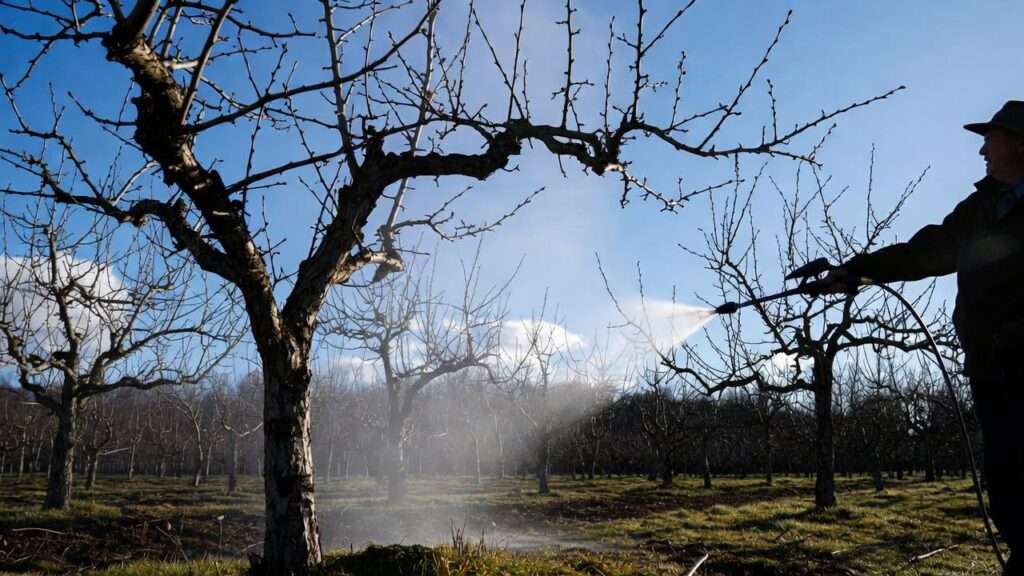
Imagine stepping into your backyard orchard in spring, only to find your beautiful apple and peach trees covered in curled leaves from aphid damage, tiny white scales dotting the branches, or fine webbing from spider mites ruining your fruit harvest. 😩 It’s heartbreaking — especially when you’ve put so much love into pruning, watering, and fertilizing all season. The good news? Many experienced home gardeners and organic orchardists prevent these exact problems with one simple, natural tool: dormant oil spray for fruit trees.
This highly refined horticultural oil (also called superior oil or narrow-range oil) smothers overwintering pests and their eggs without using harsh chemicals. Applied correctly, it can reduce early-season pest populations dramatically — often by 80–90% according to university extension trials — leading to healthier trees, fewer interventions later, and tastier, pest-free fruit. 🌳
In this ultimate guide, we’ll cover everything you need to know: what dormant oil really is, how it works, which fruit trees benefit most, the critical timing window (the make-or-break factor), step-by-step application instructions, common pitfalls to avoid, safety tips, and more. Whether you’re a beginner backyard grower in a mild climate like Barisal or managing a small home orchard in a temperate zone, this comprehensive resource will help you master dormant oil spray for better results than ever before. Let’s dive in and give your trees the best start to the season! 🚀
What Is Dormant Oil Spray and How Does It Work? 🛡️
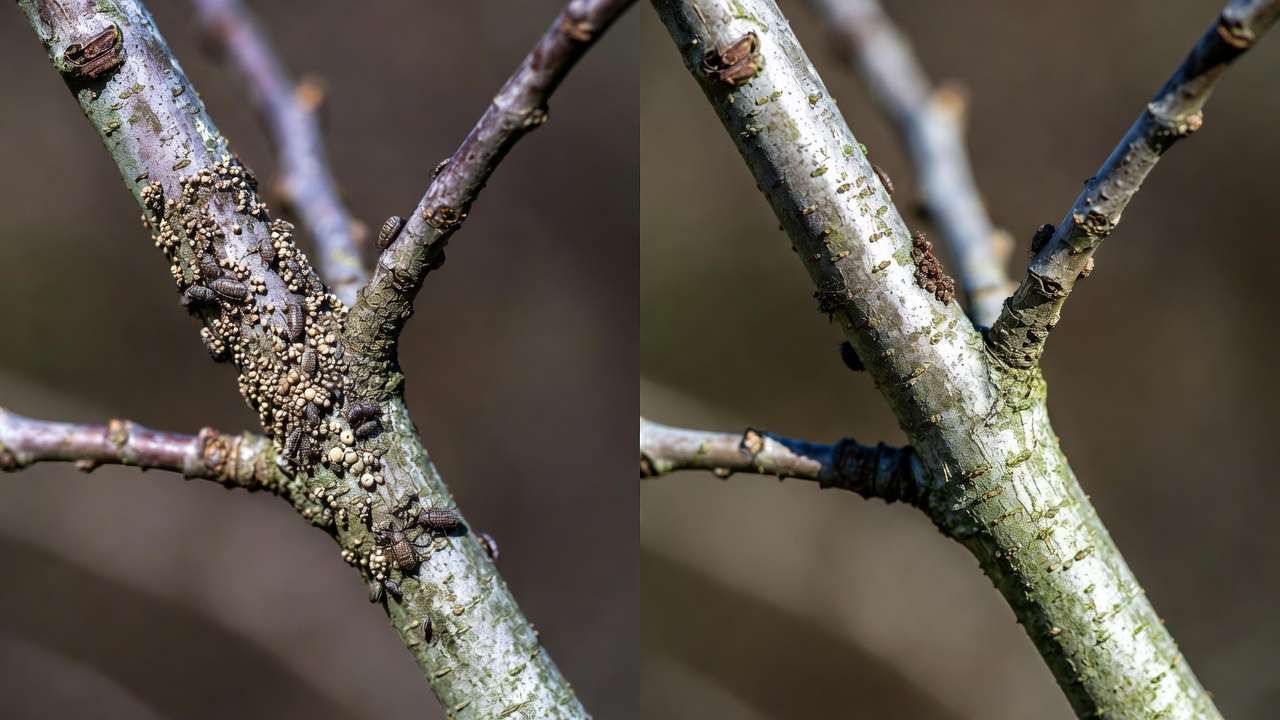
Dormant oil spray is a type of horticultural oil — a highly refined petroleum- or plant-based product designed specifically for smothering insects. Unlike traditional insecticides that poison pests, dormant oils work mechanically: the oil coats the bodies of soft-bodied insects, scale crawlers, mites, and their eggs, blocking their spiracles (breathing pores) and causing suffocation. It penetrates egg shells to kill developing embryos inside, too.
Modern formulations are called “superior” or “narrow-range” oils because they have a low unsulfonated residue (U.R.) value — meaning fewer plant-toxic compounds remain after refining. This makes them safer for trees compared to older, heavier dormant oils.
Key differences from other oils:
- Dormant oils — Used at higher concentrations (typically 2–3%) during late winter/early spring when trees are leafless or barely budding.
- All-season or summer oils — Lighter, applied at lower rates (1% or less) during the growing season for active pests.
Dormant oil is especially valuable in fruit tree care because it targets overwintering stages before pests hatch and multiply. It’s low-toxicity to birds, mammals, and beneficial insects (like pollinators — applied well before bloom), and it breaks down quickly in the environment. Many brands are OMRI-listed for organic use, making it a cornerstone of integrated pest management (IPM) in home orchards. 🌿
Quick Comparison Table: Dormant Oil vs. Other Common Pest Controls
| Control Method | How It Works | Targets Overwintering Pests? | Organic-Friendly? | Risk to Pollinators | Typical Use Timing |
|---|---|---|---|---|---|
| Dormant Oil | Smothers/suffocates | Yes (eggs, scales, mites) | Yes | Very low | Late winter/early spring |
| Neem Oil | Disrupts feeding/growth | Partial | Yes | Moderate | Growing season |
| Insecticidal Soap | Disrupts cell membranes | No (active stages only) | Yes | Low | Growing season |
| Synthetic Pesticides | Neurotoxic/poison | Varies | No | High | As needed |
This physical mode of action means no resistance buildup — pests can’t “evolve” against suffocation!
Benefits of Using Dormant Oil Spray on Fruit Trees 📉
Using dormant oil isn’t just about reacting to problems; it’s proactive prevention. Here’s why savvy growers swear by it:
- Reduces early-season pest pressure — Effectively controls overwintering eggs and adults of aphids, San Jose scale, European fruit lecanium, spider mites, pear psylla, and leafrollers.
- Prevents outbreaks — By knocking down populations before they explode in spring, you often avoid needing multiple sprays of stronger products later.
- Eco-friendly and low-impact — Dissipates quickly, minimal harm to beneficial insects, birds, or soil life when used as directed.
- Cost-effective for backyard growers — One or two applications can save you time, money, and frustration compared to repeated treatments.
- Supports organic practices — Pairs well with cultural controls like pruning for airflow and removing fallen fruit mummies.
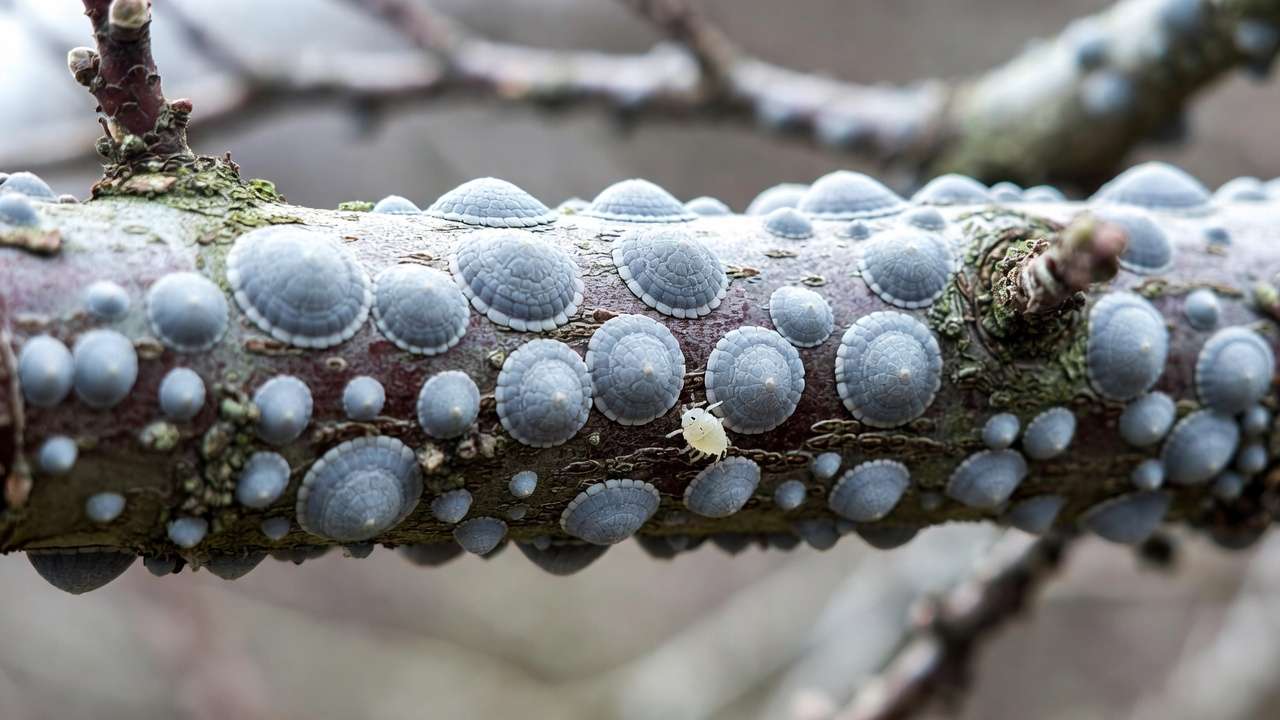
Real-world insight: In temperate climates, growers who apply dormant oil consistently report noticeably cleaner bark, fewer curled leaves from aphids, and healthier fruit set. It’s a small effort for big rewards — healthier trees mean more abundant, high-quality harvests! 🍑
Which Fruit Trees Benefit Most from Dormant Oil? 🌳
Dormant oil is most valuable for trees prone to sucking pests that overwinter on bark or near buds. Top beneficiaries include:
- Pome fruits — Apples, pears, quince (excellent for scale, aphid eggs, mites, pear psylla).
- Stone fruits — Peaches, nectarines, plums, apricots, cherries (great for San Jose scale, European fruit lecanium, aphid eggs, mites).
- Citrus (in mild-winter areas) — Controls scale and mites effectively.
It’s especially helpful if your trees had visible issues last season — like sticky honeydew from aphids/scale, sooty mold, or mite stippling on leaves. Even clean trees gain preventive value in high-pest years.
Less critical for trees with no history of these pests, but it’s still a low-risk insurance policy. Regional note: In mild, subtropical-like areas (similar to parts of Bangladesh with warm winters), timing starts earlier (January–February) than in colder zones (March–April).
The Most Critical Part: When to Apply Dormant Oil Spray (Timing Guide) ⏰
Timing is the single most important factor for success with dormant oil spray for fruit trees — get it wrong, and you either miss the vulnerable pests or risk damaging tender new growth. Many home gardeners spray too early (when insects aren’t yet respiring) or too late (after buds open too far), leading to poor control or phytotoxicity (leaf burn or bud damage). Here’s the expert breakdown based on university extension research from places like Ohio State, Michigan State, Rutgers, and others.
Why timing matters so much Overwintering pests like scale, aphid eggs, and mite eggs are inactive in deep winter — they don’t breathe much, so oil can’t suffocate them effectively. As temperatures warm in late winter/early spring, these pests become active: eggs start hatching, crawlers emerge, and respiration increases. This is when oil works best — coating them while they’re vulnerable but before populations explode.
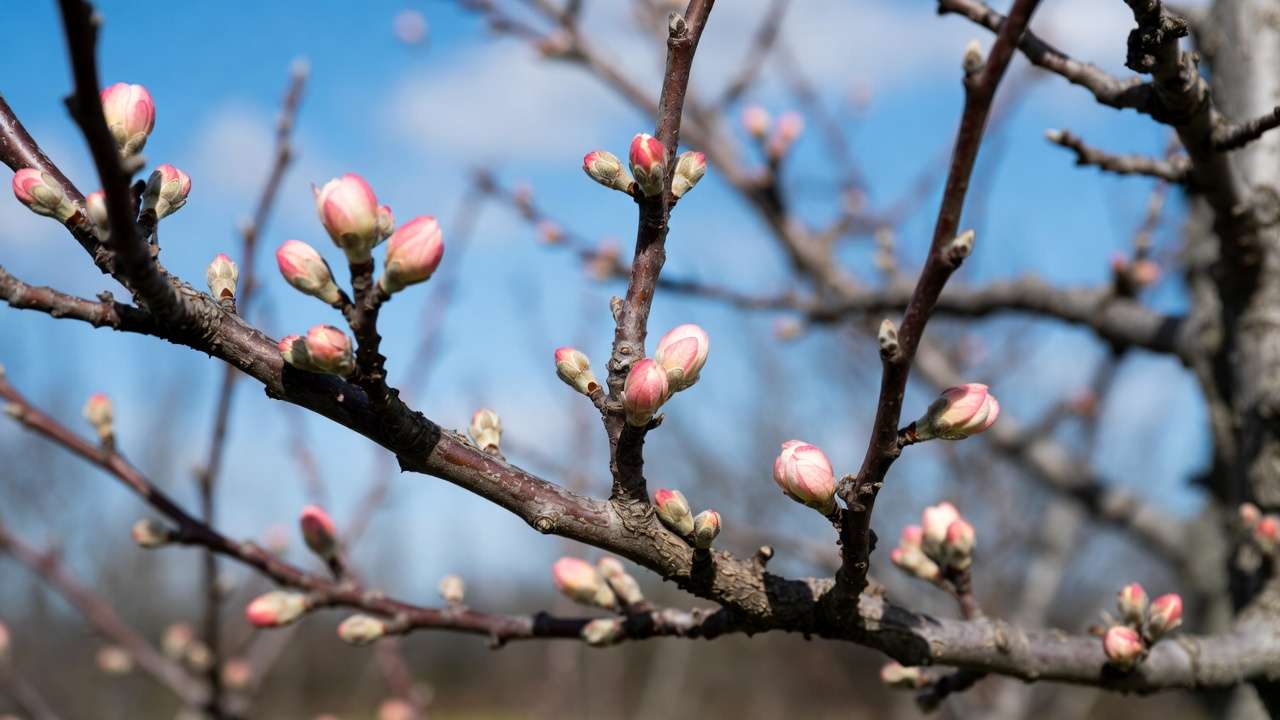
The ideal window is late winter to early spring, from full dormancy (after leaf drop in fall) through bud swell to early bud break stages — but before significant green tissue emerges. Apply too early (deep winter), and it’s wasted; too late, and you can injure new shoots.
Key factors to watch
- Temperature: Daytime temps 40–70°F (4–21°C) during application. No freezing for at least 24–48 hours after (some sources say 12–24 hours minimum). Avoid >85°F or high humidity/sun to prevent burn. Never spray if frost is forecast soon after.
- Bud stages (the real clock): Observe your trees closely — timing varies by species and local climate.
- Pome fruits (apples, pears): Best at delayed dormant to ½-inch green (bud swell to green tip). Safe up to tight cluster or pink in some cases, but reduce rate.
- Stone fruits (peaches, plums, cherries, apricots): Dormant to pink bud or just before bloom — often earlier window since stone fruits are more sensitive.
- Citrus (mild climates): Anytime during true dormancy or delayed dormant.
Regional timing examples (adjust for your area) In temperate zones (e.g., northern U.S./Europe), late February to early April. In milder subtropical or tropical-adjacent areas like Barisal Division, Bangladesh (warm winters, minimal hard freezes), the window often starts earlier — January to March — as trees may break dormancy sooner with consistent warmth. Monitor local weather: if nights stay above 10–15°C and buds swell by late January/February, spray then. In Bangladesh’s humid, mild climate, focus on dry, calm days to avoid fungal issues post-spray.
Multiple applications? In high-pest-pressure areas (heavy scale or mite history), some experts recommend split applications:
- First at full dormant/bud swell (2–3% rate).
- Second at delayed dormant/green tip (1–2% reduced rate). This improves coverage since one spray rarely hits 100% of pests. But one well-timed thorough application is often sufficient for home orchards.
Weather & bud checklist
- Check 7–10 day forecast — no freezes or heavy rain right after.
- Inspect buds daily — take photos! Compare to extension guides (e.g., apple green tip = tiny green tips showing).
- Apply on calm, dry, mild days (morning ideal so it dries before evening chill).
Pro tip 📸: Download free bud stage charts from university sites (e.g., Intermountain Fruit or Rutgers) or search “fruit tree bud stages images” for visuals. In Barisal’s climate, watch for early bud movement after foggy/warm spells — don’t wait for “northern” March timing!
Common timing mistakes to avoid (we’ll expand in the next section):
- Spraying in deep winter cold (pests not vulnerable).
- Ignoring forecasts — oil + freeze = damage.
- Applying after full bloom or heavy green growth.
Master this section, and your dormant oil will deliver maximum impact! Next up: how to actually apply it safely and effectively. 🌿
Step-by-Step: How to Apply Dormant Oil Spray 🧰
Applying dormant oil is straightforward, but thorough coverage is non-negotiable — pests hide in bark cracks, branch crotches, and undersides. Skimping here is the #2 reason for failure (after bad timing).
Gather your supplies
- Horticultural/superior dormant oil (e.g., Monterey, Bonide All Seasons, or local equivalents — check OMRI for organic).
- Pump sprayer (handheld 1–4 gallon for small trees; backpack for larger). Hose-end sprayer works for dilute mixes.
- Measuring tools (graduated cup, scale).
- PPE: Gloves, goggles, long sleeves/pants (oil is slippery/messy).
- Ladder for tall branches.
Mixing ratios (always read your product label first!)
- Standard dormant rate: 2–3% (2–3 gallons oil per 100 gallons water) — common for full dormant stage.
- Delayed dormant/near bud break: Reduce to 1–2% to minimize risk to tender tissue. For small batches (e.g., 1-gallon sprayer): 2–3 tablespoons oil per gallon water (adjust per label). Agitate/shake well — oil emulsifies but needs mixing.
Step-by-step application
- Choose the perfect day: Mild, dry, calm, 40–70°F, no rain/frost forecast for 24+ hours.
- Prune first if needed (late winter pruning + spray combo works great).
- Mix fresh — don’t store mixed solution long.
- Start at the top: Spray from upper branches down, ensuring runoff on all surfaces.
- Hit every spot: Trunk, main branches, crotches, twig undersides — pests love hiding there!
- Work systematically: Circle the tree, overlap sprays for full coverage.
- Clean up: Rinse sprayer thoroughly after (oil clogs nozzles).
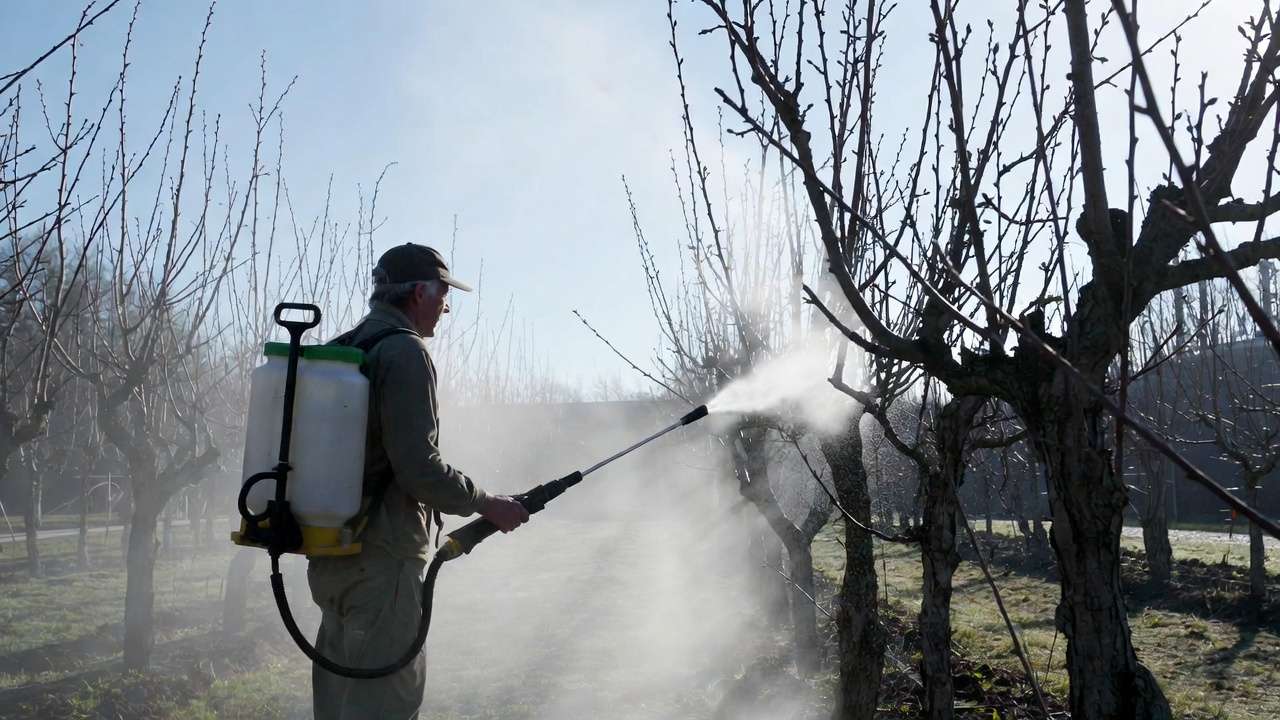
Best time of day — Early morning or late afternoon on cloudy/mild days. Avoid hot direct sun (oil + heat = potential burn).
Pro tips
- Combine with compatible products if needed (e.g., fixed copper for fungal issues in dormancy — but check labels; never mix sulfur close to oil).
- For small home setups in Barisal: A simple pump sprayer + 2% mix covers most backyard mango/jackfruit/peach trees quickly.
- Test a branch first on sensitive varieties if unsure.
Thorough application = 80–90%+ pest reduction. Miss spots, and survivors repopulate fast!
Common Mistakes and How to Avoid Them ⚠️
Even seasoned gardeners can slip up with dormant oil spray for fruit trees, leading to wasted effort, poor pest control, or worse — tree damage. Here are the most frequent pitfalls, drawn from university extension experts (MSU, OSU, Rutgers, etc.) and real grower experiences:
- Spraying too early in deep winter — Insects aren’t respiring actively in very cold weather, so the oil can’t suffocate them effectively. Dormant oils applied in February (in colder zones) or too soon in mild areas often fail. Avoid it: Wait until late winter/early spring when daytime temps consistently hit 40°F+ and buds begin to swell. Monitor forecasts and tree buds closely.
- Applying when temperatures are too low or freezing is forecast — Oil doesn’t dry properly below 40°F, and if it freezes on branches, phytotoxicity (burn-like damage) can occur. Avoid it: Only spray on days 40–70°F with no freeze risk for 24–48 hours after. Apply in the morning so it dries before evening chill.
- Spraying too late — after significant green growth or bloom — Tender new shoots, leaves, or open flowers are highly sensitive; oil can cause burn, bud drop, or reduced fruit set. Avoid it: Stop at bud swell to ½-inch green (pome) or pink bud (stone). If you see green tissue, skip or reduce rate heavily.
- Poor or incomplete coverage — Pests hide in bark cracks, branch crotches, trunk bases, and twig undersides. Spotty spraying lets survivors repopulate. Avoid it: Spray to full runoff on all surfaces, working top-down and circling the tree. Use adequate pressure for penetration.
- Over-mixing or using high rates on stressed trees — Concentrated mixes or applications on drought-stressed, newly transplanted, or weakened trees increase burn risk. Avoid it: Follow label exactly (usually 2–3% dormant, lower near bud break). Water trees well beforehand if dry; test a small branch first on sensitive varieties.
- Mixing with incompatible products — Combining oil too soon after (or with) sulfur, certain fungicides, or lime-sulfur can cause severe phytotoxicity. Avoid it: Wait 2–4 weeks between sulfur and oil applications (check labels). Never mix unless explicitly compatible.
- Ignoring weather — sun, wind, or rain — Hot sun + oil = burn; wind = drift/uneven coverage; rain soon after = wash-off and wasted spray. Avoid it: Choose calm, cloudy/mild days; no rain for 24+ hours post-application.
Quick Do’s & Don’ts Table
| Do ✅ | Don’t ❌ |
|---|---|
| Apply at proper bud stage & temp | Spray below 40°F or with freeze risk |
| Ensure thorough coverage to runoff | Skip branch undersides or trunk |
| Shake/mix well before use | Use on drought-stressed or sensitive plants |
| Read label every time | Mix with sulfur too close in time |
| Wear PPE (gloves, goggles) | Spray in hot sun or windy conditions |
By dodging these, you’ll maximize effectiveness and keep your trees safe. Prevention beats correction every time! 🌿
Safety, Environmental Impact, and Best Practices 🌍
Dormant oil is one of the safest options for home fruit tree care — its mode of action is physical (smothering), not toxic poisoning. Here’s the trustworthy scoop:
- Human & pet safety — Low acute toxicity; minimal risk when used as directed. Wear gloves, goggles, long sleeves to avoid skin/eye irritation (oil is slippery). Keep kids/pets away during application and until dry. No long-term residues on fruit — safe for edible crops.
- Pollinators & beneficials — Extremely low impact — applied before bloom, when bees and ladybugs aren’t active on trees. It dissipates quickly without harming birds, mammals, earthworms, or soil microbes.
- Environmental footprint — Breaks down rapidly in sunlight/air; no persistent toxins. Many brands (e.g., Monterey, Bonide) are OMRI-listed for certified organic use. Far better than broad-spectrum synthetics for IPM.
- Best practices
- Always read/follow label (rates, timing, compatibilities vary).
- Store concentrate in cool, dark place; don’t freeze.
- Dispose of leftovers/rinsate per local rules (never dump).
- Integrate with other methods: prune for airflow, remove mummies, encourage beneficials — oil is just one tool.
In mild, humid areas like Phuljhuri, Barisal Division (warm winters, potential early bud break), prioritize dry days to avoid fungal flare-ups post-spray. Overall, dormant oil is eco-conscious prevention at its best! 🐝
FAQs About Dormant Oil Spray for Fruit Trees ❓
Here are answers to the most common questions from gardeners:
- Can I use dormant oil on evergreen fruit trees (like citrus in mild climates)? Yes — apply during true dormancy or delayed dormant stages. Citrus benefits from scale/mite control; use lower rates if growth is active.
- What if I missed the ideal timing window? If buds are already open/green, skip it — risk of damage is high. Focus on summer oils or other IPM instead. Better late than never isn’t true here!
- Is dormant oil safe for bees and pollinators? Very safe when timed correctly (pre-bloom). No residual toxicity; pollinators aren’t exposed.
- How often should I apply? Usually once (well-timed thorough spray). In high-pest areas, 2 applications (dormant + delayed dormant, reduced rate) can help, but one is often enough for home use.
- What are the best brands/products? Reliable options: Monterey Horticultural Oil, Bonide All Seasons, or local OMRI-listed superior oils. Avoid cheap, unrefined oils — they cause more phytotoxicity.
- Can I combine it with fungicides? Yes — often paired with copper (for bacterial/fungal issues) in dormant stage. Check labels; never mix sulfur close in time.
- Will it control diseases too? Primarily insects/eggs. Some indirect fungal benefit via cleaner trees, but use copper/lime-sulfur for peach leaf curl, scab, etc.
- Is it worth it if my trees look clean? Yes — preventive! One application can stop hidden eggs from hatching into big problems.
Got more questions? Drop them in the comments! 📝
Conclusion & Next Steps 🍑🌳
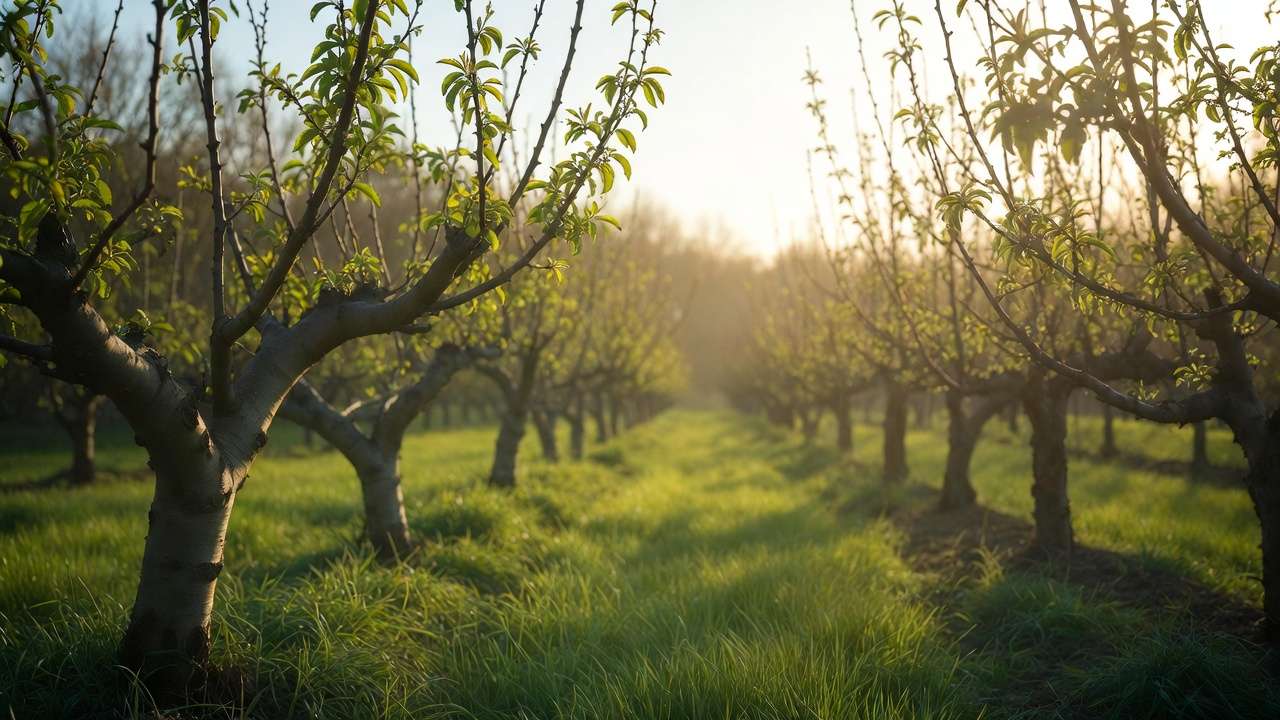
Mastering dormant oil spray for fruit trees — especially nailing the timing and thorough application — is one of the smartest moves you can make for a healthy, productive backyard orchard. By smothering overwintering pests naturally, you set your apples, peaches, plums, and more up for pest-free growth, fewer sprays later, and better fruit quality. In your mild Barisal climate, watch for those early warm spells in January–March — inspect buds, check forecasts, and act when conditions align.
This season, grab your sprayer, choose a perfect day, and give your trees that protective coat. You’ll thank yourself come harvest time with plump, clean fruit! 🚀











