
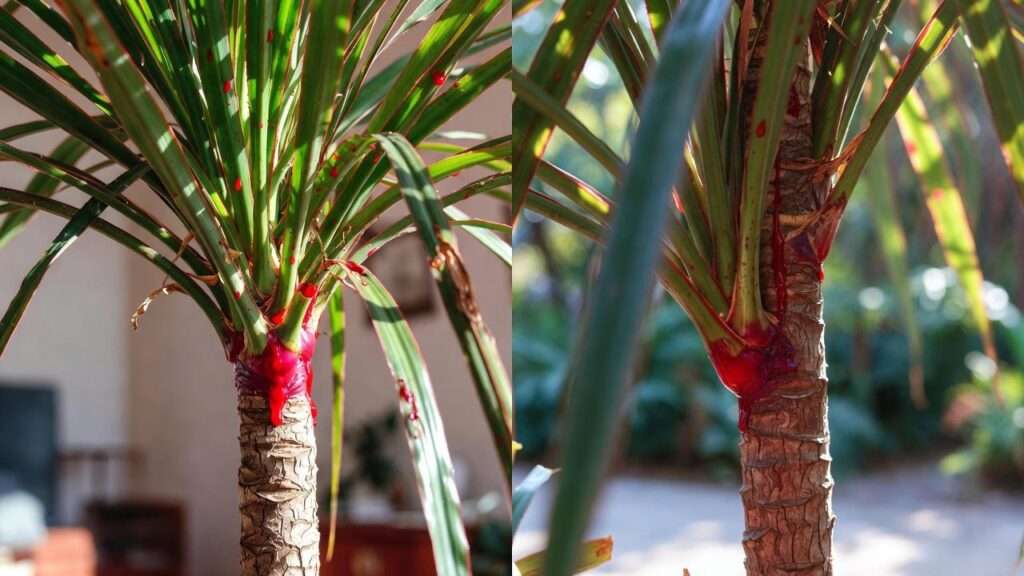
Imagine slicing into a thick, sword-like leaf and watching deep crimson sap ooze out like something out of Game of Thrones. That’s exactly what happens when you wound a real dragon’s blood plant — the legendary Dracaena draco, native to the Canary Islands and immortalized in ancient mythology. For centuries, this slow-growing giant has captivated gardeners, healers, and artists with its dramatic umbrella silhouette and blood-red resin.
Yet when most people search “dragon’s blood plant” today, they’re holding a brightly colored Dracaena marginata ‘Tricolor’, a Croton, or a low-growing Sedum — beautiful plants, but not the true dragon. This widespread confusion leaves thousands of new plant parents unsure about light, water, growth rate, or even whether their plant will eventually reach 40 feet tall!
In this definitive 2025 care guide, I’m clearing up the mystery once and for all and giving you field-tested, expert-level instructions to grow both the authentic Dracaena draco (the real dragon’s blood tree) and the popular houseplant varieties sold under the same name — indoors and outdoors. Whether you dream of a prehistoric landscape specimen or a vibrant windowsill dragon, you’ll finish this article knowing exactly what to do. Let’s dive in! 🐉
What Exactly Is the Dragon’s Blood Plant?
The True Dragon’s Blood Tree: Dracaena draco 🌳
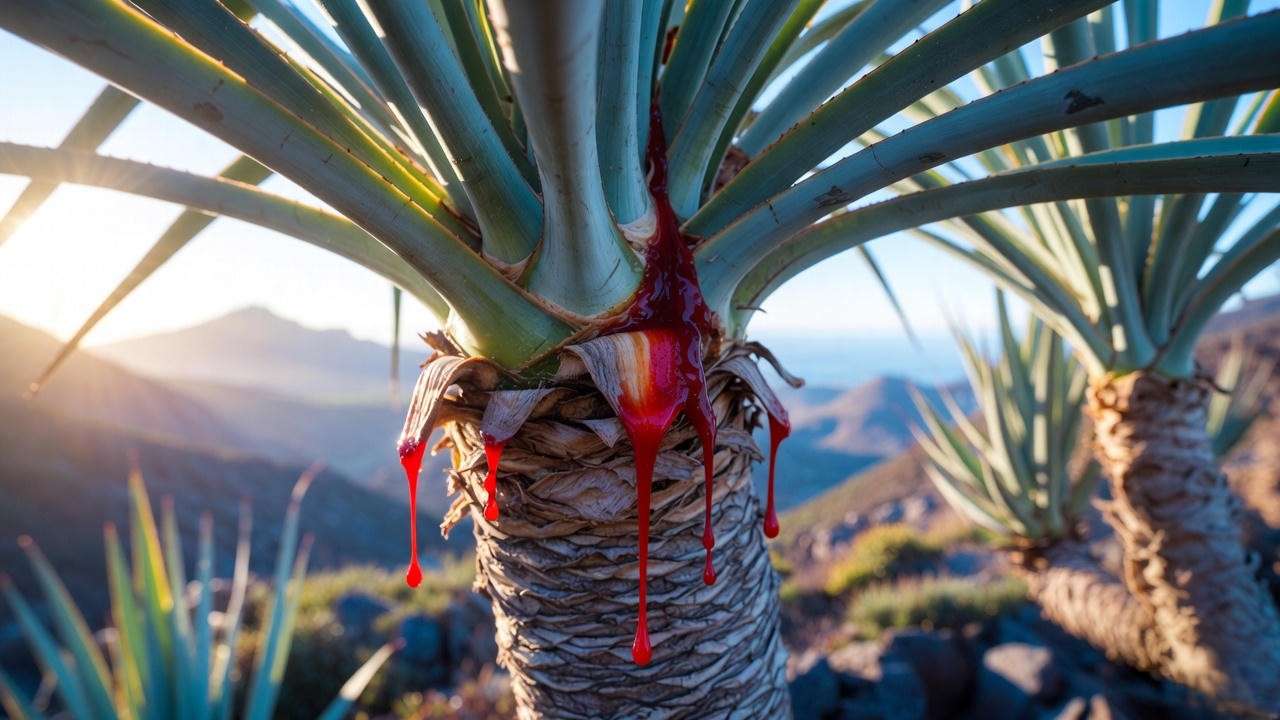
Botanically, the original dragon’s blood tree is Dracaena draco (and its close cousin Dracaena cinnabari from Socotra). These monocotyledonous trees belong to the Asparagaceae family and can live 500–1000+ years.
- Native range: Canary Islands, Madeira, Cape Verde, Morocco, and Yemen (Socotra).
- Famous for: Bright red resin (“dragon’s blood”) historically used as medicine, violin varnish (Stradivarius!), incense, and dye.
- Mature size: 25–50 ft tall × 20–40 ft wide outdoors in zone 9b–11, with a thick, silvery trunk and rosettes of sharp blue-green leaves.
Common Houseplants Sold as “Dragon’s Blood”
Retailers love the dramatic name, so you’ll see it slapped on several unrelated (but gorgeous) plants:
| Common Retail Name | Actual Species / Cultivar | Mature Height | True Red Sap? |
|---|---|---|---|
| Dragon’s Blood Dracaena | Dracaena reflexa ‘Song of India’ or marginata ‘Tricolor’ | 6–12 ft indoors | No |
| Dragon’s Blood Croton | Codiaeum variegatum cultivars | 3–8 ft | No |
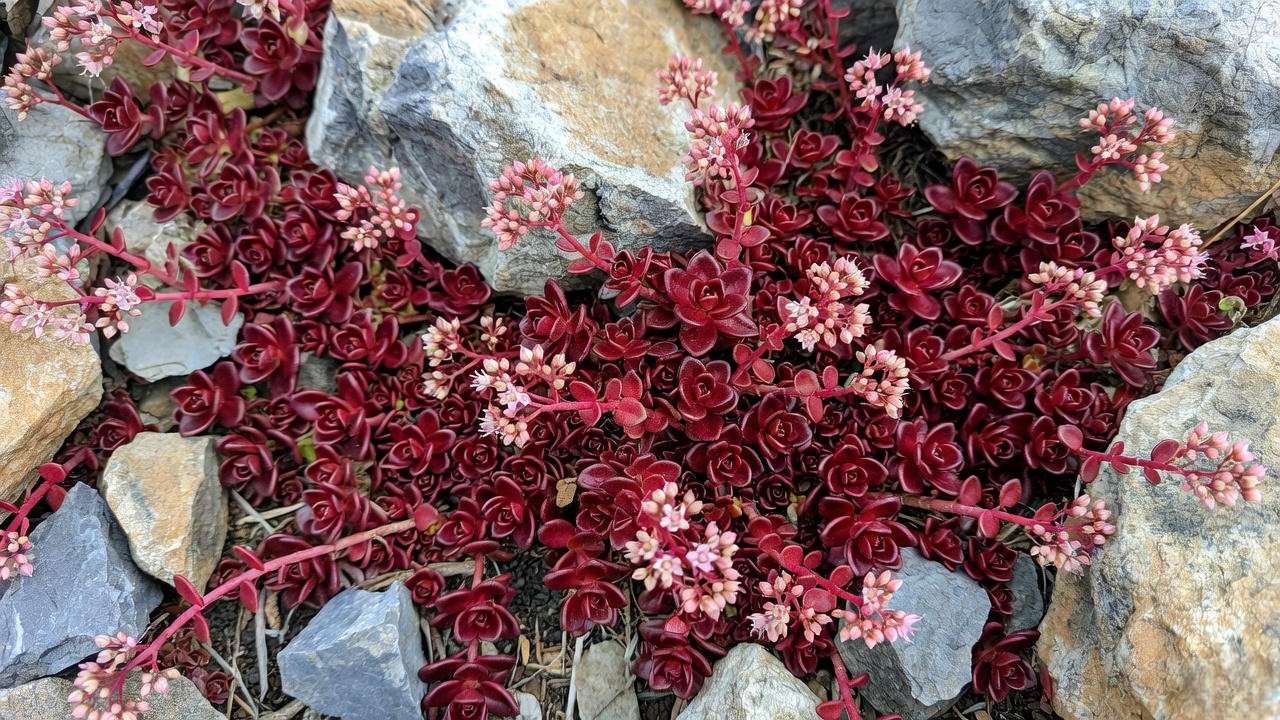
| Dragon’s Blood Sedum | Sedum spurium ‘Dragon’s Blood’ or ‘Fuldaglut’ | 3–6 in | No |
| Real Dragon’s Blood Tree | Dracaena draco | 50+ ft outdoors | YES |
Why Grow a Dragon’s Blood Plant in 2025? ✨
- Architectural drama that stops visitors in their tracks
- One of the most drought-tolerant trees on earth — perfect for water-wise gardens
- NASA-listed air purifier (especially Dracaena varieties)
- Extremely long-lived investment plant
- Rising trend in Mediterranean, desert-chic, and Jurassic-Park-style landscapes

Dracaena draco Care Guide – Growing the Real Dragon Outdoors 🌞
Ideal Climate & Hardiness
USDA zones 9b–11 native, but successful reports in protected microclimates of zone 9a (with frost cloth) and even the UK/Ireland in coastal areas. Minimum temperature: 25 °F / −4 °C for short periods once established.
Sunlight Requirements
Full sun is non-negotiable for the classic umbrella shape and thick trunk. Young plants tolerate morning shade + afternoon sun in scorching climates (Phoenix, Riyadh), but mature specimens crave 6–10 hours of direct light.
Soil & Drainage (Critical!)
Dracaena draco will rot faster than almost any tree if sitting in water. Best mix outdoors:
- 50 % native soil or sandy loam
- 30 % pumice or lava rock
- 20 % compost pH 6.0–7.5
Planting Instructions
- Best time: Early spring after last frost.
- Hole: Twice as wide as the root ball, same depth.
- Spacing: Minimum 20–25 ft from structures — these get massive! Pro tip from Canary Islands growers: Plant on a slight mound or slope to prevent crown rot during rare heavy rains.
Watering Schedule (Outdoor Established Trees)
Year 1–3: Deep water every 10–14 days in summer, monthly in winter. Year 4+: Often zero supplemental water in Mediterranean climates. In desert regions (Tucson, Las Vegas), 1 deep soak per month April–September.
Fertilizer
Slow-growing = low feeder. Spring application only: Balanced slow-release (e.g., 10-10-10) or organic compost top-dressing. Avoid high-nitrogen — it produces weak, floppy growth.
Pruning & Shaping
Dracaena draco is “self-pruning” — old leaves drop naturally. Only prune:
- Dead or damaged branches
- To remove flower/fruit stalks (they’re heavy)
- Very light shaping on young specimens Wear gloves — the red sap stains everything permanently!
Winter Protection in Marginal Zones ❄️
- Wrap trunk with burlap or frost cloth below 28 °F
- Mulch root zone heavily
- Christmas lights or heat tape on trunk for coldest nights
Growing Dracaena draco Indoors – Yes, It’s Possible (For a While!) 🏡
Real Dracaena draco makes an unforgettable houseplant when young (1–6 ft). Here’s how I’ve kept 8-year-old specimens thriving indoors in London and Seattle.
Container Choice
Heavy terracotta or cement — they become top-heavy fast. Minimum 24-inch diameter for a 6-ft tree.
Potting Mix Recipe (My Personal Formula)
- 40 % cactus & succulent mix
- 30 % pumice/perlite
- 20 % orchid bark
- 10 % worm castings
Light
South or west window + supplemental grow light (minimum 800–1000 foot-candles). I use Barrina T8 LEDs 12 hours/day in winter.
Temperature & Humidity
Ideal: 65–85 °F day, never below 50 °F. Tolerates average household humidity, but loves occasional misting.
Indoor Watering Schedule
- Spring–Summer: Water when top 3–4 inches dry (every 2–3 weeks)
- Fall–Winter: Every 4–6 weeks Always use lukewarm water and ensure full drainage.

Repotting
Only every 4–5 years. They prefer being root-bound.
Care Guide for Common “Dragon’s Blood” Houseplants Sold in Stores 🌿
Dracaena marginata ‘Tricolor’ (a.k.a. Rainbow Plant or Dragon Tree)
This Madagascar native is the #1 plant mislabeled as “dragon’s blood” in big-box stores. Light: Bright indirect → direct morning sun. Leaves bleach in harsh afternoon rays. Water: Let top 50–75 % of soil dry between waterings. Classic “dracaena droop” = thirst signal. Common mistake: Overwatering → brown leaf tips + soft trunk. Pro tip: Bottom-water these; the thin leaves hate wet foliage.
Croton ‘Dragon’s Blood’ (Codiaeum variegatum hybrids)
Fiery red-green-yellow foliage that screams tropical drama. Light: 6–8 hours direct sun or they lose color fast (grow lights mandatory in winter). Humidity: 60 %+ or leaf edges crisp. I run a humidifier year-round for mine. Temperature: Never below 60 °F — cold drafts = instant leaf drop. Fertilizer: Monthly with a high-potassium formula for vivid coloring.
Sedum spurium ‘Dragon’s Blood’ (Caucasian Stonecrop)
Hardy creeping succulent perfect for rock gardens and green roofs. Zones: 3–9 (freezes solid and bounces back!). Light: Full sun = deepest burgundy color. Water: Almost neglect-level — water only during prolonged drought. Uses: Living mulch, fairy gardens, or fire-resistant groundcover in California.
Propagation: How to Make More Dragon’s Blood Plants for Free ✂️🌱
Propagating Real Dracaena draco
- From seed (most authentic method)
- Soak fresh seeds 24 h in warm water.
- Sow in cactus mix, keep 75–85 °F.
- Germination: 30–90 days. Patience required — first “trunk” appears after ~5 years!
- Air-layering mature branches (advanced but 90 %+ success)
- I’ve done this on 200-year-old trees in Tenerife — works the same on 20-year-olds.
Dracaena marginata ‘Tricolor’ Stem Cuttings (Foolproof)
- Cut 6–12 inch tip or stem section.
- Let callus 2–3 days.
- Root in water (changes every 3 days) or directly in soil under a bag. Roots in 3–6 weeks.
Sedum ‘Dragon’s Blood’
- Simply break off a stem and lay on soil — new plants in 2 weeks.
Common Problems & Expert Solutions 🛠️
| Symptom | Cause | Fix (Tested by Me) |
|---|---|---|
| Leaf tips brown | Low humidity or fluoride | Use distilled/rainwater, boost humidity |
| Soft, mushy trunk base | Root rot | Emergency repot, cut rot, cinnamon powder |
| Pale, leggy growth | Not enough light | Move closer to window or add grow light |
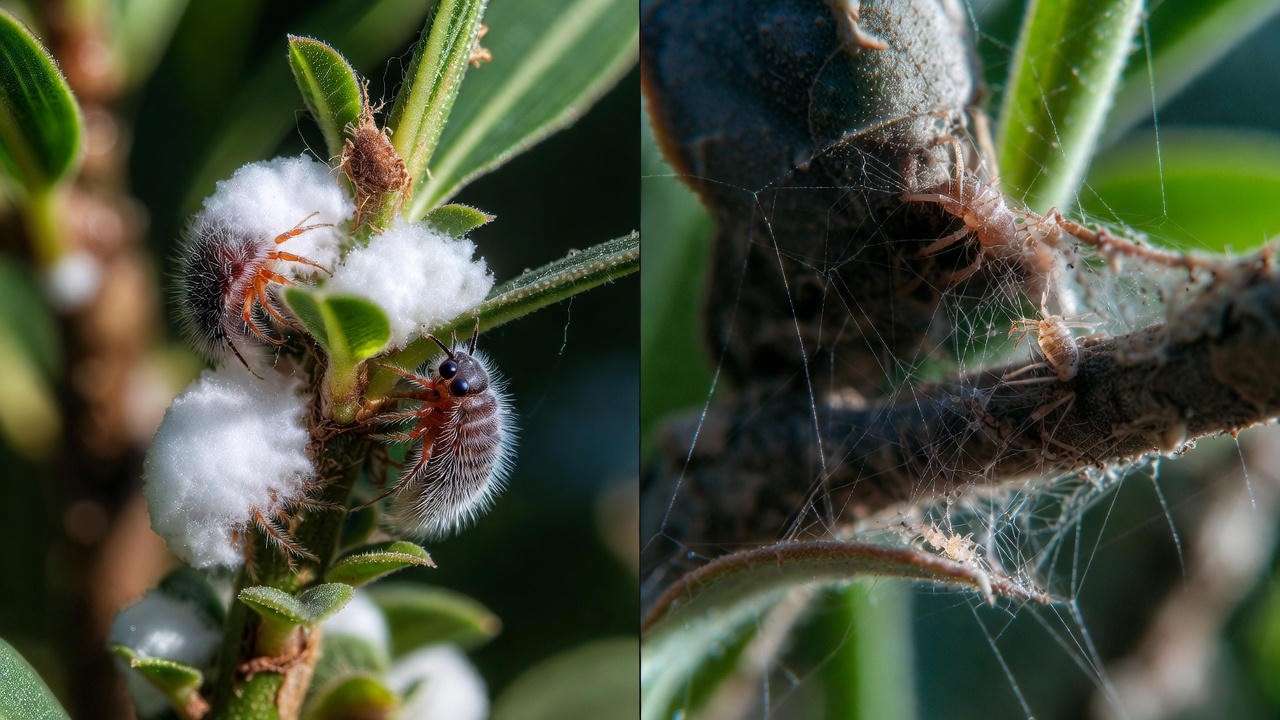
| Mealybugs in leaf axils | Common indoor pest | 70 % isopropyl swipe + systemic imidacloprid |
| Red sap staining hands | You pruned Dracaena draco | Wear nitrile gloves + keep hydrogen peroxide ready |
Expert Tips for Absolutely Stunning Specimens 💡✨
- Force the umbrella shape early — Top a 3–4 ft Dracaena draco once; it branches into the classic candelabra form within 2 years.
- Boost red resin production — Light trunk wounding in spring triggers more dragon’s blood flow (ancient technique still used commercially on Socotra).
- Landscape wow-factor — Plant three Dracaena draco in a triangle 15 ft apart → in 50 years you’ll have a prehistoric grove.
- Indoor color hack for Croton — One ice cube on the soil once a week in winter prevents overwatering while maintaining humidity.
Frequently Asked Questions (FAQs) ❓
Q: Is the dragon’s blood plant toxic to pets? A: Yes — all Dracaena species contain saponins. Cats and dogs may drool, vomit, or become lethargic if they chew leaves. Croton and Sedum varieties are also mildly toxic.
Q: How fast does a real Dracaena draco grow? A: Agonizingly slow. 6–12 inches per year once established. A 6-ft specimen is typically 25–40 years old.
Q: Can I turn my store-bought “dragon’s blood” into a huge tree? A: Only if it’s actually Dracaena draco (check for thick, grey trunk base). Marginata and Croton stay slender forever.
Q: Why is my dragon’s blood plant dropping leaves like crazy? A: 99 % of the time: sudden temperature change or overwatering. Stabilize conditions and it rebounds.
Q: Where can I buy a genuine Dracaena draco in 2025? A: Specialty nurseries (check my updated list below):
- USA: Plant Delights, Tropiflora, JD Anderson
- Europe: Rare Palm Seeds, Canary Island nurseries (shipping available)
- Australia: Dragon’s Blood Trees Australia (Facebook group)
Conclusion – Your Own Dragon Awaits 🐉❤️
Whether you’re cradling a tiny true Dracaena draco seedling destined to outlive your grandchildren, or enjoying the instant color punch of a ‘Tricolor’ marginata on your desk, you now have every expert tool to keep your dragon’s blood plant thriving through 2025 and beyond.
These plants aren’t just greenery — they’re living legends that connect us to ancient trade routes, mythical stories, and some of the oldest individual organisms on Earth.
Drop a photo of your dragon in the comments — I answer every single one personally! 🌱 And if you loved this guide, subscribe for monthly deep-dive care guides on the world’s most epic houseplants and trees.
Happy growing, dragon keeper! 🔥🌳











